


25,99 €
Mehr erfahren.
- Herausgeber: John Wiley & Sons
- Kategorie: Wissenschaft und neue Technologien
- Serie: RGS-IBG Book Series
- Sprache: Englisch
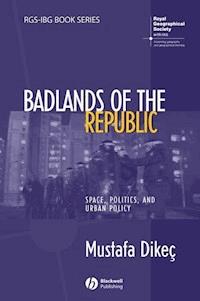
The relationship between space and politics is explored through a study of French urban policy. Drawing upon the political thought of Jacques Rancière, this book proposes a new agenda for analyses of urban policy, and provides the first comprehensive account of French urban policy in English. * Essential resource for contextualizing and understanding the revolts occurring in the French 'badland' neighbourhoods in autumn 2005 * Challenges overarching generalizations about urban policy and contributes new research data to the wider body of urban policy literature * Identifies a strong urban and spatial dimension within the shift towards more nationalistic and authoritarian policy governing French citizenship and immigration
Sie lesen das E-Book in den Legimi-Apps auf:
Seitenzahl: 452
Veröffentlichungsjahr: 2011
Ähnliche



















Contents
List of Figures and Tables
List of Abbreviations and Acronyms
Series Editors’ Preface
Acknowledgements
Part I Badlands
1 Introduction: The Fear of ‘the Banlieue’
The Colour of Fear
Organization of the Book
2 State’s Statements: Urban Policy as Place-Making
Neoliberalism, Neoliberalization and the City
The Republican State and Its Contradictions
The Republican Penal State and Urban Policy
Part II The Police
3 The Right to the City? Revolts and the Initiation of Urban Policy
The Hot Summer of 1981: How Novel is ‘Violence’?
Brixton in France? The Haunting of the French Republic
The ‘Founding Texts’ of Urban Policy
The ‘Anti-immigrant Vote’
Consolidation of Urban Policy
Conclusions: Consolidation of the Police
4 Justice, Police, Statistics: Surveillance of Spaces of Intervention
When the Margin is at the Centre
The ‘Return of the State’
‘I Like the State’
Justice, Police, Statistics
Conclusions: Looking for a ‘Better’ Police . . .
. . . a ‘Republican’ One
5 From ‘Neighbourhoods in Danger’ to ‘Dangerous Neighbourhoods’: The Repressive Turn in Urban Policy
Encore! The Ghost Haunting the French Republic
Pacte de Relance: Old Ghost, New Spaces
‘They are Already Stigmatized’: Affirmative Action à la française
Is ‘Positive Discrimination’ Negative?
Insecurity Wins the Left: The Villepinte Colloquium
Remaking Urban Policy in Republican Terms
Whither Urban Policy?
The Police Order and the Police State
Back to the Statist Geography
Conclusions: Repressive Police
Part III Justice in Banlieues
6 A ‘Thirst for Citizenship’: Voices from a Banlieue
Vaulx-en-Velin between Official Processions and Police Forces
Vaulx-en-Velin after the trente glorieuses
A ‘Thirst for Citizenship’
A Toil of Two Cities (in One)
Whose List is More ‘Communitarian’?
Conclusions: Acting on the Spaces of the Police
7 Voices into Noises: Revolts as Unarticulated Justice Movements
Revolting Geographies
Geographies of Repression: ‘Police Everywhere, Justice Nowhere’11
Policies of Urgency: ‘20 Years for Unemployment, 20 Minutes for Insecurity’
Conclusions: From ‘a Just Revolt of the Youth’ to ‘Urban Violence’
8 Conclusion: Space, Politics and Urban Policy
Notes
References
index
RGS-IBG Book Series
The Royal Geographical Society (with the Institute of British Geographers) Book Series provides a forum for scholarly monographs and edited collections of academic papers at the leading edge of research in human and physical geography. The volumes are intended to make significant contributions to the field in which they lie, and to be written in a manner accessible to the wider community of academic geographers. Some volumes will disseminate current geographical research reported at conferences or sessions convened by Research Groups of the Society. Some will be edited or authored by scholars from beyond the UK. All are designed to have an international readership and to both reflect and stimulate the best current research within geography.
The books will stand out in terms of:
the quality of researchtheir contribution to their research fieldtheir likelihood to stimulate other researchbeing scholarly but accessible.For series guides go to www.blackwellpublishing.com/pdf/rgsibg.pdf
Published
Badlands of the Republic: Space, Politics and Urban Policy
Mustafa Dikeç
Geomorphology of Upland Peat: Erosion, Form and LandscapeChange
Martin Evans and Jeff Warburton
Spaces of Colonialism: Delhi’s Urban GovernmentalitiesStephen Legg
People/States/Territories
Rhys Jones
Publics and the City
Kurt Iveson
After the Three Italies: Wealth, Inequality and Industrial Change
Mick Dunford and Lidia Greco
Putting Workfare in Place
Peter Sunley, Ron Martin and Corinne Nativel
Domicile and Diaspora
Alison Blunt
Geographies and Moralities
Edited by Roger Lee and David M. Smith
Military Geographies
Rachel Woodward
A New Deal for Transport?
Edited by Iain Docherty and Jon Shaw
Geographies of British Modernity
Edited by David Gilbert, David Matless and Brian Short
Lost Geographies of Power
John Allen
Globalizing South China
Carolyn L. Cartier
Geomorphological Processes and Landscape Change: Britain in the Last 1000 Years
Edited by David L. Higgitt and E. Mark Lee
Forthcoming
Politicizing Consumption: Making the Global Self in an UnequalWorld
Clive Barnett, Nick Clarke, Paul Cloke and Alice Malpass
Living Through Decline: Surviving in the Places of the PostIndustrial Economy
Huw Beynon and Ray Hudson
Swept up Lives? Re-envisaging ‘the Homeless City’
Paul Cloke, Sarah Johnsen and Jon May
Climate and Society in Colonial Mexico: A Study in Vulnerability
Georgina H. Endfield
Resistance, Space and Political Identities
David Featherstone
Complex Locations: Women’s Geographical Work and the Canon1850–1970
Avril Maddrell
Driving Spaces: A Cultural-Historical Geography of England’s M1Motorway
Peter Merriman
Geochemical Sediments and Landscapes
Edited by David J. Nash and Sue J. McLaren
Mental Health and Social Space: Towards InclusionaryGeographies?
Hester Parr
Domesticating Neo-Liberalism: Social Exclusion and Spaces ofEconomic Practice in Post Socialism
Adrian Smith, Alison Stenning, Alena Rochovská and Dariusz S´wia˛tek
Value Chain Struggles: Compliance and Defiance inthe Plantation Districts of South India
Jeffrey Neilson and Bill Pritchard
© 2007 by Mustafa Dikeç
BLACKWELL PUBLISHING
350 Main Street, Malden, MA 02148–5020, USA
9600 Garsington Road, Oxford OX4 2DQ, UK
550 Swanston Street, Carlton, Victoria 3053, Australia
The right of Mustafa Dikeç to be identified as the Author of this Work has been asserted in accordance with the UK Copyright, Designs, and Patents Act 1988.
All rights reserved. No part of this publication may be reproduced, stored in a retrieval system, or transmitted, in any form or by any means, electronic, mechanical, photocopying, recording or otherwise, except as permitted by the UK Copyright, Designs, and Patents Act 1988, without the prior permission of the publisher.
First published 2007 by Blackwell Publishing Ltd
1 2007
Library of Congress Cataloging-in-Publication Data
Dikeç, Mustafa, 1971–
Badlands of the republic: space, politics, and urban policy/Mustafa Dikeç.
p. cm.
Includes bibliographical references and index.
ISBN 978-1-4051-5631-8 (hardcover: alk. paper) — ISBN 978-1-4051-5630-1 (pbk.: alk. paper) 1. Urban policy—France. 2. Sociology, Urban—France. 3. Immigrants—France. 4. Identity (Psychology)—France. I. Title.
HT135.D55 2007
307.76086′9120944—dc22
2006102118
A catalogue record for this title is available from the British Library.
Set in 10 on 12 pt Plantin
by SNP Best-set Typesetter Ltd, Hong Kong
Printed and bound in
by
The publisher’s policy is to use permanent paper from mills that operate a sustainable forestry policy, and which has been manufactured from pulp processed using acid-free and elementary chlorine-free practices. Furthermore, the publisher ensures that the text paper and cover board used have met acceptable environmental accreditation standards.
For further information on
Blackwell Publishing, visit our website:
www.blackwellpublishing.com
For my son,
Aslan Hancock Dikeç
(2005)
In memoriam
Figures and Tables
FIGURES
1.1 and 1.2 The changing colour of ‘the banlieue’ 3.1 Brixton in France? 3.2 Regions and major cities of mainland France 3.3 Departments and major cities of Rhône-Alpes 3.4 The ‘3Vs’ of Lyon 3.5 The first urban policy neighbourhoods (1982–3) 3.6 The 148 urban policy neighbourhoods (1984–8) 3.7 The 400 urban policy neighbourhoods per department (1989–93) 4.1 The ‘difficult neighbourhoods’ of the French Intelligence Service per department (1999) 4.2 The urban policy neighbourhoods per department (1999) 5.1 The location of Maisons de Justice et du Droit (MJDs) in mainland France in 2002 6.1 Social housing neighbourhoods of Vaulx-en-Velin seen from the new centre 6.2 The new centre of Vaulx-en-Velin seen from the social housing neighbourhoodsTABLES
4.1 Characteristics of the priority neighbourhoods of urban policy in comparison with their agglomerations and metropolitan France, 1990 (%) 5.1 Characteristics of priority neighbourhoods of urban policy in comparison with cities and metropolitan France, 1990–9 (%) 6.1 Unemployment rates in Vaulx-en-Velin and its urban policy neighbourhoods compared to departmental, regional and national rates for selected years (%) 6.2 Unemployment rates and population characteristics of Vaulx-en-Velin and its urban policy neighbourhoods, 1990 and 1999 (%) 6.3 Rates of increase in unemployment levels in Vaulx-en-Velin and its urban policy neighbourhoods compared to departmental, regional and national rates for selected periods (%)Abbreviations and Acronyms
ANRU Agence Nationale pour la Rénovation Urbaine CIV Comité Interministériel des Villes CLSs Contrats Locaux de Sécurité CNDSQ Commission Nationale pour le Développement Social des Quartiers CNPD Conseil National de Prévention de la Délinquance CNV Conseil National des Villes CPE Contrat Première Embauche DIV Délégation Interministérielle à la Ville DSQ Développement Social des Quartiers DSU Développement Social Urbain FN Front National GAMs Groupes d’Action Municipale GPUs Grands Projets Urbains GPVs Grands Projets de Ville HCI Haut Conseil à l’Intégration HLM Habitation à Loyer Modéré HVS Habitat et Vie Sociale INED Institut National d’Etudes Démographiques INSEE Institut National de la Statistique et des Etudes Economiques ISE Indice Synthétique d’Exclusion LOV Loi d’Orientation pour la Ville LSI Loi pour la Sécurité Intérieure LSQ Loi relative à la Sécurité Quotidienne MIB Mouvement de l’Immigration et des Banlieues MJD Maison de Justice et du Droit ORUs Opérations de Renouvellement Urbain PCF Parti Communiste Français PS Parti Socialiste RG Renseignements Généraux RMI Revenu Minimum d’Insertion RPR Rassemblement pour la République SRU Loi de Solidarité et Renouvellement Urbains UDF Union pour la Démocratie Française UMP Union pour un Mouvement Populaire ZAC Zone d’Aménagement Concerté ZEP Zone d’Education Prioritaire ZFU Zone Franche Urbaine ZRU Zone de Redynamisation Urbaine ZUP Zone à Urbaniser par Priorité ZUS Zone Urbaine SensibleSeries Editors’ Preface
Like its fellow RGS-IBG publications, Area, the Geographical Journal and Transactions, the RGS-IBG Book Series only publishes work of the highest international standing. Its emphasis is on distinctive new developments in human and physical geography, although it is also open to contributions from cognate disciplines, such as anthropology, chemistry, geology and sociology, whose interests overlap with those of geographers. The Series places strong emphasis on theoretically-informed and empirically-strong texts. Reflecting the vibrant and diverse theoretical and empirical agendas that characterize the contemporary discipline, contributions are expected to inform, challenge and stimulate the reader. Overall, the RGS-IBG Book Series seeks to promote scholarly publications that leave an intellectual mark and change the way readers think about particular issues, methods or theories.
For series guides go to www.blackwellpublishing.com/pdf/rgsibg.pdf
Kevin Ward (University of Manchester, UK) and
Joanna Bullard (Loughborough University, UK)
RGS-IBG Book Series Editors
Acknowledgements
Although none of the chapters in this book have previously appeared in their current form, I have used material from some of my published articles. These include ‘Space, politics, and the political’, Environment and Planning D: Society and Space, 2005, 23(2): 171–88 (Pion Limited, London); ‘Badlands of the Republic? Revolts, the French state, and the question of banlieues’, Environment and Planning D: Society and Space, 2006, 24(2): 159-63 (Pion Limited, London); ‘Two decades of French urban policy: From social development of neighbourhoods to the republican penal state’, Antipode, 2006, 38(1): 59–81 (Blackwell, Oxford); and ‘Voices into noises: Ideological determination of unarticulated justice movements’, Space &Polity, 2004, 8(2): 191–208 (http://www.tandf.co.uk/journals). I thank the publishers for permission to re-use material from these articles.
This project started under the supervision of Edward Soja, whose recommendations and encouragement are much appreciated. I am grateful to Julie-Anne Boudreau, Philippe Estèbe, Liette Gilbert, Steve Hinchliffe, Kirstie McClure, Doreen Massey, Walter Nicholls, Chris Pickvance and Michael Storper for the exciting discussions we have had over the years. Nick Henry and Kevin Ward provided constructive comments as the editors of the series at the time of writing. During the production process, it has been a pleasure to work with Angela Cohen, Rebecca du Plessis, Justin Dyer and Jacqueline Scott. Much of the work for this book was completed while I was a postdoctoral research fellow at the geography department of the Open University. During the final stages, I have enjoyed being in the wonderful working environment of the geography department at Royal Holloway, University of London. Philip Crang, Felix Driver and David Gilbert have been most supportive. Both institutions have been particularly welcoming, and their financial aid for the transcriptions and copyrights is much appreciated. John Allen, Nigel Clark, Mathew Coleman and Steve Pile read the manuscript and provided constructive comments. I have been very lucky to have them as colleagues, and, above all, as friends.
It is hard to adequately express my gratitude to my parents and sister. And it is even harder to do so when it comes to Claire; I simply cannot find the words to express how grateful I am for her love, generosity and patience. Academic work can become very absorbing, and I definitely am not immune to this. At the early stages of this project, while I was desperately trying to finish my dissertation, Joakim joined us. He showed me how wonderful life is, and how trivial my problems were as an aspiring academic. But such lessons are easily forgotten. His brother, Aslan, arrived while I was trying to finish this book. He taught me that there is more to life than just the book – that there is life itself, with which he was not gifted. This book is dedicated to his memory.
Mustafa Dikeç
Paris and London, January 2007
Part I
Badlands
1
Introduction: The Fear of ‘the Banlieue’
The accusations were serious: armed robbery, killing of three police officers and murder of one taxi driver. They were hurled at a young woman of 23 years old and her companion, a young man of about the same age, who was shot dead during his sconfrontation with the police. The evidence presented at the court, and the presence of eyewitnesses, left little hope for the young woman. The prosecuting attorney insisted on the truly cynical nature of the acts of the two, which, it was maintained, could not be justified by the circumstances. The prosecutor claimed:
[They] are not terrorists, they are not Bonnie and Clyde, they are not the characters of Natural Born Killers. They are neither zonards,1 nor drug addicts, nor banlieue outcasts [des exclus de banlieue]. [She] is not the daughter of immigrants, her mother was a teacher and helped her with homework in the evenings. These are two students who dropped out of college, gave up on work, who chose to live in a squat and to live from hold-ups, because ‘money is freedom’. (Libération, 30 September 1998: 15; emphasis added)
What the accused were not associated with – terrorism, drugs, exclusion, immigration – exemplifies some of the terms that have been articulated with the spatial references of the prosecuting attorney – zones and banlieues – in the last two decades. Was the attorney, with these statements, recognizing the difficulties of growing up or living in a zone (being a ‘zonard’) or banlieue? Or was she, if unwittingly, demonstrating the naturalization of crime as associated with zones and banlieues? If the accused were zone or banlieue inhabitants, would their acts be seen as more ‘natural’ rather than truly cynical? In a republic that cherishes so dearly the principle of equality, how can such spatial references be presented as potentially mitigating circumstances?
Lesen Sie weiter in der vollständigen Ausgabe!
Lesen Sie weiter in der vollständigen Ausgabe!
Lesen Sie weiter in der vollständigen Ausgabe!
Lesen Sie weiter in der vollständigen Ausgabe!
Lesen Sie weiter in der vollständigen Ausgabe!
Lesen Sie weiter in der vollständigen Ausgabe!
Lesen Sie weiter in der vollständigen Ausgabe!
Lesen Sie weiter in der vollständigen Ausgabe!
Lesen Sie weiter in der vollständigen Ausgabe!
Lesen Sie weiter in der vollständigen Ausgabe!
Lesen Sie weiter in der vollständigen Ausgabe!
Lesen Sie weiter in der vollständigen Ausgabe!




