


5,49 €
Mehr erfahren.
- Herausgeber: Allen & Unwin
- Kategorie: Gesellschafts- und Liebesromane
- Sprache: Englisch
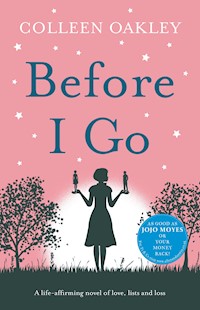
Colleen Oakley's debut deftly balances sorrow with laughs and compassion. - Us Weekly Her time is running out. How can Daisy ensure that Jack will live happily ever after? On the eve of what was supposed to be a triumphant 'Cancerversary' with her husband Jack to celebrate three years of good health, Daisy suffers a devastating blow: her doctor tells her that the cancer is back, but this time it's unstoppable. Death is a frightening prospect - but not because she's afraid for herself. She's terrified of what will happen to her brilliant but charmingly helpless husband when she's no longer there to take care of him. It's this fear that keeps her up at night, until she stumbles on the solution: she has to find him another wife. With a singular determination, Daisy searches for Jack's perfect match. But as the thought of her husband with another woman becomes all too real, Daisy is forced to decide what's more important in the short amount of time she has left: her husband's happiness - or her own?
Das E-Book können Sie in Legimi-Apps oder einer beliebigen App lesen, die das folgende Format unterstützen:
Veröffentlichungsjahr: 2017
Ähnliche


















First published in Great Britain by Allen & Unwin in 2015
First published in the United States in 2015 by Gallery Books, a division of Simon & Schuster, Inc.
Copyright © Colleen Tull 2015
The moral right of Colleen Tull to be identified as the author of this work has been asserted by her in accordance with the Copyright, Designs and Patents Act of 1988.
All rights reserved. No part of this book may be reproduced or transmitted in any form or by any means, electronic or mechanical, including photocopying, recording or by any information storage and retrieval system, without prior permission in writing from the publisher.
Allen & Unwin
c/o Atlantic Books
Ormond House
26-27 Boswell Street
London WC1N 3JZ
Phone: (61 2) 8425 0100
Email: [email protected]
Web: www.allenandunwin.com/uk
A CIP catalogue record for this book is available from the British Library.
Paperback ISBN 978 1 76011 210 3
E-book ISBN 978 1 74343 931 9
Internal design by Davina Mock-Maniscalco
For my parents, Bill and Kathy Oakley
Life is pleasant. Death is peaceful.
It’s the transition that’s troublesome.
—Isaac Asimov
contents
February
One
Two
Three
Four
Five
Six
Seven
March
Eight
Nine
Ten
Eleven
Twelve
Thirteen
Fourteen
Fifteen
Sixteen
April
Seventeen
Eighteen
Nineteen
Twenty
Twenty-one
Twenty-two
Twenty-three
Twenty-four
May
Twenty-five
May: one year later
Jack
Acknowledgments
february
one
THE KALE IS gone. I’m standing in front of the open refrigerator, allowing the cool air to escape around my bare thighs. I’ve pushed aside the stacks of Tupperware containing leftovers of dinners that we’ll never eat. I’ve searched the crisper, even digging beneath the wilted celery (does anybody ever use an entire bag of celery before it goes rubbery?). There was some type of slime that had accrued on the bottom of the drawer. I added cleaning it out to my mental list of duties. I even pulled all the organic milk and juice cartons from the top shelf and looked behind them. No dice.
The kale is definitely gone.
Then I hear it. The high-pitched squeal of Queen Gertrude, our Abyssinian guinea pig, coming from the living room. And I know what’s happened to my greens.
I feel anger bubble up inside of me like a bottle of Dr Pepper that’s been rolling around the floorboard of a car—just waiting for the top to be taken off so it can burst free from its confined plastic.
It’s just kale.
It’s just kale.
It’s just cancer.
My anger is supposedly grief wearing a disguise. That’s what the therapist said in the one session I agreed to attend four years ago when I had breast cancer.
Yes, had.
But now I think my anger is just anger at the possibility that I might have breast cancer again.
Yes, again.
Who gets cancer twice before they turn thirty? Isn’t that like getting struck by lightning twice? Or buying two Mega Millions winning tickets in one lifetime? It’s like winning the cancer lottery.
“Morning.” Jack lumbers into the kitchen, yawning, in a rumpled T-shirt that says STAND BACK, I’M GOING TO TRY SCIENCE and his green scrub pants. He pulls a travel coffee mug from the cabinet above the sink and places it under the spout of our one-cup coffeemaker. He pops the plastic cylinder of breakfast blend into the machine and presses start. I inhale deeply. Even though I don’t drink coffee anymore, I love smelling it.
“Jack,” I say, having moved from my recon mission at the fridge over to the counter where the blender is set up. I pour a cup of frozen raspberries into the glass pitcher.
“Yeah, babe.” He walks up behind me and plants a kiss firmly between where my ear and jawline meet. The swack reverberates in my eardrum.
“Benny!” he says, also directly in my ear, as our three-legged terrier mutt skitters into the room. Jack kneels on the ground beside me to greet him. “There’sagoodboy. How’dyousleep? Ibetyou’rehungry. YouhungryBennyboy?” Benny’s tail whacks the mauve tile on our kitchen floor repeatedly as he accepts Jack’s morning nuzzles and ear scratches.
Jack stands and heads to the pantry to scoop a portion of kibble for Benny’s food dish.
“Did you feed Gertie the kale that was in the fridge?”
“Oh yeah,” he shrugs. “We were out of cucumbers.”
I stand there, staring at him as he grabs a banana from the fruit bowl on the counter and peels it. Benny is munching his breakfast contentedly.
Jack takes a bite of his banana, and finally noticing the weight of my gaze, looks at me. Then he looks at the blender. He lightly taps his forehead with his banana-free hand. “Aw, damn. I’m sorry, babe,” he says. “I’ll pick up some more on my way home from the clinic tonight.”
I sigh and jab the blender’s crush ice setting, making my morning smoothie, sans kale.
Deep breath.
It’s just kale.
And there are children starving in Darfur. Or being murdered in their sleep. Is Darfur the genocide thing? I can’t remember. Either way, bad things are happening to kids overseas, and here I am worried about a leafy vegetable.
And the possible come-back cancer.
But Jack doesn’t know about the cancer because I haven’t told him yet. I know, you’re not supposed to keep secrets from your spouse, blah, blah, blah.
But there are plenty of things I don’t tell Jack.
Like the fact that you can’t just pick up organic kale at the Kroger down the street. The only grocer that sells it is more than eighty-five miles away, almost to Atlanta. And the farmer’s market that I’ve been getting my organic kale from this season won’t be open again until Monday. There is a small produce stand in Monroe that sometimes carries organic kale, but it’s only open on Saturday. And today is Thursday.
Jack doesn’t know any of this because he doesn’t do the grocery shopping. He doesn’t do the grocery shopping because the one time I sent him to the store for dishwasher detergent and a lemon, he came home with $125 of stuff we didn’t need—like three pounds of rib-eye steaks and a case of forty-two snack-size plastic cups of mandarin oranges.
“Don’t worry about it,” I say. “I’ll get some next time I go. It’s no big deal.”
It’s no big deal.
It’s no big deal.
I pour my pink-but-should-be-green smoothie into a glass and walk over to the counter where I keep my to-do list. I pick up the pencil lying beside the pad of paper and write:
4 Clean out vegetable drawer.
5 Call Monroe to check on kale for Saturday.
Then I scan the other three things I need to accomplish today in between classes.
1 Make flash cards for gender studies exam.
2 Buy caulk for windows.
3 Work on thesis!
My thesis. For which I still don’t have a topic. I’m in the second semester of my master’s degree program in community counseling and I have chosen, researched, and then discarded roughly six different themes for my dissertation.
“Diorama!” Jack yells, jarring me out of my thoughts.
My eyes focus on him as I realize what he’s just said. Relief washes over me, and I temporarily forget everything else that has been weighing on my mind—kale, cancer, thesis.
“Yes!” I reply.
He flashes his teeth at me, and I focus on his off-center upper bite. It’s the very first thing I noticed about him, and I found the flaw devastatingly charming. That’s how I knew I was in trouble. Because when you don’t like someone, you just think, “He’s got some crooked teeth.”
Still smiling, Jack gave me a slight nod of his head, obviously pleased with himself that he had remembered the word that had eluded us three nights ago when we had been flipping through the channels and landed on Jurassic Park.
“God, this is the best movie,” he said.
“The best,” I concurred.
“I loved it so much that I used it for my fifth-grade science project—”
“—analyzing whether it was actually possible to resurrect dinosaurs from the dead using mosquito DNA. And you won first place in the Branton County science fair,” I finished for him, playfully rolling my eyes. “I’ve heard.”
But my husband was not to be deterred from reliving his nerdy glory days. “The best part, though, was that thing I built with all the miniature dinosaur models. Dang, what are they called? God, I kept that forever. I wonder if my dad still has it.”
“Terrariums?”
“No, those are with real plants and stuff. This was with the shoebox and you look in one end of it—”
“I know what you’re talking about. I just can’t remember, wait—cycloramas? No, those are circular.”
“It’s on the tip of my tongue . . .”
And on we went for another few minutes, both drawing blanks on the word.
Until now.
“Diorama,” I repeat, smiling.
And it’s not the liberation that comes with finally remembering a word that escaped recall that makes me grin. It’s Jack. My husband, who blurts out words with absolutely no context in the middle of the kitchen on a Thursday morning. And makes my heart fill with the wonderment and satisfaction of our connection. I suppose all couples feel this way at some point—that their bond is the most special, the strongest, the Greatest Love of All. Not all the time, just in those few- and-far-between moments where you look at the person you’re with and think: Yes. It’s you.
This is one of those moments. I feel warm.
“Why do you still drink those things?” Jack says, eyeing my homemade smoothie. He’s now sitting on the countertop across from me, slurping a spoonful of milk-laden Froot Loops out of an entirely-too-big Tupperware bowl. Jack loves cereal. He could literally eat it for every meal. “You had cancer four years ago.”
I want to give him my canned response when he questions my boring all-organic, antioxidant-packed, no-processed-anything diet: “And I don’t want it again.”
But today I can’t say that.
Today I have to tell him the secret I’ve been holding inside for nearly twenty-four hours since I got off the phone with Dr. Saunders yesterday morning, because I physically haven’t been able to say the words. They’ve been stuck in my throat like one of those annoying popcorn hulls that scratch your esophagus and make your eyes water.
I search the corners of my brain for the right way to say it.
The results of my biopsy are in. It doesn’t look good.
So, my tumor marker numbers are up. Want to meet for lunch today?
You know how we had that party last February celebrating three years of me being cancer-free and the end of my every-six-months blood tests? Whoopsies!
But I decide to go with something simple: the hard, cold truth. Because no matter how much the doctor tried to lessen the blow with his “we just need to run some more tests,” and “let’s not panic until we know what we’re dealing with,” I know that what he really means is one terrible, horrible, no good, very bad thing.
I clear my throat. “So, Dr. Saunders called yesterday.”
My back is to him, but the room has gone silent and I know if I turn around and look, his spoon will be hanging halfway between his mouth and the bowl, as if he’s eating cereal in a movie and someone paused it to answer the phone, or go to the bathroom.
“And?” he says.
I turn in time to see him lower his utensil into the still-half-full Tupperware. He’s now in slow motion. Or maybe I am.
“It’s back,” I say at exactly the same time the Tupperware slips out of his grasp and a waterfall of milk and Froot Loops cascades down his leg and onto the floor.
“Shit,” he says, leaping off the counter.
I grab the paper towels from the holder behind me and start rolling off sheets until I have a bouquet big enough to sop up the mess. Then I bend down and get to work.
“Let me,” Jack says, kneeling beside me. I hand him a wad of paper.
We attack the puddle in silence—shooing Benny away as he tries to lap up the sugary milk—and I know that Jack is absorbing the information I’ve just given him. Soon he’ll chide me for not telling him sooner. How could I sit on this for a full twenty-four hours? Then he’ll ask me exactly what Dr. Saunders has said. Word for word. And I’ll tell him, as if I’m relaying bits of neighborhood gossip.
He said.
And then I said.
And then he said.
But until then, Jack will absorb. Ponder. Digest. While we—side by side—do our best to clean up this big, ridiculous mess.
BEFORE JACK LEFT for the vet hospital, he pecked my cheek, squeezed my shoulder, and looked me directly in the eyes. “Daisy. It’s going to be OK.”
I nodded. “Don’t forget your lunch,” I said, handing him the brown paper sack that I had filled the night before with a tuna sandwich, granola bar, and baby carrots. Then I walked to the bathroom to get ready for my day as he left through the back door in the kitchen. The rickety screen creaked as it opened and shut behind him.
What he meant was: “You aren’t going to die.” But I know I’m not going to die. It’s only been a year since my last clean blood work, and I can’t even feel the tumor they found on the mammogram when I poke and prod my left breast, so I’m sure they’ve caught it early, just like the first time. And the tests they want to run tomorrow morning will just confirm that I have breast cancer. Again. But that doesn’t mean everything will be OK.
I don’t want to go through surgery again. Or chemo. Or radiation. And I don’t want to have a year of my life taken away from me while I endure these treatments. I know I’m behaving like a petulant child—stamping my foot and clenching my fists, eyes squeezed tight against the world. I don’t wanna! I don’t wanna! I don’t wanna! I know I should be grateful. As far as cancer goes, relatively, I’ve had it easy. Which is why I’m ashamed to even admit my greatest fear: I don’t want to lose my hair again.
I know it’s vain, and so very inconsequential, but I love my hair. And while I tried to be all “strong, bald woman” last time, it just honestly wasn’t a good look on me. Some people can carry off bald. I am not one of them. My chocolate mane has just started grazing my shoulders again—it’s not quite as thick or polished as it once was, but it’s long. It’s feminine. And I appreciate it more now after having lost it once. I sometimes catch myself petting it, nearly crooning like I do when I stroke Benny’s wiry fur.
Good hair.
Nice hair.
Stay, hair.
I also adore my breasts, which is why I didn’t let Dr. Saunders lop them off last time. A lot of women go for it. Just take them! Just to be safe! They’re just breasts! But I was twenty-three, and didn’t want to part with them. Why couldn’t the cancer have been in my thighs or my never-quite-flat-enough stomach? I’d have happily given those up. But please, for the love of God, leave my perfect, C-cup, make-most-men-do-a-double-take perky tits.
It’s not like I was making a bad medical decision. A big article in Time came out right after my diagnosis, touting the results of a large study in Houston that found women who opt for a preventative double mastectomy have about the same recurrence rates as women who don’t. I never read Time. I saw the article on the way to my sociology of crime class while I was peering over the shoulder of the student seated next to me on the bus. It’s an omen, I thought. And when I brought it up to Dr. Saunders, he agreed that while the study was preliminary, the findings seemed solid—the choice was up to me. Now, four years later, sitting here with cancer once again, the random sighting of a magazine article doesn’t seem so much like fate as it does me just believing what I wanted to believe so I could do what I wanted to do. I should have let them take my breasts. I shouldn’t have been so vain.
I finish brushing my teeth and take one last glance in the mirror.
My hair.
My perfect breasts.
I inhale. Exhale.
It’s just cancer.
I LIKE THE still of the morning. I’m alone in the house but revel in the reminders that I’m not alone in the world. Jack is gone, but his presence is still palpable. The indent on the bed, where his body warmed the sheets, beckons me. Maybe I could crawl in just for a second, I think. What is it about an unmade bed that’s so tempting? I resist the urge, pull up the comforter, and smooth out the wrinkles. Then I fluff Jack’s pillow, erasing the evidence of a good night’s sleep and leaving it fresh for tonight’s slumber.
I gather three pairs of his worn socks from the floor beside the bed and drop them in the hamper. Then I glance over at the open suitcase on the floor beside our dresser. Every year Jack and I celebrate February 12, the day—after months of chemo and six weeks of radiation—that Dr. Saunders called and said I was officially cancer free. Last year, for the third anniversary, we planned a quiet dinner for family and friends at my favorite restaurant. Jack was supposed to reserve the private room at Harry Bissett’s, but the morning of the party when I called to ask if we could bring our own champagne, the manager said there was no record of our reservation. Jack had forgotten to make it. Seriously, Jack? No reservations at H.B. Call everyone and tell them the party is off, I texted him, furiously punching out each letter on my innocent iPhone.
When I pulled into our driveway that evening, I was still so frothing with anger, I barely noticed the cars lining the side of our narrow street. But when I walked in the back door, a chorus of voices shouted “Happy Cancerversary!” and my wide eyes took in the buoyant faces of our family and friends. Not only had Jack invited everyone to our place for an impromptu keg party, he had even ordered a few trays of chicken fingers from Guthrie’s and lit the Clean Cotton Yankee Candles that I only take out for company. “I love you,” he mouthed from across the kitchen where he was pouring my mom a glass of white zinfandel—the only wine she’ll drink. I nodded, my cheeks flush with heat and my heart full of affection for my absentminded husband who, like a cat, somehow always manages to land on his feet.
This year, Jack surprised me by announcing he had planned an overnight trip for us. It’s rare that I get to spend more than a few hours alone in the company of my overworked husband, who’s one of a few overachieving individuals who’s concurrently getting both his DVM and his PhD in veterinary medicine, so I’m particularly excited. We leave in two days, and my side of the suitcase is neatly packed, sweaters rolled, jeans folded, underwear and socks tucked into the mesh pocket. Jack’s side is empty. I’ve been reminding him to fill it every night this week, even though I know he’ll wait till the last minute, throw everything in Saturday morning, and then inevitably forget something important like his toothbrush or contact lens solution.
I let out an audible sigh. Out of the corner of my eye, I notice a half-empty, sweating glass on Jack’s nightstand. I pick it up, rub the water ring off the pressed wood with the palm of my hand, and walk the glass into the kitchen.
When we first moved in together, I balked at Jack’s lack of order and cleanliness. We were a newlywed cliché, though we weren’t even married yet.
“I’m not your freakin’ maid!” I spat during a particularly heated argument.
“I never asked you to be,” was his cool reply.
We were opponents on a battlefield, neither one wanting to lose ground. Jack’s stance was that clutter and mayhem didn’t bother him; he wasn’t opposed to cleaning, he just didn’t think about it. I argued that if he cared for me, he would think about it and pick up after himself. Every dirty plate that I came across, every jacket or pair of shoes that didn’t make it back into the closet, was a tangible insult. “I don’t love you! I don’t care about your feelings! I’m purposefully leaving my coffee cup on the bathroom sink to get under your skin! Ha! Ha-ha-ha!”
But like most people who decide to stick it out for the long term, I slowly learned to accept that his messiness was just that—messiness. It wasn’t a personal attack. And Jack made a halfhearted effort every now and then to straighten the mountain of papers on his desk in the study that threatened to avalanche onto the scuffed wood floor—and on really good days, he even remembered to return used dishes to the kitchen.
But they never quite make it into the dishwasher.
A cool draft greets me as I pour the dregs of multicolored milk from Jack’s impromptu cereal bowl into the sink and load it into the dishwasher. I look up at the row of windows over the faucet, admiring their aged beauty while lamenting their inefficiency. Not only do they have the original glass panes from 1926, the year our house was built, the wooden frames around them have been painted so many times that many of them don’t close all the way, leaving cracks where air sneaks in. They need to be completely replaced, but until we can afford that costly solution, I’ve just decided to caulk them shut. Job number thirty-seven on my interminable list of tasks to keep our Spanish bungalow from being deemed uninhabitable.
When we were house hunting two years ago, I immediately fell in love with its rounded doorways, red-clay-tile roof, stone front porch with black ironwork handrails, and yellow stucco exterior. I pictured myself lazily eating hunks of Manchego cheese and drinking wine under the large olive tree in the backyard. Jack wasn’t as charmed.
“That’s not an olive tree,” he said, shattering my fantasy. “And this house needs a lot of work. The townhome was move-in ready. Fresh paint and all.”
I shook my head, thinking of the arched nook in the hall and the antique phone I would find at a flea market to set on the recessed shelf. “This is it.”
“I’m not going to have the time to do everything this house needs,” he said. “You know what my schedule’s like.”
“But I do. I have time. You won’t have to lift a finger. I promise.”
He tried again. “Did you see the yard? I don’t think there’s a blade of grass to be found in all those weeds.”
“I’ll fix it,” I said quickly. “You’ll see.”
He sighed. Jack knew me well enough to know once I set my mind on something, I wouldn’t be deterred. He shook his head in defeat. “Only you,” he said.
I smiled and snaked my arms around him, pleased with my victory.
“It will be perfect,” I said.
But it was not perfect. Shortly after we moved in, I realized what Jack had first intuited (though I never would admit he was right)—it wasn’t just a little TLC that the house needed. It was a lot. After I painted all of the interior cake-icing walls, got new air filters, pulled weeds in the yard, pressure washed the exterior, hired a handyman to build a new set of stairs on the back deck, and scrubbed, polished, and dusted everything in sight, our heater exploded. Into flames. Five months later, the air conditioner followed. Then a pipe burst, flooding the basement, and that’s when we uncovered a mildew problem that had just been lying in wait behind the walls. And after putting out all those fires (literally, in the case of the heater), I still have a laundry list of little tasks I need to complete that I keep on the door of our fridge, like hiring an electrician to come install GFCI outlets, putting a new backsplash in the kitchen, buffing the original hardwood floors, and of course, caulking the won’t-shut windows.
I finish loading the dishwasher and sponge down the counters. Then I grab a bag of baby carrots out of the fridge along with the lunch I had packed the night before and my daily to-do list and put it all into my shoulder bag, which I ease over my head and sling across my sweater-clad chest. Winter has behaved more like an early spring this week, so I leave my favorite black down coat in the hall closet, even though it’s February.
I exit the house the same way Jack did, opening first the heavy wooden door with the handle that sticks and then pushing my way out the screen door. I let it slam behind me, delighting in the squeak of the rusted hinge, as I do every day. It sounds like summer, which has always been my favorite season.
I walk down the back steps to our one-car driveway. Whoever gets home last has to park on the street—usually Jack. I glance next door to Sammy’s house. Her porch light is still on, so she probably stopped somewhere for breakfast after her shift. I’m a little relieved, because as much as I like her, she talks a blue streak, and a simple hi always turns into a fifteen- or twenty-minute fairly one-sided conversation (hers). And today I have just enough time to drive to campus, park my car, catch the university bus, and make it to the psychology building before class starts.
I navigate my Hyundai Sonata through the backstreets of my tree-lined neighborhood until I get to the baseball stadium. In the spring, if we’re in the backyard, we can sometimes hear the crack of leather meeting wood and wonder if it was one of our Georgia Bulldogs or the opposing team that swung the bat. Neither one of us cares about sports enough to ever check and see who wins. It’s one of the first things I loved about Jack—that unlike every other guy in this town, he didn’t spend his Saturdays in the fall tailgating and guzzling beer and saying things like, “Coach has got to stop running that blitz every third down.”
Like most other southern universities, Athens is a football town. It’s also a college town by every sense of the definition. The thirty-five thousand students who attend the university make up a third of the city’s population. When summer comes and the students pack up their belongings to head home or to study abroad in Amsterdam or the Maldives, the frenetic energy that fills every coffee shop, bus stop, and bar from September to May dissipates. The city seems to breathe, luxuriating in the space it has to stretch its arms until school is back in session.
But today, the energy is full and present as I slowly drive past throngs of kids loping to their classes, filling sidewalks, haphazardly crossing streets. I marvel at how young they look. At twenty-seven, I’m only a few years apart from the seniors, so I can’t explain why it feels like lifetimes. Is it marriage that’s aged me? The cancer? Or the realization and acceptance of mortality—something most college kids haven’t quite wrapped their still-developing brains around?
Fortunately, I’m not the oldest in my master’s program. A graying forty-something woman named Teresa sits near me in my Advanced Theories of Stress Management class. I imagine she’s a divorcée and this is her Eat Pray Love experience. She’s going back to school! Getting her counseling degree! Making something of herself! Jack says that’s unfair. That maybe she just lost her job in the recession and is trying out a new career path.
Whatever the reason, I guess everyone has their story for why they are where they are. Mine, of course, has to do with the cancer. I started chemo right after graduating, and deferred my acceptance to my master’s program for a year. But the next fall, when my treatment had long been finished, I still wasn’t ready. My body was tired.
“Take a few years off,” Jack said. “We’ll get married. Have some fun.”
That’s how my husband proposed to me.
I accepted.
Then I got a job at a credit card call center where I wore a headset and flipped through psychology medical journals to pass the time. When a tone beeped in my ear, I pleasantly said, “Thank you for calling AmeriFunds credit.” My job was to help people make balance transfers onto a new credit card with zero percent APR for twelve months. “After twelve months, the variable APR will be fifteen-point-nine-nine percent to twenty-three-point-nine-nine percent based on your creditworthiness,” I explained to faceless voices on the other end of the line.
But my favorite part of the job wasn’t really part of the job at all. Or it wasn’t supposed to be. It was when customers would explain why they were opening the new credit card, giving me a glimpse into their lives. There were the happy clichés: “My daughter just got engaged. There goes the retirement fund!” And the abruptly sad: “My Herman usually took care of this kind of stuff. But he’s gone now.” I wasn’t supposed to veer off the script, but if a supervisor wasn’t hovering, I’d probe deeper (“How old’s your daughter?” or, “When did he pass?”). And it occurred to me that most people just want to talk. To be heard. Even if it is by a stranger. Or maybe, especially if it’s a stranger. I felt like I was doing a public service. Or that’s what I told myself in order to feel better about my menial minimum-wage job. Either way, I liked it. The listening.
Until then, I had been going through the steps in becoming a psychologist. Checking off boxes on the life plan I had made when I was thirteen years old and watched Prince of Tides for the first time. I wanted to be Barbra Streisand, in a cushy chair and expensive diamonds, unlocking the mysteries of men’s brains and irresponsibly falling in love. It all seemed so grown-up and glamorous. And though, like most thirteen-year-olds, I already thought I was the former, I desperately wanted to be the latter, as well.
After two years, when my manager wanted to promote me to the other side of the call center—the one that actually placed calls, instead of received them, I decided it was time to go back to school. I didn’t want to be “a goddamned telemarketer” (my mother’s term). I wanted—really wanted—to be a therapist.
I get to Gender Studies with five minutes to spare. I slide into a desk and take a pack of empty index cards out of my bag so I can fill them with concepts that I need to memorize for the exam we have next Tuesday. I delight, as I always do, at the idea of crossing something off my to-do list. But before I can put pen to paper, my cell buzzes.
It’s my best friend, Kayleigh, who’s a kindergarten teacher and isn’t technically supposed to be using her cell phone during school hours while children are in her class. But Kayleigh doesn’t give a fuck. In fact, when she dies, I’m 90 percent sure that’s what her gravestone will read: “I don’t give a fuck.”
I silence my phone, sending Kayleigh to voicemail, because I do care, and because my professor, Dr. Walden, a tiny woman who’s five feet tall on a good day, has taken her position at the front of the classroom and cleared her throat. I smile, anticipating what Kayleigh’s message will say. Probably a diatribe about the nineteen-year-old UGA basketball player she’s inappropriately sleeping with, or a bitch-fest about her goody co-teacher, Pamela, who wears pearls and sweaters with animals on them. Then I frown, because I have this feeling in the bottom of my stomach, like I’ve forgotten something. Did I turn the stove off ? Did I remember to grab my lunch from the fridge? Is my car overdue for an oil change?
And then it hits me all at once, and I can’t believe that I forgot, even for a second.
My cancer is back.
two
I’M NOT INDECISIVE. If someone asked Jack to pick out four adjectives from a list of characteristics to describe me, that would not be one of them. Stubborn? Yes. Organized? To a fault. Independent? Of course. Indecisive? Absolutely not. Which is why it’s baffling that I have yet to decide on a thesis topic for my master’s degree. I blame it on my adviser.
“Pick something that interests you,” she said while I was trying to decide if I should tell her she had lipstick on her coffee-stained teeth. “You’ll be eating, sleeping, and breathing it for a year.”
Instead of being helpful, it paralyzed me. A lot of things interest me, but enough to garner my attention for a year? How do I choose?
That evening, I’m contemplating this for what feels like the thousandth time and mowing through a plate of roasted root vegetables on the couch when I learn from PBS NewsHour that a decorated soldier, who returned home to Wisconsin from Afghanistan with one less leg than he deployed with because he threw himself onto an IED saving the lives of two Afghani boys and their dog, is now in prison for shooting his wife and her sister in the head three times each. As Judy Woodruff interviews a psychiatrist on the effects of PTSD, I pause midchew. That could be an interesting thesis topic. PTSD and soldiers? No, I’m not especially interested in the military. But PTSD and its effect on children’s cognitive development? Maybe. I like kids.
The familiar creak of the back door opening interrupts my thoughts. Benny, warm against my thigh on the couch, lets out a yip, but then lays his head back down, too comfortable to greet the intruder.
“Jack?” He’s rarely home during NewsHour and my heart does a middle-school skip that I might get to see him before I expected tonight.
“Nope, just me,” I hear before I see Kayleigh’s wild spirals of hair and hunched shoulders fill the door frame of the den. Kayleigh rarely knocks, even though I’ve told her that one of these days she could regret it.
“Why?” she asked. “I might walk in on you and Jack mopping the kitchen floor with your naked bodies?”
“Maybe,” I said. We actually did have sex in the kitchen once. I was boiling water for tea and Jack came in looking for a snack. It was right after we moved in and Jack had joked it was our homeowner’s duty to consecrate every room of our house.
“Don’t you mean consummate?” I asked him. He smiled and slipped his hand down the front of my jeans, and I let him, no longer caring about vocabulary or the kettle screaming at us from the stove.
“Ew,” she frowned as if she, too, could see the memory replaying in my mind, and then: “When his car’s here, I’ll knock.” But between his classes, clinic, and volunteer work, his car was rarely here.
“Oh,” I say, sliding my empty plate onto the coffee table. “Hey.”
“Nice to see you, too.” She plops onto the couch beside me and props her skinny ankles next to my dirty plate. Everything about Kayleigh is geometric, from her cylindrical hair to her right-angle elbows and stick-straight parallel legs. In middle school, when curves sprouted on my body like an unwanted fungus, I envied her still-flat chest and protruding hipbones.
We sit in a comfortable silence that only people who’ve known each other for most of their lives can share, while the news show moves on to a story about vaccines.
“Do you have any microwave popcorn?” Kayleigh asks on a commercial break.
“Are you serious?” I look at her. “Do you know how terrible that stuff is for you?”
“Oh, Jesus, here we go,” she says, and rolls her eyes.
“It’s got this chemical, diacetyl, that causes lung scarring. The factory workers who make it? They get this disease called popcorn lung from working around the fumes all day.”
“I’m not planning on huffing it,” she says, shaking her head. “You watch too much news.”
“Whatever. Hey, can you still take care of Benny and Gertie this weekend?”
“Yes! You’ve already asked me three million times. I promise I won’t forget.” She picks up the remote and clicks off the TV. “So, you’ll never believe what Pamela did today.”
“She took off all of her clothes and ran from classroom to classroom screaming ‘the British are coming!’”
“No.”
“Then you’re right. I’ll never guess.”
“Do you have scotch?”
I nod toward our bar in the corner of the room. “Help yourself.”
She stands up and pads over to the liquor cabinet, forgoing the Dewar’s for Jack’s good bottle of Glenlivet, and then starts in on her coworker’s latest misdeed. “She found some conference in Kansas on this teaching method she’s all obsessed with. Reggius? Reggio. I don’t know. And she suggested to Woods that all the kindergarten teachers should go. To Kansas. What the fuck do I want to go to Kansas for? Why can’t these conferences be in someplace awesome?” She takes a thoughtful sip of the scotch. “Like Vegas. I would totally go to Vegas.”
As she’s talking, I sit back in what Jack calls my “therapist pose” and wonder if Kayleigh’s projecting: Freud’s theory of rejecting your negative personality traits and attributing them to others. But Pamela’s personality traits don’t seem to be that negative. She’s kind of a go-getter. Maybe a little bit of a suck-up, sure. But she’s passionate and obviously loves her job. Of course, I don’t say any of this to Kayleigh because Kayleigh hates her, which means I should hate her, too, out of solidarity.
That’s something Kayleigh’s good at. Not hating people, but loyalty. In the second grade when I had the chicken pox, she came over and watched Karate Kid with me over and over until her mother called and made her come home. It was summer, which meant she could have been out riding bikes or lying in her backyard trying to turn her ghostly pale skin pink and then red (she never tans), but she was holed up with me and Ralph Macchio. And when I had cancer, she was there again. While most of my friends faded away during the treatments—just like the cancer books and blogs had warned me—Kayleigh showed up more often, armed with gossip magazines and details of her latest torrid affairs to keep my mind off the pain.
Shit.
The cancer.
“Kayleigh,” I say.
“I know, I know, it could be worse,” she says. “I could be unemployed, the grass is always greener, blah, blah, blah—”
“My tumor markers are up,” I say. Then I laugh a little, because it feels like I’m playing The $25,000 Pyramid and the answer is “How many different ways you can tell people you have cancer.”
Her head snaps toward me. “What?” The word comes out of her mouth like a dart.
“They think it’s back.”
“Seriously?”
“Yeah.”
“Wait, they think? So it might not be, right?”
“Well, I guess they know. Just not how . . . much. I have more tests tomorrow.”
“Jesus.”
“Yeah.”
“What can I do?”
“Nothing, really,” I say, and then, because neither of us has ever been big on sappy displays of emotion, I pick up the remote. “Can I watch my show now?”
“Yeah, of course,” she says, pouring more scotch into her empty glass. The move comforts me. It means—like always—she’s here to stay.
“OH MY GOD,” Jack says, stretching his long arms above his head as he enters our bedroom. “I’m exhausted.”
“I bet.” I glance at the clock on my nightstand. “It’s midnight.”
Kayleigh left about an hour earlier and I got in bed to read and wait for Jack to get home.
I slide a bookmark between two pages to hold my place and set the book beside me on top of the duvet. Jack takes it as an invitation to crawl onto the bed and lay down directly on top of me, his full body weight distributed over mine.
“You’re smushing me,” I say into the side of his scratchy face. I inhale his evening scent—it’s mostly Jack muddled with his lingering woodsy antiperspirant, a sharp contrast to his morning smell, which is all soapy and fresh and tingles my nose. I like the evening Jack best—even on days when he’s had a surgery and smells faintly antiseptic.
“Good,” he replies. It comes out muffled and his breath is hot on my neck. “Mmhungry.”
“Did you eat dinner?”
He’s silent and I know he’s thinking about it.
“Seriously, Jack. I don’t know how you forget to eat. Doesn’t your stomach growl?” I push at his hips, heavy on my thighs. They don’t budge. “Get off. I’ll go warm you up something.”
“No, it’s fine,” he says, rolling off me. “I’m too tired to eat.”
He sits up and begins his nightly ritual of peeling his socks off one by one before shoving his feet under the covers and rolling up tight like a burrito in our sheets.
“What time is your appointment tomorrow?”
“Ten,” I say, and before he can offer, I add: “You don’t need to come.”
Although I’m not sure he would have offered. Jack’s on the orthopedic surgery segment of his clinical rotations this week, and tomorrow he’s observing a hip replacement on a German shepherd. Except when he told me about it on Monday, it sounded more like: “AND I GET TO WATCH A HIP REPLACEMENT ON A GERMAN SHEPHERD.”
“I can if you want,” he says.
“No,” I say. “You’ve got that hip thing.”
“It’s a dog. I can see that anytime.”
“Don’t downplay it. I know you’re excited,” I say. “Besides, it’s just going to be a long day of sitting in the waiting room between tests, and I won’t even be getting the results. Trust me. It will be mind-numbingly boring.”
“Well, I can come and entertain you with my fascinating wit and intellect,” he says, smiling.
I roll my eyes at him, but can’t help returning his smile. “Really, it’s not a big deal,” I say, reiterating what I’ve been telling myself since I got off the phone with Dr. Saunders yesterday.
He stares at me for a beat and his eyes turn serious. I know he’s trying to decide if he should push once more. He doesn’t. “OK,” he says, leaning over and nuzzling me just beneath my ear. I hear him inhale my skin through his nose and I wonder if I smell different in the morning and evening, too, and which one he likes best. “If you change your mind, I’ll drop everything and come straight over,” he says.
“Don’t drop everything,” I say. “What if you’re holding the dog?”
“Ha-ha,” he says, leaning away from me to switch the light on his nightstand off. And then, almost as an afterthought, he turns his head back toward me and crinkles his brow. “Have you called your mom?”
My body tenses. I had been meaning to. No, that’s a lie. I had been doing everything I could to avoid it, really.
“Daisy,” Jack chastises.
“I know! I know,” I say. “I will.”
Click. He turns out the light and I lean back into my pillow and try not to think about my mother or the come-back cancer.
I fail at both.
THERE ARE SEVEN cracks separating the large square cement blocks of the sidewalk leading up to the automatic sliding glass doors at Athens Regional. In four years, I have never stepped on any of them. Today is no exception. I slip through the silent doors and turn left toward the cancer center. I nearly run smack into a wrinkled woman supporting an elderly man down the hallway.
“I’m so sorry,” I say, veering around their path.
She looks at me with kind eyes, then turns her attention back to her shuffling husband. That’s love, I think. And for a split second I wish I had let Jack come with me.
A new receptionist greets me at the front desk. I nod to her as I sign in. “Is Martha on vacation?” I ask.
“Retired,” she says. “Bought a motorcycle with her boyfriend and they’re going cross-country.”
“Good for her.” I try to picture the gentle, white-haired, grandmotherly woman who had been my longtime liaison for paperwork, insurance questions, and scheduling appointments on the back of a Harley.
I pick an open chair in the waiting room and settle into it, avoiding eye contact with the other patients. It’s something I’ve done ever since my very first visit when I accidentally met a man’s gaze and he regaled me for forty-five minutes with his “cancer journey.” He ended with an invitation to his weekly support group. All my life, I’ve been a joiner. In high school, it was Honor Society, Drama Club, SADD, Pep Squad. In college, Phi Kappa Phi academic fraternity, Students for a Free Tibet, intramural soccer, and LeaderShape. But this—this cancer crowd—this was a club I didn’t want to belong to.
Magazines litter the side tables, but I stare straight ahead at the clock, willing time to tick faster. I want to fast-forward to tomorrow, my romantic weekend rendezvous with Jack, where I can pretend to be cancer free one last time before I get my sentence on Monday. While my mind is on the future, the fingers on my left hand begin tracing my past—the jagged scar that runs from the crease of my right elbow to midbicep. The wound has long since healed, but it’s as if the skin was sewn back too tight. It often itches—and at the most inopportune times, like when I’m giving a presentation in class or waiting for sleep to overtake me at night.
It’s a good conversation starter at parties. “Oh, this? This is the six-inch cut that saved my life.” Wait for requisite gasps from my audience, and then “How?”
I’m glad you asked. It was finals week my senior year and I was having a study group over to my apartment for a class in which the professor was notorious for including ridiculously minute details of the lives of cognitive development theorists on his tests. I was planning to make homemade chicken enchiladas—the ultimate study comfort food. I reached up to the top shelf of my open kitchen cabinet where I kept my glass casserole dishes and BAM! An avalanche of Pyrex and CorningWare tumbled down on top of me. A dish must have broken in midair because when it made contact with my extended arm, it sliced it wide open, like a fisherman gutting a trout.
In the ER, when the doctor was reviewing the film of the X-rays to make sure there were no fractures, he noticed something not in my arm but in my breast, which had been captured in the edge of the picture. “See that small mass?” he asked, pointing to the film hanging from the light box. “It’s probably nothing, but you ought to get it biopsied just in case.” Turns out, it wasn’t nothing. It was cancer. During the surgery to remove the tumor, they found it had already spread to my lymph nodes. Fortunately, it was nothing a little chemo and radiation couldn’t handle. But if I hadn’t broken the dish that cut my arm that led to the X-ray, they may never have caught it in time.
In this retelling of my tale, I don’t mention the three panic attacks I had while waiting for the results of the biopsy. I don’t mention the two surgeries I had to endure—thanks to a positive margin (which sounds like a good thing, but isn’t) and a high ratio of cancerous sentinel lymph node cells after the first lumpectomy. And I don’t mention that chemo and radiation were actually my only choices in treatment, thanks to my diagnosis of triple-negative breast cancer, meaning it tested negative for all three receptors that respond to the well-known and highly effective hormone therapy treatments like Tamoxifen and Herceptin. When it comes to cancer, people like the happy ending, not the boring details.
When I’m done with my story, audience responses vary. “Amazing.” “God is good.” “Talk about fate.” “That is one lucky scar.” I’m not sure who’s right—whether it was fate, luck, or some divine intervention. But I am glad that when my mom was helping me unpack the kitchen in my new apartment, I ignored her advice to put the casserole dishes in the bottom cabinet instead of the top. “They’re so heavy,” she said. “It’s dangerous for them to be up so high. What if they fall?”
“Daisy Richmond.” A large black woman with a clipboard calls my name.
She leads me to an exam room, and I hesitate at the door. It’s the exact same room where Dr. Saunders gave me the bad news four years ago—using his red dry erase marker on a whiteboard to detail the position of the tumor in my breast, explain the lumpectomy the surgical oncologist would perform, and teach me about margins and how radiation would work. By the time he was done with the lecture, the board was bleeding with his sketches, diagrams, and poor penmanship.
Is this a bad omen? Should I request a different room?
I sit down in the same uncomfortable blue chair near the door and stare at the blank white board hanging on the wall across from me.
My cell vibrates in the front pocket of my bag announcing a text message. I pull it out. It’s from Kayleigh.
Sure you don’t want me to come up there when school’s out?
I’m fine! I want to shout. It’s just a few tests. It’s no big deal. But I know she’s just being a good friend. And I know this tiny display of concern is nothing compared to what my mother would be doing right now. Even though Jack was right, and I should have called her, I’m glad that I didn’t. Because no matter how many times I said, “Mom, that’s all the information I have right now,” she would have still peppered me with at least forty questions that I didn’t have the answers to, and then she would have gotten overly dramatic and weepy and immediately made the hour-and-a-half drive from Atlanta to Athens so she could sit anxiously next to me all day, asking me every five minutes how I was feeling. Sometimes, it’s just nicer to be alone.
I’m sure, I tap out to Kayleigh. As soon as I hit send, the door to the exam room opens and Dr. Saunders shuffles in.




