


Erhalten Sie Zugang zu diesem und mehr als 300000 Büchern ab EUR 5,99 monatlich.
- Herausgeber: Allen & Unwin
- Kategorie: Gesellschafts- und Liebesromane
- Sprache: Englisch
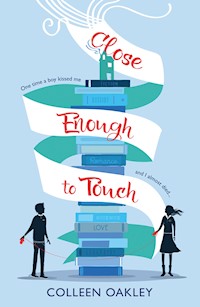
One time a boy kissed me and I almost died... And so begins the story of Jubilee Jenkins, a 28-year-old woman with a unique and debilitating medical condition - she's allergic to other humans. After a humiliating, near-death experience in high school, Jubilee has become reclusive in her adulthood, living the past nine years in the confines of the Victorian house her unaffectionate mother deeded to her when she ran off with a wealthy businessman. But now, her mother is dead, and without her financial support, Jubilee is forced to leave home and face the world - and the people in it - she's been hiding from. One of those people is Eric Keegan, a man who just moved into town for work. With a daughter from his failed marriage no longer speaking to him, and a brilliant, if psychologically troubled, adopted son who believes he has untapped telekinetic powers, Eric's struggling to figure out how his life got so off course, and how to be the dad - and man - he wants so desperately to be. Then, one day, he meets a mysterious woman named Jubilee...
Sie lesen das E-Book in den Legimi-Apps auf:
Seitenzahl: 557
Veröffentlichungsjahr: 2017
Das E-Book (TTS) können Sie hören im Abo „Legimi Premium” in Legimi-Apps auf:
Ähnliche


















Also by Colleen Oakley
Before I Go
First published in Great Britain by Allen & Unwin in 2017. First published in the United States in 2017 by Gallery Books, an imprint of Simon & Schuster, Inc
Copyright © Colleen Tull 2017
The moral right of Colleen Oakley to be identified as the author of this work has been asserted by her in accordance with the Copyright, Designs and Patents Act of 1988.
All rights reserved. No part of this book may be reproduced or transmitted in any form or by any means, electronic or mechanical, including photocopying, recording or by any information storage and retrieval system, without prior permission in writing from the publisher.
Allen & Unwin
c/o Atlantic Books
Ormond House
26-27 Boswell Street
London, WC1N 3JZ
Phone: 020 7269 1610
Email:[email protected]
Web:www.allenandunwin.com/uk
A CIP catalogue record for this book is available from the British Library.
Paperback ISBN 978 1 76029 413 7
E-book ISBN 978 1 92557 523 1
For my big sister, Megan, for everything.
I don’t want learning, or dignity, or respectability.
I want this music, and this dawn, and the warmth of your cheek against mine.
—Rumi
CONTENTS
PART I
One
Two
Three
Four
Five
Six
Seven
Eight
PART II
Nine
Ten
Eleven
Twelve
Thirteen
Fourteen
Fifteen
Sixteen
Seventeen
Eighteen
Nineteen
Twenty
Twenty-One
Twenty-Two
PART III
Twenty-Three
Twenty-Four
Twenty-Five
Twenty-Six
Twenty-Seven
Epilogue
Jubilee
Author’s Note
Acknowledgments
PART I
You can keep as quiet as you like, but one of these days somebody is going to find you.
Haruki Murakami, 1Q84
(Twenty years ago)
The New York Times
THE GIRL WHO CAN’T BE TOUCHED
by William Colton
At first glance, Jubilee Jenkins is your run-of-the-mill third grader. She can name all three Powerpuff Girls gracing the front of her tiny T-shirt (and will, when prompted), and she purposefully mismatches her socks, as is apparently de rigueur at Griffin Elementary. Colorful scrunchies secure her wispy russet hair away from her face.
And Jenkins is like a lot of other American third graders in that she has an allergy. According to reports by the World Allergy Organization, allergies and asthma in children have been on the rise since the mid-1980s, including food allergies, which is a growing concern to experts.
But Jenkins isn’t allergic to peanut butter. Or bee stings. Or pet dander. Or any of the other most common allergens.
Jubilee Jenkins is allergic to other people.
Born in 1989 to single mother Victoria Jenkins, Jubilee was a typical infant. “She was perfectly healthy. Slept through the night at seven weeks, walked at ten months,” says the elder Jenkins. “It wasn’t until she was three that we started having issues.”
That’s when Ms. Jenkins, who had just been promoted to manager at Belk in Fountain City, TN, began noticing rashes on Jubilee’s skin. But it wasn’t just a few bumps.
“It was awful—these huge raised welts, hives that itched her like crazy, long scaly patches of skin all over her arms and face,” says Jenkins. “She used to scream bloody murder from the pain of it.” In the space of six months, Ms. Jenkins made more than 20 visits to their family doctor, as well as the hospital emergency room—to no avail. Jubilee also had to be revived by an EpiPen three times for anaphylaxis. Physicians were perplexed.
They remained that way for the next three years, as Jubilee was subjected to every allergy test available in the twentieth century.
“Her little arms were like pincushions,” says Jenkins. “And we tried everything at home, too—changing detergents, keeping food diaries, removing all the carpet from our house, repainting. I even quit smoking!”
It wasn’t until they met Dr. Gregory Benefield, an allergist and then associate professor at Emory University in Atlanta, that they finally started to get some answers. (continued on page 19B)
one
JUBILEE
ONE TIME, A boy kissed me and I almost died.
I realize that can easily be dismissed as a melodramatic teenagerism, said in a high-pitched voice bookended by squeals. But I’m not a teenager. And I mean it in the most literal sense. The basic sequence of events went like this:
A boy kissed me.
My lips started tingling.
My tongue swelled to fill my mouth.
My throat closed; I couldn’t breathe.
Everything went black.
It’s humiliating enough to pass out just after experiencing your first kiss, but even more so when you find out that the boy kissed you on a dare. A bet. That your lips are so inherently unkissable, it took $50 to persuade him to put his mouth on yours.
And here’s the kicker: I knew it could kill me. At least, in theory.
When I was six, I was diagnosed with type IV contact dermatitis to foreign human skin cells. That’s medical terminology for: I’m allergic to other people. Yes, people. And yes, it’s rare, as in: I’m only one of a handful of people in the history of the world who has had it. Basically, I explode in welts and hives when someone else’s skin touches mine. The doctor who finally diagnosed me also theorized that my severe reactions—the anaphylactic episodes I’d experienced—were either from my body over-reacting to prolonged skin contact, or oral contact, like drinking after someone and getting their saliva in my mouth. No more sharing food, drinks. No hugs. No touching. No kissing. You could die, he said. But I was a sweaty-palmed, weak-kneed seventeen-year-old girl inches away from the lips of Donovan Kingsley, and consequences weren’t the first thing on my mind—even if the consequences were deadly. In the moment—the actual breathless seconds of his lips on mine—I daresay it almost seemed worth it.
Until I found out about the bet.
When I got home from the hospital, I went directly to my room. And I didn’t come out, even though there were still two weeks left in my senior year. My diploma was mailed to me later that summer.
Three months later, my mom got married to Lenny, a gas-station-chain owner from Long Island. She packed exactly one suitcase and left.
That was nine years ago. And I haven’t left my house since.
I DIDN’T WAKE up one morning and think: “I’m going to become a recluse.” I don’t even like the word “recluse.” It reminds me of that deadly spider just lying in wait to sink its venom into the next creature that crosses its path.
It’s just that after my first-kiss near-death experience, I—understandably, I think—didn’t want to leave my house, for fear of running into anyone from school. So I didn’t. I spent that summer in my room, listening to Coldplay on repeat and reading. I read a lot.
Mom used to make fun of me for it. “Your nose is always stuck in a book,” she’d say, rolling her eyes. It wasn’t just books, though. I’d read magazines, newspapers, pamphlets, anything that was lying around. And I’d retain most of the information, without really trying.
Mom liked that part. She’d have me recite on cue—to friends (which she didn’t have many of) and to boyfriends (which she had too many of)—weird knowledge that I had collected over time. Like the fact that superb fairy wrens are the least faithful species of bird in the world, or that the original pronunciation of Dr. Seuss’s name rhymed with “Joyce,” or that Leonardo da Vinci invented the first machine gun (which shouldn’t really surprise anyone, since he invented thousands of things).
Then she’d beam and shrug her shoulders and give a smile and say, “I don’t know where she came from.” And I’d always wonder if that maybe was a little bit true, because every time I got the nerve to ask about my father—like, what his name was, for instance—she’d snap and say something like “What’s it matter? He’s not here, is he?”
Basically, I was a freak show growing up. And not just because I didn’t know who my father was or because I could recite random facts. I’m pretty sure neither of those are unique characteristics. It was because of my condition, which is how people referred to it: a condition. And my condition was the reason my desk in elementary school had to be at least eight feet away from the others. And why I had to sit on a bench by myself at recess and watch while kids created trains out of their bodies on the slide and played red rover and swung effortlessly on monkey bars. And why my body was clad in long sleeves and pants and mittens—cloth covering every square inch of skin on the off chance that the kids I was kept so far away from accidentally broke the boundaries of my personal bubble. And why I used to stare openmouthed at mothers who would squeeze their children’s tiny bodies with abandon at pickup, trying to remember what that felt like.
Anyway, combine all the facts—my condition, the boy-kissing-me- and-my-almost-dying incident, my mother leaving—and voilà! It’s the perfect recipe for becoming a recluse.
Or maybe it’s none of those things. Maybe I just like being alone.
Regardless, here we are.
And now, I fear that I’ve become the Boo Radley of my neighborhood. I’m not pale or sickly looking, but I’m afraid the kids on the street have started to wonder about me. Maybe I stare out the window too much when they’re riding their scooters. I ordered blue panel curtains and hung them on each window a few months ago, and now I try to stand behind them and peek out, but I’m worried that looks even more creepy, when I’m spotted. I can’t help it. I like watching them play, which I guess does sound creepy when I put it like that. But I enjoy seeing them have fun, bearing witness to a normal childhood.
Once, a kid looked directly into my eyes and then turned to his friend and said something. They both laughed. I couldn’t hear them so I pretended he said something like, “Look, Jimmy, it’s that nice, pretty lady again.” But I’m afraid it was more like, “Look, Jimmy, it’s that crazy lady who eats cats.” For the record, I don’t. Eat cats. But Boo Radley was a nice man, and that’s what everybody said about him.
THE PHONE IS ringing. I look up from my book and pretend to contemplate not answering it. But I know I will. Even though it means getting up from the worn indent of my velvet easy chair and walking the seventeen paces (yes, I’ve counted) into the kitchen to pick up the mustard-yellow receiver of my landline, since I don’t own a cell phone. Even though it’s probably one of the telemarketers who call on a regular basis or my mother, who only calls three or four times a year. Even though I’m at the part in my book where the detective and the killer are finally in the same church after playing cat and mouse for the last 274 pages. I’ll answer it for the same reason I always answer the phone: I like hearing someone else’s voice. Or maybe I like hearing my own.
Riiiiiiiinnnnng!
Stand up.
Book down.
Seventeen paces.
“Hello?”
“Jubilee?”
It’s a man’s voice that I don’t recognize and I wonder what he’s selling. A time-share? A new Internet service with eight-times-faster downloads? Or maybe he’s taking a survey. Once I talked to someone for forty-five minutes about my favorite ice-cream flavors.
“Yes?”
“It’s Lenny.”
Lenny. My mother’s husband. I only met him once—years ago, in the five months he and my mother were dating before she moved out to Long Island. The thing I remember most about him: he had a mustache and pet it often, as if it were a loyal dog attached to his face. He was also formal to the point of being awkward. I remember feeling like I should bow to him, even though he was short. Like he was royalty or something.
“OK.”
He clears his throat. “How are you?”
My mind is racing. I’m fairly certain this isn’t a social call since Lenny has never called me before.
“I’m OK.”
He clears his throat again. “Well, I’m just going to say it. Victoria—Vicki—” His voice breaks and he tries to disguise it with a little cough, which turns into a full-on fit. I hold the receiver with both hands to my ear, listening to him hack. I wonder if he still has a mustache.
The coughing spell over, Lenny inhales the silence. And then: “Your mother died.”
I let the sentence crawl into my ear and sit there, like a bullet a magician has caught with his teeth. I don’t want it to go any farther.
Still holding the receiver, I put my back against the wallpaper covered in cheerful pairs of red cherries and inch my butt down until I’m sitting on the cracked and tattered linoleum, and I think about the last time I saw my mother.
She was wearing a two-sizes-too-small mauve sweater set and pearls. It was three months after the Boy Kissed Me and I Almost Died, and as I mentioned, I had spent the summer mostly in my room. But I also spent a considerable amount of time shooting daggers at my mother whenever I passed by her in the hallway, seeing as how the whole incident would never have happened if she hadn’t moved us from Fountain City, Tennessee, to Lincoln, New Jersey, three years earlier.
But honestly, that was the least of her sins as a mother. It was just the most recent and most tangible to be angry with her for.
“It’s the new me,” she said, twirling at the bottom of the stairs. The movement caused the cloying scent of her vanilla body spray to waft through the air.
I was sitting in the velvet armchair rereading Northanger Abbey and eating Thin Mint cookies from a plastic sleeve.
“Doesn’t it just scream millionaire’s wife?”
It didn’t. It screamed slutty June Cleaver. I looked back down at my book.
I heard the familiar crinkling of cellophane as she dug in her back pocket for her pack of cigarettes, and the click of the lighter.
“I’m leaving in a few hours, you know.” She exhaled and slid onto a couch cushion across from me.
I looked up and she gestured toward the door at the one suitcase she had packed. (“That’s all you’re taking?” I had asked that morning. “What else would I need?” she said. “Lenny’s got everything.” And then she giggled, which was just as strange as her wearing pearls and a sweater set and twirling.)
“I know,” I said. Our eyes met, and I thought of the night before, as I lay in bed and heard the door to my room softly creak open. I knew it was her, but I remained still, pretending to sleep. She stood there for a long time—so long that I think I drifted off before she left. And I didn’t know if it was my imagination, or if I really did hear her sniffling. Crying. Now I wondered if maybe there was something she was trying to muster up the courage to say, some profound mother-daughter moment. Or at least an acknowledgment of her poor mothering skills where we’d laugh and say something banal like “Well, at least we survived, right?”
But sitting on the couch, she just inhaled her cigarette again and said: “So, I’m just saying, you don’t have to be so bitchy.”
Oh.
I wasn’t sure how to respond to that, so I took another cookie out of the sleeve and put it in my mouth and tried not to think about how much I hated my mother. And how hating her made me feel so guilty that I hated myself.
She sighed, blowing out smoke. “Sure you don’t want to come with me?” she said, even though she knew the answer. To be fair, she had asked multiple times over the past few weeks in different ways. Lenny has plenty of space. You could probably have a whole guesthouse to yourself. Won’t you be lonely here all by yourself? I laughed at that last one—maybe it was some innate biology of being a teenager, but I couldn’t wait to be away from my mother.
“I’m sure,” I said, flipping a page.
We spent the last hour we’d ever spend together in silence—her chain-smoking, me pretending to be lost in my book. And then when the doorbell rang, announcing the arrival of her driver, she jumped up, patted her hair, and looked at me one last time. “Off I go,” she said.
I nodded. I wanted to tell her that she looked nice, but the words got caught in my throat.
She picked up her suitcase and left, the door easing shut behind her.
And there I sat, a book in my lap and an empty plastic cookie sleeve beside me. Half a cigarette was still smoldering in the ashtray on the coffee table, and I had a strong urge to pick it up. Put my lips to it—even though I knew it could kill me. Inhale my mother one last time.
But I didn’t. I just watched it burn.
And now, nine years later, my mother is dead.
The news isn’t out of nowhere, in the sense that about ten months ago, she mentioned that a suspicious scab on her scalp that refused to heal had been determined to be melanoma. She laugh-coughed and said, “Always thought it would be my lungs that got me.”
But Mom had a tendency to be overdramatic—like the time she got a mosquito bite, became convinced she had West Nile, and lay supine on the couch for three days—and I couldn’t be certain whether her pronouncement in subsequent months that she was dying was an actual diagnosis from a doctor or one of her elaborate schemes for attention.
Turns out, it was the former.
“The funeral is on Thursday,” Lenny says. “Would you like me to send a driver?”
The funeral. In Long Island. It feels as though a giant fist has reached into my chest and started squeezing. Tighter and tighter until there’s no air left at all. Is this what the beginning of grief feels like? Am I already grieving her? Or is it the thought of leaving the house that compresses my vital organs? I don’t know.
What I do know is that I don’t want to go—that I haven’t wanted to go anywhere for nine years—but saying it out loud would make me a terrible person. Who doesn’t go to their own mother’s funeral?
I also know it’s possible Mom’s Pontiac that’s been sitting in the driveway for nine years wouldn’t make the trip.
I gulp for air, hoping Lenny can’t hear the effort it’s taking me to breathe.
Finally, I answer: “You don’t need to send a driver,” I say. “I’ll figure it out.”
There’s a beat of silence.
“It starts at ten a.m. I’ll e-mail you the address,” Lenny says. And then I sense a shift in the air between us—a steeling of his voice, as though he’s running a board meeting and not discussing his dead wife with the stepdaughter he never claimed. “I know it may be an inappropriate time to discuss this, but I wanted to let you know your mother has left you the house, free and clear—I’ve paid off the balance of your mortgage and I’ll be transferring the deed—as well as her car, if you still have it. But, well, the checks she was sending you … I thought I should tell you as soon as possible that I won’t be continuing that specific tradition, so you’ll need to make other, ah … arrangements.”
My cheeks redden at the mention of my freeloading, and I have the urge to hang up the phone. I feel like a loser. Like those thirty-year-old men who live in the basement of their parents’ house, their mothers still washing their drawers and serving them grilled cheese with the crusts cut off. And I guess in a way, I am.
The first check arrived a week after she left.
I set it on the kitchen table and stared at it for three days every time I passed it. I had every intention of throwing it away. Maybe Mom wanted to live off Lenny’s money for the rest of her life, but I wasn’t interested.
And then the electricity bill came. And then the water. And then the mortgage.
I cashed the check.
I was eighteen and jobless and still trying to figure out what I was going to do with my life. Surely it involved some sort of employment and college education. So I swore to myself this would be the only time. That I wouldn’t take any more money.
When the next check came, three weeks later, I still didn’t have a job, but I didn’t feel like leaving the house to cash it, so I thought that would be the end of it. But on a break from an intense game of Bejeweled on the computer, I did a quick online search and learned that I could just mail the check into the bank and the money would magically show up in my account.
And then, as I returned to clicking on colorful gemstones and watching them satisfyingly disappear, I wondered what else I could do without leaving home.
Turns out, a lot.
It became sort of a game—a challenge to see what I could accomplish while sitting in my pajamas.
Groceries? Fresh Direct delivers.
College? I got an English degree in eighteen months from one of those online outfits. I’m not sure how legit it is, but the piece of paper they sent me is real enough. I wanted to keep going, get a master’s, maybe a PhD, but $400 per credit hour was depleting my already stretched budget, so I started taking a handful of the classes Harvard offers for free online every semester. Free. Makes you wonder why all those geniuses are paying hundreds of thousands of dollars for their Ivy League education.
Dentist? Floss regularly and brush after every meal. I haven’t had so much as a toothache, and I chalk it up to my good dental habits. And I’ve started to think that maybe dentistry is a racket.
When a neighbor left a note on my door alerting me that my grass was reaching unmanageable heights and he would appreciate my maintaining my lawn for the “integrity” of the neighborhood? I called a landscaping service to come once a month and left a check under the porch mat.
The trash presented a more difficult challenge. I couldn’t figure out a way to get it to the curb without actually going outside. It’s not that I couldn’t do that, of course, but now I was determined to not have to. To figure out this last piece of the puzzle. I’m not proud of it, but I called the city garbage service and told them I was disabled. They said if I could get my trash into the bin beside my back door, the workers would come around and get it every Thursday morning. And I felt a little buzz of pride at my deceitful cleverness.
Six months passed. Then a year. And there were times when I would stop and wonder if this was it. If I would live my life out this way, never seeing another soul in person again. But mostly, I just woke up every morning and lived my life like everyone else does—not thinking about the big picture, just doing my work for class, making dinner, watching the news, then getting up and doing it all over again. In that way, I didn’t think I was really different from anyone else.
Though my mother called sporadically over the years, to complain about the weather, a rude waiter, a bad ending to a TV series, to brag about one of the many trips she and Lenny were taking or to invite me for a holiday—even though she knew I wouldn’t come—we never discussed the money she was sending me. I was ashamed of taking it, but I had also convinced myself that I somehow deserved it. That she owed me for being kind of a selfish, crappy mother.
But I never meant for it to go on this long.
“I know you have your condition,” Lenny said, “but it’s something we never quite saw eye t—”
“I understand,” I say, the humiliation burning brighter with each second. But there’s a flare of anger mixed in—anger that my mom didn’t leave me any money on top of the house and car (even as I recognize how ungrateful that is), although I guess technically it’s Lenny’s money. Or maybe I’m angry at myself for becoming so dependent on those monthly checks. Or maybe it has nothing to do with the money. Maybe I’m mad that I didn’t take her up on her invitation to visit even once. Or invite her to visit me. Funny how when someone dies you momentarily forget all their faults, like how just talking to her on the phone was so emotionally draining, I didn’t ever want to see her in person. But now … now it’s too late.
“Well, then,” Lenny says.
There’s nothing left for us to say, so I wait for his good-bye. But then it’s silent for so long I wonder if maybe he already hung up and I somehow missed it.
“Lenny?” I say, at the exact moment he speaks.
“Jubilee, your mom really … ,” he says. His voice falters again. “Well, you know.”
I don’t know. My mom really what? Liked tight blouses? Smoked far too many cigarettes? Was impossible to live with? I hold on to the phone long after he’s hung up, hoping I’ll hear what he was going to say. That it somehow got caught in the ether between us and will materialize at any second. When I accept that it won’t, I let the receiver drop onto the floor beside me.
Minutes pass. Or maybe hours. But I don’t move—even when a staccato of beeps blares from the receiver, the phone insisting on being hung up.
My mother is dead.
I look around the kitchen, checking for subtle differences—comparing the before and after. If I can find one, then it’s evidence that maybe I’ve entered some alternate universe. That maybe mom is still alive in the other, real one. Or maybe I’ve read 1Q84 too many times.
I take a deep breath, and tears spring to my eyes. I’m not prone to outward displays of emotion, but today I just sit and let them fall.
THERE ARE UPSIDES to being a recluse. Like, it only takes me six minutes to wash the one plate, mug, fork that I use every day. (Yes, I’ve timed it.) And I don’t ever have to make small talk. I don’t have to nod and smile when someone says “Heard it might rain today,” or mumble something inane back like “The grass sure could use it, huh?” Really, I don’t have to worry about the weather, period. It’s raining? Who cares? I’m not going out in it.
But there are downsides, too. Like, late at night when I’m lying in bed listening to the dead-quiet of the street and wondering if maybe, just maybe, I’m the only person left on Earth. Or if there was a civil war or a superflu or a zombie apocalypse and nobody remembered to tell me, because nobody remembers I’m here. On those nights, I would think about my mom. She’d call me. She’d tell me. She’d remember. And a wave of comfort would wash over me.
But now, she’s gone. And I’m lying in bed, listening to the night air and wondering: Who’s going to remember me now?
THURSDAY BEGINS LIKE a normal day: I go downstairs and make two sunny-side-up eggs with toast (cut into tiny bite-size pieces after a choking incident four years ago) and eat it while reading the news online. But then, instead of clicking on the next lecture in my Harvard class (this week: “Shakespeare After All: The Later Plays”), I have to face that this day is not a normal day.
I will be leaving the house.
My heartbeat revs at the thought, so I try to distract myself with a more immediate problem: I have nothing to wear to my mother’s funeral. The only black things I own are a pair of sweatpants and a matching hoodie. Not exactly suitable funeral attire.
Upstairs, I walk down the hall to my mom’s room and stand in the doorway. For nine years, I’ve left her room exactly as it was when she walked out the door. Not in a creepy Miss Havisham kind of way. There’s no uneaten wedding cake on a table or anything. I told myself it’s because I just didn’t know what to do with her stuff, but part of me liked having her stuff where it’s always been. Like maybe she’d come back for it one day.
Except now, I guess, she won’t.
At my mom’s closet, I stand staring at her collection of women’s skirt suits circa the nineties from her days as a department store retail clerk. I remember trying on her clothes as a child when she was at work, letting the garments swim around me, inhaling her sugary scent. I’d even get in her bed, wrapping myself up in her blankets, pretending they were her arms. It was against the rules—the doctors warned that even though it appeared I only reacted to skin-on-skin contact, I had to still be careful around things that had prolonged contact with other people, like bedsheets and towels. Allergies are tricky, they said. But I took the risk, and fortunately never reacted. It was my little act of rebellion, but it was something else, too—the only way I could feel close to her. I pull a black suit jacket off its wire hanger and shrug it on over the white tank top I slept in.
I turn and look in the ornate mirror hung over Mom’s dresser, and I scrutinize myself for the first time in years. The realization that other people will be looking at me—seeing what I see in the reflection—churns my stomach. I haven’t had a proper haircut in years, relying on a few snips here and there with my nail scissors, and it shows. My hair’s never been obedient, but it’s grown especially unruly and wild in its freedom, brown curls crawling every which way from the crown of my head to my elbows. I try to smooth them down with the palm of my hand, to no avail.
Then I remember the suit I’m wearing and my eyes are drawn to the padded shoulders. It’s as if someone is asking me a question and I’m shrugging to indicate I don’t know the answer. The rest of the suit is slightly ill fitting. My mom was a little slip of a thing, aside from her large breasts. While I’m not much bigger, the sleeves are a tad too short, the skirt too snug around the waist. It will have to do.
As I bend down to look in the bottom of her closet for a pair of shoes, I swear I catch a whiff of vanilla body spray and my stomach lurches. I sit down on my butt, pull the lapel of the jacket up to my nose, and inhale.
But all I smell is musty fabric.
DOWNSTAIRS, I PICK up my handbag from the side table near the door. I rifle through it, eyeing the two bright yellow EpiPens clustered at the bottom. They expired years ago, but I convince myself they’ll still work in an emergency. And then I pick up my gloves. I wonder if I should put them on. I always found it kind of overkill as a child—the yellow knit gloves I wore in elementary school, graduating to more adultlike, but just as weird, leather gloves in high school. It’s not as if I was going out of my way to touch people—or them me. It’s not that hard to keep your hands to yourself, especially when you’re treated like a pariah. But then I think of all the ways people can make contact without even thinking about it: exchanging money at cash registers; handshakes; someone in a hurry pushing past you, their arm brushing yours.
I slip the gloves on.
Then, before I can change my mind, I snatch my keys off the table beside the front door, turn the handle, and step over the threshold.
The brightness of the blue September sky assaults my eyes and I squint, raising a hand to block the rays. It’s 7:34 a.m. and I’m outside. On the front porch. Though I’ve hurriedly opened the door under the cover of night to bring in packages left by the postman and my weekly grocery delivery, I can’t remember the last time I stood here. In broad daylight.
Blood rushes to my head and I clutch the door frame, dizzy. I feel exposed. As if a thousand eyes are on me. The air around me is too loose, shifty. As if a current could just pick me up and fling me unwilling into the world.
I will my foot to move. To step forward.
But it won’t. It’s as if I’m standing precariously on the edge of a cliff and one step will send me into the great abyss. The world will swallow me whole.
And that’s when I hear it.
The metal clanging and squeaking of the garbage truck turning onto the street.
I freeze.
It’s Thursday. Trash day.
My heart beats wildly against my chest, as if it’s trying to burst out of my body.
I search for the knob behind me, turn it, and step back inside, shutting the door firmly behind me.
Then I lean against it and concentrate on slowing my breath, so the rhythm of my heart can return to normal.
Normal.
Normal.
I glance at my gloved hands and snicker. And then a full burst of laughter escapes my lips and I reach up to my mouth with leather-clad fingers to suppress the sound.
What was I thinking? That I could just leave the house and go to my mother’s funeral like a normal person?
If I were normal, I would wave to the garbagemen. Or say hi. Or just ignore them completely and get in the car, as I’m sure other people do a hundred times a year without even thinking about it.
My shoulders begin shaking as my laughter mutates into crying.
I’m not going to my mother’s funeral. Lenny will wonder where I am. Anything my mom’s told him over the years about my being a bad daughter will be confirmed.
And while all of that is troublesome, another thought floats on the periphery of my brain, waiting to be let in. A terrifying thought. A thought that I realize maybe I’ve known deep down but haven’t wanted to admit to myself. But it’s hard to deny it when I’m leaning against the front door inside my house, unable to slow my heart or stem my tears or stop my body from shaking.
And that thought is: Maybe there’s another reason I haven’t left my house in nine years.
Maybe it’s because I can’t.
two
ERIC
THE FISH IS dying.
I don’t think it is dead yet, because when I gently poke at it with the eraser end of a pencil, it flaps its fins and swims erratically around the small glass bowl for about ten seconds until it appears to give up and float to the top of the water again. It’s not belly-up, though, and isn’t that the telltale sign?
My eyes dart around the boxy apartment as if the solution to save this fish’s life will present itself. But the beige walls, of course, are bare. The rest of the small living room only contains my couch, a glass coffee table, and a few boxes with LIVING ROOM written in black marker on the side. The pencil appears to be my only hope.
I poke at the fish again and look over my shoulder as if a PETA representative is going to be standing there shaking a finger in my face. I’m sure this is tantamount to animal abuse, but this fish needs to live. At least for the next fifteen minutes. And the pencil is my only hope.
The fish finishes its bizarre dance and resumes floating.
Jesus Christ.
“What are you doing?” The small voice gives me a start.
“Nothing,” I say, jabbing the fish one more time and then setting the pencil down. “Feeding Squidboy.”
“I already fed him. Last night. I feed him every night.”
I turn to face Aja’s large, dark, knowing eyes behind his wire-rimmed glasses and marvel—not for the first time—at how he can so often make me feel like I’m the child and he the adult. Even though he looks exactly like his dad, Dinesh—acorn skin, silky black hair, lashes long enough to be a mascara ad—he’s the complete opposite of him personality-wise. Where Dinesh was impulsive, charming, personable, Aja is cautious, quiet, introverted. More like me, I guess.
“I know,” I say, using my body to block his view of the small glass bowl. Aja’s life has been turned upside down enough in the past two years—from his parents’ death, to my adopting him, to my now moving from the only town he’s ever known in New Hampshire to Lincoln, New Jersey. If I can shield him from his dying fish, at least for today, I’m going to do it. “But he looked hungry. And I am, too. Let’s go get breakfast.”
Suspicion doesn’t leave Aja’s eyes, but he turns and plods toward the kitchen, hands in his pockets, shoulders slightly hunched, making his already slim ten-year-old frame appear even tinier.
“Ready for your first day of school?” I ask, heading toward the sink to rinse out yesterday’s coffee mug with hot water. Maybe today will be the day I find the extra mugs in an errant box, as I’ve unpacked all the boxes marked KITCHEN, and they were not there. Moving is the only time that I’m able to suspend my belief in the laws of nature and understand that some other dynamic force is at work. Black magic? Teleportation? It’s the only explanation for how things get lost. The coffee mugs should be in the kitchen boxes. Where I packed them. And yet …
I grab the coffeepot handle and pour the dark brown liquid into my mug. I shouldn’t have made an entire pot, as, after seeing some news segment on the dire health consequences of too much coffee, I promised myself that the new me in New Jersey would only have one cup a day. I can’t remember what the consequences are now, but they probably involve cancer and death. Which seems to be the end result of every health study these days. I turn back to Aja, realizing he didn’t respond to my question.
“Bud?”
He’s carefully measuring one cup of Rice Chex to pour into his bowl, as the serving size suggests. I know he’ll measure the half cup of milk next.
When he’s done with his precise breakfast preparation, he picks up a spoon.
I try again. “Aja?”
I realize I sound a bit desperate, but that’s mainly because I am. Because even though I’m now four full states away I can still hear her voice as though she’s speaking directly in my ear.
You don’t know how to talk to your own fucking child.
And that’s one of the nicest things Stephanie has said to me since our divorce. When we were married, she always complained I wasn’t good at picking up on social cues or implications or the meaning behind words and actions (and maybe she was right; is it too much to ask people to just say what they mean?), but I had no problem picking up on the implication of what she was telling me that night.
You’re not a good father.
I didn’t argue with her. It’s hard to be a good father when you only see your daughter every other weekend and the entire time her ears are plugged up with those white buds, her fingers moving at light speed, typing god knows what to god knows who on her phone. I would sometimes try to glance over Ellie’s shoulder to make sure she wasn’t sexting, as I had read an article about that in the Washington Post. She may well have been and I wouldn’t have known it, because all I saw were a bunch of uppercase letters that didn’t make words. It was like code, and I puffed up a bit wondering if maybe she’d have a future writing HTML in Silicon Valley.
Anyway, when Ellie and I had our massive falling-out four months ago, I picked up on another implication, without Stephanie’s saying a word—which I fought the urge to point out to her because I thought she would have been impressed by my progress: it was all my fault.
I should have tried harder. I should have been there more. I should have somehow made my fourteen-year-old daughter take those earbuds out and have a real, live conversation with me. Because now she won’t even speak to me. Not even via coded text.
And maybe that’s why I’m so desperate to have Aja respond to every single one of my questions. I’ve only officially been his father for two years—Two years? Has Dinesh been gone that long?—but I know the parent-child connection is so very fragile, like a soap bubble, and it doesn’t take much to break it.
“Eric?” Aja keeps his eyes trained on the Rice Chex box.
“Yeah, bud?” I say, hating the overeagerness in my voice.
“Did you find a wheelchair yet?”
I take a long sip of my coffee, not wanting to get into this conversation so early in the morning. Or ever. Aja got in his head last week that he wanted to be Professor X from the X-Men for Halloween (which, it should be pointed out, is nearly two months away. Aja likes to plan ahead). I readily agreed, without realizing the costume required a wheelchair. I told Aja I wasn’t sure it was appropriate, seeing as how he doesn’t have a disability and it could be offensive to people who actually do. “But Professor X does,” he said matter-of-factly. I let it drop, too overwhelmed by the move to argue about it.
“Not yet,” I say, and before he can ask a follow-up question, I close the gap between us with a few steps and bend at the waist so I’m eye level with him, all four of our eyes now trained on the cereal box.
“Any luck today?” I ask. It’s the exact opposite of what I was told to do by the therapist I took Aja to after his parents died. Don’t feed into his delusions, she said in her obnoxiously nasal tone. But it seemed overreactionary. Or maybe it was that drug, that Risperdal they gave him that made him so drowsy, he slept seventeen hours a day and barely ate, that felt overreactionary. I stopped giving him the pills and didn’t go back. Aja has an imagination. So what? What’s the harm in that?
He shakes his head. “I can’t even get a little spark, much less a flame.”
“A flame?” I’m a little alarmed at this. “I thought you were just trying to move it with your mind.”
“No, this week I’m working on the advanced levels, specifically telekinetic destruction.” He glances at me. “That means blowing things up.”
Oh. I scratch the side of my cheek and straighten up and glance around the small kitchen. My eyes land on the phone book that was on the counter when we moved in. I wonder who uses phone books anymore. And then I wonder where I put that therapist’s number.
Maybe it’s with the coffee mugs.
WHILE AJA IS brushing his teeth and finishing getting ready for school, I check back in on Squidboy. He is now decidedly belly-up. Giving him the benefit of the doubt, I poke him with the pencil anyway, but nothing happens. I sigh. Maybe Aja won’t look at his bowl before we leave. Then I’ll have time to go to the pet store, pick out a Squidboy replica, and hope he doesn’t notice that either.
My phone buzzes in my pocket. I set the pencil on the shelf next to the fishbowl and retrieve my cell.
“Hey, Connie,” I greet my sister. She’s the reason I moved to this quiet borough just eight miles away from the Manhattan skyline. New York itself was out of the question due to the outrageous rent and even worse public schools, but I would have probably chosen a more popular—and populated—city like Hoboken or Elizabeth if Connie hadn’t been living in Lincoln for the past eight years. It’s like a throwback to a different time, she said. The downtown is so quaint, with cute little shops and gorgeous views of the river. And the schools are really good. I couldn’t care less about the river, but she had me at the schools—and the fact that she would be a few miles away and could jump in and help with Aja if I needed it.
“First day of school,” she says, skipping the greetings and jumping directly into the conversation in her lawyerly fashion. Yes, my parents raised an accountant and attorney, and though they often tell us at our WASP-y holiday gatherings how proud they are of us, I sometimes wonder if they’re not a little disappointed by how boring their children turned out. “Is he ready?”
I glance down the hall. He’s still in the bathroom. “Just about. Although I think he may have a potentially dangerous new interest in blowing things up.”
“Don’t all boys?”
I try to recall a fascination with explosives from my own childhood. “I don’t think I ever did.”
She snorts. “No, I think you’d qualify as the outlier in the risk-taking department.”
“Oh, I would?” I say. “Hey, speaking of—how was your skydiving trip last weekend? And the rattlesnake farm? Did you handle a lot of them?”
“Ha-ha. Very funny.”
“Just saying. Pot, kettle. All that.”
“Yeah, but we’re not talking about me.”
“No,” I say. “We never do seem to talk about you, lately.” I look for my coffee on the shelf next to Squidboy’s bowl and realize I left it in the kitchen.
“Well, my life isn’t the one that’s imploded on itself.”
“Thanks. That’s very helpful.”
“No problem,” she says. “But seriously—how are you holding up?”
“Fine,” I say, walking into the kitchen and setting my sights on my mug on the table. I drain the last few gulps and reach for the pot on the counter to pour a second cup. (I’ll stop at two today. Surely cutting back slowly is a better way to break a habit than cold turkey.) “I can’t find my other coffee mugs,” I tell Connie. And then I laugh.
As if the disappearing coffee mugs are the most severe of my problems. I moved four states away from my ex-wife and my daughter who’s not speaking to me. I uprooted my son—who, admittedly, doesn’t handle change well—from the only town he’s ever known, the only friends he’s ever known, the city where his parents are buried for Christ’s sake, and am starting him in a brand-new school with kids he doesn’t know. Oh, and he’s into blowing things up.
And the fish is dead.
“It’s only for six months,” Connie says, ignoring my coffee mug comment and shooting right to the heart of the matter, like she always does. “You did the right thing.”
The right thing. It’s like a slippery salmon I’ve been trying to catch from a stream with my bare hands for my entire life. The right thing is why Stephanie and I got married directly out of high school when we found out she was pregnant with Ellie. The right thing is why I adopted Aja when Dinesh and Kate died in a commuter-plane crash, even though Stephanie was against it. The right thing is why I let Ellie live with her mother after the divorce, even though no part of me wanted to be without her for even a day.
But moving to Lincoln, New Jersey, so I can work in my firm’s New York office filling in for the senior financial analyst during her maternity leave—even though I told myself it would not only put me one step closer to making partner, but it would be nice to have a fresh start, be an adventure for Aja, and put us closer to my sister—is starting to feel a little bit selfish, and a lot like running away, and not even remotely like the right thing for anybody but me.
“Ellie,” I say, immediately visualizing her upturned nose, the wispy caramel curls that frame her round face, her doll-like eyes. But no. I’m picturing her as a child. Not as the fourteen-year-old she is now, her thinned-out face revealing defined cheekbones, her locks trained to lie flat—all hints of curl erased from existence with a metal iron, as is apparently the style. When did she become this person, this young woman? And how did I miss it?
I don’t realize I’ve said her name out loud until Connie’s voice softens.
“Oh, Eric,” she says. “I don’t think it much matters to Ellie right now where you live.”
And though I know it’s true, I can’t explain why hearing it hurts quite so much.
THE SEPTEMBER MORNING is still and muggy, feeling more like the thick air of August than the crisp leaf-turning weather associated with back-to-school. As we pull into the Lincoln Elementary School car drop-off line, I swallow all of the hokey clichéd advice that my dad arbitrarily said over the years. Knock ’em dead, tiger. Never let them see you sweat. Be yourself.
I’m not sure which phrase would be most appropriate, anyway. Certainly not Be yourself. I love him, but if I’m being objective, I have to admit that sometimes when Aja’s himself, he can come across as a little patronizing and antisocial, and, well, weird—which isn’t the best foot forward with fifth-grade boys you want to befriend.
My palms get sweaty as the car inches up, closer to where Aja will get out. I glance over at him. He’s sitting stone still, his eyes trained straight ahead.
“I’ll pick you up today,” I say, just to break the silence, even though we talked about it all last night. “But you’ll be riding the bus home starting next week.”
He doesn’t acknowledge me, and I know it’s because he hates when I repeat instructions.
The carpool line attendant—a grandmotherly woman with crinkly eyes and an orange sash draped over her large belly—opens the door of the car in front of us, and a man steps out of the backseat, slinging a backpack on his shoulder. A slight panic sets in—am I supposed to be walking Aja in? They didn’t mention that in any of the information packets.
The man shuts the door, and I wonder where the kid is. And then my eyes bulge as I get a glimpse of the “man’s” cherubic face. He’s just a child. A huge, gargantuan child. Is this what fifth graders look like nowadays? I glance back at Aja, who looks even tinier in his bucket seat. Fragile. I wonder if it’s too late to jerk the wheel and peel out of the parking lot. Possibly drive all the way back to New Hampshire.
I wonder if Aja is thinking the same thing.
“Hey, Eric?” he says in a small voice, and my heart breaks a little.
“Yeah, bud?”
He turns to me with his big eyes, and I steel myself with all the confidence I don’t feel, to assure him that this is the right thing. That he’ll have a great day. That the hulking fifth grader who probably lords over children like Aja on the playground stealing their lunch money and giving them wedgies is actually going to be a nice kid who’ll bond with him over their mutual love of the X-Men.
“Can we get a dog?”
“What?” I say, tearing my eyes away from the frightening man-child who’s now shaking hands with the principal on his way toward the entrance. They’re almost the same height. I shudder and hope that Aja doesn’t notice.
“A dog. Can we get one?”
“What? No.” I pull the car up to the curb in front of the school’s entrance and put it in park. The carpool attendant reaches for the handle to open Aja’s door, but it’s locked.
“You promised,” he says, ignoring the attendant looking expectantly in his window.
“When? Unlock your door.”
“You said when the fish died, we could get a dog,” he says. “And the fish is dead.”
“He is?” I say, hoping I sound surprised. I tap the “unlock” button on my door panel, and the elderly woman tries the handle again, but Aja promptly pushes the lock back into the down position.
I give her a forced smile and hold up one finger.
“Yeah. I don’t know how you didn’t notice that when you were feeding him this morning.”
“Huh,” I say.
The driver behind us leans on the horn. I glance in the rearview and see a mother glaring back at me. My heart starts thudding. “We’ll talk about this later. You gotta go into school.”
Aja adjusts his glasses and crosses his arms. “Not until you say we can get a dog.”
The horn blares again.
“Aja! We don’t have time for this.”
I press the unlock button again. Aja relocks it. The attendant looks perplexed, as if she’s never encountered a child who won’t get out of the car before. I look past her and see the principal start to walk toward the car. A bead of sweat runs down my forehead.
And then I remember the wheelchair, and I’m struck with inspiration. Or at least another bargaining chip.
“How about I find the wheelchair and I’ll think about getting the dog?”
Beep-beep-BEEEEEEEEEEEEEEEEEEEEEEEP. I resist the urge to roll down the window and scream for the driver to keep her pants on by gripping the steering wheel so tightly all the blood leaves my fingers.
Aja’s face lights up and I think I’ve won. But then he crosses his arms again and settles his butt more firmly in his seat. “The wheelchair and the dog,” he says over the sound of the horn that is now just a constant tone. I had no idea suburban carpool lines were so aggressive.
“Aja! Get. Out. Of. The. Car.” My teeth are so clenched it’s like my jaw has been wired shut.
He doesn’t budge—just looks at me, uncaring that an entire line of carpool parents are cursing us. I know that I shouldn’t budge, either. That a good parent would stand his ground, not reward such manipulative behavior by letting the child get his way.
Other horns join in. BEEEEEEEEEEEEEEEEEEEEEEEEEEEEEEEEEEEEEEEEEEEEEEEEEEEEP!
But screw parenting—all I want in life right now is for that goddamn horn to stop blaring.
“Fine!” I say. “The wheelchair and the fucking dog!” At the same time Aja pops up the door lock and swings the car door open, letting the F-word fly loud and free into the school-zone air.
The principal stops in his tracks and the attendant’s gray, squirrely eyebrows jump halfway up her forehead.
The horn is quiet, the air is still, and everyone congregated in the school entrance is staring at me. Aja, unruffled, hops out of the car and hooks his backpack over his shoulder, striding toward the front door.
I take a deep breath, my face bright red with embarrassment. “Knock ’em dead, tiger!” I yell at Aja’s back. Then I reach over and grab the handle, slamming the door shut, and throw the gearshift into drive.
BACK HOME, I pour a third cup of coffee and sit down at the kitchen table where Aja attempted to ignite the Rice Chex box just an hour earlier. In exhaustion—though it’s not even eight thirty—I rub my jawline with my hand, against the grain, already feeling the stubble emerge from my pores. My five o’clock shadow appears around noon, and I have yet to find a razor to combat that no matter how “cutting-edge” the shaving technology claims to be. (And really? Razor technology? Who’s inventing these things—NASA scientists?) Work doesn’t start until next week, but I almost want to go into the office, so I can at least feel competent at something.
Based on the morning’s events, parenting isn’t going to be that thing today.
And because things on that score can’t get much worse, I pull out my phone and tap out a text message to Ellie. She hasn’t responded in more than four months, but that doesn’t keep me from trying.
Just accidentally dropped the F-bomb, shocking Aja’s new principal and a grandmotherly crossing guard. Thought that might amuse you. Love you, sweet cheeks. Dad
I know I don’t need to sign texts—Ellie taught me that two years ago when she looked over my shoulder at a message I was sending and had ended with Eric. “Daaa-aad,” she said, in that new You’re the stupidest person on earth way she had begun drawing out my name. “You know that when you send a text, your contact info automatically pops up? Everyone knows it’s from you?” This was also around the time she started ending every sentence with an upward lilt, as if every statement were, somehow, also a question. I soon learned from listening to her friends speak that this was typical adolescent-girl linguistics, and I wondered if they were handed an instruction book when they got to middle school on how to talk and dress and patronize their parents.
Anyway, I did not know about the redundancy of signing texts and was happy for the lesson—even if its delivery was a touch condescending.
But I still sign my texts to Ellie because now I like picturing her rolling her eyes at her dad’s buffoonery. I hope it might even make her giggle a little. And maybe I also like reminding her that that’s who I am. Her dad. Even if she doesn’t want to talk to me.
I hit “send.” And then I pour another cup of coffee.
Tomorrow. I’ll start cutting back on coffee tomorrow.
three
JUBILEE
THE MAILMAN IS late.
I’m trying to pay attention to the Jack the Ripper special on PBS, but my eyes keep roving to the clock on the wall. It’s 1:17. The mail comes every day between 12:00 and 12:30.
And I’m worried about him. The mailman. Even though I’ve never once talked to him. And I don’t even know his real name. I call him Earl, because one time I heard him through the door, belting out in his baritone: “Duke, Duke, Duke … Duke of Earl, Earl, Earl.”
Maybe he witnessed a purse-snatching and chased the would-be robber down on foot, tackling him to the ground to retrieve a stranger’s bag. That seems like something Earl would do—he has that kind of face. Decent. Good.




