



Erhalten Sie Zugang zu diesem und mehr als 300000 Büchern ab EUR 5,99 monatlich.
- Herausgeber: Books on Demand
- Kategorie: Gesellschafts- und Liebesromane
- Serie: Poesie des Jähzornes
- Sprache: Englisch
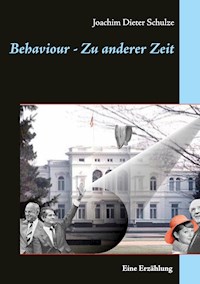
The factuality of historical events presented in the narrative during the development phase of the revolutionary state after the lost First World War focuses on the terrorist mischief of the Nazi leader Adolf Hitler and the consequences of his terrorist actions. Murder as the unconditional method of seizing power, expanding it and maintaining it, not only led to the downfall of the state, but also to a lasting shock effect on the souls of the people in the completely destroyed country, who accused themselves of cheating by supporting the Nazis great guilt and joint responsibility, should put up with. In fact, Verena made a common cause when she cooperated with the Office for the Protection of the Constitution and - albeit terroristically - worked preventively towards their goals, which were actually goals of the police. But she only worked indirectly for the federal prosecutor, especially not when she shot him. Should intrigues lead to action, so that the criminally acting policeman got out of the focus of the federal prosecutor's office and thus that of the initiated federal prosecutor? Did she take money for the triple murder in Karlsruhe? Her actions disappear in the inscrutable mysticism of a compulsive and foolhardy soldier of the Red Army Faction, as if she wanted to rise to the rank of great world savior, very much like Hitler, if she didn't shoot the general but saved the people from him because he be a Nazi? Was she an agent of secret services and influential world politicians? Verena leaves the pressing questions unanswered and cloaks herself in silence. If Kette believes it from her, then he should prove it to the court. In this narrative, he reveals facts and backgrounds with his plea, which contribute significantly to clarifying the facts.
Sie lesen das E-Book in den Legimi-Apps auf:
Seitenzahl: 741
Veröffentlichungsjahr: 2022
Das E-Book (TTS) können Sie hören im Abo „Legimi Premium” in Legimi-Apps auf:
Ähnliche



















Werner
against forgetting
After a true story
And I saw thrones and they sat on them.
And judgment was handed over to them.
(Revelations 4/20)
Table of Contents
Part 1 On the essence of the H
Part 2 Crime
Part 3 RAF methods of denazification
Part 4 The truth and nothing but the truth
Part 7 Nihil's desire
8th part dictator MAN
9th part 1984
10th part farces
11th part 2. Farewell
closing song
Introductory words
It must be similar in narratives when one sentence follows the other, from which paragraphs, chapters, and finally whole stories have developed, which in themselves not only make one sense, but a great many of them. It is the same with this story, which wants to ascertain and not invent, in search of a truth in it. The foundation of a multiplicity is the singular, which must have lined up in an equality before it accumulated in a multitude. To be able to understand and justify it in this way requires a human mind, the foundation of all human reason, which has previously firmly clarified what is true or false about the absolute of an expression.
Basically, it seems reasonable to a person if he does not only follow his instincts and desires in his actions, which are carried out spontaneously and thoughtlessly, but whose consequences. And consequences were previously foreseeable by virtue of reason, because every action is followed by a reaction, be it on the people affected by an act or by things affected by an act. Deeds also bring about undesirable damage in people if they should now seek salvation in the reality of being and also strive for it, as the apostles of good virtues demand of them. But not every condition in the world is ideal; some of it is harmful to humans and therefore dangerous, which is why its destruction by human hands, that of mischief, is considered quite reasonable and is therefore also undertaken. There is also an effect in the destruction, which can aim at things but also at ideals, the abstractions of non-existent, higher things. The criterion of human reason then demands a decision before a human being finds reason to act now, which may bring about healing while destroying.
In this story, too, a search is made for a meaning of human action, as well as for a clear definition of objects, which a human being, after sensual perception, has now become possible only in the abstraction of what he thinks of from it, what he can only imagine as an image. The truth here, if it is required, can only be hidden behind the sensuality of the perception, which literally requires clarification before a person can make his or her judgment about the correctness of a mathematical solution as well as about the clarification of facts in the interpersonal area, for which there must have been stories beforehand, to associated, wordy descriptions of deeds and events, statements of good and bad about them, which have painfully caused damage to a human soul - it is the hour of birth of a whole, painful story, a drama, even a human tragedy.
The criterion of human reason - as I said - requires a decision before it gives his mind the reason to now follow actions that may bring about a healing, because healing does not seem impossible to many of those involved in this matter. But a verdict, even one about this, is urgently subject to the human desire for justice.
Complexity and accumulation of events piled up. If they are presented in a very exaggerated way by overly careless narrators who lack any conceivable truth content, this will lead to false assumptions and in connection with a court hearing like this one, which is not just about finding the truth, but above all for the condemnation of a person whose deeds are blamed and accused of being punishable, it therefore demands a conscientiousness that opposes frivolity, for the sake of justice and not for the sake of the malicious gossip, who can do terrible things, claims and he wrongly charged in his speech. In addition, the principle of justice requires the speaker who is committed to the truth, not only to justice and certainly not to the satisfaction of a greed for sensations, but rather to look for a truthfulness that corresponds to the reality of the events described here can match. In addition, justice demands human wisdom, and for it not only a portion of human maturity is required, for which a special qualification is required, which cannot be met solely by training the mind, but which has mainly arisen through sufficient life experience, whereby it also led a person up to spiritual heights and down to depths that he had to cope with in the course of his life, from which he learned to overcome and thus matured his soul.
From experience, a person gains a relationship to sympathy, to the ability to empathize with their fellow human beings, about whose behaviour they have to judge. Human behaviour is something different than a human act that produces an effect, because behaviour is the reaction to effects that can be demonstrated through acts or other material influences on something that is there. When attempting such a general explanation, it should be noted that not only a person but all things in the world can be read as a reaction when they are materially affected and this happens in a conceivable way, both materially and ideally. It is very difficult for a human being to extract any truth from an effect, especially when an effect was not physical but only through words that may have been spoken very lightly or even maliciously with the aim of offending someone, especially when storytellers just start talking irresponsibly and spread one lie after the other to hide the truth. Responsibility is such an abstract concept as truth and reality are, concepts that do not deserve absolution but demand it, just as a person may claim for himself in his claim to credibility in relation to the correctness and truth of his statements.
The clarification of the truth about a state of affairs generally leads to arguments in people, which in the worst case can end in a lawsuit before a regular criminal court, whereby the exchange of blows with words should suffice there during a hearing between the moderate and those who are to be moderated. In addition, in such circumstances, it requires a previously established court order to which the parties involved in legal disputes must submit. According to her, the confrontation is to be conducted with words that want to convince and are not intended to win a victory, but rather, for the sake of truth, to be aligned with facts that brought about a truth and which in this story mainly relate to things that do not exist in the reality of being but only in the abstraction of an event and by no means in a fantasy about events that possibly never happened.
Also for this important reason, this story is not very easy to tell, because it builds on lies that others began spinning as early as 1967, which expanded over ten long years until the leaders of a now legendary gang forced them to their abrupt end. Lies for which Verena is now responsible, worse still, which led her to commit a crime which, by its very nature, is irresponsible. The act she was accused of sets an example of human cruelty, parricide, the killing of a human being by human hands, an atrocity that is explained by human reason as a murderous act in the abstraction of what can be experienced, what is unspeakable by outsiders. For this explanation, a definition of the term is required, a judgment based on circumstantial evidence, and in this context another, abstract term pushes itself in between, if atonement is required, it applies to the human instinct, which in its merciless nature first seeks revenge ponders when it affects him externally. So much for the time being, enough of the basics of human behaviour, which does not want to heal but only to destroy.
Part 1
On the essence of the H.
Chapter 1
At another time it could have cost her her life, and under such circumstances she would not have been allowed to roam free at the time. Now she not only entered the courtroom freely but also camera-friendly through the door. Although she was a bit stooped, she took a seat in the dock without hesitation. She was on par with the panel. Two lawyers are sitting next to her; in casual robes and with longer, natural hair, they somehow seemed young at heart, modern. They had nothing to say to each other now. They were followed by Chain and his wife, the joint plaintiffs, who sat apart from them and to the side of the judge's podium. In other words, only Chain, as she wants to call him, present himself as a joint plaintiffs in this hearing.
At another time she would hardly have been allowed to speak, if she had been heavily guarded and placed behind bars, where she would have had to listen in silence to the accusation, the testimonies of the witnesses and their reproaches. In the run-up to this hearing, Chain at least regretted that she had at least broken her silence from back then and had at least declared herself ready to make a statement. Still, it didn't seem enough to him. He believed that if the accused had been more willing to testify, the facts could have been clarified more thoroughly and more truthfully.
She didn't want to admit it and she felt that further covering up important facts in a whole spate of lies and bad cover-ups would only take a sad continuation with this trial, allowing others to get away and innocents to serve time for a murder they did not commit. But the public prosecutor's office did not bring any murder charges against her, even though, according to Chain's plea, this would even be a triple murder for which innocent people have long since disappeared behind bars, even though she was the alleged perpetrator. It's up to Chain and it's typical for him. The crime was now thirty-two years ago and how should she remember April 7th, 1977 if she could no longer reliably say where she was on that day. But she didn't think she was in Germany.
In fact, it began thirty-three years before she was born in 1919, a year of revolution. At that time it was not an act of violence that forced the overthrow, but its complete opposite, namely the abandonment of the war, the cessation of fire in the positions of Verdun. The surrender led to a return to the negotiating table. The emperor had capitulated to the enemy. After all, army officers went over to the people as a whole. The people were shocked: the workers, the peasants, the military, the women, all employees, all officials, the press. First the mood that followed the event was the abdication of the emperor and with his disappearance the authoritarian state disappeared. From the German Reichstag in Berlin, Scheidemann proclaimed the German Republic, which from now on is one emanating from the people.
Immediately there was a dissenting voice, that of Karl Liebknecht, on the square in front of the palace, and he proclaimed the free, socialist republic as the leader of the Spartacus League, the fraction of revolutionary communists with a Moscow orientation that the German bourgeoisie believed it to be. In Russia, a coup led to mass extermination and the murder of the Russian tsar family. In Germany, many people were afraid that the same could now happen here too, with the formation of a revolutionary council, which was finally made up of all the existing parties in the country and appointed a nobleman, Prince Max von Baden, as the first Reich Chancellor, who initially gave the people a made the reassuring message: there will be no shooting. The Reich Chancellor had ordered that no use of arms should be made by the military. So this revolution proceeded tamely and without further bloodshed, and thus became an example of the fact that things could be done differently.
And it was quick with that. A constitution was quickly put in place that essentially continued the liberal and democratic tradition of 1848, with which the central political organ, the new Reichstag, was founded. From now on, the chancellor and every minister are bound by their confidence, which can be withdrawn. And the representative part of the Kaiser was replaced in the form of government of the monarchy, which had been replaced, by a Reich President, who was given extensive powers, above all supreme military command and the right to dissolve the Reichstag. This was to have consequences that the fathers of this constitution had not yet foreseen, because Article 48 contained therein granted the Reich President exceptional powers if public security and order in the German Reich were significantly disturbed or endangered. H. had taken advantage of it, first promoting terror on the streets until, after thirteen years of political preparatory work, he had finally achieved his goal of having himself appointed Chancellor and now declaring a state of emergency, which entitled him to lead the country alone. His emergency decrees were quickly followed by the emergency laws, the dissolution of the separation of powers by combining both offices, that of Chancellor and President. Now he was a dictator who had all the officials and judges swearing by him, later even taking over the supreme command of the army and the police apparatus. This process of unlawful usurping of office, as far as is known, was to expand in later years into warlike crimes previously thought impossible and which propagated with lasting effect as their case was tried, through methods of vile threats of violence used here not directly overthrow but (initially) to blackmail the release of imprisoned German revolutionaries, which is why fifteen shots were fired from a motorbike at the Federal Public Prosecutor General at close range. So much for the time being, albeit very rambling, on the facts for which she is responsible and which has been the subject of proceedings against her since September 30, 2010.
H. stands for the top terrorist Adolf Hitler, who was Hitler and whose cruelty in the legislation of the Federal Republic, i.e. during the post-war period, earned her the sustainability that she would like to fight. That's why she's sitting here now, as a victim of the Federal German Office for the Protection of the Constitution, who, in pure Gestapo manner, didn't let her out of his claws and who ultimately bears sole responsibility for the crimes she's accused of to this day. A police force that protects its constitution, but not the people who need more police protection than a state constitution could ever need. So much for her opinion of a police force that, in her day as a wild terrorist, was itself a grand master of terror and had driven her to react since '67. She hasn't been able to get rid of this persecution for more than thirty years, which she hopes to endure no longer.
With the founding of a constitutional state at that time, the unity of the people in an empire was not called into question, but rather taken for granted, in a way that was no longer acceptable for the imperialist world powers, which after the Second World War made a decision about a new future for the once again collapsed empire is: a violence emanating from a people who allowed themselves to be co-opted to terrorize the peoples of the world. In addition, even then, with the founding of the republic, no reasonable relationship was established with the social reality of the people in the Reich, who were often suffering from poverty and in the many metropolises that had grown too large, suffered real hardship that had to be alleviated politically, which is why many of them became brutalized and so many - in the handling of the Holocaust there were at least 200,000 Germans who participated in it as perpetrators - mutated into mass murderers in order to rise above all peoples in the world as masters, allegedly for the reason that additional living space would be gained and this desire eventually enforced in a terrorist manner. The establishment of reigns of terror in the conquered areas gave the National Socialists control over all the dissatisfied people there, who would ultimately no longer be tolerated by their occupiers and should therefore be enslaved to exterminate them. Mass murders were H.'s intended and ordered method for this.
Such reasons certainly did not lead the perpetrators directly to their heinous act in Karlsruhe in 1977, but they fought the terror of that H.s as well as social injustices in principle. They believed that imperialist systems in capitalism can basically only produce social injustice by only exploiting the workers. With them, a radical counter-force should have practically opposed the fascist one, because violence that emanates from the state can only be overcome with counter-violence on the part of the people terrorized by the state.
Their terrorist group structure, as uncovered by the police, exemplified a tendency for the political party landscape in the ruling system to be fragmented by an opposition movement of extra-parliamentary resistance throughout the country, which they too worked towards using even militant methods, just like it had already been the case in a comparable way in the 1920s, when the Spartacus League confronted the police on the streets in an armed struggle, whereas the first constitution of 1919 had not incorporated any effective means of setting political levers nevertheless work against insurgent street fighting as well as against social injustice, against abuses such as those caused by unemployment and starvation, as well as the refusal of social services by the state and should therefore be remedied by the state, as was the case with the formation of a social stratification in the beginning n the post-revolutionary people's state but had become necessary. The politics of the time countered the bourgeois displeasure with police state measures that claimed deaths. At that time there was a lack of sufficient experience with the rule of law and its protection, that is, a state that should also be social, in the name of justice, which also ensures fair equality.
With regard to Verena, it can be stated that it is a question of a defendant who did not give any information about herself, apart from the fact that she was single. Based on the written documents relating to the verdict of the 5th Criminal Division of the Stuttgart Higher Regional Court of December 28, 1977 for attempted murder and other criminal offenses committed in Singen am Hohentwiel, it was determined that she had a criminal record because she had already received a double life sentence and was sentenced to sixteen years for two attempted murders, which she committed when she was a twenty-five-year-old woman. By then she had already been sentenced to six years in prison for taking part in a bomb attack. At first she did not fully serve her sentence because anarchist comrades blackmailed her release by kidnapping a politician.
After all, she attended a secondary school after elementary school, which she left after the tenth grade without a degree, which is why she can still be regarded as a reasonably educated person. Her father, a mining technician, died in 1961, the year in which Verena turned nine, the records say, which undoubtedly led to a difficult social situation under the care of the mother, who was very concerned about her children, who totalled ten had children to take care of. Verena moved out of her mother's household in March 1970, temporarily lived with friends or rented and earned her living by working in a meat products factory, as a telephone operator or as an occasional worker. From the end of 1971, she was no longer registered with the police. Apparently she was on the wrong track, for in the autumn of 1971 she joined the Black Aid, a group of anarchists concerned with the care of political prisoners. There she met Bommi and others who were building up an underground movement that – after the anniversary of Benno Ohnesorg's death – was given the name »June 2nd Movement«. The organization aimed to change social and political conditions in the Federal Republic of Germany. The defendants are more concerned with practical actions than with ideological questions. It is also said that their way of life and their erroneous solidarity with violent criminals prove serious damage to their development. The harmful tendencies in this sense have come to the fore in their considerable delinquency.
Chapter 2
A foreign English word that was difficult to speak had long since become commonplace in German language use, which only a few understand because it has become less of a colloquial, common expression that is generally understood and more of a technical term in psychology. It sounds similar with other german words like »behebig«, with which it is not to be translated but with »behaviour«, a noun that in its basic form also addresses the behaviour of a person in general and in psychological research, a modern one Branch of human behavioural science called behaviourism. Behaviourism shouldn't really belong here, but that's what she believes to have been about from the start, because she did social work, albeit unofficially, with Black Aid, the prisoner aid organization where her career began, with work run by a Educational work (with behavioural disorders) cannot be differentiated. Verena shows behaviour not only with her behaviour in front of the court; that's decent in that she doesn't bother anyone, doesn't utter snotty replies or insults. Her hair is neat, she appears in clean clothes, which correspond to the clothes of a famous terrorist at that time because they are the same, but which show no signs of wear, on her original jeans, which she often wore at the time, on the light-coloured jeans - Jacket, with which she was photographed as Chain. She also liked to play a double role and did not shy away from a masculine charisma in front of the public. With that, she already faced the press at that time and amazed her audience in a behaviouristic way and not punishable, as she believes. All of her clothing was kept neat and tidy and hung up until the days of this trial; none of it was lost, from the few belongings that she already had at that time.
Her behaviour towards the court and also towards the joint plaintiff, the victim's son, is something else; even if it corresponds to behaviour as required by the court rules, their secrecy also means sparing their opponents as well as self-protection of their mental resilience, which was sufficiently damaged by the stress of the renewed arrest on August 27, 2009. Stress attacks everyone's health and that doesn't have to be the case with her any more after all the years she's been in jail. Behaviour means any changeable material state when an organic reaction is provoked by an external stimulus. Even bad air in the courtroom can change the behaviour of the people in it, which manifests itself in nervousness, aggression, and in the worst case, panic. Clean air is now ensured and therefore care is taken that the hall does not overcrowd with too large an influx of curious audience. The audience can stay outside, should sit down in front of the television and have it explained to them from there, how it was never anything else in connection with the RAF terror than an overblown media spectacle in which the lie plays the leading role. This circumstance also worries Verena, because she is threatened with another punishment, which she now has to fear, which could possibly be life imprisonment if the court actually only commits arbitrariness. Even before the trial began, her lawyers warned her to be extremely careful not to make any mistakes that could have fatal consequences through careless statements or irregularities. Who is silent does not lie, which is why she persists, lets the others do it: the judges, the public prosecutors, the witnesses and Chain, when he begins to read out his plea: »High Senate, I would like my plea with a quote from the former Federal President Gustav Heinemann preface, which should be known to those who followed the trial of Andreas Baader, Gudrun Ensslin and Jan Carl Raspe. It reads: »The dress of our freedom are the laws that we have given ourselves. Ensuring that these laws are respected and enforced is a matter for the police and the judiciary.« - She is cautious about this statement. The Reich President at the time also showed restraint when he dissolved parliament in the Berlin Reichstag five times in one year and ordered the people to hold new elections. She did not consider systematically destroying this trial through terror in the courtroom, as at other times H. had caused terror in the Berlin Reichstag when he hoped to achieve a decisive electoral success through constant new elections, until he finally came to the power that he had claimed so fanatically: through constant disruption, parliament was systematically kept incapable of making decisions, and this circumstance calculably demanded its dissolution at the time. After that, it was the affair of Andreas and Gudrun, who perhaps took the H.'s success in the Berlin Reichtag as a model, after which they knew how to do it, which they were very happy to be infected by at the time. She, too, went crazy in the courtroom at the time. The President of the Reich also reacted to the excitement of the acts of violence that the political People committed on the streets and in Parliament, which made it impossible to form a government and thus the Reichstag was unable to act, let alone quorate. Her H. in the soup was also a president, that of the Federal Criminal Police Office (BKA), who was happy to get her on his side. Her H. also offered her his protection through dissolution: dissolution of the group, dissolution of the court in the Stammheim trial against Gudrun and Andreas (but how?), closure of the proceedings in this matter, albeit only conditionally and therefore in accordance with the provisions of Section 170, Paragraph 2 of the Code of Criminal Procedure (StPO). The National Socialists, who were able to increase their weak presence in the Reichstag tenfold after the last ballot and were now represented with a conspicuous strength in Parliament, they expected to have been sentenced to death without further ado, according to their conviction. H. had meanwhile achieved his goal when, through murder and threats of murder to demoralize the people, he was able to win a majority together with the German nationals in the Reichstag after the Harzburg Alliance and was thus elected chancellor. So murder was the method that no one punished any more if it led to political success, provided the perpetrator had parliamentary immunity and also gained control of the people and legislation. The people reacted, partly because of their disinformation, with displeasure at the confusion in parliament, which is why they bowed to the Nazis' claim to power with great encouragement in the election. Exactly the opposite happened with her H.: everything was made pretty small and decisive things happened in her absence. In the last election in '28 the Nazis got only 1.4 percent and in one in 1932 they got 42 percent and multiplied the number of their seats. The experience of this success through terror apparently promised them success too - the Nazis actually fought against the communists, as Verena at least didn't want to get in common with the communists - the Nazis threaten her, like the communists, to simply hang her to show her political behaviour in the To get a grip: the opponents who were seized were to be killed so that the remaining sympathizers would be intimidated, who would therefore change their political behaviour and become ready to defect to the National Socialist movement. It was the method demanded by the people in order to find peace and order in the state again, as the ruling National Socialists like it, a method demanded in the sense of the death penalty used as an instrument for it - »Don't you notice that you're running the business get those over there? They both want to smash the democratic republic in order to then build their dictatorship on the ruins, each their own. They will be the hanged ones!« the Prussian Minister Braun once prophesied to the Communists in the Reichstag, as if he had spoken to Gudrun, Andreas and Jan-Karl in exactly the same way. Here, too, the method of threatening to kill calls for improvement, remorse, simply for a change in human behaviour, and it has always been intended to deter imitation when the threat of violence sticks in the minds of many people and tries to intimidate them. The Communists in the Reichstag, who were so irritated at the time, roared in response, shouting: »Ha, first we'll hang you!«
When it came to this, the communists made common cause with the Nazis and, for a long period of thirty years, pursued their active policy of destruction in a united community, as the terror in the GDR up to the end of the 1980s proved. Chain seems to have the same motivation and support for Verena's terror as a continuation of this destructive force of the anti-democrats, who refuse to let go of militantly asserting their own political will. A force that is also very self-destructive to the terrorists. Too many people willingly sacrificed her and the lives of others for her political idea, and Verena seemed close enough to many observers. According to this scene, human life is not a terrorist's greatest asset worth protecting. Chain also regrets it because a feeling of sympathy for the victims and their relatives falls by the wayside.
Chapter 3
Instinctively he sensed a connection. - »The terrorists shot the federal prosecutor dead in the city,« answered the elderly gentleman. Ludwig hadn't been in his front yard very long, tidying up the traces left behind by the recent winter. It was the Easter season, Maundy Thursday, that demanded it of him every year, and he started talking to his neighbours.
It had scared him upright. He complained, »I don't understand. What's the point of all this frenzy?« - He was addressing the much too fast motorbike that just swept past him. - »They've been circling around here for a few days.«, the neighbour reacted. - »You, listen!« they began their ongoing conversation. Ludwig made it easier. At first he suppressed any suspicion, and soon went thoughtfully back into the house. He hoped for the news on the radio. His wife was waiting for him and had long since made her coffee, which she handed him when Ludwig sat down at her table. It was her habit to have the radio on when she was in the kitchen preparing lunch each morning. He let her give him a hearty sandwich. He stopped chewing as the radio voice read the message. It was breaking news that two people were dead and one seriously injured, which matched the neighbour's statement. They wore olive-green motorcycle helmets, the anchor said. The person on the pillion may have been a woman. She fired the fatal shots. He thought of the two young people on the motorbikes, just on the street in front of the garden and passing him at breakneck speed. He remained silent, continued to suppress his impressions, decided after staying in the warm kitchen for a while that it would be better to ring the police. - »It's piling up,« remarked his wife. It threw him into a bit of a rage: »Arrests have only recently been made. Sooner or later they caught them all.«, he reacted with short words. In fact, he was concerned with more important things at the moment: »The boy can actually do the street work on Saturday. It's getting to be too much for me today,« he remarked as he walked past on his way to the phone. His wife relied on her son's willingness to help, who didn't have to go to work on Easter Saturday and would be happy to relieve his father of the effort. His observation tormented him. He looked for the phone, picked up the receiver and, after a bit of searching in the phone book, dialed the number of the main police station and he said to the policeman on the other end of the line: »If you're looking for the whereabouts of the perpetrators, then it's best to look in our residential area. A motorbike just sped past here. I am sure. It was them!«
Chapter 4
I – I. No more than the juxtaposition of two superscript vertical strokes, which are held together by a narrow crossbar in the middle, form a unit and form it into a letter: H. Quite soft in sound so it lacks a sound of its own, muted it is the hardness and dominance of the vowels in the melodic wording of a speaker who does not speak it, who actually breathes it. Verena chose the letter as a name that she didn't want to pronounce at all because she fears him, its bearer, whom she doesn't believe, thinks less of Hitler when using it - she has him inside, who she also doesn't trust - even more to Herold, the boss, the then President of the Federal Criminal Police Office. He was after her.
Like the long sides of the H, both people had one thing in common: they were striving for power. The power of both determined Verena's actions to this day. One H. tried to tempt her hand to murder as if it weren't. The second characterizes the one who is still alive, who determined them from outside when Karlinka hired them. That applies to today as well as June 2, when Karlinka killed the student in West Berlin. It wasn't her fault. Later he expected her back again at one of his crime scenes, he delegated the salvage work as a police officer for the BKA, who he actually wasn't, who he pretended to be there, she suspected. They didn't know each other very well, having only seen each other a few times in their lives, but each time it had something to do with arrests.
They disappeared on April 7th around a quarter past eight. Stephan only arrives at the train station, Konrad and Knut bring him with them, they waited until Anton let the motorcycle disappear under the bridge, both left their helmets before they got into Christian's Alfa, in which he drove them furiously to Sachsenheim. The train they wanted to board at 10:21 a.m. led back to Karlsruhe. They could change trains to Paris in Bietigheim-Bissingen and thereby try to escape from the German police. But her plan is a bolder one. To return to the crime scene in Karlsruhe, Verena needs good nerves and actually only a short time. Actually, she has no business there, but the boss, her H. in this soup, could still be alive. - »Silke?« was the new girl's name, Christian knew that much, and she was waiting at the train station in Karlsruhe in the ambulance that they wanted to change to as soon as they arrived. Anton gives the instructions, says that he and Christian will get into the transport room. Verena should sit in front of the driver, because the journey from the train station to the scene of the accident doesn't take very long. Karlinka will instruct them, Anton expects. »The cops will also order the undertakers. So we don't have anything to do with the transport.« He was only told yesterday. Anton has been trying to get the upper hand on her for the months of their liaison. She leads him with her silence, which rewards her with a rest on the train throughout the journey. A conversation could now be dangerous for them, should someone overhear.
H. had in common with Hitler that they both held the highest offices, political offices in which they became very powerful. Although the H. of the 1920s and 1930s differed in terms of their physical constitution, they did not differ in their involvement in the exercise of their duties. H. became ailing on the way to power and built himself up with drugs. H. didn't want to rule? He should serve! There was the bitter experience of his father's violence, who died very young, and who, through tremendous humiliation, drilled into him his capacity for submission. There was the vulnerable mother who gave him love. The early death of his father helped him to an orphan's pension, which gave him food. Then came the period of rejection which left him homeless and starving and there was recourse to the military where he could stay because it was preparing for the war he was going to in 1914. He had finally escaped the emergency shelters in the psychiatric ward and in men's dormitories, where he could go into hiding if there was no other option for him in Vienna. After the war, which the army lost, he suffered from the collapse of the political order in the Reich, he claimed, which is why he was not the only one thrown off course, which is why millions fell into dire straits of unemployment and hunger crises. He was fed up with this, so he looked for a culprit, which he finally found in the violent peace. His initial also stands for »hate«, for »hysteria of the masses«. With an H in the wording, he blows out.
There was another one, Brockdorff-Lantzau, who looked very much like him: dark, short-cropped hair, parted on the left, angular face, a tight moustache between the nose and upper lip - like Charly Chaplin - slim build with strong shoulders However, Brockdorff-Lantzau had grown somewhat larger than H.. Alongside Schuching, Giesberts, Landsberg, Leinest and Dr. They stood ready for Melchior in a delegation in Versailles for negotiations as representatives of the German Reich. H. found out about them and about them in the newspapers, talked about the violent peace in his private circles, just as the headlines called the peace treaty, and he urged himself to do something against Berlin and to overthrow the Reichstag, those responsible for the November crime, as he understood the revolution, to account. He thought he was politically a supporter of the Pan-German Party, but joined the German Workers' Party (DAP); that's good, because the workers are ready for revolution and so he can take them away from the communists, get them on his side and thus prevent the communist revolution. He stirred up popular anger with his speeches in the beer halls, where at first few listened to him, then more and more until he finally filled the whole Circus Krone with people who became more willing to follow his hate triads, delivered in pathetic torrents. But not everyone was his political friend; some thought he was a dreamer, a demagogue, others called him a psychopath when they talked about him. Few even attempted to assassinate him; H. thus experienced how dangerous a public reputation could be for him. This experience strengthened his intention to at least arm himself with a pistol when performing. But there was still nothing to fear from him if he occasionally just shot into the air at the beginning of a speech in a locality.
In the meantime there were masses who increasingly radicalised themselves on the streets of the Reich and thus taught the people to fear. This had to stop according to the will of those who loved peace! Suddenly they staged a coup in Berlin. That was already the case in 1920, just under a year after the founding of the republic. The rebels were right-wing extremists with whom H. sympathized. They organized a counter-revolution with their leader, a man named Kapp, which H. was also convinced was necessary if something fundamental was to change the disorder in the Reich. In his speeches he himself aimed at the destruction of the parliament in the Reichstag. It is true that the Reichswehr did not full fill its duty during the Kapp Putsch; she did not intervene during the uprising. It was the SPD, together with the trade unions, who carried out a general strike and formed an emergency government at a secret location outside of Berlin, which soon successfully prevailed against the putschists. The coup broke up. Parliamentary work could be continued in Berlin with the legitimate government. H. recognized the reason for Kapp's failure in the lack of fanaticism, which led to the necessary consequences - arrests, executions, dismissals of enemy officials, the concentration of power on an individual as well as that of the prisoners in work camps set up for them - in order to achieve the goal of the successful, counter-revolutionary overthrow. He expressed it in his speeches and in propaganda broadcasts on the newsreels he almost invoked fanaticism as the absolute necessity of every individual in the people in order to successfully reverse the Versailles treaties and restore general conditions as they existed before 1914, by which he meant that the war that had become necessary for this could only be won in a fanatical struggle by Germany and the Germans. For this he demanded war, the unconditional fight of every German for him, for H., the first German dictator after imperial times. For others listening to him, it meant anachronism, return to feudalism, political persecution. H. was able to assert himself at least in the DAP, persuading the high-ranking gentlemen on the party executive committee, including former generals of the Kaiser, to give him preference in the selection for a younger, succeeding party chairman. They were made ready for it by his successes as an orator. They considered H. to be a talented politician, but some gentlemen on the board did not like him. Nevertheless, he had cleared another hurdle when, after a short time, he was actually appointed party leader, and he immediately began to impose his profile on the party. He gave it a new name, put two more letters in front of the old short form and founded the NS(DAP). He wooed an influx of the people. The radicalization of the people had thus made progress that many people had not noticed until now. Political murders had long since taken place, with the SPD Reichstag President Ebert, the Jewish deputy Rathenau, the two Spartacists Liebknecht and Rosa Luxemburg being killed.
No one doubted that these murders happened and that they would have consequences that were not immediately foreseeable. That also applies to Verena now, on the way on the train that is about to stop, that they are about to get off. They then boarded the waiting ambulance, which took them to the scene of the accident using the special signal. She immediately rushed to the vehicle, after inspecting it while driving up, saw a person sitting in the front passenger seat, leaning halfway to the left, as if he had pressed the accelerator pedal of the automatic service vehicle with his left hand, which is why it was still there rolled a little further, first to the middle of the intersection, then over it before hitting the curb and stopping there. They soon turned the ambulance around, pulling in a line with other vehicles on the opposite side near the limousine that was fired upon. Verena immediately jumped out of the ambulance, ran over to the car and looked again at the man who remained so lifeless in the passenger seat. After a brief diagnosis, she told the guy who jumped off the curb from across the street and came towards her to get out, it was no use, any help would come too late here. - »The body bag!« she ordered Christian, who had changed in the meantime and rushed over to her in a medical uniform; he should fetch him, the victim could only be disposed of in a hearse.
Transcendence is the supreme source of power. This source allowed himself to be personified in the life of H.. - At first it was the party functionary of the DAP Eckart, with whom he often met and discussed. The collapse of the empire and the associated destruction of the authoritarian state blossomed in society when people devoted themselves to Freemasonry and the occult. The latter gave many curious people who were open to the supernatural access to powers that are magical and, because they are inexplicable, based on powers that a human being cannot explain through the senses. The magic of the stars, the pendulum and the cards require an interpretation, but not everyone can master it. Anyone who controls them is an above-average master, held by H., because he can use them to control people. In a political system in which the industrialists determine the main economic events, who regularly cause mass redundancies with economic crises, a wage-dependent, anxious person - according to H. the weak person - does not only look for ways out when looking for his happiness; he hopes to have the future foretold in the prophecy, which will be fateful for him. Once he knows what is going to happen to him, what is going to happen in the world, then his life planning becomes more calculable and he believes that if he knows in advance exactly what it is, when and where the greatest opportunities are predetermined for him, he needs it only to seize the happiness that lies within him. H. sometimes didn't believe in it, even if he banished his boredom by pouring lead on New Year's Eve in front of the camera. But he was interested in finding out the secret of divination: what's the point? He turned to an occultist by the name of Hanussen, who had meanwhile become famous in Munich. Nevertheless, he made an appointment, went to see him and inquired about the path to his success in politics. In the meantime, many new parties had been founded, including those from the spectrum of right-wing radicalism. The clairvoyant Hanussen predicted success for him, but recognized the use of firearms and extreme willingness to use violence as a necessary prerequisite for this. And it was Hanussen who worked out a hypnosis plan for the Berlin Reichstag arsonist van der Lubbe, according to which the young communist, standing under hypnosis, was said to have set the fire on the clairvoyant's orders, with which the clairvoyant wanted to make himself popular with the Nazis if he ordered the arson so cunningly. In any case, a few days before the crime, he saw a large house go up in flames. A short time later, the hypnotherapist was found dead in Berlin's Grunewald.
H. seemed to have heeded Hanussen's advice, since he hadn't thought otherwise himself for a long time, so he pushed his commitment to public appearances and speeches, in which he now concentrated his entire concentration on spreading his hatred of Jews, which did not originate in H .'s innermost being, which hitherto had an effect on him from the outside. Anti-Semitism had become a widespread phenomenon of baseless hatred of people of other religions and ethnic backgrounds as early as the 19th century. H. had taken acting lessons especially for this and here too he followed the advice of the clairvoyant, who predicted how he could improve his oratory skills in order to increase the successes he had already achieved in front of his politically interested audience. He was still considered by too many of his listeners to be a crackpot, the king of Munich, a new type of tourist attraction, which, however, had become increasingly well-known. The status he had fought for - he was now party leader of the NS (DAP) - underpinned the apparent seriousness of his political intentions in public, which is why he was generally taken more and more seriously.
As early as February 24, 1920, at the beginning of the third year after the revolution, which H. described as the November crime that he would never tolerate, the party leaders had worked out a preliminary program to which he approved the content. He no longer needed to think about his own political concept. Everything was said in the provisional party program. The DAP was a product of the young republic, a newly founded party, which meant that competition from the other parties barred H. and the DAP from a prospect of a large majority in parliament, which could also arouse H.'s anger, because the large number of other parties and their influence severely restricted the possibility of seizing power and enforcing one's own political ideas. And the contents of the party program of the DAP were nationalistic, demanded not only the union of all Germans on the basis of the right of selfdetermination of the peoples to a Greater Germany and within it the equal rights of the German people compared to the other nations, also the repeal of the peace treaties in Versailles and St. Germain, demanded land and soil (colonies) to feed the people and the settlement of the excess population. According to clear definitions of this program, only those people could be citizens who are national comrades and according to the party's opinion, only people who are of German blood can be national comrades, regardless of religion, which is why it is expressly stated in the party program that Jews cannot be Germans. The thus declared anti-Semitism of this right-wing party continued to feed the anti-Semitism of the H.s. Likewise, according to the will of the DAP, all citizens must have the same rights and duties, and the first duty of every citizen must be to create mentally or physically. According to this, the activity of the individual must not violate the interests of the general public, but must take place within the framework of the whole and for the benefit of all.
H. wasn't a fool and he shouldn't be a fool either. In the period of his professional disorientation after the war, he sensed his chance as a politician to be able to escape from job and homelessness, the unsettled life as a bohemian, and in Munich too many people stuck to the politics that came with the newly installed parliamentarism, the creation of a constitution that expressly allows the founding of a party and even makes it a fundamental condition for political participation. So it was smart to apply to be a politician, also to escape misery by establishing yourself as a professional politician and gaining professional security in this position. Nevertheless, H. contradicted the cleverness, which in his sense was very foolish when it came to enforcing his goals, but mainly his own will, which would be much easier for him with the act of violence. The Marxist doctrines are based on the same social-Darwinist foundation, according to which man is not the product of a divine creation but exclusively the product of a biological development that over a period of millions of years produced modern man, who, however, differed in his race could be distinguished, which demonstrated a qualitative difference and therefore, according to the law of nature, subordinated the weak to the strong. For this reason alone it is folly to give in to Christian morality, according to which the weak must at least be guaranteed protection, which is why there would be far too many inferior people who prevent the strong in their struggle for life, or at least hold them back. He is convinced that the strong should win and only the victor counts as a valuable person in society, whom the weak should not burden. The strong may therefore root out the weak, as happens in every war in which the destruction of human life does not correspond to a crime but to a natural law provision that is irrevocable and therefore legal. But Marxism fathoms itself philosophically and explains itself theoretically. And, recognizing that modern societies produced classes that would have produced the social injustice and misery of the working class in the first place, he causes the systematic revolutionary construction of a new social model, the overcoming of old systems of rule through armed struggle, according to which power and rule in the Marxist society are no longer in the circles of the upper class but in the hands of the working class and must also be defended there and this, if necessary, with arms in hand. From this intention, a new image of man is derived, according to which the classless society must first educate people, a blatant contradiction to the previous image of man, according to which every human being is a creature of God and not just the product of state education. Marxism therefore abolishes God and the choleric mind of H. was not very upset about this either, if the annihilation of the Jewish faith were enough for him, because with its annihilation there would no longer be a God alien to Germanic people. The street battles between the communists and the police also made him angry, and he was also angry about the mass demonstrations that flared up again and again in major German cities. His anger impeded his intellect, which, when analysing political events in the new society, focused much more on the drive structures of the politicizing and marching people and saw no way out of a crisis if they not only made a riot but also used firearms. Already now should be shot back. H. then did not wish for a success of the folkish uprising, but rather for peace in the state!
According to Darwin, a society survives the struggle for life in which, according to the laws of nature, only the stronger prevail over the weaker, as he demands that only the stronger should also win; he did not want to believe an explanation that sometimes even corresponded to widespread conviction among the people and which testifies to a natural law that inevitably contradicts the social nature of a Marxist and even a Christian up-bred person and that property is only theft, because it forbids him to accept the funds that were made available to him for his political development. Meister Eckart got him the elegant clothes and decent low shoes and also a contact to the leadership of the DAP when H.'s rise in the party began. But H. also soon had supporters and sponsors at his disposal, who until now had not been very blessed with their economic strength, which also gives them power, who could hope for their own economic advantage if he succeeded in the coup he was striving for; after all, the human spirit creates a change in his views, but never in the circumstances that H. absolutely wanted to change. H. recognizes the power to change in the will and not in the free thinking of every person, and it became clearer to him that the source of assertiveness lies in fanaticism and not in the levelheadedness in committing human deeds, which should really bring about those changes that bring benefits to people. In the meantime, H. was shouting to his audience that he had recognized the power of his ability to hypnotize entire masses with his speeches and he understood how to use this power more and more for his political success, after which he ended up as the only leader would emerge. H. never followed this idea. He jumped at the chance when it came his way. Like a great general, he could then unhindered eradicate what was harmful in the world. The hard times could then be followed by the pleasant, the prosperous time, with the realization of his Greater German Reich, in which everyone will be happy, everything hostile and weak is first wiped off the face of the earth by the movement, a movement in the sociological sense, which he turns into a party will reshape, which will not tolerate any other parties alongside it. Suddenly, threateningly and fear-mongering, he promised to sweep away all parties in the country. A hard fight awaited him, which with the final victory confirmed his final success as the reward for which he increasingly intoxicated and beguiled the masses.
Chapter 5
He is just like H. and that is why he is so dangerous. Andreas didn't follow any dreams, he didn't succumb to a longing for a homeland, his family replacement in a military unit. H.'s dreams were of his power. Andreas helped those who he believed had too little power because of social exclusion to get out of their dilemma - definitely one caused by the state and its social order and therefore also by those in power, the people of the establishment responsible – to liberate themselves. Andreas was not even a seducer, not even a spokesman, but he was a leader - he does everything the same. He was even a democrat when it came to initiating actions in what was basically just a loose bunch, and not straight away criminals, which he put up for discussion, with each individual in the group being free to decide whether he wanted it that way himself, whether he took part, for example in the coffin action with Fritz Teufel in it, in the flour bomb action from the smashed church tower of the Memorial Church in West Berlin. With that, Andreas quite consciously set his tone, which sent a signal to the public, with which he wanted to state that he was concerned with resistance and not with world revolution. That's why Andreas hasn't been in prison for such a long time. In any case, Verena had not thought otherwise of him since their time together in Berlin.




