


9,59 €
Mehr erfahren.
- Herausgeber: Batsford
- Kategorie: Geisteswissenschaft
- Sprache: Englisch
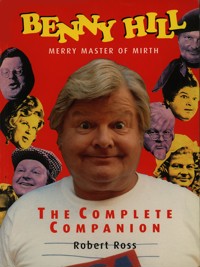
Benny Hill is the best known and best loved British comedian on world television - from the USA to the Pacific Rim. Feted for his unique brand of coy awareness, innuendo and saucy songs - but seemingly out of favour in his homeland before his death - Benny Hill can now be rated as having had one of the foremost careers in comedy. Robert Ross tracks Hill's career through the landmark Independent Television specials, early parody sketches for the BBC, film appearances, radio shows and recordings - including the No. 1 hit 'Ernie, the Fastest Milkman in the West'. Ross examines Hill's skillful use of the fledgling TV medium, and celebrates the support of his regular back-up team (Bob Todd, Henry McGee and Nicholas Parsons). The truth is revealed about Hill's Angels and the alternative comedy backlash that saw Hill pushed off the small screen in the UK. Benny Hill is the ultimate guide to the most widely recognised funny man since Charlie Chaplin.
Das E-Book können Sie in Legimi-Apps oder einer beliebigen App lesen, die das folgende Format unterstützen:
Seitenzahl: 570
Veröffentlichungsjahr: 2014
Ähnliche


















BENNY HILL
Merry Master of Mirth
THE COMPLETE COMPANION
Robert Ross
DEDICATION
To that great character actor, Norman Mitchell, a vital part of the indispensable band of players who made postwar British film and television such a rich treasure trove of delights. A wonderful friend, encouraging voice and cheerful spirit, you won’t find your name anywhere beyond this page, but this book is for you, Norman.
First published in the United Kingdom as an eBook in 2014 by Batsford 1 Gower Street London WC1E 6HD An imprint of Pavilion Books Company Ltdwww.batsford.com © Robert Ross 1999
First published 1999
The moral rights of the author have been asserted.
All rights reserved. No part of this publication may be reproduced, stored in a retrieval system, or transmitted in any form or by any means, electronic, mechanical, photocopying, recording or otherwise, without the prior written permission of the copyright owner.
eBook ISBN 9781849942584
FOREWORD
‘He touched the funny bone of the whole world!’
Henry McGee
‘One thing that should be mentioned about his career is its sheer longevity – it was quite amazing. He was an extremely generous, kind man. Anything he set his mind to, he could do. His work had to be just right but he was always modest. He was a kind, lovely man whom I miss greatly – a great liver who lived his own way.’
Peter Charlesworth
‘That small group of people who worked with him, we would have done anything for him, because we really did love him. He was totally unpretentious, kind and all the things that weren’t like the man the press made him out to be. A great man, a wonderful man, and an enormous talent. I know I’ll go to my grave knowing my shows will be screened all over again – when they’re all watching it on kid’s television in 2090.’
Dennis Kirkland
‘Benny was great fun to work with.’
June Whitfield
‘I think he had this deep concern that some people hated his comedy because it was branded sexist. Benny continually said, ‘My comedy is not like that – I never chase the girls, the girls chase me!’ He was marvellous.’
Phil Collins
‘Benny was imbued with the knowledge and understanding of comedy tradition. He knew instinctively as a professional, and learning from others, what was right for his work. People to this day, say, “Oh, Benny Hill was so politically incorrect.” Well, maybe some of it isn’t acceptable by today’s standards, but if you say, “Was Benny Hill a funny man?”, the answer is “Yes, he was.” That’s all you need to know. He was of the music hall and the saucy postcard. He wasn’t consciously trying to offend, he was simply of his time, and that humour doesn’t date, however much our moral consciousness may change. He made millions laugh – end of story.’
Nicholas Parsons
ACKNOWLEDGEMENTS
I owe tremendous thanks to Benny’s major BBC collaborator, Dave Freeman, and major Thames Television collaborator, Dennis Kirkland, for giving so much of their time and support to this project, also to Ian Carmichael, Peter Charlesworth, Phil Collins, Pamela Cundell, Nicholas Parsons, Graham Stark, Frank Thornton, Stanley Unwin, June Whitfield, Alec Brgonzi and Norman Rossington for their incisive, affectionate memories. Thanks also to Henry McGee, Gary Morecombe for his enthused encouragement, Barry Took for being such a legend and still having time for a newcomer like me . . .
Thanks again to Mr Richard Reynolds, my main man at B.T. Batsford, for continuing to pay me for something I would probably (I said probably) do for nothing, his assistant Andrie Morris, Max Tyler of the British Music Hall Society for pointing me in the right direction, those gloriously helpful folk at the British Film Institute Library, and latterly those other helpful folk at the Newspaper Library in Colindale, Alan Coles for a wonderfully dodgy copy of a wonderfully dodgy movie, that cool dude Rick Blackman for a cool dude-like programme for Fine Fettle, the late George W. Brown and my selfless friend Maxine Ventham of The Goon Show Preservation Society for invaluable information regarding Third Division – Some Vulgar Fractions, David Graham of Comic Heritage for valued support, me darlin’ Annalie Howlett for those glorious university days (remember when a session in The Vulture’s Perch seemed much more attractive than an evening of Benny Hill at the National Film Theatre?), Mum, Dad and Fiona for everything, and a fond farewell salute to Mr Cool himself, Frank Sinatra, who, apart from touching the human soul with everything from ‘One For My Baby’ to ‘That’s Life’, was a dedicated Benny Hill fan. Sock it to ’em ....
Stills are copyright to the production comapanies as credited in the accompanying text. The author would like to thank the British Film Institute, The BBC, Pearson and Canal+ for their help with illustrations.
INTRODUCTION
‘In relations between the sexes, the male is always disappointed.’Benny Hill
As Jimi Hendrix some time before 1970, a big-wig at RCA in 1977 and some bloke at Parlophone in 1980 all reputedly said: to die young is the best career move you can make. Benny Hill, for many years British television’s most successful comedian, died in 1992 at the age of 68. His youth and golden years gone, Hill was trapped in a twilight zone, rejected by the new blood of programme planning, held up as the epitome in tired, old-fashioned and offensive comedy by the new breed of comedian, and fast disappearing from the collective consciousness of the new generation of home viewers. While Tony Hancock, Eric Morecambe and Peter Sellers saw their legends soar and Frankie Howerd was riding the crest of a wave with renewed student stardom, Benny Hill had become the forgotten giant of British comedy.
In over a hundred countries across the world, the story could not have been more different. From Angola to Belgium, his shows were screened constantly. In France, his genius for mime was considered to be on a par with Chaplin and Keaton, in Russia his television shows were one of the few Western images to break through the Iron Curtain, and most importantly of all, in America he was by far the most popular comic import with his classic ITV Thames Television shows re-edited for repeated prime-time screenings. However, despite a strong, loyal following in Britain, the work of Benny Hill is still in limbo, stereotyped and castigated as embodying all that’s bad about British comedy.
But there was far more to his work than a never-ending line of suspender-clad dolly birds. This book will attempt to redress the balance by simply detailing the varied and endearing work of one of Britain’s best-loved clowns. Unlike biographies written by those family and friends close to Hill, this book is not a life story, nor is it a hagiography of the man – indeed, it’s impossible to deny that in later years, with his freedom restricted by the moral minority, Hill’s comedy became jaded and uninspiring. But writing all his own material, performing it with pride and embracing a trusted, tested troupe of colleagues, Hill was the all-conquering Citizen Kane of his own Xanadu before Thames Television finally pulled the plug.
His much-celebrated work for Thames between 1969 and 1989 typifies his enormous contribution to popular culture, and programmes from his 1970s golden age capture him at his assured peak. However, it must not be forgotten that Hill was the first comedian to attain stardom through the medium of television with his hugely popular BBC series from 1955 – programmes that, due to both the BBC’s distaste for all-out smut and the more restrained social climate of the time, allowed Hill to cleverly inject innuendo into his comedy. His radio assignments of the 1950s reveal a fine patter comedian in the mould of Max Miller, excellent character work opposite Archie Andrews, and latterly, the starring vehicle Benny Hill Time, which, heard today, reinforces the brilliance of his 1960s writing. Hill attempted cinema stardom with one of the last Ealing comedies, played Shakespeare, sparred with Michael Caine in an archetypal swinging sixties heist comedy and soared to number one in the British pop charts with his comic lament, Ernie (The Fastest Milkman in the West).
Unlike the ensemble dexterity I have previously tackled in The Carry On Companion and Monty Python Encyclopedia, this is a study of one man’s career. Regardless of the familiarity of his regular team, Benny Hill single-handedly summed up a tradition of saucy sea-side-postcard comedy, delivered at breakneck speed, peppered with knowing grins, rustic comments and innuendo-drenched songs. While the aim of this book is to present in full detail all the television, stage, radio, recording and cinematic ventures which made up Hill’s career, personal autobiographical information will be scattered between the dates and cast lists, sometimes to back up a point, or merely to highlight for the reader what Benny Hill the man was up to, as opposed to Benny Hill the comedian.
Totally aware of his own limitations (although his acting in the film Light Up the Sky! is a revelation that was sadly never repeated), Hill’s ambition was simple. From watching touring revue shows docked at Southampton, Hill remembered: ‘I used to watch comedians in shows like Oo La La always surrounded by pretty girls. That’s going to be the life for me one day!’ ‘The girls’ – like Bob Todd, custard pies or clown shoes – were just part of the act, but in the end they would prove to be his downfall. Despite the fact that Hill correctly argued that ‘My would-be lovers never succeed. A man who succeeds is not funny. A man who fails is funny ... if my sketches teach anything it is that, for the male, sex is a snare and a delusion. What’s so corrupting about that?’, his shows were axed in 1989, to the anguish of his fans and the delight of those who thought him politically incorrect. This book will look at the evidence and opinions from both sides of the argument, as well as Hill’s continued popularity with 100 million viewers in over eighty countries and his place in the annals of British comedy heritage alongside other beloved losers, such as Basil Fawlty, Harold Steptoe, Derek Trotter, Victor Meldrew and Anthony Aloysius St John Hancock.
When Sue Upton called Benny ‘the hapless clown’, she was dead right. Here was a comic talent without malice, bumbling through his own tightly controlled comic universe with the sole aim of making us laugh. He succeeded beyond his wildest dreams. This is the story of one towering comic figure who dominated British television entertainment for over forty years. His name may still be held in unjustified contempt by some, but his legacy, unfolded here, tells a tale of struggle, hard work and sheer talent.
BLUE BENNY HILL:
The early days of a comic legend
‘I’m the saucy comic!’Benny Hill
Benny Hill was destined to became the most universally successful comedian of the modern era. Marching the well-worn path of the European clowning tradition of the seventeenth and eighteenth centuries, he reshaped visual antics from his childhood cinematic heroes like Buster Keaton, Harry Langdon and, most importantly, Charlie Chaplin. The mixture included BBC radio snatches of music hall comedian Max Miller-like innuendo, thrilling early visits to local stage revues and the healthy tide of Donald McGill’s saucy seaside postcards coming in from Brighton. A transatlantic edge was grafted onto the sub-consciousness with influences from New York arriving at his hometown port of Southampton. The end result: the only British comedian of the post-war era to fully crack the international market, arguably one of the most instantly recognizable British icons, and the one clown who can rightfully challenge Chaplin for his crown.
Born Alfred Hawthorne Hill in a flat above a lamp shop in Bernard Street, Southampton, on 21 January 1924 (not 1925, as several reference books and Hill himself would have had us believe), he was the youngest son of Alfred and Helen. Performance was clearly in the blood of Hill’s family. Helen’s sister, Louise Cave, had been a semi-professional singer, his father’s father, Henry, had been a street clown, his father’s brother, Leonard, had been killed in a circus high-wire accident, and father Alfred Snr himself, born in Leytonstone, London, in 1894, had run away from home at the age of 16 to join in the excitement of Fossett’s Circus. Not surprisingly, throughout his life Benny Hill loved the small-town country circuses of France and Spain. His earliest memories were of his mother making him a clown suit out of an old pair of pyjamas and of his father donning the old make-up and walking on his hands up the stairs. This clownish sense of the absurd contrasted with the military strictness which earned Alfred Snr the title of ‘The Captain’ from his children.
Hill’s father’s life was marred by hardships, near misses and abandoned opportunities. His career in entertainment was prematurely curtailed by First World War service, and having fought on the Western Front, been gased in France at the age of 19 and survived a period as a prisoner of war in Belgium, he nursed an understandable hatred for authority shared by many of his shattered generation, promised homes fit for heroes, but returning as heroes fit for homes. Alfred had met and married Helen Cave in 1920, when he was a clerk at Toogoods Rolling Mills. In the same year as his marriage, a further failed business prospect had really turned Alfred sour – for he was now the sole employee in a company which would make a certain Jack Stanley a millionaire. Alfred had been offered a partnership in the firm, but couldn’t borrow the necessary money from his father. The business, a backstreet affair selling surgical appliances, abdominal supports, vigour-inducing medicines and contraceptives, dealt with many customers by post. With a new wife and just about to start a family, regular pay was far more important than risky business ventures.
Leonard Hill was born in 1921, followed by young Alfie Hill three years later, and sister Diana in 1933. They spent their childhood in a small terraced house, 164 Wilton Road, Southampton, enchanted by their mother’s readings from Bubbles annuals and other Christmas books – throughout his life, Hill maintained that the Giant in Pompety Finds a Needle was the most terrifying creation in literature.
The Future Looks Bright!
As a small boy, Benny faced taunts from schoolyard baiters along the lines of ‘Hillie’s dad sells French letters.’ Latching onto these cheeky jibes, piecing together limited sexual knowledge, and in the clichéd tradition of all great comedians, playing the classroom fool to win appreciation, Hill developed a knowing way with smutty comedy to entertain his contemporaries – he used this technique for the rest of his career. In his 1992 book, Star Turns, Barry Took points out the embarrassment with sexual matters and his father’s position as appliance fitter as the root of the deep-rooted, insecure fear of copulation that prevented Benny’s humour from escaping a nudging, giggling world of childish smut. In my opinion, Hill knew exactly what the score was, playing to his youthful audience, getting the required reaction, and sticking with it.
While his father may have been the dictatorial master of the household, Hill’s mother was open and affectionate, happy to protect her 5-year-old son’s female flirtations at Shirley Infant School, Wilton Road, and eager to discuss at length bodily functions of all kinds. It was hardly a sheltered upbringing, and before long Benny was cracking the first of many risqué treasures:
Teacher: ‘Where have you been?’’
Late Boy: ‘Up Shirley Hill.’
Teacher: ‘Who are you?’
Late Girl: ‘I’m Shirley Hill.’
Just the kind of thing to get the other boys to stop hitting you in the dinner break, this little story was given added credibility as Shirley Hill was a local beauty spot.
Painful experiences that shaped Hill’s comedy include tales of a brief clash with a child molester, dreadful parental rows at home, bereavement (his mother’s parents, Gran and Granpa Sims, died in 1929 and 1930 respectively) and deeply hurtful female rejections, but the star himself would often relate happier times with his father, skipping along to his shop in Market Street with his lunch and playing the Jewish card game Kiobbiyos – which his father would as often as not let him win. However, this myth of an idyllic childhood served the public persona of a star remembering his dead father, as in a 1983 TV Times interview by Jennifer Farley, headed ‘The Clown who Made his Old Dad Very Happy’ (12–18 March), whereas privately, he often confided to his equally embittered brother that he could have cheerfully killed his father!
The power of his father was vitally important to Benny Hill – reflected comically in his stupid, aged, misunderstanding comic sketch parents, and in his fearful respect of police, doctors, lawyers and every other authority figure – but the spectre of female rejection remained the overwhelming aspect of his comic expression, although he had no fear of women, simply respect, and there was no shortage of female playmates and hand-holding in the early years. Aged 5, he would playfully frolic with little Peggy Bell, but later the usual teenage angst led to depressions, nail-biting and long walks.
At the age of 12, Hill discovered his ideal woman. In September 1936, he was staying with his cousin in nearby Eastleigh for Carnival Week when a vision of dark-haired loveliness with a green coat caught his imagination. The crush was, he explained in later years, ‘the biggest I’ve ever had’, and on his return home he would walk six miles just to get a glimpse of her. Four years later, 16, streetwise and much more confident, Hill saw her again, asked her to the pictures, but felt ‘no sparks’ on their date, and called it a day. Now, whether this mysterious young lady is Citizen Hill’s Rosebud is debatable, but the repeated impetuous proposals that marked his life have their roots here. Gallant, caring and kind to women throughout his life, the victim of his humour was always the man – and more importantly, himself, his younger, love-struck 12-year-old self from Southampton adolescence. Therapy, inspiration or self-mockery, Hill the comedian continually used this inner catalogue of emotions to fashion a universal language of classic television comedy.
Coming from a family of frustrated performers and acting the schoolroom clown through necessity and enjoyment, his early years were spent transfixed by cinema. Allegedly, by the age of 3 he had already perfected the staggering walk of Charlie Chaplin! And it wasn’t just the magical movies inside – Hill was fascinated by the cinema building itself, spending many happy childhood days riding his bicycle to new picture palaces just to check out the elaborate decor. But those glorious stories from his mother gave him a love for language, even though his party piece, a ballad concerning Mustapha and Hussan, was hardly his best use of it. Word games with brother Leonard and a shared delight in the world of Damon Runyon pointed him in the right direction.
Hill delighted in entertaining his friends and family, discovering a gift for impersonating everyone from Louis Armstrong to Jack Buchanan, which became his main obsession at the time. BBC radio voices of Max Miller and Robb Wilton delighted him, he perfected the unique vocal delivery of George Bernard Shaw and H.G. Wells, while cinema provided the source for his first female impersonation, Mae West, and his first real character technique as Claude Rains, using a kitchen knife to create a set of false teeth from orange peel and painting on a moustache with his mother’s eyebrow pencil. Performances as sexy Maurice Chevalier, grouchy Edward G. Robinson and buoyant James Cagney, or comic monologues wearing his George Robey hat were all part of his childhood love of becoming somebody else to entertain people. Naturally, this talent would become an important part of his classic television shows, although, on reflection, his inspired performances as W.C. Fields, Peter Lorre and Max Miller himself are unfairly forgotten in light of the clichéd ‘dirty old man’ misunderstanding.
Another important but often underrated string to his performing bow was music, a skill also embraced while Hill was still at school. At an early age, he sang to the accompaniment of his father’s one-string violin, and later, he loved to play music himself, realizing its important place in the overall structure of a show. In later years, Hill would become proficient on guitar and cornet (once playing at a big concert with Ted Heath and His Orchestra), but during these formative days he supported himself by playing drums in a local band – a talent which united him with contemporary struggling comic genius Peter Sellers in nearby Portsmouth.
Always happy to reclaim milk round memories.
The young Hill delighted in sound, and one of his earliest party pieces was a sound-only ‘walk through the countryside’, complete with golf balls hitting animals and other surreal audio pictures. His position of family clown at the age of 9 or 10 even impressed his father, although he would usually walk out of the room to laugh rather than let his son see his appreciation of the performance. Father’s weekly trips to his Freemasons’ lodge would inspire Benny with a flurry of comic observation – sending up his father’s well kitted out attire with mini gangster kaleidoscopes, elongated James Cagney death scenes and George Raft coin-tossing or flamboyant orchestra situations with exaggerated conducting movements and mimed violin solos.
Around this time, Hill was briefly part of the choir of St Marks Church, but – typically – solely for the 6d a week fee and a trip to the Isle of Wight. By 1935, he had won a scholarship to the Richard Taunton School, but life there was just boring enough to allow him plenty of day-dreaming moments. Disinterest was reflected in his poor academic achievements at school, although art was a favourite subject, and the boy was good – his old teacher kept a statue from among Benny’s work and bequeathed it back to the star in his will, while actress Connie George bought a carving of an Aztec head by the talented 11-year-old. This artistic bent was pinpointed by a TV Times piece (‘A Dream in the Life of Benny Hill’, 25–31 May 1985) for which Hill posed for a Lord Patrick Lichfield photograph, typically depicting him with a glamorous model reflected in his abstract portrait, and equally typically, balanced by fond memories of his own saucy mind: he had peppered a school project entitled ‘The City of Dreadful Night’ with a montage of prostitutes and sailors looking for action.
School also gave him the chance to play goalkeeper for the football team – which allowed him to fill quiet spells with impromptu gorilla impressions from the crossbar – and to develop a profitable cottage industry removing 14 carot gold nibs from discarded pens and swapping them for gold coins, jewellery, and eventually, semi-precious gemstones. Hill enthralled his small audience with a three-dimensional boot-box peep-show depicting scenes from Treasure Island. He was also a dab hand at flicking his well-worn cigarette cards. Most importantly, school days presented him with his first real taste of theatrics. Apart from art, Hill loved his French lessons, but even more influential than these was English, with his guiding teacher Dr Horace King. Later to enjoy a hugely successful political career, become Speaker of the House of Commons and enjoy the title Lord Maybray-King, King spotted acting potential in his young pupil, encouraged his flamboyant comic expression, and vitally, cast him in his first scripted stage performance. Yes, Hill’s earliest official work was as a rabbit in a school production of Alice In Wonderland. Hardly the most taxing of beginnings, he had to wear a sign round his neck reading ‘Rabbit’, and found his dialogue consisted almost entirely of emitting the occasional squeak, although the role did showcase Hill’s first painful pun – crying out ‘’Ear! ’Ear!’ during the courtroom scene.
From the age of 13, Hill tried his hand as an amateur entertainer in and around Southampton, tuning his natural talent for impression, but overloading his act with the familiar sounds of Harry Roy, Horace Kenny, Claude Dampier and Stainless Steven, giving nothing more than a reheated, albeit impressive, presentation of each artists’ act.
In these days before the Second World War, BBC radio comedy was tightly guarded against smut and innuendo. Before armed conflict allowed Tommy Handley’s It’s That Man Again and Max Miller to become vital home front comforts, BBC Director General Lord John Reith deplored any hint of suggestive material, and Miller was banned from the BBC for allegedly cracking the joke about an optician whose client complained: ‘Every time I see F you see K’ (think about it). Miller found refuge on the less morally censored Radio Luxemburg, and of course, the variety theatres, which were packed for his every performance.
One of those faithful millions who warmed to the cheeky chappie’s irresistible charm was a certain Benny Hill, and without a doubt, no single comic was more influential on him. While eulogizing fans later placed Hill firmly in the tradition of Chaplin and Keaton, it is essential to highlight the influence of Max Miller, Donald McGill’s saucy seaside postcards and Brighton end-of-pier variety shows throughout his work. A fresh, streetwise, confident figure – in contrast to the hugely successful comic characterizations of, say, George Formby or Frank Randle – Miller embraced an air of American-styled fast banter while embodying the British spirit. It’s true that American comedians fascinated the young Hill during trips to the cinema, and as with Liverpool’s 1950s influx of pure rock ’n’ roll, Southampton was full of sailors arriving with the latest recordings from New York. As a result, Hill was brought up on a staple diet of Louis Armstrong, Fanny Brice, The Two Black Crows and Whispering Jack Smith, savoured on the family wind-up gramophone. However, it was Miller, ‘The King of the South of England’, who captivated the young Hill. Miller’s brightly coloured suit, blue and white books and jauntily angled trilby embodied the essence of fish ’n’ chips, kiss-me-quick hats and naughty weekends by the sea.
The serious face of war-stunning publicity pose for the 1959 filmLight Up The Sky!
Love is in the air... Benny turns on the romantics with Who Done It? co-star Belinda Lee.
The young hopeful...
When at the start of the Second World War he began to experiment with his own material, Hill embraced the cheeky innuendo of his idol. He couldn’t have hoped for a better role model. Hill’s father was less than impressed, introducing bike riding, swimming, boxing and thrilling trips to see American speedway ace Sprouts Elder as diverting distractions – with varying degrees of success – but the excitement of performance was all-consuming. Even Benny’s refereeing of his brother’s scrappy boxing bouts would resolve into a perfect ‘cocky cockney’ routine. Finally, several visits to the music hall culminated in a guided tour of the Southampton Hippodrome. The object of the exercise was to dampen the young man’s ambitions rather than fire his imagination, but predictably, he became even more stagestruck, so his father finally relented and bought him his first professional make-up box. Some sources claim that Hill made his official stage debut as early as the age of 9, with an appearance at Southampton’s Palace Theatre in 1933. Whatever the truth in that, Hill’s performing career really began to take off during the days immediately before the Second World War. His father was secretly impressed by Benny’s talent, and encouraged him with back-handed comments and half-hearted actions, but continually damped the boy’s aspirations with knowing asides that showbusiness was nothing like a Betty Grable picture. His son wasn’t really bothered. In the summer of 1938, he had seen Albert Hunter and the Jitterbugging Maniacs in The Cotton Club Revue at the London Palladium. As J. Worthington Foulfellow was about to sing, ‘It’s an actor’s life for me’, and the young Alfie was hooked.
THE STAGE
Despite the best intentions and best efforts of his father to dissuade him from a career on the stage, the natural clown was in Hill’s genes, he revelled in the buzz an appreciative audience’s laughter gave him, and the glamorous prospects were more than enough to attract a wide-eyed teenager. Along with his older brother, Leonard, Hill had run through his collection of vocal tricks – playing Crosby, Wilton, Durante, Buchanan and the Ritz Brothers in their double act depicting three different radio broadcasts: BBC programming, Radio Luxemburg and American commercial radio. The climax had Benny being bashed over the head with a gong – it was that sort of show. These performances were for charitable events for the Fellowships Supporters Council, but for Leonard, the future lay in teaching, eventually becoming a headmaster.
In 1938, at the age of 14, Hill landed his first semi-professional position with Bobbie’s Concert Party. His two spots were very short, and the deal was only struck because six performances were imminent and nobody else was available, but he relished the chance. Firstly, he would come on in woolly hat and heavy coat, toss a handful of shredded paper in the air to serve as a cheap snow effect, and chatter about the bad weather. A better characterization had him playing a vicar, wearing one of his dad’s collars back to front and made up with lipstick and rouge borrowed from his mother. Hill performed as ‘second comic’, and all the gags were stolen from various source material he had filed away. One-liners such as ‘The Young Mother’s Club seems to have a shortage of young mothers – in spite of all the efforts of myself and the Bishop’ were probably beyond the young comedian’s powers of delivery, but it was invaluable early experience – albeit short-lived, since after the six shows, his contribution was curtailed. However, he was learning the business. Offered the fee of 2s 6d or a bottle of pop and a taxi home, the young Benny took the money and walked!
Hill dabbled with a guitar group, The Hill Brothers, supporting leader Eric Vincent, fooled around with his guitar-plucking pal Tex Southgate, and hastily resurrected his Bobbie’s Concert Party turns for a talent show held at the Plaza Cinema, Northampton, in which he came second to a glass-eating act! He tirelessly refined his slapdash patter act with countless Sunday lunchtime shows at working men’s clubs. With an audience in the mood for bluer, rougher material than that approved of by the BBC, Hill found an eager reception for his Max Miller-style performances. Lacking the nerves that curtailed stage work when he became a star, and eager to learn about the business, he frequently visited the theatre, whether to see Charlie Poland’s band on Southampton’s Royal Pier or the grand revue at the Palace Theatre.
Despite his father’s lack of interest, Hill’s paternal grandfather was much more supportive. Although he was a stolid pillar of the local community, he was part-time critic for The World’s Fair journal, so he could secure free tickets to most productions, get the best seats in the house, create fever pitch in the expectant cast and excite a polite welcoming nod from the orchestra leader – young Benny loved all this. The Hippodrome Theatre was his ultimate treat – studying the various comedians on the bill, being enchanted by the illusionist Horace Goldin, and most importantly, delighting in presentations of popular travelling revue shows such as Naughty Girls of 1900, Scandals of Broadway and Ooh La La! The shows boasted a straightman who doubled as a baritone, a saucy soubrette, an older comedienne and loads of girls, but it was the star comedian that most impressed young Hill, and his lifestyle seemed like paradise: ‘I used to watch all these great fat women in the audience laughing at the comic and I would think how wonderful it would be to be that man. He was surrounded by pretty girls, he obviously got more money than anyone else and everyone loved him. They laughed and clapped when he came on stage – you could feel the warmth going out to him.’
Evacuated briefly to Bournemouth, Hill’s family moved from Westrow Gardens to temporary accommodation in Hounsdown, near the New Forest, although it wasn’t long before everything was back to normal at home in Southampton. Bournemouth had introduced him to the delights of a pierrot show, falling in love with the pierrette and instantly in awe of the star comedian’s physical comedy routines. The comic was Willie Cave, and he remains one of the unsung influences of Hill’s life. The acting bug was still gnawing at its latest victim, and he would often take the train down to Basingstoke to meet the star comedians headlining the Grand Theatre – now the glorious Haymarket Theatre. One such act was the Smeddle Brothers, who auditioned him, liked what they saw, and promised him a chance if anything presented itself.
He left school at the age of 15 without taking the scholarship certificate for which he was studying, and found employment as a weighbridge operator with the Phoenix Coal Company. He lasted in the job for just three weeks, and after the outbreak of the Second World War in September 1939, he supplemented his full-time job as stockroom clerk cum trainee manager for his local Woolworth’s store by entertaining in pubs, halls and air raid shelters. The shelter at Catchcold Tower rang to reheated music hall routines, and young Benny enthralled the easily delighted audience. During his six months at Woolworth’s, he was surrounded by a workforce totally made up of charming young ladies, lovingly calling him ‘Sonny Boy’ and smothering him with their California Poppy scent. Hill fell for the toiletries counter assistant, although most of his time was spent clearing up dog mess in the store, and he came to dread Mr Dean the manager’s yell of ‘Hill!’
To escape this and to allow him more time to rehearse his act, he took a job as a milkman with Harry Hann & Son’s Dairy for 28s a week – complete with Daisy the horse and a cart, an experience later immortalized in ‘Ernie (The Fastest Milkman in the West)’. Lodging with a Mr and Mrs Brown in Eastleigh, he began as an assistant milkman, and only secured that post because of war shortages. This was a step down from the promotional hierarchy of Woolworth’s, but that didn’t matter: his biggest thrill came from entertaining.
By 1940, one of his Woolworth’s girlfriends had suggested he join a local dance band, Ivy Lillywhite and Her Friends. Soon he was strumming a guitar, pounding drums, telling jokes and singing popular hits like ‘Who’s Taking You Home Tonight?’ and ‘Careless Love’, once receiving the hefty fee of 5s, and finally playing at the Spitfire Concert, Eastleigh. Hill introduced the technique of joking between numbers, and his comedy spots soon became hugely popular with the crowds, appearing at the local Conservative and Liberal Clubs. Basing his entire persona on his worshipped Max Miller, his stage attire consisted of a white felt hat with a sewn-up brim, loud blue-check jacket (which he had bought from the Eastleigh Co-op for 10s) and a garish red tie (which he cheekily brought into the act – ‘That’s all right dear, it’s just me tongue hanging out!’). This Miller-like rapport with his audience made up for his catalogue of stolen jokes, hastily written down during theatre trips, and his ad-libs marked him out as a promising fledgling comedian – allegedly, one night a lady was breast-feeding in the audience and Hill shouted out: ‘After you with that!’ He completely embraced Miller’s irresistible technique addressing the audience with friendly conspiracy, and Hill’s throwaway interjections of ‘Mrs Woman’ hinted at this attempt to emulate the affection of his hero.
BENNY GOES TO LONDON
At the age of 17, Hill took a life-changing decision, sold his beloved drum kit for £6, supplemented his savings with a few extra pounds from his father, and left home to try to become a full-time performer. His parents were totally against his gamble, but Hill was determined, and in September 1940, with the blue serge suit on his back and a few possessions packed in a cardboard suitcase, he made the journey to London. However, rather than streets paved with gold, the young hopeful found streets paved with used bus tickets.
Arriving at Waterloo, he made his way to Leicester Square, bought a copy of The Stage, and asked a policeman if there was anywhere outside the West End which had a few theatres in close proximity. Having the common sense not to go straight for the top, Hill was told that the Empress, Brixton, and the Streatham Hill Theatre were near each other, and he took the bus to Brixton. Sid Seymour and the Mad Hatters were in residence at the Empress, and Hill asked for Seymour at the stage door. He told Hill that there was nothing for him, but struck by the boy’s keenness, he pointed him in the direction of his brother, Phil Seymour, who was an agent currently presenting a show called Follow the Fun at the Chelsea Palace. The star comedian was Hal Bryan, and on a Thursday, the manager, a kindly man by the name of Harry Frockton Foster, listened to young Benny’s dream of turning professional, and told him to come back the following Monday, when there might be a position for him. Although he had enough money for digs, since he had no guarantee of work, Hill decided to conserve his money, spending the first four nights sleeping rough on Streatham Common, initially on the grass, eventually finding a slightly more comfortable place to rest his head in an unfinished concrete air raid shelter. He washed and shaved at the toilet in Lyon’s Corner House cafe.
On the Monday, he turned up at the office of producer Harry Benet at 11 Beak Street, Soho, and landed himself a £3 10s a week job with Follow the Fun, which was due to open that night at the East Ham Palace. Despite his ill-advised cocky attitude and Jimmy Cagney swagger, Hill clearly had something, but the offered position really was the lowest of the low. Informed that Benet’s star comic, George Lacey, had started at the bottom, he was offered the post of Assistant Stage Manager, with the promise of small parts in the show (later, he would typically joke: ‘I’m not an ASM anymore but I’ve still got the small parts!’). He was aware that this apprenticeship was going to be difficult. The stage parts would be very small, if any, and the job mainly involved humping props, baskets and scenery around, as well as looking after the ponies, monkeys and dogs involved in the ‘Pino’s Circus’ section. However, now in secure employment, he rented a room in an East End lodging house and revelled in the theatrical experience.
On his first night, he was shown how to use Leichner grease sticks and appeared as a policeman in a court sketch. In the finale, a patriotic tableau, Hill strolled on as John Bull (complete with a cushion stuffed up his waistcoat to fill out his physique) to shake hands with another player as Uncle Sam, culminating in a glorious flag-waving singalong of ‘Land of Hope and Glory’. The whole thing was a cheerful knees-up, from the cheerful arrival by stage prop boat to the important three-handed sketch concerning gaining a girl’s favours by offering her drink. Hill cropped up in this as well, naturally.
On the Wednesday night, he was setting up props for the next scene when he heard a pause on stage. Instead of the usual cross-talking double act based round the military call-up poster promotion ‘Go To It’, the star comic, Hal Bryan, had launched into a desperate-sounding barrage of one-liners. Instantly realizing that the straightman, who liked the occasional drink, hadn’t turned up, Benny, already made up and quickly donning a boiler suit over his policeman costume, took a deep breath, thought for an instant and went on. Although he had only heard the routine during the previous two nights, he managed to feed the opening remark, ‘Hello, Hal. Going to it?’ Bryan was off, answering ‘No, coming from it!’, and they completed the sketch without a hitch. One of Hill’s favourite memories was Bryan whispering ‘Thank God you’ve shown up’ on stage, and the young man came off with a huge grin of pleasure. Congratulated by all the crew and cast, as Bryan was leaving the theatre he walked over to Hill, put a 10s note in his hand and muttered: ‘You’re going to be a trouper, son.’
When Follow the Fun folded, Hill was retained by Harry Benet as baggage master for the pantomime Robinson Crusoe at the Bournemouth Pavilion. Principal comic was Walter Niblo, and the show-stopping speciality act was Gary Hickson tap-dancing on his xylophone – perhaps mercifully overshadowing Hill’s blacked-up, bone-through-the-nose antics with four chorus boys in ‘The Cannibal Dance’.
Hill enjoyed further less high-profile employment as firewatchman at Benet’s scenery workshop in Walworth Road, South London – an old haunt of young Charlie Chaplin. Some of his handiwork found its way onto the stages of the London Palladium and the Prince of Wales Theatre – where, less than a decade later, Hill would be headlining. However, in 1947 his fledgling stage career was going very nicely thank you – he was back on the road in a touring revue, Send Him Victorious. Starting with a successful run at the Hackney Empire, Hill found himself travelling round the country for several months, a different venue each week. Initially, snooker star Joe Davis was enlisted as an added attraction, but even without him, London dates in Camden Town and at the Brixton Empire went well. Further afield in the North of England, the company played the Victoria, Burnley, followed by the Salford Hippodrome.
THE ARMY YEARS
Due to his wandering lifestyle, Hill’s call-up papers were repeatedly redirected but never caught up with him, until the military police finally tracked him down in November 1947 on the fourth night of Send Him Victorious at Cardiff’s New Theatre and dragged him away. One can imagine the farcical scene as Hill was arrested in the theatre, confused and complaining at the treatment, and carted off, under guard, to Catterick induction camp in Yorkshire.
During his war service, he became Craftsman A.H. Hill, No. 14332308 in the Royal Electrical and Mechanical Engineers (REME). In later, more affluent, years, he was typically dismissive of his military career, explaining that his mechanical knowledge wasn’t sufficent to put a lavatory chain together, but all that enforced saluting certainly came in handy for his later character, Fred Scuttle. He underwent an intensive driving course (which he hated, and although fully licensed, he never drove in civilian life) and a six-week fitter’s course in Brighton before being posted to Dunkirk, just after D-Day. Although he never faced action during his time in France and Germany, he was continually in the combat zone. He became fluent in French and German, and the countries made an impression on him which remained throughout his life.
After serving with the Third Light Anti-Aircraft Searchlight Battery workshop at Arnold, near Nottingham, he was accepted into the Central Pool of Artists. He was pronounced A1, and during leave time in London visited the Mayfair headquarters of Stars in Battledress. Initially dismissed by Sergeant Charlie Chester with the regret that the organization had no need of scriptwriters, in spring 1946 Hill found himself stationed near the Grosvenor Square HQ, and three weeks later opened in the frightfully dated 1930s musical comedy revue Happy Weekend. Hill was the bespectacled juvenile lead, Riki, made famous in the West End by Steve Geray, but this was hardly the stuff servicemen wanted. The aspiring comic spiced up the dialogue with contemporary references and knowing mockery, building up the minor part of the barman with a self-penned song, ‘They Call Me the Yodelling Bar Man’, and stumbling through the delicate number ‘We Go Together Like Sausage and Mash, Bacon and Egg’ in heavy Army boots. It was perfect fare for the cramped Nissen huts that served as makeshift venues, but was somewhat lost on the vast stage of the Opera House, Calais, where they finally arrived.
He toured British military bases with the piece, and was finally sent through the Combined Service Entertainment (CSE) HQ in Hamburg and AEM in Lüneburg to start rehearsing a variety band show which he was to host. The list of stars who were discovered by services entertainment units during the war is lengthy and impressive, with Peter Sellers, Tony Hancock, Spike Milligan, Kenneth Williams, Harry Secombe, Jon Pertwee, Kenneth Connor and countless others taking the post-war years by storm following their experience of entertaining the troops.
Hill was confident from the outset that he was destined to be a star, while the stammering Private Frankie Howard, who was serving in the same unit, was full of the nervous doubts that were the trademark of his unique and timeless act. Both admired each other’s work, and they remained close friends, dying within hours of each other over the Easter weekend of 1992. Never fully coming to terms with Howerd’s depressive attitude, Hill’s total conviction that he would become a major star within months of leaving REME made for a fascinating contrast in the barrack room, but his self-assurance was dented when his clever, breathtakingly intricate linking banter between the acts was lost on a certain Major McGregor, who dismissed the effort as simply ‘not funny’ – hardly the most confidence-building review for a comedian. Hill’s solo piece was hastily cut from the show, and his compering links were delivered by McGregor himself.
Thankfully for Hill’s bruised ego, a young man by the name of Harry Segal was also watching, and was far more impressed. Segal, an old pro on the halls since childhood, spotted a raw energy in Hill’s comic performance that immediately struck him. Whisking the private off to the NAAFI for a cup of tea, Segal gushed with admiration, quickly explaining that he was running a touring military revue called It’s All In Fun. Segal took Hill on as stage manager, with assurances that the work would also include on-stage performance once the troupe moved away from the headquarters and the critical eye of Major McGregor. Hill slowly regained confidence, although he was never quite so ebullient as a stage personality again – indeed, it was a very hard struggle to finally coax him back on stage at all, with Segal leading him into the cockney knees-up finale, then a brief part in a comedy sketch, and finally, the five-minute spot he had performed previously. Segal literally ordered him onto the stage, but with justification – his sophisticated comic monologue, delivered clad in a silk dressing gown, received huge applause.
At the time, Hill and Howerd were still basing their delivery style on Max Miller’s, and naturally, with an audience of servicemen in the middle of world conflict, the material was expected to be as fruity, raucous and unsubtle as possible. Hill’s variety style of Miller-like bonding with his audience against the strict moral code of the authority figure was perfect for the situation, and is a technique still employed by comedians such as Ben Elton in his live performances.
Encouraged by warm reactions from his comrades in arms, Hill’s stage persona became stronger, and finally, during one of the last German shows, he finished to a standing ovation. Luckily, the audience included Colonel Richard Stone, in charge of Combined Service Entertainment throughout the whole of Europe, who became Hill’s life-long agent after the war. Stone also signed up former Captain Ian Carmichael from Hill’s unit, and the two performers were reunited in the 1959 war film Light Up the Sky! Hill’s Army days later came back to haunt him when a certain ex-Major McGregor approached agent Richard Stone to book Benny for a cabaret evening at his New Forest pub. Initially the star refused, finally accepting a massive £30 fee for a brief fifteen-minute turn. In the end, due to bad advertising of the event, no audience turned up, the show was cancelled and Hill was paid off with his fee in full. Almost immediately, he bumped into his old champion, Segal, in the Charing Cross Road. Segal was back in the business, but lacked the necessary cash to secure costumes for a prospective pantomime offer, so Hill gave him the required funds – exactly £30.
Perhaps the most formative moment of Hill’s military days came with a fumbled date with an attractive NAAFI girl by the name of Maria. Hill invited her out to the cinema, scraped together some money for a meal afterwards, and donned his finest clothes for the occasion. When he picked her up, she explained that another soldier had also asked her out, he was there as well, and the young lady suggested all three go to see the film. Understandably upset at this, the razor-sharp comic mind of Hill was working overtime. Turning to the other soldier, who was equally put out, he invited him to the cinema and left the girl standing, foreshadowing Hill’s reversed-sexual-situation comedy which would reach genius with his ‘The Collector’ parody, Mervyn Cruddy’s ageing chorus boy and the powerful female figures which would become so misunderstood. Whether it be Patricia Hayes during the BBC days or Stella Moray in the early Thames Television escapades, Hill delighted in defending himself against the predatory, man-eating vamp with sexual designs uncomprehensible to him. Right until the late 1980s, Hill planned to film the original, inspirational wartime encounter as it happened, but never got round to it – perhaps the memory was better reflected in other comic situations rather than starkly recreated.
BACK TO CIVVY STREET
When he was demobbed in autumn 1947, Hill gratefully received his £50 Army gratuity money, made a fleeting trip back to Southampton, and resumed his hunt for theatrical employment, journeying to the haven of returning military personnel entertainers, the Windmill Theatre in Windmill Street, Soho, with its famous nude revue. His first audition on returning home was for the Windmill’s Vivian Van Damm. Continually on the lookout for fresh, willing and, above all, cheap comedians to keep the theatre’s pledge to never close, Van Damm was happy to give newcomers a chance.
Military service and countless service shows had changed audience expectations of comic delivery, a skin as thick as a rhino’s was needed to withstand the reaction of the audience, who were much more interested in staring than laughing, and the comic became nothing more than a hasty distraction as the nude girls changed scenes. Many tried, but few succeeded, and for every career that Van Damm helped (Peter Sellers, Tony Hancock, Jimmy Edwards), there was disappointment for future comic stars (Spike Milligan, Bob Monkhouse, Norman Wisdom). Hill was one of the unlucky ones. Having written a new skit around famous Jewish/Irish tenors of the time, he failed his audition – indeed, he didn’t deliver one gag before being shown the door. The turnover of talent was very quick, and Van Damm had no time to waste.
In the autumn of 1947, Hill was down to his last 14s when he accepted badly paid and sporadic variety theatre spots. Living in a flat at 62 Ambler Road in Queensway, just fifty yards off Bayswater Road, London, sharing with two young ladies called Dorothy and Hazel, Hill performed at venues like the Tottenham Liberal and Radical Club or the Edmonton Working Men’s Club, earning £1 per turn or £1 10s for two performances. Terry-Thomas was the big star from the military training ground, and held court at a celebratory party for CSE folk, but nobody could touch the spiralling genius of Michael Bentine in Hill’s eyes – even years later, a gem from Benny’s own show would be subjected to the question, ‘How does it compare with “The Chair Back”?’, one of Bentine’s early routines.
Hill was still concentrating on lacklustre Max Miller-like material, teasing the audience with Southampton-based tales of his family’s bull-shipping, then expressing amazement that some thought it all bullocks. He was going nowhere fast, and with his Army payoff dwindling, no quality work and the depressing task of keeping cheerful, he decided to return home. Trying to convince himself this would just be a trip to see his parents, he secretly harboured the fear that his future lay as a bank clerk in Southampton. Having bought himself a ticket for the coach, he was advised there would be a two-hour delay, so, strolling to fill the spare time, he stumbled across the Biograph Cinema, Victoria, screening Danny Kaye’s classic comedy The Kid From Brooklyn. He watched the film, was captivated by Virginia Mayo (who isn’t?) and struck by the fact that Kaye was playing character comedy Hill himself could perform. With renewed faith, he tore up the coach ticket, returned to his flat, cooked his last two eggs, washed his last two shirts and was back in showbusiness with a vengeance.
At this stage of his struggle, Hill was still performing under his own name – billed as Alf Hill. His brother, Leonard, advised him that the name didn’t look very impressive on a theatre bill, and besides, it made him sound too cockney – like a third-rate Max Miller. The fact that at the time Hill was a third-rate Max Miller notwithstanding, the seed of radical change had been sown. He had already began peppering his innuendoes with impersonations and character comedy, delighting in rustic bumblers and Germanic fools, and delivering the beloved, corny one-liners through his own created characters rather than his breathless ‘self’ persona. Like Peter Sellers, Hill found it easier and more successful to encase himself in myriad hilarious characters and let them tell the jokes. He toyed with the stage name Leslie Hill, but felt it sounded like a tea dance pianist. With a lifelong respect for the American comedian Jack Benny, he first adopted the stage name Ben K. Benny, but this quickly became Benny Hill.
By now living in very cheap digs in Cricklewood and earning £1 per performance in working men’s clubs and pubs, the comedian travelled the entire London Underground system for his performances, and began to effortlessly fall back on cutting responses to rowdy hecklers (‘There’s a bus leaving in two minutes!’ – ’Be on it!’) and skilfully embarrassing punters who had to visit the toilet during the performance by asking them, ‘Could you hear us in there?’, gratefully receiving the stunned response ‘No!’, and finishing them off with: ‘Well we could hear you in here!’ It was a gag that Hill used shamelessly and frequently, even resurrecting it for a lacklustre Streetcar Named Desire sketch in his very last show from 1992.
With his pianist, Bill Randall, in tow, Hill travelled round London by tube and bus to each gig. It was hardly the glamorous showbusiness life he had expected during his days with REME. However, things were on the up and up. A few months after his demob he appeared in a Spotlight revue at the Twentieth Century Theatre in Notting Hill Gate in November 1947. Hill’s material was now more refined than the working men’s club stand-up fare he had peddled previously – he played character parts like the Dreadful Dancing Sisters, an alcoholic baritone, a Peter Lorre/Sydney Greenstreet two-hander, and most telling of all, an overtly cockney send-up of his own front-cloth routine. By parodying the form, his audience laughed at the old jokes in a knowing, deconstructed way. The bill also included Bob Monkhouse, and Hill’s performance remains typical of his late-1940s variety turn. Spotlight was used as a showcase for producers looking for new talent, so Hill received no payment, although he was quickly picked up for a BBC radio slot. Boosted by positive reactions, Hill once again tried his hand at a Windmill Theatre audition, only to receive a second rejection, before gratefully polishing his act round the working men’s clubs of Dagenham, Harlesden, Lambeth and Stoke Newington. Once in these early days he was incorrectly billed as ‘Bennie Hill’, but he didn’t really care as long as he earned enough money to pay for his next tube journey. Other performers like Max Bygraves and Bob Monkhouse would help out their friends, recommending Benny Hill if they themselves couldn’t make a date. He worked at the Metropole, Edgware Road, and enjoyed a week at Collin’s Music Hall, Islington, but this invaluable experience was as nothing compared to the hefty £5 a week he could earn.
By early 1948, Hill had graduated to more sophisticated, respectable ventures like entertaining after Masonic dinners, when he could pocket anything up to 3 guineas a performance. A week at the Kilburn Empire was a high point, while a five-times-a-night engagement in a Cine-variety Christmas show on Bognor Pier was less impressive. The show combined film and live entertainment, and Hill struggled valiantly to fill in between movie treats, but the bookings were pitiful and the run folded prematurely. To supplement these irregular earnings, Hill moonlighted the old working men’s club circuit as comic impersonator Bob Job – he gave his disgruntled audience everybody from Gordon Harker to Ned Sparks to Janet Gaynor, and the few pounds boosted his pocket without denting his reputation.
It was around this time that ex-Captain Richard Stone signed Benny Hill up as his client and eagerly presented him to the hugely influential impresario Hedley Caxton. Always on the lookout for interesting, funny and keen comedians with an appeal for the family working-class audience, Caxton’s forte was seaside variety show bills for the summer season market. His star name comedian was Reg Varney. Richard Stone did a convincing enough job promoting Hill to secure him an audition for a part in the up-coming revue. Primarily, the position was for supporting player and comic stooge for Varney, and Hill landed the job, notably beating a certain Peter Sellers, who left Caxton rather unimpressed by giving a straight rendition of a George Formby number on his ukelele. Hill, accompanied by his own guitar-playing, sang a self-penned calypso satire on the Atlee/Bevin government. It clearly blew the competition out of the water – sweetest of all, the rehearsal room was Mac’s, just opposite the Windmill Theatre, which had twice turned him down. As previously agreed, the winner bought coffee and cakes for Sellers at Velotti’s Cafe, nipped over to see Edith Piaf in Paris to celebrate, and returned home for his £14 a week summer season. Hill was headed for the bright lights of Margate.
Gaytime
This comic revue for 1948 enjoyed a hugely successful trial run at Cliftonville Lido, Kent, before a pre-season tour and the great opening at the Lido, Margate. Bursting forth with the jolly invitation, ‘Gaytime,/Let’s have a gaytime,/Gaytime,/Let’s have some fun!’, this was a real feelgood holiday experience.
Like a low-grade Sid Field and Jerry Desmonde, Varney turned on the campness with skill, brilliantly playing a terribly shy tennis player (based on the French champion Suzanne Lenglen), while Hill’s petulant instructor fed the laugh-lines with aplomb. Entitled ‘What the Deuce!’, Hill had crafted a wonderfully flamboyant part for his partner, allowing himself time to develop his own comedy through long pauses, disconcerted looks and innocent, innuendo-drenched comments like ‘Balls to you!’ Varney thought the teaming was inspired and many people considered Hill’s perfectly timed amazed facial reactions the making of the act. However, whether because this hired hand was outshining his star name or not, Caxton was left totally unimpressed by Benny Hill. Indeed, his solo spot, hated by Hill himself, was so badly received that the management’s unpromising reaction was that the man had no potential for comic stardom.
It was hardly the ground-breaking venture that Hill had hoped for, although he tirelessly worked alongside Varney for three seasons of Gaytime




