


Erhalten Sie Zugang zu diesem und mehr als 300000 Büchern ab EUR 5,99 monatlich.
- Herausgeber: Polygon
- Kategorie: Poesie und Drama
- Sprache: Englisch
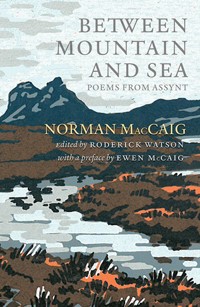
'Two Men at Once' is one of Norman MacCaig best known poems. He was indeed two men at once: Edinburgh, the city where he was born and lived as a teacher and poet, was his home, but no other place shaped his poetry more than Assynt in Sutherland. It is here that he would spend many a summer on family holidays, walking the hills and fishing the lochs. MacCaig's fresh eye saw remarkable newness even in the everyday and each poem is a tiny revelation, a new look at an old friend. This collection celebrates, renews, and rediscovers Norman MacCaig's Assynt.
Sie lesen das E-Book in den Legimi-Apps auf:
Seitenzahl: 114
Veröffentlichungsjahr: 2018
Das E-Book (TTS) können Sie hören im Abo „Legimi Premium” in Legimi-Apps auf:
Ähnliche













BETWEEN MOUNTAIN AND SEA
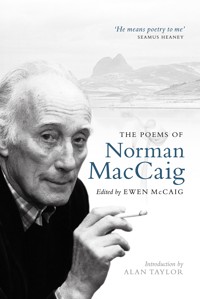
Norman MacCaig (1910–96) was born and educated in Edinburgh. He attended the Royal High School, studied Classics at the University and went on to train as a schoolteacher. When he retired from teaching he was appointed as Creative Writer in Residence at the University of Edinburgh and then joined the staff at the University of Stirling. He loved Edinburgh and lived there all his life but found a special source of creative enrichment for himself and his family by making lengthy visits to Assynt every summer.
MacCaig was awarded the Queen’s Gold Medal for Poetry and many other distinctions but is best remembered for his teaching and reading, his fruitful influence on younger writers, and most of all for the poems that celebrated the living world so memorably over so many years.
BETWEENMOUNTAINAND SEA
POEMS FROM ASSYNT
NORMAN MACCAIG
Edited and introduced byRODERICK WATSON
Foreword byEWEN McCAIG
First published in paperback in Great Britain in 2018 by Polygon, an imprint of Birlinn Ltd
West Newington House
10 Newington Road
Edinburgh EH9 1QS
www.polygonbooks.co.uk
ISBN 978 1 84697 449 6
eBook ISBN 978 1 78885 029 2
Poems copyright © the estate of Norman MacCaig
Foreword copyright © Ewen McCaig, 2018
Editorial arrangement and introduction
copyright © Roderick Watson, 2018
All rights reserved. No part of this publication may be reproduced, stored, or transmitted in any form, or by any means electronic, mechanical or photocopying, recording or otherwise, without the express written permission of the publisher.
British Library Cataloguing-in-Publication Data
A catalogue record for this book is available on request from the British Library.
Typeset by Polygon, Edinburgh
Printed and bound by Clays Ltd, St Ives plc
CONTENTS
Foreword Ewen McCaig
Introduction Roderick Watson
‘LONG JOURNEY BACK’
Back to Sutherland after a long absence
Inverkirkaig Bay
Climbing Suilven
Swimming lizard
Maiden Loch
Haycock, Achiltibuie
Goat
‘ENVIABLE LANDSCAPES’
Memory two ways
Sound of the sea on a still evening
Spraying sheep
Culag Pier
Midnight, Lochinver
High up on Suilven
Moorings
Poachers, early morning
Byre
Water tap
Loch Sionascaig
July evening
A voice of summer
No accident
Signs and signals
Fire water
Sandstone mountain
Bull
Sheep dipping, Achmelvich
By Achmelvich bridge
A corner of the road, early morning
Remembering old Murdo scything
Struck by lightning
Winter
Among scholars
Fetching cows
Falls pool, evening
Vestey’s well
Two shepherds
Waiting to notice
In this wild day
Above Inverkirkaig
On a cloudy mountain
Looking down on Glen Canisp
Illumination: on the track by Loch Fewin
Humanism
Between
Moment musical in Assynt
Small round loch
Old rose bush
Basking shark
Dancing minister
Country dance
Lord of Creation
Walking to Inveruplan
Descent from the Green Corrie
So many summers
‘THE MISTY LANDSCAPE OF HISTORY’
A man in Assynt
No end no beginning
Centre of centres
‘BACK AGAIN’
Back again, Lairg station
July landing
Lesson
Greenshank
Birthdays
The Pass of the Roaring
In everything
Reversal
Stag in a neglected hayfield
A. K. ’s summer hut
Small rain
Praise of a road
Praise of a collie
Praise of a boat
Praise of a thorn bush
Small lochs
Stonechat on Cul Beg
Summer evening in Assynt
1,800 feet up
Poems for Angus (1976–78)
Notes on a winter journey, and a footnote
A. K. MacLeod
Highland funeral
A month after his death
Triple burden
Comforter
Praise of a man
From his house door
Angus’s dog
Dead friend
In memoriam
Defeat
Tighnuilt – the House of the Small Stream
Off Coigeach Point
Me as traveller
‘NOTATIONS’
Notations of ten summer minutes
Highland games
View with no prospect
Toad
Local dance
Gamekeeper’s widow
Invasion of bees
Two thieves
Camera man
One more
Summer idyll
Running bull
On the Lairg to Lochinver bus
Pastoral
Found guilty
Highland barbecue
On the north side of Suilven
At the Loch of the Pass of the Swans
Everywhere at Loch Roe
A man walking through Clachtoll
On the pier at Kinlochbervie
Haymaking
‘HONEY AND SALT’
Between mountain and sea
On a croft by the Kirkaig
Crofter
On Lachie’s croft
Perfect evening, Loch Roe
Wester Ross, West Sutherland
Sargasso Sea
Maps
The Loch of the Peevish Creek
Idling at sea
At the foot of Cul Mor
Two men at once
Country lover
Sunset at Clashnessie
Things behind each other
In the croft house called The Glen
Image of a man
Assynt and Edinburgh
Gale at Stoer Point
A small corner with a space in it
On Handa
Processes
By the Three Lochans
Index of titles
FOREWORD
There are about 800 poems in the published work of Norman MacCaig, of which some 140 focus mainly on the Assynt landscape or people. Their significance appears to outweigh the numeric proportion, partly because of when they were written (most were from the 1960s onwards when, in my view, his best work was produced) but mainly because of their direct expression and the intense personal commitment to the landscape and people. The poems in this collection span a period of more than forty years. Reading through them, it becomes clear that his emotional ties to the area remained constant throughout his life. The late poems, written when he could no longer visit Assynt, became tinged with nostalgia, but their subjects are no less vividly depicted.
Although the poems certainly stand alone for any reader, they carry a personal significance for me because they are about shared experiences. Although this can also be said about numerous poems amongst his other work (which I would never wish to see overshadowed by the Assynt poems), I can see that the directness of experience that my father believed was needed to create a good poem is most consistently present in the Assynt poetry. Despite long familiarity with my father’s work, preparation of this book was the first occasion on which I read the Assynt poems as a discrete group. I was surprised by the intensification of the poetic experience and the depth of meaning projected by this work as a whole, which certainly seems more than the sum of its parts. That, for me, amply justifies this volume, which illustrates one man’s sustained and deeply felt engagement with a special place and the people that he found there.
The McCaigs first went to Assynt in 1947, and a lengthy sequence of summer visits followed. Getting to know the place and the people intimately took time. The landscapes were not explored by my father as a romantic Wordsworthian rambler. He was an enthusiastic and bloodthirsty fisherman and, although he loved walking through the Assynt landscape, it was the fishing that got him out of his chair. His growing knowledge of the land can be linked to the widening exploration of the fishing possibilities that we undertook when I was young. Communication with a range of local people also took some years to build up, partly because we (and others) did not have a car in the early times and the community was widespread. There is little doubt that, for him, the landscape and the community were aspects of a singular thing and the development of his many local friendships was as important and (in the poetic sense) meaningful as the landscape.
The first years of Assynt holidays were spent in Achmelvich with a move to Inverkirkaig in the mid-1970s. A point I noted during the preparation of this book was the large number of poems relating to the early years in Achmelvich, some appearing decades later. Many of the Achmelvich poems are only recognisable as Assynt poems because of my personal memories: for example, ‘Water tap’, where the surroundings confirm it is the tap by the road behind our (unplumbed) house in Achmelvich; ‘A voice of summer’, which was the voice of the corncrake in the hayfield by the house and ‘Toad’. Toads often entered the Achmelvich house.
The croft house next door was occupied by Pollóchan (the croft name) and family. Pollóchan was one of the many Donald MacLeods in the area. He was a traditional crofter, keeping sheep, cows and hens and selling milk from the front door. He was a generous friend of the McCaigs and, in his quiet way, a man of some distinction. The croft appears in many poems, such as ‘Fetching cows’, and ‘Byre’. Pollóchan himself makes many appearances, though often unnamed. He is ‘sauntering Orpheus’ in ‘Running bull’, written in 1981 some thirty years after the event (which I witnessed as a boy); he is the unnamed companion in ‘Haymaking’; he is the unnamed person in ‘Crofter’.
Inverkirkaig was the base for more extensive fishing expeditions in newly explored landscapes. There are numerous poems featuring the River Kirkaig and its locality. It was also the home of ‘A. K.’ MacLeod whose life is celebrated and death lamented in ‘Poems for Angus’. Angus worked maintaining the road running south from Inverkirkaig towards Achiltibuie, but that was his least significant attribute. He was a man of great social charm, humour and humanity and with a profound knowledge of the local land and wildlife. Angus and Pollóchan feature very much more in MacCaig’s poetry than any other person. Normally, my father was reluctant to write about individuals, especially those close to him, so his poetic treatment of these men is exceptional, especially with Angus. In addition to the personal love and respect that my father had for these friends I believe that he experienced them partly as symbolic figures, representing all that he felt was best and most characteristic about the Assynt people. They were people whose friendship he aspired to.
My father’s poetic response to Assynt was not immediate. A few poems were written in the 1950s but significant numbers did not appear until he had been an annual visitor for over fifteen years. They then grew in frequency and, when age and infirmity took over and he could no longer go there, more and more of his work drew on Assynt. Time was usually needed: apparently minor events become poems decades later. The response to Assynt was not a facilely descriptive one. Almost no poetry was written when he was in Assynt. This was partly because it was crowded out by other activities but mainly because this was a time for refuelling. The poetry came later.
It is worth considering where the special quality in the Assynt work came from. Assynt is a beautiful place with nice people in it, but that does not fully explain the depth of personal and poetic engagement in the poetry. I do not believe that his poetic talent was all he brought to Assynt. What he brought there, in my perception, was the impact of his childhood holidays in Scalpay, Harris, the birthplace of his mother. These happy visits made an indelible impression on him, of the place and, especially, of the people and his own heritage. His Scalpay poems are not very numerous, but they are among his finest.
Despite being family and a welcome guest in Scalpay, he was an English speaker and, for lack of a softer word, an outsider. Without implying the least unhappiness, I believe this stayed with him all his life, as profound childhood impressions do, and gave him a longing for acceptance in the Assynt community that could never be fully assuaged by the reality of the friendships he found there. This was visible in company. In Edinburgh social gatherings he was normally centre stage, where he tended to dictate the topics of conversation and generally take charge. In Assynt he was no less gregarious, but he became more of a listener and he looked up to the company in a way that would have been inconceivable elsewhere.
His Scalpay visits were of fundamental importance in bringing him to Assynt in the first place. He had extensive knowledge of the Highlands, gained as a young man when he went for lengthy cycling and camping holidays with friends, covering virtually everywhere, both on and off road, on a single gear bicycle. These travels put Assynt into a context, when, following the war and the appearance of young children, he drew on this knowledge of Scotland when selecting a place for family holidays. Achmelvich was chosen. It was ideal for children and good for fishing, but other places will have suited in such ways. He said that a major factor in the choice was a similarity in the Assynt coastal landscape to Scalpay and the east of Harris. He was, in a sense, seeking his roots. Scalpay itself would have been unthinkable by this time – too minister-ridden, too teetotal and even further away from Edinburgh.
In selecting Assynt his instincts guided him well. A more fertile soil for planting the seedlings that had been germinating since childhood could not have been found, and the fruit was many great poems. It brought him happiness, but without stultifying contentment. He had to ‘woo the mountain, till I know the meaning of the meaning, no less’, a process that kept him writing Assynt poems into his eighties, with no loss of freshness.
Ewen McCaig, 2018
INTRODUCTION
‘Landscape and I get on together well,’ said the poet, and here’s the proof.
Norman MacCaig’s wry love of the created world, and all its creatures, illuminates his poetry. Wherever he found himself, in line after line, he shows us how ‘hieroglyphs of light fade one by one / But re-create themselves, their message done, / For ever and ever.’ (‘Landscape and I’.) But it was among the mountains, lochs and shores of his beloved Assynt that this vision achieved its fullest expression, and the poems in this selection are testimony to that.




