



4,49 €
Mehr erfahren.
- Herausgeber: Dancing Lemur Press LLC
- Kategorie: Fantasy und Science-Fiction
- Sprache: Englisch
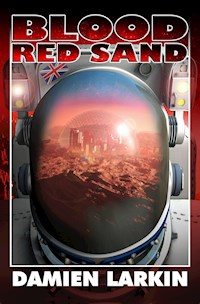
We have always been here...
Traumatized by the effects of Compression travel, soldier Darren Loughlin holds the key to the fate of Earth’s Martian colonies. With his Battalion decimated, his fractured memory holds the only clues to the colony-wide communications blackout.
With time running out, Darren pieces together his year-long tour of duty with the Mars Occupation Force. Stationed in the Nazi-founded New Berlin colony, ruled by the brutal MARSCORP, he recounts his part in the vicious, genocidal war against the hostile alien natives and all who question Terran supremacy.
But as his memories return, Darren suspects he is at the centre of a plot spanning forty years. He has one last mission to carry out. And his alien enemies may be more human than he is…
Sie lesen das E-Book in den Legimi-Apps auf:
Seitenzahl: 429
Veröffentlichungsjahr: 2019
Ähnliche



















Damien Larkin
DANCING LEMUR PRESS, L.L.C.
Pikeville, North Carolina
http://www.dancinglemurpressllc.com/
“There is drama and heartache here, insights in the light and darkness of humanity’s soul. This book makes you think.” – Phil Parker, author
“A mesmerizing mix of genres: A dash of Starship Troopers mixed teasingly with Memento, spiced with a haunting blend of Black Mirror.” - Roland Yeomans, author
“This science fiction, action thriller story begins and ends with a fast pace storyline.” – The Happy Booker
“Every time I thought I had the story figured out Larkin threw another curveball, and I could barely keep up. It felt like the Twilight Zone or Black Mirror…” – C. D. Gallant King, author
“An action packed Military Science Fiction novel that kept me on the edge of my seat. Who would have thought aliens, Nazis, and time travel would have blended together so well?” - Jamie Kramer, Books and Ladders
“This story is full of twists that kept me turning the page…” – L.G. Keltner, author
“Big Red captures these dreams of extraterrestrial exploration and adds the exciting question of ‘what if?’” - Bitty Book Nook Book Reviews
This is a military sci-fi that reminded me a lot of Heinlein’s Starship Troopers. – Lynda R. Young, author
“I loved this novel. It was well written and instantly engaging. The story was fast paced.” – Sue Tingey, author
“If you like military sci-fi books you should definitely pick this one up.” - Carrie K’s Book Reviews
“If you enjoy military sci-fi with lots of unexpected twists, you'll love Big Red.” – Ellen Jacobson, author
Copyright 2019 by Damien Larkin
Published by Dancing Lemur Press, L.L.C.
P.O. Box 383, Pikeville, North Carolina, 27863-0383
http://www.dancinglemurpressllc.com/
ISBN 9781939844613
All rights reserved. No part of this publication may be reproduced, transmitted, or stored in a retrieval system in any form–either mechanically, electronically, photocopy, recording, or other–except for short quotations in printed reviews, without the permission of the publisher.
This book is a work of fiction. Any resemblance to actual events or persons, living or dead, is coincidental.
Cover design by C.R.W.
Library of Congress Cataloging-in-Publication DataNames: Larkin, Damien, author.Title: Big red / Damien Larkin.Description: Pikeville, North Carolina : Dancing Lemur Press, L.L.C., [2019] Identifiers: LCCN 2018055682 (print) | LCCN 2018057963 (ebook) | ISBN 9781939844613 (ebook) | ISBN 9781939844606 (pbk. : alk. paper)Subjects: | GSAFD: Science fiction.Classification: LCC PR6112.A746 (ebook) | LCC PR6112.A746 B54 2019 (print) | DDC 823/.92--dc23LC record available at https://lccn.loc.gov/2018055682
Dedication
“In loving memory of Niamh Kennedy. Breathe easy, angel.”
TABLE OF CONTENTS
Chapter 1
Chapter 2
Chapter 3
Chapter 4
Chapter 5
Chapter 6
Chapter 7
Chapter 8
Chapter 9
Chapter 10
Chapter 11
Chapter 12
Chapter 13
Chapter 14
Chapter 15
Chapter 16
Chapter 17
Chapter 18
Chapter 19
Chapter 20
Chapter 21
Chapter 22
Chapter 23
Chapter 24
Chapter 25
Chapter 26
Chapter 27
Chapter 28
Chapter 29
Chapter 30
Chapter 31
Chapter 32
Chapter 33
Chapter 34
Chapter 35
Chapter 36
Chapter 37
CHAPTER 1
At first, I thought the piercing white light that bore down on me flowed from the sparks of an electric buzz saw. A relentless, slicing agony carved through my brain, tearing through flesh and bone, mind and memory. My skull felt as though it was being split in half. But I heard no high-pitched scream of a saw and, from an involuntary muscle spasm in my arm, I found I wasn’t restrained.
It took a moment for me to realise sparks weren’t raining fiery kisses onto my face and the light above me remained as constant as a laser. I hadn’t blinked in what seemed like an eternity, so upon forcing my eyelids shut and reopening them again, my senses burst to life. I rolled over and lifted a shaking hand to rub my throbbing temples. Through my blurry vision, I could make out the polished marble floors of the room. Beside the leg of the folding cot, I spied cracks on the floor and vaguely recalled noting those same cracks the first time I had climbed onto this hard mattress a year before.
Dazed, I perceived another needle of fire being strategically inserted into my brain, causing incomprehensible pain. I let out a roar as my eyes teared up, and I struggled for breath. I gasped, trying to suck in sweet, unrecycled air, and another harsh pain surged through my chest, temporarily forcing me to forget the buzz saw slicing its way through my skull.
In response, a firm, gloved hand gripped my shoulder and eased me back onto the mattress. A masked figure blocked the painful light glaring down on me, and cold, gloved hands prodded at my head and body. I tried to speak but screams and whimpers escaped. I sensed the cool tears running down my face and squeezed my eyes closed to stop them.
That only made things worse.
In the darkness of my mind, figures emerged and disappeared. They looked like faded silhouettes of people I had known and grown to like—or at least endured—but I couldn’t see their faces. It started slow at first, just one or two shadows emerging long enough to mimic a humorous incident from long hours of training, but as the pain in my chest intensified, the silhouettes rushed faster and faster, eager to reach their climax. Days, weeks, and months sped past in a heartbeat, each image more vivid and detailed than the last, until that final moment, and I knew why I was screaming.
I bolted upright in the cot, knocking the doctor away from me. With eyes wide open, I remembered my wound. I saw the stunned doctors shouting for an orderly over the high-pitched ringing in my eardrums. Panicking, I grabbed at my chest to stop the blood from oozing out of my wound. My trembling hand touched the dark green T-shirt that we all wore, but to my surprise, I didn’t feel the gaping hole that should have been there. I pulled up my T-shirt to see my pale, hairless skin untouched by blood, not burned flesh. I prodded at myself in disbelief, expecting a barb of pain to shoot through the area where I thought had been operated on, but I felt nothing. The pain in my head and chest retreated, as did the ringing in my ears. It was then that I noted the screaming and shouting around me.
Two pairs of sturdy hands eased me back onto the cot mattress again, and still struggling to make sense of my jumbled thoughts, I offered no resistance. Lying back on the soft pillow, I moved my head from side to side as the doctor completed her checks. She looked vaguely familiar, even behind the mask, and something told me she was trustworthy.
All around me were rows of cots with dozens of uniformed soldiers in various states of agonised shock. Some fought with the orderlies, roaring and screaming incoherently, and others were curled up in the foetal position, numb from what they had experienced. Cries of pain and bitter sobs of regret echoed throughout the room, a testament to the horror we had survived.
A light shone into my eyes. Looking up, I saw the red-haired doctor standing over me, studying me in-depth. This time, the light caused no pain, so I let her do what she needed. After a moment, she pulled down her face mask and, with a clinical expression, spoke to me.
“Do you remember where you are?”
I didn’t. The room was familiar. I knew I had been here a year before, but a fog draped itself over my memory. I was positive I could navigate the halls of this place but had no idea of its purpose or what we were doing here.
“Yes,” I lied, surprised to hear my voice so hoarse.
I must have been screaming non-stop from the moment I regained consciousness. As if reading my mind, she reached behind her to a small, metallic trolley and pulling out a plastic container with a flexible straw, uncapped it, and handed it to me. My quivering hands accepted it. Parched, I sucked on the straw. The cool water made its way down my aching throat to spread instant relief throughout my body.
“What’s the last thing you remember happening?” she asked, scrutinising my every movement.
Although it sounded like a typical question to be ticked off a medical checklist, I got the impression that the doctor had no idea what we’d been through and was genuinely confounded by our pain-filled outbursts.
“I got shot,” I groaned and tapped at my chest.
For a moment, the pain was real again. Searing, hot flames engulfed my torso and ate away at my innards, but as soon as I patted myself, it faded. A part of me wondered if it had really happened, if it was part of a twisted nightmare or a side effect of the treatment, but the memory felt so real. I couldn’t remember the exact circumstances, but I recalled being lodged into a shaft or confined space with two or three others when I got hit.
“I need you to focus your mind and try to remember. Did anyone else make it? Is anyone else alive up there?”
Up where?
I could see snippets of a firefight and older memories of training and patrols but nothing else sprang to mind. Sensing the urgency of her question, I focused on that image of the shaft and studied it for tell-tale clues. At least three others were there, but from the shouts and sounds of explosions that hung outside the boundaries of my memory, there had to be more. I remembered being terrified to the core. Although the adrenaline kept me moving, my hands had trembled as I held my weapon. The sound of intense hand-to-hand combat echoed from all around us, and the screams of the dying grew closer as an unseen enemy approached.
“Think,” she said, rubbing my shoulder gently with a cold hand. “Did anyone else make it out alive?”
Trying to focus, I shifted in the cot and looked around. Surely there had to be someone in the room who could answer that better than me. To my right, I thought the soldier occupying the cot looked comatose, but then I saw his eyes. Huge and mesmerizing, they drew me in. A vague familiarity hung about him. His feet dangled, unmoving, off the edge of the cot, and his large hands rested on his chest. His smooth, ebony skin betrayed not a single scratch or mark, but those dark eyes gazed deep into mine, as if to communicate with me. His lips moved slowly as he mouthed something. Too drained and disorientated to make the effort of whispering back, I furrowed my brow and shook my head at him to show that I didn’t understand. Without blinking, he moved his lips more concisely and whispered something with a raspy voice that terrified me to the core.
“Kill them all.”
The doctor turned at the sudden utterance. While waving for another orderly, she began checking the traumatised soldier.
“We have another one,” she shouted over the din of cries and screams.
Once she made sure someone tended to him, she returned her attention to me. She signalled for a drip and, without any warning, jabbed a needle into my arm. Unable to resist, I watched the transparent fluid flow from the drip into my body. Behind me there was a clash and clang of a trolley falling over and the grunts and shouts of what sounded like a scuffle.
“We need security in here now,” a harsh voice shouted from somewhere in the room. “They’ve totally lost it. They need to be restrained and sedated until we know exactly what happened.”
“They need compassion,” the red-haired doctor above me fired back in anger. “They’re our girls and boys, and God only knows what they’ve gone through. Restrain them if you have to, sedate them if necessary, but don’t treat them like the enemy.”
It was good to know someone was on our side, whoever they were. Whoever we were for that matter. The doctor returned her attention to me and, placing a hand on my wrist, checked my pulse.
“Feeling better?” she asked.
I was. Whatever was in that drip was making me float. All the pain and fear that had crashed through my skull evaporated. The screams of agony dwindled to soft background noise. It was like being back in a womb.
“Focus on my voice,” she said, and I did. “I need you to think very, very hard. I know whatever you experienced was traumatic, but there are people still up there. Your people. I need you to remember exactly what happened. You said you got shot. Who shot you?”
I replayed the memory in my head again, but I couldn’t see anyone. I was doing something with my left hand while holding a rifle or a gun in my right.
“I don’t know. I didn’t see them.”
“Were you on the base when you got shot?”
I thought about it as hard as I could.
“What base?”
She patted me on the arm again and looked around her. Raising her right hand, she shook it vigorously at someone. After a few moments, a bearded man, with his face mask wrapped around his chin approached. He ignored me as he spoke with the red-haired doctor.
“I don’t know how to explain it,” she whispered, turning her back on me as if that would drown out her words. “Something must have happened during the transfer procedure. All of the simulations we ran never indicated the possibility of this level of memory fragmentation.”
The bearded man turned to look at me and saw me staring up at him. He forced a smile before returning his attention to the doctor.
“It may be a temporary side-effect from them coming back so soon. This one seems far more lucid than the rest. Maybe they need time to recuperate. Check the records. They’ve been through a lot in the last year. That would take its toll even on veteran soldiers.”
“Maybe,” the red-haired doctor continued, “but right now, we don’t have time. We need to find out what happened. I want you to supervise the rest. I’ll take this one and see if we can jog his memory. Call Doctor Ling and get her down here, too.”
“Okay, Doctor,” the bearded man said. Without another word, he turned and walked away.
“Orderlies,” the doctor called out and beckoned them over. She must have signalled something to them when I wasn’t watching because one of the orderlies made his way to an empty patient trolley, which he dragged to my cot.
“We’re going to move you, Corporal Luglin.”
That didn’t sound like my name.
Two hands eased themselves under my head and back, and another pair of hands gripped under my combat boots. With a three count, they hoisted me onto the trolley. One of the orderlies grabbed the drip and attached it to the trolley. Without warning, they strapped restraints around my wrists, ankles, and waist, pulling them tight to confirm they were secure. Then they began manoeuvring me between the rows of distressed soldiers. Confused at the name, I reached a weak hand under my T-shirt and pulled out a pair of dog tags resting on my chest.
“Loughlin,” I said, correcting the doctor as she led the trolley towards our destination, “pronounced Lock-Linn. I’m Irish.”
“My apologies,” she said, half turning her head as she led the way.
My fingers continued toying with the dog tags.
“Darren Loughlin,” I said aloud to no one in particular. That sounded familiar. The dog tags also confirmed my serial number, blood type, religion, and nationality.
The orderlies wheeled me past another two-dozen screaming, shouting, and horrified soldiers before pushing me through double doors into a side room. They inserted my trolley carefully between two rows of computer screens and strange-looking medical equipment. Without prompting, one of them hoisted my head rest as the orderlies prepared me for whatever was to come next.
The taller of the two male orderlies rubbed a cool gel onto my temples before sticking on some sort of miniature suction cups, and the smaller one attached what looked like a blood pressure cuff tightly around my right arm. While he did it, the smaller orderly kept glancing at me strangely. Like the soldier who had lain in the cot to my right, he looked as if he was trying to communicate something to me, but I had no idea of what.
The doctor called the taller orderly over to the monitors, and the moment their backs were turned, the smaller orderly leaned forward, pretending to check my drip. As quick as a flash, he pressed something small and cold into the palm of my right hand. I instinctively wrapped my hand around it to conceal the object from view and shifted my weight to hide it underneath my right thigh. Even though I only held it for a few seconds, a part of me already knew what it was. I had held it a hundred times before and knew it was dangerous.
“Stall them for as long as possible,” he muttered under his breath. “When it’s time, you’ll know. Salient.”
I opened my mouth to speak, but he had already turned and headed towards the doctor.
“Wait outside,” the doctor said to the orderlies when the double doors swung open again.
A tall Asian woman burst through the doors with a look of concern plastered over her face. She wore a long, neatly pressed black skirt and a white blouse. Several long beady ornaments dangled from her neck. She greeted the doctor with a nod before looking towards me. Smoothing her skirt and careful not to bump into the nearby computer monitors glaring down at me, she took a seat and pulled out paper files and a tablet device from her bag.
“Mr. Loughlin, how are you today?” she asked, trying to maintain eye contact as she leafed through several pages.
“I’ve been better,” I groaned back. My throat still hurt, but I was glad I didn’t sound as hoarse as I did earlier.
“My name is Doctor Ling,” she said, extending a friendly hand to shake mine. I raised my right hand and waggled it against the restraints to show I was unable to reciprocate. Undeterred, she stood, leaned over me at an awkward angle, and gripped my hand. Resisting the urge to break eye contact and take advantage of the view that her loose blouse would undoubtedly present, I smiled back politely.
“I’m the head psychologist for the program, and I’d like to touch base with you about your condition.”
“My schedule’s clear.”
“Great,” she said, and flashed her wrist as she pushed a few renegade strands of hair behind her ear. “You’ve probably witnessed a lot of alarming things here since you’ve returned. It must be confusing for you, but rest assured, you’re in good hands.”
I felt safe, but then again, that could have been the drugs they were pumping into me.
“Do you know where you are?”
I thought hard about it. Although I recognised the room I woke up in and a few of the faces, I couldn’t place myself. I shook my head.
“That’s okay. It’s normal considering what you’ve been through. I have full confidence that your memories will return in due process. We just need to give them a jump start.”
She picked up the tablet device and became engrossed by something of interest. Distracted, she forced herself back to the present and placed the tablet on the chair beside her.
“We’re going to try something a bit different, if that’s okay with you?” Doctor Ling asked. I nodded my consent to proceed. “I’m sure it must be frustrating trying to remember where you are and what’s happened to you and your colleagues, so I want you to push all of that from your mind. For the moment, we’ll push aside the MOF, EISEN, Mars, and the program, and start with the basics.”
“Mars?”
I looked at her as if she had two heads.
“Yes, Mars. We’ll focus on that later. To start: Can you tell me what today’s date is?”
I was still baffled by that “Mars” utterance but decided to play along. I tried to focus my jumbled mind to find any record or reminder of what the date could be.
“Twenty-fourth of…March…”
“Very good,” Doctor Ling said, and smiled as she made a note on her tablet. “Do you remember what year it is?”
“2018.”
That didn’t sound right, but a voice inside me told me it was.
“Correct again,” she said, scribbling. “And how long has your assignment lasted?”
A voice on the inside told me this was a trick question. A voice that protected me when danger was near.
“From your perspective or mine?” I asked, unable to mask a victorious smile at spotting her trick question.
“Your perspective is the one that matters,” she said with a wink.
“Thirteen months from my point of view.”
“Great. This is great, Darren. Your ability to recall these details shows that you haven’t suffered any permanent damage. It may take time, but if we start slow, it won’t be long before you’ll feel as right as rain.”
She was right. I wasn’t sure how, but the more I spoke, the more I felt as though the fractured pieces of my life were slowly reassembling. Images flashed through my mind, but it felt more like a laptop updating its software. It started at one percent and moved gradually upwards as my life and memories began downloading. It was a strange sensation inherently knowing but not able to access or recall specific things at will.
“Okay, next,” the doctor continued. “I want you to tell me how you joined the program. Focus on what your life was like before and how you came to join. We’ll get to the bigger stuff in time.”
“Hopefully not too much time,” I said before laughing. “I’m pretty sure I have somewhere I need to be. Okay, here goes…”
CHAPTER 2
There’s nothing important about me, nothing that marks me as anything different from anyone else you know. I’m that person you barely notice on your way to work, that familiar face in the office whose name you don’t know. I’m liked and I’m happy, but I’ve never been special.
I grew up in a suburb of Dublin, Ireland and spent most of my life there. It was a nice area; it had its rough spots, but I liked it. At school, I passed tests and did my homework, but my scores didn’t indicate I was gifted or anything.
Growing up, I was a typical teenage boy who chased girls, got into fights, and had fun with my friends, but no matter what I got myself into, I never brought trouble to my mother’s door. She knew I was no angel, but I think she knew that I was smart enough to never get caught.
At seventeen, I joined the Reserve Defence Forces—Ireland’s version of the British Territorial Army or the American National Guard. As a neutral country, it wasn’t as though there was any chance we’d ever see any action, but when one of my buddies told me he enlisted, I decided to check it out.
That probably ranks as one of the best decisions I ever made. From the moment they marched us around the parade square, I was hooked. It wasn’t just the assault rifles and uniforms, it was the camaraderie, the discipline, the notion that for once I was giving back to the country I loved so much. They also had cheap, tax-free beer. That helped, too.
I spent seven years in the Reserves. Although exhausting and a lot of times boring, I enjoyed it. Seven years later, only myself and two others remained out of a training platoon once thirty-three people strong, so we asked for our discharge papers and left.
I wasn’t sure where to go next and bounced between jobs, working and partying—sometimes doing both simultaneously. That is, until I met Louise. We hit it off straight away. She was fiery, intelligent, and ambitious. She was so ambitious that when we moved in together and had a daughter a few years later, I committed to staying at home to raise Kat.
It was on another average day when I got the call that would change my life. I had picked up Kat from play school and was watching her race around the room, still exhausted from my birthday celebrations a few days earlier, when my phone buzzed.
I didn’t recognise the number, but thinking it was Louise calling from another number, I answered.
“Oi! Oi! Governor!” a voice with a mock-English accent greeted me.
I recognized the joker on the other end of the line as Rory and laughed, greeting my ex-army comrade.
As Kat ran about, content like only a child could be, I dived into it with Rory. We talked like the old friends that we were and caught up quickly.
I was glad to hear he had stuck with his career in the British Army and had recently returned from a deployment to Afghanistan as a logistics officer. He shared colourful stories about his time over there before asking what I had been up to. I didn’t have much to share, so that didn’t take too long. At this point, Kat got upset with a doll that made the mistake of refusing to obey her will. Sensing a tidal wave of temper tantrums, I was bringing our talk to a friendly conclusion when Rory said the innocent words that would cost me a portion of my life and a head-full of jumbled, fractured memories.
“Ever wish you could get paid to play with guns and blow stuff up on the weekends again?”
“Hell yeah,” I responded enthusiastically. “I’d give my left arm to re-live those days, but I don’t have the time between work, Kat, and Louise’s job. If only, eh?”
“That’s why I called you, brother,” Rory continued. His infectious enthusiasm leaked through the phone. “The EU is putting together a new program for ex-service personnel. It’s in beta-phase at this stage, and it’s strictly hush-hush and invite-only, but they’re looking for people with skills to do some flexible work. You interested?”
It sounded too good to be true and, in my experience, if it sounded too good to be true, it usually was.
“Yeah, man, it sounds great, but I’m sure those types of things are for ex-full timers. As tempting as it is, I have to look after Kat, and there’s no way I could get time off work. The weekends are way too busy.”
“That’s the thing—” Rory laughed, and excitement built in his voice. “It’s totally unlike anything before. It doesn’t matter what your skill level is. As long as you served and you pass the tests, you’re in. I’m telling you, brother, if you do one weekend a month, that works out as the equivalent of a few weeks of pay now. Imagine having more time with Louise and Kat for doing something you’d be good at and not having to work at that dead-end job.”
As sales pitches went, his was pretty damn good.
“There has to be a catch, though,” I pressed. “What does it involve?”
Rory laughed again.
“The catch works in your favour, my friend. I got posted to it recently as a liaison officer. It’s a European initiative to create a part time, flexible body of troops that can aid the civil power in times of emergency and free up duties for front line personnel. The British are overseeing it so far, but with everything going on with them and to keep it fair and equal, the EU has pushed for quotas from different nationalities to apply, and they need more Irish and Europeans. Since it’s invite-only, consider this yours. You just need to pass the tests and you’re in.”
I was sold. I spoke with Rory for a few more minutes, squeezing as much information as possible out of him before letting him go. Barely a few minutes passed after hanging up when an application pinged straight into my phone’s email inbox.
Louise encouraged me to go for it. The very next day, I got a response on my application. The assessment stage was set for the coming Saturday morning, which was short notice, but Louise being Louise managed to book me a cheap flight to London on Friday night, stay in a nice hotel, and then fly back early on Sunday, all as an additional birthday present. I made plans with Rory to go out for drinks afterwards, so everything wrapped up well.
Screw my job. They could get by without me for one weekend.
I’m not going to go into too much detail about the flight over. Suffice it to say, I’m not the biggest fan of airplanes, but it was uneventful and thankfully my plane didn’t smash into the Irish Sea in a giant ball of flames.
Assessment day dawned. After showering, shaving, and getting changed into my freshly pressed suit, I hailed a London cab and arrived fifteen minutes early at the address for the interview. It was a mundane office block smack bang in the centre of London with nothing indicating it as being affiliated with the military. My heart pounded as I re-read the email, fearing I had the wrong address, but everything checked out.
Composing myself, I approached the revolving door and greeted the receptionist. Dressed in a black uniform that made him look more like a security guard, he unexpectedly flashed a disarming smile and, after taking my name, held up a leather-bound tablet and rose from his seat to study it. For a moment, I thought he was trying to take my picture, but he turned it around to show me a photo of myself, which was accompanied with additional information. It struck me as strange, since I’d never sent them my picture, but I didn’t say anything.
He directed me towards a solitary door to the right of the reception desk and buzzed me in. I opened the solid, reinforced door. On the other side, two heavily armed men clad entirely in black greeted me. At that point, I wondered if I’d fallen victim to an elaborate kidnapping scam, but realising I wasn’t worth that much to anyone, I flashed them a nervous smile.
They thoroughly patted me down and ran me through a metal detector. Despite the fact I wasn’t carrying a weapon of any kind, I relaxed immediately when they found nothing incriminating on me and followed one of the guards as he escorted me down a long, well-lit corridor. At the end, we reached a lift. The guard punched in a code and then led me into it.
“Don’t be nervous,” he said as the lift doors slammed closed.
“Thanks. Can I…”
“I’m not authorised to answer questions. But you look as though you’re about to crap yourself. Pull it together. You’ll do fine.”
Strangely enough, an armed guard telling me I looked as if I was about to void my bowels did reassure my fraying nerves. I took a deep breath and told myself I could do this. I had nothing to lose. Or so I thought.
We descended several floors before the lift doors creaked open and the guard gestured for me to step out. I nodded my thanks and stepped out into an illuminated, sterile-looking corridor. A tall and thin man with an immaculate suit and greasy, slicked-back black hair nodded politely at me.
“Mr. Loughlin,” he said, extending his hand and firmly shaking mine, “I’m glad you could make it. Shall we?”
He gestured to my left, and we walked and chatted politely about London and the weather. What followed next was four hours of non-stop gruelling psychometric, physical, and mental testing. It wasn’t as bad as I expected, though, because although I get a bit jittery, I excel at interviews.
The questions themselves were nothing unusual and gave no hint about the actual program or my expected duties. It was standard stuff: talking about myself, my life, my time in the Reserves, what I would do in this or that situation, how I would resolve a certain series of problems, and so forth. Once you’ve heard one set of interview questions, you’ve heard them all. The written test was next, which didn’t seem any different from tests I’d done in school. Most of the questions were straightforward problem-solving, while others were similar to that of a personality test, like the ones Louise had gotten me to do online.
The physical side of the assessment was the thing I was afraid might let me down. I wouldn’t class myself as unfit, but I’d let myself go a little. It had been hard to find a proper balance between working, looking after Kat, and the million other things I had to do every day.
For this part of the test, the slicked-back hair man, who never gave me his name, led me into a changing room and handed me a green Army-style uniform. The camouflage patterns weren’t Irish or British, or any other nation’s colourings that I recognised, but I pulled them on all the same. After donning the trousers, T-shirt, shirt, and combat boots, they led me into a waiting area, where I got a first glimpse of my soon-to-be-comrades. Everyone appeared nervous, so taking advantage of that, I cracked a few jokes to lighten the mood. I could tell it was well received; sometimes people need someone to break the ice before they know it’s okay to let their guard down. Thinking about it now, although I didn’t know them at the time, that was the first time I spoke to Tazz, Smack, and Big Mo.
They led us to a large exercise hall filled with all sorts of equipment and training gear. They ordered us to remove our shirts and attached heart rate monitors to our chests and suction cup devices to our temples. Then we began group exercises. It was excruciating, but I held my own, as did everyone else.
After giving us all water, one of the doctors led us back to the waiting room and told us we’d be called upon one at a time to discuss whether we’d made it to the next round. A few minutes later, they called my name. I said my goodbyes to everyone and exited the room. I remember thinking at the time that they were a nice bunch of people and I hoped that if I got through, I’d see them again. I was escorted into a nearby office where a bureaucrat in a suit and a cheap haircut looked me up and down with bored indifference.
“Congratulations, Mr. Loughlin. You’ve passed. We’d like to offer you a position in the program.”
I was stunned. I had expected there to be at least another round of interviews or assessments, but, after replaying his words over in my mind, there was no way I could be misinterpreting him.
“Thank you, sir,” I said, trying my best to contain my excitement. “I’m grateful for this opportunity. When do I start?”
“Soon,” he replied dryly. “You’ll need to sign some paperwork first, followed by a mandatory blood test. Once everything is signed, you’ll be briefed on all relevant information. Please follow the nurse outside.”
He waved at the door for me to leave. Without another glance, he returned to something far more interesting than me buried in his paper work. Smiling, I left the room as Tazz walked in, nodding as she gave me a cheery wink and a smile. The nurse silently led me back down the corridor towards the lift I had emerged from earlier, but we took a left through another set of reinforced, security code-protected doors. As the doors opened, I was surprised to see at least two or three dozen uniformed applicants already queued up in a line by the wall ahead of me. I didn’t recognise any of them from the waiting room, but it made sense that they’d have multiple, smaller assessment groups all on the same day. The nurse motioned for me to join the line and, after disappearing for a moment, returned with a clipboard and at least a hundred pages of a document attached to it. The writing was extra small; it looked as though I had the guts of a compressed encyclopaedia to read through and the queue edged forward at a quick pace.
Several more interviewees from my own assessment group fell into line, flashing me victorious smiles as I tried to speed read through the document. Unfortunately, I’m not fluent in legalese, but from skimming through some of the pages, it seemed to be about protecting the program from liability in the event of injury. I could understand the logic to that, but I felt a bit uneasy at signing something that I hadn’t had the time to read through properly.
The top of the queue stopped at the entrance to an open set of doors. By the time I reached the top, I’d barely gotten through the first few pages when an authoritative “Next!” called from the room.
Still trying to race through the document, I stepped forward and found myself in a large, open hall with dozens of green, foldout cots. A sterile room with gleaming white walls and dozens of large, luminous lights glared down at us, illuminating every aspect of the hall. Already, at least thirty or forty uniformed applicants were sprawled on or sitting on the cots with dozens of scurrying orderlies racing around, pushing trolleys laden with equipment back and forth. I noted three other sets of double doors along the far wall and wondered if more groups were in there, too.
At the head of the room sat three doctors working from a folding table, surrounded by stacks of paperwork. I eagerly approached them, hoping they could answer a few questions.
“Name?” a tall, bearded doctor asked.
“Loughlin, Darren, Sir.”
Without looking up at me, he handed me a ball point pen.
“Please sign the areas highlighted with stickers,” he said.
I looked back at the clipboard in my hands and noted four stickers at the edges of the document, showing where I had to sign.
“That’s the thing, sir. I haven’t had a chance to read everything before I sign—”
He sighed loudly and rubbed his face in annoyance. “Christ, there’s always one,” he growled through his hands.
I thought his frustration was a bit extreme considering I only had a few questions before I signed my life away. Beside him, a red-haired doctor with cool eyes looked up at me.
“Mr. Loughlin, my name is Doctor Lucas. Allow me to be blunt. You are fully entitled to read every word of that document, but if you haven’t read it by now, we’ll have to stop the queue completely and wait for you to go through it line by line before proceeding. That means everyone else out there in the corridor will have to wait until you’re done and everyone else in here will have to sit there, unable to leave. Would you really like that to be the first impression your future colleagues have of you?”
That hit home a bit. I suddenly felt the eyes of all my future comrades staring up at me, judging me. They probably weren’t, but I still didn’t want to be that guy.
“I swore an oath, Mr. Loughlin, to do no harm,” she continued, “you have my word as a doctor that there’s nothing illegal in that document. It’s a standard waiver to cover the program from liability in the event of injury. If you were to be injured, that document states that we’ll cover the full cost of any medical expenses or loss of earnings. It is entirely your choice, though. Would you like to step aside and read this document or would you like to proceed?”
All three of the doctors looked at me with a combination of frustration and pleading. Against my better judgment, I conceded. Resting the clipboard on their table, I quickly signed my name on all the relevant spaces. If you couldn’t trust a doctor, who could you trust?
Relieved, the doctor thanked me and signalled for an orderly to lead me away, before calling for the next applicant to come in. The masked orderly led me through the maze of cots before selecting an empty one and ordered me to take my shirt off and sit down. Despite being self-conscious about how sweat-stained my T-shirt underneath would be from the earlier workout, I did as I was told.
Gesturing to a nearby nurse pushing around a trolley, he gave her my name. She checked her clipboard, rummaged around in a plastic box, and pulled out a small plastic bag with my name labelled on it. The orderly took it from her, pulled out a set of dog tags, and told me to put them on. I remember thinking how weird it was that they already had a set of dog tags made for me when I’d just signed up, but I pushed that out of my mind, too.
With everyone settled, the orderlies eventually made their way around the room and one-by-one took blood samples from us before giving us separate inoculations. I was a bit wary of being injected with something containing an unknown substance, but a neighbour asked the burning question of what it was. The orderly advised it was a backup injection to reinforce our immune systems and it was perfectly fine, but that the side-effects sometimes resulted in drowsiness or temporary disorientation; hence the cots.
When it came to my turn, I didn’t even ask and presented my arm. I looked around to see those who had gone before me were mostly lying back on the cots, looking around or fidgeting to get comfortable. Sure enough, a minute or two after the injection, my mind went hazy, and I decided it was best to lay back, too. My head swam, but I hoped the powerful white light above my cot would be enough to keep me conscious. I didn’t want to be known as the guy who made a fuss about paperwork and then passed out.
It wasn’t to be, though. Even with the light shining down on me, my eyelids grew heavier and my brain drifted away. I didn’t fight it and remember thinking that everything would be fine when I woke up in a few minutes.
CHAPTER 3
“And that brings us to right now,” I concluded, glancing over at Doctor Ling.
My head felt a lot better. Although the calming euphoria of the drugs they were pumping into my body affected me, my mind was starting to focus. I could recall most of my memories from prior to the job interview and snippets of what happened after, although in certain places they were a bit fuzzy. Apart from a few grainy images of a firefight, I couldn’t recall what had happened to me yesterday or the day before.
Doctor Ling finished scribbling her notes before looking back up at me.
“So, what happened next?”
“I woke up on Phobos.”
“And what happened after you woke up?”
“That was thirteen months ago,” I stated, ignoring her question.
Turning away from her, I focused my attention on the doctor gazing intently at the monitors at the end of the room.
“I thought you looked familiar. No, ‘trustworthy’ was what I was thinking when I first woke up. You look similar to the doctor who told me I had nothing to worry about when I signed that damn contract a year ago.”
Doctor Lucas turned away from her work to look at me. I could see a flash of remorse cut across her cool exterior, but her lips remained firmly shut as she looked in my direction. I don’t know why, but a surge of hostility rose in me. It felt like something left over from weeks of dwelling, like when you have a fight with your partner and it goes on for so long that you forget what the actual tiff was about.
“I remember lying down in a room similar to the one I woke up in, after an interview a year ago. Tell me doctor, how long has it been for you since I lost consciousness?”
“There’s no need for this,” she replied, trying to maintain her professional composure. “You’ve already been briefed. You know exactly how this works. We’re on the same side. Right now, civilians are counting on us. We don’t have time for games.”
“Answer the question or I stop talking. I want to hear you say it. I laid down on that cot over a year ago. How long ago was that for you?” I hissed at her.
The doctor shifted her weight before taking a few steps towards the foot of my trolley and folding her arms. “Okay, fine. You and everyone else were unconscious for exactly seventeen minutes. You were supposed to serve a twelve-month tour of duty and be rotated back after sixty minutes, my time. Instead, according to the Compression Matrix logs, you were gone for thirteen months and you were back in a quarter of the recommended time. On top of that, the exact minute that we received the compression signal, we lost contact with every one of our off-world colonies. Every single one has gone dark.”
She turned, walked towards the double doors leading to the room that I’d woken up in, and threw them open. Outside, I could still hear the cries and groans of my comrades, although it had quietened down considerably. With steel in her voice, she turned to face me while gesturing towards the noise outside.
“Three quarters of your fellow soldiers haven’t returned and those who have show evidence of Post-Traumatic Stress Disorder from gunshot wounds, stabbings, and dismembered limbs, indicating an extremely violent confrontation. Only two of you are lucid enough to speak, so we must focus on the task at hand. We need to know what happened up there or everything we’ve worked for and sacrificed for is over. Do you understand?”
“Okay, that’s enough,” Doctor Ling interjected, holding her hand up to silence the doctor. She returned her attention to me and patted me reassuringly on the hand.
“I’m glad it’s coming back to you, Darren. I really am. I know the last year hasn’t been easy for you, and you have every right to be angry. Let’s continue to take this nice and slow. We’ll figure this out together, shall we?”
I ignored Doctor Lucas and returned my attention to Doctor Ling, nodding my consent. As I shifted in the trolley to get comfortable, I felt the cylinder the orderly had slipped me nestled underneath my right thigh. For a moment, I saw a flash of what it could be used for and, stretching my muscles as a pretext, looked around at the monitors on my left and right, wondering if it would work on one of them. No rush, though. I still hadn’t received the signal yet—whatever it was supposed to be.
“Fine,” I continued, “so, I woke up in Asaph Hall Research Station, on Phobos…”
CHAPTER 4
I remember blinking my eyes a few times and wondering if the whole interview had been a dream. It took a few seconds for my memories to load up and my brain to switch back on before I bolted upright in the cot. For a moment, I feared I had been the only one who passed out, but while peering groggily around the room, I noticed the rest of my comrades were still comatose.
It struck me as odd that all of us had been rendered unconscious by the inoculation, but that was quickly overshadowed by the realisation that we were no longer in the same room. We were in the exact same order, but everything appeared completely different. Those sterile, white walls were now grey; the large luminous lights now dim and much smaller; and our standard-issue folding cots replaced with medical beds.
I contemplated waking someone up when a door at the top-right of the room whooshed open. Dressed like a surgeon in blue scrubs, a man strolled in, whistling quietly, and headed towards a desk at the head of the room. He grabbed a chart and turned to exit. That’s when he must’ve spied me out of the corner of his eye, because he dropped the chart to the ground and jumped back in fright. Then he let out a laugh, half in shock, half trying to catch his breath.
“You scared the living hell out of me,” he said as he stood straight again. “I’m glad you’re awake, though. We were wondering when you sleepy heads would rise and shine.”
“Where am I?” I groaned, desperate for a caffeine fix to force my brain cells to activate. “Were we out for long?”
The surgeon patted his chart and inhaled loudly through his teeth, as if contemplating how to answer.
“You know what? I’m gonna let the higher-ups go through all that with you. Hang tight and someone will be with you shortly.”
I watched him leave, too tired to press the matter, and took a seat back on my bed. Several of my new colleagues began to stir from our unexpected slumber. By the time anyone came for us, we were all awake, grouchy, and hungry. I hoped we hadn’t been asleep too long. The email said that the entire assessment would be completed by 4pm, but we had gotten our injections at around 3pm. I was looking forward to sharing my good news with Rory later over a few well-deserved beers.
The door opened and a small but stocky female soldier entered. She stood a few paces from the door and glanced around the room at all of us. She wore the same green uniform, although hers was far neater, pressed, and ironed. Without even seeing her sergeant’s rank markings, the hard jaw and scowl she wore easily marked her as a senior non-commissioned officer.
“All right, everyone on your feet. Let’s go,” she called out. “Move it. Follow the lights on the floor.”
Anyone who had still been lazing on their beds immediately jumped to their feet and, like a zombie horde from an ‘80s horror, we lumbered towards the door. The corridor outside was far brighter, and it took a minute for my eyes to adjust. Like the room, it was plain and grey, giving no indication of even what floor we were on.
As the sergeant had stated, small green lights flashed along the sides of the floor, like waves gently lapping against the beach, ushering us in the right direction. Small chatter broke out as we walked, but I kept to myself, hoping they would feed and dismiss us so I could call Louise and tell her I was okay.




