


3,99 €
Mehr erfahren.
- Herausgeber: Blake Patrick
- Kategorie: Gesellschafts- und Liebesromane
- Sprache: Englisch
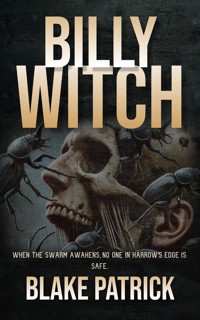
In the quiet English countryside, an unseen horror has begun to stir. When a chemical spill seeps into the river outside Harrow’s Edge, it mutates the larvae of the local Billy Witch beetles into something far more dangerous. What begins as a few strange sightings soon erupts into a nightmare, as the newly-evolved beetles swarm the town, attacking anything in their path.
Dr. Lewis Harding, a reclusive biologist, tries to warn the authorities, but no one listens—until it’s too late. The beetles multiply at an alarming rate, their aggression growing deadlier with each passing day. As the townspeople begin to fall victim to the unstoppable swarm, panic grips Harrow’s Edge.
Sergeant Jane Wilkins, struggling to maintain order, and Harriot Caldwell, an investigative journalist uncovering a dark government cover-up, find themselves in a desperate battle for survival. But as the beetles continue to evolve, the true scale of the threat is revealed. Can the town’s last defenders stop the swarm before it consumes them all?
From the depths of terror,
Billy Witch is a fast-paced, bone-chilling horror tale that will make your skin crawl. Perfect for fans of Shaun Hutson and the classic creature horrors of the 1980s, this novel will grip you from the first page and refuse to let go until the final, bloodcurdling moment.
Are you ready to face the swarm?
This is a horror story you won’t be able to forget.
Das E-Book können Sie in Legimi-Apps oder einer beliebigen App lesen, die das folgende Format unterstützen:
Veröffentlichungsjahr: 2024
Ähnliche




















Billy Witch
Blake Patrick
Copyright © 2024 by Blake Patrick
All rights reserved.
No part of this publication may be reproduced, distributed, or transmitted in any form or by any means, including photocopying, recording, or other electronic or mechanical methods, without the prior written permission of the publisher, except as permitted by U.S. copyright law. For permission requests, contact [include publisher/author contact info].
The story, all names, characters, and incidents portrayed in this production are fictitious. No identification with actual persons (living or deceased), places, buildings, and products is intended or should be inferred.
1st edition 2024
Table of Contents
Title Page
Copyright Page
Foreword
The Crash
Doubt and Dismissal
The Unseen Enemy
The Day Of The Fair
Experimental Solutions
The Town on Edge
Harriot’s Investigation
The Beetles Strike Again
Harding’s Breakthrough
The Fairground’s Massacre Aftermath
Under Siege
The Assembly Line
The Siege Begins
The Breaking Point
The Final Push
Endgame
Monaco
Sign up for Blake Patrick's Mailing List
Also By Blake Patrick
Foreword
Billy Witches—just hearing those two words could strike the fear of God into children back in the 1970s. I remember how the very mention of them would send us running for our lives, terrified that one of those nightmare insects might land in our hair. Though you don’t seem to hear much about them these days, back then, they felt like a real danger—or so we thought.
I’ve always had a deep love for the horror novels of the 1980s—Spiders, Devil's Coach Horse, Slither, Rats, Slugs, Crabs, to name just a few of my favourites. Even the covers of those books were enough to give you nightmares, but it was the stories themselves that truly captivated me, pulling me into their dark, unsettling worlds.
With this book, I set out to write a horror story in the same spirit—one that might evoke those old thrills and pay tribute to the writers who gave me so much joy. I hope I’ve done them justice.
Blake
The Crash
The night was so quiet that even the wind seemed to hold its breath, waiting.
On the narrow, winding road that hugged the contours of the riverbank, a lone chemical tanker groaned as it weaved through the shadows. Its headlights cut through the fog, but only just. The driver, Eddie Murchison, cursed under his breath, gripping the wheel tighter as he squinted at the road ahead. The tanker, an iron beast, was loaded with something Eddie wasn’t paid enough to care about, only that it was hazardous. And that tonight, he needed to make the delivery on time.
“Bloody hell, this fog,” Eddie muttered, glancing at his watch. He was already behind schedule. A pint at the local would have to wait.
His mind wandered as his truck rumbled on. Just a few more miles, and the road would straighten out. He’d be through the village soon, then onto the main road, away from this suffocating mist and eerie isolation. He took one hand off the wheel, rubbing his eyes for just a moment—just long enough.
The deer appeared out of nowhere, a flash of white in the darkness.
Eddie’s heart lurched. He yanked the wheel hard to the left, instinct kicking in before rational thought. Tyres screamed against the tarmac, the tanker’s heavy load shifting violently. He braked but nothing happened. The rear end fishtailed, metal screeching as it skidded sideways. The heaviness of the tanker was too much. Eddie's world spun as the wheels lost their grip entirely, the truck tipping.
“NO!”
The tanker flipped, metal crunching as the cab hit the road and skidded on its side like a monstrous sledge. The scream of tortured metal echoed across the empty landscape before a deafening explosion silenced everything. The tanker slammed through the guardrail, plummeting into the river below with a final, cataclysmic crash. The cab crushed under the weight of the load, trapping Eddie inside, his screams swallowed by the churning water as the cold, black river claimed him.
For a moment, silence reigned again, but the night would not stay silent for long.
The tanker groaned as it settled in the riverbed, its ruptured shell leaking a thick, oily substance that spread like poison through the water. The river, calm and sluggish at first, began to ripple with an unnatural sheen. Swirls of bright, unnatural colours—purple, green, yellow—danced across the surface, carried downstream by the current.
For miles, the toxic liquid flowed, sinking into the mud, winding around rocks, seeping into the roots of trees that lined the riverbank. And under the surface, nestled in the silt and reeds, something stirred.
The larvae of Melolontha melolontha, the common cockchafer—harmless, harmless little creatures in their juvenile stage, feeding quietly in the river’s ecosystem. But tonight, they had a new meal. The chemical cocktail found them in their burrows, soaking into their bodies, altering their biology in ways no one would understand until it was too late.
Unnoticed by the town that lay beyond the fog, the river carried its lethal cargo into every stream, every tributary. The water ran through fields, feeding crops, slipping into animal troughs, soaking into the earth. The ground breathed in the poison, and everything that relied on the river’s lifeblood slowly began to change.
By the time dawn broke, there was no sign of the accident. The tanker lay submerged, buried in muck, its driver forgotten by the world above. The river, calm and tranquil once more, reflected the early morning light like nothing had ever happened.
But something had.
The end had already begun.
And no one would know until it was far too late.
Six months after that fateful night, Dr. Lewis Harding wiped the back of his hand across his forehead, the damp chill of the riverbank clinging to his skin. It was well past midnight, and most sane folk were long asleep. But for Harding, this was the best time to study the creatures that fascinated him—nocturnal insects, those tiny, unseen members of the natural world that thrived in the dark. Tonight, he was focused on one particular specimen: Melolontha melolontha, the common cockchafer, or "billy-witch" as it was known in these parts.
He stood near the edge of the river, the murky water glistening under the moonlight, his lantern casting long, flickering shadows across the trees. The air hummed with the buzz of wings and the occasional call of night creatures. Harding adjusted his wire-rimmed glasses, squinting at the small container in his hand where he’d already trapped a few beetles earlier that evening. They were supposed to be harmless—a nuisance for farmers perhaps, but nothing more. Yet something about these specimens had caught his eye.
They were bigger. Considerably bigger.
“Strange,” Harding muttered to himself, crouching beside his equipment. He placed the container down on the ground and unscrewed the lid. The beetles inside, usually sluggish, were thrashing about with an unusual vigour, their spiked legs scratching at the glass. Harding’s brow furrowed as he observed their movements. Normally, these creatures measured around three centimetres, their large, clumsy bodies bumbling through the air during the spring and summer months. But these—these were at least double that size.
He reached for his tweezers, carefully extracting one of the beetles from the container. Holding it up to the lantern, he examined its body. The exoskeleton shimmered unnaturally, and the wings beneath the hard outer shell seemed to vibrate with an aggression that he hadn’t encountered before.
“This isn’t right,” he whispered. He had been studying the insect population in this area for years. He knew the rhythms, the cycles, and the characteristics of every species that called the riverbank home. But this mutation—this was something new. The beetle struggled against the metal grip of the tweezers, emitting a low, eerie hum as it flexed its powerful wings. Harding felt a shiver creep down his spine.
Suddenly, the beetle jerked free from his grip and buzzed aggressively around his head before disappearing into the night.
“Bloody hell,” Harding muttered, fumbling with the tweezers before composing himself. He’d caught enough specimens for tonight, and the data he had collected already raised too many questions.
As he packed up his equipment, he couldn’t shake the unsettling feeling gnawing at him. These creatures, normally harmless and almost comical in their clumsiness, were showing signs of something much more dangerous. They had grown, mutated even. And while he had no proof as to why yet, he had a strong suspicion that the answer lay somewhere in the river—something was changing the ecosystem.
By the time Harding made his way back to town, the first hints of dawn were creeping over the horizon. He headed straight to the local council office, determined to report his findings. Surely, the local authorities would take his concerns seriously—this wasn’t just an oddity, it could be a potential threat to the environment.
Hours later, seated in a drab office, he explained his observations to Councillor Davies, a middle-aged man with greying hair and an air of perpetual disinterest. Harding showed him his field notes, described the oversized beetles, the erratic behaviour, and the mutations. Davies barely looked up from his paperwork, occasionally offering a half-hearted nod.
“I’m telling you,” Harding pressed, “this isn’t normal. These cockchafers have mutated—something in the river, something toxic, has caused this change. We need to investigate.”
Davies sighed, finally setting his pen down. “Look, Dr. Harding, I appreciate your concern, but what you’re describing sounds like a few oversized bugs. It’s hardly a crisis.”
“Over-sized? They’re twice the size they should be! What if this is the start of something bigger? We need to trace the source—”
“Dr. Harding,” Davies cut him off, raising a hand. “The council has more pressing matters to attend to. I suggest you write up your findings, and if it turns into anything more, we’ll look into it. But right now, this seems like an isolated incident. A few large beetles are no cause for alarm.”
Harding clenched his fists beneath the desk, frustration bubbling under his calm exterior. He knew what he’d seen—this was no isolated incident. Something was very wrong.
But he also knew, in that moment, that no one was going to listen.
As he left the council office, the morning sun now fully risen, Harding made a vow. If they wouldn’t take his warnings seriously, he’d have to find out the truth on his own. Whatever was happening to those beetles, it wasn’t over.
It was only just beginning.
Sergeant Jane Wilkins leaned back in her creaky office chair, the dull hum of the police station a far cry from the excitement of her early years on the force. Her desk, cluttered with paperwork, old incident reports, and a half-drunk cup of cold tea, reflected the nature of her work these days. Petty crimes, drunken brawls, and the odd lost dog—this small rural town didn’t offer much in the way of excitement.
A loud sigh escaped her as she glanced out the window. The warm morning sun bathed the streets in a golden light, and the quietness of the town seemed amplified by the distant sounds of the preparations for the annual summer fair. The locals had been buzzing about it for weeks, and as far as Wilkins was concerned, it was nothing more than an excuse for teenagers to get drunk and for vendors to hike up the prices of cheap trinkets.
“Jane!” a voice called from the doorway. Wilkins looked up to see the mayor, Nigel Burns, sauntering in, his rotund frame casting a long shadow across her office. He was the kind of man who always looked slightly smug, like he knew something you didn’t. Dressed in his usual tweed suit, Burns carried himself with the confidence of a man who was more interested in keeping his seat on the council than actually doing any real work.
“Morning, Sergeant,” he said, puffing out his chest. “Thought I’d stop by to check on things. You know how it is with the fair coming up. Busy, busy!”
Wilkins raised an eyebrow. "Morning, Mayor. Yes, the fair. Shouldn’t be too much trouble—unless you count the odd fight breaking out over who gets the last pint.”
Burns chuckled, his belly shaking with the effort. "Ah, that’s the spirit! We need this fair to go off without a hitch. Brings in the tourists, puts money into the town. The local businesses depend on it. You’ve got everything under control, I take it?”
Wilkins nodded, though her thoughts were far from enthusiastic. “Yes, it’s all routine. We’ve got extra patrols set up around the camping sites and the fairgrounds. Shouldn’t be any real issues.”
Burns clapped his hands together, clearly pleased with himself. “Splendid! Splendid! And no sign of that bloody biologist sticking his nose in again, I hope?”
Wilkins stifled a groan. Dr. Lewis Harding had been a regular nuisance over the past few weeks, droning on about oversized beetles and chemical mutations. She had little patience for his paranoia, especially when the town had real concerns to deal with. The fair was a big deal, and Harding’s constant warnings were starting to grate on her nerves.
“He came by again yesterday,” she admitted. “Going on about some beetles he found near the river. He’s convinced there’s something wrong with them.”
Burns rolled his eyes. “Oh, for heaven’s sake, beetles? Is that man still banging on about his insects? Honestly, Jane, we have enough to worry about without entertaining the ramblings of that bug-mad scientist. He’s always been a bit... eccentric, but this time he’s taking it too far.”
“I tried to tell him,” Wilkins replied, tapping her pen against her desk. “He’s not exactly listening to reason.”
“Well, I hope you put him in his place. Last thing we need is Harding stirring up trouble right before the fair. Imagine the headlines—‘Dangerous Mutant Beetles Terrorise Local Festival.’ Bloody ridiculous!”
Wilkins smirked at the thought. “I don’t think it’ll come to that. The man’s just worried about nothing.”
Burns leaned in, lowering his voice conspiratorially. “Listen, we can’t have Harding scaring off the tourists, alright? The fair’s already got a few investors coming in, and they’re bringing their families. If he starts spreading wild theories about killer beetles, it could put them off.”
She met his gaze, understanding exactly what he was getting at. “Don’t worry, I’ll keep an eye on him. We’ll handle it.”
Burns straightened, clearly satisfied. “Good. That’s what I like to hear. Now, I’ve got to meet with the event organisers. Busy, busy, busy! Let’s make this year’s fair a success, eh?”
As Burns strutted out of the office, Wilkins exhaled slowly. She didn’t much care for the man, but he had a point—Harding was turning into a problem. The scientist had always been a bit of an oddball, but recently, his obsessions were getting out of hand. Oversized beetles, chemical spills—it all sounded like something out of a bad sci-fi film.
She reclined in her chair again, glancing at the small stack of reports Harding had insisted she look over. Some beetles, double their usual size, found near the river. So what? It wasn’t unusual for bugs to be bigger in the wild. Nature had a way of surprising people. If Harding wanted to spend his nights poking around in the mud, that was his business.
For Wilkins, the fair was the real focus. The town needed the boost, and the last thing anyone wanted was to see Harding’s theories take over the headlines. Ignorance was bliss, after all. What could a few overgrown beetles possibly do?
As she set the papers aside, her radio crackled to life. There was always something else to deal with, something more important than a mad scientist’s ramblings.
She stood, grabbing her coat. There was a town to keep safe, after all.
The early morning mist clung to the fields, wrapping the landscape in a blanket of grey as George Miller trudged through the wet grass. The sun had barely crept over the horizon, casting a weak light across his land, but something wasn’t right. His sheep were restless, bleating louder than usual, and his border collie, Max, hadn’t come back to the farmhouse after his night patrol. That was unusual—Max was always waiting by the door at dawn, eager for breakfast and a run.
George tightened his grip on his walking stick, a growing sense of discomfort plaguing him. He whistled, a shrill note that usually brought Max bounding through the fields within seconds. This time, there was nothing—just the hollow echo of his call drifting on the wind. The sheep’s bleating grew louder, almost frantic, and he quickened his pace.
“Max!” George called again, his voice breaking the stillness of the morning. He scanned the field, the tall grass swaying gently, but there was no movement.
As he reached the far corner of the pasture, something caught his eye—a dark shape lying motionless in the grass, partially obscured by the mist. His heart sank. “Max?”
George broke into a run, his boots thudding against the earth, and as he got closer, he knew something was horribly wrong. Max lay sprawled on his side, his fur matted with blood, eyes wide open and lifeless. George dropped to his knees beside the dog, his breath coming in short, panicked gasps.
“Oh, no... Max... what happened to you, boy?”
The sight was worse than anything he could have imagined. Max’s body had been torn open, the flesh savagely ripped from his bones, his legs twisted at unnatural angles. His chest cavity was a mangled mess, the ribs visible through the shredded fur, as though something had burrowed into him, gnawing and tearing with a mindless hunger. George gagged, bile rising in his throat as he turned away from the horror in front of him.
“What in God’s name...” he muttered, staggering to his feet, the sickening image of his dog’s mutilated body burned into his mind. His hands trembled as he reached for the collar around Max’s neck, his fingers brushing against something sticky—blood. But there was something else too, something strange.
George wiped his hand on his trousers, looking down at his fingers. They were coated in a strange, slimy substance—thick and black, like tar. His mind raced, trying to make sense of it all. He scanned the ground around Max, searching for any sign of what could have done this, but all he saw were patches of disturbed grass and, scattered everywhere, tiny beetles—hundreds of them, crawling over the dog’s body, their dark shells glistening in the morning light.
George staggered back, swatting at his legs as the beetles swarmed around him. A few clung to his trousers, biting into the fabric with sharp pincers before he managed to knock them off. His pulse quickened. These weren’t the harmless insects he was used to seeing on the farm. They were larger, more aggressive, and there were so many of them.
Without another thought, George ran, his boots pounding against the earth as he raced back to the farmhouse, his breath coming in ragged gasps. He didn’t stop until he slammed the door shut behind him, collapsing against it, his chest heaving.
Sergeant Wilkins arrived later that morning, standing by the fence with her notepad as George relayed the story, his voice trembling with shock. She glanced over at Max’s body, now covered with a tarp, her jaw tightening as she scribbled down notes. A mutilated dog, strange black slime, aggressive beetles—none of it made any sense.
“So you didn’t see what attacked him?” she asked, her pen poised above the page.
“No, I didn’t see a damn thing,” George snapped, running a hand through his thinning hair. “But I know those bloody beetles had something to do with it. Look at them!He gestured wildly at the swarm still moving along the ground near Max’s body.
Wilkins frowned. “Beetles don’t attack dogs, Mr. Miller.”
“These ones did,” he insisted, his voice hoarse. “Or they were there when something else got him. It’s not natural, Sergeant. I’ve never seen anything like it.”
She sighed, folding her notepad. It wasn’t the first time she’d heard strange stories about wildlife behaving oddly lately, but this? This was different. She’d seen animal attacks before, but not like this. The beetles were unnerving, yes, but she had no evidence they were responsible for the horrific state of the dog.
“I’ll send someone to collect the body and run some tests,” Wilkins said, trying to keep her tone measured. “In the meantime, stay away from that part of the field. I’ll get in touch if we find anything.”
As she turned to leave, she noticed a familiar face walking towards them—Harriot Caldwell, the local journalist, camera in hand and curiosity in her eyes. She had a knack for showing up just when something strange was happening.
“Morning, Sergeant,” Harriot called out, giving a quick nod to George. “Heard there was some trouble. Anything worth writing about?”
Wilkins exhaled sharply. “Just a dog attack, Harriot. You won’t get much of a story out of this one.”
Harriot raised an eyebrow, peering past her at the tarp-covered shape. “From what I heard, it wasn’t just any dog attack.”
Sergeant Wilkins shook her head, already tired of the conversation. “I’ll let you know when there’s something worth reporting on.”
Harriot, undeterred, snapped a few pictures of the scene anyway, her mind already spinning with questions. She had a feeling there was more to this story than Wilkins was letting on. Beetles? A mutilated dog? It sounded ridiculous, but in a sleepy town like this, ridiculous often turned out to be the truth.
As Harriot turned to leave, she glanced back at the field one last time. Something wasn’t right here, and she intended to find out exactly what.
Dr. Lewis Harding hunched over his microscope, eyes bloodshot and heavy with exhaustion. The lab was dimly lit, a single lamp casting a cold glow over the array of beetles pinned to corkboards, vials of strange fluids, and piles of hastily scribbled notes. His fingers trembled slightly as he adjusted the focus, bringing into view the tiny, mutated legs of the specimen he had trapped the night before. It was unlike anything he had ever seen.
The beetles were changing.
He had spent the past several weeks collecting samples from the riverbanks, documenting their behaviour, and what he had uncovered was nothing short of terrifying. They weren’t just larger; their physiology was completely altered. Their mandibles were longer, sharper. Their exoskeletons, once a dull brown, now shimmered with a dark, almost metallic hue under the light, as though something unnatural had fused with their very DNA. But that wasn’t the worst of it.
The chemical analysis had come back just hours ago. There were traces of compounds—compounds that should not have existed in nature. Harding held up one of the reports, scanning it again, as if re-reading it might somehow make the results less real. The beetles’ bodies contained residues of industrial chemicals, highly toxic substances that had somehow entered the local ecosystem. His mind drifted back to the tanker crash six months ago. That night had seemed like an isolated incident at the time—a tragedy, but not one that anyone had considered capable of having long-lasting consequences.
But now? Now it was clear. The river had been poisoned, and everything living within its waters was absorbing that poison. These beetles had become something else entirely—faster, more aggressive, and, from what he suspected, increasingly dangerous.
He dropped the report onto the cluttered desk, frustration churning within him. He had tried to sound the alarm weeks ago, but no one had listened. Not the council, not the police, not even the blasted mayor. They had all brushed him off as a neurotic scientist with too much time on his hands. But the evidence was undeniable now. These mutations weren’t a natural occurrence—they were the result of contamination. If these beetles continued to breed and spread, the consequences could be catastrophic.
Harding stood, pacing the small space of his lab, the anxiety building in his chest. He had to do something before it was too late. He picked up the phone and dialled the mayor’s office.
Mayor Nigel Burns sat behind his large oak desk, a cigar smouldering between his fingers, the smoke swirling lazily in the warm afternoon air. The annual fair was only days away, and he was in high spirits. The plans were coming together nicely, and the town’s economy was already feeling the positive impact. If everything went according to plan, it would be the best fair in years, drawing in tourists from all over. It was exactly what the town needed.
The last thing he needed was that madman Harding throwing another fit about his bloody beetles.
When the phone rang, Burns sighed heavily and picked it up. “Mayor Burns speaking.”
“Nigel, it’s Lewis Harding. I need to see you immediately,” came the voice from the other end, tense and urgent.
Burns rolled his eyes and relaxed in his chair. “Harding, not this again. I’m a bit busy, you know. The fair is in three days, and I’ve got more important things to deal with than your latest bug crisis.”
“This is not just about the beetles anymore!” Harding snapped. “I’ve been studying them for weeks. Their entire physiology has changed. These creatures are mutating because of the chemicals in the river. I have the data—chemical analyses, toxicology reports. I’ve documented the changes.”
“Lewis, we’ve been over this,” Burns replied, a thin smile playing on his lips. “So a few beetles are bigger than usual. It’s hardly the end of the world. Why don’t you take a holiday? Relax a bit. You’re working yourself into a state.”
“You’re not listening to me!” Harding’s voice crackled through the receiver, rising with frustration. “These aren’t just bigger insects—they’re something else now. If this contamination continues unchecked, it could affect the entire ecosystem. I’ve already seen the effects in other species—dead fish, altered plant life. There’s more going on here than you realise, and if we don’t act now, it’s going to get out of control.”
Burns exhaled slowly, resting the cigar in the ashtray. “Look, Lewis, I understand you’re passionate about your work, but we can’t go around telling people that their local beetles are turning into monsters. You’ll cause a panic for no reason. Think about the fair—this town needs the revenue. I won’t have you spreading fear over something that’s probably a natural occurrence. These things happen in nature, you know.”
Harding’s voice grew cold. “This is not natural, Nigel. The beetles are attacking animals, and it’s only a matter of time before they pose a threat to humans. You need to shut down the fair and address this before it’s too late.”
Burns snorted, his patience wearing thin. “Shut down the fair? Are you insane? Absolutely not. This town has been through hard times. We’re on the verge of turning things around, and you want to throw that all away because you found a few big bugs? No. I won’t entertain it.”
“Damn it, Nigel, you’re playing with people’s lives!” Harding shouted, but Burns had already made up his mind.
“Look, Harding, I’ll have someone look into it, alright? We’ll send a couple of experts, get a second opinion. But don’t expect me to cancel anything. Now, if you’ll excuse me, I have real work to do.”
The line went dead.
Harding slammed the phone down, his heart pounding in his chest. He had tried reasoning with them, tried to make them see the danger. But Burns was blinded by his obsession with the fair, and the town council had dismissed him too many times.
If they weren’t going to listen, he’d have to find a way to stop this on his own. Before the swarm grew beyond his worst fears.
The dark suspicion in his mind was turning into something far more terrifying: certainty.
The woods were thick with the smells of pine and damp earth, a cool breeze whispering through the trees. Michael Trent loved early evening hikes, especially when the light was fading, and the world seemed to turn inward. It was peaceful, a welcome break from the chaos of his day-to-day life. The trail snaked through the dense forest, far from the noise of the town, and he found comfort in the solitude.
As he moved deeper into the woods, the sounds of civilisation faded completely, leaving only the crunch of twigs underfoot and the occasional rustle of small creatures in the undergrowth. The sun had dipped below the horizon, casting long shadows through the trees, but Michael knew these woods well. He often stayed out later than he should, navigating the trails with a familiarity that came from years of walking them.
The air was still, almost unnervingly so, as he paused to catch his breath near a cluster of birch trees. A slight movement on the path ahead caught his attention—a low, almost imperceptible skittering sound. He squinted into the fading light, thinking it might be a squirrel or some other small animal foraging in the dusk.
Then he saw them.
At first, it seemed like nothing more than a shimmer on the ground, a dark mass moving slowly over the leaves. He stepped closer, frowning, trying to make out what it was. The mass shifted, undulated, and then he realised—it wasn’t just one thing. It was many. Hundreds, maybe thousands, of beetles scurrying across the forest floor, their dark, shiny bodies writhing in a way that made his skin crawl.
“What the hell...” he muttered, taking a step back.
The beetles moved with an eerie synchronisation, a wave of black creeping towards him, their chitinous bodies clicking and hissing as they advanced. Michael’s heart began to race, the hairs on the back of his neck standing on end. In all his years of hiking, he had never witnessed something similar to this.
Before he could react, the swarm surged forward.
The first few beetles hit his boots, crawling up his legs with a speed that defied their normally sluggish nature. Michael let out a startled yelp, swatting at his trousers, but more beetles followed, covering his legs and crawling higher. Panic set in as he stumbled backward, frantically trying to brush them off, but they were relentless.
“Oh God, get off me!” he shouted, slapping at his legs, his chest, his arms.
The beetles swarmed faster now, climbing over each other in a frenzied mass, their mandibles clicking hungrily as they covered his body. Michael screamed, stumbling as he fell to the ground, writhing and thrashing as the swarm engulfed him. He tried to shout for help, but his cries were muffled as the beetles found their way into his mouth, his nose, his ears. They tore at his skin with razor-sharp pincers, burrowing into his flesh with a hunger that went beyond nature’s design.
His screams turned to gurgles as the beetles began to strip him, layer by layer. Skin, muscle, tendon—all reduced to raw, bloody tissue as the swarm devoured him alive. His hands clawed at his face, trying to pull the beetles away, but they covered him completely now, a writhing mass of black that surged over him like a living tide.
His movements slowed as the life drained from him, his flesh dissolving into a bloody pulp beneath the relentless assault. His eyes, wide with terror, disappeared under the swarm, the last remnants of humanity consumed by the frenzied beetles.
Then, silence.
The swarm shifted, the dark mass retreating as quickly as it had appeared, leaving behind only the remains of what had once been Michael Trent. His body lay in the clearing, stripped of skin, muscles shredded, bones exposed to the cold evening air. The flesh had been gnawed down to the bone in some places, blood pooling around the remains in sickening, glistening puddles.
As the swarm receded, the beetles scattered back into the undergrowth, their purpose fulfilled, leaving no trace of their presence except for the torn remains of the man who had once enjoyed peaceful hikes through the woods. His body lay in a grotesque heap, twisted and hollow, his final moments etched into the brutal scene around him.
The forest was quiet again, the wind rustling through the trees as if nothing had happened.
But in the fading light, one beetle remained. It crawled slowly across the blood-soaked ground, pausing at the edge of Michael’s body before turning its attention toward the trees. Its wings twitched, antennae flickering in the air, tasting the scent of fresh prey.
Then, it disappeared into the underbrush, where hundreds more waited, silently, for their next victim.
The woods had always been a place of peace, but now, they harboured something far darker—something that would not stop until it had devoured everything in its path.
Doubt and Dismissal
Dr. Lewis Harding leaned over his microscope, his eyes bloodshot from hours of studying the cockchafers’ mutated bodies. The soft hum of the fluorescent light above his workbench was the only sound in the lab, aside from the occasional scratch of a pen across paper as he made notes. The beetles twitched inside their glass containers, their movements far more aggressive than they should have been. He had never seen behaviour like this before, not in such docile creatures.
“This doesn’t make sense,” he muttered, rubbing his temples. He adjusted the microscope again, focusing on the exoskeleton of one of the beetles. Its body was larger than normal, the hardened shell gleaming with an almost metallic sheen. Underneath the microscope, the texture of the exoskeleton was unnervingly smooth, more like polished armour than the brittle covering he had been used to seeing in these species.
He scribbled a note on his pad. Larger exoskeleton. Unnatural rigidity. Metallic structure—potential contamination source.
Harding leaned back in his chair, staring at the beetle, his mind racing. During the past couple of weeks, he had been analysing these specimens, and what he had uncovered was both disturbing and puzzling. The cockchafers had undergone a significant mutation, not only in size but in their entire biology. Their muscle structure was more developed, and their mandibles were sharper—predatory even. And then there was the strange aggression. The insects, once harmless, now reacted violently to any form of contact.
“This can’t just be a random mutation,” Harding said aloud, as though speaking the thought would make it more real.
He picked up the beetle with a pair of tweezers, holding it up to the light. Its legs twitched and scrambled, trying to escape his grasp, and its wings buzzed ominously. There was no doubt now—the chemical spill from the tanker six months ago had seeped into the river and the surrounding ecosystem. The beetles, their larvae submerged in the contaminated waters, had absorbed something toxic, something unnatural. It was clear that the chemicals had triggered these mutations.
But the question that haunted Harding was how it had spread so rapidly. The beetles were everywhere now, not just near the river. They had been found miles from the crash site. The mutation was spreading faster than he could have anticipated.
Suddenly, a sharp knock at the door interrupted his thoughts.
“Come in,” he called, not bothering to look up from his microscope.
Tom Harding, his teenage nephew, stepped inside, carrying two mugs of tea. “Uncle Lewis, you’ve been in here for hours. Thought you might need this.”
“Thanks, Tom,” Harding replied, taking the mug gratefully. “I’m close to something, I just... I can’t figure out how the contamination is spreading so quickly.”
Tom set his own mug down on the workbench, peering at the beetles in the containers. “What do you mean? It’s been months since the spill, hasn’t it? Wouldn’t the chemicals have settled by now?”
Harding shook his head, frowning. “That’s what should have happened. The chemicals should have dissipated, diluted by the river and its tributaries. But these mutations... they’re spreading. And they’re spreading far faster than the contamination should allow. It’s almost like the beetles are... transmitting it somehow.”
“Transmitting it?” Tom raised an eyebrow. “Like a disease?”
“Exactly,” Harding said, snapping his fingers. “That’s the only explanation that makes sense. These beetles must have become carriers of the chemicals, spreading them through their contact with the environment. Every time they feed, every time they land on something—they’re leaving traces of the contamination behind, and it’s accelerating the mutation in other creatures.”
He paused, taking a deep breath as the enormity of the situation began to settle in. “This isn’t just about a few mutated insects, Tom. This is about an entire ecosystem being affected. If the mutation continues to spread like this, it could alter the balance of the local wildlife. Worse, if the beetles’ aggression continues to grow, they could start attacking more than just animals.”
“You mean... people?” Tom’s voice wavered, the gravity of his uncle’s words hitting him.
Harding nodded slowly. “Yes, I’m afraid so. If these beetles have become this aggressive, this predatory, there’s no telling what they might do if they swarm in large enough numbers.”
Tom stood in silence, the implications hanging heavy in the air. “What do we do?”
Harding sighed, setting his mug down. “We need to warn the authorities again. The mayor won’t listen, but we can’t just sit here. If this mutation gets out of control, we could be looking at a disaster. But we need more data first—something concrete that proves how dangerous these beetles have become.”
“More data? We’ve already got those reports,” Tom argued, gesturing to the piles of paper scattered across the workbench.
“They won’t take those seriously,” Harding replied, shaking his head. “We need proof. Something they can’t ignore.”
Tom frowned. “What kind of proof?”
“Live specimens. Footage. Anything that shows what these beetles are capable of. We need undeniable evidence before they’ll even consider acting on it.”
Harding turned back to his microscope, determination burning in his eyes. “If they won’t listen to reason, we’ll force them to listen to the facts. Before it’s too late.”
Tom glanced at the beetles again, a chill running down his spine. He didn’t know how much time they had left, but he trusted his uncle. If anyone could figure this out, it was Dr. Lewis Harding. But deep down, he couldn’t get rid of the feeling that they were already running out of time.
Dr. Lewis Harding sat stiffly in the reception area of the government office in Bristol, his briefcase resting on his lap. The building had an air of bureaucratic indifference—rows of grey, identical desks and the low murmur of voices that seemed to blend into the constant hum of a droning air conditioner. The receptionist, a young woman who hadn’t even looked up when he arrived, was typing away on her computer, completely oblivious to Harding’s growing anxiety.
He tapped his foot impatiently, glancing at the clock. He had sent numerous letters, emails, and even made phone calls over the past few weeks, desperately trying to secure a meeting with someone who could help—someone with the power to do something. The cockchafers’ mutation was getting worse, and every day that passed without action made the situation more dangerous. Finally, he’d been granted this meeting. It had taken far too long, and now, as the minutes ticked by, he couldn’t rid himself of the notion that he was being brushed off yet again.
The door to the inner office creaked open, and a voice called out, “Dr. Harding? They’ll see you now.”
Harding stood quickly, clutching his briefcase as though it were a lifeline, and followed the receptionist down a long, sterile corridor. His heart raced in his chest. This was his chance to finally make the government see the seriousness of the situation. He had the data, the evidence—there was no reason they shouldn’t take him seriously this time.
The receptionist led him into a small, cramped office where two officials sat behind a large wooden desk. One was a man in his late fifties, with thinning hair and a perpetual scowl. His nameplate read Mr. Colin Pratt—Environmental Affairs. Next to him sat a younger woman, smartly dressed, with a clipboard in hand. Her name was Ms. Laura Hume—Public Safety Coordinator. Both looked up with polite, yet bored expressions.
“Dr. Harding, is it?” Mr. Pratt asked, not bothering to stand or offer his hand. “Take a seat.”
Harding sat down, feeling a growing tension in his shoulders. He reached into his briefcase and pulled out a thick file, laying it on the desk in front of them. “Thank you for seeing me. I’ve been trying to get someone’s attention for weeks now. What I’m about to show you is highly concerning.”
Pratt gave a skeptical look, but said nothing. Harding opened the file, spreading out reports, chemical analyses, and photographs of the mutated beetles. He spoke quickly, his words tinged with urgency. “These cockchafers—what the locals call ‘billy-witch beetles’—have undergone severe mutations due to a chemical spill six months ago. Their size has doubled, they’ve become aggressive, and their behaviour has completely changed. They’ve been attacking livestock, and I have strong reason to believe they could pose a serious threat to humans if the population continues to grow unchecked.”
Ms. Hume made a few notes on her clipboard, glancing up at Harding. “And these mutations are caused by the chemical spill, you say? From the tanker crash?”
“Yes, exactly,” Harding said, pushing the lab reports towards her. “These are the chemical analyses I conducted. The beetles have absorbed compounds from the river water, and it’s triggered these mutations. I’ve seen similar signs in other species—fish, birds—but the beetles are the most alarming. They’re breeding rapidly, and they’re spreading the contamination with them. If we don’t act soon, the consequences could be catastrophic.”
Pratt shuffled back in his chair, glancing briefly at the reports before crossing his arms over his chest. “So, let me get this straight, Dr. Harding. You’re saying that a few beetles have gotten a bit bigger, and you’re claiming this is some sort of... ecological disaster?”
“It’s not just that they’ve gotten bigger,” Harding replied, a hint of frustration creeping into his voice. “Their entire biology has changed. They’ve become aggressive predators. I’ve documented cases of these beetles attacking animals, stripping them down to the bone in minutes. This isn’t just about size—it’s about behaviour, about how this mutation could affect the entire ecosystem.”
Pratt exchanged a glance with Ms. Hume, who seemed to stifle a smile. “Well, Dr. Harding, we do appreciate your dedication to the environment, but you have to understand that these things tend to sort themselves out. Nature has a way of balancing itself. A few larger beetles isn’t enough to raise alarm bells here in Bristol.”
Harding’s jaw tightened. “This isn’t a natural phenomenon! It’s a direct result of human interference. The chemicals in the river have caused these changes, and if we don’t intervene, this could spiral out of control.”




