


3,49 €
Mehr erfahren.
- Herausgeber: Blake Patrick
- Kategorie: Gesellschafts- und Liebesromane
- Sprache: Englisch
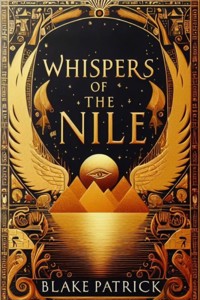
Ancient Egypt. A race to uncover a legacy that can change destinies. Danger is never far away.
Unlock the secrets of Egypt's distant past in "Whispers of the Nile", a captivating tale of love, intrigue, and mystery.
Set against the backdrop of majestic Egypt, a land where the line between the divine and the mortal blurs, scribe Jehuti and priestess Neferura discover their destinies intertwined in a quest that could alter the course of history.
As they confront the trials set by the enigmatic gods and navigate the treacherous waters of palace intrigue, the pair uncover truths long buried beneath the stones of silent monuments.
But beneath the glinting surface, a darker truth festers—a legacy of power that will demand the ultimate sacrifice.
Fans of Wilbur Smith's "River God" will be enthralled by this epic adventure full of thrilling adventures, forbidden love, and cunning deceit.
Join the odyssey that is "Whispers of the Nile," where every whisper holds a truth, every shadow tells a story, and every page you turn brings you closer to uncovering the timeless enigma of a civilisation that has fascinated the world through the ages.
Das E-Book können Sie in Legimi-Apps oder einer beliebigen App lesen, die das folgende Format unterstützen:
Veröffentlichungsjahr: 2024
Ähnliche




















Whispers of the Nile:
A Tale of Gods and Mortals
––––––––
Blake Patrick
Chronicles of the Eternal Nile
Book 1
Contents
PREFACE
The Throne's Shadow
Desert Whispers
The Divining Pool
Sand and Stone
Dance of the cobra
River’s End
Gods and Mortals
Forbidden Love
Gold and Deceit
Pyramid Schemes
Veil of Darkness
Oasis Mirage
Labyrinth of the lost
Whispers in the wind
Whispers in the sand
City in turmoil
The Phoenix rises
Echoes of Eternity
Echoes of the Ancients
Whispers of the Past
Whispers of Eternity
PREFACE
In the realm of the ancients, along the lifeline that is the River Nile, the world of ancient Egypt unfolds—an enigma draped in the vestments of sand and time. It is a civilization that commands both wonder and mystique, where the dust of millennia has settled over stories and truths alike. To comprehend the essence of ancient Egyptian life, to understand the ascendancy of its pharaohs, one must journey beyond the veil of the present, sailing upstream on the currents of the past.
The Nile, Egypt's eternal wellspring, was the lifeblood of the civilization, engendering both prosperity and stability. The annual inundation deposited layers of fertile silt along its banks, bestowing upon Egypt the moniker "the gift of the Nile." Here, where agriculture flourished, a complex society emerged, tightly woven and meticulously structured.
At the zenith of this society reigned the pharaoh, not merely a ruler but a divine intermediary. The pharaoh was the pivotal axis upon which the celestial and the terrestrial balanced, a god incarnate who commanded with the authority of the heavens. It was through this divine right that pharaohs ascended, their lineage often believed to be traced to the gods themselves, their bloodline a testament to their celestial origins.
In this sacred and stratified cosmos, the pharaoh embodied Egypt’s vitality, order, and harmony—known as Ma'at. This concept, essential to Egyptian thought, was not simply an abstract ideal but a tangible, ever-present force that permeated every aspect of life and governance. To uphold Ma'at was the pharaoh's paramount duty, ensuring the nation's prosperity and the gods' favour. It was a role steeped in religious ritual and political power, each pharaoh charged with sustaining the universe's delicate equilibrium.
Life in ancient Egypt was an intricate tapestry of labour and worship, a daily rhythm set to the beat of construction and cultivation. Workers toiled under the relentless sun to erect monuments of timeless grandeur, edifices destined to touch the skies and gods alike. Their hands carved and chiselled stone, creating temples, tombs, and statues that stand as enduring testaments to their craft and devotion.
In contrast to the magnificence of royal and divine architecture, the common folk of Egypt dwelt in houses of mud brick, their lives dictated by the seasons and the cycles of the Nile. They were a people of resilience and ingenuity, their society rich with artisans, scribes, and farmers. Every class and occupation had its place within the hierarchy, a system that offered stability but rigidly defined one's role and prospects.
Religion imbued every aspect of Egyptian life, its pantheon a celestial council that presided over the natural and the supernatural realms. The deities were numerous and varied, each with their domain and followers. From the sun god Ra, who journeyed across the sky, illuminating and warming the earth, to Osiris, the lord of the afterlife, who judged the souls of the deceased, these gods shaped the understanding of the world and the beyond.
Death, in the Egyptian consciousness, was not an end but a transformation—a passage to an eternal existence that mirrored the earthly one. The care and attention devoted to the deceased were profound, a reflection of the belief in the afterlife's reality. Mummification, funeral rites, and tomb construction were not mere customs but sacred duties that ensured safe passage and sustenance in the next world.
The grand narrative of Egypt is not without its share of shadow, for it is also a tale of intrigue and ambition. The pharaoh's court was a chessboard of power plays, where alliances formed in whispers and loyalty was often as fluid as the Nile itself. Advisors, priests, and nobles vied for influence, their schemes as much a part of the empire's heartbeat as the annual flooding.
In these pages, you will encounter a world where mythology and reality converge, where the threads of history and legend are intricately woven. You will walk alongside characters for whom the gods are as real as the ground beneath their feet, where each decision reverberates with the weight of divine and mortal consequence.
As we unfurl the scroll of the past, the lives of those who walked the banks of the ancient Nile come alive, whispering their tales to those who would listen. We peer into the realm of pharaohs and peasants, a world at once alien and familiar, discovering that the human heart beats with the same passions and fears across the chasm of time.
Now, let us begin our journey into the heart of this land of contrasts and continuity, where each grain of sand carries the echo of eternity, and each stone tells a story of a people who believed the gods walked among them.
As we delve deeper into the ancient Egyptian way of life, we find a society ensconced in symbolism and ritual. This was a culture that revered the written word, not merely for its practical applications but for its magical and preservative properties. The hieroglyphs—sacred carvings—were not mere letters but potent symbols that encapsulated the essence of the things they represented. Scribes, therefore, were not just literate craftsmen but were considered magicians of the word, wielding their scripts like wands that could communicate with the divine and perpetuate one’s name for eternity.
The pharaoh, in the eyes of the people, was not only a godly ruler but also a warrior, a defender of the nation's borders against the encroaching chaos that lay beyond. It was he who led the chariots into battle, who secured the victories that expanded and fortified Egypt's horizons. The depictions of the pharaoh smiting his enemies were not mere propaganda but representations of his divine mandate to protect Egypt’s sanctified order against the forces of disorder.
Yet, beneath the pharaoh's gilded sandals lay the dusty feet of the common man, the backbone of Egyptian society. The farmers, who turned the soil and harvested the grain, lived a life governed by the seasons and the river's whims. Their existence, while far from the splendours of the court, was nonetheless entwined with the divine. Each seed sown into the earth was a pact with the gods, an act of faith that they would bring forth sustenance from the fertile black land.
Women in ancient Egypt enjoyed a degree of respect and legal rights that were uncommon in the ancient world. They could own property, initiate divorce, and were often involved in religious ceremonies as priestesses and musicians. The veneration of goddesses such as Isis, Hathor, and Ma'at provided models of divine femininity that permeated every layer of society, from the royal palace to the humblest home.
The very fabric of Egyptian society was woven with religion, a constant dialogue with the divine. The temples were not just places of worship but were the houses of the gods on earth. Each day, rituals and offerings were made to maintain the gods' favour and presence within the sanctuaries. The fragrant smoke of incense filled the air, while hymns and prayers echoed off the stone walls, a symphony of devotion that vibrated through the spiritual and material planes.
The path of the divine was etched into the very landscape of Egypt, from the sanctity of the temples to the sepulchres hidden within the desert's embrace. The pyramids, those monumental triumphs of human endeavour, stood as the most enduring symbols of the pharaohs' godlike status. These structures were not just tombs but were cosmological vehicles for the king's soul, connecting the earth to the stars. Each block was a testament to the belief in an everlasting afterlife, where the king would continue to rule in the celestial realm.
The pyramids themselves were constructed through the collective efforts of a society that saw the divine hand in every aspect of life. Laborers, engineers, architects, and artisans—all worked in a concerted effort to erect these eternal homes for their god-kings. The precision and scale of these structures remain a testament to their ingenuity and the centralized power that could mobilize such resources and manpower.
The pharaoh's death was both a time of mourning and a time of renewal. The entire nation participated in the intricate funerary practices that ensured the king's safe journey to the afterlife. The mummification process, lasting seventy days, was a sacred art, preserving the body for its eternal existence. This was followed by a procession of mourners and priests, the body borne on a sledge to its final resting place amidst spells and prayers to ward off evil and guide the deceased king.
It was in the afterlife that the pharaoh expected to achieve his apotheosis, joining the pantheon of the gods and continuing his rule. The rituals performed, the spells recited, and the tomb's very construction were all designed to secure this divine transformation. The Pyramid Texts, the oldest known religious texts in the world, were inscribed in the king's tomb to provide guidance and protection in the hereafter.
This complex society was governed by laws and codes that reflected both practical governance and the overarching divine order. The pharaoh, as the supreme judge, was the final arbiter of Ma'at. However, officials and local governors, too, played their part in upholding the law and ensuring justice. The concept of truth, balance, and cosmic order was integral to the administration of justice, from the smallest dispute to the grandest declaration.
Egypt’s fascination with the afterlife also bred a bustling economy of funerary goods—artisans crafted amulets, shabtis, and canopic jars, ensuring the dead were well-equipped for eternity. This was a culture that looked death in the eye and prepared for it with the same diligence as they lived their earthly lives.
In exploring the legacy of ancient Egypt, one encounters a people whose lives were richly textured with mythology, whose every action was imbued with meaning. From the silt-laden banks of the Nile to the sun-baked stones of the pyramids, the ancient Egyptians crafted a civilization that straddled the boundary between the seen and the unseen, the mundane and the magical.
As we continue to peel back the layers of the past, to explore the inner workings of this civilization, we are reminded of the indelible human desire to understand our place in the cosmos, to connect with something larger than ourselves. The ancient Egyptians, in their search for immortality, have achieved a form of it—as long as their stories are told, as long as we continue to seek wisdom in the silent stones and the shifting sands, their legacy endures.
And so, we venture forth into the chapters ahead, each a gateway to an ancient world, each a stepping stone across the river of time. It is a journey of discovery, unearthing the treasures of the past, and unravelling the tapestry of a civilization that has fascinated us for centuries.
Join us, then, as we traverse this land of eternal duality, where death begat life, and myth intertwined with reality. Let the journey commence, and may the whispers of the ancients guide us through the storied landscape of their enduring realm.
The Throne's Shadow
The sun blazed over the city of Thebes, its rays glinting off the golden apex of the grand pyramids that stood as sentinels over the vast expanse of the Nile. But deep within the palace, the air was cool, the sunlight filtered through delicate lattices of alabaster and ivory.
Pharaoh Akhenra sat atop his ornate throne, a massive structure of ebony, inlaid with gold and precious gems that told tales of the dynasty’s valour and conquests. The walls were lined with vivid murals depicting the gods favouring the House of Anak, blessing them with bountiful harvests and victories in battle. The Pharaoh’s form, draped in fine white linen, was accentuated by the gleaming golden uraeus adorning his crown, symbolizing his divine rule.
A soft murmur ran through the courtiers as Tiaa, the Queen, made her way into the hall. Her eyes, outlined with rich kohl, scanned the crowd before resting on her husband, offering him a slight nod. Akhenra's heart warmed at the sight of her. In the intricate dance of politics and power, Tiaa had always been his trusted confidante, the voice of reason amidst the chaos.
However, amidst the hushed reverence for the royals, a shadow was creeping closer to the throne. Not a physical one, but a palpable tension that even the most naive maidservant could sense. Two seats away from Pharaoh, General Menes sat upright, a stern expression carved onto his hawkish face. As head of the military and a member of the House of Anak, his loyalty should have been unquestionable. But rumours whispered of his growing discontent with Akhenra’s rule.
To Menes’s left, the scribe Horemheb stood ready, clutching a roll of papyrus. Horemheb was not just any scribe; he was the royal chronicler, the man responsible for penning the deeds and words of the Pharaoh for all eternity.
Akhenra cleared his throat, drawing the attention of the hall. “People of Thebes, today marks the anniversary of my ascension. We've witnessed prosperity and growth under the watchful eyes of the gods. Our lands have expanded, our granaries overflow, and our people live in harmony.”
Murmurs of agreement echoed through the hall. Akhenra continued, “Yet, the gods also remind us to be vigilant. It is our duty to guard our legacy.” As if on cue, a herald entered the hall, bearing a sealed scroll. “News from the Eastern borders, Great Pharaoh,” he declared, bowing low. Akhenra beckoned him closer. Breaking the seal, he quickly scanned the contents. A shadow passed over his face.
“Raiders from the deserts have attacked our caravans,” he announced. The court erupted in hushed whispers.
General Menes rose. “My Pharaoh, allow me to take the army and deal with these insolent raiders.”
But Tiaa intervened, “My lord, might there be a more... diplomatic solution? Perhaps they act out of desperation, not malice.”
Menes’s gaze hardened. “We cannot show weakness. It would be an open invitation for others to challenge our dominion.”
Horemheb, usually silent during these debates, cleared his throat. “If I may, Pharaoh, history has shown us that wars drain our resources and sorrow our people. Queen Tiaa's counsel might be wise.”
Akhenra sighed deeply, feeling the weight of the crown. “General Menes, ready our forces but do not march. I shall send an envoy to parley with these raiders.”
The General bowed, but his eyes betrayed his displeasure. “As you command.”
As the court adjourned, Akhenra retreated to his private chambers, Tiaa at his side.
“Do you think I made the right decision?” he asked her.
She took his hand, “Only time will reveal the will of the gods, but peace is always a path worth pursuing.”
Outside, as dusk settled over Thebes, the first stars twinkled in the night sky. But in the shadowy alleys and moonlit terraces, secret meetings unfolded. Whispered conversations spoke of power shifts and emerging alliances.
And while the mighty Nile flowed, bearing witness to countless intrigues and battles of the past, its waters whispered of the brewing storm, one that might change the course of history.
For now, Thebes slept, unaware of the shadows vying for its throne.
In the heart of the city, the Temple of Ra stood tall, an architectural marvel with towering obelisks and grand columns adorned with hieroglyphics that paid homage to the sun god. Within its confines, High Priestess Neferet prepared for the evening's ritual.
She was a vision, her ceremonial robes of pure white contrasting her ebony skin. Around her neck hung an amulet shaped like the Eye of Thoth, a symbol of protection and royal power. Her connection to the divine was said to be so profound that even Pharaoh Akhenra sought her guidance in times of doubt.
Beside her, her apprentice, Senet, carefully arranged the sacred artifacts for the ritual. Senet was a young woman of unparalleled beauty but with a sharp mind, having rapidly risen through the temple ranks due to her acumen and dedication.
As Neferet began chanting, the temple's inner sanctum echoed with her melodious voice, invoking the gods' blessings. The ceremonial flames danced, casting long, wavering shadows upon the walls. As the ritual reached its zenith, Neferet fell silent, her eyes fixed on the sacred pool in the centre of the chamber.
The pool's water, sourced from the holy Nile, began to ripple and shimmer. Images emerged — swirling sands, a falcon in flight, a serpent poised to strike, and the throne of Thebes, surrounded by shadows.
Neferet gasped, drawing Senet's attention. "What do you see, High Priestess?"
Neferet hesitated, then whispered, "A prophecy, child. The throne is in danger. Shadows from within and beyond threaten to engulf it."
Senet, alarmed, asked, "What must we do?"
"The gods have shown us the challenge but not the solution," Neferet replied. "We must be vigilant and guide our Pharaoh through this darkness."
In another part of Thebes, General Menes convened a secret meeting. Surrounded by his trusted captains, he unveiled a map of Thebes and its surroundings.
"We have been soft for too long," Menes declared. "The raiders are but a symptom of a greater malaise that has infected our great city. It's time we take matters into our own hands."
Captain Akil, a young but seasoned warrior, asked, "What do you propose, General?"
Menes leaned in, "A show of strength. We'll march to the borders, display our might, and crush any who dare oppose us. The Pharaoh's indecisiveness makes us look weak. It's time for action."
As the meeting concluded, Captain Akil found himself torn. Loyalty to his General was paramount, but he also respected Pharaoh Akhenra and the balance of power in Thebes.
Meanwhile, Princess Anika, Akhenra's eldest daughter, sneaked out of the palace under the cover of darkness. Guided by the stars, she made her way to the banks of the Nile. Waiting there was her secret paramour, a young soldier named Geb, from the rival House of Sethos.
Their meetings were infrequent but passionate, a secret they guarded with their lives. An alliance between the Houses of Anak and Sethos was unfathomable, making their love forbidden.
"I've missed you," Geb whispered, pulling Anika into a tender embrace.
"And I, you," she replied, her eyes glistening with tears. "But our meetings grow more dangerous with each passing day."
Geb caressed her cheek. "Then let's run away, far from the politics and wars."
Anika sighed, "It's not that simple. My duty to my House, my family..."
Their moment of intimacy was interrupted by a distant rustling. They quickly separated as a figure emerged from the shadows.
It was Senet, the temple apprentice.
Anika, surprised, whispered, "What are you doing here?"
Senet, with a knowing smile, replied, "The same could be asked of you, Princess. But fear not, your secret is safe with me."
As the night deepened, the intertwined destinies of these individuals were set in motion, each playing their part in the grand tapestry of Thebes. And as dawn's first light kissed the horizon, it was evident that the city was on the cusp of monumental change.
The Throne's Shadow was growing, and its reach was far and wide.
Dawn's first light shimmered off the vast expanse of the Nile, casting Thebes in a golden hue. Vendors began setting up stalls in the bustling market, and the scent of freshly baked bread wafted through the air.
Inside the palace, King Akhenra stood on his balcony, looking over his beloved city. But his heart was heavy. The news of the raiders weighed on him, and the rising tensions within his court were palpable.
"Father?" Anika's soft voice interrupted his thoughts.
Turning, he saw his daughter, her raven-black hair cascading down her shoulders, her regal demeanour a testament to the future queen she would become.
"Anika," he said, his face softening, "come, join me."
They stood side by side, looking out over Thebes. After a moment, Anika broke the silence. "Father, I've heard whispers in the palace. People question your decision about the raiders."
Akhenra sighed. "It's a delicate balance, my child. Decisions made from a place of fear or aggression can often lead to greater turmoil. But, sometimes, I wonder if my path of diplomacy is seen as weakness."
Anika placed a reassuring hand on his arm. "You lead with your heart and the wisdom of the gods. The people love and trust you."
Akhenra smiled weakly, "But what of the court? Men like General Menes?"
Anika hesitated, then replied, "Menes is a warrior, Father. He sees the world through the lens of battle. But Thebes is more than just its army. It's its people, its culture, its legacy."
Their tender moment was interrupted by a servant. "Pharaoh, High Priestess Neferet requests an audience."
Akhenra nodded. "Send her in."
Neferet entered, her presence commanding and serene. Bowing slightly, she began, "Great Pharaoh, the gods have spoken, and I fear for the safety of your throne."
Akhenra stiffened. "Speak clearly, Neferet. What have you seen?"
Neferet hesitated, choosing her words carefully. "The sacred waters showed shadows around the throne. From both within our walls and beyond. There are those who seek to destabilize your rule."
Akhenra's face darkened. "Is it Menes?"
Neferet paused, then replied, "The waters do not reveal names, only intentions. But be wary, Pharaoh. The coming days will test your resolve and the loyalty of those around you."
After Neferet's departure, Anika asked, "Father, do you believe her?"
Akhenra replied, "Neferet has no reason to lie. And her connection to the gods is profound."
He continued, "But it's not only Menes I'm wary of. Our neighbours, the House of Sethos, have long coveted our throne. We must be vigilant."
Unbeknownst to Akhenra, Anika's heart raced at the mention of the House of Sethos. The secret she held could jeopardize not just her own life but the very fabric of Thebes.
That evening, as the sun dipped below the horizon, a clandestine meeting took place in the desert outskirts of Thebes. General Menes met with Lord Sethos, the head of the rival house.
Sethos, a tall, imposing figure with a salt-and-pepper beard, greeted Menes with a curt nod. "General, to what do I owe this unexpected visit?"
Menes, ever the strategist, replied, "Our interests align, Lord Sethos. Akhenra's rule weakens Thebes. Together, we can bring about a change."
Sethos raised an eyebrow, intrigued. "Go on."
Menes unfolded a plan, a coup to dethrone Akhenra and place Sethos on the throne, with Menes as his right hand.
The fate of Thebes hung in the balance as alliances shifted and shadows converged. The throne's shadow was no longer just a metaphor but a looming threat that could change the destiny of Thebes forever.
The following day, the streets of Thebes hummed with activity. However, beneath the everyday bustle, an undercurrent of tension simmered. Rumours of political unrest spread like wildfire, with whispers exchanged in every corner.
In the palace, Queen Tiaa called for a private gathering of her most trusted advisors and confidantes. Among them were Anika, Horemheb the royal scribe, and a few select courtiers known for their unwavering loyalty to Pharaoh Akhenra.
"We stand at the precipice," Tiaa began, her voice steady yet filled with urgency. "Our beloved Thebes is threatened by unseen forces, and we must act."
Horemheb stepped forward, "Your Majesty, there are whispers of a coup. While the sources remain unnamed, the frequency and intensity of these rumours cannot be ignored."
Anika, her heart heavy with her own secrets, inquired, "What can we do, Mother?"
Tiaa replied, "We must strengthen our intelligence network. Discover the truth and identify those plotting against us."
While they strategized, Menes and Sethos continued their covert meetings, rallying support from various influential figures within the city. The promise of power and wealth lured many to their cause.
However, Captain Akil, caught in a moral quandary, sought guidance from the Temple of Ra. Inside its vast confines, he found Neferet in deep prayer. Approaching her cautiously, he knelt and spoke, "High Priestess, I seek clarity."
Neferet looked up, her gaze piercing. "Speak, Captain."
Akil hesitated, then whispered, "I've overheard troubling conversations. There are plots against the Pharaoh. But my loyalty to my General conflicts with my duty to the crown."
Neferet closed her eyes for a moment, then replied, "Loyalty to individuals is commendable, but loyalty to Thebes and its people is paramount. Seek the path that ensures the greater good."
Fortified by her words, Akil made a decision. That night, he covertly met with Horemheb, revealing the plot against Akhenra.
Horemheb, alarmed, said, "This is grave news. We must inform the Pharaoh immediately."
However, as they rushed towards the palace, they were ambushed. A group of masked assailants, loyal to Menes, cornered them. A fierce skirmish ensued. Without warning, the desert's silence shattered like glass under a hammer's blow. A hailstorm of arrows, as silent as death and as precise as the embalmers of Thebes, fell upon them. The ambush was not just a show of force; it was a statement, a declaration that Akil's existence was now a thread to be cut by Menes's will.
In the chaos, Akil's voice rose, a beacon of command and defiance. "Shields!" he bellowed, and his men formed an impromptu shield wall, the clatter of wood and the grunts of effort mingling with the thuds of arrows embedding into makeshift protection.
The masked assailants, clad in the dark fabrics that seemed to drink in the dawn's light, emerged as wraiths from the desert's embrace, their scimitars glinting with the thirst for royal blood. They were a score in number, moving with a silence that was unsettling, their presence an ominous portent.
Akil, who stood as resolute as the eternal pyramids, drew his kopesh, its curved blade reflecting a dance of light, an omen of the bloodletting to come. "For the throne!" he cried out, a rallying call that breathed courage into his outnumbered men.
The skirmish was brutal and intimate. Metal clashed against metal, the grim symphony of war playing upon the sand as Akil and his men fought back to back. Akil himself was a tempest, his blade a harbinger of death for any who came within its arc. Each movement he made was precise, honed by years of command and combat — a ballet of violence that left the sands thirsty for the blood of the fallen.
Despite the ferocity of their defence, Akil's band was pressed hard, the sheer number of their adversaries threatening to overwhelm them. But Akil, ever the tactician, had not survived the viper's nest of courtly intrigue to fall on the open sands. With a barked command, he and his men began a fighting retreat, moving towards the rocky outcrops that dotted the landscape like the bones of the earth itself.
It was there, amongst the jagged embrace of stone, that Akil's knowledge of the land — his land — proved its worth. He led the masked assailants into narrow passes and dead ends, the natural fortifications diminishing the advantage of their greater numbers. Akil and his men, though battered and bloodied, used the terrain to even the odds, their resolve unshaken, their spirits unbroken.
Then, with the light of Ra now fully upon the battlefield, Akil seized an opportune moment when the assailants' coordination faltered. He ordered a charge, his followers erupting with the pent-up fury of cornered lions. The ambushers, surprised by the sudden ferocity, broke formation under the onslaught.
The skirmish ended as swiftly as it began, the masked men of Menes disappearing into the desert's heart as ethereal as they had arrived, leaving behind only the groans of the wounded and the silence of the dead.
Akil stood amidst the aftermath, his chest heaving with exertion, his weapon dripping with evidence of survival. His eyes, dark as the midnight Nile, swept across his men, taking silent count of the living and the fallen. The victory was theirs, but at a cost. The message was clear: Menes’s shadow was long, and it aimed to engulf them all.
As they tended to their wounded and salvaged what they could, Akil knew this was but the first of many trials they would face. Menes would come again, as relentless as the tide, but Akil would be ready. He had to be — for his followers, for the throne, for Egypt.
Within the palace's safety, they relayed the news to Akhenra and Tiaa. The Pharaoh's face turned ashen. "So, it's true. Menes has betrayed us."
Tiaa, ever the voice of reason, interjected, "We must act swiftly but with caution. A direct confrontation could plunge Thebes into chaos."
Anika, realizing the depth of the peril, finally divulged her secret relationship with Geb. "I believe Geb can be our ally. The House of Sethos isn't united. There are those within who value peace over power."
Akhenra, shocked at the revelation, took a deep breath. "Arrange a meeting, Anika. But be cautious."
As days turned into nights and the sands of time flowed, the stage was set for a confrontation that would decide the fate of Thebes. Alliances were forged, strategies devised, and the heartbeats of countless individuals resonated with the looming uncertainty.
Would the Throne's Shadow be lifted, or would it engulf Thebes in darkness? The days to come held the answer.
In a secluded grove by the Nile, Anika met Geb under the silvery light of the crescent moon. Their reunion was bittersweet, as love and political intrigue melded into a complex dance.
"Geb," Anika began, "Thebes is on the brink of war. Your house, led by Lord Sethos, and Menes seek to overthrow my father."
Geb looked pained, "Anika, not all in the House of Sethos support this madness. I certainly don't. But dissenting voices are silenced. There's fear everywhere."
She held his hands, her eyes pleading, "Then help us. Help Thebes. We can expose this conspiracy and restore peace."
He hesitated, then nodded, "I'll do it, for us, for Thebes."
Over the next few days, Geb covertly gathered information. He discovered that a significant faction within the House of Sethos was discontented with the coup. This faction, led by Lady Ishtar, believed that Thebes's strength lay in unity, not division.
Leveraging this, Anika, Geb, and the loyalists devised a plan. They would call for a grand council, inviting all major houses and influential figures, under the guise of discussing trade and alliances. Here, they would expose the coup, banking on the power of public sentiment to deter Menes and Lord Sethos.
The day of the council arrived. The grand hall of Thebes was adorned with golden drapes, and the emblem of the sun god Ra shone brightly. The air was thick with anticipation.
As the discussions began, Lady Ishtar stood up. "Esteemed leaders, while we talk of trade, a more pressing matter casts a shadow upon our great city."
Murmurs spread through the hall. Sensing the time was right, Anika stepped forward, presenting evidence of the conspiracy. Letters, testimonies, and accounts of secret meetings were laid bare.
The revelation sent shockwaves through the assembly. Accusations flew, alliances were shattered, and the hall was filled with uproar.
Lord Sethos, realizing the tide was turning against him, sought to flee but was apprehended by Akil and his guards.
Menes, however, was nowhere to be found.
Akhenra, rising from his throne, declared, "This conspiracy, fuelled by ambition and greed, has been exposed. Thebes remains, as always, indomitable. Those who seek to disrupt our peace will face justice."
In the aftermath, Lord Sethos was exiled, and the splinter factions within the House of Sethos were pacified through diplomacy. Thebes breathed a sigh of relief, its unity restored.
But Menes remained at large, his whereabouts unknown, leaving a lingering threat on the horizon.
Anika and Geb's love, having weathered political storms, bloomed. While challenges lay ahead, Thebes stood tall, its foundations unshaken, its spirit undeterred.
The Throne's Shadow, while dispelled for now, served as a poignant reminder of the delicate balance of power, love, and loyalty.
And thus, amidst the golden sands of time, the tale of ancient Thebes continued to unfold, its legacy echoing through the ages.
With Menes still at large, unease lingered in the heart of Thebes. The citizens went about their daily lives, but whispers of the rogue general's next move were omnipresent.
One evening, as Akhenra walked the palace gardens, reflecting on the events that had transpired, a hooded figure approached him. Startled, Akhenra's guards immediately drew their weapons, but the figure lowered its hood to reveal a familiar face. It was Iset, a trusted spy and informant.
"Pharaoh," she bowed. "I bring news of Menes."
Akhenra, intrigued, signalled for his guards to stand down. "Speak."
"Menes has taken refuge in the city of Memphis," Iset began. "He seeks the support of its ruler, Lord Kheper, to amass an army and march on Thebes."
Akhenra's expression darkened. "Memphis is a formidable city-state. With their support, Menes could pose a significant threat."
Iset continued, "There's more. Rumours suggest that Menes possesses an artifact of great power, something that could tip the scales in his favour."
Anika, who had joined her father, asked, "What is this artifact?"
Iset hesitated, "It's called the Eye of Thoth. Legend says it grants immense power to its possessor, but at a grave cost."
The revelation sent ripples of concern through the royal family. If the legend was true, Thebes would face a formidable enemy.
Determined to prevent another uprising, Akhenra summoned a council. Strategies were discussed, ranging from diplomatic negotiations with Memphis to pre-emptive strikes.
Queen Tiaa, always the voice of wisdom, suggested, "Before we take any drastic measures, we should send an envoy to Memphis. We need to gauge Lord Kheper's stance."
Akhenra agreed, appointing Anika and Geb to lead the diplomatic mission. Their shared history with both Thebes and the House of Sethos made them ideal candidates.
The journey to Memphis was fraught with tension. As they approached the city, its grand walls and bustling port stood as a testament to its might.
Lord Kheper, a man of middle age with a stern demeanour, welcomed them. "To what do I owe this unexpected visit?"
Anika, with grace and diplomacy, replied, "Great Lord, we come to discuss the future of our two cities and the looming shadow of Menes."
Kheper raised an eyebrow. "Menes is but a guest. What he seeks is of no concern to Memphis."
Geb, sensing the need for a more direct approach, interjected, "Menes plots war, Lord Kheper. Supporting him jeopardizes the peace between our cities."
The meeting was tense, with both sides weighing their words carefully. As discussions continued, it became clear that Lord Kheper was unaware of Menes's true intentions.
Promising to reconsider his alliance with Menes, Kheper dismissed the envoy. But as Anika and Geb departed, a chilling realization dawned on them. The Eye of Thoth, the artifact of immense power, was not just a legend. It was real, and it was in Memphis.
Now, the race to secure the artifact and ensure the safety of Thebes began in earnest. The fate of two great cities hung in the balance, and the sands of time were running out.
The journey back to Thebes was a whirlwind of anxious discussions between Anika and Geb. The duo realized that the Eye of Thoth couldn’t fall into Menes's hands. Its power, combined with the might of Memphis, would be unstoppable.
Upon their return, they immediately informed Pharaoh Akhenra. The council was reconvened, this time with an air of urgency.
"We must secure the Eye before Menes," declared Captain Akil, his voice filled with determination.
Neferet, the High Priestess, who had been largely silent during the previous councils, now spoke, "The Eye of Thoth is not just a symbol of power. It's an artifact of the gods. In the wrong hands, it could wreak havoc."
Akhenra contemplated, then decided, "Anika, Geb, gather a team. You will return to Memphis under the veil of night and secure the Eye."
The mission was perilous. The heart of Memphis was a labyrinth of streets, alleys, and guarded compounds. But Anika had an advantage - her friendship with Princess Meryt, Kheper's daughter. Years ago, they had met during a diplomatic visit and formed an unlikely bond.
Under the cover of darkness, Anika and Geb, accompanied by Akil and a select group of elite soldiers, navigated Memphis's maze-like streets. Their first stop was the residence of Princess Meryt.
The princess, surprised yet sympathetic to their cause, said, "The Eye of Thoth is kept in the Temple of Ptah, heavily guarded. But I can help you get inside."
With Meryt's assistance, they devised a plan. While Anika and Meryt distracted the priests with an unscheduled visit, Geb, Akil, and the soldiers would infiltrate the temple's inner sanctum.
As the night deepened, the plan was set into motion. Anika and Meryt, under the guise of offering prayers, engaged the temple's head priest in conversation. Meanwhile, Geb and his team silently made their way to the chamber where the Eye was believed to be housed.
Inside, the chamber was dimly lit with torches, the walls adorned with hieroglyphics. At the centre stood a pedestal, atop which rested a jewel-encrusted amulet - the Eye of Thoth.
As Geb reached out to grab it, shadows shifted. Menes emerged from the darkness, a sinister smile playing on his lips. "Did you think it would be that easy?"
Geb, whose faith was as unshakeable as the pillars around him, confronted Menes with a seething fury, his voice echoing off the limestone walls. "Defiler! Your presence soils the sanctity of Ptah's embrace!"
Menes, with the sly grin of a jackal sizing up its prey, retorted with venomous calm, "Geb, once a guardian of pharaohs, now what? A priest’s lapdog? I come for what is rightfully mine, and even your fervour cannot shield it from my grasp."
Steel was drawn, the sound a harsh curse in the temple's domain, as Menes's men advanced. Geb, unflinching, drew his own weapon, an ankh-shaped khopesh that had tasted the blood of those who threatened the natural order. The tension coiled like a cobra ready to strike, and in the next breath, the temple's sanctity was shattered by the cacophony of battle.
The skirmish was fierce, echoing through the corridors and chambers. The clang of metal, the grunts of exertion, the shuffling of sandaled feet against stone — a maelstrom contained within walls that had withstood the ages. Geb fought with the ferocity of a lion, his blade a whirlwind of divine retribution, turning Menes's men into offerings for the afterlife.
Menes, ever the serpent, watched and waited, his own weapon biding its time. The two circled one another amidst the chaos, the eye of a storm of flashing blades and shouted curses. Their clash was inevitable, as fated as the rise and fall of the Nile.
When they finally met, it was with the force of two tempests colliding. Geb's strength was unmatched, his blows raining down like the wrath of the gods, but Menes was slippery and cunning, his movements like the whispers of shadows. They fought around the very altar of Ptah, their shadows intertwined in the flickering light of oil lamps.
Their duel was not merely of flesh and blood, but of ideals — the immutable order against the insatiable ambition. Geb’s strikes were powerful, each one a prayer in motion, demanding retribution. Menes parried with the desperation of one who knew that defeat would mean not just death, but obliteration from memory and honour.
As the battle raged, it became clear that the temple could not be the final arbiter of this strife. With a deft manoeuvre, Menes found his opening and fled, his retreat a tactical gambit that promised their conflict would continue under the watchful eyes of the gods. Geb stood victorious but not triumphant, for he knew that as long as Menes drew breath, the shadow over the throne would remain, a darkness lurking at the edges of the light.
And as the wounded were tended to and the fallen mourned, Geb looked upon the visage of Ptah, the creator of all, and whispered a vow. The battle for the soul of Egypt was far from over, and he would be its steadfast guardian until the gods themselves decreed the end.
The group, battered but victorious, made their escape from Memphis, the Eye of Thoth securely in their possession.
Back in Thebes, celebrations erupted. The artifact was placed in the Temple of Ra, under the watchful eyes of the priestesses and priests, its power contained.
However, the victory was not without its costs. The relationship between Thebes and Memphis was strained, and Menes, though defeated, was still at large, his thirst for power unabated.
But for now, Thebes stood strong, its people united in their triumph and their hope for a peaceful future.
Desert Whispers
The vast desert outside Thebes, known as the Red Land, was a place of extremes - punishingly hot during the day, and bitterly cold at night. It was a land where survival was a testament to one’s will.
Yet, amidst this barren expanse, life persisted. Nomadic tribes, known as the Sand Walkers, had called this desert home for generations. The Sand Walkers were the embodiment of the desert’s harsh, unforgiving nature, a nomadic tribe who had adapted to the extremes of Egypt's sprawling sands. Clad in garments woven from the robust fibres of desert plants, they were draped in loose-fitting robes that shielded them from the relentless sun and biting sandstorms. Their attire, a palette of earthy tones, allowed them to blend seamlessly with their environment, making them one with the dunes and the wind-swept plains.
The Sand Walkers' eyes, a vivid contrast to their dust-laden faces, shimmered with the clarity of the desert sky. These eyes had been refined by generations of squinting against the blinding sun, able to perceive the subtlest of movements in the vast expanses of their arid domain. Rimmed with kohl not just for adornment but also to absorb the sun's glare, their gaze held the depth of the desert's mysteries.
Their feet were bound in sturdy sandals, fashioned from the tough hide of desert beasts, designed to traverse the myriad terrains they called home. The soles were thick, to protect against the scorching sands, while the straps were secured firmly around their ankles to provide stability against the treacherous, shifting grounds.
Around their heads and faces, the Sand Walkers wore shesh—long, woven scarves—that could be wrapped to cover their mouth and nose, guarding their lungs from the invasive grains of the desert's breath. Only their eyes would remain visible, flickering like mirages above the cloth that concealed their expressions.
The Sand Walkers moved with the desert. They did not fight its whims; they rode them like the great Nile crocodiles rode the river's currents. Their knowledge of the land was unparalleled, passed down through whispered tales and songs under the canvas of stars that stretched unimpeded across the night sky. They could read the stories told by the shapes of dunes, the patterns left by the winds, and the positions of the celestial bodies above.
In their ranks, there were those who could sense water hidden beneath the arid surface, diviners of moisture who could hear the whispers of underground rivers that had never seen the light of day. Others were skilled hunters, capable of tracking the scarce wildlife that dared the desert’s extremities, ensuring their people would not succumb to the emptiness of their endless home.
The Sand Walkers were also renowned for their craftsmanship. Jewellery of exquisite beauty—crafted from bones, stones, and the rare jewels they happened upon—adorned their necks and wrists. These were not just decorations but symbols of their identity and status within the tribe, each piece telling of victories, losses, or sacred rites of passage.
At the heart of their culture was the belief in the sacredness of balance—the delicate equilibrium between taking from the land and giving back to it. They were the children of the desert, its guardians, and in their silent footfalls was the respect they bore for the land that both sustained and tested them.
Legends spoke of their mystical abilities to summon sandstorms or disappear into thin air, but the truth of the Sand Walkers was more profound. Their magic was in their survival, their resilience, and their unbreakable bond with the harsh world they mastered with each measured step. In the tales that wound like the great river through the kingdoms of Egypt, the Sand Walkers held a place of respect—a reminder that even in the barrenness of the desert, life persists, adapts, and endures.
Nadia, a young woman of the Sand Walkers, rode her camel at the head of her tribe. Her raven-black hair was shielded from the sun by a linen hood, and her eyes, the colour of dark chocolate, scanned the horizon, always watchful. The intricate tattoos on her arms told tales of her lineage and her feats, marking her as a chieftain's daughter.
Today, the tribe was on the move to the Oasis of Serenity, a hidden gem of the desert, known for its refreshing waters and lush vegetation. The annual gathering of tribes was to take place there, a time of trade, tales, and festivities.
As the sun began its descent, casting an orange hue over the sand, the desert seemed to come alive. The shadows of the dunes grew longer, and a cool breeze whispered tales of old. The soft sound of the camels' padded feet, the gentle tinkling of their harnesses, and the murmur of voices were the only sounds in this vast emptiness.
Suddenly, a sharp cry pierced the air. One of the scouts, riding ahead, had spotted something. Nadia spurred her camel forward, reaching the scout's side. Before them lay the remnants of a recent skirmish. Broken chariots, scattered belongings, and worst of all, bodies wearing the emblem of Thebes.
Nadia dismounted, her heart heavy. The desert was known to be treacherous, but this was no act of nature. This was a massacre.




