


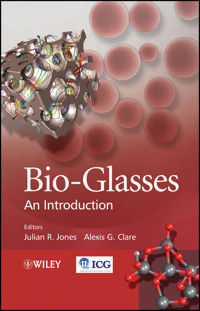
Bio-Glasses E-Book
91,99 €
Mehr erfahren.
- Herausgeber: John Wiley & Sons
- Kategorie: Fachliteratur
- Sprache: Englisch
This new work is dedicated to glasses and their variants which can be used as biomaterials to repair diseased and damaged tissues. Bio-glasses are superior to other biomaterials in many applications, such as healing bone by signaling stem cells to become bone cells.
Key features:
- First book on biomaterials to focus on bio-glasses
- Edited by a leading authority on bio-glasses trained by one of its inventors, Dr Larry Hench
- Supported by the International Commission on Glass (ICG)
- Authored by members of the ICG Biomedical Glass Committee, with the goal of creating a seamless textbook
- Written in an accessible style to facilitate rapid absorption of information
- Covers all types of glasses, their properties and applications, and demonstrates how glass is an attractive improvement to current procedures
- Of interest to the biomedical as well as the materials science community.
The book covers all types of glasses: traditional glasses, bioactive glasses, sol-gel glasses, phosphate glasses, glass-ceramics, composites and hybrids. Alongside discussion on how bio-glasses are made, their properties, and the reasons for their use, the authors also cover their applications in dentistry, bone regeneration and tissue engineering and cancer treatment. Its solid guidance describes the steps needed to take a new material from concept to clinic, covering the essentials of patenting, scale-up, quality assurance and FDA approval.
Sie lesen das E-Book in den Legimi-Apps auf:
Seitenzahl: 364
Veröffentlichungsjahr: 2012
Ähnliche




















Table of Contents
Title Page
Copyright
List of Contributors
Foreword
Preface
Chapter 1: The Unique Nature of Glass
1.1 What Is Glass?
1.2 Making Glass
1.3 Homogeneity and Phase Separation
1.4 Forming
1.5 Glasses That Are Not “Melted”
1.6 Exotic Glass
1.7 Summary
Further Reading
Chapter 2: Melt-Derived Bioactive Glass
2.1 Bioglass
2.2 Network Connectivity and Bioactivity
2.3 Alternative Bioactive Glass Compositions
2.4 In Vitro Studies
2.5 In Vivo Studies and Commercial Products
References
Chapter 3: Sol-Gel Derived Glasses for Medicine
3.1 Introduction
3.2 Why Use the Sol-Gel Process?
3.3 Sol-Gel Process Principles
3.4 Steps in a Typical Sol-Gel Process
3.5 Evolution of Nanoporosity
3.6 Making Sol-Gel Monoliths
3.7 Making Particles
3.8 Sol-Gel Derived Bioactive Glasses
3.9 Summary
References
Chapter 4: Phosphate Glasses
4.1 Introduction
4.2 Making Phosphate Glasses
4.3 Phosphate Glass Structure
4.4 Temperature Behaviour and Crystallisation
4.5 Phosphate Glass Dissolution
4.6 Cell Compatibility of Glasses
4.7 Phosphate Glass Fibres and Composites
4.8 Applications
4.9 Summary
References
Chapter 5: The Structure of Bioactive Glasses and Their Surfaces
5.1 Structure of Glasses
5.2 Structure of Bioactive Glasses
5.3 Computer Modeling (Theoretical Simulation) of Bioactive Glasses
5.4 Glass Surfaces
5.5 Summary
References
Chapter 6: Bioactive Borate Glasses
6.1 Introduction
6.2 What Differentiates a Bioactive Borate Glass from Other Bioactive Glasses?
6.3 Evaluating Reactive Materials (In Vitro Versus In Vivo Testing)
6.4 Multifunctional Bioactive Borate Glasses
6.5 Applications of Bioactive Borate Glasses in Orthopedics and Dental Regeneration
6.6 Soft Tissue Wound Healing
6.7 Tissue/Vessel Guidance
6.8 Drug Delivery
6.9 Commercial Product Design
6.10 Summary
References
Chapter 7: Glass-Ceramics
7.1 Glass-Ceramics and Their Uses
7.2 Methods Used for the Controlled Crystallization of Glasses
7.3 A Glass-Ceramic That Hardly Expands When Heated
7.4 High-Strength, Moldable Glass-Ceramics for Dental Restoration
7.5 Glass-Ceramics That Are Moldable and Machinable
7.6 Outlook
References
Chapter 8: Bioactive Glass and Glass-Ceramic Coatings
8.1 Introduction
8.2 Enameling
8.3 Glazing
8.4 Plasma Spraying
8.5 Radiofrequency Magnetron Sputtering Deposition
8.6 Pulsed Laser Deposition
8.7 Summary
References
Chapter 9: Composites Containing Bioactive Glass
9.1 Introduction
9.2 Biodegradable Polymers
9.3 Composite Scaffolds Containing Bioactive Glass
9.4 Processing Technologies for Porous Bioactive Composites
9.5 Case Study: the PDLLA-Bioglass Composite Scaffold System
9.6 Final Remarks
References
Chapter 10: Inorganic-Organic Sol-Gel Hybrids
10.1 Introduction
10.2 Hybrids in Medicine and Why They Should Be Silica-Based
10.3 Self-Assembled Hybrid Films and Layers of Grafted Silanes
10.4 Sol-Gel Hybrids
10.5 Ormosils
10.6 Polymer Choice and Property Control in Hybrids
10.7 Maintaining Bioactivity in Sol-Gel Hybrids
10.8 Summary and Outlook
Further Reading
Chapter 11: Dental Applications of Glasses
11.1 Introduction
11.2 Structure of the Human Tooth
11.3 Glass Bioactivity and Teeth
11.4 Bioactive Glass in Dental Bone Regeneration
11.5 Treatment of Hypersensitive Teeth
11.6 Bioactive Glass Coating on Metal Implants
11.7 Antimicrobial Properties of Bioactive Glasses
11.8 Bioactive Glasses in Polymer Composites
11.9 Bioactive Glasses in Glass Ionomer Cements
11.10 Summary
References
Chapter 12: Bioactive Glass as Synthetic Bone Grafts and Scaffolds for Tissue Engineering
12.1 Introduction
12.2 Synthetic Bone Grafts and Regenerative Medicine
12.3 Design Criteria for an Ideal Synthetic Bone Graft
12.4 Bioglass and the Complication of Crystallisation During Sintering
12.5 Making Porous Glasses
12.6 The Future: Porous Hybrids
12.7 Bioactive Glasses and Tissue Engineering
12.8 Regulatory Issues
12.9 Summary
Further Reading
Chapter 13: Glasses for Radiotherapy
13.1 Introduction
13.2 Glass Design and Synthesis
13.3 Non-Degradable or Bio-inert Glasses: Rare Earth Aluminosilicate Glasses
13.4 Biodegradable Glasses: Rare Earth Borate/Borosilicate Glasses
13.5 Design of Radioactive Glass Microspheres for In Vivo Applications
13.6 Treatment of Liver Cancer: Hepatocellular Carcinoma
13.7 Treatment of Kidney Cancer: Renal Cell Carcinoma
13.8 Treatment of Rheumatoid Arthritis: Radiation Synovectomy
13.9 Summary
References
Supplemental Images
Index
This edition first published 2012
2012 John Wiley and Sons, Ltd.
Registered office
John Wiley & Sons, Ltd., The Atrium, Southern Gate, Chichester, West Sussex, PO19 8SQ, United Kingdom
For details of our global editorial offices, for customer services and for information about how to apply for permission to reuse the copyright material in this book please see our website at www.wiley.com.
The right of the author to be identified as the author of this work has been asserted in accordance with the Copyright, Designs and Patents Act 1988.
All rights reserved. No part of this publication may be reproduced, stored in a retrieval system, or transmitted, in any form or by any means, electronic, mechanical, photocopying, recording or otherwise, except as permitted by the UK Copyright, Designs and Patents Act 1988, without the prior permission of the publisher.
Wiley also publishes its books in a variety of electronic formats. Some content that appears in print may not be available in electronic books.
Designations used by companies to distinguish their products are often claimed as trademarks. All brand names and product names used in this book are trade names, service marks, trademarks or registered trademarks of their respective owners. The publisher is not associated with any product or vendor mentioned in this book. This publication is designed to provide accurate and authoritative information in regard to the subject matter covered. It is sold on the understanding that the publisher is not engaged in rendering professional services. If professional advice or other expert assistance is required, the services of a competent professional should be sought.
The publisher and the author make no representations or warranties with respect to the accuracy or completeness of the contents of this work and specifically disclaim all warranties, including without limitation any implied warranties of fitness for a particular purpose. This work is sold with the understanding that the publisher is not engaged in rendering professional services. The advice and strategies contained herein may not be suitable for every situation. In view of ongoing research, equipment modifications, changes in governmental regulations, and the constant flow of information relating to the use of experimental reagents, equipment, and devices, the reader is urged to review and evaluate the information provided in the package insert or instructions for each chemical, piece of equipment, reagent, or device for, among other things, any changes in the instructions or indication of usage and for added warnings and precautions. The fact that an organization or web site is referred to in this work as a citation and/or a potential source of further information does not mean that the author or the publisher endorses the information the organization or web site may provide or recommendations it may make. Further, readers should be aware that Internet web sites listed in this work may have changed or disappeared between when this work was written and when it is read. No warranty may be created or extended by any promotional statements for this work. Neither the publisher nor the author shall be liable for any damages arising herefrom.
Library of Congress Cataloging-in-Publication Data
Bio-glasses : an introduction / [edited by] Julian Jones and Alexis G. Clare.
p. ; cm.
Includes bibliographical references and index.
ISBN 978-0-470-71161-3 (cloth)
I. Jones, Julian R. II. Clare, Alexis.
[DNLM: 1. Biocompatible Materials. 2. Glass. 3. Drug Delivery Systems. 4. Regeneration. 5. Tissue Scaffolds. QT 37]
610.28–dc23
2012008850
A catalogue record for this book is available from the British Library.
List of Contributors
Department of Materials Science and Engineering, University of Erlangen-Nuremberg, Erlangen, Germany
Otto Schott Institute, Friedrich Schiller University Jena, Jena, Germany
Department of Materials Engineering, Monash University, Clayton, Victoria, Australia
Kazuo Inamori School of Engineering, New York State College of Ceramics, Alfred University, Alfred, USA
Kazuo Inamori School of Engineering, New York State College of Ceramics, Alfred University, Alfred, USA
Center for Bone and Tissue Repair, Graduate Center for Materials Research, Materials Science and Engineering Department, Missouri University of Science and Technology, Rolla, Missouri, USA
Department of Bioscience and Biotechnology, Okayama University, Tsushima, Okayama, Japan
Ivoclar Vivadent AG, Schaan, Principality of Liechtenstein
Process Chemistry Centre, Åbo Akademi University, Biskopsgatan, Åbo, Finland
Department of Materials, Imperial College London, South Kensington Campus, London, UK
MO-SCI Corporation, HyPoint North, Rolla, Missouri, USA
Department of Materials, Imperial College London, South Kensington
Campus, London, UK
Department of Bioscience and Biotechnology, Okayama University, Tsushima, Okayama, Japan
Department of Bioscience and Biotechnology, Okayama University, Tsushima, Okayama, Japan
Department of Biomaterials, Kyushu University, Maidashi, Higashi, Fukuoka, Japan
Foreword
‘Hamburger. Hot Dog. Ice Cream.’ Five ordinary words, but each had extraordinary significance. It was 1984 when Dr. Gerry Merwin, MD, an Ear, Nose and Throat surgeon at the University of Florida, Gainesville, Florida, whispered the words into the ear of a patient. She was an extraordinary patient—a young mother, expectant with her second child. She was desperate to be able to hear her new-born baby cry. However, the mother was deaf from an infection that had dissolved two of the three bones of her middle ear. Only part of the stapes (stirrup) remained. Under a local anaesthetic, Dr. Merwin had just implanted the world's first Bioglass® device into her middle ear. The implant was designed to conduct sound waves from her eardrum to her inner ear, the cochlea, and thus restore her hearing.
Bioglass was the first man-made material to bond to living tissues. I discovered it in 1969, but the material had to pass 15 years of in vitro (cells growing on it in the laboratory) and in vivo (animal) tests before the first device could be implanted. The University of Florida Shands Hospital Ethics Committee had approved the first human trial after evaluating data from safety tests done on hundreds of mice by Dr. Merwin, his surgical residents and Dr. June Wilson, who interpreted the histology data.
But, the big questions remained: ‘Would this new material work in a human? Would the implant bond to the soft connective tissue of the eardrum? Would it bond to the hard connective tissue (bone) of the stapes? Would it conduct sound? Would normal hearing be restored?’
No one knew the answers to these questions. Ear surgeons had inserted other types of middle ear implants in patients for many years, but they often failed. The materials used were metals and plastics, selected because they were as inert and non-toxic as possible in the body. A thin layer of scar tissue formed around the metal and plastic parts, isolating them from the body, eventually causing the implant to be forced out of position. All of the first-generation biomedical materials used in the body (so-called bio-inert materials) led to the formation of scar tissue. For some clinical needs, the scar tissue poses no problem. For a middle ear implant, scar tissue can be disastrous. Continual vibration and motion of the implant can wear a hole in the eardrum. The implant can come out through the hole, permanently damaging the eardrum.
The Bioglass middle ear implant tested a new concept in repair of the human body, bioactive bonding. The special composition of the glass contained the same compounds as present in bones and tissue fluids: Na2O, P2O5, CaO and SiO2. When a bone is broken, the body uses these compounds to form new bone. The new Bioglass implant released these compounds and the cells in the native bone used them to form a bioactive bond. The collagen of soft connective tissues, such as the tympanic membrane, also bonded to the bioactive hydroxyapatite layer that forms on the bioactive glass surface.
The theory underlying a second generation of biomedical materials, based upon bioactive bonding, was ready for its final test.
Dr. Merwin whispered the five words. A big smile appeared on the face of the patient and she repeated: ‘Hamburger. Hot Dog. Ice Cream!’ The Bioglass middle ear implant worked.
Ten years later in a follow-up study, the implant was still working, and the mother could hear her 10-year-old child laughing and singing. In the years since, thousands of patients have had their hearing restored with bioactive middle ear implants. The field of medicine and the nature of biomaterials had been changed forever.
It is now nearly 30 years since this first, epochal human trial. The speciality field of bioactive materials has expanded exponentially in those years. Millions of patients have undergone various types of repair and reconstructive surgery using formulations of bioactive materials, such as Bioglass, synthetic hydroxyapatite, Si-substituted hydroxyapatite (Actifuse®), tricalcium phosphates (e.g. Vitoss®), bioactive glass–ceramics (A/W glass–ceramic, Cerabone®), and so on. However, the grandfather material, 45S5 Bioglass, is still the material with the highest level of bioactivity and the fastest rate of bioactive bonding, and for some applications is the so-called ‘gold standard’. Bioglass is now used as a synthetic bone graft (e.g. NovaBone®) and it can now be found as the active ingredient (NovaMin®) in a market leading brand of toothpaste for sensitive teeth. The soluble glass dissolves and seals the tubules in exposed dentine, preventing exposure of nerve endings to hot and cold food and drinks.
Thus, understanding the science, technology and applications of bioactive glasses is a very important educational need for the healthcare and glass community. Many new developments have occurred during the past 30 years that are not discussed in standard materials science textbooks. Many subjects, such as sol–gel processing of bioactive gel–glasses, genetic stimulation of osteogenesis by ionic dissolution products of bioactive glasses, stimulation of angiogenesis, bioactive composites, hybrid bioactive materials, phosphate glasses, bioactive materials with hierarchical porosity, molecular modelling of glass structures and bioactivity mechanisms, tissue engineering and regenerative medicine, are now important topics in the field that did not even exist as concepts in 1984. Also, other important biomedical glass and glass–ceramic systems for therapeutic treatment of tumours and repair of diseased and damaged teeth are in widespread use and enhancing the quality of life for millions of patients throughout the world.
This important new book provides a basic level of understanding of all of the above topics. Of special importance is the fact that this book assumes that the reader is just getting started in the field. It is a primer. It provides the necessary foundation of science and technology at a beginning level in order for the reader to explore later the multitude of papers being published annually in this new field. Without a basic understanding, such as provided by this book, a person is easily confused. The reason is that the interface generated over time between a bioactive glass and the body is controlled by an integrated synthesis of inorganic chemistry, physical chemistry and biochemistry. The man-made material and the living material become as one at a molecular level. This type of ‘living interface’ mimics that between hard and soft connective tissues in the body that has evolved over billions of years. This unique character of bioactive bonding requires a unique textbook in order to comprehend and explore these materials and their clinical use. This unique book provides the fundamental level of comprehension needed. I hope it encourages the bright young creative minds of the future to enter the field and take bioactive glasses and related materials forward to the next generation of medical devices and continue to improve the quality of life of patients. For the experienced researcher, the book provides a comprehensive overview of the important current topics in the field written by world-class authors. Unlike many conference proceedings, this volume has been written by carefully selected contributors who have created much of the subject matter they discuss in their chapters, and as a consequence the contents are authoritative.
To all readers, beginner or experienced: read, enjoy and marvel at this wonderful material!
Larry Hench
Inventor of Bioglass®
20 September 2011
Preface
I found out about ‘Bioglass’ by accident. I was giving a presentation in a lecture competition in London, while I was an undergraduate at Oxford. After my talk—the subject of which (spray forming of aluminium alloys) is incidental—I began chatting to one of my fellow contestants about his biomaterials presentation. As I expressed interest in the work, Larry Hench overheard and began telling me about his own work. I was captivated and decided I should do all I could to do a PhD in Larry's group. It was a while later (a few weeks actually, due to Larry's humble nature) that I realised that he invented Bioglass and was a founder of the field of ‘bioactive ceramics’. Even though I was studying materials science in a top university, I had not heard of Bioglass or the many variants that had been developed since its invention. It should not be left to chance events for young people to come across these important and exciting materials.
So, one aim for us in writing this book is to make more people aware of bio-glasses and their variants, their application in medicine and their great potential for future clinical procedures. The book covers a wide range of material, from what a glass is, through the origins of bioactivity and how bioactive glasses can regenerate bone and heal wounds, to glasses used in cancer treatment and new-generation materials for dental reconstruction and tissue engineering. Other books available, at the time of writing, either seemed to try to cover too broad an area—such as all bioceramics—or were a collection of articles collated at conferences on the very latest developments in the field, which were perhaps not accessible to the non-expert.
We set out to produce a book that was accessible to those curious about materials in medicine, whether their background was scientific, engineering or medical. We hope that undergraduate students will find the book interesting, and decide that this is an area about which they would like to discover more or in which perhaps they would like to follow a career. The international profile of bio-glasses is increasing all the time, so more and more healthcare professionals will be exposed to bio-glass-related treatments and devices. Owing to its introductory and accessible nature, this book will be a useful tool for healthcare professionals to quickly learn about bio-glasses and their potential. Anyone brushing their teeth with the latest generation of toothpastes (containing fine Bioglass particles) may also be curious to discover how the active ingredient works in treating sensitive teeth.
I would like to take this opportunity to thank a few people. First, my co-editor, Alexis Clare—who came up with the concept for this book—as it would not have been possible without her. Alexis and I are both very pleased that Larry was so willing to write the Foreword to this book in his ‘retirement’, while he works on new projects developing materials for soaking up and recycling oil slicks, materials for supercapacitors and, of course, writing his Boing Boing, the Bionic Cat children's stories that introduce science concepts to children. We would also like to thank the other members of Technical Committee 4 (TC04) of the International Commission of Glass (ICG) for their contributions, many of them writing chapters for this book, and of course the ICG itself.
Julian R. Jones
Senior Lecturer, Department of Materials, Imperial College London
and Visiting Professor at Nagoya Institute of Technology, Japan
Chair of Technical Committee 4 (TC04)
of the International Commission of Glass (ICG)
March, 2012
Chapter 1
The Unique Nature of Glass
Alexis G. Clare
Kazuo Inamori School of Engineering, New York State College of Ceramics, Alfred University, Alfred, USA
1.1 What Is Glass?
We tend to think of glass as a single material from which we manufacture many useful articles, such as windows, drinking vessels, and storage containers that can contain quite corrosive liquids, including aggressive laboratory chemicals. Therefore, the glass has to be quite corrosion-resistant and inert, including being able to maintain its optical properties while being in aggressive environments such as a dishwasher or extreme weather. For a material that we generally view as “delicate,” in terms of attack from chemicals, it can be quite resistant. Another extreme environment is the human body. An implanted medical device is subjected to a warm and wet environment with continual fluid flow and complex mechanical loads, but perhaps more importantly there are many cells, some at work to reject foreign inert materials. They do this by encapsulating the materials with fibrous (scar) tissue. Hip replacements generally last 15 years or so, and in 2009 there was the story of a man who cut himself shaving and out of his chin fell a piece of glass. He had a lump under his chin, but he thought it was an abscess. In fact, 20 years earlier he was involved in a car accident and a piece of the windscreen embedded in his chin, unbeknown to him. The inert glass would have been sealed off from the body by fibrous tissue and over the years it was pushed out through the soft tissue to the skin.
Lesen Sie weiter in der vollständigen Ausgabe!
Lesen Sie weiter in der vollständigen Ausgabe!
Lesen Sie weiter in der vollständigen Ausgabe!
Lesen Sie weiter in der vollständigen Ausgabe!
Lesen Sie weiter in der vollständigen Ausgabe!
Lesen Sie weiter in der vollständigen Ausgabe!
Lesen Sie weiter in der vollständigen Ausgabe!
Lesen Sie weiter in der vollständigen Ausgabe!
Lesen Sie weiter in der vollständigen Ausgabe!
Lesen Sie weiter in der vollständigen Ausgabe!
Lesen Sie weiter in der vollständigen Ausgabe!
Lesen Sie weiter in der vollständigen Ausgabe!
Lesen Sie weiter in der vollständigen Ausgabe!
Lesen Sie weiter in der vollständigen Ausgabe!




