


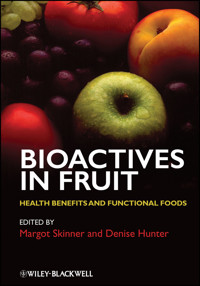
Bioactives in Fruit E-Book
154,99 €
Mehr erfahren.
- Herausgeber: John Wiley & Sons
- Kategorie: Fachliteratur
- Sprache: Englisch
For centuries we have known that fruit is important for health, but we are only just beginning to fully understand why. Bioactives in Fruit: Health Benefits and Functional Foods aims to summarise some of our current knowledge on the bioactive compounds that are associated with the health benefits of specific fruits with a strong emphasis on the validation of health benefits by human intervention trials. Reflecting the current interest in food and health, the book includes strategies to retain and enhance the bioactives in fruit through breeding, growing conditions, fruit storage, processing into ingredients and production of functional foods.
To accomplish this task authors with expertise in biology, chemistry, pharmacology, food science, nutrition, medicine, and horticulture have contributed. They come from universities, government and industry funded research institutes and biotechnology and food companies in Europe, the United States, Asia and New Zealand to give the book a broad perspective.
This book, describing fruit bioactives, their health benefits when consumed as a food and related topics regarding their development into fresh or processed functional foods, will be of use to postgraduate
students, researchers, functional food product developers, food regulators and anyone who has curiosity about why fruit is good for you. The information contained within will provide plant breeders with new targets for the development of value-added horticultural products, and will also provide nutritionists and dieticians with a useful resource for developing strategies to assist in preventing or slowing disease onset or severity. Bioactives in Fruit: Health Benefits and Functional Foods is a major resource which will be required reading for anyone working in the fields of health and functional foods.
Sie lesen das E-Book in den Legimi-Apps auf:
Seitenzahl: 1302
Veröffentlichungsjahr: 2013
Ähnliche




















Contents
Cover
Title Page
Copyright
Contributors
Preface
Chapter 1: Introduction to the Major Classes of Bioactives Present in Fruit
BIOACTIVES
CLASSIFICATION OF PLANT-DERIVED BIOCTIVES
BIOACTIVES IN FRUITS
CONCLUSION
REFERENCES
Chapter 2: Fibre in Fruit
INTRODUCTION
DIETARY FIBRE
FRUIT
PLANT TISSUES AND TYPES OF CELL WALLS
CELL WALL POLYSACCHARIDES
EFFECTS OF COOKING OR PROCESSING ON CELL WALL COMPOSITION
HEALTH BENEFITS
FUTURE CONSIDERATIONS FOR HEALTH FUNCTIONALITY
REFERENCES
Chapter 3: Bioavailability of Antioxidant Compounds from Fruits
INTRODUCTION
ANTIOXIDANTS IN FRUITS
FACTORS THAT AFFECT ANTIOXIDANT RESPONSE TO INGESTION OF FRUIT: ‘APPARENT’ AND ‘REAL’ BIOAVAILABILITY
GETTING TO THE END: A NOTE ON COLONIC METABOLITES
FINALLY, INCREASING BIOAVAILABILITY OF ANTIOXIDANTS: CAN IT AND SHOULD IT BE DONE?
CONCLUSIONS
ACKNOWLEDGEMENTS
DECLARATION OF INTEREST
REFERENCES
Chapter 4: Pharmacokinetic and Pharmacodynamic Interaction of Functional Foods with Medicines
INTRODUCTION
FRUITS
GINKGO BILOBA EXTRACT (GBE)
GREEN TEA
SAW PALMETTO EXTRACT (SPE)
CONCLUSIONS
ACKNOWLEDGEMENTS
REFERENCES
Chapter 5: Health Properties of Apple and Pear
INTRODUCTION
THE ORIGIN OF APPLES
DOMESTICATION OF APPLES
APPLE PRODUCTION
MAJOR CLASSES OF APPLE BIOACTIVES
BIOSYNTHESIS AND GENETIC REGULATION OF APPLE BIOACTIVES
APPLE AND HUMAN HEALTH
STORAGE AND PROCESSING
STRATEGIES TO IMPROVE THE BIOACTIVE CONTENT OF APPLES
CONCLUSIONS
REFERENCES
Chapter 6: Orange and Grapefruit Bioactive Compounds, Health Benefits and Other Attributes
INTRODUCTION
COMPOSITION OF CITRUS
BIOAVAILABILITY AND METABOLIZATION OF CITRUS PHYTOCHEMICALS
CITRUS AND SPECIFIC AILMENTS
ATTRIBUTES OF CITRUS HAVING RAISED DISPROPORTIONATE CONCERNS
CONCLUSIONS
REFERENCES
Chapter 7: Health Benefits from Pomegranates and Stone Fruit, Including Plums, Peaches, Apricots and Cherries
INTRODUCTION
THE ORIGIN, DIVERSITY AND TRADITIONAL USES OF THE POMEGRANATE (PUNICA GRANATUM L.)
THE ORIGIN, DIVERSITY AND TRADITIONAL USES OF THE STONE FRUITS (PRUNUS L.)
PHYTOCHEMICAL COMPOSITION
EFFECT OF PROCESSING AND STORAGE ON POMEGRANATE AND STONE FRUIT BIOACTIVES
HEALTH EFFECTS OF POMEGRANATES
HEALTH EFFECTS OF STONE FRUIT
CONCLUSION
REFERENCES
Chapter 8: The Potential Health Benefits of the Subtropical Fruits Kiwifruit, Feijoa and Tamarillo
INTRODUCTION
KIWIFRUIT
FEIJOA
TAMARILLO
CONCLUSION
REFERENCES
Chapter 9: Effect of Health-promoting Properties of Grapes, Including Resveratrol
INTRODUCTION
BIOAVAILABILITY AND METABOLIC FATE OF COMPOUNDS
HEART HEALTH BENEFITS AND POTENTIAL MECHANISMS OF ACTION
IMMUNITY
CANCER
OBESITY, METABOLIC SYNDROME AND DIABETES
COGNITION
CONCLUSION
ACKNOWLEDGEMENTS
REFERENCES
Chapter 10: Potential Health Benefits of Blackcurrants
INTRODUCTION
BIOACTIVITY OF ANTHOCYANINS AND METABOLITES
FUTURE DIRECTION OF RESEARCH
LIST OF ABBREVIATIONS
REFERENCES
Chapter 11: Overview of the Health Properties of Blueberries
INTRODUCTION
BIOACTIVE COMPONENTS OF BLUEBERRIES
OBESITY AND INSULIN RESISTANCE
TYPE 2 DIABETES MELLITUS
CARDIOVASCULAR DISEASES
CANCER
LONGEVITY
NEUROPROTECTION AND AGING
GASTROINTESTINAL DISEASES
VISION
CONCLUSION
REFERENCES
Chapter 12: Cranberry Polyphenols in the Promotion of Urinary Tract, Cardiovascular and Emerging Health Areas
INTRODUCTION
BIOACTIVES IN CRANBERRY
HEALTH BENEFITS OF CRANBERRY
CONCLUSION
REFERENCES
FURTHER READING/RESOURCES
Chapter 13: Vegetable Fruits: A Cornucopia of Health Benefits
INTRODUCTION
TOMATOES
CAPSICUM
OTHER SOLANACEOUS VEGETABLE FRUITS
CUCURBITACEAE
OTHER VEGETABLE FRUITS
CONCLUSIONS
REFERENCES
FURTHER READING/RESOURCES
Chapter 14: Potential Health Benefits of Avocados
INTRODUCTION
ANTIOXIDANT PROPERTIES
CARDIOVASCULAR AND METABOLIC DISEASE
OSTEOARTHRITIS/BONE HEALTH
INFLAMMATION
CANCER
NEUROPROTECTION
WOUND HEALING
AGING
TOXICITY
CONCLUSIONS
REFERENCES
Chapter 15: Cardiovascular Benefits of Olive Oil: Beyond Effects of Fat Content
INTRODUCTION
FACTORS AFFECTING PHENOL COMPOUND CONTENT IN VOO
THE HEALTH EFFECT OF VOO
CONCLUSION AND FUTURE PERSPECTIVES
ACKNOWLEDGEMENTS
REFERENCES
Chapter 16: Cocoa, Blood Flow and the Brain
INTRODUCTION
CULTIVATION AND EXTRACTION
ACTIVE COMPONENTS
PHARMACOKINETICS AND ABSORPTION
MECHANISM OF ACTION
HUMAN INTERVENTION TRIALS
EPIDEMIOLOGICAL EVIDENCE
CONCLUSIONS
REFERENCES
Chapter 17: Breeding for Enhanced Bioactives in Berry Fruit
INTRODUCTION
BREEDING BERRY FRUIT FOR IMPROVED BIOACTIVES
USE OF GENETIC ENGINEERING FOR IMPROVING BIOACTIVE COMPOUNDS
CONCLUSIONS
REFERENCES
Chapter 18: The Influence of Pre- and Postharvest Environmental Stress on Fruit Bioactives
INTRODUCTION
THE MAIN GROUPS OF FRUIT BIOACTIVES SENSITIVE TO ENVIRONMENTAL STRESSORS AND THEIR ASSOCIATIONS WITH HUMAN HEALTH
THE MAIN ENVIRONMENTAL STRESSORS THAT CAN INFLUENCE THE LEVELS OF BIOACTIVES IN FRUITS
THE INFLUENCE OF ENVIRONMENTAL STRESSORS AND OTHER TREATMENTS ON THE LEVELS OF BIOACTIVES IN SOME COMMERCIALLY IMPORTANT FRUITS
XENOHORMESIS: AN ANCIENT RESPONSE WITH MODERN APPLICATIONS
REFERENCES
Chapter 19: Recovery of Valuable Bioactives from Residues Arising from Fruit Processing
INTRODUCTION
MEMBRANE SEPARATION AND FILTRATION
ADSORPTION AND ION EXCHANGE PROCESSES
SUMMARY
NOMENCLATURE
REFERENCES
Chapter 20: Stability and Bioaccessibility of Fruit Bioactives in Foods: Food Component Interactions and Matrix Effect
INTRODUCTION
KEY COMPONENTS PRESENT IN FRUIT-BASED FUNCTIONAL FOODS
INTERACTIONS BETWEEN FRUIT BIOACTIVES AND OTHER FOOD COMPONENTS IN VARIOUS FOOD SYSTEMS
CONCLUSION AND FUTURE OUTLOOK
REFERENCES
Index
This edition first published 2013 © 2013 by John Wiley & Sons, Ltd
Registered office:John Wiley & Sons, Ltd, The Atrium, Southern Gate, Chichester, West Sussex, PO19 8SQ, UKEditorial offices:9600 Garsington Road, Oxford, OX4 2DQ, UK The Atrium, Southern Gate, Chichester, West Sussex, PO19 8SQ, UK 111 River Street, Hoboken, NJ 07030-5774, USAFor details of our global editorial offices, for customer services and for information about how to apply for permission to reuse the copyright material in this book please see our website at www.wiley.com/wiley-blackwell.
The right of the author to be identified as the author of this work has been asserted in accordance with the UK Copyright, Designs and Patents Act 1988.
All rights reserved. No part of this publication may be reproduced, stored in a retrieval system, or transmitted, in any form or by any means, electronic, mechanical, photocopying, recording or otherwise, except as permitted by the UK Copyright, Designs and Patents Act 1988, without the prior permission of the publisher.
Designations used by companies to distinguish their products are often claimed as trademarks. All brand names and product names used in this book are trade names, service marks, trademarks or registered trademarks of their respective owners. The publisher is not associated with any product or vendor mentioned in this book.
Limit of Liability/Disclaimer of Warranty: While the publisher and author(s) have used their best efforts in preparing this book, they make no representations or warranties with respect to the accuracy or completeness of the contents of this book and specifically disclaim any implied warranties of merchantability or fitness for a particular purpose. It is sold on the understanding that the publisher is not engaged in rendering professional services and neither the publisher nor the author shall be liable for damages arising herefrom. If professional advice or other expert assistance is required, the services of a competent professional should be sought.
Library of Congress Cataloging-in-Publication Data
Bioactives in fruit : health benefits and functional foods / editors, Margot Skinner, Denise Hunter. p. ; cm. Includes bibliographical references and index. ISBN 978-0-470-67497-0 (cloth : alk. paper) – ISBN 978-1-118-63555-1 – ISBN 978-1-118-63556-8 (ePDF) – ISBN 978-1-118-63558-2 (emobi) – ISBN 978-1-118-63559-9 (epub) I. Skinner, Margot. II. Hunter, Denise. [DNLM: 1. Fruit–chemistry. 2. Biological Availability. 3 Functional Food. 4. Phytotherapy–methods. 5. Plant Extracts. WB 430] RA784 613.2–dc23
2013006647
A catalogue record for this book is available from the British Library.
Wiley also publishes its books in a variety of electronic formats. Some content that appears in print may not be available in electronic books.
Cover image © Steven Allan/istockphoto.com Cover design by Meaden Creative
Contributors
Francisco A. Tomás-BarberánCEBAS-CSIC Department of Food Science and Technology Murcia Spain
Iris F.F. BenzieDepartment of Health Technology and Informatics The Hong Kong Polytechnic University Kowloon Hong Kong
David J. BurrittDepartment of Botany University of Otago Dunedin New Zealand
Antonio Camargo GarciaLipids and Atherosclerosis Unit IMIBIC/Reina Sofia University Hospital/University of Cordoba, and CIBER Fisiopatologia Obesidad y Nutricion (CIBEROBN) Instituto de Salud Carlos III Spain
Paul F. CancalonFlorida Department of Citrus Lake Alfred Florida USA
Reinhold CarleHohenheim University Institute of Food Science and Biotechnology Stuttgart Germany
William T. CefaluDiabetes and Nutrition Laboratory Pennington Biomedical Research Center Baton Rouge Louisiana USA
Suengmok ChoKorea Food Research Institute Seongnam Republic of Korea
Alastair CurrieThe New Zealand Institute for Plant and Food Research Ltd Motueka New Zealand
Gary M. DavenportP&G Pet Care Mason Ohio USA
Yoshiharu DeguchiLaboratory of Drug Disposition and Pharmacokinetics School of Pharmaceutical Sciences Teikyo University Japan
Michael EdwardsDepartment of Nutrition Norwich Medical School University of East Anglia Norwich UK
Carrie M. ElksNutritional Neuroscience and Aging Laboratory Pennington Biomedical Research Center Baton Rouge Louisiana USA
Richard EspleyThe New Zealand Institute for Plant & Food Research Auckland New Zealand
Joseph FrancisComparative Biomedical Sciences Louisiana State University School of Veterinary Medicine Baton Rouge Louisiana USA
María I. GilCEBAS-CSIC Department of Food Science and Technology Murcia Spain
Anusooya GnanavinthanFood Science, School of Chemical Sciences The University of Auckland Auckland New Zealand
Crystal F. HaskellBrain, Performance and Nutrition Research Centre School of Life Sciences Northumbria University Newcastle upon Tyne UK
Denise HunterThe New Zealand Institute for Plant & Food Research Ltd Auckland New Zealand
Donald K. IngramNutritional Neuroscience and Aging Laboratory Pennington Biomedical Research Center Baton Rouge Louisiana USA
Kerrie L. KasparOcean Spray Cranberries, Inc. Lakeville-Middleboro Massachusetts USA
Dietmar Rolf KammererHohenheim University Institute of Food Science and Biotechnology Stuttgart Germany
Colin KayDepartment of Nutrition Norwich Medical School University of East Anglia Norwich UK
Christina KhooOcean Spray Cranberries, Inc. Lakeville-Middleboro Massachusetts USA
Carolyn E. ListerThe New Zealand Institute for Plant & Food Research Limited Lincoln New Zealand
Jose Lopez-MirandaLipids and Atherosclerosis Unit IMIBIC/Reina Sofia University Hospital/University of Cordoba, and CIBER Fisiopatologia Obesidad y Nutricion (CIBEROBN) Instituto de Salud Carlos III Spain
Stefan MartensFondazione Edmund Mach, Istituto Agrario di San Michele all'Adige (IASMA) Centro Ricerca e Innovazione, Dipartimento Qualita' Alimentare e Nutrizone, Biotecnologia dei Prodotti Naturali San Michele all'Adige Italy
Bruno MezzettiUniversità Politecnica delle Marche Ancona Italy
Rosalind MillerGlaxoSmithKline Brentford UK
Shingen MisakaDepartment of Pharmacology, School of Medicine Fukushima Medical University Fukushima Japan
Conchita ObónDepartamento de Ciencia y Tecnología de Alimentos Universidad Miguel Hernández Orihuela Spain
Takashi OkuraLaboratory of Drug Disposition and Pharmacokinetics School of Pharmaceutical Sciences Teikyo University Japan
Susan S. PercivalFood Science and Human Nutrition Department University of Florida Gainesville Florida USA
Francisco Perez-JimenezLipid and Atherosclerosis Unit IMIBIC/Reina Sofía University Hospital/University of Cordoba CIBER Fisiopatología de la Obesidad y Nutrición (CIBEROBN) Instituto de Salud Carlos III Cordoba, Spain
Sophie PutnamGlaxoSmithKline Brentford UK
Diego RiveraDepartamento de Botánica Universidad de Murcia Murcia Spain
George S. RothGeroScience, Inc. Pylesville Maryland USA
David RuizCEBAS-CSIC Department of Food Science and Technology Murcia Spain
Zaid SalehThe University of Auckland, Department of Chemical and Materials Engineering The New Zealand Institute for Plant and Food Research Limited Auckland New Zealand
Catalina Sánchez-RocaDepartamento de Botánica Universidad de Murcia Murcia Spain
Jessica ScalzoThe New Zealand Institute for Plant and Food Research Ltd Hawkes Bay New Zealand
Barbara Shukitt-HaleNeuroscience Laboratory USDA Human Nutrition Research Center on Aging Tufts University Boston Massachusetts USA
Margot SkinnerFood Science, School of Chemical Sciences The University of Auckland Auckland New Zealand
Stephen J.M. SkinnerDepartment of Physiology Faculty of Medicine and Health Sciences The University of Auckland Auckland New Zealand
Bronwen G. SmithFood Science, School of Chemical Sciences The University of Auckland Auckland New Zealand
April J. StullDiabetes and Nutrition Laboratory Pennington Biomedical Research Center Baton Rouge Louisiana USA
Dongxiao Sun-WaterhouseThe New Zealand Institute for Plant & Food Research Limited Auckland New Zealand
Yuko TakiDepartment of Pharmacokinetics and Pharmacodynamics School of Pharmaceutical Sciences University of Shizuoka Japan
Keizo UmegakiInformation Center, National Institute of Health and Nutrition Shinjuku-ku, Tokyo Japan
Daniel ValeroDepartamento de Ciencia y Tecnología de Alimentos Universidad Miguel Hernández Orihuela Spain
Sissi Wachtel-GalorDepartment of Health Technology and Informatics The Hong Kong Polytechnic University Kowloon Hong Kong
Hiroshi WatanabeDepartment of Clinical Pharmacology and Therapeutics Hamamatsu University School of Medicine Japan
Yasuo WatanabeYokohama College of Pharmacy General Health Medical Center Yokohama Japan
Anthony W. WatsonBrain, Performance and Nutrition Research Centre School of Life Sciences Northumbria University Newcastle upon Tyne UK
Robin L. WestDepartment of Psychology University of Florida Gainesville Florida USA
Gary WoodwardDepartment of Clinical Biochemistry Oxford University Hospitals Oxford UK
Shizuo YamadaDepartment of Pharmacokinetics and Pharmacodynamics School of Pharmaceutical Sciences University of Shizuoka Japan
Elena M. Yubero-SerranoBrookdale Department of Geriatrics and Palliative Medicine Division of Experimental Diabetes and Aging Division Mount Sinai School of Medicine New York, NY USA
Preface
For centuries we have known that fruit is important for health but we are only just beginning to fully understand why. This book aims to summarize some of our current knowledge on the bioactive compounds that are associated with the health benefits of specific fruits with a strong emphasis on the validation of health benefits by human intervention trials. Because of the present interest in food and health, the book includes strategies to retain and enhance the bioactives in fruit through growing conditions, fruit storage, processing into ingredients and production of functional foods. To accomplish this task authors with expertise in biology, chemistry, pharmacology, food science, nutrition, medicine and horticulture have contributed. They come from universities, government and industry-funded research institutes and from biotechnology and food companies in Europe, the United States, Asia and New Zealand to give the book a broad perspective.
A brief introduction on the major classes of bioactives present in fruit is followed by a chapter on fruit fibre, exploring the many different chemical compositions that fibre from different sources, including commercial preparations, may contain. This is an important aspect to consider when attempting to attribute health benefits to fibre and when developing new fibre containing foods. The focus of the next chapter is the bioavailability of antioxidant compounds from fruit and includes vitamins C and E, as well as carotenoids and polyphenolic phytochemicals. It incorporates a discussion of the reasons why plasma antioxidant levels are maintained at low concentrations even when consumed at quite high levels, an important consideration as recommendations for fruit and vegetable consumption increase and supplements containing high amounts of these compounds are promoted by their manufacturers. Bioavailability and bioactivity of both foods and pharmaceuticals are related to their absorption, metabolism, distribution, excretion and transport across cell membranes, together with their ability to bind to specific receptors. The potential for functional food bioactives to interact with pharmaceuticals is considerable due to the large number of constituents that they contain. Some examples of the way in which selected functional foods and nutraceuticals influence the pharmacokinetics and pharmacodynamics of drugs are the subject of the next chapter, emphasizing the need to understand whether interactions of foods with medicines are clinically harmful or beneficial to drug therapy.
There then follow a number of chapters on the bioactives and health benefits of common and not-so-common fruits, which include apple and pear, citrus, pomegranate and stone fruit, grapes, blackcurrants, blueberry, cranberry and kiwifruit, feijoa and tamarillo. ‘Vegetable’ fruits, olives, avocado and cocoa, plant foods not commonly consumed as ‘fruit’, are not left out. The chapters are written from different perspectives depending on the interests and research focus of the authors. For example, the chapter on apples and pears includes an update on the biosynthesis and genetic regulation of bioactives within apples. The chapter on citrus includes attributes of citrus that have raised health concerns and again discusses the grapefruit–drug interactions alluded to in an earlier chapter, including ways that this may be overcome now and in the future. The chapter on blueberries includes a detailed examination of mechanistic and pre-clinical studies in models that range from longevity in fruit flies to myocardial ischemia in rats.
The health areas covered in the book span a wide range. These include basic antioxidant activity and all it may be associated with, immune modulation including positive effects associated with asthma, antibacterial properties and reduction of symptoms of infections such as cold and influenza, cardiovascular health, bone health, obesity, metabolic syndrome and diabetes, eye health and vision, oral and gastrointestinal health, urinary tract health, cognition and anxiety and, associated with a number of these areas, longevity. Supporting data, including results from mechanistic, in vitro and in vivo animal studies, are discussed together with validation from human intervention trials, and tentative or firm conclusions drawn, depending on the evidence available. It should be mentioned that epigenetic and nutrigenomic factors that may influence how individuals respond to the bioactive components in fruit is beyond the scope of this book. Once intervention trials are designed and conducted to provide more personalized outcomes, we may find that some of the equivocal results that are often obtained in intervention trials will be clarified and health benefits of functional foods be more commonly assigned to particular groups or genotypes.
The next two chapters are on the subject of horticulture. Using anthocyanins as an example, a chapter on breeding for enhanced levels of these bioactive compounds in blackcurrant and blueberry outlines gains that may be achieved through conventional breeding techniques, as well as the potential for using genetic transformation in strawberries as a proof of concept. As many of the bioactives in fruit are secondary metabolites, whose levels increase in plant cells after exposure to environmental stress, the potential of stress priming to enhance the bioactive contents of fresh fruit or produce new fruit-based products is considered in the chapter following.
The book finishes with two chapters that highlight different aspects of functional foods. In a chapter on recovery of bioactive compounds from entities such as peel and seeds, where they are present in high amounts, innovative process technologies are described that can be applied to purify, enrich and selectively fractionate the compounds from crude extracts recovered from food processing byproducts. The recovery of such components for use as bioactive compounds in functional or enriched foods, as well as dietary supplements, is presented as a promising strategy to produce ingredients and products from waste streams to help achieve sustainable agricultural food production. The last chapter discusses many of the interactions that may occur between fruit bioactives and other food components when they are incorporated into finished processed foods. It goes on to point out that it is the complexity of finished foods, coupled with the processing conditions, that influence the stability, bioaccessability and, ultimately, the bioavailability of the fruit bioactive compounds in a finished processed functional food product.
The information gathered in this book, describing fruit bioactives, their health benefits when consumed as a food and related topics regarding their development into fresh or processed functional foods, will be of use to postgraduate students, researchers, functional food product developers, food regulators and anyone who has curiosity about why ‘fruit is good for you’. The information contained within may provide plant breeders with new targets for the development of value-added horticultural products. It may also provide nutritionists and dieticians with a useful resource for developing strategies to assist in preventing or slowing disease onset or severity. In many instances, the regular consumption of specific fruits in a quantity that is pleasurable and achievable within the context of the diet is all that may be required.
We extend our sincere thanks to the many individuals who have contributed so generously in accomplishing this project.
Margot Skinner
Denise Hunter
1 Introduction to the Major Classes of Bioactives Present in Fruit
Anusooya Gnanavinthan
BIOACTIVES
Bioactives are compounds that produce physiological effects when present in a living material, in other words they must exert physiological benefits related to promoting health and preventing effects of a disease (e.g. blood pressure reduction, blood glucose reduction etc.) (Aluko, 2011; Awika, 2011). When bioactives are taken orally, the compound must withstand the digestion that will destroy the active structure and render it physiologically inactive. But, in some cases, the inactive part of the compound becomes active once consumed, as a result of the action of digestive enzymes present in the gastrointestinal tract (Aluko, 2011). Also, bioactive compounds may exert their physiological effect within the digestive tract and may not be absorbed. However, in most cases, the compound must be absorbed from the gastrointestinal tract into the blood circulatory system, from where it is carried to target organs. Foods that contains bioactives, and that are consumed as part of a normal diet, are called functional foods (Shahidi, 2009).
Plants are a rich source of bioactive compounds. Plant-derived bioactive products such as fruits, vegetables and nuts are becoming popular because of their abundance and low cost (compared to animal products), and due to the wider acceptability of plant products as a result of religious, social or moral reasons that prevent many people consuming animal-derived products (Omaye et al., 2000; Aluko, 2011). Bioactives from fruits show antimicrobial activity, anticancer activity, anti-inflammatory activity, immuno-stimulatory activity and antioxidant activity and so on (Hollman and Katan, 1999; Emilio, 2007; Weston, 2010).
CLASSIFICATION OF PLANT-DERIVED BIOCTIVES
Bioactives can be classified based on molecular identity or biopolymer type that includes polyphenolic compounds, indigestible carbohydrates (dietary fibres), functional lipids (mainly in cereals and seeds), proteins and peptides and carotenoids (Figure 1.1).
Fig. 1.1 Possible classification and examples of plant bioactive compounds (Von Elbe and Schwartz, 1996; Hollman and Katan, 1999; Tokuşoğlu and Hall, 2001; El Gharras, 2009; Naczk and Shahidi, 2006).
Phenolic compounds
Plant phenolics are a structurally diverse class of phytochemicals (Naczk and Shahidi, 2006). Phenolic compounds are defined by the presence of at least one aromatic ring bearing one (phenol) or more (polyphenols) hydroxyl substituents, including their functional derivative (e.g. esters and glycosides) (Maffei, 2003). Polyphenols occur as plant secondary metabolites, are widely distributed in the plant kingdom and represent an abundant antioxidant component of the human diet (Tokuşoğlu, 2011). There has been an increased interest in the health benefits of polyphenols due to the corresponding antioxidant capacities (Wang et al., 1996; Sun et al., 2002).
Free radicals (reactive oxygen species) and antioxidant studies play a major role in medicine. Free radicals are produced by many biological reactions in the body and can damage crucial biomolecules. If these free radicals are not scavenged, they may lead to disease conditions (Fan et al., 2007). Reactive oxygen species (ROS), such as superoxide (O2−), the hydroxyl radical (•OH), hydrogen peroxide (H2O2) and lipid peroxide radicals, have been implicated in playing an important role in chronic degenerative disease, such as cancer, inflammatory, cardiovascular and neurodegenerative diseases, and ageing (Mullen et al., 2002; Price et al., 2006; Sies, 2010). The harmful actions of free radicals can be blocked by antioxidants, by scavenging those free radicals and detoxifying the organisms (BeMiller and Huber, 1996; Fan et al., 2007). Therefore, antioxidants are referred to as compounds that can counteract the damaging effects of oxygen in tissues, and the term is applied to molecules that protect from any free radical (molecule with unpaired electron) (Bilgiçli , 2007). Antioxidants in food are defined as any substance that can relay, retard or prevent the development of food rancidity due to oxidation (Gordon, 2001). Natural antioxidants may inhibit lipid peroxidation in food and improve the quality and safety of the food (Fan , 2007). Two inhibitory mechanisms may be involved: direct scavenging of free radicals (primary antioxidant, e.g. vitamin E – α-tocopherol) and indirect scavenging of free radicals (secondary antioxidant) (Gordon, 2001).
Lesen Sie weiter in der vollständigen Ausgabe!
Lesen Sie weiter in der vollständigen Ausgabe!
Lesen Sie weiter in der vollständigen Ausgabe!
Lesen Sie weiter in der vollständigen Ausgabe!
Lesen Sie weiter in der vollständigen Ausgabe!
Lesen Sie weiter in der vollständigen Ausgabe!
Lesen Sie weiter in der vollständigen Ausgabe!
Lesen Sie weiter in der vollständigen Ausgabe!
Lesen Sie weiter in der vollständigen Ausgabe!
Lesen Sie weiter in der vollständigen Ausgabe!
Lesen Sie weiter in der vollständigen Ausgabe!
Lesen Sie weiter in der vollständigen Ausgabe!
Lesen Sie weiter in der vollständigen Ausgabe!
Lesen Sie weiter in der vollständigen Ausgabe!
Lesen Sie weiter in der vollständigen Ausgabe!
Lesen Sie weiter in der vollständigen Ausgabe!
Lesen Sie weiter in der vollständigen Ausgabe!
Lesen Sie weiter in der vollständigen Ausgabe!
Lesen Sie weiter in der vollständigen Ausgabe!
Lesen Sie weiter in der vollständigen Ausgabe!
Lesen Sie weiter in der vollständigen Ausgabe!
Lesen Sie weiter in der vollständigen Ausgabe!




