


Biological Drug Products E-Book
167,99 €
Mehr erfahren.
- Herausgeber: John Wiley & Sons
- Kategorie: Wissenschaft und neue Technologien
- Sprache: Englisch
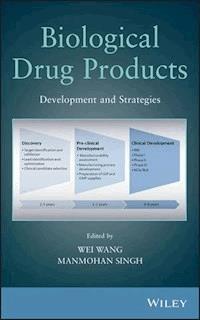
Tested and proven solutions to the challenges of biological drug product development Biological drug products play a central role in combating human diseases; however, developing new successful biological drugs presents many challenges, including labor intensive production processes, tighter regulatory controls, and increased market competition. This book reviews the current state of the science, offering readers a single resource that sets forth the fundamentals as well as tested and proven development strategies for biological drugs. Moreover, the book prepares readers for the challenges that typically arise during drug development, offering straightforward solutions to improve their ability to pass through all the regulatory hurdles and deliver new drug products to the market. Biological Drug Products begins with general considerations for the development of any biological drug product and then explores the strategies and challenges involved in the development of specific types of biologics. Divided into five parts, the book examines: * Part 1: General Aspects * Part 2: Proteins and Peptides * Part 3: Vaccines * Part 4: Novel Biologics * Part 5: Product Administration/Delivery Each chapter has been prepared by one or more leading experts in biological drug development. Contributions are based on a comprehensive review and analysis of the current literature as well as the authors' first-hand experience developing and testing new drugs. References at the end of each chapter serve as a gateway to original research papers and reviews in the field. By incorporating lessons learned and future directions for research, Biological Drug Products enables pharmaceutical scientists and students to improve their success rate in developing new biologics to treat a broad range of human diseases.
Sie lesen das E-Book in den Legimi-Apps auf:
Seitenzahl: 1491
Veröffentlichungsjahr: 2013
Ähnliche




















Contents
Cover
Title Page
Copyright
Dedication
Preface
Contributors
Part 1: General Aspects
Chapter 1: An Overview of the Discovery and Development Process for Biologics
1.1 Introduction
1.2 The Discovery Process for Monoclonal Antibodies
1.3 Manufacturing Process Development for Biologics
1.4 Regulatory Review and Approval for Biologics
1.5 Biologics: The Past, the Present, And the Future
1.6 Conclusion
References
Chapter 2: Nonclinical Safety Assessment of Biologics, Including Vaccines
2.1 Introduction
2.2 Considerations in the Selection of the Animal Species
2.3 Considerations for the Nonclinical Safety Evaluation
2.4 Pharmacokinetics
2.5 Selection of the Initial Clinical Dose
2.6 Future Directions
References
Chapter 3: Clinical Assessment of Biologic Agents
3.1 Introduction
3.2 Clinical Trial Structure
3.3 Incorporating Patients into the Structure of a Trial
3.4 Efficacy
3.5 Pharmacovigilance
3.6 Diseases Treated with Biologics
3.7 Future Perspectives
References
Chapter 4: Key Regulatory Guidelines for the Development of Biologics in the United States and Europe
4.1 Introduction
4.2 General United States Regulatory Scheme
4.3 European Union Guidelines
4.4 Regulatory Strategies for Worldwide Marketing of Biological Products
4.5 Preventive Vaccine Development: Special Considerations
4.6 Conclusion
Chapter 5: Landscape and Consideration of Intellectual Property for Development of Biosimilars
5.1 Introduction
5.2 Legislative History
5.3 Approval Guidelines for a Generic Biological Product
5.4 Intellectual Property Protection Under the Bpci Act
5.5 Legal Issues
5.6 Future Perspectives
Chapter 6: Scientific Aspects of Sterility Assurance, Sterility, Asepsis, and Sterilization
6.1 Introduction
6.2 Contamination Control
6.3 Fundamental Concepts in “Sterile” Product Manufacturing
6.4 The Evolution of Aseptic Processing Technology
6.5 Sterility and Asepsis: Toward a Common Scientific Understanding
6.6 Sterility, Viability, and Virulence
6.7 Regulations and Aseptic Contamination Rates
6.8 Considerations Regarding Environmental Monitoring
6.9 Practical Considerations in Current Good Manufacturing Processes–Compliant Aseptic Processing: Achieving Sterility by Design [17]
6.10 The Need for Scientifically Valid Standards and Regulations
6.11 An Overview of Sterilization and Decontamination
6.12 Microbial Death Curves
6.13 Toward a Measure of Real Product Safety
6.14 A Few Scientifically Modest Proposals
References
Part 2: Proteins and Peptides
Chapter 7: Cell Culture Processes in Monoclonal Antibody Production
7.1 Introduction
7.2 Mammalian Expression System and Cell Line Engineering
7.3 Cell Line and Cell Bank Tests
7.4 Process Development, Scale UP, and Tech Transfer
7.5 Process Advances and Future Perspectives
7.6 Acknowledgments
References
Chapter 8: Protein and Peptide Purification
8.1 Introduction
8.2 Overview of Downstream Processing
8.3 Protein Refolding Methods
8.4 Challenges in Purification
8.5 Purification Strategies
8.6 Future Directions
References
Chapter 9: Chemical and Genetic Modification
9.1 Introduction
9.2 Protein Modification to Increase Circulation Half-Life
9.3 Structure-Based Engineering to Modify Protein and Peptide Therapeutics
9.4 Protein Modification to Add a Therapeutic Effect
9.5 Protein Modification Used for Diagnostics
9.6 Future Directions
Acknowledgments
References
Chapter 10: Analytical Characterization of Proteins and Peptides
10.1 Introduction
10.2 Structural Characterization and Confirmation
10.3 Physicochemical Properties
10.4 Biophysical Properties (Higher Order Structure and Stability)
10.5 Other Posttranslational Modifications and Product-Related Impurities
10.6 Aggregates and Particulates
10.7 Summary
Acknowledgments
References
Chapter 11: Protein and Peptide Formulation Development
11.1 Introduction
11.2 General Formulation Development Strategies
11.3 Key Challenges in Drug Product Formulation and Fill-Finish
11.4 Summary
References
Chapter 12: Regulatory Strategies and Lessons in the Development of Biosimilars
12.1 Background and Objective
12.2 History
12.3 Market
12.4 Why are Biopharmaceuticals Different from Small Molecules?
12.5 Typical Biopharmaceutical Manufacturing Steps and Analytical Techniques for Characterization
12.6 Generics versus Biosimilars
12.7 Current Regulatory Status and Pathways to Biosimilar Products
12.8 Conclusion
References
Part 3: Vaccines
Chapter 13: Vaccine Development: History, Current Status, and Future Trends
13.1 Introduction
13.2 Current Vaccine Development (Product and Process)
13.3 Specific Relevant Trends
13.4 Future Trends for Vaccine Development
Acknowledgments
References
Chapter 14: Role and Application of Adjuvants and Delivery Systems in Vaccines
14.1 Introduction
14.2 Challenges in Developing Vaccine Adjuvants
14.3 Vaccine Adjuvants, Adjuvant Effect, and Toxicity
14.4 Characteristics of an “Optimal” Adjuvant
14.5 Regulatory Aspects for Adjuvants Used in Human Vaccines
14.6 Adjuvants Used in Licensed Vaccines
14.7 Future Directions and Prospects
Addendum
Acknowledgments
References
Chapter 15: Methods for Characterizing Proteins in Aluminum Adjuvant Formulations
15.1 Introduction
15.2 Analytical Methods
15.3 Conclusion
Acknowledgments
References
Part 4: Novel Biologics
Chapter 16: The State of the Art and Future of Gene Medicines
16.1 Introduction and Historic Perspective
16.2 Gene Therapy in the Clinic
16.3 Adeno-Associated Viral Vectors as a Technological Platform for Clinical Translation
16.4 Challenges in Hepatocyte-Directed Gene Therapy
16.5 Regulatory Aspects of Gene Therapy
16.6 General Conclusions and Perspectives
References
Chapter 17: Nucleic Acid Vaccines
17.1 Introduction
17.2 History of Nucleic Acid Vaccines
17.3 DNA Plasmids as a New Group of Biological Drug Products
17.4 Optimization of DNA Vaccines
17.5 Unproven Safety Concerns
17.6 Manufacturing Process
17.7 Regulatory Considerations
17.8 Summary
References
Chapter 18: Multifunctional Polymeric Nanosystems for RNA Interference Therapy
18.1 Introduction
18.2 RNA Interference Therapy
18.3 Delivery Systems for RNA-Interference
18.4 Multifunctional Nanosystems for Delivery of RNA-Interference Therapeutics
18.5 Illustrative Examples of Nanoparticle-Mediated Small Interfering RNA Delivery
18.6 Illustrative Examples of Nanoparticle-Mediated Micro RNA Delivery
18.7 Conclusions
References
Chapter 19: Advent and Maturation of Regenerative Medicine
19.1 Introduction
19.2 Regenerative Medicine: Looking Back
19.3 Transplantation Medicine: Historical Perspectives
19.4 Bone Marrow Transplantation and Hematopoietic Cell Transplantation
19.5 Emergence of Stem Cell Therapy
19.6 Emergence of Tissue Engineering and Scaffolds
19.7 Regenerative Medicine: Looking Forward
19.8 Cell Therapy, Tissue Engineering, and the Global Landscape of Regenerative Medicine
19.9 Global Regenerative Medicine and Medical Tourism
19.10 Regulatory Hurdles
19.11 The Future and Challenges
References
Part 5: Product Administration/Delivery
Chapter 20: Conventional and Novel Container Closure and Delivery Systems
20.1 Introduction
20.2 General Development Approach of a Combination Product (Drug or Biologic with Device)
20.3 Containers and Product Quality
20.4 Recently Marketed and Emerging Container Platforms
20.5 Blow-Fill-Seal Plastic Ampoule
20.6 Nonparenteral Delivery
20.7 Device Functionality Testing
20.8 Recommendations
References
Chapter 21: Controlled-Release Systems for Biologics
21.1 Introduction
21.2 Choice of a Suitable Delivery System
21.3 Feasible Systems for Biologics
21.4 Future Directions
References
Chapter 22: Routes of Delivery for Biological Drug Products
22.1 Introduction
22.2 Conventional Administration of Biological Drug Products
22.3 Alternative Routes of Administration
22.4 Summary and Outlook
Acknowledgments
References
Index
Copyright © 2014 by John Wiley & Sons, Inc. All rights reserved
Published by John Wiley & Sons, Inc., Hoboken, New Jersey
Published simultaneously in Canada
No part of this publication may be reproduced, stored in a retrieval system, or transmitted in any form or by any means, electronic, mechanical, photocopying, recording, scanning, or otherwise, except as permitted under Section 107 or 108 of the 1976 United States Copyright Act, without either the prior written permission of the Publisher, or authorization through payment of the appropriate per-copy fee to the Copyright Clearance Center, Inc., 222 Rosewood Drive, Danvers, MA 01923, (978) 750-8400, fax (978) 750-4470, or on the web at www.copyright.com. Requests to the Publisher for permission should be addressed to the Permissions Department, John Wiley & Sons, Inc., 111 River Street, Hoboken, NJ 07030, (201) 748-6011, fax (201) 748-6008, or online at http://www.wiley.com/go/permission.
Limit of Liability/Disclaimer of Warranty: While the publisher and author have used their best efforts in preparing this book, they make no representations or warranties with respect to the accuracy or completeness of the contents of this book and specifically disclaim any implied warranties of merchantability or fitness for a particular purpose. No warranty may be created or extended by sales representatives or written sales materials. The advice and strategies contained herein may not be suitable for your situation. You should consult with a professional where appropriate. Neither the publisher nor author shall be liable for any loss of profit or any other commercial damages, including but not limited to special, incidental, consequential, or other damages.
For general information on our other products and services or for technical support, please contact our Customer Care Department within the United States at (800) 762-2974, outside the United States at (317) 572-3993 or fax (317) 572-4002.
Wiley also publishes its books in a variety of electronic formats. Some content that appears in print may not be available in electronic formats. For more information about Wiley products, visit our web site at www.wiley.com.
Library of Congress Cataloging-in-Publication Data:
Biological drug products : development and strategies / edited by Wei Wang, Manmohan Singh.
p. ; cm.
Includes bibliographical references and index.
ISBN 978-1-118-14889-1 (cloth)
I. Wang, Wei, 1957 March 10-II. Manmohan Singh, 1964 November 8-
[DNLM: 1. Biological Agents–pharmacology. 2. Biological Agents–therapeutic use. 3. Drug Delivery Systems. 4. Drug Discovery. QV 241]
RM301.25
615.1’9–dc23
2013016301
To my wife, Linlin Wang, for her unconditional support and love.
—Wei Wang
I dedicate this work to my family for their lifetime of support.
—Manmohan Singh
Preface
Biological drug products have been playing a key role in combating human diseases. The growth of biologics has clearly outpaced that for small molecule drugs in the past decade, and the trend is expected to continue for the next one. However, successful development of biological drug products has not been straightforward because of both the labor-extensive production processes and the rather limited process and storage stabilities of biologics. On top of these are additional challenges, including stringent requirements of good manufacturing process (GMP) compliances, ever-increasing regulatory scrutiny, and intense market competition (e.g., biosimilars).
This book is intended to summarize the recent progress in the development of different types of biologics, to describe the development challenges and more importantly, to discuss the development strategies. It is divided into five parts, covering general aspects in the development of biologics (Part 1) and challenges and strategies in the development of specific types of biologics (Parts 2 to 5). The general topics include overall product development process (Chapter 1), preclinical and clinical assessment (Chapter 2 and 3), key regulatory guidelines (Chapter 4), intellectual property considerations (Chapter 5), and GMP issues (Chapter 6). Development of specific types of biologics are discussed, covering proteins and peptides (Chapters 7 to 11), biosimilars (Chapter 12), vaccines (Chapters 13 to 15), gene medicines (Chapter 16), nucleic acid vaccines (Chapter 17), oligonucleotides (Chapter 18), and regenerative medicines (Chapter 19) along with product administration and delivery-related issues (Chapters 20 to 22).
Wei Wang
Manmohan Singh
Contributors
James P. Agalloco, Agalloco & Associates, Belle Mead, New Jersey, USA
James E. Akers, Akers Kennedy & Associates, Kansas City, Missouri, USA
Ashraf Amanullah, Genentech, Inc., Oceanside, California, USA
Mansoor Amiji, Northeastern University, Boston, Massachusetts, USA
Jean-Pierre Amorij, Institute for Translational Vaccinology (Intravacc), Bilthoven, The Netherlands
Tudor Arvinte, University of Geneva and Therapeomic, Inc., Basel, Switzerland
Anthony Atala, Wake Forest School of Medicine, Winston-Salem, North Carolina, USA
George O. Badescu, PolyTherics Ltd., London, UK
Steve J. Brocchini, PolyTherics Ltd., London, UK
Rachel Buglione-Corbett, University of Massachusetts Medical School, Worcester, Massachusetts, USA
Martinus A.H. Capelle, Therapeomic, Inc., Basel, Switzerland
Krista Hessler Carver, Covington & Burling LLP, Washington, DC, USA
Mahesh V. Chaubal, Baxter Healthcare Corporation, Round Lake, Illinois, USA
David W. Clarke, Pfizer, Inc., Pearl River, New York, USA
Bart de Geest, Catholic University of Leuven, Leuven, Belgium
Luis R. Espinoza, Louisiana State University, New Orleans, Louisiana, USA
Monika Farys, PolyTherics Ltd., London, UK
Esteban J. Freydell, DSM Biotechnology Center, Delft, The Netherlands
Shanthi Ganesh, Northeastern University, Boston, Massachusetts, USA
Claire L. Ginn, UCL School of Pharmacy, London, UK
Stephanie C. Gordts, Catholic University of Leuven, Leuven, Belgium
Rajesh K. Gupta, Biologics Quality & Regulatory Consultants, LLC, North Potomac, Maryland, USA
Douglas C. Harnish, Teva, Malvern, Pennsylvania, USA
Brian Hosken, Genentech—A Member of Roche Group, South San Francisco, California, USA
Liangbiao George Hu, Pfizer, Inc., Pearl River, New York, USA
Darrell J. Irvine, Massachusetts Institute of Technology, Cambridge, Massachusetts, USA
Arun Iyer, Northeastern University, Boston, Massachusetts, USA
Frank Jacobs, Catholic University of Leuven, Leuven, Belgium
Hanieh Khalili, National Institute for Health Research Biomedical Research Centre, London, UK
Richard Kingham, Covington & Burling LLP, Washington, DC, USA and London, UK
Gabriela Klasa, Covington & Burling LLP, Brussels, Belgium
Brandon Kwong, Massachusetts Institute of Technology, Cambridge, Massachusetts, USA
Buddhadev Layek, North Dakota State University, Fargo, North Dakota, USA
Feng Li, Genentech, Inc., Oceanside, California, USA
Shan Lu, University of Massachusetts Medical School, Worcester, Massachusetts, USA
Rhishikesh Mandke, North Dakota State University, Fargo, North Dakota, USA
Srikumaran Melethil, University of Missouri, Kansas City, Missouri, USA
Abner M. Mhashilkar, Wake Forest School of Medicine, Winston-Salem, North Carolina, USA
Paula Miller, Pfizer, Inc., Chesterfield, Missouri, USA
Shikha Mittoo, University of Toronto, Toronto, Ontario, Canada
Beckley K. Nfor, Delft University of Technology, Delft, The Netherlands
Mayura Oak, North Dakota State University, Fargo, North Dakota, USA
Satoshi Ohtake, Pfizer, Inc., Chesterfield, Missouri, USA
Marcel Ottens, Delft University of Technology, Delft, The Netherlands
Estera M. Pawlisz, PolyTherics Ltd., London, UK
Karolina Peciak, PolyTherics Ltd., London, UK
Emilie Poirier, Therapeomic, Inc., Basel, Switzerland
Lesley Ann Saketkoo, Louisiana State University, New Orleans, Louisiana, USA
Umang S. Shah, Novartis Vaccines and Diagnostics, Holly Springs, North Carolina, USA
Gitanjali Sharma, North Dakota State University, Fargo, North Dakota, USA
Amy Shen, Genentech, Inc., South San Francisco, California, USA
Heather H. Shih, Pfizer, Inc., Cambridge, Massachusetts, USA
Jagdish Singh, North Dakota State University, Fargo, North Dakota, USA
Xingfang Su, Massachusetts Institute of Technology, Cambridge, Massachusetts, USA
John Suschak, University of Massachusetts Medical School, Worcester, Massachusetts, USA
Leo van der Pol, Institute for Translational Vaccinology (Intravacc), Bilthoven, The Netherlands
Shixia Wang, University of Massachusetts Medical School, Worcester, Massachusetts, USA
Wei Wang, Pfizer, Inc., Chesterfield, Missouri, USA
Yajun Jennifer Wang, Genentech—A Member of Roche Group, South San Francisco, California, USA
Joseph Wong, Baxter Healthcare Corporation, Round Lake, Illinois, USA
Qiong L. Zhou, Northeastern University, Boston, Massachusetts, USA
Part 1
General Aspects
1
An Overview of the Discovery and Development Process for Biologics
Heather H. Shih, Paula Miller and Douglas C. Harnish
1.1 Introduction
Biologics, also called biotherapeutics or biopharmaceuticals, are drug substances derived from living organisms or produced using biotechnology that are composed of biological entities such as proteins, peptides, nucleic acids, or cells [1]. They differ from small molecule (SM) drugs that are chemically synthesized and have low molecular weights. Some biologics, such as antibody–drug conjugates, consist of both a protein moiety and an SM component, both of which are required for the therapeutic action of the drug. Traditional biologics that have reached the market include vaccines and blood-derived factors. The advancement in modern biotechnology has brought forth new classes of biologics as exemplified by monoclonal antibodies (mAbs), Fc fusion proteins, recombinant proteins, and peptide drugs. Some early clinical success is now seen in several novel classes of biologics, which include antibody variants, novel protein scaffolds, RNA therapeutics, and cell-based therapies [2–5]. This chapter focuses on protein-based biologics, particularly mAbs because they represent the largest class of biologic drugs. By the end of 2011, the US Food and Drug Administration (FDA) had approved close to 40 mAbs and antibody variants as summarized in Table 1.1. Details on other forms of biologics such as vaccines and RNA drugs can be found in later chapters.
Table 1.1 List of Food and Drug Administration–Approved Antibody-Based Therapeutics Up to 2011 as Categorized by Types.
The first protein-based biologic drug, recombinant insulin Humulin, was approved in the United States in 1982 [6]. Since then the field of biologics grew steadily, with the biotechnology sector laying the foundation for both the drug discovery process and technology innovation. Around late 1990s, the pharmaceutical industry started to invest more in the development of biologics. This shift from a primary focus on SM drugs was largely due to patent expiration on these drugs and the concurrent fierce competition from generic SM drugs. In addition, the increasing difficulty to bring new drugs to the market because of tightened regulations and a lack of breakthroughs in the drug discovery process has also contributed to this shift. Presently, the number of biologics on the market has reached more than 200, and the sales of biologics in 2009 reached $93 billion, with approximately one third of current pharmaceutical pipelines consisting of biologics [7]. Given that almost all of the large pharmaceutical companies have acquired infrastructures and committed resources to develop biologics, we will continue to see a robust growth in this sector in the coming years.
Compared with SM drugs, protein-based biologics have unique therapeutic features. A therapeutic protein usually exhibits exquisite specificity when binding to and modulating its molecular target, which often translates into low off-target toxicity and clinical safety. For example, therapeutic mAbs bind to their target molecules with affinities in the picomolar to low nanomolar range (e.g., [8]). Furthermore, the interaction occurs over a broad interface with multiple physical and chemical bonds formed between an antibody and its cognate antigen, resulting in an extraordinary binding specificity that allows the differentiation of binding partners that differ by as few as one amino acid or subtle conformational difference. On the contrary, the small size of an SM drug makes it prone to off-target binding to proteins other than its intended target, which may result in unacceptable levels of toxicities. A potentially short development cycle is another advantage for the development of biologics, particularly mAbs and recombinant proteins. A clinical candidate for mAb or recombinant protein can be generated and selected in as short as 3 to 5 years compared with typically 7 to 8 years for SMs.
Protein-based biologics have their own limitations. Presently, almost all protein-based drugs must be administered as intravenous or subcutaneous injections because oral delivery is not yet a viable route of administration. Furthermore, protein drugs do not readily penetrate cell membrane and blood–brain barrier (BBB) and therefore are limited to the modulation of peripherally located extracellular targets. The cost of goods to manufacture protein drugs is significantly higher than for SM drugs, which translates into a high drug price that exacerbates health management cost issues [9].
Based on these pros and cons associated with the development of biologics, presently the pharmaceutical industry strives to achieve a balanced portfolio consisting of both SM and biologic drugs. This chapter provides an overview of the discovery and development process for protein therapeutics with a primary focus on mAbs (). Additionally, the chapter summarizes the current status of the protein-based biologics field and discusses several future trends.
Lesen Sie weiter in der vollständigen Ausgabe!
Lesen Sie weiter in der vollständigen Ausgabe!
Lesen Sie weiter in der vollständigen Ausgabe!
Lesen Sie weiter in der vollständigen Ausgabe!
Lesen Sie weiter in der vollständigen Ausgabe!
Lesen Sie weiter in der vollständigen Ausgabe!
Lesen Sie weiter in der vollständigen Ausgabe!
Lesen Sie weiter in der vollständigen Ausgabe!
Lesen Sie weiter in der vollständigen Ausgabe!
Lesen Sie weiter in der vollständigen Ausgabe!
Lesen Sie weiter in der vollständigen Ausgabe!
Lesen Sie weiter in der vollständigen Ausgabe!
Lesen Sie weiter in der vollständigen Ausgabe!
Lesen Sie weiter in der vollständigen Ausgabe!
Lesen Sie weiter in der vollständigen Ausgabe!
Lesen Sie weiter in der vollständigen Ausgabe!
Lesen Sie weiter in der vollständigen Ausgabe!
Lesen Sie weiter in der vollständigen Ausgabe!
Lesen Sie weiter in der vollständigen Ausgabe!
Lesen Sie weiter in der vollständigen Ausgabe!
Lesen Sie weiter in der vollständigen Ausgabe!
Lesen Sie weiter in der vollständigen Ausgabe!
Lesen Sie weiter in der vollständigen Ausgabe!
Lesen Sie weiter in der vollständigen Ausgabe!
Lesen Sie weiter in der vollständigen Ausgabe!
Lesen Sie weiter in der vollständigen Ausgabe!




