


186,99 €
Mehr erfahren.
- Herausgeber: John Wiley & Sons
- Kategorie: Wissenschaft und neue Technologien
- Sprache: Englisch
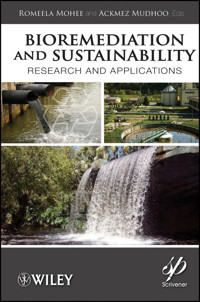
Bioremediation and Sustainability is an up-to-date and comprehensive treatment of research and applications for some of the most important low-cost, "green," emerging technologies in chemical and environmental engineering Sustainable development requires the development and promotion of environmental management and a constant search for green technologies to treat a wide range of aquatic and terrestrial habitats contaminated by increasing anthropogenic activities with the main sources of contaminants being the chemical industries. Bioremediation is a technique that uses living organisms in order to degrade or transform contaminants into their less toxic forms. It is based on the existence of microorganisms with the capacity to attack the compounds on the enzymatic level. Bioremediation is an increasingly popular low-cost alternative to conventional methods for treating wastes and contaminated media with the possibility to degrade these contaminants using natural microbial activity mediated by different consortia of microbes. Over the last few years, the scientific literature has revealed the progressive emergence of various bioremediation techniques. Bioremediation and Sustainability presents an up-to-date and comprehensive collection of chapters prepared in bioremediation technology research and applications. The strategies covered in this volume can be applied in situ or ex situ, depending on the site in which they will be applied. In situ is the treatment done in the site of the contamination, and ex situ involves the removal of soil or water to subsequent treatment. There is a wide variety of techniques that have been developed in the past and are covered in this volume, such as natural attenuation, bioaugmentation, biostimulation, biosorption, composting, phytoremediation, rhizoremediation, and bioleaching.
Sie lesen das E-Book in den Legimi-Apps auf:
Seitenzahl: 616
Veröffentlichungsjahr: 2012
Ähnliche



















Contents
Cover
Half Title page
Title page
Copyright page
Dedication
Preface
Acknowledgments
List of Contributors
Chapter 1: Elements of Sustainability and Bioremediation
The Sustainability, Remediation and Biotechnology Link
Environmental Pollution and Biotreatment Variants
Main Features of Bioremediation
In Situ Bioremediation Technologies
Ex Situ Bioremediation
Anaerobic Digestion Processes
Biosorption of Heavy Metals
Factors Influencing Bioremediation Rates
Trends in Bioremediation Research
Concluding Note
Acknowledgements
References
Chapter 2: Natural Attenuation
The Natural Attenuation and Sustainability Link
Contaminant Transformation Under Natural Site Conditions
Monitoring for Natural Attenuation
Source Area Evaluation
Quantitative Analysis of Natural Attenuation Data
Concluding Note
References
Chapter 3: Anaerobic Digestion Processes
Anaerobic Digestion Fundamentals
Applications
Project Development
Safety
Anaerobic Digestion Economics
Anaerobic Digestion Monitoring
Conclusions & Future Developments
References
Chapter 4: Biosurfactants: Synthesis, Properties and Applications in Environmental Bioremediation
Introduction
Enzymatic Syntheses of Surfactants
Microbial Synthesis of Biosurfactants
Properties of Biosurfactants
Biosurfactants in Pollutant Remediation
Concluding Notes
Acknowledgements
References
Chapter 5: Phytoremediation: An Efficient Approach for Bioremediation of Organic and Metallic Ions Pollutants
Introduction
Types of Phytotechnology
Strategies Used in Phytoremediation of Inorganic Pollutant
Strategies Used in Phytoremediation of Organic Pollutant
Concluding Note
References
Chapter 6: Bioleaching
Introduction
Mechanisms of Bioleaching
Strategies of Bioleaching
Microorganisms of Bioleaching
Factors Affecting Bioleaching
Environmental Considerations
Conclusions
Acknowledgements
References
Chapter 7: Biosorption of Heavy Metals – New Perspectives
Biosorption of Heavy Metals – New Perspectives
References
Chapter 8: Biofiltration: Essentials, Research and Applications
Introduction
Abatment Techniques
Biological Based Methods for the Removal of VOCs and Heavy Metals
Performance Parameters of Biofiltration
Analysis of Product Streams in Biofilter Column
Research Status of Biofiltration
Biofiltration for Removal of VOCs
Mechanisms of Biofiltration
Applications of Biofiltration
Conclusions
References
Chapter 9: Modeling and Implementation of Sustainable Remediation Based on Bioventing
Introduction
Understanding the Enviornment Domain - Possible Difficulties in Using Bioventing
Difficulties in Using Bioventing
Bioventing Implementation
Sustainable Bioventing Practice
Concluding Note
References
Chapter 10: Bioremediation of Xenobiotics
Introduction
Types of Bioremediation
Methods for the Bioremediation of Xenobiotics Compounds
Bioreactors Used for the Biormediation of Xenobiotic Comspound
Metabolic Pathways for Bioremediation of Xenobiotics
Bioremediation of Various Classes of Xenobiotic Compounds
Concluding Note
References
Index
Bioremediation and Sustainability
Scrivener Publishing
3 Winter Street, Suite 3
Salem, MA 01970
Scrivener Publishing Collections Editors
James E. R. Couper
Ken Dragoon
Richard Erdlac
Rafiq Islam
Norman Lieberman
Peter Martin
W. Kent Muhlbauer
Andrew Y. C. Nee
S. A. Sherif
James G. Speight
Publishers at Scrivener
Martin Scrivener ([email protected])Phillip Carmical ([email protected])
Copyright © 2012 by Scrivener Publishing LLC. All rights reserved.
Co-published by John Wiley & Sons, Inc. Hoboken, New Jersey, and Scrivener Publishing LLC, Salem, Massachusetts.Published simultaneously in Canada.
No part of this publication may be reproduced, stored in a retrieval system, or transmitted in any form or by any means, electronic, mechanical, photocopying, recording, scanning, or otherwise, except as permitted under Section 107 or 108 of the 1976 United States Copyright Act, without either the prior written permission of the Publisher, or authorization through payment of the appropriate per-copy fee to the Copyright Clearance Center, Inc., 222 Rosewood Drive, Danvers, MA 01923, (978) 750-8400, fax (978) 750-4470, or on the web at www.copyright.com. Requests to the Publisher for permission should be addressed to the Permissions Department, John Wiley & Sons, Inc., 111 River Street, Hoboken, NJ 07030, (201) 748-6011, fax (201) 748-6008, or online at http://www.wiley.com/go/permission.
Limit of Liability/Disclaimer of Warranty: While the publisher and author have used their best efforts in preparing this book, they make no representations or warranties with respect to the accuracy or completeness of the contents of this book and specifically disclaim any implied warranties of merchantability or fitness for a particular purpose. No warranty may be created or extended by sales representatives or written sales materials. The advice and strategies contained herein may not be suitable for your situation. You should consult with a professional where appropriate. Neither the publisher nor author shall be liable for any loss of profit or any other commercial damages, including but not limited to special, incidental, consequential, or other damages.
For general information on our other products and services or for technical support, please contact our Customer Care Department within the United States at (800) 762-2974, outside the United States at (317) 572-3993 or fax (317) 572-4002.
Wiley also publishes its books in a variety of electronic formats. Some content that appears in print may not be available in electronic formats. For more information about Wiley products, visit our web site at www.wiley.com.
For more information about Scrivener products please visit www.scrivenerpublishing.com.
Library of Congress Cataloging-in-Publication Data:
Bioremediation and sustainability : research and applications / editors, Romeela Mohee, Professor, Department of Chemical and Environmental Engineering, Faculty of Engineering, University of Mauritius, Réduit, Mauritius; Ackmez Mudhoo, Lecturer, Department of Chemical and Environmental Engineering, Faculty of Engineering, University of Mauritius, Réduit, Mauritius. pages cm Includes bibliographical references and index. ISBN 978-1-118-06284-5 1. Bioremediation. I. Mohee, Romeela, editor of compilation. II. Mudhoo, Ackmez, editor of compilation. TD192.5.B556926 2012 628.1’683–dc23 2011052321 ISBN 978-1-118-06284-5
Dedicated to my family especially my daughter Mansha without whose support this book would not have been possible
— Romeela Mohee
For Yaana, Teena, Assad, mum and dad
— Ackmez Mudhoo
Preface
Soils in the same way as aquatic environments are the target of thousands of contaminants that vary in composition and in concentration. These contaminants enter the system as a result of a wide range of actions such as intentional applications, inadequate residue disposal, accidental wastes and inappropriate use. The pollution by inorganic compounds such as nitrates, phosphates and perchlorates is due to inadequate disposal of manufacture residues of fireworks and matches; explosives such as hexahydro–1,3,5–trinitro–1,3,5–triazine (RDX) and octahydro–1,3,5,7–tetranitro–1,3,5,7–tetrazocine (HMX) from their manufacture and tests; monoaromatic hydrocarbons like benzene, toluene, ethylbenzene and xylene (known as BTEX) fromoil spills and of storage tanks leaking; polycyclic aromatic hydrocarbons from accidental spills; a range of herbicides such as diuron, linuron and chlorotoluron used in weed control and by heavy metals. Heavy metal contamination can be a consequence of industrial activities that eliminate residues in the soil that, over the long term, promote their accumulation. The majority of the sources are originated by human actions like metal manufacture and mining industries with storage, disposal and transportation problems. Among the metals found more frequently there are cadmium, lead, cobalt, copper, mercury, nickel, selenium and zinc. For cadmium, lead, copper and zinc, their toxicity increases as follows: lead<zinc<copper<cadmium, depending on countless abiotic and biotic factors.
Sustainable development requires the development and promotion of environmental management and a constant search for green technologies to treat a wide range of aquatic and terrestrial habitats contaminated by increasing anthropogenic activities with the main sources of contaminants being from the chemical industries. Bioremediation is a technique that uses living organisms to degrade or transform contaminants into their less toxic forms. It is based on the existence of microorganisms with capacity to enzymatically attack the compounds. The strategies can be applied in situ or ex situ, depending on the site in which they will be applied. In situ is the treatment done in the site of the contamination and ex situ, refers to the removal of soil or water to subsequent treatment. There is a wide variety of techniques that has been developed in the past, and some of these techniques are natural attenuation, bioaugmentation, biostimulation, biosorption, composting, phytoremediation, rhizoremediation and bioleaching. Since bioremediation and these techniques not only represent an emerging (green) technology but also present a great advantage of being cost effective when compared to the traditional remediation methods due to the use of indigenous microorganisms with a versatile metabolism, this book presents an up–to–date and comprehensive collection of chapters prepared in bioremediation technology research and application. The chapters cover bioleaching, biosorption, bioaugmentation, biostimulation, bioventing, biofiltration, biostimulation, natural attenuation, phytoremediation, biosurfactants, anaerobic digestion and composting.
Romeela MoheeAckmez Mudhoo
Acknowledgements
This undertaking has brought a unique opportunity to renew some old friendships and hopefully weave in some new ones in our pursuit to gather and distill the expertise required for editing and compiling this book. Words of appreciation and thanks are entirely due to the contributors for the way they have graciously responded with characteristic good humour and patience to the deadlines. Their constructive criticisms and suggestions have enhanced the content of the present work. It is hoped that the final result does ample justice to their painstaking efforts deployed in preparing their respective chapter(s).
Mr Ackmez Mudhoo expresses his appreciation for the faith his parents, Mr Azad A. Mudhoo and Mrs Ruxana B. Mudhoo, his brother Assad, sister–in–law Teena, and lovely niece Yanna have placed in him throughout the writing and compilation of this handbook. A. Mudhoo is thankful to Prof Konrad Morgan (Vice–Chancellor & Chairman of Senate of the University of Mauritius, Réduit, Mauritius), Prof Romeela Mohee (Dean, Faculty of Engineering, University of Mauritius, Réduit, Mauritius), and Dr. Vinod K. Garg (Guru Jambheshwar University of Science and Technology, Hisar, Haryana, India) for their presence, encouragement and support.
Romeela MoheeAckmez Mudhoo
List of Contributors
Ackmez Mudhoo holds a Bachelors degree (B.Eng. (Hons.)) in Chemical and Environmental Engineering and a Master of Philosophy (M.Phil.) degree by research in Chemical Engineering from the University of Mauritius. His research interests encompass the bioremediation of solid wastes and wastewaters by composting and anaerobic digestion. Ackmez has 56 international journal publications, 4 conference papers and 3 co-edited books to his credit. Ackmez serves as peer reviewer for Waste Management, International Journal of Environment and Waste Management, Journal of Hazardous Materials. He is presently lecturer in the Department of Chemical and Environmental Engineering, University of Mauritius.
Romeela Mohee is Professor of Chemical and Environmental Engineering in the Department of Chemical and Environmental Engineering at the University of Mauritius, Mauritius. Her research is focused on waste containment, solid waste management, beneficial reuse of waste materials, heat and mass transfer modeling. She earned a PhD at the University of Mauritius under the supervision of eminent professors from the University of Leeds and Clemson University. She was also a Fulbright Scholar.
Dr. Dupont has a BS degree in Civil Engineering, and MS and PhD degrees in Environmental Health Engineering from the University of Kansas, Lawrence, Kansas, USA. Dr. Dupont joined the faculty at Utah State University in 1982, and has been conducting basic and applied research related to bioremediation, natural attenuation, and field scale system performance evaluation at petroleum and chlorinated solvent contaminated sites since that time. Dr. Dupont teaches undergraduate and graduate courses related to solid and hazardous waste management, wastewater engineering, remediation engineering, and pollution prevention/industrial ecology in the Environmental Engineering program at USU, and has written numerous textbooks and journal publications in these areas. He lives with his wife, a herd of cats, and a dog in a beautiful canyon in Northern Utah.
Dr. Safferman is an Associate Professor in the Department of Biosystems and Agricultural Engineering at Michigan State University and is the director of the MSU Anaerobic Digestion Research and Education Center. Previously he served as a faculty member at the University of Dayton for 11 years and an environmental engineer at the U.S. Environmental Protection Agency for 5 years. He also has engineering consulting and industrial experience. Dr. Safferman has a M.S. and Ph.D. in Environmental Engineering and a B.S. in Civil Engineering from the University of Cincinnati. His research and extension programs entail holistic, innovative food processing and animal residual management, sustainability, waste to resource technologies, soil assimilation capacity, and onsite generated wastewater treatment. He also coordinates the Department’s student capstone design experience.
Dana Kirk has B.S. degrees in Animal Science and Biosystems Engineering, an M.S. in Biosystems Engineering and a Ph.D. in Biosystems Engineering, all from Michigan State University. He has 10 years of experience as an environmental engineer working on livestock waste related issues. Consulting projects have ranged from CAFO permitting, environmental compliance and reporting, waste storage facility design, livestock facility design, construction oversight, waste treatment technology evaluation, and anaerobic digestion optimization. Dr. Kirk’s current research entails bench top, pilot-scale, and commercial anaerobic digestion systems used to evaluate feedstocks, optimize performance, and integrate technologies.
Mr. Faivor has a B.S.in Biosystems and Agricultural Engineering. He manages and conducts research at the Anaerobic Digestion Research and Education Center, Michigan State University, with over 7 years of experience working on lab, pilot, and full-scale anaerobic digestion systems.
Ms. Wu-Haan has Masters of Science degrees from Iowa State University in Animal Nutrition and Environmental Science and Bioresource and Technology. She has conducted research for over 7 years on projects regarding agricultural waste management, air quality control, and waste to energy technologies.
Dr. Ramkrishna Sen is an Associate Professor (Biochemical and Bioprocess Engineering) in the Department of Biotechnology, Indian Institute of Technology Kharagpur (IIT Kharagpur), India. Before joining IIT Kharagpur, Dr. Sen worked in BITS, Pilani as Assistant Professor and Cadila Pharmaceuticals Ltd., Ahmedabad as the Manager (R&D–Biotech). He has had a teaching and academic research experience of more than ten years after his Ph.D from IIT Madras, Chennai and has industrial R&D experience of three years in the field of large scale production of recombinant therapeutic proteins and bioprocess development and scale up for probiotics and nutraceuticals. Dr. Sen is currently heading a vibrant group of ten Ph.D scholars, three M.Tech and three B.Tech project students, who are involved as a team in developing, modeling, optimizing and scaling up bioprocesses for production, characterization and applications of marine lipopeptides, also called biosurfactants; probiotic based nutraceuticals; plant oil and microalgal lipid feedstock based biorefinery for biodiesel and other commercially valuable products; lignocellulosic bioethanol and microbially treated jute geotextiles. Dr. Sen, being a bioprocess engineer with industrial experience, set his research priorities in the broader areas of health-care and bioenergy. Dr. Sen handled four industrial R&D projects, out of which two products were commercialized by Cadila Pharma Ltd. In IIT Kharagpur, he completed five sponsored projects, has six ongoing sponsored R&D projects and two consultancy projects, out of which one is funded by a Texas (USA) based company. He has about fifty peer reviewed international journal publications with an average impact factor of 3.3 and h-index of approximately 13. He published seven book chapters in internationally published books by reputed publishers. He also edited a book on ‘Biosurfactants’, which was published in 2010 by Springer. He has seven patent applications filed to his credit. Already, five students have got their Ph.D degree from IIT Kharagpur under his direct guidance. He is the life member of Indian Institute of Chemical Engineers (IIChE) and the founding member of the Global Biorenewables Research Society (www.gbrs.org). Dr. Sen is the member of editorial board of two international journals and reviewer of more than twenty international journals and also of project proposals of various national and international funding agencies.
Mr. D. Gunaseelan did his Bachelor of Technology (B. Tech) in Biotechnology at Arunai Engineering College, Tamil Nadu, India in the year 2008 and completed his Master of Technology (M. Tech) in Industrial Biotechnology at SASTRA University, Tamil Nadu, India in 2010. Presently, he has been working on enhanced production and purification of lipopeptide biosurfactant of marine origin as a Senior Research Fellow in an Indian government funded project (Ministry of Earth Sciences) at the Indian Institute of Technology Kharagpur, West Bengal, India for the past one year under the guidance of Prof. Ramkrishna Sen. He has communicated one manuscript on his work to a reputed international journal.
Divya Gupta was born in Aligarh district of Uttar Pradesh, India on 3rd January 1990. She took her secondary education from Kishori Raman Girls Inter College, Mathura and senior secondary education from T R R R S V M Inter College, Kashipur, India. She has completed her B. Tech. in Biotech. from, Mangalayatan University, Beswan, Aligarh, India. She got university topper position in B.tech. in 2007–2011 batch. Currently she is doing her M. Tech. in Biotech. from G. B. Pant Engineering college, Pauri, Garhwal, India.
L. K. Singh has done his B. Tech. and M. Tech. in Chemical Technology (with specialization in Biochemical Engineering) from Harcourt Butler Technological Institute Kanpur (UP) in year 2000 and 2002 respectively. After completing his PG degree he has joined Ekta Agro Industries Limited, New Delhi as Manager (Projects). He has joined Harcourt Butler Technological Institute Kanpur (UP) in year 2003 as Lecturer in the Department of Biochemical Engineering and Food Technology. He has organized a National Symposium on “Recent Technological Developments in Bioprocess and Food Processing Industries” and a Refresher course under TEQIP World Bank Project on “Biotechnological Approaches for Chemical Process Industries” at HBTI Kanpur. He is also working on a major research project on “Production of Xylitol (a natural sweetener) by Fermentation sanctioned by University Grant Commission, New Delhi. Presently he is doing his Ph.D. from the Department of Biotechnology, Indian Institute of Technology Roorkee (UK) under the Quality Improvement Program, sponsored by AICTE New Delhi. Simultaneously he is holding the post of Assistant Professor (Biochemical Engineering) in HBTI, Kanpur with about 9 years of teaching and research experience.
Dr. Ashish Deep Gupta was born on 20 June 1976 at Kanpur. He did Post Graduation from G.B. Pant University of Agriculture & Technology, Pantnagar in 2002. He obtains Ph.D (Biotechnology) from the Indian Institute of Technology Roorkee, Roorkee in Nov 2008. In his research journey, he secured CSIR-UGC National Eligibility Test (NET) in Dec 2004, June 2003 & Dec 2001 and Graduate Aptitude Test in Engineering (GATE) in Feb 2004 and Feb 2002. He started his career as faculty member at ICFAI University, Dehradun, Uttarakhand in July 2006, later in May 2010 he joined as Senior Lecturer at Department of Biotechnology, Mangalayatan University, Aligarh. He has published several research articles of national and international repute.
Dr Vikash Babu was born in Bulandshahr district of Uttar Pradesh, India on 1st September 1981. He did his Bachelor’s degree from I.P (PG) College Bulandshahr, India. After qualifying all India combined entrance exam for biotechnology conducted by JNU, New Delhi, India, he did his degree in Biotechnology from Kumaun University, Nainital. After completing his M.Sc degree, he qualified many national level competitive exams such as DBT-JRF- 2005, CSIR-UGC NET for lecturership- Dec. 2004 & June 2005 and GATE-2005. In Nov. 2005, he joined as a DBT-JRF in the Department of Biotechnology, Indian Institute of Technology, Roorkee under the superivision of Dr. Bijan Choudhury. On 2nd of Jan 2006, he had registered for the Ph.D in the same department and Institute and completed his Ph.D degree in the year 2011. After finishing his Ph.D research work he joined Mangalayatan University, Beswan, Aligarh as a lecturer. Currently he is working as a lecturer in the same university.
Professor Leo G. Leduc, Ph.D, ARMCCM is Professor of Microbiology in the Department of Biology at Laurentian University in Sudbury, Ontario, Canada. He obtained his Ph.D. in Environmental Microbiology from the University of Guelph in 1995 and his primary research interest is on the activities of chemolithotrophic acidophilic bacteria. Dr. Leduc has authored several publications such as peer-reviewed research articles, book chapters, and conference proceedings on acidophilic bacteria. He also has numerous communications on the microbiology of acidophilic bacteria at both national and international conferences.
Dr. Garry Ferroni is Head of the Medical Sciences Division and a Professor of Medical Microbiology at the Northern Ontario School of Medicine. His research interests include the activities of microorganisms found in mining environments, temperature effects on microorganisms, and exopolymer production and antibiotic resistance in bacteria.
Maria Teresa de Jesus Simões Campos Tavares is an Associate Professor at Department of Biologic Engineering, at University of Minho, Portugal. She develops her research activity within the Institute for Biotecnology and Bioengineering. She got her Chemical Engineer degree in 1982, at University of Oporto and defended her PhD thesis in 1991, at University of Minho. She worked in Oporto Refinery for two years and she prepared her thesis in several periods of formation in Haldor-Topsøe, Lyngby, Denmark. Her expertise covers catalysis and environmental catalysis, biosorption and bioremediation, biodegration and recovery of contaminated systems. She is or was responsible for several national and international projects. She supervised circa 20 Master and PhD theses, she is author of 50 articles in international journals, 80 presentations in international conferences and has 2 patents.
Hugo Sérgio Pitães Figueiredo was born in Braga, Portugal. He obtained his degree in Applied Chemistry in 2004, at the University of Minho, followed by a Master in Biotechnology in 2007, at the same University. He his currently concluding his Ph.D. studies in Chemical and Biological Engineering at the same University, under the supervision of Prof. Teresa Tavares and Prof. Isabel Neves.
His main investigation interests are biosorption of heavy metals and recovery of the same as metal-zeolite heterogeneous catalysts for the oxidation of organic compounds.
Dr. Smita Raghuvanshi is working as an Assistant Professor in Department of Chemical Engineering at Birla Institute of Technology and Science (BITS), Pilani, India. She has done her Masters in Chemical Engineering from BITS-Pilani, India in the year 2003. Since then, she served in BITS as Asst. lecturer till June 2004. She worked in BITS Pilani as Lecturer from July 2004 to July 2010. She also worked on her PhD during this duration in the field of Environmental Engineering. Her PhD is entitled as “Studies on Biodegradation and Biofiltration for Removal of Volatile Organic Compounds (VOCs)”. She has several publications to her credit in the journals such as Biodegradation and Bioresource Technology. She is also guiding one PhD student at present. She is Life Associate member of Indian Institute of Chemical Engineers. Her research fields include biodegradation and biofiltration of VOCs and metal ions, CO2 mitigation using bio-based techniques and production of bio diesel. She is also having DST-fast track project in the field of biofiltration for removal of chlorinated VOCs.
Subhajit Majumder, Lecturer of Chemical Engineering at Birla Institute of Technology and Science (BITS), Pilani, India, received his B.E. degree from University of Pune, India and M.E. degree from Chemical Engineering Department of BITS, Pilani in 2007. Prior to joining the BITS as faculty, Mr. Majumder was working with Wipro Technologies from 2007 to 2009 as an Associate Consultant in the healthcare division. From 2004 to 2005, he worked as an engineer in the production control department of Black Bitumen, Haldia, India. He also served Haldia Petrochemicals Limited, India as an engineer in the production department from 2003 to 2004. Mr. Majumder’s main professional activity has been in the area of biological based separation techniques and various novel separation methods. He has co-authored theoretical and experimental technical papers pertaining to his field of research. He is a member of the American Chemical Society.
Dr. Suresh Gupta joined BITS-Pilani (Raj) in the year 2003 as Assistant. Lecturer. He was promoted to Assistant Professor in the August, 2008. He has completed his Masters in Chemical Engineering from IIT Kanpur. He became Lecturer in 2004 and also started his PhD in the field of adsorption of heavy metal ions. He developed some low-cost adsorbents during his PhD. He came up with several good publications during his PhD. He has publications in journals such as Adsorption, Bioresource Technology and Journal of Environmental Management. He is also guiding two PhD students in the field of adsorption and biofiltration of metal ions. He loves teaching and he has done taught various courses such as Chemical Process Calculations, Computational Transport Phenomena, Selected Chemical Engineering Operations, Chemical Process Technology, Energy Integration Analysis, etc. He is a life associate member of Indian Institute of Chemical Engineers (IIchE). He is Co- coordinator of two projects in the Department of chemical Engineering.
Professor Hillel Rubin received his PhD at Technion in 1969, and since then he has been there a Faculty member with the Faculty of Civil Engineering. He has held a variety of research and managerial positions within Technion, and visiting professorship positions in many universities, like University of Florida (1974–1976, 1980–1982), University of Michigan (1994), University of New York at Buffalo (1997–8), Cornell University (2003–4). His research interests are: environmental fluid mechanics, hydrology, hydraulics. Professor Rubin is the author and chief editor of several books and the author of hundreds of refereed papers in his topics of research activities. He is also a member of the editorial boards of several professional journals.
Dr. Eran Rubin is a faculty member at the Faculty of Technology Management at the Holon Institute of Technology (HIT). He received his Ph.D. in Management Information Systems from the University of British Columbia in 2009. His research interests include environmental information systems, decision support systems, financial impacts of information systems, and corporate social responsibility. Dr. Rubin has published in various journals concerning information systems and sustainability including the Journal of Business Finance and Accounting, International Journal of Social Environmental and Economic Sustainability, and Requirements Engineering Journal.
Prof. Dr.-Ing. Holger Schüttrumpf works in the filed of Civil Engineering, Coastal Engineering and Hydromechanics, Hydraulic Engineering and Water Resources Management. He obtained a PhD for the thesis “Wave Overtopping Flow on Seadikes” in 2001 at the Technical University of Braunschweig. He is a Senior Researcher at the Federal Waterways Engineering and Research Institute in Hamburg, and is a Full-Professor in Hydraulic Engineering and Water Resources Management of RWTH Aachen University. Since 2007, Prof. Dr.-Ing. Holger Schüttrumpf is the Director of Research Institute for Hydraulic Engineering and Water Resources Management at RWTH Aachen University. His research topics span Coastal Engineering, Hydraulic Engineering, Water Resources Management, Groundwater Engineering, Hydropower, Ecohydraulics, Sediment transport and Morphodynamics. He is also the Head of national and international research projects with more than 100 publications. He received the PIANC-De-Paepe-Willems-Award in 2003.
Komal Saxena was born and bought up at Aligarh district of Uttar Pradesh, India. She was born on 11th April 1985. She did her secondary in 2002 from a convent school named ‘Our Lady of Fatima High School’ Aligarh, India and higher secondary in 2004 from ‘Zakhir Hussain Model School’ Aligarh, India. She had been qualifying many talent search examinations in sciences and life sciences at national and international level since 1998. She joined the Bachelor’s degree in Life Sciences from S. V. Colledge, Aligarh in 2005. Due to her keen interest in biotechnological research, she quited her Bachelor’s degree in Life Sciences and got enrolled in MBA integrated with Bachelor’s in Technology programme (Biotechnology) at Mangalayatan University, Beswan Uttar Pradesh, India in 2007. Presently, she is persuing her final year of the same.
Dr. G. K. Aseri is a distinguished Academic personality with Post Graduate in Microbiology from Jai Narain Vyas University -Jodhpur and Ph. D. in Microbial Technology from Central Arid Zone Research Institute (CAZRI - ICAR) in the year 1999 & 2001 respectively. He had been awarded with Senior Research Fellowship by ICAR Institute (CAZRI) in Microbial Technology and Plant Tissue Culture. Simultaneously, he was engaged in teaching as lecturer in JNVU from 2001–2006. Dr. Aseri has worked for five years in Amity University as Deputy Director & Head of Amity Institute of Biotechnology. He has also received ‘Young Scientist Award’ in the year 2006 from Department of Science and Technology (Govt. of India) with one research project under SERC scheme entitled “Soil biological indicators” and has also completed his second research project recently with National Bamboo Mission “Ministry of Agriculture-Govt. of India” in collaboration with Amity University Uttar Pradesh. He has given consultancy to various Food & Beverage Industries (Bisleri, Kingfisher & Sri Ram Gums etc.) for Quality Control. He has published 35 research papers in International & National Research Journals and has also presented his research papers at International Conferences in Egypt, Germany & Bangkok. Presently Dr. Aseri is working as Director of Institute of Biomedical Education & Research in Mangalayatan University, Aligarh.
Dr. Ashish Deep Gupta was born on 20 June 1976 at Kanpur. He did Post Graduation from G.B. Pant University of Agriculture & Technology, Pantnagar in 2002. He obtains Ph.D (Biotechnology) from the Indian Institute of Technology Roorkee, Roorkee in Nov 2008. In his research journey, he secured CSIR-UGC National Eligibility Test (NET) in Dec 2004, June 2003 & Dec 2001 and Graduate Aptitude Test in Engineering (GATE) in Feb 2004 and Feb 2002. He started his career as faculty member at ICFAI University, Dehradun, Uttarakhand in July 2006, later in May 2010 he joined as Senior Lecturer at Department of Biotechnology, Mangalayatan University, Aligarh. He has published several research articles of national and international repute.
Dr Vikash Babu was born in Bulandshahr district of Uttar Pradesh, India on 1st September 1981. He did his Bachelor’s degree from I.P (PG) College Bulandshahr, India. After qualifying all India combined entrance exam for biotechnology conducted by JNU, New Delhi, India, he did his degree in Biotechnology from Kumaun University, Nainital. After completing his M.Sc degree, he qualified many national level competitive exams such as DBT-JRF-2005, CSIR-UGC NET for lecturership- Dec. 2004 & June 2005 and GATE-2005. In Nov. 2005, he joined as a DBT-JRF in the Department of Biotechnology, Indian Institute of Technology, Roorkee under the superivision of Dr. Bijan Choudhury. On 2nd of Jan 2006, he had registered for the Ph.D in the same department and Institute and completed his Ph.D degree in the year 2011. After finishing his Ph.D research work he joined Mangalayatan University, Beswan, Aligarh as a lecturer. Currently he is working as a lecturer in the same university.
Chapter 1
Elements of Sustainability and Bioremediation
Ackmez Mudhoo* and Romeela Mohee
Department of Chemical and Environmental Engineering, Faculty of Engineering, University of Mauritius, Réduit, Mauritius
* Corresponding Author ([email protected])
Abstract
Bioremediation is becoming an increasingly popular and sustainable alternative to conventional methods for treating wastes and contaminated media in view to degrade and ultimately stabilize the contaminants using microbial activity. Many studies on bioremediation have been reported and the scientific literature has been accordingly enriched with an emergence of various bioremediation techniques. In this introductory chapter, the essential features of sustainability and the various in situ and ex situ bioremediation techniques have been outlined. This chapter also provides groundwork for the subsequent chapters which give a more detailed account of the anaerobic digestion technology, phytoremediation, vermicomposting and biosorption in their applicability and effectiveness for the biological treatment, stabilization and eventually remediation of contaminated environments.
Keywords: Sustainability, Biotechnology, Environmental contaminants, Bioremediation techniques
The Sustainability, Remediation and Biotechnology Link
Most segments of industrialized society are rethinking how behavior, reliance on technology, and consumption of energy impact the environment. Society is looking for ways to minimize these impacts, or avoid them altogether, so that human activity can become more sustainable. In point of fact, sustainability is a concept that coincides with many of the principles of Green Chemistry. Green chemistry, in first instance, is an essential part of green engineering. The definitions of green chemistry and green engineering share many commonalities, and the application of both chemistry and engineering principles is needed to advance the goals of environmental sustainability [1]. A working definition of green engineering proposed by Kirchhoff [1] is the design, commercialization, and use of processes and products that are feasible and economical while minimizing pollution at the source and risk to human health and the environment. The link between green chemistry and green engineering is strong in ensuring that inputs and outputs, both for materials and energy flows and budgeting, are as inherently safe as possible. Whilst Green Chemistry focuses on the design of chemical products and processes that reduce or eliminate the use and generation of hazardous substances, it also lays down the ground plan for the design of the green engineering technologies needed to implement sustainable products, processes, and systems [1].
Lesen Sie weiter in der vollständigen Ausgabe!
Lesen Sie weiter in der vollständigen Ausgabe!
Lesen Sie weiter in der vollständigen Ausgabe!
Lesen Sie weiter in der vollständigen Ausgabe!
Lesen Sie weiter in der vollständigen Ausgabe!
Lesen Sie weiter in der vollständigen Ausgabe!
Lesen Sie weiter in der vollständigen Ausgabe!
Lesen Sie weiter in der vollständigen Ausgabe!
Lesen Sie weiter in der vollständigen Ausgabe!
Lesen Sie weiter in der vollständigen Ausgabe!
Lesen Sie weiter in der vollständigen Ausgabe!




