


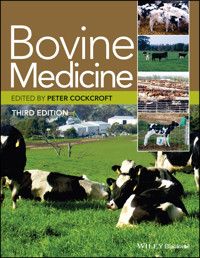
Bovine Medicine E-Book
144,99 €
Mehr erfahren.
- Herausgeber: John Wiley & Sons
- Kategorie: Fachliteratur
- Sprache: Englisch
Thoroughly updated to reflect recent changes in the industry, Bovine Medicine, 3rd Edition, offers practicing large animal veterinarians and veterinary students a comprehensive reference to core aspects of contemporary cattle health and husbandry.
- New edition of a classic text, featuring thoroughly rewritten text, with coverage shifted to the core aspects of everyday cattle practice
- Includes new focus on both applied skills and application of knowledge, along with many more full-colour illustrations than in previous editions
- Represents a toolkit of skills that will support the delivery of contemporary cattle practice
- Presents a seamless integration of information on husbandry, nutrition, and disease
- Written by a wide range of experts from around the world
Sie lesen das E-Book in den Legimi-Apps auf:
Seitenzahl: 1928
Veröffentlichungsjahr: 2015
Ähnliche




















Table of Contents
Cover
Title Page
Copyright
Dedication
Contributors
Preface
Section I: Modern Cattle Practice
Chapter 1: Sustainability and One Health
Introduction
What is the global impact of bovine production?
What are the opportunities for mitigation?
Environmental impact and public perception
Role of the veterinarian/animal scientist and future developments
References
Chapter 2: Modern Cattle Practice: a Blueprint for the Future
Introduction
Veterinary advisory services
Concluding remarks
References
Suggested further reading
Suggested website consulting (non-exhaustive)
Chapter 3: Education and Cattle Practice: ‘What Do We Do? What Should We Do?’
Introduction
References
Chapter 4: Evidence-Based Veterinary Medicine and Clinical Audits in Cattle Practice
Introduction
What is evidence-based veterinary medicine (EBVM)?
What is evidence?
What skills do I need to practise EBVM?
Sources of evidence
References and further reading (Evidence-based veterinary medicine)
References and further reading (Audits)
Chapter 5: Practice-Based Clinical Research
Introduction
The research question and study hypothesis
Study design
Implementing the study
Publishing the results of the study
The REFLECT Statement and other reporting guidelines
VICH Good clinical practice (GCP)
Conclusion
Reference
Further reading
Chapter 6: Expert Witness
Introduction
Types of evidence offered
What is expected of the expert witness?
Structuring a report
Statements of truth
Clarity of instruction
Independence
Establishing and referencing evidence
Responding to a disclosed report
Appearance in court
Review
Changes in the law
Summary
References
Further reading
Further information and useful contacts
Section II: Practice Management and Professional Skills
Chapter 7: Practice Management – Developing a Progressive Veterinary Practice
Introduction
Essential requirements to develop a successful practice
Summary
Acknowledgements
References
Chapter 8: Veterinary Leadership and Communication Skills
Leadership and individualised communication strategies
Gathering information: three components
Explanation and planning: connecting it to the farmer's perspective
Conclusion
References
Chapter 9: Marketing, Promotion and Farmer Education
Understanding the challenges to effective marketing
Developing a marketing strategy for the practice
Summary
References
Useful web links
Chapter 10: Veterinary Equipment in Ambulatory Practice
Introduction
Chapter 11: The Practice Laboratory
Introduction
Clinical pathology
Microbiology
Parasitology
Reproduction
General laboratory equipment
Centrifuge time/speed needed for different fluids
Design of the practice laboratory (Figure 11.4)
References and further reading
Institutions providing recommendations for standard operating procedures for veterinary laboratories
Recommended list of texts
Chapter 12: Safety: Handling and Restraint of Cattle
Introduction
Understanding cattle behaviour
Handling facilities – the yards
Handling facilities – the crush
Handling facilities – equipment
Avoiding injuries
Conclusion
References and further reading
Section III: Clinical Skills
Chapter 13: Herd Health Investigations in Cattle Practice
Introduction
Define and describe the problem: What? Is it worth investigating? How much?
Generate hypotheses to identify potential causes for the outbreak by identifying groups for comparison – Who, When, and Where?
Collect additional data to test your hypotheses: necropsy, clinical examination, sample collection
Summary
References
Chapter 14: Diagnosis and Clinical Reasoning in Cattle Practice
Introduction
The diagnostic process
Clinical reasoning exercise
Conclusion
References and further reading
Chapter 15: Special Diagnostic Procedures
Skin
Cardiovascular
Respiratory system
Abdomen
Further tests on milk
Musculoskeletal system
CNS
Further reading
Chapter 16: Bovine Haematology and Biochemistry
Introduction
Sample collection, transport
Laboratory procedures
Haematology
Biochemistry
Interpreting results
A case example
References
Chapter 17: Post-Mortem Examination and Sample Taking in Cattle
Introduction
Post-mortem lesions
Tissue sampling – fresh tissues
Tissue sampling – fixed tissues
General guidelines for packaging and posting of tissue specimens
References
Acknowledgements
Chapter 18: Microbiology for Cattle Practitioners
Introduction
Reasons to test
Diagnostic sample collection
Diagnostic sample submission
Types of tests
Interpretation of laboratory test results
Conclusion
References
Further reading
Chapter 19: Epidemiology: the Important Concepts
Introduction
Diagnostic test evaluation
Quantitative assessments
Sampling
Conclusion
References
Further reading
Glossary
Chapter 20: Biosecurity
Introduction
What is biosecurity?
Biosecurity at the global level
Biosecurity at the national level – border protection
Biosecurity at the regional level
Biosecurity at the farm level – farm biosecurity plans
Farm biosecurity plan
Acknowledgements
References
Further reading
Chapter 21: Applied Clinical Parasitology for Cattle Practitioners
Introduction
Cattle husbandry and management
Cattle parasites
Parasite pathogenicity
Diagnostics
Antiparasitics
Farm health planning
Summary
References and further reading
Chapter 22: Cattle Poisoning: Principles of Toxicological Investigations
Introduction
Epidemiology of poisoning in cattle
Public health
Relevant legislation
Pathogenesis and pathology of poisoning in cattle
Classification of poisons
Common clinical syndromes associated with poisoning
Identifying harmful exposure
Investigating suspected exposure to toxic substances
Options for treatment, control and prevention of contamination
Food safety, public health, suspected adverse reactions
Laboratory investigations
Routine samples for confirming a poisoning incident
Common cattle poisons
Sources of additional information
Chapter 23: Antimicrobial Selection in Cattle Practice
Introduction
Antimicrobials
References and further reading
Chapter 24: Pain Management in Cattle Practice
Introduction
Pain
Reducing pain in cattle practice
Evidence for the effectiveness of analgesic drugs in reducing pain during and after castration and dehorning
References and further reading
Chapter 25: Bull Health and Breeding Soundness
Introduction
Bull selection and purchase
The Bull Breeding Soundness Evaluation (BBSE)
BBSE conduct and criteria
BBSE outcomes
Genetic considerations
Bull libido or sex drive
Special considerations
Pathological conditions
Testicular hypoplasia
Testicular degeneration
Summary
References
Chapter 26: Euthanasia of Cattle
Introduction
Planning stage
Methods
Safety considerations
Emotional impact
Disposal
Large-scale euthanasia
References
Further reading
Section IV: Herd Health
Chapter 27: Important National and International Diseases of Cattle
The ‘old diseases’
Still there, and increasing in importance
Emerging diseases
Bibliography
Chapter 28: Population Medicine and Herd Health Planning
Introduction
Models of veterinary practice
Fundamental and auxiliary records for ‘top level’ and ‘drill down’ analysis
Benchmarking
Herd performance indicators
Herd economics and partial budgets
Conclusions
References
Appendix I(From Nordlund (1986))
Chapter 29: Welfare and Cattle Behaviour
Introduction
Welfare measurement
Major welfare concerns
Conclusions
References
Useful sources of information
Chapter 30: Rumen Health in the Dairy Cow
Introduction
Rumen acidosis
Case definition and clinical signs of SARA
Risk factors for sub-acute ruminal acidosis
Influence of feeding systems on risk of SARA
Diagnosis of SARA
Prevention and treatment of SARA
References
Chapter 31: Genetics for the Bovine Practitioner
Genome and genomic organisation
Origin of cattle – bovine phylogenetics and domestication
Genetic basis of modern cattle breeds
Parentage testing
Inherited diseases of cattle
Production traits
Disease resistance
Chromosomal anomalies
Samples for genetic testing of cattle
References
Chapter 32: Abortion and Perinatal Mortality in Cattle
Introduction
Stages of pregnancy
References
Section V: Dairy Cattle Herd Health
Chapter 33: The Prevalence and Cost of Important Endemic Diseases and Fertility in Dairy Herds in the UK
Introduction
Culling
Mastitis
Lameness
Fertility
Production disease
Endemic infectious disease
Youngstock disease
The farm audit
Conclusions
References
Useful sources of Information
Chapter 34: Dairy Cow Housing Audit
Introduction
Standard specifications
Measurables
Animal measurables
Lesen Sie weiter in der vollständigen Ausgabe!
Lesen Sie weiter in der vollständigen Ausgabe!
Lesen Sie weiter in der vollständigen Ausgabe!
Lesen Sie weiter in der vollständigen Ausgabe!
Lesen Sie weiter in der vollständigen Ausgabe!
Lesen Sie weiter in der vollständigen Ausgabe!
Lesen Sie weiter in der vollständigen Ausgabe!
Lesen Sie weiter in der vollständigen Ausgabe!
Lesen Sie weiter in der vollständigen Ausgabe!
Lesen Sie weiter in der vollständigen Ausgabe!
Lesen Sie weiter in der vollständigen Ausgabe!
Lesen Sie weiter in der vollständigen Ausgabe!
Lesen Sie weiter in der vollständigen Ausgabe!
Lesen Sie weiter in der vollständigen Ausgabe!
Lesen Sie weiter in der vollständigen Ausgabe!
Lesen Sie weiter in der vollständigen Ausgabe!
Lesen Sie weiter in der vollständigen Ausgabe!
Lesen Sie weiter in der vollständigen Ausgabe!
Lesen Sie weiter in der vollständigen Ausgabe!
Lesen Sie weiter in der vollständigen Ausgabe!
Lesen Sie weiter in der vollständigen Ausgabe!
Lesen Sie weiter in der vollständigen Ausgabe!
Lesen Sie weiter in der vollständigen Ausgabe!
Lesen Sie weiter in der vollständigen Ausgabe!
Lesen Sie weiter in der vollständigen Ausgabe!
Lesen Sie weiter in der vollständigen Ausgabe!
Lesen Sie weiter in der vollständigen Ausgabe!
Lesen Sie weiter in der vollständigen Ausgabe!
Lesen Sie weiter in der vollständigen Ausgabe!
Lesen Sie weiter in der vollständigen Ausgabe!
Lesen Sie weiter in der vollständigen Ausgabe!
Lesen Sie weiter in der vollständigen Ausgabe!
Lesen Sie weiter in der vollständigen Ausgabe!
Lesen Sie weiter in der vollständigen Ausgabe!
Lesen Sie weiter in der vollständigen Ausgabe!
Lesen Sie weiter in der vollständigen Ausgabe!
Lesen Sie weiter in der vollständigen Ausgabe!
Lesen Sie weiter in der vollständigen Ausgabe!
Lesen Sie weiter in der vollständigen Ausgabe!
Lesen Sie weiter in der vollständigen Ausgabe!
Lesen Sie weiter in der vollständigen Ausgabe!
Lesen Sie weiter in der vollständigen Ausgabe!
Lesen Sie weiter in der vollständigen Ausgabe!
Lesen Sie weiter in der vollständigen Ausgabe!
Lesen Sie weiter in der vollständigen Ausgabe!
Lesen Sie weiter in der vollständigen Ausgabe!
Lesen Sie weiter in der vollständigen Ausgabe!
Lesen Sie weiter in der vollständigen Ausgabe!
Lesen Sie weiter in der vollständigen Ausgabe!
Lesen Sie weiter in der vollständigen Ausgabe!
Lesen Sie weiter in der vollständigen Ausgabe!
Lesen Sie weiter in der vollständigen Ausgabe!
Lesen Sie weiter in der vollständigen Ausgabe!
Lesen Sie weiter in der vollständigen Ausgabe!
Lesen Sie weiter in der vollständigen Ausgabe!
Lesen Sie weiter in der vollständigen Ausgabe!
Lesen Sie weiter in der vollständigen Ausgabe!
Lesen Sie weiter in der vollständigen Ausgabe!
Lesen Sie weiter in der vollständigen Ausgabe!
Lesen Sie weiter in der vollständigen Ausgabe!
Lesen Sie weiter in der vollständigen Ausgabe!
Lesen Sie weiter in der vollständigen Ausgabe!
Lesen Sie weiter in der vollständigen Ausgabe!
Lesen Sie weiter in der vollständigen Ausgabe!
Lesen Sie weiter in der vollständigen Ausgabe!
Lesen Sie weiter in der vollständigen Ausgabe!
Lesen Sie weiter in der vollständigen Ausgabe!
Lesen Sie weiter in der vollständigen Ausgabe!
Lesen Sie weiter in der vollständigen Ausgabe!
Lesen Sie weiter in der vollständigen Ausgabe!
Lesen Sie weiter in der vollständigen Ausgabe!
Lesen Sie weiter in der vollständigen Ausgabe!




