


10,80 €
Mehr erfahren.
- Herausgeber: Notting Hill Editions
- Kategorie: Wissenschaft und neue Technologien
- Sprache: Englisch
As a trainee doctor, Andrew Lees was enthralled by his mentors: esteemed neurologists who combined the precision of mathematicians, the scrupulosity of entomologists and the solemnity of undertakers in their diagnoses and treatments. For them, there was no such thing as an unexplained symptom or psychosomatic problem – no difficult cases, only interesting ones – and it was only a matter of time before all disorders of the brain would be understood in terms of anatomical electrical and chemical connections. Today, this kind of 'holistic neurology' is on the brink of extinction as a slavish adherence to protocols and algorithms – plus a worship of machines – runs the risk of destroying the key foundational clinical skills of listening, observation and imagination that have been at the heart of the discipline for over 150 years. In this series of brilliant, insightful and autobiographical essays, Andrew Lees takes us on a kind of Sherlock Holmes tour of neurology, giving the reader insight into – and defending – the deep analytical tools that the best neurologists still rely on to diagnose patients: to heal minds and to fix brains.
Das E-Book können Sie in Legimi-Apps oder einer beliebigen App lesen, die das folgende Format unterstützen:
Veröffentlichungsjahr: 2022
Ähnliche

















Notting Hill Editions is an independent British publisher. The company was founded by Tom Kremer (1930–2017), champion of innovation and the man responsible for popularising the Rubik’s Cube.
After a successful business career in toy invention Tom decided, at the age of eighty, to fulfil his passion for literature. In a fast-moving digital world Tom’s aim was to revive the art of the essay, and to create exceptionally beautiful books that would be lingered over and cherished.
Hailed as ‘the shape of things to come’, the family-run press brings to print the most surprising thinkers of past and present. In an era of information-overload, these collectible pocket-size books distil ideas that linger in the mind.
nottinghilleditions.com
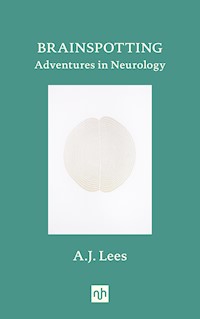
BRAINSPOTTING
Adventures in Neurology
–
A. J. Lees
Contents
To my teachers
‘My dear fellow,’ said Sherlock Holmes as we sat on either side of the fire in his lodgings at Baker Street, ‘life is infinitely stranger than anything which the mind of man could invent.’
– ‘A Case of Identity’ (1891), from The Adventures of Sherlock Holmes by Sir Arthur Conan Doyle
– Preface –
When I tell people I am a neurologist, very few have much idea of what I do. Common reactions are: ‘Isn’t that the same as Gregory House?’ or ‘How wonderful it must be to study the human mind?’ When I reply that I make the blind see, the lame walk and can calm the shaking palsy, many assume I must be a brain surgeon. The media prefer to call me a ‘leading neuroscientist’ even though I spend no time in a laboratory and carry out no research on the healthy brain.
Neuroscience engages the attention and curiosity of the general public despite its complexity, and in the last twenty years various domains of knowledge have acquired a ‘neuro’ prefix that attempts to link them with the nervous system. Timothy Leary, the Harvard Professor of Psychology who advised my generation to ‘turn on, tune in, drop out’ with LSD-25, was the first person to link life science with culture, and there are now specialists in neuroaesthetics, neurotheology, neuroeconomics, neuromarketing and even neurolaw.
Neurology, the term coined by Thomas Willis in the seventeenth century to describe the doctrine of the nerves, now refers to the study and treatment of viiidisorders of the nervous system. Although both neurology and psychiatry are concerned with disordered behaviour and thinking, a high wall has grown up between the two specialties that has proved very difficult to break down. Most psychiatrists insist that the patient’s narrative matters in its own right without any requirement for spotlight consciousness. The neurological examination, on the other hand, reminds psychiatrists that in order to solve medical problems they need to observe as well as listen, and that a practical knowledge of the brain’s morphology and physiology is important.
During my training, neurologists were held in awe for their clinical acumen and their uncanny ability to diagnose zebras and black swans, but equally they were caricatured by colleagues as introverted, analytical eggheads that combined the precision of mathematicians with the scrupulosity of bryologists and the sobriety of undertakers. Theirs was a young science in which expertise had been passed down often by word of mouth at the bedside, from master to master. These supermen, and they were all men, convinced me that it was only a matter of time before every brain disease would be categorised in terms of its anatomical, electrical and chemical connections, and that all mental life would be mapped to a neural substrate. Neurologists were literally the brains of the medical profession; their rational approach drew me in. My own first teachers emphasised that my training ixwould be as long and demanding as that required of a vestal virgin in Ancient Rome: that I would need to listen, observe and infer and also learn the importance of contemplation. The method I used was reasoned and left little to the imagination.
It took ten years of apprenticeship before I felt competent to diagnose and treat most of the common neurological syndromes and even longer before I felt reasonably confident to distinguish a healthy person from an ill one. During my long career as a neurologist, I have treated about 30,000 patients in National Health Service clinics, and several thousand more in the consulting rooms at University College Hospital and the National Hospital, Queen Square, London. I have done about 4,000 ward rounds and seen hundreds of hospital referrals. I have taught undergraduate and postgraduate students at the bedside and in seminar rooms and have lectured to colleagues in large auditoria all over the world. I have visited patients in their own homes, although not as many as I would have liked. I have tried to find answers to the questions my patients asked me and which I was unable to answer at the time.
I mention these facts only to illustrate the difference between my medical life and the practice of Oliver Sacks, who, during his lifetime, became the best-known neurologist on the planet. In 1976 Jonathan Cole, a medical student at the Middlesex Hospital, wrote to Dr Sacks to see if he might spend xa two-month elective in his department. After some delay and with some embarrassment Sacks wrote back apologetically saying that he no longer had a salaried post at Beth Abraham hospital, and that he was a neurological gypsy who survived marginally and precariously on odd jobs here and there. He was a physician without a post, a romantic scientist, more at home in the asylums of yesteryear than in the new skyscraper hospitals, but his letters – handwritten from his desk in Horatio Street, West Village, New York – gave renewed hope to the ignored, and his books made neurology more human. Through his writing Sacks was able to reconcile the afflicted with their environment. To many neurologists he came over more like a psychiatrist in the mould of Sigmund Freud.
I took a different course. I watched my ps and qs and hoped that I could contribute something worthwhile by working inside a healthcare system that I respected and looked up to. I avoided the cardinal sin of letting fantasy get the better of objectivity, and after twenty years I was rewarded with my own department. This allowed me to surround myself with brilliant colleagues and to be inspired by curious young minds. Their example sometimes allowed me to see bigger pictures and through their ideas acquire new ways of detecting disease.
I now work on a different scale and time course with redefined cultural constructions and contexts, but the medical interview and neurological examination xihave remained as vital as ever. The clinical method I describe throughout this book involves paying great attention to detail and has an applicability in reducing error that goes far beyond the diagnosis of disease, yet in spite of its great value it is no more than a type of accurate guessing in which the end point achieved is a name. Over time this name that is given to a collection of symptoms and signs comes to assume the importance of a specific entity, although it is never more than an insecure, ephemeral conception. After almost half a century of seeing people in the clinic, I still feel like an explorer shining a pocket torch into a cave and hoping I will find a precious stone. The careful study of a patient’s symptoms from the beginning to the end of their disease remains my chosen animal model and I remain as committed to clinical trials, best evidence and the need for medical statistics as I was when I completed my training as a doctor. I am enamoured by the exciting new approaches to restoring function to the brain injured and by the way genetics has changed the face of neurology.
Despite continuous change in the classification of neurological disorders over the last four decades, the contents of my doctor’s bag have hardly altered. I still carry an ophthalmoscope, a Queen Square hammer, a red hatpin, a 128 Hz tuning fork, a pin hole, a pen torch and some orange sticks. New additions are Neurotips for testing pain sensation, which have replaced pins, the ‘little green book’ for assessing cognition, xiiand some applications on my mobile phone, such as the Ishihara test for colour vision, a Snellen’s visual acuity chart and an electronic black-and-white-striped moving drum for testing optokinetic nystagmus.
Even after so long surprises occur in the clinic. Last year a married couple who are professional ballroom dancers came to see me. After immaculate synchronicity for twenty-five years, they had suddenly run into timing problems. The wife told me that her husband was now making one or two false steps, particularly when dancing the paso doble. As I then listened to his own account, which involved technical terms such as ‘reduced horizontal energy’, there was nothing that I could see that indicated a neurological problem. When it came to the examination I asked him to tap his feet on the ground one at a time and noticed that the movements of his right foot were more irregular, slower and less rhythmical than those on the left. I suspected Parkinson’s disease but rather than ordering a dopamine transporter scan I told them that I was not sure what was wrong but that I wanted to see him again in three months’ time. Hearing a new presentation of a common disease still gives me enormous pleasure and I added ‘the faulty dance step’ to my list of uncommon presentations of Parkinson’s that already included ‘swimming in circles’, ‘the Rolex watch that kept stopping’, ‘the white hand’, the ‘skiing smudge in the snow’ and ‘the foot cramp of the long-distance runner’.
xiiiMy enthusiasm for eliciting physical signs is as strong as it ever was. I marvel at the pathognomonic, appreciate the cardinal, and adore even the softest of commemoratives. Some of the abnormalities I see and feel and then record indicate old scars; others are harbingers, but it is those that reveal the cause of the presenting complaint that I value most. I also like the menagerie similes including dromedary, hobby horse, dancing bear and cock to describe different pathological gaits, but these terms should not be used in front of patients.
When I started to write this book I was searching for a lost soulful neurology that arose out of the diverse and fascinating presentations of nervous disease and the richness of my speciality’s accumulated literature. Through time-drifting and heart-searching I was able to randomly connect with the past and recall demonstrations from my apprenticeship that had helped to form my views about how neurology should be practised. I could also rely for source material on a handful of minor medical triumphs and a cemetery full of mistakes that had been etched deep in my memory. Insight allowed me to envisage a scintillating future that transcended representation and mechanisms, where the double helix and the enchanted loom merged with the magical universe to reveal the identity of illness. xiv
– Birdwatching on the Pavements –
I still remember dreams where I could fly, and how as a child I loved the sound of a tawny owl hoot. Recognising a robin, a duck, a swan and a house sparrow was part of growing up, but I also picked up the names of other birds I didn’t know from the chatter of my mother and father, as they looked over our little lawn at teatime. Every Thursday, when the box of groceries was delivered from the Thrift Store, I pulled out the packet of PG Tips and rummaged in its foil wrapper and cardboard carton hoping a Brooke Bond Tea collectable picture card of a gannet would fall out rather than yet another duplicate of a bird I already had. It was these cards that provided the platform for me to leave stamp collecting and trainspotting behind and start to create an inventory of living things.
For my twelfth birthday I asked for a compendium that would allow me to put a name to the birds I was seeing in my garden and the old pasture that sloped down from the bottom of our road. Every bird that had been sighted more than fifty times in the last hundred years was included in my Collins Pocket Guide to British Birds. Richard Fitter, its author, had discarded the standard Linnaean classification and devised a 2new approach that would assist birdwatchers out in the field to identify species they had only glimpsed. The manual’s descriptive section was divided into the three broad habitats of land, waterside and water, and within each of these groupings the indigenous species were laid out in ascending order based on their length. The sixty-four pages of illustrations arranged the individual types by their colour and likeness while also depicting raptors, gulls and waders in flight. At the bottom of each plate there was a silhouette of a house sparrow, which served as a size comparator, and in the key at the back birds were categorised according to the colour of their feathers, anatomical features such as their feet, head, wings and tail, their haunts, and particular behavioural characteristics. The guide made the point that female, male and immature birds of the same variety could look quite different and that plumage often changed markedly with the season. It also reassured me that even expert birdwatchers, in their mania for rarities, made diagnostic errors.
One day, about a year after I had started to keep records, I looked out from my bedroom window on to the rugby pitch and saw a group of dark birds huddled close to the twenty-five-yard line. In a moment of drama, they rocketed into the air, skimming the tops of the goalposts, and whirred away over the chimney tops. The pack of eight were back the following morning, crouched low on the grass pecking the pitch like pigeons with their small black beaks. My mother and 3father could neither tell me their name, nor where they had come from.
There were too many medium-sized land birds in my guide to be of much help and none of the illustrations seemed to be a close match for what I was seeing. So, I turned to the key. The list of brown birds included partridge, woodcock, corncrake, snipe, ruff and bittern, but only two of them, the golden plover and the red grouse, had a black bill. I flipped back through the illustrations and immediately discounted the plover, so I homed in on the red grouse. The text informed me that Lagopus lagopus scotica was endemic to the upland moors of the British Isles where it fed on ling, bilberries and small insects. Field identifiers that I had been unable to discern included a crimson band above the eye, a hook-tipped bill and light-grey feathered feet. Sensing my uncertainty, my father reminded me that birds could fly anywhere they wanted to and that very few remained in one place for long. He went on to say, with a smile on his face, ‘Birds also do not read bird books.’ That evening I wrote in my diary:
The red grouse were on the rugby pitch. I think they may have come here to escape the burning heather on Blubberhouses Moor.
The identification of the red grouse sparked my interest and I started to spend Saturdays travelling to bird haunts like Spurn Head and Swillington Ings in 4the company of adult naturalists. These experienced and generous people emphasised to me the importance of writing down what I saw and showed me where and how to look.
My mother, who sometimes used birds to tell fortunes, conserved my bird journals for many years. After I had qualified as a doctor she handed them back to me, reminding me how as a twelve-year-old I had felt the need to be able to name every little brown bird that came into view. She then said, ‘Do you remember when you found that dead blue tit unmarked in the garden and how you buried it under the laburnum, marking its resting place with an ice lolly stick?’ At the time she had told me that when sailors were lost at sea blue tits carried their souls to heaven.
I have one of my old maroon hardback journals open in front of me now, its lined pages filled with an italic script that I scarcely recognise as my own. Each entry is meagre and ordinary; the mechanical accounting with daily averages and graphs that followed the descriptions were remnants of my need for systems, formality and rules. Even so, watching birds had taught me the virtue of patience and composure and how to focus on a single living thing at the expense of everything around it:
Sunday April 24th
The weather was cold with a strong wind blowing … A blue tit was feeding on the nuts when a greenfinch wanted to. A 5fight broke out but not for long for the tit attacked the finch with such ferocity that the greenfinch was forced to withdraw.
Saturday June 11th
The weather was mild but there were a few rain showers. A song thrush began to build a nest in the flowering currant bush, but it was only seen once. It probably still had some young to feed and was building the new nest in its spare time.




