


Erhalten Sie Zugang zu diesem und mehr als 300000 Büchern ab EUR 5,99 monatlich.
- Herausgeber: Independent Thinking Press
- Kategorie: Bildung
- Sprache: Englisch
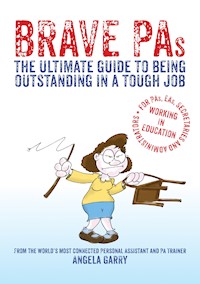
The common image of the secretary or personal assistant is that of a quiet "Miss Jones" type - not usually expected to have the courage (or the right) to speak out on something they are passionate about. However, PAs have a vital role to play in an education environment - a role that requires real bravery. Written by the former PA to the principal of an innovative new academy in the UK, who now delivers training courses for secretaries and PAs in schools globally, this book offers tips, hints, anecdotes, time-saving advice, knowledge and expertise for PAs, secretaries and administrators to follow throughout the year. Each individual bravery-themed section is packed with advice and insights to assist with your continuing professional development, enable you to perform at your best and cope with the inevitable challenging situations you face, one week at a time. PAs, secretaries and administrators in schools, colleges and universities, this book is for you. Make this a brave year!
Sie lesen das E-Book in den Legimi-Apps auf:
Seitenzahl: 316
Veröffentlichungsjahr: 2015
Das E-Book (TTS) können Sie hören im Abo „Legimi Premium” in Legimi-Apps auf:
Ähnliche



















To my loved ones:
You know who you are.
You help me do what I do,
and allow me to be who I am,
whilst encouraging me to push myself
to be the best that I can be.
Thank you for being there for me when it really matters.
CONTENTS
FOREWORD
We live in a world where education has been swamped by deadlines, systems and procedures. Never has the school leader more needed assistance than now. Each day hundreds of emails, forms, submissions and phone calls bombard the leader’s desk, and this is all before the children, staff, parents and governors each add in their own special demands. Without help most people would buckle, and sadly some do. This is where the importance of quality organisational support becomes clear: you need someone to help raise your head from the swamp, someone to take control. However, it would be a grave error to think that a quality PA is simply a way of removing paperwork and ticking boxes – a good one is so much more than this.
Many of us are worried that the human side of education is being hidden under a mass of numbers and targets, and that schools need to reclaim the moral purpose for education. I would argue this becomes much easier with a talented PA at your side.
In this book, Angela Garry skilfully identifies many of the essential skills that anyone wanting to step into this demanding role should be looking to develop. She adopts the metaphor of the PA’s bag to guide us through the multifaceted demands of the role. Sometimes the ideas for the bag are small gems (like how to remember the tea and coffee order) whilst others could help save the school from disaster (like the advice on preparing for a major computer meltdown). After reading this book, every head teacher will be asking to see the ‘purple folder’ which Angela encourages her fellow PAs to prepare. She writes with an authoritative voice, born out of her wide and varied career, including her recent work training PAs across the globe. However, it would be wrong to imagine this as a simple factual ‘how to’ book; Angela writes with real heart, and she uses humour and honesty to get her message over.
Angela loved her time working in schools and that is clear from her writing, but she also doesn’t shy away from addressing some of the problems that anyone working in a school office role might meet. She expresses the humanity that the role requires and describes with real colour some of the situations that will occur, but importantly, for each, she gives practical ideas about what you can do about them.
Schools need a brave and talented office team supporting the work of the school. In fact, I doubt any school can be successful without one. The role of a head teacher can be very demanding and lonely (I know – I’ve been there!), but the role becomes less stressful with a brave PA by your side. Someone prepared to work efficiently under the radar, someone who can go places you can’t, someone who hears things you can’t, someone who helps you keep your many plates spinning.
Education is definitely not about the numbers – it’s about the people. Brave PAs should be read, not only by every PA, EA, secretary and administrator working in education, but by every leader who wants to create a school, college or university which is focused on this.
Dave Harris former head teacher and author of Are You Dropping the Baton?, Brave Heads and co-author of Leadership Dialogues
INTRODUCTION
It takes a lot to be a great administrator in an educational environment – nay, it takes real bravery. It’s not the same as working in a personal assistant (PA), executive assistant (EA), secretarial or administrative role in any other environment. We work to distinctly different customer groups, and ultimately the aim of our institution is not all about profit – it’s about developing our pupils and students into the citizens of tomorrow. We are part of an institution that is helping to develop the next generation’s rocket scientists, cleaners, doctors, bus drivers, shop workers, industrialists, firemen, inventors and parents of generations to follow – plus all those whom we will inspire to become budding PAs!
Imagine, if you will, that we all have within us a small velvet bag that is filled with a handful of little glass beads. Each bead contains the essence of one of our brave strengths, assets and skills – our internal ‘Bravery SAS’. This is where our bravery comes from, based on how we use these beads: one at a time or in combination with other beads.
Some people carry their bravery bag deep inside their pocket, hidden away, and don’t bring it out into the open very often, believing that there is a limit on usage and they must reserve it only for special occasions. Some people aren’t even aware that they have a bravery bag, so never use it. Some open their bravery bag and look through the beads, choosing to select just a few of them. Others wear their bravery bag on their shoulder and rummage through it on a regular basis.
Brave PAs use their bravery bag daily and will find that they use every bead within the bag at some point, sometimes using several at once to find brave solutions and methods to meet their various challenges. Each of the 48 chapters in this book looks at one or more of the different bravery skills, assets and strengths required to be successful in your role: what they are and how you can use them, how you can supplement and develop them, and how to make sure you access them on a regular basis to become a brave PA in education.
This book is based on my experiences of training to be a teacher and subsequently working in administrative, secretarial and PA roles in education. Brave PAs offers a selection of my tips, hints, anecdotes, time-savings, advice, knowledge and expertise to assist with your continuing professional development, and to enable you to be the best you can be in your role, bravely supporting the leadership of your school, college or university.
You might choose to read just one chapter of this book per week, and think of this book as a guide for use throughout an academic year in your role, or you might prefer to dip in and out of it at random. Alternatively, you may like to pick out chapters on a particular topic (see the topic list at the back of the book). Whatever you do with it, I hope that it helps you in your role as a PA in education. There are so many more chapters I could have included (I started out with a list of more than 70!) on so many more aspects of working in an educational environment – but this seemed enough for starters.
Note: Brave PAs has been written specifically for PAs, EAs, secretaries and administrative staff working in schools, colleges and universities. Throughout the book, the terms ‘PA’, ‘head teacher’ and ‘school’ are used as shortcuts for all administrative staff and their head teachers/principals/college leaders/university heads/leaders in other educational institutions.
All anecdotal evidence within this book is true – but names have been changed to preserve anonymity where requested.
BRAVERY IS …
BRAVERY IS … STEPPING
INTO YOUR FIRST ROLE IN AN EDUCATIONAL ENVIRONMENT
Your first experiences of working in an educational environment may well be scary, whether you are arriving straight from school or college or from working in a role in a different industry. Many people believe that a job in education will be ‘easier’ than elsewhere, that they will enjoy long holidays and short hours, but this generally does not prove to be the case!
With increasingly smaller budgets and tighter controls on spending, educational institutions are becoming pressurised into becoming ‘lean’, which means reducing staff numbers and overheads whilst still maintaining standards and delivering excellent teaching for the students. The role of PA, EA or secretary in a school, college or university is often therefore a hugely responsible position, which will require you to have lots of fingers in lots of different pies throughout the organisation, regardless of whether your job is to support just one individual or many staff members. You will become involved in the whole organisation for the good of all – and so you should! The better acquainted you can become with the workings and machinations of your school or college, the better you will be able to support its leadership.
PAs who make the move from a corporate role will be used to working in busy, pressurised situations, but many will be unprepared for the sheer number of interruptions that will occur during the working day in education, as pupils, parents, teachers, teaching assistants, governors, professors, college sponsors, community members and many more compete for their attention. I’ve spent my career working in corporate, charity and educational institutions, and I’ve seen the huge gulf between what people think of as a ‘cushy number’ working in education in comparison with what actually happens.
Please don’t get me wrong. I’m not saying that working in education is an awful experience, too hard, too difficult or too pressurised. I have loved each and every one of my roles as an administrator in education – as, I am sure, will you – and I have felt challenged to push myself to reach high standards throughout. It’s always been a role where I have felt valued and where I have known that what I was doing was working towards an overall goal that is sincerely worthwhile – educating the adults of the next generation. I love the PA role and working in the educational sphere with equal passion. And, with each job, I have developed different skills and new methods of working.
Education is a very different experience than working anywhere else. There are very few other organisations where you would be required to deal with huge numbers of children, teenagers and young adults every day in your workplace, as well as ‘already grown’ adults. For those who have spent their career working solely with adults, it can be a daunting or scary experience to make the switch to working in education. It takes bravery.
My experiences of working in educational environments have required bravery throughout, to adapt to the various demands required of me as a PA, an adult, a tutor, a coach, a mentor, a member of the local community; bravery which I’m going to share with you over the coming pages, and which I hope can help you in your future as a brave PA in education.
BRAVERY IS … ENLIGHTENING
– SOME LIGHT-HEARTED ADVICE FOR A NEW PA
If you are brand new to being a PA, then welcome to this really exciting profession!
Being a new PA or administrative assistant is no easy task. Your head teacher or principal will quite often expect things of you that you are unfamiliar with – they may presume that you already know what to do without being told. They will probably also expect that you automatically know their preferences and will be able to organise logistics successfully on their behalf.
If you want to be great at your job, the following enlightenments should be useful to you.
BE FRIENDLY AND EARN THE RESPECT OF YOUR COLLEAGUES
When you arrive in a new role, your colleagues need to know who you are and what you do. If you need something from them, you need them to respond accordingly. A major element of the PA role is chasing people to get them to produce reports and papers to deadline, to agree to attend meetings, to turn up on time and to take on extra responsibility, so you need your colleagues to know that you are there as the head’s or principal’s ‘third arm’. You are there to ensure that whatever needs doing gets done.
You will need to get to know about the people your boss will meet with on a regular basis – this might by the school or college’s governors, or the university’s council. If they are familiar with who you are and what your role is, a good working relationship with them should develop much easier than if they have no idea who you are or what you are doing. You may not be directly involved with their schedule or time management, but getting acquainted with their assistants will help assure their cooperation when you need something from them.
MOST LIKELY, YOUR COLLEAGUES KNOW NOTHING ABOUT WHAT A PA DOES
You will find that many of the people you work with have little idea about the role of a PA so your task should be to educate them! They may think of you as a diary-keeper, a chaser-of-deadlines or the ‘go to’ person for everything under the sun, so they will often come to you with questions or tasks that aren’t your responsibility to fulfil, but they have no idea who else to go to with them, so they come to you. Of course, these are things that you will take in your stride in time – it is usually a case of ‘If you don’t know who to ask about something, ask the PA – they will be able to find out for you’. For example, many of your colleagues will be under the impression that you are (apparently) the only person in the entire world who knows where anything is. Without you, nobody would know who to call, when the meeting is or who it is with – and the list keeps going.
Being a PA (and a brave one at that!) requires certain skills including organising meetings, handling travel itineraries, having good (or preferably great) computing skills and typing speeds, as well as being flexible and adaptable to working with last minute changes. But, because of their lack of knowledge about the role, a lot of people assume that the role of PA is easy, which is rather hilarious. I have never met (nor heard of) a PA who has described their job as easy.
Your role at this point is to enlighten your colleagues. Become an ambassador for the profession and demonstrate to them the true power of the PA – that we essentially control the head teacher’s time. We decide if and when someone may see our boss or speak to them by phone. We keep the head teacher or principal supported in a safety net that allows them to walk the tightrope of running the organisation, secure in the knowledge that we’ve ‘got their back’.
Here are some of the key skills that you will need to succeed as a brave PA.
YOU NEED TO BE AN ELEPHANT
You know the saying, ‘Elephants never forget’? PAs must not forget anything because there is nobody to back you up. People will come to you looking for a piece of paper they had in their hand six weeks ago or for the contact details of someone who visited the school last term, and even if you had nothing to do with the original details you will be expected to find out.
Your head teacher or principal will ask you to ‘dig out’ an email they received from John or Bob, (or was it Phil?), three or four weeks ago, which mentioned something about X or Y. Undoubtedly, it will turn out to have been a message from Simon, which mentioned that Tim might be involved in a project (to which the head had thought, ‘No, that’s Bob’s responsibility’), but you will have to work this out by remembering the conversation you had with the head that day when he mentioned something about Bob …
To become great PAs, we need to develop an almost ESP-type connection with our bosses to work out what it is they mean, because quite often they do not tell us or give us the wrong information. Great detective skills also help to piece together the fragments of information that we gather every day.
YOU NEED TO KNOW EVERYTHING ABOUT EVERYONE
It will also be expected that you know everyone’s needs, wants, quirks, habits, demands and eccentricities, because you will, of course, have developed an encyclopaedic knowledge of the staff within the first few moments of having arrived in your new role!
YOU NEED TO BE THE BEST TRAVEL ORGANISER
As well as organising meetings you will quite often be the travel arranger. Anyone who has booked a business trip for six people, all flying from different airports at different times, and all having different personal preferences about the type of place where they want to stay, will be able to tell you that booking travel can be unbelievably complicated – and you will be expected to be the person who can magically make it all happen.
YOU NEED TO BE A GREAT EVENT ORGANISER
As a PA, you will be the person to organise the next conference or major meeting. Whilst it’s highly possible that you enjoy event planning and organising (I do hope so!), nobody around you will have any idea how hard it actually is to organise a full conference. All those who do have an inkling will usually steer clear and leave it to you, as you are the ‘trained professional’. This being the case, try to get your name down for a course on event management to help you along.
YOU NEED TO MANAGE TIME CAREFULLY AND WISELY
There are many different aspects to the role of PA, but one of the most important is that of managing time. And by that I mean both yours and the person you work for.
You will need to be quick and accurate in the work that you do, adaptable to be able to pick up different tasks at different times and fastidious enough to make sure that nothing gets left behind. You will undoubtedly have a task list a mile long, and it can be quite daunting to a new PA to be suddenly expected to manage this.
In addition, you need to make sure that your head teacher has time to meet with people, speak with them on the phone and do all of the necessary things that are involved in running a busy school or college. This means that you will need your calendar synced with theirs, as you will be responsible for ensuring that they get to those meetings at the right time, with the right papers, with the right travel arrangements and know who they are meeting and why. Your IT team will be able to set it up so that your calendars can work together.
As well as ensuring that your head gets to the right meetings, you will be involved in making sure that those meetings happen without a hitch, requiring attention to details such as everyone’s availability, preparing papers for the meeting and making sure that everything from the conception of the meeting up to the moment it ends goes smoothly.
Once you’ve got a handle on their calendar, you will probably also need some sort of access to your head teacher’s emails too, but very early on in a PA role, particularly for a new PA, this may not be a requirement just yet.
ONE OF THE MAJOR CHALLENGES OF THE ROLE IS TO SHINE
In the words of REM, PAs are always ‘shiny happy people’. Or at least, we’re not supposed to answer the phone or greet visitors at the door with, ‘What do you want?’ Always aim to shine and be happy to meet the people who come into your room, who call you on the phone, who pass you in the corridor or outside visitors who come into your school, college or university. We are there to welcome people into the organisation, and to give them a positive impression of what we collectively do for the pupils and students.
Remember that a key element in being a great PA is enjoying your work. It’s not a role that everyone is suited to, because of the enormous amount of multi-tasking required, but it can be incredibly rewarding. No matter what happens, we will either fix it, sort it out or will know how or who to get it done.
Welcome to the role of PA – buckle up, strap yourself in, it’s going to be an exciting ride! And don’t forget to use your role to enlighten others.
BRAVERY IS … GETTING
OFF TO A GREAT FIRST START
Some of the first things you will need to do in the first few days in your new role include:
FINDING, READING AND DIGESTING THE HANDOVER NOTES FROM YOUR PREDECESSOR
What do you mean, there aren’t any handover notes? Check the shelves and drawers in your new office – is there a purple coloured folder anywhere? (A note for your future self: whenever you leave a job, leave behind some excellent handover notes for your successor – see page 215.)
All too often we start at a new job and have to think on our feet on the first day because the person who left the job didn’t leave any notes behind. If you find that this is the case when you start a job, make sure that you do not do this to your successor when you leave!
OK, so you’ve read the handover notes (or not, as the case may be). What’s next?
GETTING SET UP AND FINDING OUT THE BASICS
Get set up for computer access. You will need a username and password, access to the network and someone to tell you what’s where within the system.
Telephone access. Do you need a pin number to sign in to the voicemail system? How do you set up speed dials on your desk phone? What is already set up on it? With luck, this should be detailed in the handover notes you receive.
Access to the boss’s email/calendar via the computer network. Some managers will want you to have ‘viewing’ access only while you and they build up trust; others will expect and need you to have full ‘editing’ access straightaway.
Where is the toilet/staffroom/break area?
What is the routine for lunches – how do you pay? How often? What time? Where do you go?
Is there a safe place for your personal belongings during the day (e.g. a locker or a lockable drawer in your desk)?
Fire/emergency evacuation procedures – where should you go, and what should you do?
Where are the tea and coffee supplies/printing supplies/stationery cupboard?
Where are the keys to the filing cabinets in your workspace or office?
Do you need keys to the office and/or security cards to ‘swipe’ your way into the building?
GETTING COMFORTABLE
Set about rearranging your room and setting up your desk how you want it, including hunting out a more comfortable chair, if necessary, as you are likely to be sitting at your desk for some very long hours at times! Move things around until you are comfortable with them.
For example, I’m used to working with two screens, with a laptop in front of me and a second monitor and my desk phone to the right, plus a full-size keyboard and mouse in front of the laptop. Trying to work at a desk where the computer and phone are on the wrong side of the desk means I can’t work at my best capacity, as I get neck strain from leaning to the left. I have worked with a number of people who have spent years working in uncomfortable positions like this, without resolving the issue by simply moving things around.
Where is the main source of natural light/electronic light in the room? Do you need to move the actual location of your desk in the room so that you are not blinded by sunlight for certain parts of the day? I’ve worked with PAs who sit squinting all afternoon in the autumn – when the sun starts to set at just the wrong angle for them to be comfortable – and quite often they haven’t moved their desk to alleviate this, saying it would be too troublesome to do. However, squinting in the wrong lighting and getting headaches isn’t worth it – so get the desk moved!
INSTALLING USEFUL STUFF
You may have used various computing aids or shortcuts in previous jobs, such as autocorrects, short words and dictionaries. Now is the time to put them in place in your new role. Also add commonly used work-related website addresses to your browser’s favourites list. If you have done your homework in your last job, you will have created copies of these to bring with you before you left. (For more on this, see pages 117 and 215.)
Check what computing packages are available to you on your new computer – for example, you may be a whizz with Microsoft Project and used it on a regular basis in your old job, but may find that it’s not installed on your computer in your new job. If you anticipate that you are going to need it (and let’s face it, you probably will) then you will need to get on to your IT team to see if it can be installed. If the software is already available within the school then this should not be a problem, but if it has to be purchased you may need to justify the purchase to your head or finance team, as well as the IT team.
COMPILING YOUR NEW JOB’S VITAL STATISTICS
If the following information has not been provided, then find out your boss’s car make/model/registration number, their mobile number, home phone number, their partner’s mobile number, name/phone number of their children’s schools, contact numbers for their doctor/dentist/parents, the garage for their car and so on. You will also need the desk phone numbers and mobile numbers of the leadership team and the board of directors or governing body (if your role includes working with these). Obtain a list from your colleagues, or start compiling one yourself.
WHO’S WHO?
One massively important thing for you to do early on in your new role is to work out who everyone is. Get hold of whatever organisation structure diagram you can find. Ask your boss – or the human resources department – for this. If your predecessor has done their job well, they will have included a copy in their handover notes. If there isn’t one, start compiling one and get it printed out and up on your wall as soon as you possibly can. It doesn’t have to be fancy – just use the basic organisation chart tool within Word if you have to, or draw it up on a piece of paper – but having something that identifies who works where, and for whom, is vital.
Check it through with your boss and ask if you have the reporting lines marked up correctly. More than likely they will be pleased that you are using your initiative in creating something that is badly needed within the organisation. Once you have an organisation chart in front of you, start working your way around it – getting to know who everyone is and checking out their roles and responsibilities: who works with whom, in which teams, and who reports to whom.
If you have a staff photo list, print it out and stick it on your wall, and use it alongside the structure diagram. If you don’t have a staff photo list, check with whoever creates your staff security badges and ask for access to the photos of staff. This will be a godsend to you in the first few weeks in a new role, as you can look up the person you just chatted with at lunchtime and work out their relationship to your role.
KEEP A LIST OF IMPORTANT PEOPLE, AND BE SURE TO KEEP IT UP-TO-DATE
You will find that building a database of dignitaries and invited guests for the annual gala awards ceremony for pupils will take time but, most importantly, you need to remember that whatever list you create should be reviewed and amended year in, year out.
The people outside of the school who were deemed ‘important’ five years ago may not be the most appropriate individuals to invite to an event taking place now, when the school, the staffing, the curriculum (and often that person’s involvement and interest in the school) have all moved on in different directions.
All of the above details, once you’ve compiled them, should feed into your purple folder, as you develop it.
MAKING SOME VERY IMPORTANT NEW ‘BUDDIES’
Whenever you start a new job, one of the first things you need to do is to meet, greet and get to know your team of best buddies – the people who will help you out at the crucial times throughout the coming years. Generally, this team consists of:
The IT expert – who can reboot the server or kick-start a faulty laptop at a moment’s notice.
The reprographics expert – in charge of the copying facilities.
The site officer/caretaker – the holder of the keys to the building and the access codes for the security system, and the person who can put up signage for events and reserve parking spaces for any important guests.
The chef/catering manager – the key to everyone’s stomachs, including refreshments for meetings.
The receptionist(s) – who will usually be the font of all knowledge about the whole organisation.
Seek out these people, find out their names, memorise them and make friendly working relationships with them. There will be times when you desperately need their assistance – when the computer network breaks down just a few minutes before a vital meeting, when a huge amount of copying simply has to be done at late notice, when the building needs to be kept open until late one evening in order to help you get a tender or bid completed on time, when a large party of visitors descend on the organisation and are in need of urgent refreshments, or when you are waiting for a special VIP visitor but you don’t want to be seen hanging around waiting for them in the foyer of the building.
Like I’ve said, make friends with these people. Add them to your personal Christmas card list, give them a bottle of wine or a box of chocolates on their birthday, bring them back a little ‘silly something’ from your holiday abroad – and get on their good side. Thank them for their assistance and always let them know how much you appreciate their help. This is most definitely not a case of sucking up to people – this is a case of rapidly building good working relationships with the individuals who will be vital to you throughout your role in this school/college.
Always thank your buddies for their assistance and let them know how much you appreciate their help. Always give credit where it is due and make sure your colleagues get recognition from others for their efforts – for example, ask the boss to say a special thank you to them during a staff meeting or find a way to praise them in the school or college newsletter.
Ultimately, everyone in the organisation will be important to you in some way, but these five people will tend to be amongst the most important – they are your new ‘A Team’, your best buddies.
WORKING WITH EVERYONE ELSE
Build your relationships with everyone in the school slowly and at a steady pace. Everything we do has a knock-on effect further down the line … The little Year 7 boy who has banged constantly on your door every breaktime this week, and is becoming a bit of a pest, will in all too short a time become one of the school’s GCSE pupils in Year 10 or 11. If, during his Year 7, you scared him away from your office and told him not to bother you, he may not feel willing, three or four years down the line, to come to you with his concerns about a fellow pupil who needs some help.
Taking time to listen to a parent when she phones in, worried about her child’s report, will make all the difference to that parent when you later send out a request for people to volunteer to work with pupils in an after-hours group. Because you have been a caring and supportive ear, she may feel more inclined to offer her assistance.
The same applies to connections outside the school. For example, building up a good working relationship during the year with a stationery supplier will undoubtedly pay dividends when you are asked to source something at extremely short notice – because you have nurtured that relationship, you should be able to persuade them to send an urgent item to you via courier to meet that vital deadline, and still negotiate a lower price with them.
All of these things can make a difference to someone, somewhere. Let it be you that makes it happen.
TAKING IT GENTLY
A word of caution on starting in your new job in a school, college, university – or, indeed, anywhere. I’ve met a few PAs in the past who have started at a new job by blasting their way in, as if through concrete. They have barged in on conversations, shoved their point forward in discussions and pushed themselves to the forefront in an effort to try to gain the immediate recognition and respect of their colleagues.
One PA who joined a university where I was working told me on her first day that she wanted to make it clear that she was ‘a force to be reckoned with’, and that when she asked for something to be done (on behalf of the team of professors for whom she worked) she wanted everyone on the staff to know that it ‘jolly well ought to be done, sharp-ish’. My hackles went straight up at this, and I would strongly recommend against this sort of approach.
Admittedly, being a PA is not the best role in which to make yourself lots of lovely, fluffy, cuddly friends within the workforce. You should aim to be friendly with your colleagues, and any actual friendships that form can be considered a bonus (and a hindrance at times!), but you would definitely do well not to go out of your way during your first few days to make any enemies.
If you are starting a new job in education, in the early days, you are likely to meet other people in other roles who know much more about the organisation than you do, and who will not appreciate being bullied or harassed. Make a slower, stronger, sleeker approach to building working relationships with your fellow staff. After all, if things go well you could be in this role and working alongside these people for many years to come, so work on making a really positive start.
BRAVERY IS … REALISING
YOU ARE NOT ‘JUST A PA’ – YOUR DESK IS THE CENTRAL COG AROUND WHICH THE REST OF THE SCHOOL’S MACHINERY REVOLVES
In your role as PA to the leader of a school, college or university, you will make a difference to the work and lives of those around you, pretty much by simply being there. You will ease the lives of others by arranging much needed meetings with your boss, handling queries from those who have no idea where else to go with their questions, sorting out problems that don’t ‘fit’ within other departments and dealing with students, parents and other concerned parties in a professional and methodical manner.
For my part, I always knew that my roles in education were really important – providing the vital link between principals, professors, deputy vice chancellors and everyone else at a huge range of levels in an institution: leadership teams, professors, committees, tutors, students, their families, governing bodies, sponsors and so on. I’m really proud that what I did on a day-to-day basis was helping to provide a form of education that was truly innovative and out of the ordinary. I got great satisfaction from knowing that I was making a difference.
My hope is that you can gain that feeling of satisfaction in your role too – enjoying what you do, feeling appreciated and knowing that you too make a difference.




