


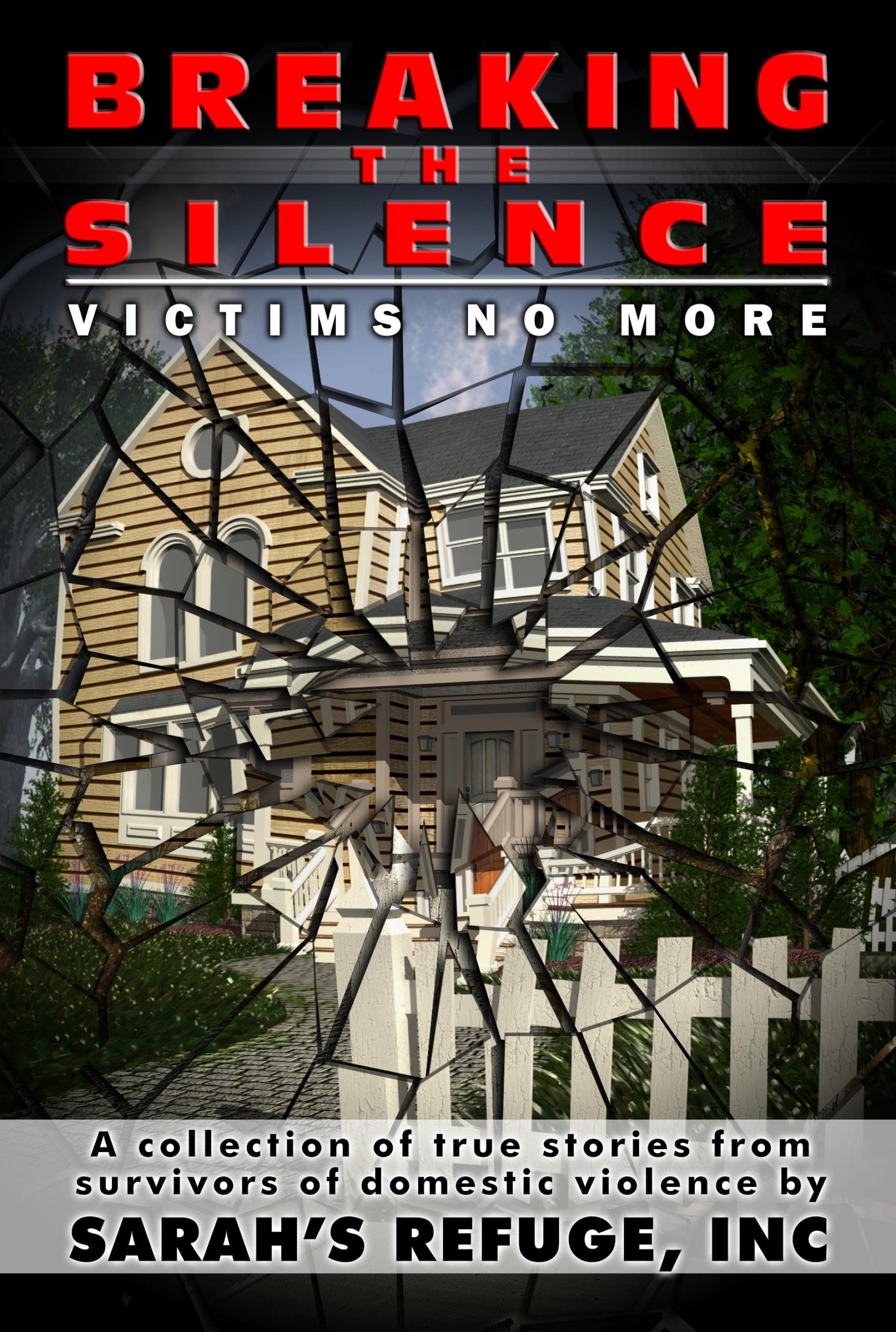
Breaking the Silence E-Book
3,65 €
Mehr erfahren.
- Herausgeber: Dancing Lemur Press LLC
- Kategorie: Ratgeber
- Sprache: Englisch
The silence must be broken…
Each year, thousands of men, women, and children suffer domestic violence. For many, it’s far too long to live in this kind of silence. How much devastation must we see in individuals, families, and communities before we realize that someone… anyone… everyone must take a stand?
Featuring stories & accounts from domestic violence survivors & family members. Also included is information regarding types of abuse, why victims stay, awareness months, & a personalized safety plan.
Domestic violence has the potential to destroy everything it touches, but there is a solution.
Stand up, speak up, and break the silence!
Das E-Book können Sie in Legimi-Apps oder einer beliebigen App lesen, die das folgende Format unterstützen:
Seitenzahl: 96
Veröffentlichungsjahr: 2011
Ähnliche




















Vital information and a collection of true stories from survivors of domestic violence
by Sarah's Refuge, Inc.
DANCING LEMUR PRESS, L.L.C.
Pikeville, North Carolina
http://dancinglemurpress.com/
“This book packs a punch and provides hope and inspiration for the weary traveler on the road to survival. A must read.”
- Mr. Junie M. Christian, Onslow Women's Center, Executive Director
“These are true stories and these women are doing the most important thing a victim of abuse needs to do. They are breaking their silence and speaking out… And if you don’t know what to do, the resource section will guide you to the help you need.”
- Karen Walker, author of Following the Whispers
“ ‘Breaking the Silence’ provides insight into domestic violence through true stories and poems reported through the eyes of the victims... This book also provides much needed information to help victims and their supporters stop the abuse. I highly recommend this book not only to those who are still being abused but everyone.”
- Carolyn R. Cook, Ph. D., Senior Psychologist I at Cherry Hospital
Copyright 2013
Published by Dancing Lemur Press, L.L.C.
P.O. Box 383, Pikeville, North Carolina, 27863-0383
http://dancinglemurpress.com/
ISBN: 9781939844026
All rights reserved. No part of this publication may be reproduced, transmitted, or stored in a retrieval system in any form – either mechanically, electronically, photocopy, recording, or other – except for short quotations in printed reviews, without the permission of the publisher.
Compiled and edited by C. Denise Sutton
Cover design by C.R.W.
Library of Congress Control Number: 2013943255
Dedication
A special dedication goes out to all victims of rape and domestic abuse. As long as there is someone struggling to break free, the fight continues…
Acknowledgements
Sarah’s Refuge, Inc. Domestic Violence and Rape Crisis Center would like to thank all victims who shared their feelings and experiences. It is with high expectations that, through these stories, readers can gain a better understanding of rape and domestic abuse and their power in our communities. Another thank you goes out to all other contributing writers who, through their words of inspiration, will hopefully, encourage victims and their families to continue in the struggle to stand firm and speak out in order to eliminate this exploding epidemic.
Table of Contents
Foreword
Introduction
Section I – Information
What is Domestic Violence?
What is the Duluth Model?
Personalized Safety Plan
How Can You Help?
Wish List
Awareness Months
Ribbons That Represent Domestic Violence
The “Hidden” Stories
Why Victims Stay
Section II: Personal Thoughts and Stories
Victim No More (Title Poem) by C. Denise Sutton
Trust Me by Joli
Stand Up, Speak Out! by C. Denise Sutton
I Saw…I Heard by Jeanette A. Bethea
Lurking Behind A Bottle by Andreal Hendricks
Resolution by Seretha Renee Pearsall
Who Am I? by Tammy E. Brown
One Flaw In Women by Anonymous
Somebody’s Little Girl by Renora Chestnutt
Looking for the Solid Rock by Juanita
It All Becomes Clear by Stefanie Alston
Mirror by Christy Williams
Victory After Violence by CeCeLyric
What Cannot Be Frozen by Joyce Cooper
Love by Christian Penister
Before by C. Denise Sutton
Teen Bullying by Isaiah Johnson
Fighting Back the Darkness by Shavonia West
The Fight Within by Stefanie Alston
The Day I Felt Safe by Shavonia West
Untitled by Anonymous
Dear Daddy by Anonymous
Old and Unwanted by C. Denise Sutton
Remember for What? by Jeanette A. Bethea
On Purpose by Linda V. Murphy
Remember Me by Jeanette A. Bethea
About Sarah’s Refuge, Inc.
Biographies
Foreword
Jeanette A. Bethea, M.Div.,M.B.A.,M.A.,B.S.N.
Breaking the Silence: Victims No More is an anthropology written by those affected by rape and domestic violence including the victims, their families and friends, and members of the community. The writings address how victims can overcome the stigma, despair, despondency, and hopelessness of domestic violence by exposing it while, in the process, making a conscious effort to regain a sense of wholeness and self worth.
Because of my work with rape and domestic abuse victims in the past, I can relate to their struggles, hopes, and dreams. As a Court Advocate in the Juvenile and Domestic Relations Court in Henrico County, Virginia, I prepared many of these victims for his/her court appearance to obtain a restraining order. I also developed a plan for follow-up services through Safe Harbor, a comprehensive program for victims of domestic and sexual violence, and other community resources.
I witnessed the hurt, the shame, the confusion, the sense of hopelessness, worthlessness, and diminished sense of trust as I observed victims’ speech pattern and body language. You will see these emotions portrayed by the writers throughout the book.
I often initiated my interaction with victims by encouraging them to look directly at me rather than to divert their eyes as they revisited the shame of victimization. I reminded the victimthat what happened to them was NOT their fault…I toldthe victimthat he/she was NOT responsible for the abuser’s detestable behavior. I informed the victimthat I was present to function as advocate, encourager, supporter, and confidante.
As you read these collections from Breaking the Silence: Victims No More, try to experience vicariously the ravages of abuse as well as the courage of the victim to see beyond the abuse and to grasp the glimmer of hope, however faint, that was in the future. Visualize yourself being bullied, beaten, or verbally vilified. Think about how you would feel as a family member or friend of someone murdered by their abuser.
On the positive side, feel the joy as you read of victims who escape from their prison of violence to find the freedom and peace so long sought. Their success story may encourage another.
Spiritually identify with victims as they expose the shame and horrors of abuse to embrace a new vision of who they are and Whose they are.
It is the hope of the contributing writers that all forms of domestic and sexual violence be hidden no more and that readers become increasingly aware of the symptoms and effects of violence in the home, school, and community so that all of us will be motivated to become agents of change who will address the destructive effects of rape and domestic violence.
Finally, an over-reaching goal is to break the silence of abuse until there are no more victims! No more bullying, name calling, stalking, hitting, slapping, intimidation by use of words or weapons, isolation, shoving, pushing, controlling, restraining, threats, total control of finances, or forced sex!
“Dear friends, let us love one another, for love comes from God… since God so loved us, we also ought to love one another.”
(First John 4:7, 11 NIV)
Introduction
As you drive by, you see the beautifully manicured yard. You see the bricked or newly painted house. You may even see a luxury car or two. But you can’t see behind those closed doors and picket fences. Therein lies the problem. How do you conquer an almost invisible enemy? Without the signs, it is almost impossible to know the agony that someone may be experiencing. Sometimes, the truth saves a person before it is too late. At other times, the outcome is not so positive.
Violence, whether physical, mental, or emotional, can have far ranging and devastating effects for not only victims but their families and communities. Until someone feels the need to speak out against it, the violence will continue to grow. So, who is going to shout out “Enough is enough. This will no longer be tolerated!”?
“We will!” say the writers of Breaking the Silence: Victims No More. “And we will sum it up by saying, ‘Victims, we care about your pain. There is hope. You are not alone.’”
Section I:
Information
What is Domestic Violence?
Domestic violence can be defined as a pattern of behavior in any relationship that is used to gain or maintain power and control over an intimate partner. Abuse is physical, sexual, emotional, economic or psychological actions or threats of actions that influence another person. This includes any behaviors that frighten, intimidate, terrorize, manipulate, hurt, humiliate, blame, injure or wound someone.
Domestic violence can happen to anyone of any race, age, sexual orientation, religion or gender. It can happen to couples who are married, living together or who are dating. Domestic violence affects people of all socioeconomic backgrounds and education levels.
Physical Abuse: Hitting, slapping, shoving, grabbing, pinching, biting, hair pulling, etc are types of physical abuse. This type of abuse also includes denying a partner medical care or forcing alcohol and/or drug use upon him or her.
Emotional Abuse: Undermining an individual's sense of self-worth and/or self-esteem is abusive. This may include, but is not limited to constant criticism, diminishing one's abilities, name-calling, or damaging one's relationship with his or her children.
Economic Abuse: Is defined as making or attempting to make an individual financially dependent by maintaining total control over financial resources, withholding one's access to money, or forbidding one's attendance at school or employment.
Psychological Abuse: Elements of psychological abuse include–but are not limited to–causing fear by intimidation; threatening physical harm to self, partner, children, or partner's family or friends; destruction of pets and property; and forcing isolation from family, friends, or school and/or work.
Domestic violence can happen to anyone regardless of race, age, sexual orientation, religion, or gender. Domestic violence affects people of all socioeconomic backgrounds and education levels. Domestic violence occurs in both opposite-sex and same-sex relationships and can happen to intimate partners who are married, living together, or dating.
Domestic violence not only affects those who are abused, but also has a substantial effect on family members, friends, co-workers, other witnesses, and the community at large. Children, who grow up witnessing domestic violence, are among those seriously affected by this crime. Frequent exposure to violence in the home not only predisposes children to numerous social and physical problems, but also teaches them that violence is a normal way of life - therefore, increasing their risk of becoming society's next generation of victims and abusers.
Sources: National Domestic Violence Hotline, National Center for Victims of Crime, and WomensLaw.org.
What is the Duluth Model?
Since the early 1980s, Duluth—a small community in northern Minnesota—has been an innovator of ways to hold batterers accountable and keep victims safe.
The “Duluth Model” is an ever evolving way of thinking about how a community works together to end domestic violence.
A community using the Duluth Model approach:
Has taken the blame off the victim and placed the accountability for abuse on the offender.
Has shared policies and procedures for holding offenders accountable and keeping victims safe across all agencies in the criminal and civil justice systems from 911 to the courts.
Prioritizes the voices and experiences of women who experience battering in the creation of those policies and procedures.
Believes that battering is a pattern of actions used to intentionally control or dominate an intimate partner and actively works to change societal conditions that support men’s use of tactics of power and control over women.
Offers change opportunities for offenders through court-ordered educational groups for batterers.
Has ongoing discussions between criminal and civil justice agencies, community members and victims to close gaps and improve the community’s response to battering.
Wheel Gallery
The Power and Control Wheel was developed from the experience of battered women in Duluth who had been abused by their male partners. It has been translated into over 40 languages and has resonated with the experience of battered women world-wide.
FAQs About the Wheels




