


Erhalten Sie Zugang zu diesem und mehr als 300000 Büchern ab EUR 5,99 monatlich.
- Herausgeber: Dog Horn Publishing
- Kategorie: Gesellschafts- und Liebesromane
- Sprache: Englisch
Twenty-seven unique stories that stretch the meaning of 'eclectic', bound together in one forbidden tome for the first time. Covering most genres, and moving from grim, cruel, and tragic: broken women living on shelves in a library, a Greek goddess and the monster she created meeting in a final showdown, an alien trapped in Patagonia nurturing itself on sickness and religious gullibility to survive and an exiled Martian fixated on Dana Scully. All this, with a few devils, saints, cloned messiahs, witches, and well-educated zombies thrown in for good measure. 'Bubbles of darkness trapped in fluid humour, like hashish suspended in golden wine, a heady and often disturbing brew.' -Rhys Hughes
Sie lesen das E-Book in den Legimi-Apps auf:
Seitenzahl: 411
Veröffentlichungsjahr: 2011
Das E-Book (TTS) können Sie hören im Abo „Legimi Premium” in Legimi-Apps auf:
Ähnliche



















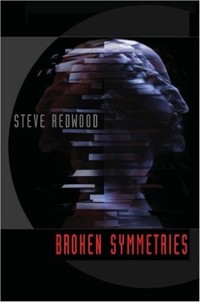
BROKEN SYMMETRIES
Steve Redwood
Broken Symmetries
Published by Dog Horn Publishing at Smashwords
Copyright 2011 Steve Redwood
With thanks to all those book and magazine editors who took a chance on my often quite unsuitable stories; to the mysterious D, the Queen of Whispers of Wickedness, who published my first ever collection, and to her enforcers, especially Peter Tennant, always unfailingly helpful, and also to the scallywaggy troupe of regular posters; to Jerome Betts, who did not want to be mentioned, but who ploughed through most of my stories (despite most of them not being his ‘cup of tea’) and never failed to spot nasty little bugs hiding in them; and, of course, to Adam Lowe, who unhesitatingly took on the project when the initial publisher suddenly abandoned it; and (just in case) to God or the Devil, whichever one of them happens to be stronger.
Introduction
by Ian Watson
Broken Symmetries must be one of the most enjoyable books I’ve ever read. Cunningly, to keep you on your toes, Steve Redwood alternates serious tales with hilarious tales. The latter are, well, hilarious – told with wit and wordplay, vim and vigour and sometimes a spot of vinegar for seasoning. Speaking of vinegar, years ago Garry Kilworth won a Gollancz short story award with “Let’s Go to Golgotha” in which the audience for the crucifixion mostly consists of umpteen time-travelling tourists, but the sage Mr Redwood goes one, or ten, better by exploring many more implications, such as the little-known fact that Jesus was of short stature, challenged elevation, aspiring elevation, whatever the more politically correct phrase, and that Jesus wasn’t much of a fan of God the Father. “Fuckit, fuckit, fuckit!” exclaims one of the characters. “For a moment, I thought he was conjugating a long-forgotten Latin verb…” Don’t worry about these being spoilers; there’s plenty more in the story. Indeed here is one of the hallmarks of a Redwood tale, sheer abundance as well as economy (try buying that from Ryanair) – his two-in-one zompire, for instance – couched in really sprightly and vivid prose. But then there are the serious tales too, and mein Gott these can be exquisitely harrowing as well as written with remarkable eloquence. Just to single out one, “Epiphany in the Sun” is a masterpiece of brilliant dark tension set in a Turkey (the country!) wonderfully evoked as the initially minor incident of an injured dog leads inexorably to tragedy. Oh, why not single out two? The tale of the Virgin’s milk, set in Argentina, is tormentedly eloquent. Indeed, why not three? “Circe’s Choice,” the Redwood riff on Greek mythology prompted by Ovid’s Metamorphorses, is cruel, beautiful, lustful, savage. In fact, lust (often frustrated; feminists will love Nastassja Kinsky’s revenge on one of her seedier fans!) plays quite a role in a number of the stories. Indeed most of the high emotions run riot in Broken Symmetries (with which, symmetrically, this introduction ends so as not to delay you further from the banquet that awaits).
CONTENTS
Damaged
The Road to Damascus
Jeanne
Thank You For Your Submission
Phantom Verdict
Sanctuary
Expiry Date
Fowl Play
Epiphany in the Sun
The Heisenberg Mutation
Circe’s Choice
Two Legs Bad
Going Back
The Burden of Sin
Keeping it in the Family
The Rosary
The Crucifixion Conspiracy
Bait
Nastassja’s Honour
Sacrifice
Reverse Pinocchio Syndrome
Hot Cross Son
A Helping Hand
Split Decision
Late Developer
Cybersoul
The Last Question
DAMAGED
†
The Library shelves were unusually well-stocked that day, with golden-skinned women dangling languid bare legs over the edges. They were not allowed to speak here, of course, but their sad eyes pleaded, “Take me, take me.” Through a half-open door at the back, he saw a couple of them being treated.
He pushed Maria 8, her skin already unhealthily blotched, towards the counter, and forced a smile for the Blueskin sitting behind it. She didn’t return it.
“I’ve come to renew this woman,” he said. His tone was defensive.
She frowned. “There’ll be a renewal fee, of course.”
“I know.”
She took his name – John William Smith – and Social Security number, then tapped buttons on her computer keyboard, her fingers moving with the speed of hummingbird wings.
Behind her, he noticed a huge reproduction of Magritte’s shrouded lovers. Were they hiding their faces from each other to avoid disappointment? he wondered.
She printed out a sheet from the computer, and passed it over to him.
He glanced at it, then looked up angrily.
“But this is twice as much as last time!”
“That is correct.”
“But why?”
She looked at him through lidless eyes. “You know very well that the longer she goes without a Service the quicker she deteriorates. And the treatment is correspondingly more costly.”
The computer bleeped. She glanced at it, and then looked back at him.
“It appears someone has reserved her, anyway. For . . . let’s see . . . the 14th. Next month.”
“What!”
“Which means you couldn’t renew her for more than two weeks anyway.”
Inside, he felt an enormous relief. No more pretence! It was no longer up to him! But at the same time . . .
“Who’s reserved her?”
“You know we can’t give out information like that.”
Maria 8 stood to one side, her face expressionless. But he could almost smell her fear.
“But I don’t understand. Why does he want her? Was he the owner before?”
She refused to reply.
He knew it wasn’t wise, but he couldn’t stop himself muttering, “It’s not as if she was in very good condition even when I got her!”
The Blueskin’s head snapped up, and her colourless eyes pulsed ominously.
“Please remember you are on State Benefits! We provide for your minimum sexual necessities, but you can’t expect us to provide you with the latest models, or allow you to pick and choose what you think suits you. If you want a brand new woman, then get yourself a job, and pay for one!”
Realising he had gone too far, he made a placating gesture.
“I’m sorry. It’s just that this bill is so much higher than I expected.”
“I can’t help that. Please make up your mind: do you still want to renew her – but only till the 14th – or would you rather exchange her now?”
He glanced across at Maria 8, remembered where he was, and looked quickly back at the Librarian. He hoped she hadn’t noticed his lapse.
He intended to say, “Well, if it’s only a couple of weeks, I might as well return her now.” What he actually said was:
“My present renewal is still valid until the end of this month. Can I come back in a day or two and let you know?”
She looked surprised. Then frowned. “You can do that, if you wish.”
“Yes, thank you, I think I’ll do that. Goodbye.”
He didn’t waste time smiling this time, but, pushing Maria 8 before him, moved towards the door, trying not to notice the array of sparkling legs. Maria, his treacherous mind remarked, was like a grey cloud passing in front of the sun.
So someone had reserved her. As the unemployed were not allowed to make reservations, and the average working citizen would not be allowed to use State Benefits, it had to be somebody above the system. Someone really high up. He felt almost relieved. It was out of his hands. He’d done his best. She couldn’t blame him for this.
But he knew she would.
†
He sat thinking as she prepared the lunch in the kitchen. She had hardly spoken on the way home. He noticed his hands were clammy. Nervousness. But why, for God’s sake? He’d done more than could ever have been expected of him. Not only renewed her twice already, but even been prepared to do it yet a third time! Which would have made four months. Four whole months with the same used woman! He doubted if anyone else in the City had ever kept a woman out as long as that without a Service, certainly not one as damaged as she had been.
Lunch was uncomfortably silent, until at last he said, trying to adopt a light tone:
“Well, it seems you have an important admirer! You should feel complimented.”
“Maybe I would if I knew who it was.” A moment’s silence. Then inevitably: “Why didn’t you exchange me then, get it over with? Like you really wanted to?”
He didn’t answer at once. A few weeks before, he would have flared up, demanded to know how she could be so ungrateful: acting the victim, when he was the one making the sacrifices! But he was now resigned to her distrust, knowing, deep down, that it wasn’t unfounded.
Two weeks before, she had caught him glancing through the catalogues.
“I’m only looking!” he had protested as she stared at him with sadness and disappointment. “Come on, if I really wanted another woman, I only have to take you back, like everyone else!”
He had meant it as a defence, not a threat, but it had been a turning point. She had never mentioned it, but he knew she had never forgiven him.
Which was crazy, since there was nothing to forgive.
Now, he said, not answering her question: “It’s almost better this way. For your sake, I mean. Maria, if you don’t go in for a Service soon, you’re going to be really ill. You could even die!”
“A Service would destroy my memories.”
“But sooner or later, not having one will destroy you!”
“I am my memories.”
“You lost your other memories, the ones before me, and yet you’ve been all right.”
“All right? When I came here, I was empty, empty, empty! Do you want me to return to that again?”
He looked at her, wanting to say so much – and yet not enough. When she had arrived, she had been nothing more than a bright shiny receptacle for his desires. Someone who had language, and a passable knowledge of everyday things, but not a single personal memory. This had been a conscious policy decision on the part of the Government, once the Blueskins had offered their skills: it was bad enough not being able to afford to buy your own woman, without having to put up with any emotional baggage the State hand-outs might be carrying.
And he’d renewed her, and renewed her again, and his reward was that she had developed enough character and personality to be able to . . . what?
To have her own desires? To presume to judge him?
Before he could answer, there came a ring at the door. Voices. Steve! That was one person he would have preferred not to see right now. Especially if he had come – and he would have, of course! – with his new woman.
Maria opened the door. Steve looked at her, surprised.
“You’re still here?” he said. He had no intention of being rude or hurtful.
“Nor for long,” she replied,
Steve’s new woman stood smiling beside him. She wasn’t exactly beautiful, of course – after all, Steve too was on State Benefits – but really glowing. It wouldn’t last very long. Within a very short time she too would begin to lose her shine. It always happened. The women always lost their shine. Nonetheless, the contrast now between the two women was too painfully marked, like the difference between a waterfall throwing back flashes of sunlight, and stagnant pond water on a grey day. And he was more than ever conscious of how thin Maria’s skin had become, what was left of it. Almost transparent. The signs of previous operations were now clearly visible.
Also the size of the wounds she had suffered.
Who could have done a thing like that?
Steve at once steered him towards the kitchen.
“Don’t tell me you’ve renewed her again! Whatever for?”
“I couldn’t do it. I couldn’t dump her back on the shelf again.”
“OK, OK, we all go through this at some time or other. It’s natural. We grow fond of them. Nothing wrong in that. I renewed a woman once. But this is the third time! Look at her, John, almost no shine left, she’s already decaying. She has to be Serviced. You can always take her out again, if you really like her.”
“She wouldn’t remember me, you know that.”
Steve slapped him on the shoulder. “So what? So long as she remembers how to cook and clean and treat your cock like an emperor . . . !”
He was right, of course. Few men denied it was more pleasant if you liked the woman you rented, but it could hardly be considered indispensable.
“She’s been reserved, in any case.”
Steve whistled his surprise, and was about to say something when his new woman, followed by Maria, came into the kitchen, already looking anxious. They were all like that at the beginning, unable to be away from their men for more than a few minutes without something akin to panic setting in. While obviously not the same quality as those in the private sector, Steve’s woman was still in very good shape, perhaps the best the Library – that was odd, why was it called a Library? he suddenly wondered – had to offer. He could have drawn her out himself the week before, he thought ruefully. What’s wrong with me?
“Isn’t this a lovely kitchen?” she said. Her voice was high, sharp, like a new kettle.
“It’s the same as any other subsidised housing,” Maria answered coldly. It was clear she didn’t much like her. Didn’t want to remember what she had once been herself?
“But you’ve made it specially nice, I can tell! To keep John happy. Still, you’ll see, I’ll do even better for Steve!”
“I applaud your ambition.”
“Oh, isn’t it wonderful to be off the shelves? To be alive?”
There was the tiniest pause before Maria answered: “What does ‘alive’ mean?”
The other woman frowned momentarily, then giggled.
“It means making Steve the happiest man in the world!”
“Ah yes. Something only you could do, of course.”
Nonplussed, the woman turned her attention to Steve. John saw, however, that his friend, though holding and caressing his woman, wasn’t really listening to her at all, he was listening to Maria. Steve has noticed it, too!
That was satisfaction of a sort. A small recompense.
The visitors didn’t stay very long. Besides, it was impossible to talk to Steve in private. He would arrange to meet him later.
Afterwards, Maria said: “Steve looks very happy today. Why do you think that is?”
She was deliberately provoking him. “I don’t know. You tell me.” The worst possible response.
“I don’t need to.” She was staring out of the window. The light picked out the tendons of her muscles. ‘Flayed’ was the word that came to mind.
He wanted to shout out, “Well, show some appreciation, then!” but held himself in check. It didn’t help.
“What are you trying to prove?”
The injustice stung.
“I’m not trying to prove anything. But, God damn it, I’m doing it for you!”
She swung round, her eyes blazing.
“Yes, for me! That’s just it! Not for you! Just for me! Oh, John, don’t you see, it’s almost worse this way, it’s almost worse!”
“What’s wrong with you! What more do I have to do to . . . ?”
To . . . what? The words went round his head like an echo, like another voice.
He stormed out into the dingy back yard. She followed him a few minutes later.
“Oh John, I’m sorry, it’s the memories, that’s what I’m scared of losing. I’m so scared of waking up one day, and there was no yesterday.”
She touched his arm, and added:
“And there are things I’ve learnt that I know I wouldn’t learn again, not with a different man.”
There were many things he could have said then. He said none of them. The moment passed.
Such moments had never come in his life before. He didn’t know how to handle them.
†
Who had reserved her? Some lover of the low life who had simply liked her photo in the catalogues, or – a chilling thought – the same man who had caused all that damage before? He was afraid of him, without knowing why. He felt – although he had no logical reason to feel this – that the reservation of Maria 8 had been a challenge to him personally. He sensed danger, as if he were a beetle lying helpless on its back on the edge of a sandpit, and the nameless man was the lion ant lurking beneath. If he struggled, the first grain of sand would start to fall in, then the second . . .
†
Watching her undress that night, he noticed more signs of decay. Where the gold had flaked off, bruised flesh was showing through, and body hair was beginning to show under her armpits, and on the lower part of her belly. As she got into bed, he noticed a slight odour. For the first time it entered his mind that she might actually die.
He cursed himself for his own weakness. Here he was, with a woman becoming more unattractive day by day – even her hair now showed streaks of brown and black – when all he had to do was exchange her, like everyone else did.
It was ridiculous, there would be no point in renewing her for two more weeks. She would simply deteriorate more. He would exchange her tomorrow. It would be the best thing for her.
He woke up in the night, and found her curled up on the floor, naked and shivering, weeping silently, photographs of their early days clutched in her thin hands, smudged with her tears.
†
He took her to the Library the following day to renew her.
The Blueskin frowned.
“If you do insist on taking her out again, why don’t you at least leave her overnight, so she can have a Service? She’ll be ready again by midday tomorrow.”
“Without any memories.”
“Of course. That’s the point. A Service deletes personal memories, egoism, desires. That’s what we were brought here for, weren’t we?”
“No, thank you. It’s only for two weeks, anyway. I’ll take her as she is, if you don’t mind.”
She stared at him with an unreadable expression, but proceeded silently to fill out his Library card. As she was doing it, he suddenly thought: since the Services are so vital, why do they even allow women to be renewed without one? Why give us the choice? It didn’t make sense.
A lot of things, he was beginning to realise, didn’t make sense.
As they were leaving, the Librarian said – and her voice was somehow less harsh than usual:
“Remember, she must be back by the thirteenth at the latest. To allow time for Servicing. We’ll repair her, of course, make her as good as new, but we can’t guarantee she won’t be mistreated in the future.”
Why had she said that? He turned round slowly, unwillingly, while a warning voice was telling him not to listen.
“What are you saying?”
“I’m simply reminding you that there are no guarantees for the future of Maria 8.”
“Why should anyone harm her?”
“That’s a question we often ask. Indeed, that’s why we’re all here, isn’t it?”
“Are you saying this other man, the one who’s reserved her, will harm her? Has harmed her in the past?”
“No, I’m not saying anything. I’m simply reminding you that there are no guarantees.”
“But why are you telling me? Now?”
“It’s a warning we give to all our . . . clients who keep a woman longer than is necessary or advisable. We assume that the woman has been renewed because the client is seeking more than sexual gratification. And might therefore have some interest in what happens to her after she is returned.”
She paused for a moment, and for a moment he thought he saw something like pity in her eyes.
“I’ve been authorised to inform you, by the way, that the person who made the reservation was the Prime.”
He turned away and walked out slowly, this time completely unaware of the glittering women on the shelves and their vacant golden eyes.
†
The days fell away like the last leaves of autumn, fluttering away from his reach as he tried to grab and hold them.
Things changed with Maria 8. Not only because this was the final renewal, but because of the Librarian’s last words, which buzzed round his head like disturbed hornets.
He told himself again and again that whatever happened to Maria 8 after the 14th, he was in no way responsible, there was nothing he could do. Yes, he might, or might not, have made the final renewal only out of a sense of guilt, or weakness, or sheer cussedness, or some incipient sense of loyalty – he didn’t know himself – but he found himself worrying more and more about her future.
. . . Because he was beginning to feel certain that it was the man who had just reserved her who had inflicted the terrible wounds which were becoming more and more visible as her golden skin fell away. He had no evidence at all for this, it was as if the knowledge had always been with him.
The last traces of Maria 8’s brightness disappeared. In bed, her breasts now flattened slightly when she lay down. He noticed that she had begun to sweat when he used her. Although she continued doing the household chores as before, she quickly tired, and sometimes didn’t even finish them.
There was no logical reason at all to keep her now. And every reason not to.
But he realised with shock and something akin to fear that, even so, he didn’t want to take her back.
He didn’t want to exchange her.
He had no word for this unknown feeling.
But it was the day he realised this that he began to wonder whether there might be some way to avoid returning her.
But for the reservation by the Prime, it might have been possible. He could have invented excuses not to return her – forgetfulness, illness, and so on – and in the end the Library might have simply let the matter pass. It could hardly matter to them, he thought, which of the women were in stock, and which were out on loan.
But you didn’t mess around with the Prime. His power was absolute. He owned everything. It was said that he could annihilate you with a mere thought.
Yes, the Prime’s power here was absolute. But outside the City?
All his life, there had been rumours that the City wasn’t everything, that there existed somewhere else, an outside, a magical place where women didn’t have to be Serviced, where the Blueskins were unknown.
But no one who left the City, it was said, had ever returned.
He mentioned his crazy idea to Maria. The look she gave him then, the way she came across and folded herself in his arms, made the idea seem not crazy at all.
They made their plans.
And were arrested fifteen days later on the outskirts of the City, taken to the Palace, and hurled into separate dungeons there.
†
After he had been lying alone for a few hours, shivering, listening to the sinister dripping of water somewhere, a bright light suddenly burst into the cell. No one was to be seen, but a voice boomed and echoed all around him.
“John, you’ve surprised me. I really didn’t believe we had it in us.”
“What have you done with Maria?”
“Your first question is about the woman. I’m learning a lot. But I can’t answer that question yet, I’m afraid. Not just yet.”
“Who are you?”
“And I, your King, your Keeper, only merit the second question. I could be offended. Thing really are so much simpler here. Me, I’m the Prime, of course. And the next question is, or should be, ‘Who is the Prime?’ However, for the sake of your sanity, I don’t think I’ll answer that question, either.”
“Why am I here?”
“If you mean ‘here’, in this cell, why, the answer’s obvious. You’ve been a bad bad boy. But if you mean – which, of course, you didn’t, but never mind – ‘here’ as in ‘in the City’, why, to see what you’re going to do.”
“What do you mean?”
“Why do geneticists love fruit flies so much? Because they don’t waste time hanging around, they live and die in a couple of weeks, things are speeded up, you can see what’s really happening. The Big Picture.”
“Why did you reserve Maria?”
“Hmm, the heretic interrogates the Inquisitor! This is a strange place, indeed! But I don’t mind: even your questions are my answers. I just told you. To speed things up. Put you under pressure. See which way you would turn. Anyway, she isn’t your woman. She’s ours.”
“Did you own her before? Was it you who damaged her?”
“Now there you’ve really hit the nail on the head! That’s what I’m trying to find out. Was it me who damaged her? And if so, do I care? That’s why I’m here. Or should I say, that’s why you’re here. Tell me, what were you planning to do?”
John didn’t answer.
“You weren’t planning to leave our little kingdom, were you?”
John remained silent.
“Ah well, I can wait, I’m not a fruit fly,” the other said calmly. “Meanwhile, let’s take a really close peek at your mind, shall we?”
They must have drugged him, because he began to have a crazy dream, or vision, he didn’t know which. He thought he saw himself asleep on a bench outside a restaurant, and Tweedledum wandered by with Tweedledee, saying to Alice, “If that there King was to wake, you’d go out – bang! – just like a candle!” Opposite the restaurant, there was a statue of an eyeless prince, the tiniest sliver of gold leaf hanging from one shoulder, with a dead bird lying at its feet – whether swallow or nightingale, he couldn’t be sure, but it was well and truly dead, stiff and cold, and somehow that seemed to matter. A frog hobbled out of the restaurant on crutches, accompanied by another Prince, this time a little one, who was wearing an elephant on his head. “They ate my legs, and didn’t even kiss me!” the frog muttered. “Don’t they realise how vital it is to kiss me?” It swivelled a reproachful eye back inside the restaurant. “I suppose, to be fair,” the Little Prince was musing , “it was easier for me: I only had one rose on the planet, in any case. We’re going for a stroll in the Garden of Forking Paths,” he added, “where we might well see some butterflies, very educational, their life cycle. If you’d like to join us . . . ”
The vision began to dissipate. He knew he wanted to go with them, that they had the answers, but . . .
“Not just yet. One final turn of the screw, to be sure.”
The voice was his own. But he hadn’t spoken.
†
He was taken to see Maria the next day. Her body lay on the floor in a corner. It was dull and heavy, a soggy, imperfect thing. There was blood between her legs.
He flung off the guards in a fury, knelt down, lifted her, and held her and howled, while his tears, the first ones he had ever shed, fell on the dull, lifeless flesh.
And where they fell new skin sizzled into existence, skin that gleamed and flashed and danced in the light, and the eyes opened, and the mouth smiled, and the tears bounced back, flickered all around, swirled like trillions of tiny glistening raindrops that rapidly engulfed him.
†
And the rain poured down but still the man – whose name might or might not have been John William Smith – walked. And walked. Lines of Robert Browning echoed through his mind like the ticking of an underwater clock:
My soul
Smoothed itself out, a long-cramped scroll
Freshening and fluttering in the wind
When, drenched with the rain, he finally entered the flat, he heard her in the kitchen. He laboriously took off his coat, dried himself in the bathroom, and stood for a long time staring down into the garden, puzzled. The sun broke out, and the water droplets on the leaves suddenly shone and shimmered in the light. Brighter than gold. He rubbed his eyes and frowned. As if trying to catch a memory. Brighter than gold . . . He went slowly downstairs and into the kitchen.
She was at the sink. Thin arms, so often holding a dishcloth or a Hoover, thin legs, so often dragging her back from the shopping, thin face, so often hardly even noticed, let alone kissed. Etiolate, because he had stopped giving her any light . . . how could anyone shine with no light?
As if in a trance, he went to her, lifted her arms out of the sink, and pulled her towards him, forcing her head against his chest, and held her.
Just held her.
He had once, years ago, worlds ago, had words for this feeling.
THE ROAD TO DAMASCUS
†
The nightmare began again, although no one could have known it, when Hemera took her daughter to the pet shop to buy her a Betelgeusian squoggle-catcher for her tenth cloneday. But the last one, it turned out, had been purchased just a few hours before.
Little Maia burst into tears – those special tears that always induced thoughts of either suicide or girlicide in her mother. Even on recycled air, the child’s squalling capacity was awesome.
“Are you sure you can’t get one?” asked Hemera. She looked the owner straight in the eye. “I could make it worth your while.”
The owner, who had not failed to notice the Venusian lava-serpent necklace and the equally priceless Ganymedean shawl, looked round cautiously. They were alone.
“We won’t be receiving any more squoggle-catchers for at least a month,” she said slowly, “but if you really want an exotic pet – I mean, really exotic – and you’re able to pay, then perhaps I can help. Unofficially, you understand.”
Maia, like everyone else on the Artemis Five trading colony, had learnt the art of negotiation very young. Mother and child looked into each other’s identical eyes, and in a double blink the pact was sealed: Maia’s tears went into provisional remission, and Hemera nodded to the young woman.
Twenty minutes later, they were in a well-hidden underground warehouse, where the faint peppermint smell of an Andromedan Polypod still lingered. That augured well: the Polypods had built up a fine reputation as audacious starfarers whose contraband goods tended to become collectors’ items almost at once. But when she saw the new ‘exotic’ creature in its cage, Hemera’s first impression was hardly positive. It was bipedal, malodorous, and unpleasantly hairy. It looked up when the two women and the girl entered, and began chattering away and gesticulating, and even threw itself on the floor in what in a human would have seemed a supplicating gesture. Maia whooped with delight.
Disinfectant sprinklers couldn’t completely suppress a rather unpleasant odour. Hemera wrinkled her nose.
“Don’t worry,” the owner said reassuringly, “it doesn’t usually smell quite so strong. The smell is easily cleared anyway by pouring almost boiling water over it. It makes strange noises when you do this, a kind of deep scream – it clearly finds it unpleasant – but it gets rid of the smell, and also makes its skin nice and soft – if a bit wrinkled. But try not to let the water boil completely.”
“It’s rather ugly, isn’t it?”
“Well, it’s not very pretty, I admit, but it is extremely affectionate, if treated well.”
“Where’s it from?”
“You know the Polypods never reveal things like that. But they did claim that it’s one of the most primitive creatures they’ve ever come across, possibly predating even the colonisation of this segment of the galaxy!”
“That would explain its obvious lack of intelligence.”
“Ah, but it’s not completely unintelligent! Irrational and at times hysterical, yes, but not unintelligent. I’ve had it here for a month or more, and . . . well, you’ll see what I mean if you decide to buy it. Indeed, it’s this strangely warped intelligence that would make it such an interesting pet.”
“What’s it called?”
“The Polypods called it a gollub, but they said they made up that name because of the sound it makes when it drinks.”
“Are you sure it’s not dangerous? I don’t like the way it’s looking at us.”
“It has little tantrums now and then, but that’s no problem: I can throw in a neuro-whip free, just in case, which sends a disruptor beam straight at the pain centres.”
“Oh, can I try now, Mummy?”
The owner looked doubtful, but a peremptory glance from Hemera resolved her doubts.
“Here, young lady, but only turn the dial just a fraction.”
She handed Maia an oblong box with a red dial. The little girl pointed it at the gollub and twisted the dial as far as possible. She jumped up and down in ecstatic delight as the creature shrieked and hurled itself in agony against the bars, losing two teeth in the process.
Hemera gently took the neuro-whip away.
“Now you mustn’t do that too often, darling,” she chided. “You’re only to use this thing if the pet’s disobedient, or for training. Unless you’re really, really bored.” She recalled what Maia had done to the Rigan cloud-bat, which had necessitated repainting the whole apartment, and even part of the glideway outside. Still, little girls would be little girls.
“I’m sure you’d never need to use it,” said the pet shop owner, as tactfully as possible. “As I said, the creature’s usually quite obedient. In any case, there’s an easier, less damaging, way to control it. You see those funny lumps of flesh hanging between its legs? According to the Polypods, those two things like dried apricots are called berls, and seem to serve no other purpose than to be violently scratched, but that other thing – I call it a twitcher – has some quite remarkable properties, I can assure you. At the moment, it’s true, you can hardly see it, because of your daughter’s . . . um, playful enthusiasm, but it has a quite unique capacity of expanding and contracting. Moreover, I’ve discovered that you only have to stroke it a bit to make the gollub instantly attentive and desirous to please.”
“Can it communicate?” Hemera wasn’t interested in the ridiculous twitcher.
“It seems to have a rudimentary form of speech. Mainly gibberish, of course. But I’ve managed to pick out a few sounds that may well be words. What’s more, although I know this may sound like gynomorphism, the pathetic fallacy, it sometimes seems to show real, almost human, emotions, although that’s clearly impossible. As I’ve already said, it has a strong desire to please, and will do almost anything for the reward of having its twitcher stroked.”
She gave Hemera a significant look. “I might add that it could be much more than just a toy for young girls. Oh yes, it could definitely have other uses. But far be it from me to pre-empt your own discoveries.” Her smile really was quite suggestive. Hemera pretended not to have heard: the woman clearly hoped to charge more by making the creature seem more interesting than it really was.
“There’s one unfortunate thing I should warn you about.” Ah ha, here comes the candid I-wouldn’t-want-to-mislead-you patter. “When its twitcher has been expanded for some time, a rather unpleasant substance comes out, sometimes with considerable force. It’s not dangerous, but it can be annoying.”
“Substance?”
“Yes, you know, a bit like what snails and slugs leave behind. Luckily, there are usually warning signs when this is about to happen: the creature breathes much more heavily, its face becomes red and blotchy, its grunting becomes very rapid, and its eyes go funny. The best thing at this stage is to throw very cold water over it, or use the neuro-whip, although it might be better to just let this substance come out, since when it’s repeatedly drenched with cold water it tends to become either very morose or even unusually aggressive.”
“This . . . substance won’t damage the carpet?”
“Oh no.”
Hemera was still hesitating, but she knew Maia had already made up her mind. And the pet shop owner knew it, too.
“A few words on its care. It seems to do well on a liquid diet, alcohol is best, and seems to keep it quite happy. But always – always – make sure it’s chained to something in the house. If it escaped . . . well, as you know, the authorities are getting stricter all the time. A woman was publicly flogged last month for possessing an inter-phasic Nebulan trunkfish.”
“I saw the flogging! It was great fun!” Maia informed them, giggling.
“Maia likes to watch educational programmes,” said Hemera.
“Well, I hope you enjoy your new pet. If treated well, it will undoubtedly become a warm, devoted creature, and you’ll find there’s nothing nicer than to return home in the evening, and have it come bounding up, licking your feet, and jumping up and down in welcome.”
†
The following few days were indeed happy ones, for both mother and child. Maia would take piggyback rides on the new pet, pull hair out of its nostrils and eyelids, put gungy-slugs into its ears, set fire to the strange tuft of hair at the end of its jaw, and treat it as she did all her toys. At first, it was rebellious, and prone to gibbering too much, but the neuro-whip and the berl-cruncher (a little device that Maia herself invented) soon solved that small problem. It was the creature’s strange twitcher, however, that gave her most delight. She would stroke it until it stuck up, pull it down until tears came to the creature’s eyes, then suddenly let go. She liked to paint it, tattoo it, lasso it, and throw prickly Jovian ring snakes over it. Once, she managed to wind it up so tightly that when she let go, the resultant jet brought down a careless fly. Aiming for the opposite effect, she discovered that simply putting a Scorpius X-1 giant vampire spider near it caused it to retract to the point of invisibility. Sometimes, her friend Aegina, a merry red-haired girl a few years older than her, came round. Aegina, who never bothered with clothes, for some reason had a strong effect on the creature: upon seeing her, its twitcher would twang upright almost immediately, without any need for physical winding up. Both girls found this hilarious, but at the same time, unfortunately, the gollub would get noticeably agitated, and it was necessary to use the neuro-whip or berl-cruncher to calm it down.
If anything, Maia’s mother seemed even more pleased with the new acquisition. Her best friend Hestia (they had been cloned in the same lab on the same day) soon noticed a new freshness about her friend’s cheeks, a spring in her gait, a mischievous smile playing about her lips. When she pressed Hemera about this, the latter blushed, and said coyly:
“Well, the burtee might have other uses, you know.”
“Burtee?”
“That’s what it seems to call itself.”
Hestia insisted on knowing more, so one night, after Maia had gone to bed, Hemera invited her round.
“You just have to experience this,” she said, “it’s like nothing I’ve ever felt before.”
She was lounging in a chair, idly swinging her feet, while the burtee, with a white cloth tied round the front of its body, was standing at the sink washing up. Every now and then, Hemera snapped her fingers, and it would break off, bend down, lick her feet, and await orders. There were scorch marks on its shoulders, a sign that a certain amount of training with the neuro-whip had been necessary.
“Has the cleaning robot broken down?” asked Hestia, puzzled.
“Oh no! Listen, I can’t explain it, but just watching it slaving over the kitchen sink, occasionally kicking it or using the neuro-whip, gives me a most incredible sensation of well-being! Yes, really, I swear I’m not having you on! Just come and sit with me, and see if you feel the same.”
It was hard to keep Hestia away after that.
But this innocent contentment was not to last long.
One afternoon, a grim-faced Woman in Black burst in, armed with a needle-gun, searched the house, found the naked burtee whimpering behind the toilet, and briskly clubbed it into unconsciousness. For some strange reason, she stripped and examined both the women and the girl very carefully (Hemera thought she heard her mutter ‘steel in tact,’ but that made no sense). After finding out the name of the pet shop, she warned them never to mention the gollub to anyone at all, on pain of an extremely protracted death, and took the plaything away, together with Maia’s berl-cruncher and the neuro-whip. A little later, they saw the pet shop go up in flames, and not long after that, a muffled explosion came from the direction where the underground warehouse had been.
†
Where had it come from? Were there any others? If there were, there existed the terrifying possibility that the creatures might once again spread across the Galaxy – after all the bitter centuries spent eliminating them – and usher in a new Dark Age.
Galactic Watcher Boadicea, sworn to protect the Federation against the Scum of the Universe and uphold the values of The Great Purification, took off from Artemis Five, with the still unconscious gollub staked out on the cabin floor, and reflected on her good fortune. Without that tip-off a few days before . . .
Within half a day she caught up with the Andromedan ship, slaughtered the crew, and interrogated the Captain.
The quivering Polypod Pirate, after she had threatened to inject concentrated cod liver oil into its tentacles, had told a strange story. It had been hiding out with its crew in one of the bomb craters of Old Earth and they had come across some natives who claimed that a strange machine had just appeared one day out of nothing, and that the gollub had staggered out of it, uttered a noise that sounded like ‘O sheet!’, and promptly collapsed. The creature was so similar to the pictures of prehistoric devils they had seen that they had taken it back to their village planning to sacrifice it to their local goddess. The Captain, who liked to think he was a connoisseur of blood rituals, had gone to watch the sacrifice and had found the proposed victim to be so strange that he had immediately sensed profit. The Polypods had snatched the creature from the sacrificial slab, and made off with the antiquated machine as well.
When an order had come through from their underground dealer on Artemis Five, the gollub had been delivered there.
Boadicea already had a suspicion as to where the creature had come from, and when the Captain repeated some of the ‘words’ he thought he had heard: ‘inkland’, ‘worta’, ‘bludiyell’, and, above all, ‘tymatcheen’, she was sure.
´Tymatcheen’!
The Black Watcher waited only to take a single look at this ‘tymatcheen’ (it was still in the hold of the pirate ship) and then injected the cod liver oil into the terrified smuggler after all. It immediately spasmed into the Tentacular Death Frenzy which, battle-hardened as she was, still left her breathless with shock. And a pang of guilt: she didn’t usually break her word, and the Polypod had clearly had no idea what a Time Machine was, but if it uttered the mere word in certain quarters . . .
Although not herself in the Time Division (where the learning of Ancient English, as well as the contemporaneous sub-dialect Bûshian, was obligatory), as a Grade One Watcher, Boadicea had a smattering of AE, and was well acquainted with the history of Time Travel. She knew, too, that despite the repeated warnings of the Ultimate Time Guardians, the Federation Council still secretly maintained a Time Travel capability, although they were wise enough not to attempt to make use of it except when their own existence might be at stake.
But this was not a Federation machine!
And it certainly wasn’t from the future!
As the ship’s robots transferred the artefact – which was vaguely wasp-shaped – into her own Starfighter, she tried to come to terms with what she had stumbled across. Something that had been feared more than anything else.
A Machine that had come from the past with a creature that had been extinct for thousands of years!
She looked down with an exultant smile at the gollub now finally beginning to recover consciousness at her feet. She suppressed a healthy instinct to destroy it at once. She had to deliver it to the Council first. She could just imagine the jealousy on the face of Her Greerness, who only the week before had publicly criticised her for her ‘rebellious streak’. Honour and fame beyond her imagining lay ahead.
But there was something to be done before that. Like so many others who had dabbled in Pre-history, she had been disgusted by the accounts of what had gone on in those distant times. And yet a secret part of her had always wondered what it must have been like. She told herself that, before delivering the gollub to her superiors for execution or experiments, it was her duty to herself as a serious historian to find out once and for all whether the incredible stories were true.
She kicked the gollub for a few minutes to put herself in the mood – it certainly was just as exhilarating as she had read! – and threw off her uniform.
And that, though at the time she didn’t realise it, was the beginning of her metamorphosis into the Abominatrix.
And of the Second Dark Age of the Galaxy.
JEANNE
†
Jeanne is dying. Her dying is returning my strength to me, so I no longer pretend to the others, but go openly into her bedroom and lie beside her, but not like before. All that was bad between us is gone, devoured as she is being devoured, as she would have devoured me, and she is now just a little girl who is lost and defeated and dying, and only half understands why. I lie beside her and rock her gently, and move the damp hair from her terrified eyes with rough callused fingers, and tell her lies, tell her that everything will be all right, and last night I’m sure she whispered, "I couldn’t love you before, you know why I couldn’t, but now I think I can. Is it too late?" And I lied – or thought I lied – again, and said of course not, and then she cried, the first time she had been able to cry in her whole life; silent, welling adult tears that trickled under my fingers as I stroked her cheek.
I know Alain will never forgive me for this, for robbing him of a part, just a little part, of his prey.
And I am afraid, yes: but the really wonderful thing is, I don’t care. Mary, open the curtains again, and let our children look out, you don’t have to hide me from them any more.
†
Among the so-called solitary wasps, the females confine themselves in most cases to providing food and a sheltered home for the development of their larvae. The normal pattern is for the wasp to make a nest of some sort. These nests reach their highest development in the elegant undivided nests of the potter-wasps (Eumenes), each of which shelters a single larva.
†
Jeanne’s mother, Suzanne. Sitting outside a coffee-house in a village near Périgueux, in the Dordogne, simple yellow dress over a pale slim body, hair that really was the colour of corn, cut short and ovalling her face, large light green eyes that looked up at me as I passed, lips that almost curved into a smile. And I, instead of walking on, as I had intended, stopped to gaze at the avalanche of green hills falling on the village, pretended to wipe sweat off my brow, turned back, and took the table next to hers, and thought that I was the hunter.
I’d like to say we made love that same night in the old semi-derelict farmhouse she lived in, but that would be wrong: we did the things that adults do when they are making love, so I thought we were making love. A week later, I left my hotel room and moved in.




