


Erhalten Sie Zugang zu diesem und mehr als 300000 Büchern ab EUR 5,99 monatlich.
- Herausgeber: Paraclete Press
- Kategorie: Religion und Spiritualität
- Sprache: Englisch
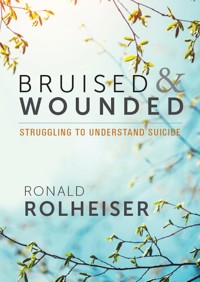
Those who die at their own hands can be trusted to the "infinite understanding and compassion" of God. -- Fr. Ron Rolheiser This book offers hope and healing to those who have experienced the loss of a loved one or anyone trying to understand suicide. —Daniel S. Mulhall, Catholic News Service Recent events have shown again how suicide touches all of us — often when we least expect it. But how to unpack the grief that follows such a painful, and often stigmatized, death? Ron Rolheiser can help. When someone is stricken with cancer, one of three things can happen: Doctors treat the disease and cure it; professionals can't cure the disease but can control it so that the person suffering can live with the disease for the rest of his or her life; or the cancer can be of a kind that cannot be treated and all the medicine and treatments in the world are powerless – the person dies. Emotional depression leading to suicide can work the same way. Sometimes a person can be treated so that, in effect, they are cured; sometimes they can't ever really be cured, but can be treated in a way that they can live with the disease for their whole life; and sometimes, just as with certain kinds of cancer, the disease is untreatable, unstoppable, and no intervention by anyone or anything can halt its advance – it eventually kills the person and there is nothing anyone can do. Thus, Ronald Rolheiser begins this small, powerful book. With chapters also on "Removing the Taboo," "Despair as Weakness Rather than Sin," "Reclaiming the Memory of Our Loved One," and "The Pain of the Ones Left Behind," Fr. Rolheiser offers hope and a new way of understanding death by suicide.
Sie lesen das E-Book in den Legimi-Apps auf:
Seitenzahl: 60
Veröffentlichungsjahr: 2019
Das E-Book (TTS) können Sie hören im Abo „Legimi Premium” in Legimi-Apps auf:
Ähnliche

















Praise For
BRUISED&WOUNDED
“Don’t let the size of this book fool you into thinking it doesn’t have much to say about suicide. Each page—each sentence—is rich in insight, wisdom, compassion, and most of all, comfort. Ronald Rolheiser gently dismantles the age-old myths and taboos associated with suicide, and gives brokenhearted survivors of suicide loss genuine reasons for hope. The greatest gift Rolheiser gives to the reader is the reassurance that Christ can enter a heart that is locked in fear and wound, and that our bruised and wounded loved ones are ‘in far gentler hands than our own.’”
—KAY WARREN,cofounder of Saddleback Church, Lake Forest, California
“With empathy and pastoral wisdom, this book provides unique insights on the nature of suicide, its devastating effects, and God’s embracing love throughout. Fr. Ron is exactly who I would have wanted at my side when my daughter died.”
—MARJORIE ANTUS,author of My Daughter, Her Suicide, and God: A Memoir of Hope
ALSO BY RONALD ROLHEISER
Against an Infinite Horizon: The Finger of God in Our Everyday Lives
Forgotten Among the Lilies: Learning to Love Beyond Our Fears
Our One Great Act of Fidelity: Waiting for Christ in the Eucharist
Prayer: Our Deepest Longing
Sacred Fire: A Vision for a Deeper Human and Christian Maturity
Secularity and the Gospel: Being Missionaries to Our Children
The Holy Longing: Guidelines for a Christian Spirituality
The Passion and the Cross
The Restless Heart: Finding Our Spiritual Home in Times of Loneliness
The Shattered Lantern: Rediscovering a Felt Presence of God
BRUISED &WOUNDED
Struggling to Understand Suicide
RONALD ROLHEISER
2018 First Printing
Bruised & Wounded: Struggling to Understand Suicide
Copyright © 2018 by Ronald Rolheiser
ISBN 978-1-64060-084-3
The Paraclete Press name and logo (dove on cross) are trademarks of Paraclete Press, Inc.
Library of Congress Cataloging-in-Publication Data
Names: Rolheiser, Ronald, author.
Title: Bruised and wounded : struggling to understand suicide / Ronald Rolheiser.
Description: Brewster, Massachusetts : Paraclete Press Inc., 2017.
Identifiers: LCCN 2017051238 | ISBN 9781640600843 (trade paper)
Subjects: LCSH: Consolation. | Death--Religious aspects--Christianity. | Suicide--Religious aspects--Christianity. | Bereavement--Religious aspects--Christianity. | Grief--Religious aspects--Christianity.
Classification: LCC BV4909 .R65 2017 | DDC 248.8/66--dc23
LC record available at https://lccn.loc.gov/2017051238
10 9 8 7 6 5 4 3 2 1
All rights reserved. No portion of this book may be reproduced, stored in an electronic retrieval system, or transmitted in any form or by any means—electronic, mechanical, photocopy, recording, or any other—except for brief quotations in printed reviews, without the prior permission of the publisher.
Published by Paraclete Press
Brewster, Massachusetts
www.paracletepress.com
Printed in the United States of America
CONTENTS
INTRODUCTION
1 BRUISED AND WOUNDED
2 REMOVING THE TABOO
3 DESPAIR AS WEAKNESS RATHER THAN SIN
4 RECLAIMING THE MEMORY OF OUR LOVED ONE
5 THE PAIN OF THE ONES LEFT BEHIND
6 DYING INTO SAFE HANDS
INTRODUCTION
A friend of mine recently attended the funeral of a man who had taken his own life. At the end of the service the deceased man’s brother spoke to the congregation. After highlighting his brother’s generosity and sensitivity and sharing some anecdotes that helped celebrate his life, he went on to say something about the manner of his death. Here, in effect, are his words:
When someone is stricken with cancer, one of three things can happen: Sometimes doctors can treat the disease and, in essence, cure it. Sometimes the medical professionals cannot cure the disease but can control it enough so that the person suffering from cancer can live with the disease for the rest of his or her life. Sometimes, however, the cancer is of a kind that cannot be treated. All the medicine and treatments in the world are powerless, and the person dies.
Certain kinds of emotional depression work the same way: Sometimes they can be treated so that, in effect, the person is cured. Sometimes they cannot ever really be cured, but they can be treated in such a way that the person can live with the disease for his or her whole life. And sometimes, just as with certain kinds of cancer, the disease is untreatable, unstoppable; no intervention by anyone or anything can halt its advance. Eventually it kills the person, and there is nothing anyone can do. My brother’s depression was of that kind, the terminal kind.
This can be helpful, I believe, for any of us who have suffered the loss of a loved one to suicide. All death unsettles us, but suicide leaves us with a very particular series of emotional, moral, and religious scars. It brings with it an ache, a chaos, a darkness, and a stigma that has to be experienced to be believed. Sometimes we deny it, but it’s always there, irrespective of our religious and moral beliefs. Indeed, as part of its darkness and stigma, suicide not only takes our loved ones away from us, but it also takes away our true memory of them. The gift that they brought into our lives is now no longer celebrated. We never again speak with pride about their lives. Their pictures come off the wall, photos of them get buried deep inside drawers that we never open again, their names are less and less mentioned in conversation, and of the manner of their death we rarely speak. Suicide takes our loved ones away from us in more ways than we sometimes admit.
And there is no easy answer for how to reverse that, though a better understanding of suicide can be a start.
Not all suicides are of the same kind. Some suicides come about because the person is too arrogant and too hard of heart to want to live in this world. But that, I submit, is the exception, not the norm. Most suicides, certainly all the cases that I have known, come about for the opposite reason—namely, the person is too bruised and oversensitive to have the resiliency needed to continue to cope with life. In these cases, and that is the vast majority of suicides, the cause of death can pretty accurately be termed as cancer, emotional cancer. Just as with physical cancer, the person dying of suicide is taken out of this life against his or her will. Death by suicide is the emotional equivalent of cancer, a stroke, or a heart attack. Thus, its patterns are the same as those of cancer, strokes, and heart attacks. Death can happen suddenly, or it can be the end product of a long struggle that slowly wears a person down. Either way, it’s involuntary.
As human beings, we are neither pure angels nor pure animals, but we are always both body and soul, one psychosomatic whole. And either part can break down.




