


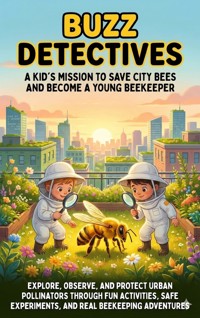
Buzz Detectives: A Kid's Mission to Save City Bees and Become a Young Beekeeper E-Book
Adrian Carmichael
Erhalten Sie Zugang zu diesem und mehr als 300000 Büchern ab EUR 5,99 monatlich.
- Herausgeber: epubli
- Kategorie: Lebensstil
- Sprache: Englisch
Did you know bees living in your city need young protectors like you? Urban bees face big challenges—fewer flowers, pollution, and not enough safe places to live. But here is the exciting part: kids can become bee heroes by learning about these amazing insects, helping them thrive, and even starting their own beekeeping journey. This adventure-packed guide turns you into a buzz detective, exploring the secret lives of city bees through hands-on missions, observations, and real beekeeping basics designed just for young minds.
Sie lesen das E-Book in den Legimi-Apps auf:
Seitenzahl: 214
Veröffentlichungsjahr: 2025
Das E-Book (TTS) können Sie hören im Abo „Legimi Premium” in Legimi-Apps auf:
Ähnliche




















Table of Contents
Chapter 1: Buzzing Basics of Bee Biology
What Makes Bees So Special?
The Bee Family Structure
The Language of Bees
Creating Honeycomb
Bee Life Cycle
Why Bees Need Our Help
Chapter 2: Urban Bee Detective Missions
Becoming a Bee Detective
Buzzing Around the Neighborhood
Uncovering Flowers’ Secrets
Observing Bee Behavior
Building a Bee Map
Journaling Your Journey
Sharing Your Discoveries
Chapter 3: Building a Buzz-Worthy Bee Habitat
Why Bees Need Our Help
Creating Bee Hotels
Planting a Pollinator Garden
Setting Up Water Stations
Tips for Urban Bee Habitat Success
Chapter 4: Inside the Hive
Meet the Queen Bee
Life as a Worker Bee
The Drone's Role
Inside the Hive: A Busy Community
Honey Production Magic
Chapter 5: Beekeeping for Young Explorers
What is Beekeeping?
Tools of the Trade
Safety First!
How You Can Help
Starting Your Beekeeping Journey
Chapter 6: Seasonal Bee Calendar
Spring: The Buzz Begins
Summer: Busy Bees at Work
Fall: Preparing for Cold Days
Winter: The Bee Nap
Chapter 7: Bee Emergency Response
Understanding Bee Emergencies
Helping Tired Bees
Handling Swarms Safely
Responding to Injured Bees
Chapter 8: Real Kid Beekeepers
Meet the Young Beekeepers
Protecting Urban Bees
Joys of Beekeeping Adventures
Challenges and Triumphs
Chapter 9: The Importance of Pollinators
Why Pollinators Matter
How Bees Help Us
The Ripple Effect of Declining Pollinators
Fun Facts About Pollinators
Chapter 10: Getting Started with Beekeeping
Finding Your Beekeeping Mentor
Essential Beekeeping Equipment
Understanding Hive Management
The Exciting Life Cycle of Bees
The Joy of Beekeeping
Chapter 11: Fun Facts About Bees
Amazing Bee Abilities
Bee Social Structures
Bee Products and Their Uses
Bees and Their Habitats
Bee Myths and Misconceptions
Fun Bee Facts for Everyday Conversations
Chapter 12: How to Become a Bee Guardian
Start Your Pollinator Garden
Create a Bee Snack Station
Spread the Word
Participate in Citizen Science
Become a Young Beekeeper
Create Bee-Friendly Spaces Together
Chapter 13: Creative Bee Art Projects
Bee Painting Party
Bee Collage Creations
Bee Decor for Your Space
Fun with Bee Sketching
Chapter 14: Exploring Local Bee-Friendly Initiatives
What Are Local Bee-Friendly Initiatives?
How to Get Involved in Local Initiatives
Fun Activities to Support Bees
Your Role as a Young Bee Guardian
Chapter 15: Keeping Track of Your Bee Journey
Why Keep a Bee Journal?
Setting Up Your Bee Journal
What to Record in Your Bee Journal
Sharing Your Journey
Reflecting on Your Bee Adventures
Chapter 16: The Future of Bees and Us
The Importance of Bees for Our Future
How You Can Make a Difference
Inspiring Others to Care
The Role of Technology in Conservation
The Buzz Has Just Begun: Your Journey as a Bee Guardian
Chapter 1: Buzzing Basics of Bee Biology
Welcome to the world of bees! In this chapter, we will learn the fascinating biology of honeybees. Did you know that bees communicate through dances? That's right! You'll discover why they make hexagon cells, each bee's special job inside the hive, and how these tiny creatures play an enormous role in our environment. Get ready to become a bee expert and understand why they need our help!
What Makes Bees So Special?
Bees are amazing creatures that have lived on Earth for millions of years. But what really makes them stand out? In this section, we’ll explore the unique traits that make bees special and why they are so important to our ecosystem.
Bees are pollinators, helping flowers to grow.
Bees play a vital role in our ecosystem as pollinators. When they visit flowers to collect nectar, they inadvertently transfer pollen from one bloom to another. This process is essential for the reproduction of many plants. Without bees, many flowers would struggle to produce seeds and fruit.
Pollination isn’t just about flowers—it has a direct impact on food production. The fruits, vegetables, and nuts we enjoy are often reliant on bees to help them grow. In fact, it’s estimated that bees are responsible for pollinating over one-third of the world’s food crops! As young protectors, understanding this special relationship is crucial, and we can help maintain habitats that support our buzzing friends.
They can recognize their colony members and communicate through pheromones.
Bees are fascinating creatures with sophisticated communication abilities. They use pheromones, which are special chemical signals, to convey messages to one another. For example, when a bee finds a good source of nectar, it will release a pheromone that tells other bees in the colony where to go.
Additionally, honeybees can recognize familiar colony members. This helps maintain order within the hive, as each bee knows its role and who is part of the family. The ability to communicate effectively is essential for the survival of the colony, making bees truly unique among insects!
Honeybees have been producing honey for thousands of years!
Honey production is one of the most remarkable aspects of honeybee biology. These industrious insects have been making honey for over 3,000 years. They gather nectar from various flowers, which they then convert into honey through a process of evaporation and enzyme activity.
Honey not only serves as a food source for bees during cold months when flowers are scarce, but it also has been enjoyed by humans throughout history. This sweet treat is not just delicious—it’s a testament to the hard work of bees. By learning about honey production, we can appreciate the time, energy, and skills these tiny pollinators possess!
Bees are crucial for the growth of many crops, which means they help provide food for people.
Bees are essential for agricultural bounty. Their role in pollination means they contribute significantly to the growth of a wide variety of crops. This includes fruits like apples and oranges, vegetables such as cucumbers and pumpkins, and legumes, all of which depend on bees for fruitful harvests.
The presence of bees not only increases the quantity of food produced but also enhances its quality. A world without bees would mean fewer food choices, increased prices, and a challenge for farmers. As young bee heroes, you can advocate for better practices that protect these vital pollinators, ensuring they can continue to contribute to our plates!
The Bee Family Structure
Every bee colony has a special family structure. It’s not just one type of bee but a whole community of different jobs! Let’s dive into who does what and how they work together.
The queen bee lays all the eggs and is the leader of the hive.
The queen bee is not just any bee; she is the most important member of the colony! Her primary job is to lay eggs, ensuring the colony continues to grow and thrive. A single queen can lay thousands of eggs each day during peak season, which is remarkable.
Beyond just laying eggs, the queen also plays a critical role in maintaining harmony within the hive. She produces special pheromones that help keep the worker bees organized and calm. These chemicals serve as a signal, letting the workers know that the colony is healthy and active. Without the queen's pheromones, the hive can become chaotic, and the worker bees may start to behave erratically.
Being the hive's leader is a huge responsibility, but the queen is well-equipped for her vital role. Understanding her significance helps us appreciate the hive as a well-organized family unit, where every bee has its part to play!
Worker bees take care of the hive, forage for food, and protect the colony.
Worker bees are the busy, tireless helpers of the colony. They perform a variety of essential tasks that help the hive survive and thrive. One of their main jobs is to forage for food, collecting nectar and pollen from flowers. This food not only sustains them but is also crucial for feeding the queen and growing bee larvae.
In addition to foraging, worker bees maintain the cleanliness of the hive. They remove debris and dead bees to keep their home healthy. Protecting the colony is another critical duty. Worker bees are known to defend their hive fiercely against any threats, using their stingers if necessary to ward off intruders.
Every worker bee must be vigilant, as their hard work directly impacts the success of the colony. Their dedication and diverse responsibilities highlight the teamwork needed in the bee family structure.
Drones are the male bees and their main job is to mate with the queen.
Drones are the male bees of the colony, and they have a very specific role in the bee family. Unlike worker bees, drones do not gather food or help with daily chores around the hive. Instead, their primary job is to mate with the queen. During the mating season, drones will leave the hive in search of a queen from another hive.
It's interesting to note that a drone’s life is quite different from other bees. They are larger than worker bees and their unique adaptations, such as their big eyes, help them find queens during their mating flights.
However, once the mating season is over, drones often face a harsh fate. If they haven’t mated, they might be expelled from the hive as the worker bees prepare for winter. This cycle emphasizes the importance of each drone’s mission and how their existence is vital for the continuation of the bee colonies.
Each bee plays an important role in making the hive successful.
In a bee colony, every member, regardless of their type, contributes to the hive’s success. This harmonious system is built on the unique roles of the queen, workers, and drones. Each bee performs tasks that are essential to the colony’s well-being.
The queen is the heart of the hive, ensuring reproduction, while worker bees are like the busy hands, taking on multiple responsibilities from foraging to hive maintenance. Drones may seem less active, but they play a crucial part during mating to ensure genetic diversity and future colony strength.
This interdependence among the bees teaches us valuable lessons about teamwork and cooperation. We can compare their roles to a well-functioning team where every member brings something significant to the table. By understanding and respecting each bee’s contribution, we can appreciate the complex life happening right in our own neighborhoods.
The Language of Bees
Did you know that bees talk to each other? They use their movements and scents to share information. This section will highlight how bees communicate and why it matters in their daily lives.
Bees use a 'dance' to communicate the location of flowers.
Bees are incredible communicators! One of the most fascinating ways they share information is through a special behavior known as the 'dance.' When a foraging bee visits a flower patch, it returns to the hive and performs a dance to inform its companions about the flower's location. This dance isn't just for fun; it conveys vital details about where to find food sources. Each movement has meaning, signaling nearby bees to pay attention and get ready for a hunting expedition.
The dance involves intricate movements, making it a beautiful display of the bees' social skills. It's a team effort where one bee's discovery can lead to a thrilling adventure for the entire hive. Understanding and witnessing this dance of communication can be truly inspiring, as it showcases the teamwork that is essential to the survival of the colony.
The 'waggle dance' shows other bees how far and in what direction to find food.
Among the various dances performed by bees, the 'waggle dance' is particularly impressive. This unique dance provides specific instructions on the distance and direction to a food source. The bee waggles its body while moving in a figure-eight pattern, where the waggle part of the dance indicates how far away the flowers are. This is crucial for bees, as knowing the distance helps them plan their foraging trips effectively.
The angle at which the bee dances also tells others where to fly in relation to the sun. It's like a treasure map but in dance form! The waggle dance ensures that the hive can efficiently exploit nearby resources, which is vital to their survival, especially in urban areas where flowers might be scarce. Learning to recognize this dance can make you feel like you’re joining a secret world of buzzing communication!
Bees also use pheromones to signal danger or mark trails.
In addition to their impressive dance moves, bees communicate through chemical signals called pheromones. These natural chemicals are powerful tools that bees use to send messages to each other instantly. For instance, if a bee encounters a threat, it releases alarm pheromones to alert others in the hive to potential danger. This reaction prompts the colony to prepare themselves, whether it’s by hiding, defending the hive, or staying alert.
Pheromones are also used to mark trails leading to reliable food sources, ensuring that other bees can follow their path to safety and nourishment. This chemical communication enriches the hive's social structure and teamwork, ensuring that every bee understands its role in protecting the colony and finding food. Understanding pheromones adds another layer to how we appreciate these remarkable insects!
This communication helps the hive work together more efficiently.
All the forms of communication - whether through dance or pheromones - contribute to the hive's efficiency. Bees are social creatures that thrive on collaboration; their dance is not merely a fun exhibition, but a vital function that sustains the entire colony. By effectively sharing information about food sources and threats, bees can make swift collective decisions that lead to their success.
This organized behavior is crucial for survival, particularly in urban environments where resources may be limited. When you observe bees communicating and working together so seamlessly, it illustrates the importance of community and cooperation. As future bee guardians, understanding and appreciating this intricate communication can inspire you to support these essential pollinators in your city!
Creating Honeycomb
The honeycomb is not just a home for bees; it's also a work of art! In this section, we’ll learn about why honeycomb is shaped like hexagons and how bees create it.
Hexagons fit together perfectly, maximizing space and storing more honey.
The honeycomb structure is one of nature's remarkable designs! Bees build their comb using hexagonal shapes that fit together seamlessly. These six-sided cells allow for maximum use of space, enabling bees to store large quantities of honey and pollen without wasting any room. Unlike circular shapes, hexagons fit closely together, creating a strong and efficient structure. This economic use of space is crucial in a hive, where bees need to conserve energy and resources to thrive. Additionally, this ingenious design minimizes the amount of wax needed for construction, which is vital since bees must produce wax by consuming honey. Understanding hexagons not only showcases the bees' engineering skills but also reveals how they have adapted to their environments to survive effectively.
Bees make honeycomb by secreting wax from their bodies.
Creating honeycomb is an extraordinary feat of engineering that starts with bees secreting a special wax from their bodies. Worker bees have glands on their abdomens that produce this wax when they consume honey. Once the gland releases the wax, the bees chew it until it becomes soft and workable. They use their mandibles to shape the wax into hexagonal cells, building the honeycomb layer by layer. This transformation from liquid honey to sturdy wax demonstrates the bees' unique abilities and their teamwork. Every cell is a carefully crafted home for their precious resources, showcasing the dedication of the bees to create a safe and efficient environment for their colony.
Each cell can hold honey, pollen, or house a developing bee larva.
One of the remarkable features of honeycomb cells is their versatility. Each hexagonal cell can serve multiple purposes, including storing honey, housing pollen, or nurturing developing bee larvae. When bees collect nectar, they convert it into honey, which they store for later use. Pollen is also collected and packed into these cells as food for larvae, ensuring young bees receive the proper nutrients to grow healthy and strong. Additionally, when a queen bee lays eggs, they are placed directly into these cells. Each cell is carefully maintained, representing the multifunctional nature of the honeycomb. This design keeps the colony thriving, showcasing the bees' incredible organization and care for their species’ future.
The structure of the comb is strong yet lightweight, which is perfect for carrying them.
The honeycomb is not only thoughtfully designed but also remarkably engineered to be both strong and lightweight. The hexagonal structure provides exceptional strength—allowing the bees to build a sturdy home without adding unnecessary weight. This aspect becomes particularly vital as bees must transport the honeycomb throughout their hives and in their flights around the city for foraging. The lightweight nature of the honeycomb means bees can carry it without expending too much energy, an important factor when every calorie counts. This clever engineering allows bees to maximize their productivity, ensuring that their hives are functional and resilient.
Bee Life Cycle
The life of a bee is quite fascinating! From an egg to a fully grown bee, they go through remarkable changes. In this section, we’ll examine the bee life cycle and how each stage is crucial for the colony.
The bee life cycle starts with an egg, which hatches into a larva.
The journey of a bee begins when a queen bee lays a tiny, pearly egg in a hexagon-shaped cell within the hive. These eggs are incredibly small—about the size of a pinhead! After just three days, the egg hatches into a larva. At this stage, the larva resembles a small, white grub and is helpless on its own.
During this crucial first stage, the larva is cared for diligently by the worker bees. They feed it a special diet of royal jelly, pollen, and nectar, ensuring it gets all the nutrients needed to grow. This initial period is vital, as it sets the foundation for the bee’s future roles in the hive. Understanding this first transformation helps us appreciate the dedication of sister bees who ensure the next generation thrives.
The larva is fed by worker bees until it pupates into a bee.
Once the larva has reached a certain size, the worker bees seal the cell with a wax cap. Inside, the larva begins an incredible transformation known as pupation. During this phase, the larva undergoes significant changes as it develops into an adult bee. The larva first transforms into a pupa, which might be a bit scary, but it’s one of the most critical shifts in its life cycle.
During pupation, the larva’s body is restructured, allowing it to emerge as a fully formed bee. This process can take about 10 to 14 days, depending on the bee's type. Caring for and nurturing each larva showcases the teamwork of the worker bees, emphasizing their essential roles in maintaining a thriving hive.
Bees can live weeks to months depending on their role in the hive.
Once a bee emerges from its cell, its role in the hive influences how long it will live. Worker bees typically have shorter lifespans, ranging from six weeks to a few months, as they spend their days busy foraging for nectar, tending to the queen, and protecting the hive.
In contrast, queen bees can live for years! Their primary job is to reproduce, laying thousands of eggs throughout their life. Understanding these differences in lifespan helps kids recognize the vital roles bees play within their communities and the complex structure of the hive.Each bee, regardless of its lifespan, is crucial for the survival and productivity of their colony.
Understanding this cycle helps us see the importance of every life stage for hive survival.
Grasping the bee life cycle is essential for appreciating the significant impact each stage has on the hive's health. Every bee starts as an egg, and each larva becomes a vital member of the colony. Whether it's a worker bee, a drone, or a queen, the survival of the hive rests on cooperation and care.
The life cycle illustrates not just the development of bees, but also the delicate balance of their ecosystem. By understanding this cycle, young bee heroes can advocate for and participate in efforts to protect these incredible insects. Appreciating each life stage empowers us to ensure that bees thrive in our urban environments, reinforcing the important message that every little bee matters!
Why Bees Need Our Help
Despite being amazing and hardworking, bees are facing big problems. In this section, we’ll discuss the challenges bees are up against and why it is important for us to step in as their protectors.
Pollution and pesticides can harm bee populations.
Bees are vital to our ecosystems, but their populations are threatened by pollution and the use of pesticides. Chemicals in our air, water, and soil can be toxic to these important pollinators. When bees come into contact with pesticides, they can suffer from severe health issues, becoming disoriented or even dying. This not only affects individual bees, but also their entire colonies. Additionally, pollution can degrade the quality of the flowers that bees rely on for food.
Reducing pollution and choosing natural pest control methods can create a safer environment for bees. Communities can help by advocating for less harmful practices and supporting local farms that use organic methods. By becoming aware of how our actions impact bees, we can make choices that help protect these essential insects.
Urban areas often lack enough flowers, making it hard for bees to find food.
City life poses unique challenges for bees, primarily due to the scarcity of flowers and native plants. Urban environments often feature concrete, buildings, and limited greenery, which means fewer food sources for bees. Bees rely on nectar and pollen from a variety of flowers to survive and thrive. Without enough flora, they struggle to gather the resources they need.
To help combat this issue, everyone can plant bee-friendly gardens. Even small patches of flowers on balconies or community gardens can provide much-needed sustenance for urban bees. Every flower counts towards creating a healthier habitat for these amazing insects, which is why planting diverse and colorful flora in cities is essential.
Climate change affects the blooming of plants and bee behaviors.
Climate change is altering weather patterns, which directly impacts the blooming times of flowers. As seasons shift, some plants may flower earlier or later than usual, creating a mismatch between when bees need food and when flowers are available. This can lead to food shortages for bees, ultimately affecting their survival and reproductive success.
Moreover, changing temperatures can affect bee behaviors, including their mating and foraging patterns. When we understand these challenges, we can identify ways to create more resilient bee habitats. Efforts such as planting climate-adaptive flowers and providing shade can help bees thrive amidst these changing conditions. Everyone can play a role in supporting bees as they navigate the challenges of a warming world!
By understanding these challenges, we can find ways to help bees in our communities.
Bees face numerous challenges, but with awareness and action, we can make a significant difference. Understanding the threats they face—like pollution, lack of food, and climate change—empowers us to take effective action. Simple steps can go a long way; communities can organize flower planting events, advocate for cleaner environments, and educate others about the importance of protecting bees.
When we work together to create welcoming spaces for bees within our neighborhoods, we not only help them survive but also foster a healthier ecosystem. By encouraging sustainable practices and planting diverse bee-friendly flora, we can contribute to the flourishing of these vital pollinators. Together, we can become bee guardians, ensuring that bees continue to buzz happily in our urban landscapes.
Chapter 2: Urban Bee Detective Missions
Are you ready to put on your detective hat? In this chapter, we'll explore twelve fun outdoor activities to find and observe different bee species right in your neighborhood. You’ll learn how to document your findings, making you an official urban bee detective. Grab your magnifying glass and let’s get started on our mission to discover the buzzing world around us!
Becoming a Bee Detective
Before we start our exciting missions, it’s important to know what it means to be a bee detective. Understanding the basics will help us spot and recognize the different types of bees we might encounter. Let’s get ready to unlock the mysteries of urban bees!
Understanding bee diversity
Bees are fascinating creatures that come in a variety of shapes, sizes, and colors. In urban areas, you can find many different species, each with unique characteristics and behaviors. Some common types include honeybees, bumblebees, and solitary bees. Understanding this diversity is the first step in your adventure as a bee detective.
For example, honeybees are social insects that live in large colonies and are known for their sweet honey. Bumblebees are also social but tend to be larger and fuzzier, helping them pollinate flowers with their fuzzy bodies. On the other hand, solitary bees prefer to live alone and often have unique nesting habits. Recognizing these differences not only enhances your observation skills but also enriches your knowledge about urban pollinators.
Why identify different species?
Identifying different bee species is crucial for understanding the health and biodiversity of your local ecosystem. By knowing what types of bees are present in your neighborhood, you can better understand their specific roles in pollination and their relationship with local plants. Each bee species contributes uniquely to the environment, so recognizing them helps highlight the importance of preserving their habitats.




