


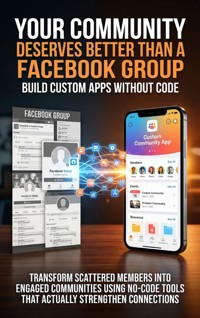
Your Community Deserves Better Than a Facebook Group: Build Custom Apps Without Code E-Book
Adrian Carmichael
Erhalten Sie Zugang zu diesem und mehr als 300000 Büchern ab EUR 5,99 monatlich.
- Herausgeber: epubli
- Kategorie: Wissenschaft und neue Technologien
- Sprache: Englisch
Facebook groups lose posts in algorithms. Discord overwhelms newcomers. Email chains create chaos. Your community deserves a digital home that actually serves its needs—and you can build it this weekend without writing code. This practical guide shows community leaders how to create custom apps that solve real coordination problems: member directories that help people connect, event systems that actually increase attendance, resource libraries that members can navigate, discussion spaces designed for your community's culture, and engagement tools that reward participation without feeling manipulative. You'll learn to choose the right no-code platform for your community's specific needs: Glide for simple data-driven apps, Softr for membership portals, Bubble for complex functionality, Adalo for mobile-first experiences, or Notion-based solutions for simplicity. Each platform comparison includes honest assessments of limitations, pricing realities, and ideal use cases. Master the community builder's approach to app design: identifying pain points that technology can solve, designing features that strengthen rather than replace human connection, creating onboarding flows that welcome newcomers, and building moderation systems that maintain culture. Learn which features communities actually use versus which sound good but collect digital dust.
Sie lesen das E-Book in den Legimi-Apps auf:
Seitenzahl: 212
Veröffentlichungsjahr: 2025
Das E-Book (TTS) können Sie hören im Abo „Legimi Premium” in Legimi-Apps auf:
Ähnliche


















Table of Contents
Chapter 1: The Shift from Free Platforms to Custom Solutions
The Allure of Free Platforms
The Frustration of Algorithm Control
The Limitations of Discord and Other Messaging Platforms
The Chaos of Email Chains
Why Custom No-Code Solutions Shine
Realizing the Potential of Custom Apps
Chapter 2: Understanding Your Community's Needs
Identifying Community Pain Points
Prioritizing Community Needs
Choosing Key Features for Engagement
Gathering Continuous Feedback
Chapter 3: Choosing the Right No-Code Tool
Understanding Your Community's Needs
Quick Overview of No-Code Platforms
Pricing Considerations
Limitations of No-Code Tools
Making the Final Decision
Chapter 4: Designing for Connection, Not Replacement
Understanding Community Needs
Features That Foster Connection
Designing the User Experience
Encouraging Member Participation
Building a Supportive Culture
Chapter 5: Crafting Seamless Onboarding Experiences
Understanding the Importance of Onboarding
Key Elements of an Effective Onboarding Flow
Personalization and Tailoring Onboarding
Creating Feedback Loops
Onboarding for Different Platforms
Launching Your Onboarding Process
Chapter 6: Hands-On Projects for Your Community
Designing Your Neighborhood Watch Coordination App
Building a Hobby Club Event Scheduler
Developing a Volunteer Management System for Nonprofits
Crafting an Alumni Network Directory
Establishing a Book Club Discussion Platform
Creating Sports League Game Coordinators
Setting Up Parent Group Resource Libraries
Launching Local Business Support Networks
Chapter 7: Strategies for Driving Adoption
Engage Your Early Champions
Smooth Transition from Existing Platforms
Create Excitement Around the Launch
Encourage Ongoing Engagement
Measure and Celebrate Success
Chapter 8: Measuring Success and Engagement
Understanding Key Metrics
Tools for Tracking Engagement
Interpreting the Data
Making Data-Driven Decisions
Chapter 9: Maintaining Your Community App
Understanding the Importance of Maintenance
Creating a Maintenance Checklist
Utilizing Automation Tools for Efficiency
Engaging Community Champions for Support
Measuring Success and Making Adjustments
Troubleshooting Common Issues
Chapter 10: Accessibility and Inclusivity in Design
Understanding Accessibility
Best Practices for Accessible Design
Tools for Testing Accessibility
Fostering Inclusivity Through Engagement
Chapter 11: Privacy and Security Considerations
Understanding Privacy Laws
Implementing Security Features
Encouraging Safe Sharing Practices
Navigating Privacy Concerns in Discussions
Chapter 12: Building a Sustainable Governance Model
Understanding Governance in Community Contexts
Involving Members in Leadership
Decision-Making Processes
Preventing Burnout in Community Leaders
Sustainability Through Community Engagement
Chapter 13: Troubleshooting Common Issues
Common Technical Glitches
Community Management Challenges
Troubleshooting User Feedback
Maintenance and Updates
Chapter 14: Integration Strategies for Maximum Efficiency
Why Integration Matters
Popular Tools for Integration
Steps to Effective Integration
Troubleshooting Common Integration Issues
Best Practices for Integration Success
Chapter 15: Encouraging Long-Term Engagement
The Importance of Community Rituals
The Power of Gamification
Facilitating Ongoing Learning Opportunities
Implementing Feedback Loops
Building a Supportive Community Culture
Chapter 16: Future-Proofing Your Community
Understanding the Landscape of Community Engagement
Maintaining Core Values amid Change
Building for Longevity
Staying Connected to Your Community
Chapter 1: The Shift from Free Platforms to Custom Solutions
Most communities start off using popular platforms like Facebook, Discord, or email chains. Yet, have you ever noticed how these platforms can often create more frustration than connection? Your community deserves better. In this chapter, we'll explore the limitations of mainstream social tools and set the stage for why custom no-code apps are the ideal solution for fostering strong, engaged communities.
The Allure of Free Platforms
In the beginning, free platforms seem like the perfect solution. They offer a way to connect without upfront costs, making them appealing to those just starting their community journey. However, this often overshadows the limitations that come with using these platforms for meaningful engagement.
Accessibility without commitment
Free platforms like Facebook and Discord provide easy access to connect with community members without any financial commitment. This low barrier to entry allows groups to gather around shared interests quickly. Individuals can join without oversight, creating a sense of immediate belonging. However, this accessibility can also lead to challenges. Community leaders may find it difficult to maintain control and ensure that everyone adheres to the group's mission and guidelines. New members may wander in without understanding the norms or culture, leading to potential friction. While the allure of free access appeals to many, it often means sacrificing essential elements like dedicated support and moderation features, which are crucial for a thriving community. When you choose to build a custom solution, you can design an environment that encourages responsible participation while also fostering deeper connections among members. This creates a more engaging atmosphere that resonates with your community's unique values.
Integration of features but misalignment with community needs
Many free platforms boast a wide range of features aimed at enhancing user experience. Yet, these features can often be a double-edged sword. While the integration of various functionalities sounds beneficial, they may not align with the specific needs and goals of your community. For example, Facebook groups offer event features, polls, and discussion boards, but these may not cater to the unique context or dynamics of your group. This misalignment can lead to frustration, as members may struggle to navigate the tools available or fail to utilize them effectively. A custom app, built with your community's needs in mind, provides focused and relevant functionalities. By identifying your members' specific pain points, you can create streamlined experiences that not only make engagement easier but also more meaningful, ensuring that the tools serve your community rather than hinder its growth.
Potential for overwhelming notifications that drown out meaningful interactions
One of the significant drawbacks of using free platforms is the avalanche of notifications that can bombard users. With every comment, like, or new post, it’s easy for members to feel overwhelmed and disengaged. In such a noisy environment, critical interactions can get lost in the shuffle, making it tough for community leaders to spark genuine conversations or encourage participation. Instead of bringing people closer, the sheer volume of alerts can lead to frustration or apathy, as members start tuning out notifications altogether. Custom-built apps allow you to prioritize notifications and streamline communication. By designing features that generate alerts for only the most pertinent discussions or events, you can create a more curated experience. This ensures that your community members receive relevant information without unnecessary distractions, fostering deeper connections and engagement.
Unpredictable algorithm changes lead to missed communications
Popular platforms often rely on complex algorithms to determine the visibility of posts and interactions, leading to unpredictability that can undermine community engagement. A post that would have excited members may go unseen due to a sudden change in the algorithm, causing missed opportunities for connection. This lack of control can leave community leaders feeling frustrated and powerless. Custom solutions bypass these challenges by providing a platform where you dictate how information flows and is prioritized. Every member's contributions can be ensured visibility, allowing for straightforward communication without the anxiety of message loss. By building a tailored digital space, you empower your community to thrive on consistent and dependable interaction, creating a culture of engagement without algorithmic interference.
The Frustration of Algorithm Control
For many communities, relying on platforms like Facebook means dealing with unpredictable algorithms that don't prioritize important posts. This can frustrate both leaders and members alike, leading to disengagement.
Community messages lost in endless feeds
In today’s digital landscape, communities often find their vital conversations lost within the clutter of endless social media feeds. Popular platforms like Facebook prioritize posts based on complex algorithms that favor engagement metrics over the importance of content. This means that crucial messages from community leaders can get overshadowed by less relevant updates or promotional content.
For a community to thrive, members need to see and interact with messages that matter. When important announcements or discussions are buried, it diminishes the sense of belonging and engagement. Custom no-code apps allow you to create curated spaces where your community can easily navigate and engage with important content. By eliminating the chaos of algorithmic uncertainty, members can focus on what truly matters—building connections and fostering a shared purpose within the community.
Important announcements can get buried under ads
One of the most critical issues facing community leaders on free platforms is the overwhelming presence of advertisements. Paid promotions often saturate feeds, relegating important community communications to the background. This not only frustrates leaders who want to reach their audience but also disheartens members who might miss vital updates among a slew of unrelated ads.
When significant announcements about events, changes, or community goals are obscured, it can lead to confusion and disengagement. A custom no-code solution can create a dedicated space for announcements and updates that remain visible and prominent. This ensures that your community retains the clarity and focus needed to engage effectively without the distraction of ads, fostering a more connected and informed membership.
Posts lack the visibility needed to spark discussions
In a thriving community, discussions should flow naturally, yet many users find that their posts struggle to gain traction on existing social platforms. Algorithms can suppress posts from reaching their intended audience, stunting the potential for meaningful engagement and conversations. This lack of visibility can deter members from sharing their thoughts or participating in discussions.
Building a custom app allows you to design features specifically intended to promote visibility. By highlighting posts or creating designated discussion boards, you can encourage members to interact with each other. Providing a clear structure for discussions fosters an environment where ideas can flourish, leading to deeper connections and a sense of ownership among members.
Members feel discouraged to participate
The overarching impact of algorithm control is that it often leads to discouragement among community members. When individuals feel that their contributions are likely to go unnoticed due to algorithmic filtering, they may hesitate to engage or share their insights. This creates a cycle of disengagement where valuable voices are stifled and interactions dwindle.
By transitioning to a no-code platform that prioritizes user-generated content, you can revitalize participation within your community. Providing easy access to discussions, recognition for contributions, and a straightforward interface can empower members to express themselves freely. Showcasing community members’ contributions helps cultivate a vibrant atmosphere where individuals feel valued, invigorating engagement and connection within the group.
The Limitations of Discord and Other Messaging Platforms
While Discord offers a dynamic environment for real-time interactions, it can quickly overwhelm newcomers. The complexity of channels and threads may deter engagement rather than encourage it.
Information overload for new members
Discord’s vibrant community is undoubtedly appealing, yet it can unleash a torrent of information that overwhelms newcomers. With multiple channels for various topics, members may find themselves inundated with notifications and messages. This noise can drown out critical discussions and important updates, leaving new members feeling lost and unsure of where to focus their attention.
The sheer volume of content can dissuade newcomers from participating, as they struggle to navigate through endless threads. Without proper orientation, they may miss out on vital community interactions and insights. A well-structured onboarding process is essential to help these members filter information effectively and encourage them to engage. Only by addressing this overload can communities foster a welcoming environment that nurtures connection from the very start.
Lack of structure can lead to chaotic conversations
A major challenge with platforms like Discord is the inherent lack of structure that can lead to chaotic conversations. Channels can quickly devolve into cluttered discussions where topics jump unpredictably, making it hard to follow conversations. When there is no clear organization, meaningful exchanges become buried beneath unrelated chatter, and important messages may get overlooked.
This chaos can frustrate members who seek productive dialogues or specific information. Implementing structured discussion threads or designated channels for particular topics can significantly enhance clarity and focus. Such organization not only makes it easier for members to engage but also ensures that valuable insights aren't lost in the digital noise, thereby strengthening the overall community dynamics.
Difficulty in finding relevant discussions
As conversations rapidly evolve on Discord and similar platforms, members often face the daunting task of locating relevant discussions. With countless threads and fast-moving chats, it’s easy for important topics to become buried and forgotten. This difficulty can hinder members from joining pertinent conversations or accessing valuable resources and information that pertain to their interests or needs.
It’s crucial for communities to implement better navigation tools that allow members to search and identify relevant discussions effortlessly. A well-designed custom app could include search functions or categorize discussions by themes. This approach empowers members to connect with others who share their interests and promotes deeper engagement, facilitating the kind of meaningful interactions that communities strive for.
High barriers to entry for less tech-savvy members
While Discord may attract tech-savvy users, it can unintentionally alienate those who aren't as comfortable with technology. The complexity of setting up an account, mastering server roles, and understanding various features can create high barriers for less experienced members. This exclusion can stifle diversity within the community and prevent valuable contributions from individuals who may feel intimidated or overwhelmed.
To foster inclusivity, communities should consider how they can simplify the onboarding process. Providing tutorials, FAQs, or even dedicated support channels can help ease anxiety for newcomers. Ultimately, by lowering these barriers, communities can attract a broader range of members and create a richer, more diverse environment that encourages everyone to participate.
The Chaos of Email Chains
Email chains can be a nightmare for organizational communication. They often create confusion with numerous threads and missed messages, making it hard for community members to stay informed.
Overstuffed inboxes lead to important messages being overlooked
Email chains often become overwhelming, causing crucial messages to be lost in the shuffle. When community members receive frequent updates, announcements, and replies all in one place, it can quickly lead to inbox paralysis. The result? Important information regarding events, deadlines, or member contributions gets buried beneath an avalanche of unread emails. This clutter not only creates frustration but can also alienate members who feel disconnected from the conversation. To combat this, organizations need a streamlined communication method that ensures messages are delivered, acknowledged, and acted upon without getting lost in a sea of digital clutter. By utilizing a custom app, you can manage communications more effectively and make sure that every member is kept in the loop.
Finding historical context in email threads is challenging
Email threads can quickly become convoluted, especially as conversations branch off and multiple replies occur. This can make it extremely difficult for members to find the historical context of important discussions. Newer members may struggle to understand past decisions, agreements, or relevant resources without the benefit of easy access to this information. Relying on stretched-out threads leads to disjointed communication and repeated questions, wasting time and diminishing engagement. An effective custom app can facilitate organized discussions, ensuring that community context is easily accessible. Features like searchable archives or categorized topics can help everyone stay informed and feel more connected.
No centralized location for resources or discussions
With email chains, resources are often scattered across various messages, making it tedious to track down essential information. Members may have to sift through dozens of emails to find links, documents, or event details, leading to frustration and inefficiency. The lack of a centralized hub for discussions and materials can stifle engagement, as members may feel overwhelmed or unable to participate fully. A custom app can serve as a dedicated space where all resources are stored in an organized manner. By providing an easily navigable repository of information, you empower members to engage more actively and contribute more effectively.
Difficulty in tracking engagement and responses
Email chains make it challenging for community leaders to track member engagement, responses, and overall participation. With no clear metrics, it’s tough to identify who is involved and who may need encouragement to participate. Additionally, discussions can become stagnant when feedback and responses are scattered across multiple threads, leading to important insights slipping through the cracks. Without tools to measure engagement, communities risk losing touch with their members. A custom app designed for community interaction can include features like analytics tools that track participation levels, making it easier to identify engaged members and those who may need additional support.
Why Custom No-Code Solutions Shine
Switching to a custom no-code solution may seem daunting, but it provides tailored features that actually engage your community. These tools give you the power to create the exact environment your members need.
Design tools according to your community’s unique needs
One of the most significant advantages of no-code solutions is the ability to design tools that perfectly align with your community's specific needs. Unlike generic platforms that offer one-size-fits-all features, custom no-code apps allow you to tailor functionalities that resonate deeply with your members.
By starting with an analysis of your community’s unique pain points, you can create an environment where members feel understood. For example, if your community struggles with event coordination, a bespoke app designed specifically for that purpose can streamline the process. You can incorporate features like RSVP tracking, reminders, and post-event feedback to maximize engagement.
Ultimately, having the freedom to craft customized solutions ensures that your community’s voices are heard, fostering a sense of ownership and belonging. This approach not only addresses existing challenges but also anticipates future needs, establishing a dynamic platform that evolves with your community.
Maintain a consistent brand voice and culture
Consistency in branding and culture is crucial for any community, creating trust and familiarity among members. Custom no-code solutions enable you to weave your brand’s personality into the digital space. This signifies more than just colors and logos—it involves how members interact with one another and the overall vibe of your platform.
With custom apps, every interface can reflect your community's values and ethos. Imagine a discussion forum where the language and tone reflect your community's mission, or a resource library crafted to uphold your brand's commitment to support and education. By curating these experiences, you maintain a united brand narrative and strengthen the emotional ties among your members.
This kind of intentional design fosters loyalty and encourages members to engage more actively, as they feel genuinely part of a cohesive entity rather than just another user in a vast system.
Create spaces where members feel valued and heard
In any community, the feeling of being valued significantly enhances engagement and participation. Custom no-code solutions give you the flexibility to create dedicated spaces that foster dialogue and feedback. Whether it’s a suggestion box feature, an open forum for discussions, or a tracking system for member contributions, these tools empower your members to express themselves freely.
When members know their voices matter, they’re more likely to engage consistently. By designing spaces specifically to encourage feedback and dialogue, you create a culture of openness. Each feature can be customized to reflect the unique communication styles of your community, ensuring everyone feels heard and appreciated.
This proactive approach not only strengthens relationships among members but also cultivates a robust sense of community ownership, where everyone plays a part in shaping the future.
Foster deeper connections with customizable features
Custom no-code solutions provide unparalleled flexibility to enhance member connections through tailored features designed for your community's dynamics. Consider functionalities like personalized member profiles that highlight shared interests or custom matchmaking for networking opportunities—this is all possible with no-code tools.
By implementing features that resonate with your members, you facilitate deeper relationships and meaningful interactions. For instance, community bulletin boards where members can share personal milestones or interests can transform a basic platform into a hub of genuine connection.
Additionally, the growth of your community can be supported by integrating social features such as group chats or collaborative projects, further enhancing engagement. As you customize these features, you create an interactive environment that encourages collaboration and strengthens interpersonal relationships.
In essence, custom no-code apps not only serve functional purposes but also enrich the emotional fabric of your community, allowing bonds to form more naturally.
Realizing the Potential of Custom Apps
The transition from free platforms to custom solutions is not just a shift in tools but a shift in mindset. By building tailored apps, communities can nurture relationships and streamline communication.
Leverage data to understand member needs
Utilizing data effectively is key to transforming your community. By analyzing member interactions, feedback, and participation patterns, you can gain invaluable insights into what your members truly need and want. Custom apps allow you to gather and filter this data seamlessly, enabling you to identify trends and preferences.
For instance, tracking event attendance can reveal popular topics and times, while surveys can help assess satisfaction levels. With this information, you can tailor your community offerings—whether that means creating specific discussion groups, organizing targeted events, or providing resources that directly address members’ interests. Ultimately, leveraging data not only enhances engagement but also builds a more responsive and inclusive community atmosphere.
Empower members to engage in ways that feel natural
Every community has its unique culture and preferred methods of communication. Custom no-code apps give you the flexibility to design engagement tools that align with these natural tendencies. For example, consider integrating features that encourage informal interactions, like discussion boards or project collaboration spaces.
Moreover, users might feel more comfortable engaging through multimedia, such as sharing photos or videos, rather than traditional text posts. By offering various formats for interaction, you empower members to connect in ways that resonate with them. This empowerment fosters a more active and invested community where individuals feel valued and heard, ultimately leading to a stronger sense of belonging and loyalty.
Focus on creating memorable experiences, not just features
In a world filled with digital options, it’s vital to focus on the experiences your community members have, not just the features of your app. Memorable experiences cultivate emotional connections that technology alone cannot replicate. Think beyond functionalities—design your app to facilitate meaningful interactions.
For instance, if you create a space for shared stories or highlight community achievements, you create an environment that celebrates members and fosters genuine relationships. Experiences like these make your community stand out and motivate members to contribute more actively. Ensuring that your platform fosters lasting memories will significantly impact retention and participation, driving a deeper commitment to the community.
Belonging and connection become the core of the platform
When building custom apps, it’s crucial to embed the values of belonging and connection right into the platform’s structure. Your design should facilitate interactions that promote community bonds. This means prioritizing features that encourage collaboration, sharing, and support among members.
For example, incorporating tools like mentorship matching or interest-based groups can create pathways for meaningful relationships within the community. When members see their personal connections flourishing, it strengthens the fabric of the group as a whole. A platform that emphasizes belonging can also differentiate your community from others, drawing in new members primarily seeking connection and support, and making your community an inviting place for everyone.
Chapter 2: Understanding Your Community's Needs
Before you can build anything, you need to understand what your community truly needs. What are the pain points? What features will actually enhance connection? In this chapter, we'll dive into methods for gathering insights from your members, helping you identify the most pressing challenges your community faces and align your no-code solutions with their specific needs.
Identifying Community Pain Points
Understanding the specific challenges your community faces is the first step toward creating effective solutions. By gathering feedback and insights, you can create an app that directly addresses these issues. Let's explore various ways to identify and understand these pain points.
Conduct Surveys
Surveys are a powerful tool for identifying community pain points. They provide a structured way to gather insights and can help you gauge overall member satisfaction. Platforms like Google Forms or Typeform make it easy to create customized surveys that target specific issues. Consider asking questions about current challenges members face, their preferences for communication, and what features they believe would enhance their experience.
Ensure your survey is clear and concise to encourage participation. Use multiple-choice questions for easy responses, along with open-ended questions that allow members to express their thoughts in detail. Analyzing the collected data will reveal trends and common concerns that can inform your app development. Regularly conducting surveys can also keep you updated on evolving community needs, allowing you to adjust your solutions accordingly.
Hold Open Forums
Facilitating open forums can be an engaging way for community members to share their thoughts and experiences. These discussions allow members to voice their concerns directly and offer suggestions for improvement. Consider hosting virtual meetings or live Q&A sessions where everyone feels comfortable sharing their opinions.
By creating a welcoming environment, you encourage participation, fostering a sense of belonging and investment in the community. Document feedback and consider using a moderator to keep discussions on track. The insights gained from open forums can significantly impact your app design, as they provide firsthand accounts of what members truly need.
Analyze Existing Communication
Reviewing past conversations within your current platforms can unveil invaluable insights into community challenges. Identify discussion threads that generated the most engagement or frustration. This analysis will help you pinpoint recurring themes or specific issues that may otherwise go unnoticed.
Look for patterns in member feedback, questions, and the types of topics that spark considerable dialogue. This data-driven approach enables you to design features that address real pain points rather than just assumptions. Use this analysis to prioritize which functionalities to develop first in your no-code solution, ensuring the app resonates with your community's needs.
Engage with Key Members




