


Erhalten Sie Zugang zu diesem und mehr als 300000 Büchern ab EUR 5,99 monatlich.
- Herausgeber: epubli
- Kategorie: Geisteswissenschaft
- Sprache: Englisch
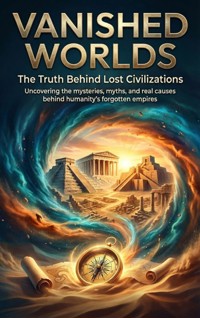
What happened to the civilizations that once ruled the world—and why did they disappear? Vanished Worlds takes readers on a thrilling journey through history's greatest enigmas, from Atlantis and the Indus Valley to the Maya and the Ancestral Puebloans. Blending cutting-edge archaeological discoveries with historical analysis, this book reveals the real reasons these societies rose to greatness and collapsed into silence. Were they undone by nature, war, or something deeper within human ambition? Through gripping narratives and vivid reconstructions, Vanished Worlds uncovers the lessons these fallen empires hold for our modern age—reminding us that even history's giants can fade into dust.
Sie lesen das E-Book in den Legimi-Apps auf:
Seitenzahl: 225
Veröffentlichungsjahr: 2025
Das E-Book (TTS) können Sie hören im Abo „Legimi Premium” in Legimi-Apps auf:
Ähnliche



















Table of Contents
Chapter 1: The Lost City of Atlantis
The Origins of the Atlantis Legend
Theories and Speculations on Atlantis' Location
Cultural Influences and Inspirations
The Myth of Atlantis in Modern Times
Chapter 2: The Mystery of the Indus Valley Civilization
Understanding the Indus Valley Civilization
The Enigmatic Script of the Indus Valley
Theories Behind the Decline
Lessons from the Indus Valley Civilization
Chapter 3: The Fall of the Maya
A Glance at Maya Civilization
Environmental Challenges
Social and Political Upheaval
Lessons for Modern Society
Chapter 4: The Ancestral Puebloans: Mystery of the Southwest
Who Were the Ancestral Puebloans?
Environmental Factors and Adaptation
Social and Political Dynamics
The Great Disappearance
Chapter 5: Easter Island: The Rapa Nui Paradox
The Lure of Easter Island
The Rise of the Rapa Nui
Environmental Challenges and Overexploitation
The Haunting Silence of Easter Island
Lessons from the Rapa Nui Paradox
Chapter 6: The Sumerians: Dawn of Civilization
The Birth of Sumerian Civilization
Sumerian Innovations and Contributions
Religion and Mythology in Sumer
The Decline of the Sumerian Civilization
Lessons from Sumerian Civilization
Chapter 7: The Roman Empire: Lessons from Decline
The Foundations of the Roman Empire
Political Corruption and Leadership Failures
Economic Challenges and Resource Depletion
Military Overreach and Vulnerability
Cultural and Social Changes
Lessons for Today
Chapter 8: The Khmer Empire: Angkor's Glory and Fall
The Rise of the Khmer Empire
The Grandeur of Angkor Wat
Environmental Challenges
Political Turmoil and Internal Strife
The Legacy of the Khmer Empire
Chapter 9: The Hittites: Masters of the Bronze Age
The Rise of the Hittites
The Hittite Legal System
Military Might and Expansion
Internal Conflicts and Challenges
The Collapse of the Hittite Empire
Chapter 10: Ancient Egypt: Pharaonic Power and Mystery
The Rise of the Pharaohs
Religion and Culture
Innovations and Achievements
The Role of Trade
The Decline of Ancient Egypt
Lessons from Ancient Egypt
Chapter 11: The Minoans and the Ashes of Thera
The Rise of the Minoans
The Minoan Society
The Eruption of Thera
The Legacy of the Minoans
Chapter 12: The Great Zimbabwe: Echoes of a Lost Kingdom
The Origins of Great Zimbabwe
The Architectural Marvels
Economic Systems and Trade
Social Structures and Culture
Causes of Decline
Legacy and Cultural Identity
Chapter 13: The Mycenaeans: Warriors of Ancient Greece
Origins of the Mycenaean Civilization
Mycenaean Society and Culture
The Mycenaean Military
Trade and Economy
The Collapse of the Mycenaean Civilization
Legacy of the Mycenaeans
Chapter 14: The Olmec: The Mother Culture of Mesoamerica
The Birth of the Olmec Civilization
Artistic Innovation and Expression
Social Structure and Governance
The Decline of the Olmec Civilization
Legacy and Influence on Future Civilizations
Chapter 15: The Nazca: Echoes in the Desert
The Nazca Lines: A Mysterious Canvas
Life in Ancient Nazca: Culture and Society
The Spirituality of the Nazca: Beliefs and Rituals
Environmental Challenges: The Decline of the Nazca
Legacy of the Nazca: Echoes of the Past
Chapter 16: Lessons From the Forgotten Empires
Understanding Sustainability
The Importance of Adaptability
The Role of Leadership
Lessons on Conflict and Cooperation
Closing Reflections: Lessons from the Past
Chapter 1: The Lost City of Atlantis
In the realm of lost civilizations, few stories captivate the imagination quite like that of Atlantis. This chapter explores the enduring myths and theories surrounding this legendary island, said to have floated on the waves of history and then vanished without a trace. We’ll sift through ancient texts and modern research to uncover the possible locations of Atlantis, the cultural elements that might have inspired its myth, and what its story tells us about humanity’s dreams and fears.
The Origins of the Atlantis Legend
The story of Atlantis begins with the ancient Greek philosopher Plato, who penned tales about this advanced civilization. His accounts stir curiosity and debate, leading to countless interpretations over the centuries. In this section, we will explore the origins of the Atlantis myth and its significance in the context of ancient philosophy and morality.
Plato's Dialogues: A Philosophical Foundation
The legend of Atlantis finds its roots in the writings of the ancient Greek philosopher Plato. In two of his works, Timaeus and Critias, he presents Atlantis as a powerful and advanced civilization that existed around 9,000 years before his time. Plato’s portrayal serves not merely as a historical account but also as a profound philosophical exploration. He used Atlantis to illustrate his ideas about morality, governance, and the ideal society.
Plato depicted Atlantis as a utopian society that ultimately succumbed to hubris and moral decay. This foundational narrative has led scholars and enthusiasts alike to probe deeper into the implications of his allegory. Is Atlantis a cautionary tale about the consequences of excess and ambition? Plato's dialogues have not only fueled speculation about the lost city but also prompted critical discussions about the nature of civilization and individual ethics.
The Allegory of Atlantis: Moral Lessons or Historical Truth?
The tale of Atlantis raises a compelling question: Is it a historical account or a moral allegory? While many have sought to identify Atlantis with factual locations, others argue that its true value lies in the lessons Plato intended to convey. In Plato's narrative, Atlantis represents the ultimate civilizational warning—a society that reached great heights but ultimately fell due to its own flaws.
This dichotomy invites readers to consider the implications of Plato’s story. If we perceive Atlantis as merely a myth, what relevance does it hold for contemporary society? Conversely, if there is truth in the legend, could it be a reflection of real historical events? As we dissect these ideas, we see how the story serves a dual purpose—entertaining imaginations while encouraging deep philosophical contemplation.
Historical Context: The Age of Exploration and Plato's Era
To fully grasp the impact of the Atlantis myth, it’s essential to examine the historical context of both Plato’s time and the later Age of Exploration. Plato flourished in the 4th century BCE, a time marked by significant philosophical advancements and Athenian democracy. His writings emerged alongside burgeoning curiosity about distant lands and ancient cultures—an interest that would intensify during the Age of Exploration in the 15th to 17th centuries.
Explorers like Columbus and Magellan opened new frontiers, spurring imaginations hungry for tales of lost empires. The rediscovery of classical texts during the Renaissance reignited fascination with Atlantis, infusing the myth with new interpretations. Thus, Atlantis evolved from a philosophical concept into a vibrant symbol of the age’s focus on exploration, wonder, and mystery.
How Misinterpretations Shaped Modern Views of Atlantis
The narrative of Atlantis has endured through the ages, yet it is also rife with misinterpretations that have shaped modern perceptions. Early scholars sought to locate Atlantis geographically, with suggestions ranging from the Mediterranean to Antarctica. These speculative theories often veered away from Plato's philosophical intent, aligning more with adventurous tales instead.
In popular culture, Atlantis transformed into a lost paradise, often depicted as a technologically advanced civilization that mysteriously vanished. Such portrayals detract from its original philosophical essence, focusing instead on sensationalism. As a result, the fascination with Atlantis has sometimes overshadowed its deeper implications, leaving us with a fragmented understanding of what the myth truly represents in the tapestry of human civilization.
Theories and Speculations on Atlantis' Location
Over the years, many theorists have proposed various locations for the infamous Atlantis, ranging from the Mediterranean to Antarctica. This section examines some of the most popular hypotheses, providing insights into the motivations and implications of these claims.
The Mediterranean Hypothesis: Santorini and Crete
One of the most widely accepted theories regarding Atlantis locates it in the Mediterranean, particularly focusing on the volcanic island of Santorini (formerly known as Thera). Artifacts from the Minoan civilization, centered on the nearby island of Crete, showcase advanced architecture, art, and trade networks that align with Plato's descriptions of Atlantis. The catastrophic eruption around 1600 BCE is thought to have obliterated the Minoan society, leading to speculation that this event inspired the Atlantis myth.
This theory gains further credence through excavations that reveal sophisticated urban planning and vibrant culture on Santorini, mirroring Plato’s account of an advanced civilization. Additionally, the proximity of these islands and their maritime capacities could explain how tales of Atlantis gained traction among ancient Greeks. However, while captivating, the Mediterranean theory faces criticism, as Atlantis was described by Plato as being larger than Asia and Europe combined. Thus, while Santorini and Crete provide tantalizing clues, they may not fully encompass the grandeur of Atlantis.
Atlantic Ocean Theories: The Azores and Beyond
Several theorists suggest that Atlantis lay within the vast expanse of the Atlantic Ocean, with prominent contenders such as the Azores—a group of islands positioned near the mid-Atlantic Ridge. Proponents argue that these islands could represent remnants of a larger continent that sank into the ocean during a catastrophic event. This idea resonates with histories of flooding and geological changes that could feasibly account for a lost civilization.
Moreover, proponents like the author Charles Berlitz popularized the notion that the Azores were part of an advanced society that engaged in maritime trade. Theories extend to regions further afield, including the Caribbean and even the coasts of South America. However, skeptics argue that there is insufficient archaeological evidence to substantiate claims of advanced civilization in the area. Regardless, these theories conjure captivating narratives of what might have been lost beneath the waves, igniting the imagination about human history and ambition.
Polar Perspectives: Antarctica as Atlantis
One of the more unconventional theories positioning Antarctica as the location of Atlantis posits that this frozen continent was once a thriving land, obscured beneath ice for millennia. Some theorists suggest that geological shifts and climate change could have altered the landscape dramatically, leading to its current inhospitable condition. Supporters of this hypothesis argue that ancient texts hint at a rich civilization that sailed the seas, leaving behind stories of their achievements.
However, this theory is often met with skepticism, primarily due to the lack of concrete evidence supporting a significant human presence in Antarctica during antiquity. Furthermore, the frigid temperatures and glacial conditions pose challenges to the survival of any advanced culture. Nevertheless, the idea invites readers to ponder what lies beneath the ice and how civilizations might have adapted to—or been destroyed by—severe environmental changes.
The Impact of These Theories on Popular Culture
The quest for Atlantis has significantly influenced popular culture, inspiring countless books, films, and television series. From the adventure of Indiana Jones to animated classics like Atlantis: The Lost Empire, the legend of Atlantis resonates deeply with audiences, serving as a symbol of lost knowledge and human ambition. These narratives often blend mythology with speculative archaeology, igniting interest in ancient civilizations and their mysteries.
Moreover, the various theories surrounding Atlantis have sparked debates in academic circles while influencing conspiracy theories related to ancient technologies and extraterrestrial interactions. As societies grapple with their identities, the fascination with Atlantis reflects a universal longing for understanding our past and the implications it holds for the future. Through the lens of these exploration narratives, Atlantis remains not only a myth but a metaphor for humanity's aspirations and the perils of hubris.
Cultural Influences and Inspirations
What cultural elements inspired the myth of Atlantis? In this section, we will investigate different civilizations that may have influenced Plato's narrative, including the Minoans and Egyptian cultures, and how their achievements contributed to the Atlantis legend.
The Minoan Civilization: A Blueprint for Atlantis?
The Minoans, an ancient civilization that thrived on the island of Crete around 2000 to 1450 BCE, are often seen as a potential inspiration for the Atlantis myth. Renowned for their advanced architecture, intricate artwork, and maritime prowess, the Minoans developed a society that showcased both power and sophistication. Their vast palaces, such as the one at Knossos, featured complex layouts and vibrant frescoes, indicating a lively culture filled with trade and innovation.
Moreover, the Minoans had a flourishing trade network that stretched across the Mediterranean and beyond, connecting them to various cultures. This extensive interaction may have contributed to their wealth and dynamic societal structure, aligning with Plato’s depiction of an advanced society. The cataclysmic volcanic eruption of Santorini around 1600 BCE, which devastated Minoan civilization, serves as a stark reminder of how nature can abruptly alter powerful empires, much like the fate attributed to Atlantis.
Egyptian Wisdom: The Pyramids and Lost Knowledge
Egypt’s rich tapestry of history and culture has also fueled speculation about Atlantis. The grandeur of the pyramids, particularly the Great Pyramid of Giza, represents a pinnacle of architectural achievement and deep knowledge of engineering, mathematics, and astronomy. These monumental structures, built around 2500 BCE, continue to baffle historians and archaeologists, prompting theories that ancient Egyptians possessed lost technologies or insights.
The Egyptians valued knowledge, wisdom, and the belief in the afterlife, which permeated their culture. In Plato’s accounts, Atlantis was depicted as a society thriving on knowledge and technology, paralleling some aspects of ancient Egyptian civilization. The idea that Atlantis might embody a collective memory of civilizations that possessed great wisdom—only to see it fade—resonates with the stories and legends surrounding ancient Egypt and its enduring mysteries.
The Role of Trade and Exploration in Ancient Cultures
Trade and exploration were crucial elements shaping the civilizations of the ancient world, and they likely contributed to the narrative of Atlantis. The Mediterranean served as a bustling highway for merchants, connecting diverse cultures such as the Minoans, Phoenicians, and Egyptians. This exchange of goods, ideas, and technologies led to significant advancements and cultural syncretism, fostering societies that were both powerful and influential.
As ancient cultures explored new territories, they encountered new peoples, which often sparked legends of advanced lost cities and civilizations. The narratives of great empires, such as Atlantis, may have emerged from these encounters, blending historical fact with myth. The tales of far-off lands filled with riches and incredible societies reflect the human penchant for storytelling, as well as a deeper yearning for exploration and discovery that transcends time.
Comparative Myths: Other Lost Cities in Ancient Narratives
The story of Atlantis is not unique in the annals of history; many cultures have their own tales of lost cities and civilizations. For example, the Aztec myth of Aztlán describes an ancestral home of the Mexica people that was lost to the sands of time. Similarly, the legends of El Dorado speak of a city overflowing with gold, enticing explorers for centuries.
These comparative myths illustrate a universal archetype in human storytelling—the notion of a once-great civilization that mysteriously vanishes, often serving as a cautionary tale about hubris or nature's wrath. By examining these parallels across cultures, we gain a richer understanding of how lost civilizations inspire both wonder and reflection on our own societal trajectories, weaving a shared narrative into the fabric of human history.
The Myth of Atlantis in Modern Times
The tale of Atlantis continues to resonate in modern culture, appearing in literature, movies, and even conspiracy theories. This section showcases how the myth has evolved, reflecting our current hopes and fears about lost knowledge and advanced societies.
From Fiction to Film: Atlantis in Popular Media
The myth of Atlantis has permeated various forms of artistic expression, particularly literature and film, creating a rich tapestry that reflects both creativity and cultural fascination. Starting with Plato's ancient texts, the allure of Atlantis inspired writers like Jules Verne and H.G. Wells, who drew on its themes of lost utopia and human ambition in their narratives. In contemporary cinema, we see a surge of interest, with films like "Atlantis: The Lost Empire" and even episodes of the animated series "SpongeBob SquarePants" incorporating the legendary city into their storylines.
These adaptations often reinterpret Atlantis as a symbol of advanced civilization, delving into themes of technological surpassing and the potential consequences linked to such progress. Through these portrayals, Atlantis serves not only as entertainment but also as a cautionary tale about the perils of hubris and the vulnerability of even the mightiest societies. The persistent reimagining of Atlantis in popular media underscores our enduring curiosity about civilization’s possibilities and the fragility of human achievement.
The Allure of Atlantis: Why Do We Keep Coming Back?
The captivating story of Atlantis evokes a universal desire to explore the unknown. This yearning stems from our innate curiosity about history, human ambition, and the potential for lost knowledge. Atlantis represents an ideal society that, despite its fictional origins, symbolizes our aspirations for a just and advanced civilization. Such narratives resonate with modern audiences longing for hope amid global challenges.
Moreover, the story of Atlantis embodies a crucial lesson about the rise and fall of societies, reminding us of the importance of sustainability and ethical governance. The evolution of the myth reflects our changing values and fears, from the technological progress of today's world to the environmental sustainability crisis. This perpetual fascination reveals our deep-seated need for stories that allow us to confront existential questions, keeping the legend alive through generations.
The Predictions of Advanced Civilizations and Technology
Throughout history, Atlantis has been associated with the idea of advanced technology and civilizations, drawing parallels with contemporary innovations. The allure of the myth often centers around the speculation that ancient Atlanteans possessed knowledge beyond their time, leading to remarkable achievements in architecture, engineering, and even energy harnessing.
This belief fuels ongoing discussions about lost technologies, such as solar power, advanced construction techniques, and sustainable practices. Our fascination with these possibilities sparks debates about what our own civilization might achieve or lose. As we delve into the implications of technological advancement, Atlantis serves as a symbol—a reminder of the balance required to ensure progress does not come at the expense of ethical considerations and ecological sustainability.
Conspiracy Theories: The Search for Lost Knowledge
The mystery of Atlantis has also given rise to a plethora of conspiracy theories, each seeking to uncover lost knowledge or hidden truths about this enigmatic civilization. From claims of secret societies preserving Atlantean wisdom to suggestions that the government is aware of its existence, the intrigue surrounding Atlantis invites speculative narratives that captivate the public imagination.
These theories often intertwine historical events with modern phenomena, suggesting that the secrets of Atlantis could hold the key to understanding humanity's purpose or future. While many of these theories lack credible evidence, they reflect a collective desire to explore the "what ifs" of our history. The ongoing search for lost knowledge serves to highlight our passion for uncovering the unseen connections between past civilizations and our current existential dilemmas.
Chapter 2: The Mystery of the Indus Valley Civilization
The Indus Valley Civilization was once one of the largest urban cultures in the ancient world, yet it remains shrouded in mystery. This chapter investigates the advanced city planning, trade networks, and social structure of this enigmatic society. We'll also explore the theories that explain its decline, from natural disasters to invasions. Together, we’ll examine what we can learn from their fate in the context of our own urban challenges.
Understanding the Indus Valley Civilization
The Indus Valley Civilization, flourishing around 2500 BCE, was a sophisticated urban culture that thrived in what is now Pakistan and northwest India. This section explores the architecture, technology, and daily lives of its people, setting the stage for understanding their advanced society.
Advanced Urban Planning
The cities of the Indus Valley, particularly Mohenjo-Daro and Harappa, are prime examples of sophisticated urban planning in ancient times. These cities featured grid layouts that remarkably optimized space for residential and commercial needs. The streets were arranged in a precise pattern, creating a sense of order and efficiency uncommon for the age.
Moreover, one of the standout features of their urban design was the intricate drainage system. Houses had access to advanced sewage systems that flowed into covered drains, showcasing the civilization's commitment to hygiene and sanitation long before similar practices were adopted elsewhere.
The use of standardized fired brick in construction is another testament to their ingenuity. This not only facilitated uniformity in building structures but also likely streamlined construction efforts across the civilization, reflecting a collective understanding of architectural principles.
Innovative Technology
The Indus Valley Civilization was remarkable for its technological innovations, particularly in engineering and craftsmanship. The people skillfully utilized cotton, which they spun into textiles, indicating an early understanding of agriculture and textile production.
Additionally, metallurgy was a prominent feature of their technology, with advances in the production of tools and ornaments from copper and bronze. The artistry of their seal carvings, often depicting animals or motifs, signifies not just craftsmanship but also a rich cultural identity. These seals often served as identifiers in trade and communication, revealing the complexity of their society.
Trade Networks
The people of the Indus Valley engaged in extensive trade networks that reached far beyond their immediate geography. Utilizing sophisticated weights and measures, they exchanged goods like textiles, pottery, and semi-precious stones with neighboring regions, notably Mesopotamia.
This trade was crucial for their economy, enabling the influx of resources not readily available in their own territory. The exchange of ideas through trade likely also contributed to cultural advancements, showcasing their role as a bridge between distinct ancient cultures. Such connections underscored their importance in the ancient world, bridging gaps between civilizations.
Social Organization
While much about the political system of the Indus Valley Civilization remains unclear, archaeological evidence suggests a complex social structure. It appears that the society operated through a centrally planned economy, indicating an organized approach to resources and labor.
Interestingly, there is little indication of significant hierarchical leadership, which prompts discussions about the nature of governance at the time. This could imply a more communal or collaborative approach to decision-making among the inhabitants, reflecting values of cohesion rather than strictly defined power dynamics.
The Enigmatic Script of the Indus Valley
A key mystery surrounding the Indus Valley Civilization is the script that remains undeciphered. This section will discuss the significance of this writing system and the attempts made to understand it.
Nature of the Script
The Indus script is a captivating puzzle, consisting of approximately 400 distinct symbols that appear on seals, pottery, and other artifacts. Scholars believe these symbols convey a form of language, potentially representing words or ideas. However, the precise meaning remains elusive, making it one of the foremost barriers to understanding the Indus Valley Civilization's culture and society.
This indecipherability poses challenges not only for linguistic analysis but also for historical comprehension. For instance, we cannot ascertain whether the script reflects a complex bureaucracy or a simple form of record-keeping. Such uncertainties leave us in the dark about their governance, trade practices, and even their daily lives.
Many questions linger: Was their writing system purely pictorial, or did it function phonetically? The absence of any bilingual inscriptions, unlike those found in other ancient cultures, further complicates efforts to unlock its mysteries. Until we can decode the Indus script, the culture behind it will remain shrouded in enigma.
Attempts at Decipherment
Over the decades, numerous researchers, linguists, and archaeologists have made valiant attempts to decipher the Indus script, yet a consensus remains elusive. Notable figures such as Andrew Robinson and Iravatham Mahadevan have put forth theories based on statistical analysis and comparisons with known languages.
Some scholars have suggested that the Indus script is a logographic system, akin to ancient Chinese, where symbols represent words, while others propose it may have phonetic elements. Recent computational methods using algorithms have attempted to analyze patterns within the symbols, but results have often led to conflicting conclusions.
Cultural Implications
The inability to read the Indus script greatly limits our understanding of the civilization’s cultural and societal frameworks. Without access to their written records, scholars struggle to unravel the complexities of their beliefs, governance structures, and social customs. What religious rituals did they practice? How did they organize their communities?
This knowledge gap hinders our ability to gauge their achievements and challenges accurately. While archaeological evidence provides glimpses into their urban planning and trade practices, the lack of written documentation denies us insight into their thoughts and ideologies. The script, thus, is not merely a linguistic artifact but a key that could unlock the entirety of their societal narrative.
Ultimately, the inability to decipher the Indus script leaves historians and archaeologists relying heavily on inference and interpretation, which can lead to misconceptions or oversimplifications of a rich and advanced culture. This gap not only makes the Indus Valley Civilization more enigmatic but also highlights the importance of written language in the preservation of cultural identity.
Comparative Studies
To enhance our understanding of the Indus script, researchers often turn to comparative studies with other ancient writing systems. For instance, linguists have drawn parallels between the Indus script and early forms of writing from Mesopotamia and Egypt, seeking common ground that might yield insight into its structure and meaning.
Some scholars have focused on specific symbols, comparing them to known glyphs from other ancient cultures. These comparative analyses are grounded in the hope that recognizable patterns or shared elements may lead to breakthroughs in understanding the Indus language.
However, such comparisons can be fraught with challenges, as each civilization had its unique context and linguistic developments. Nonetheless, these studies illuminate the connections among ancient cultures, provoking broader questions about human communication and the development of writing. With every new discovery, we inch closer to revealing the secrets of the Indus Valley Civilization and understanding its place in the tapestry of human history.
Theories Behind the Decline
The decline of the Indus Valley Civilization is as mysterious as its rise. This section looks at several theories regarding what led to the end of this advanced society.
Environmental Changes
One prominent theory regarding the decline of the Indus Valley Civilization centers on environmental changes. Archaeological evidence suggests that shifts in climate, particularly droughts or substantial flooding, could have dramatically affected agricultural practices. The civilization heavily relied on the surrounding rivers, like the Indus, for irrigation and water supply.
As the climate became less predictable, crops may have failed, leading to food shortages that strained societal structures. These abrupt alterations in climate dynamics not only impacted agriculture but also affected the ability to sustain urban populations. As people faced increasing scarcity, tensions may have risen, ultimately leading to social stress and the unraveling of their sophisticated systems.
The implications of these environmental factors remind us of the critical relationship between civilization and nature, emphasizing how modern societies must heed the lessons of the past regarding sustainability and resilience.
Economic Factors
Economic instability is another significant factor that could have played a role in the decline of the Indus Valley Civilization. Scholars suggest that disruptions in trade routes may have led to resource shortages, causing an imbalance that weakened the society’s economic foundation. The Indus Valley was known for its extensive trade networks, connecting it to distant lands and resources.
If these trade routes were compromised—whether due to climatic shifts, political issues, or other disruptions—the entire economic system may have faltered. This economic downturn could have prompted a series of crises, challenging the capacity for effective governance and community cohesion.
As we analyze the economic dimensions of this civilization's decline, we uncover the vital importance of stable trade networks and economic resilience in ensuring the longevity of societies.
Invasions and Migrations




