


Central European Stream Ecosystems E-Book
187,99 €
Mehr erfahren.
- Herausgeber: Wiley-VCH
- Kategorie: Wissenschaft und neue Technologien
- Sprache: Englisch
Probably the best-studied stream on earth.
The result of unmatched long-term data taken by the Max-Planck outstation in Schlitz from the nearby Breitenbach stream since 1949, the special focus in this handbook and ready reference is on animal and microorganism occurrence and variation, as well as chemical and physical parameters.
An invaluable data basis for modeling purposes for anyone dealing with stream ecology.
Sie lesen das E-Book in den Legimi-Apps auf:
Seitenzahl: 1107
Veröffentlichungsjahr: 2011
Ähnliche




















Table of Contents
Cover
Related Titles
Title page
Copyright page
Foreword
List of Contributors
Acknowledgments
1 Introduction
1.1 History of the Limnologische Flussstation Schlitz
2 The Breitenbach and Its Catchment
2.1 Study Area
2.2 The Stream and the Catchment
2.3 Sampling Sites
3 Environmental Characteristics
3.1 Climate and Weather
3.2 Attempt to Define Substratum Dynamics
3.3 Chemistry
4 Detrital Energy Sources
4.1 Organic Matter in Streams
4.2 Particulate Organic Matter
4.3 Dissolved Organic Matter
5 Primary Producers
5.1 Primary Producers in Streams
5.2 The Communities
5.3 Primary Production
6 Bacteria and Fungi
6.1 The Role of Bacteria and Fungi in Streams
6.2 The Communities
6.3 Microbial Metabolic Activity
7 The Fauna of the Breitenbach
7.1 Sampling Methods
7.2 Protozoa: Ciliophora
7.3 Platyhelminthes and Annelida
7.4 Nematoda
7.5 Mollusca
7.6 Arthropoda
7.7 Chordata
7.8 Ecophysiology, Behavior, and Life Cycles of Scrapers
7.9 Effects of Water Temperature along the Breitenbach
8 Ecosystem Breitenbach
8.1 The Sandy Streambed Areas of the Breitenbach
8.2 Aquatic Insects Emerging over an Artificially Changed Stream Bottom
8.3 Discharge Patterns Largely Determine Species Abundance and Community Diversity
8.4 Eleven Years Emergence at Four Sites along the Breitenbach and the Effects of Discharge Patterns on the EPTD Community
8.5 The Erlenbach – a Comparison with the Breitenbach
8.6 Modeling Discharge and Insect Abundance with Artificial Neural Networks (ANNs)
8.7 Food Chains and Carbon Flow
8.8 Global Change and Timing of Insect Emergence at the Breitenbach
9 Summary
9.1 Climate, Environment
9.2 Detrital Energy Sources
9.3 Primary Producers
9.4 Bacteria
9.5 Organic Matter Balance and Carbon Flow
9.6 Fauna
9.7 Ecosystems
References
Index
Related Titles
Moss, B.
Ecology of Fresh Waters
A View for the Twenty-First Century
2010
ISBN: 978-1-4051-1332-8
Maltby, E., Barker, T. (eds.)
The Wetlands Handbook
2009
ISBN: 978-0-632-05255-4
Rice, S., Roy, A., Rhoads, B. (eds.)
River Confluences, Tributaries and the Fluvial Network
2008
ISBN: 978-0-470-02672-4
The Editors
Prof. Dr. Rüdiger Wagner
University of Kassel
FB 10 Natural Sciences - Biology
Heinrich-Plett-Str. 40
34132 Kassel
Germany
Dr. Jürgen Marxsen
Justus Liebig University
Department of Animal Ecology
Heinrich-Buff-Ring 26-32
35392 Giessen
Germany
Prof. Dr. Peter Zwick
Schwarzer Stock 9
36110 Schlitz
Germany
Dr. Eileen J. Cox
Natural History Museum
Department of Botany
Cromwell Road
London SW7 5BD
United Kingdom
Cover
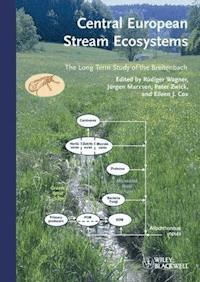
The cover picture shows a view (looking upstream direction) into the Breitenbach valley during spring, with the first greenhouse constructed over the stream for collecting emerging insects in 1969 in the background (photo: Jürgen Marxsen). The simplified scheme of carbon flow was designed after Figure 6.2 from this book. The photo of the Trichopteran species Chaetopteryx villosa was kindly provided by Dipl.-Biol. Brigitta Eiseler.
Limit of Liability/Disclaimer of Warranty: While the publisher and author have used their best efforts in preparing this book, they make no representations or warranties with respect to the accuracy or completeness of the contents of this book and specifically disclaim any implied warranties of merchantability or fitness for a particular purpose. No warranty can be created or extended by sales representatives or written sales materials. The Advice and strategies contained herein may not be suitable for your situation. You should consult with a professional where appropriate. Neither the publisher nor authors shall be liable for any loss of profit or any other commercial damages, including but not limited to special, incidental, consequential, or other damages.
Library of Congress Card No.: applied for
British Library Cataloguing-in-Publication Data
A catalogue record for this book is available from the British Library.
Bibliographic information published by the Deutsche Nationalbibliothek
The Deutsche Nationalbibliothek lists this publication in the Deutsche Nationalbibliografie; detailed bibliographic data are available on the Internet at <http://dnb.d-nb.de>.
© 2011 Wiley-VCH Verlag & Co. KGaA, Boschstr. 12, 69469 Weinheim, Germany
Wiley-Blackwell is an imprint of John Wiley & Sons, formed by the merger of Wiley’s global Scientific, Technical, and Medical business with Blackwell Publishing.
All rights reserved (including those of translation into other languages). No part of this book may be reproduced in any form – by photoprinting, microfilm, or any other means – nor transmitted or translated into a machine language without written permission from the publishers. Registered names, trademarks, etc. used in this book, even when not specifically marked as such, are not to be considered unprotected by law.
Print ISBN: 978-3-527-32952-6
ePDF ISBN: 978-3-527-63467-5
ePub ISBN: 978-3-527-63466-8
Mobi ISBN: 978-3-527-63468-2
oBook ISBN: 978-3-527-63465-1
Foreword
This is an astonishing book and a great achievement by the small band of scientists who have written it. The Max Planck Society’s “Flußstation” (River Station) worked from 1951 to 2006 at Schlitz, in Hessen in central Germany, very largely on the ecology of a single small stream, The Breitenbach (in English “Wide Brook” – which it really is not!) This concentration of effort was partly because the larger River Fulda, of which the Breitenbach is a first order tributary, had become very polluted, and it offered a more “pristine” ecosystem for study. The program was initiated by two giants of early stream ecology, whose names may not now be well known to modern students, certainly non-German ones. Joachim Illies was the founder of the “river zonation” school of lotic ecologists and Karl Müller was the originator of the eponymous “Müller’s colonization cycle”. Their pioneering work was carried on by a small team of scientists (five at any one time) plus assistants, mainly under the leadership of Peter Zwick, and this book is a testament to their dedication, persistence, and skill. This book is a goldmine, a unique compendium of detailed information on a stream (crucially including the underlying data that will be made publicly accessible). I urge students of the next generation to exploit and pore over this material because quality and reliability (of taxonomy and methodology) shine through the pages; these were all very highly skilled aquatic ecologists working with the best equipment, and the results are the best.
Let me mention a few highlights from the more than 600 pages. The list of animals from this tiny stream contains more than 2000 species! There are 820 species of insects alone! This is an order of magnitude greater than the species list from “my own” Broadstone Stream (Hildrew, 2009), another well-known stream community and a system of a similar size. The Breitenbach is in a highly diverse area of central Europe (not a biotically impoverished island), is not acidified or excessively enriched, and almost every animal group has been studied by an expert at some time over the last 50 years. Emerging adult insects were also trapped and specifically identified continuously from 1969 to 2006, thus accumulating rare species. Indeed, the high quality of the taxonomy applied to this system is a real highlight of the research program. This also applies to the algal work, in which live diatoms were identified, greatly increasing one’s confidence that the many species identified from the different microhabitats were active in the stream, and not merely allochthonous inputs. The lesson is that the less exhaustive studies that we routinely see must greatly underestimate total diversity because the sample size is small and because “difficult” groups are ignored. But what is the meaning of this diversity? Ecosystem processes in less diverse systems seem to proceed perfectly adequately. Does this indeed point to a high redundancy in stream ecosystems?
For those concerned with climate change, mean water temperature in the Breitenbach has increased only by about 0.85°C in 37 years (0.023°C year−1), whereas air temperature has increased by 1.8°C in only 20 years (0.08°C year−1). Warming in this spring-fed system has thus been rather slight and, perhaps not surprisingly, evidence for biological responses is muted. The date of emergence has not changed significantly for most species, though many show some indication of earlier (and a few of later) emergence. Exhaustive chemical analyses of the water have been undertaken. Not surprisingly, nutrient concentrations are low, but alkalinity and acid-neutralizing capacity showed some sign of decline over the whole record (in an area where acid depositions have been quite serious though decreasing over the last 20 years or so). The stream is circumneutral, however, and is not acidified (pH 6.5–7.8).
The macrofaunal community has also been remarkably persistent, the dominant species having remained almost unchanged over 37 years, though numerical fluctuations have been large. Year to year fluctuations in stream discharge, through a variety of direct and indirect effects but mainly via determining habitat availability for the guilds of scrapers and filterers, seem proximally associated with these shifts in density. Very large populations of trichopteran grazers, such as Agapetus fuscipes and Tinodes rostocki, dominate the epilithic community when clean stone surfaces are available, and the former appears to regulate algal biomass via grazing and to compete intraspecifically for food.
The microbiology (particularly bacteriology, there is less information on the fungi) of the system has been exceptionally well described, as have organic budgets. There have been no particular surprises here, but lotic systems for which there are reliable and complete measurements of flows in the microbial loop are few, and this is an absolutely prime example. Bacteria are responsible for 78% of heterotrophic respiration and 59% of total system respiration, accounting for 36% of heterotrophic biomass and most (71%) of heterotrophic production. About 50% of bacterial production enters the higher food web, 35% via protozoa, and 15% by direct consumption via the macrofauna. About 10% of carbon assimilated by the macrofauna is bacterial, the latter getting most carbon direct from dead organic matter. Bacterial production is similar to that of phototrophs, even in this well-lit, open stream, at about 0.2 kg m−2 year−1. The system is dominated by allochthonous inputs, with about 1.02 kg m−2year−1 of dissolved organic matter and 0.42 kg m−2 year−1 of particulate organic matter. The chemical nature of dissolved organic matter has been unusually well characterized, as has the nature of flowing and interstitial water. Work on the microbiology and organic carbon budget of the Breitenbach has been of an international standard and deserves much more recognition. Overall, the carbon budget of the Breitenbach for the period 1973–1998 balances, with total inputs of 1.88kg m−2 year−1 and outputs of 1.84 kg m−2 year−1, with allochthonous inputs about three times that from autochthonous sources. None of this is particularly surprising, a small, headwater stream dominated by allochthonous inputs and bacteria being major metabolic drivers of the system, but the quality of the measurements underlying these figures is first rate.
As it was at its completion, the “Breitenbach project” was in some senses science from an earlier age, frankly largely descriptive and driven by an intimate knowledge of natural history and conventional taxonomy. This is at the same time its strength, and it has hitherto been very much underestimated as a “model ecosystem”, and its weakness. Along with the solidity, reliability, and sheer quantity of the data, there have been disappointments and blemishes, which are partly scientific and partly, I suspect, due to the dynamics of the team. It was a frustration that the measurement of insect emergence, motivated initially by the notion that it would lead to a “short-hand” measurement of secondary production, did not in the end do so. The book spends some time detailing the problems of measuring emergence quantitatively. Surprisingly also, the measurements of emergence were not accompanied by a sufficient campaign to measure benthic density. I feel that the authors are too pessimistic in their dismissal of more direct ways of measuring secondary production. There is almost nothing about vertebrates in this book, and they are more or less dismissed as having “no role”. This is surely an overstatement; there is a population of brown trout in the lower reaches of the Breitenbach, yet it has not been characterized quantitatively. Work on the fish would surely have led to an appreciation of links between the aquatic food web and the riparian system, via subsidies to fish production from terrestrial resources. The team also had unrivalled measures of potential reverse subsidies, of the stream to riparian predators via insect emergence, long before they were appreciated elsewhere.
Finally, of course, we have to mention the problem of replication. This is one system, though some attempt is made to compare it with one or two other streams in the area. This is always a problem when producing a model ecosystem (though the book itself never describes the Breitenbach as a model). These are essential in ecology but only of use when they can be compared with others that differ in well-characterized ways. With hindsight, it would surely have been wise to set up a network of systems where comparisons with the “jewel in the Crown”, the Breitenbach itself, would have been possible, thus increasing the generality of the inferences drawn.
I want to end my foreword by looking forward – since I really hope this is not a dead end for research on this system. As I said at the outset, the data are there and offer wonderful opportunities for the imaginative and curious. But if I were standing at the threshold of a new program, with all the battery of techniques in ecology now available, the Breitenbach and its heritage would be a wonderful place to start. I have no remit to develop a new program, but an obvious start would be to characterize the diversity using molecular methods (this was begun with the bacteria) and to place this stream within a meta-community of its neighbors. I would look further at groundwater–stream linkages – for groundwater is the new frontier for freshwater ecologists – and particularly look at the possibility of subsidies to the food web from chemoautotrophic production (via methane, for instance). My third line would be to develop a food web for the Breitenbach, embedded within the terrestrial system, using stable isotopes, measurements of fatty acids markers, and the rest. This book should be a new beginning, not an epitaph.
Alan Hildrew
Reference
Hildrew, A.G. (2009) Sustained research on stream communities: a model system and the comparative approach. Advances in Ecological Research, 41, 175–312.
List of Contributors
Georg Becker
Universität of Cologne
Cologne Biocenter
Department of General Ecology
Zülpicher Str. 47 b
50674 Köln
Germany
Heino Christl
2 Poplar Way
Harrogate HG1 5PR
United Kingdom
Eileen J. Cox
The Natural History Museum
Department of Botany
Cromwell Road
London SW7 5BD
United Kingdom
Thomas G. Horvath
Director of Environmental Sciences Program
State University New York College at Oneonta
Oneonta, NY 13820
USA
Reimo Lieske
Im Alpenblick 10
8400 Winterthur
Switzerland
Jürgen Marxsen
Justus Liebig University
Department of Animal Ecology
Heinrich-Buff-Ring 26-32
35392 Gießen
Germany
Michael Obach
San Telmo 11-3° D.
E-20750 Zumaia
Spain
Joachim Reidelbach
Negelerstrase 53
72764 Reutlingen
Germany
Hans-Heinrich Schmidt
Schlesische Str. 22
36110 Schlitz
Germany
Rüdiger Wagner
University of Kassel
FB 10 Natural Sciences – Biology
Heinrich-Plett-Straße 40
34132 Kassel
Germany
Peter Zwick
Schwarzer Stock 9
36110 Schlitz
Germany
Acknowledgments
The Max-Planck-Gesellschaft zur Förderung der Wissenschaften (MPG), its gremia and officers, and the directors and staff at the head office of the former Max-Planck-Institute of Limnology (Plön) are sincerely thanked for long-lasting funding and support of the Limnologische Fluss-Station Schlitz. We continued and developed a study initiated by the late Prof. J. Illies, who is gratefully remembered. After his sudden death, Prof. J. Overbeck (Plön) arranged for the continued existence of the Schlitz laboratory for which we are very grateful.
Visiting colleagues and students completing their theses at the Fluss-Station funded by the MPG, the Deutsche Forschungsgemeinschaft (DFG), or the Deutscher Akademischer Austauschdienst (DAAD) contributed to our study. They are too numerous to be listed here but their names appear in the text and the references of this book. We thank them all!
We are most grateful for the busy dedicated work of the team at the Fluss-Station Schlitz, everybody contributing in his specific capacity. We particularly thank our highly specialized and experienced technicians who participated directly in our everyday scientific work, some for decades:
Ingrid Aszmutat, Evelyn Etling, Dr. Beate Knöfel, Carla Kothe, Birgit Landvogt-Piesche, Carmen Möller, Agnes Palotay-Ries, Hannelore Quast-Fiebig, Gisela Stüber, Irene Tade, Elke Turba.
We are pleased to acknowledge taxonomic and ecological expertise, advice, information, and help from the following:
Dr. W. Barkemeyer (Flensburg), Dr. C. Becker (Aachen), R. Bellstedt (Gotha), Dr. R. Brinkmann (Schlesen), Dr. R. Gerecke (Tübingen), Dr. T. Gregor (Schlitz), Dr. P. Havelka (Karlsruhe), Dipl. Biol. M. Hecht (Herborn), Dr. R. Heiß (Frankfurt/Oder), H. Hergersberg (Hürtgenwald), Dr. H.-J. Krambeck (Plön), P.-W. Löhr (Mücke), Dr. P. Martin (Kiel), Dr. A. Piechocki, Łodz, Dr. A. Pont (Oxford), Dr. H. Reusch (Suhlendorf), W. Schacht (Schöngeißing), Dr. M. Spiess (München), Dr. U. Werneke (Kleve), Dr. K.-P. Witzel (Plön), Prof. F. Wojtas † (Łodz), Prof. Dr. T. Zatwarnicki (Wrocław), Dr. H. Zwick (Schlitz).
The Editors
Schlitz, November 2010
1
Introduction
Peter Zwick
1.1 History of the Limnologische Flussstation Schlitz
After World War II, Germany was divided into four occupation zones and free travel to neighboring countries was not possible. At that time, the Rivers Weser and Fulda formed the only major German river continuum that was accessible over its entire length. However, most of the second constituent tributary of the Weser, the River Werra in the Soviet Zone, was inaccessible. Therefore, the Fulda and Weser were the natural choice as study objects for a group of five biology students at the University of Göttingen who hoped to found an institute dedicated to stream limnology.
Martin Scheele, Joachim Illies, Wolfgang Schmitz, Karl Müller, and Ernst-Joseph Fittkau received local support from Prof. Demeter Beling and Dr. Adelaide Beling, German ichthyologists and microbiologists who had previously worked on the Dnjepr in Russia. Prof. August Thienemann, head of the famous Hydrobiologische Anstalt der Max-Planck-Gesellschaft (MPG) at Plön, soon became mentor and supporter of the enthusiastic group.
In 1949, the Belings and the five students sampled the River Fulda during what became a real expedition, under the adventurous conditions of post-war Germany. The group made contact with sport fishermen at Schlitz who expressed interest in, and eventually funded, an exhibition of freshwater fauna and flora entitled “Das Leben unserer Heimatgewässer” which was shown in the sportshall at Schlitz, in the autumn of 1949. The illustrious Otto Hartmann Graf von Schlitz, genannt von Görtz, visited and decided to provide the young students with a building to serve as a base for further studies of the River Fulda. He had his sculptor grandfather’s former studio (first built in 1876) completely rebuilt and donated this plus some land and fishing rights to the MPG (Figure 1.1).
Figure 1.1 The original building of the Limnologische Flussstation in 1951, and the name plate on its front wall.
The opening ceremony of the Schlitz institute was held on 4 June 1951, in the presence of Count and Countess v. Görtz, Otto Hahn, President of the MPG, A. Thienemann from Plön, D. v. Denffer of the Justus-Liebig-Universität at Giessen, and many other guests. The choice of name, “Limnologische Flussstation” (Figure 1.2)1), anticipated a change in scientific emphasis, which manifested itself years later when the long-established Hydrobiologische Anstalt at Plön became the Max-Planck-Institut (MPI) fuer Limnologie.
Figure 1.2 The first extension building (1959; top left) is plastered and stands at a right angle to the original half-timbered building. The laboratory section added in 1995 extends the old building longitudinally and copies its half-timbered style (bottom). The Hallenmühle (top right) stands across the road opposite the main building.
J. Illies held the single scientist’s position at the Limnologische Flussstation Schlitz, but the salary was shared between the five founders until the other four found themselves different positions. Later, a second scientist’s position was installed by the MPG. Since 1982, the payroll included 15 positions, of which five were scientists. The original building soon became too small. In 1959 the MPG added a large extension to the original building, and in 1969 Graf Otto Hartmann donated a former mill opposite the Flussstation (Figure 1.2). The MPG had the Hallenmühle transformed into a laboratory and office building. Great efforts were made to turn the millrace running through the building into a living stream laboratory. However, at that time the poor water quality of the River Schlitz precluded the maintenance of the stream fauna or any undisturbed experiments. Operating artificial streams with recirculating river water from a large reservoir was not a long-term viable alternative. Littoral filtrate of the river water was used for several years, mainly to run biofilm experiments. Eventually the room was dedicated to other technical equipment. In the main building, laboratory space was at a premium, until the MPG added a dedicated laboratory section in 1995.
The scientific activities of the Limnologische Flussstation are evidenced in the publication list, with contributions from staff members, visiting scientists, and, not least, graduate students working on master and doctoral theses. Research focused on a variety of subjects, with a change of emphasis over time.
In the first years, under Joachim Illies, the focus was on methodological studies, regional limnology and the regular sequence of characteristic biocoenoses along rivers. Much of this appeared in the Jahresberichte (later: Berichte) der Limnologischen Flussstation Freudenthal, the station’s own periodical. The required taxonomic expert knowledge of stream fauna was largely developed by members of the Schlitz group themselves. Taxonomic expertise, an indispensible precondition for ecological studies, always remained a stronghold of the Flussstation.
Based on intimate knowledge of the Mölle stream in North-Rhine-Westfalia and of the River Fulda, J. Illies developed a concept of the biocenotic structure of streams (Illies, 1955), which he later extended as “Versuch einer Allgemeinen Biozönotischen Gliederung der Fließgewässer” (Illies, 1961). Only after organisms have been identified can their functions and roles in the ecosystem be analyzed. Illies’ (1961) concept of river zonation therefore logically preceded the River Continuum Concept (Vannote et al., 1980). The first describes the discontinuous distribution of biocoenoses along streams, the second the continuous change of functions along river continua. Although at first glance the concepts may seem contradictory, they are actually two sides of the same coin.
From 1957 onwards, J. Illies worked in the main institute at Plön while K. Müller led the Flussstation. Studies on organismal drift and fish biology then predominated. In 1965, the Flussstation became an outlier of the new Department of Microbial Ecology of J. Overbeck at Plön. J. Illies returned to Schlitz, as Prof. Overbeck’s local representative, but because of these changes, several studies performed at Schlitz by K. Müller and collaborators were published elsewhere and are missing from our publication list (http://edoc.mpg.de/ins/22/col/399).
For some years J. Illies and his students resumed their studies on the River Fulda before work at the Flussstation concentrated on two, first-order streams near Schlitz. Meanwhile the River Fulda had become heavily polluted while the small Breitenbach and Rohrwiesenbach were hardly disturbed and, because of their small size, more amenable to quantitative ecological studies. In both streams, Chordata play no role and invertebrates, especially insects and amphipods, dominate. J. Illies attempted to quantify the secondary production of stream insects by using emergence traps, initiating a series of emergence trap studies. Differences down the Breitenbach required several traps along its length, at the expense of work on the Rohrwiesenbach. A general survey of the Breitenbach fauna was performed and, for some time, amphipod ecology also received special attention (M.P.D. Meijering and students, compare the publication list of the Flussstation [http://edoc.mpg.de/ins/22/col/399]).
In June 1982, J. Illies suddenly died. As part of J. Overbeck’s department the Limnologische Flussstation Schlitz was not closed and, in 1983, P. Zwick became head of the station and chose to continue work on the Breitenbach, to fully exploit previous work done there. When J. Overbeck retired, the MPG decided to continue the Schlitz station as an independent working group of the MPI of Limnology at Plön.
The various scientific activities of the LFS attracted visitors from all continents. A few spent sabbaticals in Schlitz, but most guests were funded by the MPG, the Deutsche Forschungsgemeinschaft (DFG) or the Deutscher Akademischer Austauschdienst (DAAD), staying between one month and two years. In a few cases, external funding from the DFG was available for longer periods. The Flussstation hosted several German and international limnological congresses, until limnological associations became too large to be accomodated within the small township of Schlitz. Among other congresses held at the LFS, were the First International Congress on Groundwater Ecology organized in conjunction with the Third International Colloquium on Gammarus and Niphargus (1975), and the Sixth International Symposium on Plecoptera (1977). The Deutsche Diatomologen Treffen was initiated in Schlitz in 1987, meeting annually since then and going on to become the Central European diatomists meeting. The Rhithron Ecology Group was also founded at Schlitz (1988).
Staff of the LFS were always actively involved in academic teaching. Graduate students from all parts of Germany came to work at Schlitz for their Diploma or Doctorate. Students of the LFS were treated as in-faculty students by the universities at Giessen, Kassel, Kiel, and Marburg. Cooperation with other universities was no exception.
The choice of a successor after the retirement of Prof. Overbeck indicated that the MPG was redirecting the institute at Plön, and it has now become the Institute of Evolutionary Biology. When the heads of the Department of General Limnology (Prof. W. Lampert), the Working Group on Tropical Ecology (Prof. W. Junk), and the LFS retired in short succession, from autumn 2006 onwards, limnology was discontinued in the main institute and the LFS was closed, after 56 years.
The present book summarizes some of the work done on the Breitenbach by the Schlitz River Station.
Note
1) See Fittkau (1992, 2001) for the history of the epithet “Freudenthal”, further donors and additional offices operating on the Weser and so on for some limited time.




