


6,99 €
Mehr erfahren.
- Herausgeber: Parkstone International
- Kategorie: Geisteswissenschaft
- Sprache: Englisch
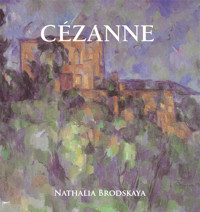
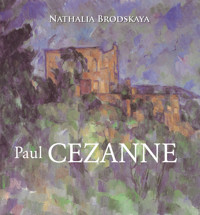
Since his death 100 years ago, Cézanne has become the most famous painter of the nineteenth century. He was born in Aix-en-Provence in 1839 and the happiest period of his life was his early youth in Provence, in company with Emile Zolá, another Italian. Following Zolá’s example, Cézanne went to Paris in his twenty-first year. During the Franco-Prussian war he deserted the military, dividing his time between open-air painting and the studio. He said to Vollard, an art dealer, “I’m only a painter. Parisian wit gives me a pain. Painting nudes on the banks of the Arc [a river near Aix] is all I could ask for.” Encouraged by Renoir, one of the first to appreciate him, he exhibited with the impressionists in 1874 and in 1877. He was received with derision, which deeply hurt him. Cézanne’s ambition, in his own words, was “to make out of Impressionism something as solid and durable as the paintings of the museums.” His aim was to achieve the monumental in a modern language of glowing, vibrating tones. Cézanne wanted to retain the natural colour of an object and to harmonise it with the various influences of light and shade trying to destroy it; to work out a scale of tones expressing the mass and character of the form. Cézanne loved to paint fruit because it afforded him obedient models and he was a slow worker. He did not intend to simply copy an apple. He kept the dominant colour and the character of the fruit, but heightened the emotional appeal of the form by a scheme of rich and concordant tones. In his paintings of still-life he is a master. His fruit and vegetable compositions are truly dramatic; they have the weight, the nobility, the style of immortal forms. No other painter ever brought to a red apple a conviction so heated, sympathy so genuinely spiritual, or an observation so protracted. No other painter of equal ability ever reserved for still-life his strongest impulses. Cézanne restored to painting the pre-eminence of knowledge, the most essential quality to all creative effort. The death of his father in 1886 made him a rich man, but he made no change in his abstemious mode of living. Soon afterwards, Cézanne retired permanently to his estate in Provence. He was probably the loneliest of painters of his day. At times a curious melancholy attacked him, a black hopelessness. He grew more savage and exacting, destroying canvases, throwing them out of his studio into the trees, abandoning them in the fields, and giving them to his son to cut into puzzles, or to the people of Aix. At the beginning of the century, when Vollard arrived in Provence with intentions of buying on speculation all the Cézannes he could get hold of, the peasantry, hearing that a fool from Paris was actually handing out money for old linen, produced from barns a considerable number of still-lifes and landscapes. The old master of Aix was overcome with joy, but recognition came too late. In 1906 he died from a fever contracted while painting in a downpour of rain.
Das E-Book können Sie in Legimi-Apps oder einer beliebigen App lesen, die das folgende Format unterstützen:
Seitenzahl: 40
Veröffentlichungsjahr: 2011


Author: Nathalia Brodskaya
© Confidential Concepts, worldwide, USA
© Parkstone Press International, New York, USA
ISBN978-1-78160-586-8
Nathalia Brodskaya
TABLE OF CONTENTS
1. Portrait of the Artist, ca. 1873-1876.
2. Portrait of Ivan Morozov.
1.Portrait of the Artist,ca. 1873-1876.
Musée d’Orsay, Paris.
2.Portrait of Ivan Morozov.
At the turn of the century, Cézanne began to be taken more and more seriously by the avant-garde: Matisse, Picasso, Braque, Vlaminck, Derain, and others, among them young Russian painters whose new art owed much to the master from Provence. However, many of Cézanne’s contemporaries did not realize his true greatness. When Paul Cézanne died in October 1906 in Aix-en-Provence, the Paris newspapers reacted by publishing a handful of rather equivocal obituaries.“Imperfect talent,”“crude painting,”“an artist that never was,”“incapable of anything but sketches,”owing to“a congenital sight defect”—such were the epithets showered on the great artist during his lifetime and repeated at his graveside.
This was not merely due to a lack of understanding on the part of individual artists and critics, but above all to an objective factor—the complexity of his art, his specific artistic system which he developed throughout his career and did not embodyin totoin any single one of his works. Cézanne was perhaps the most complex artist of the nineteenth century.
3.The Four Seasons,1859-1860.
Musée du Petit Palais, Paris.
“One cannot help feeling something akin to awe in the face of Cézanne’s greatness,”wrote Lionello Venturi.“You seem to be entering an unfamiliar world—rich and austere with peaks so high that they seem inaccessible.”[1]It is not in fact an easy thing to attain those heights.
Today Cézanne’s art unfolds before us with all the consistency of a logical development, the first stages of which already contain the seeds of the final fruit. But to a person who could see only separate fragments of the whole, much of Cézanne’sœuvre must naturally have seemed strange and incomprehensible. Most people were struck by the odd diversity of styles and the differing stages of completion of his paintings.
In some paintings, one saw a fury of emotion, which bursts through in vigorous, tumultuous forms and in brutally powerful volumes apparently sculpted in colored clay; in others, there was rational, carefully conceived composition and an incredible variety of color modulations. Some works resembled rough sketches in which a few transparent brushstrokes produced a sense of depth, while in others, powerfully modeled figures entered into complex, interdependent spatial relationships—what the Russian artist Alexei Nuremberg has aptly called“the tying together of space.”[2]Cézanne himself, with his constant laments about the impossibility of conveying his own sensations, prompted critics to speak of the fragmentary character of his work. He saw each of his paintings as nothing but an incomplete part of the whole.
Often, after dozens of interminable sessions, Cézanne would abandon the picture he had started, hoping to return to it later. In each succeeding work he would try to overcome the imperfection of the previous one, to make it more finished than before:“I am long on hair and beard but short on talent.”[3]Exactly a month before his death, Cézanne wrote toÉmile Bernard:“Shall I attain the aim so ardently desired and so long pursued?
I want to, but as long as the goal is not reached, I shall feel a vague malaise until I reach the haven, that is, until I achieve a greater perfection than before, and thus prove the tightness of my theories.”
Such thoughts, shot through with bitterness, are a tragic theme recurring in Cézanne’s correspondence and conversations with his friends. They are the tragedy of his whole life—a tragedy of constant doubting, dissatisfaction, and lack of confidence in his own ability. But here, too, was the mainspring of his art, which developed as a tree grows or a rock forms—by the slow accumulation of more and more new layers on a given foundation.
4.




