


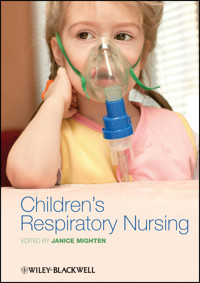
Children's Respiratory Nursing E-Book
49,99 €
Mehr erfahren.
- Herausgeber: John Wiley & Sons
- Kategorie: Fachliteratur
- Sprache: Englisch
Children's Respiratory Nursing is a comprehensive, patient-centred text providing up-to-date information about the contemporary management of children with respiratory conditions. It looks at acute and chronic respiratory conditions in both primary and secondary health care sectors and explores the subject from a child- and family-focused perspective.
Children’s Respiratory Nursing is divided into four user-friendly sections:
- The first section provides a general background for children’s respiratory nursing
- Section two explores the various investigations that aid diagnosis and treatment, such as assessment of defects in airflow and lung volume, oxygen therapy, and long term ventilation
- Section three looks at respiratory infection and provides an overview of the common infections in children with reference to national and local guidelines
- The final section considers the practical issues that impact on children’s nurses - the transition from children to adult services, legal and ethical issues and the professional communication skills needed for dealing with children and their families
This practical text is essential reading for all children’s nurses who have a special interest in respiratory conditions and would like to develop a greater level of understanding of the management required.
Special Features
- Examples of good practice provided throughout
- Includes evidence-based case studies
- Explores care in both hospital and community settings
- A strong practical approach throughout
Sie lesen das E-Book in den Legimi-Apps auf:
Seitenzahl: 540
Veröffentlichungsjahr: 2012
Ähnliche




















Contents
Contributors
Foreword
Preface
Acknowledgements
Introduction: the evolution of children’s respiratory nursing
Section I The fundamental principles of respiratory nursing
Chapter 1 Anatomy and physiology of the respiratory system
Introduction
Anatomy of the upper respiratory tract
Anatomy of the lower respiratory tract
Surface anatomical landmarks
Development of the respiratory system
Changes in anatomy with age
Physiology of the respiratory system
Conclusion
Chapter 2 Homeostasis and the respiratory system
Introduction
Respiratory rate, carbon dioxide and pH
Carbon dioxide dissolved in the blood regulates the respiratory rate
In disease homeostasis is disrupted
The regulation of blood pH is called acid–base balance and is assessed with blood gas analysis
Conclusion
Chapter 3 Nursing assessment, history taking and collaborative working
Introduction
Assessment
History taking
Consultation skills
Collaborative working
Conclusion
Section II Respiratory investigations and assessments
Chapter 4 Investigations
Chest x-ray
Bronchoscopy and bronchial lavage
Nursing management
Conclusion
Chapter 5 Assessment of defects in airflow and lung volume using spirometry
Respiratory assessment
Spirometry
Nursing management
Conclusion
Chapter 6 Oxygen therapy
Pathophysiology of oxygenation
Hypoxaemia/hypoxia
Respiratory failure
Pulse oximetry
Home oxygen guidelines
Long-term oxygen therapy
Nursing management
Conclusion
Chapter 7 Long-term ventilation
Introduction
Normal respiration
Pathophysiological aspects
Indications for long-term ventilation
Non-invasive ventilation: part of a package of care
Outcomes of long-term ventilation
Technical aspects of long-term ventilation: equipment
Care of the child with long-term ventilation
Care in the community
Conclusion
Section III Respiratory conditions
Chapter 8 Management of lung infection in children
Introduction
Bronchiolitis
Pneumonia
Empyema
Infectious and non-infectious causes of acute stridor in children
Tuberculosis in children
Conclusion
Chapter 9 Pharmacology and the respiratory system
Introduction
How drugs work
Frequently administered respiratory drugs
The nurse’s role in drug administration
Conclusion
Chapter 10 Management of asthma and allergy
Introduction
Definition of asthma
Treatment of asthma
Acute severe asthma
Nursing management
Care in the community
Conclusion
Chapter 11 Complications with lung development and progressive airway injury
Chronic lung disease of prematurity
Interstitial lung disease
Bronchiectasis
Congenital abnormalities (anomalies)
Nursing management of neonatal chronic lung disease and home oxygen
Conclusion
Chapter 12 Inherited lung disease in children
Primary ciliary dyskinesia
Cystic fibrosis
Physiotherapy and promoting independence
Exercise
Physiotherapy management of babies and young children
Physiotherapy management of older children and teenagers
Nursing management for cystic fibrosis
Care in the community
Conclusion
Chapter 13 Lung transplantation in children
Introduction
Indications for lung transplantation
Patient selection
The lung transplant assessment process
Listing for lung transplantation and donor allocation
Care of the patient on the transplant waiting list
Nursing care of the lung transplant patient
Long-term shared care of the transplant patient
Conclusion
Section IV Practical elements and governance issues
Chapter 14 Transition to adult services
Introduction
Transition as a journey
Hospital youth work
Transition programmes
Conclusion
Chapter 15 Professional issues
Introduction
Legal context of practice
Evidence-based practice
Nurse prescribing
Law and ethics
Quality assurance
National documents
Conclusion
Chapter 16 Communication: a holistic approach
Communication in healthcare
General communication problems
Improving communication
Communication with parents
Communication with colleagues
Written communication
Communication skills in the context of nursing
Reflective practice, self-awareness and boundaries
Conclusion
Glossary
Abbreviations
Answers
Index
This edition first published 2013 © 2013 by Blackwell Publishing Ltd
Wiley-Blackwell is an imprint of John Wiley & Sons, formed by the merger of Wiley’s global Scientific, Technical and Medical business with Blackwell Publishing.
Registered OfficeJohn Wiley & Sons, Ltd, The Atrium, Southern Gate, Chichester, West Sussex, PO19 8SQ, UK
Editorial Offices9600 Garsington Road, Oxford, OX4 2DQ, UKThe Atrium, Southern Gate, Chichester, West Sussex, PO19 8SQ, UK2121 State Avenue, Ames, Iowa 50014-8300, USA
For details of our global editorial offices, for customer services and for information about how to apply for permission to reuse the copyright material in this book please see our website at www.wiley.com/wiley-blackwell.
The right of the author to be identified as the author of this work has been asserted in accordance with the UK Copyright, Designs and Patents Act 1988.
All rights reserved. No part of this publication may be reproduced, stored in a retrieval system, or transmitted, in any form or by any means, electronic, mechanical, photocopying, recording or otherwise, except as permitted by the UK Copyright, Designs and Patents Act 1988, without the prior permission of the publisher.
Designations used by companies to distinguish their products are often claimed as trademarks. All brand names and product names used in this book are trade names, service marks, trademarks or registered trademarks of their respective owners. The publisher is not associated with any product or vendor mentioned in this book. This publication is designed to provide accurate and authoritative information in regard to the subject matter covered. It is sold on the understanding that the publisher is not engaged in rendering professional services. If professional advice or other expert assistance is required, the services of a competent professional should be sought.
Library of Congress Cataloging-in-Publication Data
Children’s respiratory nursing / edited by Janice Mighten. p. ; cm. Includes bibliographical references and index.
ISBN 978-1-4051-9775-5 (pbk. : alk. paper) – ISBN 978-1-118-27826-0 (ebook) – ISBN 978-1-118-27827-7 (epub) – ISBN 978-1-118-27825-3 (emobi)I. Mighten, Janice.[DNLM: 1. Respiratory Tract Diseases–nursing. 2. Child. 3. Pediatric Nursing. WY 163] 616.2′004231–dc23
2012022788
A catalogue record for this book is available from the British Library.
Wiley also publishes its books in a variety of electronic formats. Some content that appears in print may not be available in electronic books.
Cover image: © Leonid Ikan, Fotolia.comCover design by Meaden Creative
Contributors
Jayesh Bhatt MD, DCH (Lond), FRCPCHConsultant Respiratory Paediatrician, Nottingham Children’s Hospital, NottinghamConrad Bosman MBBS, MRCPCHPaediatric Registrar, Nottingham Children’s Hospital, NottinghamPhil Brewin BSc, MScConsultant Clinical Psychologist, Nottingham Children’s Hospital, NottinghamKatherine Carter RSCNPreviously Advanced Nurse Practitioner, Transplant Team, Great Ormond Street Hospital for Children NHS Trust, LondonDebra Forster RGN, RSCN, BSc(Hons)Specialist Practitioner in Children’s Community Nursing, Children’s Respiratory/Allergy and Community Nurse, Nottingham Children’s Hospital, NottinghamChhavi Goel MBBS, MD, MRCPCHConsultant Paediatrician, Burton Hospitals NHS Foundation Trust, Burton on TrentDonna Hilton Dip HE Youth and CommunityYouth Service Manager, Nottingham Children’s Hospital, NottinghamJanice Mighten RGN, RSCN, MSc, BMed Sci(Hons)Specialist Practitioner in Children’s Community Nursing, Children’s Respiratory/Community Nurse Specialist, Nottingham Children’s Hospital, NottinghamAmmani Prasad FCSPCF Co-ordinator/Senior Research Physiotherapist, Great Ormond Street Hospital for Children NHS Trust, LondonAndrew Prayle BMedSci, BMBS, MRCPCHResearch Fellow, Division of Child Health, School of Clinical Sciences, University of Nottingham, Nottingham Children’s Hospital, NottinghamAlan R. Smyth MA, MBBS, MRCP, MD, FRCPHProfessor of Child Health, Division of Child Health, School of Clinical Sciences, University of Nottingham; Honorary Consultant in Paediatric Respiratory Medicine, Nottingham Children’s Hospital, NottinghamHelen Spencer MB, ChB, DCH, MRCPCH, MDConsultant in Transplant and Respiratory Medicine, Great Ormond Street Hospital for Children NHS Trust, LondonSarah Spencer RN(Child), BSc(Hons)Specialist Practitioner in Children’s Community Nursing, Nottingham Children’s Hospital, NottinghamDavid Thomas MB, CHB, DCH, MRCP (UK), FRICPCHPaediatric Consultant, Nottingham Children’s Hospital, NottinghamHarish Vyas FRCP, FRCPCHProfessor in PICU and Paediatric Respiratory Medicine, Nottingham Children’s Hospital, NottinghamBeverley Waithe BSc(Hons), RN(Child)Children’s Community Matron, Nottingham Children’s Hospital, NottinghamCaroline Youle RGN, RSCNChildren’s Respiratory Nurse Specialist, Nottingham Children’s Hospital, Nottingham
Foreword
I am delighted to write the foreword to this excellent book. It is a real honour for me as many of the authors work within the senior nursing and medical team at the Nottingham Children’s Hospital. I know that nurses regularly working within this area of practice with children and young people will welcome this textbook which discusses all aspects of respiratory care. It will also be an aide mémoire for nurse specialists, doctors and allied health professionals, and will be a standard reference for nursing students. Particular attention has been paid to standards within national guidelines that can support practice.
The book has also been designed to adopt a systematic manner in which it is presented. My opinion is that the reader will greatly benefit from this, starting with Chapter 1 as a revision tool covering the anatomy and physiology of the respiratory system. Each chapter then increases the reader’s knowledge, highlighting age-appropriate care. Transition to adult services is later covered in Chapter 14. Other professional nursing issues are also described in great detail which will improve the overall care for this patient group.
Children and young people are very different from adults. This is most evident to nurses when treating children diagnosed with illnesses similar to those of adults. For this reason, nurses need special skills when planning their care.
Congratulations first to the editor, Janice Mighten. Congratulations also to all the chapter authors, contributors and publisher.
The authors have given a wealth of knowledge that can only come from their extensive experience. Although this book is not meant to be exhaustive, it includes a wealth of information for all who are caring for children and young people with respiratory conditions.
This textbook will be a welcome addition to my collection.
Angela Horsley Clinical Lead, Nottingham Children’s Hospital
Preface
The ever-changing world of modern medicine has enabled healthcare professionals to provide good-quality care. The idea for this book was born out of experiences with a merger of children’s respiratory services and the need to provide a unified service based on quality and high standards. It is beyond the scope of this book to discuss every aspect of paediatric respiratory medicine, although a variety of conditions will be covered alongside the role of the children’s respiratory nurse specialist, working as an important member of the multidisciplinary team.
This book is aimed at qualified nurses caring for children with respiratory conditions. It may also be useful as a point of reference to nurse specialists and students from a variety of backgrounds such as nurses, doctors and allied health professionals. This is an essential text that will support your practice and is based on standards, including national guidelines. Also included are illustrations, images and case studies to aid learning.
How to use this book
The approach that has been adopted is straightforward to guide the reader through the book in a systematic manner.
The book is divided into three sections. Each chapter begins with learning objectives and some chapters will have case studies that share relevant experiences. Finally, most of the chapters conclude with questions and answers, to enable the reader to consolidate learning. A glossary is also included at the end of the book explaining some of the more complex medical terminology.
Section I begins with an introduction that provides an overview of the respiratory nursing role and how this has evolved over time. An insight is then given into the anatomy and physiology of the respiratory system for children in Chapter 1. The process of homeostasis and the effect on the respiratory system are outlined in Chapter 2. The significance of nursing assessment and history taking is discussed in Chapter 3. This concludes with consideration of collaborative working with professionals in primary and secondary care. Reference to this concept is also continued throughout the book.
Section II begins with an outline of investigations in Chapter 4; this provides an overview of the various investigations that aid diagnosis and treatment such as chest x-rays and bronchoscopy. The images allow the reader to gain an understanding of the exploratory nature of such investigations and the relevance to treatment options. The process of assessment continues in Chapter 5, providing an insight into the assessment of airflow, including the impact spirometry testing has on daily management of patients with respiratory conditions and the necessity of nursing support to facilitate the process. Chapter 6 takes the concept of airflow further in relation to oxygen therapy, assessment, monitoring and evaluation based on national guidelines. Chapter 7 pursues the theme of long-term ventilation for children. Although this focuses on physiological and practical aspects, consideration is also given to the ethical dilemmas associated with long-term ventilation for some children. The importance of adequate nursing support for the family is also a feature of this chapter.
Section III begins with Chapter 8 which introduces the topic of respiratory infection, providing an overview of the common infections in children such as bronchiolitis and pneumonia, again referring to national and local guidelines. Chapter 9 provides a brief overview of pharmacology and the drugs used in respiratory medicine. Chapter 10 provides current information surrounding the diagnosis, care and management of children with asthma, including reference to the most current version of the British Thoracic Society management guidelines. Some of the most common congenital abnormalities that affect children are the main focus of Chapter 11. The theme of long-term conditions continues in Chapter 12, with particular reference to genetically inherited diseases such as cystic fibrosis and primary ciliary dyskinesia. The concept of multidisciplinary working is illustrated explicitly and is also applied to many other disease processes throughout the book. Maximum treatment can eventually be ineffective for some children with chronic lung disease so lung transplantation needs to be considered as an option. This is covered in a comprehensive and systematic manner in Chapter 13, including all elements of nursing care.
Section IV moves away from the management of conditions and focuses on the pertinent issues that impact on practice for children’s nurses. Chapter 14 provides an overview of transition from children’s to adult services, with reference to youth work services that support transition. For all healthcare professionals, the legal context of practice and quality assurance is very much a necessity, and this is discussed in Chapter 15. Finally chapter 16 completes this theme with a very important overview of communication and the skills required for all professionals involved in caring for children and families, in particular with chronic and long-term conditions.
I hope that this book is a valuable read for all to enjoy.
Janice Mighten
Acknowledgements
There are so many people who have worked tremendously hard towards making this book happen. Firstly I would like to thank all the contributors who have given their time to make a fine contribution towards the development of this book, and the medical photography department at Nottingham University Hospital for their help with some of the images. The positive feedback and evaluation from the reviewers are also appreciated; many of their suggestions have been incorporated into the final text. To all friends, colleagues and family, thank you for your support throughout this long process, and thanks to the publishers who have facilitated the process throughout.
Introduction: the evolution of children’s respiratory nursing
Janice Mighten
Children’s Respiratory/Community Nurse Specialist, Nottingham Children’s Hospital
The health service has progressed over the years largely due to advancements in technology, which define how we treat many diseases. The changes that have occurred in nursing have been responses not only to technology but also to political influences and standards outlined within quality assurance frameworks. Other developments within the National Health Service (NHS) have also emerged, such as the concept of regional centres, generating high costs and resources. Consequently, nurses with specialist knowledge and skills were required, to meet the demand.
Many models of practice originated from North America and had some impact on elements of nursing care within the United Kingdom. This included specialist areas of nursing practice, which were recognised as early as 1979, within the Merrison Report, which also made reference to the concept of clinical nurse specialists (Middleton 2005).
Project 2000, introduced in the 1990s, changed nursing education and the concept of specialist areas (Holland et al. 2008). This provided specific areas of nurse training, such as the children’s branch, and also set the standard for changes within nurse education. This change has continued further with the important move towards nursing becoming an all-degree profession, with emphasis on quality and standards, as suggested by the Prime Minister’s Commission (Department of Health 2010). Basford and Slevin (2003) allude to such changes in nurse education and suggest that they have lead to the emergence of practitioners with qualities that include competency, safety and effective communication , which the modern health service demands.
Within the realms of paediatric respiratory medicine, we have witnessed the development of many nursing positions. Specialist areas such as paediatric respiratory nursing have emerged through the interest of individuals practising within the field of general respiratory medicine. This began with long-term conditions, such as asthma, and lead on to many more health conditions.
Wooler (2001) outlines the importance of the children’s respiratory nurse specialist in the management of children with asthma in both primary and secondary care. Wooler also highlights the opportunity that such a role provides for children’s respiratory nurse specialists to broaden their skills within respiratory medicine.
A general medical placement provides the learner with the opportunity to gain experience when caring for children with a variety of respiratory conditions. A qualified nurse with a special interest in paediatric respiratory medicine can be presented with opportunities within this field. Such positions are very varied, from clinical nurse specialists and advanced nurse practitioners to nurse consultants.
Currently, there are very few nurses at consultant level within paediatric respiratory medicine. This suggests that the time is right to promote and encourage professional development for those who have the desire, passion and drive to reach such heights, even in these times of austerity. The ultimate aim will be to provide positive role models for the nurse specialists of the future.
References
Basford L, Slevin O. (2003) Theory and Practice of Nursing. An integrated approach to caring practice, 2nd edn. London: Campion Press.
Department of Health. (2010) Front Line Care. Report by the Prime Minister’s Commission on the Future of Nursing and Midwifery in England. London: Department of Health.
Holland K, Jenkins J, Solomon J, Whittam S. (2008) Applying the Roper, Logan and Tierney Model in Practice, 2nd edn. Edinburgh: Elsevier.
Middleton C. (2005) Short journey down a long road: the emergence of professional bodies. In: Sidey A, Widdas D (eds) Textbook of Community Children’s Nursing. London: Elsevier.
Wooler E. (2001) The role of the nurse in paediatric asthma management. Paediatric Respiratory Reviews2(1), 76–81.
Section I
The fundamental principles of respiratory nursing
Chapter 1
Anatomy and physiology of the respiratory system
Conrad Bosman
Paediatric Registrar, Nottingham Children’s Hospital
Introduction
A solid understanding of the anatomy and physiology of the respiratory system is an essential part of children’s respiratory nursing. Furthermore, some knowledge of the embryological origins of those respiratory structures allows understanding of the development of congenital pathology.
The function of the respiratory system is simple: to provide oxygenation to the blood and removal of carbon dioxide. In disease, the mechanisms allowing such gaseous exchange are impaired. Therefore knowledge of the physiology of the upper and lower respiratory structures allows an understanding of why impairment of ventilation and perfusion occurs in various disease states.
Anatomy of the upper respiratory tract
The respiratory tract begins at the tips of the nostrils (alae nasi), which are kept open by soft cartilage. Around the nostrils are the alar nasalis muscles which cause the nostrils to flare open during states of respiratory distress, and can reduce nasal airway resistance by up to 25% (Carlo et al. 1983). The nasal cartilage encloses the anterior nasal cavity called the nasal vestibule. The cells of the nasal vestibule are the same as skin and contain small hairs, vibrissae, which can help stop debris such as dust from entering. There is a large vascular capillary network in the anterior vestibule, commonly called Little’s area, which is a common site of nosebleeds in children.
A midline nasal septum divides the nasal cavity into two. On the lateral walls lie three curved turbinate bones called conchae, which direct airflow. Air passing through the nasal cavity is warmed and humidified and prevents the airways from drying out. Ventilator humidifiers do the same thing when the nose is bypassed by an orotracheal tube. This is the beginning of the nasopharynx, the site where nasopharyngeal aspirates are taken. The cells in this area are ciliated respiratory epithelial cells, rather than squamous cells, and move any particulate matter towards the oropharynx where it can be swallowed.
It is notable that the lacrimal ducts drain into the nasal conchae and the eustachian tube, that equalizes pressure in the middle ear. The adenoids are located near this region of the nasopharynx, and during viral upper respiratory tract infections adenoidal hypertrophy can block the eustachian tube in some infants and children which can lead to otitis media with effusion (Wright et al. 1998).
The naso- and oropharynx lead to the pharnyx where the epiglottis protects the laryngeal opening from the tracheal aspiration of food and liquids. During swallowing, the epiglottis moves down to close off the larynx. In epiglottitis, the epiglottis becomes very red and inflamed, swallowing becomes too painful, and the child drools.
Figure 1.1 (a) Larynx showing cricoid and thyroid cartilages and level of vocal cords. (b) Vocal cords. Courtesy of Dr Phoebe Sneddon.
The larynx is a complex structure that contains ‘C’-shaped rings of cartilage and the vocal cords and muscles (Figure 1.1). The vocal cords and the space between them are commonly referred to as the glottis. Any abnormalities in this area will cause a variety of sounds, the most common being stridor. Below the vocal cords are the windpipe or trachea, which is part of the lower respiratory tract.
Anatomy of the lower respiratory tract
The trachea bifurcates at the carina to become the right and left main bronchi. The angles are slightly different, with the left main bronchi coming off at a more acute angle. Thus any inhaled foreign bodies tend to go down the right main bronchus. These bronchi then divide repeatedly into secondary and tertiary bronchi until finally dividing into the terminal bronchioles, respiratory bronchioles and finally alveoli.
The lung itself is covered by a pleural membrane which consists of the visceral and parietal pleura, with a small fluid-filled space in between. The visceral pleura covers the lung itself, while the parietal pleura is attached to the inner walls of the thorax. Infection and/or inflammation within the lung tissue can lead to accumulation of fluid or pus in this pleural space, respectively called a pleural effusion and empyema.
The work of breathing is done by the diaphragm and the intercostal muscles, located between the ribs. In poorly controlled respiratory conditions such as asthma, the diaphragm works much harder than usual and can deform the chest wall, as the muscle fibres attach to the lower part of the rib cage. This chronic deformity of the chest wall is called Harrison’s sulci.
Surface anatomical landmarks
The ability to describe surface locations on the chest is important, and is usually described in terms of ribs or intercostal spaces and vertical lines drawn from anatomical landmarks. The second rib is located first by feeling for the sternal angle, then moving laterally. Other ribs can then be identified by counting downwards. The important vertical lines are the midclavicular and midaxillary. The midclavicular line passes straight down from the middle of the clavicle and the midaxillary line passes straight down from the axilla, when looking at the patient side on. In pneumothorax, needle thoracocentesis is performed by inserting a butterfly needle or venflon into the second intercostal space in the midclavicular line. Emergency chest drains are inserted into the fifth intercostal space in the midaxillary line.
Development of the respiratory system
Congenital defects of the upper airway originate from abnormalities of the embryological pharyngeal arches. Six arches are formed in the ventral surface of the hindbrain during the fourth to fifth weeks of embryological development, and give the embryo a characteristic appearance. These arches are derived from mesenchymal cells. The first pharyngeal arch mainly forms the lower jaw and anterior tongue, and defects can present as the Pierre Robin sequence with micrognathia, cleft palate and glossoptosis. The second pharyngeal arch gives rise to the root of the tongue, as well as other structures in the neck. Such a difference in embryological origin explains why the different parts of the tongue are innervated by different cranial nerves. The epiglottis forms from the fourth arch. The larynx opens in the 10th week of gestation. Incomplete opening at this point can lead to a laryngeal web, which can present in infancy as stridor.
Table 1.1 Stages of human lung development
Stage
Age (weeks)
Structures
Embryonic
3–6
Trachea, lung buds, right and left main bronchi, lobar and segmental bronchi
Pseudoglandular
6–16
Bronchial tree to terminal bronchioles, pneumocyte precursors
Canicular
16–26
Terminal bronchioles, acini, type I and II pneumocytes
Saccular
26–36
Respiratory bronchioles, smooth-walled sacculi
Alveolar
36–maturity
Alveoli
The trachea and lower respiratory tract develop in the fourth week from the outpouchings of the embryological foregut, and thus are derivatives of endoderm. Incomplete separation from the gut leads to the condition of tracheo-oesophageal fistula. The lung buds divide in the fifth week, with three main divisions in the right bud and two in the left. These will eventually correspond to the three lobes of the right lung and the two of the left. By the end of the fifth week the embryonic stage of lung development is finished.
The diaphragm forms in the 6th week and failure of fusion can result in herniation of abdominal contents into the thorax – congenital diaphragmatic hernia. The left side is most commonly affected.
Following on from the embryonic stage are stages of lung development (Table 1.1) (Scarpelli 1990). Before 24 weeks’ gestation, the lungs simply cannot function, even with exogenous surfactant. This stage of gestation is commonly seen as the limit of viability.
Changes in anatomy with age
In infancy, the narrowest point of the upper airway is the cricoid ring, rather than the vocal cords as in older children. Endotracheal intubation requires placing a suitably sized tube so as not to damage the vocal cords, whilst ensuring that any air leak is minimal. In younger children and infants the cricoid ring provides a seal, whereas in older children an endotracheal tube with an inflatable cuff is used. When the endotracheal tube passes through the vocal cords and is in the correct position, the cuff is inflated which creates a seal against the trachea and prevents air leak.
An important consideration in airway resistance is the change that occurs when the diameter is reduced due to mucus or inflammation. Poiseuille’s law states that airway resistance is inversely proportional to the fourth power of the airway radius (Figure 1.2). Thus a 1 mm change in airway diameter in an older child will have little effect on resistance compared to that of a newborn or infant (Balfour-Lynn and Davies 2006).
Physiology of the respiratory system
The function of the lung is to oxygenate the blood and remove carbon dioxide. Air at sea level contains 21% oxygen, with inert nitrogen making up the remainder. In order for the oxygen to be delivered to the blood, flow of air into the lung must occur. To accomplish this, a pressure gradient must be created between the terminal respiratory unit and the outside air. By contraction mainly of the diaphragm, against a thoracic cavity held rigid by the rib cage, a negative intrathoracic pressure is generated and flow of air occurs.
Figure 1.2 A similar amount of airway narrowing causes a much larger increase in airway resistance in smaller airways. Courtesy of Dr Phoebe Sneddon.
The anatomical ‘dead space’ consists of the terminal bronchioles, bronchi, trachea and upper airway. Although air passes through this dead space, no gas exchange occurs. Similarly, the tubes from a ventilator to the patient, including the endotracheal tube, extend this dead space. In neonatal ventilation, endotracheal tubes are kept as short as safely possible to reduce dead space.
During inspiration, the negative pressure exerts a force against the extrathoracic trachea and larynx, which instead of the rib cage relies on the cartilaginous rings to prevent collapse. During times of upper airway obstruction such as croup, increased effort to create flow will create further narrowing in the upper airway which is why inspiratory stridor occurs before expiratory stridor. In laryngomalacia the cartilage is not fully formed and stridor occurs as the larynx partially collapses with inspiration.
Involuntary breathing is controlled by centres in the brainstem which receive signals from chemoreceptors located in the medulla, carotid and aortic bodies. These chemoreceptors mainly respond to changes in acid–base balance which correspond to changes in blood carbon dioxide levels. Higher centres in the cortex can over-ride brainstem signals, allowing voluntary control of ventilation.
During exhalation, the diaphragm relaxes and the elastic recoil of the lungs creates a relative positive pressure within the airways to create flow of air out of the lungs. Resistance is the obstruction to airflow and is increased in conditions such as acute bronchiolitis and asthma. Compliance is the extent of lung inflation at a given inflation pressure. It is dependent on the production of surfactant by type II pneumocytes, which reduces the surface tension on the alveoli and prevents atelectasis. Low compliance is commonly referred to as a stiff lung.
The alveoli provide an enormous surface area for the diffusion of oxygen into the pulmonary blood and the removal of carbon dioxide. This assumes that the areas of the lung that are ventilated are also being perfused with pulmonary blood. In conditions such as asthma, in which mucous plugging occurs, areas of lung are not ventilated or perfused by blood. This is called ventilation/perfusion or V/Q mismatching.
Oxygen then transfers across the alveolar capillary membrane, binds to haemoglobin and is carried to the tissues, where it is made available for aerobic metabolism.
Conclusion
This chapter has provided an overview of the development of the respiratory system. This should enable readers to fully appreciate how ill health and congenital abnormalities can affect the function of the respiratory system.
References
Balfour-Lynn IM, Davies JC. (2006) Viral laryngotracheobronchitis. In: Chernick V (ed) Kendig’s Disorders of the Respiratory Tract in Children. Philadelphia: Elsevier.
Carlo WA, Martin RJ, Bruce EN, Strohl KP, Fanaroff AA. (1983) Alae nasi activation (nasal flaring) decreases nasal resistance in preterm infants. Pediatrics72, 338–43.
Scarpelli EM. (1990) Lung cells from embryo to maturity. In: Scarpelli EM (ed) Pulmonary Physiology. Fetus, Newborn, Child and Adolescent, 2nd edn. Philadelphia: Lea and Febiger.
Wright ED, Pearl AJ, Manoukian JJ. (1998) Laterally hypertrophic adenoids as a contributing factor in otitis media. International Journal of Pediatric Otorhinolaryngology45, 207–14.
Chapter 2
Homeostasis and the respiratory system
Andrew Prayle
Research Fellow, Division of Child Health, University of Nottingham, and Nottingham Children’s Hospital
Introduction
We live in an ever-changing environment but despite this, the body needs to maintain its internal environment within strict limits. The process by which the body maintains internal consistency (or internal equilibrium) is termed homeostasis (Chiras 2002). Respiration is one of the many body systems which are regulated by homeostatic processes. This chapter describes this process and gives an example of how it can be affected by ill health.
Lesen Sie weiter in der vollständigen Ausgabe!
Lesen Sie weiter in der vollständigen Ausgabe!
Lesen Sie weiter in der vollständigen Ausgabe!
Lesen Sie weiter in der vollständigen Ausgabe!
Lesen Sie weiter in der vollständigen Ausgabe!
Lesen Sie weiter in der vollständigen Ausgabe!
Lesen Sie weiter in der vollständigen Ausgabe!
Lesen Sie weiter in der vollständigen Ausgabe!
Lesen Sie weiter in der vollständigen Ausgabe!
Lesen Sie weiter in der vollständigen Ausgabe!
Lesen Sie weiter in der vollständigen Ausgabe!
Lesen Sie weiter in der vollständigen Ausgabe!
Lesen Sie weiter in der vollständigen Ausgabe!
Lesen Sie weiter in der vollständigen Ausgabe!
Lesen Sie weiter in der vollständigen Ausgabe!
Lesen Sie weiter in der vollständigen Ausgabe!
Lesen Sie weiter in der vollständigen Ausgabe!
Lesen Sie weiter in der vollständigen Ausgabe!
Lesen Sie weiter in der vollständigen Ausgabe!
Lesen Sie weiter in der vollständigen Ausgabe!
Lesen Sie weiter in der vollständigen Ausgabe!




