


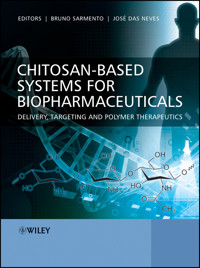
Chitosan-Based Systems for Biopharmaceuticals E-Book
156,99 €
Mehr erfahren.
- Herausgeber: John Wiley & Sons
- Kategorie: Wissenschaft und neue Technologien
- Sprache: Englisch
Chitosan is a linear polysaccharide commercially produced by thedeacetylation of chitin. It is non-toxic, biodegradable,biocompatible, and acts as a bioadhesive with otherwise unstablebiomolecules - making it a valuable component in the formulation ofbiopharmaceutical drugs. Chitosan-Based Systems for Biopharmaceuticals provides anextensive overview of the application of chitosan and itsderivatives in the development and optimisation ofbiopharmaceuticals. The book is divided in four different parts.Part I discusses general aspects of chitosan and its derivatives,with particular emphasis on issues related to the development ofbiopharmaceutical chitosan-based systems. Part II deals with theuse of chitosan and derivatives in the formulation and delivery ofbiopharmaceuticals, and focuses on the synergistic effects betweenchitosan and this particular subset of pharmaceuticals. Part IIIdiscusses specific applications of chitosan and its derivatives forbiopharmaceutical use. Finally, Part IV presents diverse viewpointson different issues such as regulatory, manufacturing andtoxicological requirements of chitosan and its derivatives relatedto the development of biopharmaceutical products, as well as theirpatent status, and clinical application and potential. Topics covered include: * chemical and technological advances in chitins and chitosansuseful for the formulation of biopharmaceuticals * physical properties of chitosan and derivatives in sol and gelstates * absorption promotion properties of chitosan andderivatives * biocompatibility and biodegradation of chitosan andderivatives * biological and pharmacological activity of chitosan andderivatives * biological, chemical and physical compatibility of chitosan andbiopharmaceuticals * approaches for functional modification or crosslinking ofchitosan * use of chitosan and derivatives in conventionalbiopharmaceutical dosage forms * manufacture techniques of chitosan-based microparticles andnanoparticles for biopharmaceuticals * chitosan and derivatives for biopharmaceutical use:mucoadhesive properties * chitosan-based systems for mucosal delivery ofbiopharmaceuticals * chitosan-based delivery systems for mucosal vaccination * chitosan-based nanoparticulates for oral delivery ofbiopharmaceuticals * chitosan-based systems for ocular delivery ofbiopharmaceuticals * chemical modification of chitosan for delivery of DNA andsiRNA * target-specific chitosan-based nanoparticle systems for nucleicacid delivery * functional PEGylated chitosan systems forbiopharmaceuticals * stimuli-sensitive chitosan-based systems forbiopharmaceuticals * chitosan copolymers for biopharmaceuticals * application of chitosan for anti-cancer biopharmaceuticaldelivery * chitosan-based biopharmaceuticals scaffolds in tissueengineering and regenerative medicine * wound healing properties of chitosan and its use in wounddressing biopharmaceuticals * toxicological properties of chitosan and derivatives forbiopharmaceutical applications * regulatory status of chitosan and derivatives * patentability and intellectual property issues * quality control and good manufacturing practice * preclinical and clinical use of chitosan and derivatives forbiopharmaceuticals Chitosan-Based Systems for Biopharmaceuticals is animportant compendium of fundamental concepts, practical tools andapplications of chitosan-based biopharmaceuticals for researchersin academia and industry working in drug formulation and delivery,biopharmaceuticals, medicinal chemistry, pharmacy, bioengineeringand new materials development.
Sie lesen das E-Book in den Legimi-Apps auf:
Seitenzahl: 1354
Veröffentlichungsjahr: 2012
Ähnliche




















Contents
Cover
Title Page
Copyright
List of Contributors
Foreword
Preface
References
Acknowledgments
Part 1: General Aspects of Chitosan
Chapter 1: Chemical and Technological Advances in Chitins and Chitosans Useful for the Formulation of Biopharmaceuticals
1.1 Introduction
1.2 Safety of Chitins and Chitosans
1.3 Ionic Liquids: New Solvents and Reaction Media
1.4 Chitin and Chitosan Nanofibrils
1.5 Electrospun Nanofibers
1.6 Polyelectrolyte Complexes and Mucoadhesion
1.7 Conclusions and Future Perspectives
Acknowledgments
References
Chapter 2: Physical Properties of Chitosan and Derivatives in Sol and Gel States
2.1 Introduction
2.2 Chitin
2.3 Chitosan
2.4 Conclusions and Future Perspectives
References
Chapter 3: Absorption Promotion Properties of Chitosan and Derivatives
3.1 Introduction
3.2 Effect of Chitosan on the Intestinal Absorption of Poorly Absorbable Drugs
3.3 Effect of Chitosan Derivatives on the Intestinal Absorption of Poorly Absorbable Drugs
3.4 Effect of Chitosan Oligomers on the Intestinal Absorption of Poorly Absorbable Drugs
3.5 Colon-Specific Delivery of Insulin Using Chitosan Capsules
3.6 Conclusions and Future Perspectives
References
Chapter 4: Biocompatibility and Biodegradation of Chitosan and Derivatives
4.1 Introduction
4.2 Biocompatibility Evaluation of Chitosan and Derivatives
4.3 Biodegradation of Chitosan and Derivatives
4.4 Conclusions and Future Perspectives
References
Chapter 5: Biological and Pharmacological Activity of Chitosan and Derivatives
5.1 Introduction
5.2 Biological Activity
5.3 Chitosan's Usefulness in Therapy and Alternative Medicine
5.4 Conclusions and Future Perspectives
Acknowledgments
References
Further Reading
Chapter 6: Biological, Chemical, and Physical Compatibility of Chitosan and Biopharmaceuticals
6.1 Introduction
6.2 Structural Features of Chitosan and Its Derivatives
6.3 Biocompatibility for Chitosan and Its Derivatives
6.4 Biocompatibility of Photo-Cross-Linkable Chitosan Hydrogel
6.5 Physical and Chemical Compatibility of Chitosan and Its Derivatives
6.6 Conclusions and Future Perspectives
References
Chapter 7: Approaches for Functional Modification or Cross-Linking of Chitosan
7.1 Introduction
7.2 General Awareness of Chitosan Cross-Linking Methods
7.3 Modified Chitosan: Synthesis and Characterization
7.4 Applications of Modified Chitosan and Its Derivatives in Drug Delivery
7.5 Conclusions and Future Perspectives
Acknowledgments
References
Part 2: Biopharmaceuticals Formulation and Delivery Aspects Using Chitosan and Derivatives
Chapter 8: Use of Chitosan and Derivatives in Conventional Biopharmaceutical Dosage Forms Formulation
8.1 Introduction
8.2 Advantageous Properties of Chitosan and Its Derivatives
8.3 Oral Administration
8.4 Buccal Administration
8.5 Nasal Administration
8.6 Pulmonary Administration
8.7 Transdermal Administration
8.8 Conclusions and Future Perspectives
References
Chapter 9: Manufacture Techniques of Chitosan-Based Microparticles and Nanoparticles for Biopharmaceuticals
9.1 Introduction
9.2 Water-in-Oil Emulsion and Chemical Cross-linking
9.3 Drying Techniques
9.4 Ionic Cross-linking Methods
9.5 Coacervation and Precipitation Method
9.6 Direct Interaction between Chitosan and Biopharmaceuticals
9.7 Conclusions and Future Perspectives
References
Chapter 10: Chitosan and Derivatives for Biopharmaceutical Use: Mucoadhesive Properties
10.1 Introduction
10.2 Mucoadhesion
10.3 Chitosan and Its Derivatives
10.4 Biopharmaceutical Use of Chitosan and Its Derivatives
10.5 Conclusions and Future Perspectives
References
Chapter 11: Chitosan-Based Systems for Mucosal Delivery of Biopharmaceuticals
11.1 Introduction
11.2 Important Challenges for the Delivery of Biopharmaceuticals by Mucosal Routes
11.3 Interest in Chitosan for Mucosal Delivery of Biopharmaceuticals
11.4 Chitosan-Based Delivery Nanosystems for Mucosal Delivery of Biopharmaceuticals
11.5 Conclusions and Future Perspectives
Acknowledgments
References
Chapter 12: Chitosan-Based Delivery Systems for Mucosal Vaccination
12.1 Introduction
12.2 Adjuvant Properties of Chitosan
12.3 Chitosan in the Delivery of Protein and Subunit Vaccines
12.4 Chitosan-Based Formulations of DNA Vaccines
12.5 Vaccine Formulations Using Chitosan in Combination with Other Polymers
12.6 Chitosan Derivatives in Vaccine Carrier Design
12.7 Conclusions and Future Perspectives
References
Chapter 13: Chitosan-Based Nanoparticulates for Oral Delivery of Biopharmaceuticals
13.1 Introduction
13.2 Challenges on the Oral Delivery of Therapeutic Proteins
13.3 Challenges on the Oral Delivery of Genetic Material
13.4 Role of Chitosan in the Protection of Biopharmaceuticals in the Gastrointestinal Tract
13.5 Chitosan-Based Nanoparticles for Oral Delivery of Therapeutic Proteins
13.6 Chitosan-Based Nanoparticles for Oral Delivery of Genetic Material
13.7 Conclusions and Future Perspectives
Acknowledgments
References
Chapter 14: Chitosan-Based Systems for Ocular Delivery of Biopharmaceuticals
14.1 Introduction
14.2 Ocular Delivery of Biopharmaceuticals
14.3 Chitosan: A Suitable Biomaterial for Ocular Therapeutics
14.4 Chitosan-Based Systems for Ocular Delivery of Biomacromolecules
14.5 Toxicological and Compatibility Aspects of Chitosan-Based Ocular Systems
14.6 Conclusions and Future Perspectives
References
Chapter 15: Chemical Modification of Chitosan for Delivery of DNA and siRNA
15.1 Introduction
15.2 Hydrophilic Modification
15.3 Hydrophobic Modification
15.4 Specific Ligand Modification
15.5 pH-Sensitive Modification
15.6 Conclusions and Future Perspectives
Acknowledgment
References
Part 3: Advanced Application of Chitosan and Derivatives for Biopharmaceuticals
Chapter 16: Target-Specific Chitosan-Based Nanoparticle Systems for Nucleic Acid Delivery
16.1 Introduction
16.2 Chitosan-Based Nanoparticle Delivery Systems
16.3 Illustrative Examples of DNA Vaccine Delivery
16.4 Illustrative Examples of Nucleic Acid Delivery Systems for Cancer Therapy
16.5 Illustrative Examples of Nucleic Acid Delivery Systems for Anti-Inflammatory Therapy
16.6 Conclusions and Future Perspectives
References
Chapter 17: Functional PEGylated Chitosan Systems for Biopharmaceuticals
17.1 Introduction
17.2 PEGylated Chitosan for the Delivery of Proteins and Peptides
17.3 PEGylated Chitosan for Delivery of Nucleic Acids
17.4 PEGylated Chitosan for Delivery of Other Macromolecular Biopharmaceuticals
17.5 PEGylated Chitosan Used for Cellular Scaffolds
17.6 Conclusions and Future Perspectives
References
Chapter 18: Stimuli-Sensitive Chitosan-Based Systems for Biopharmaceuticals
18.1 Introduction
18.2 pH-Sensitive Chitosan-Based Systems
18.3 Thermosensitive Chitosan-Based Systems
18.4 pH-Sensitive and Thermosensitive Chitosan-Based Systems
18.5 pH- and Ionic-Sensitive Chitosan-Based Systems
18.6 Photo-Sensitive Chitosan-Based Systems
18.7 Electrical-Sensitive Chitosan-Based Systems
18.8 Magnetic-Sensitive Chitosan-Based Systems
18.9 Chemical Substance-Sensitive Chitosan-Based Systems
18.10 Conclusions and Future Perspectives
References
Chapter 19: Chitosan Copolymers for Biopharmaceuticals
19.1 Introduction
19.2 Chitosan-g-Poly(Ethylene Glycol)
19.3 Chitosan-g-Polyethylenimine
19.4 Other Copolymers of Chitosan
19.5 Copolymers of Chitosan with Promising Applications
19.6 Conclusions and Future Perspectives
References
Chapter 20: Application of Chitosan for Anticancer Biopharmaceutical Delivery
20.1 Introduction
20.2 Chitosan and Cancer: Intrinsic Antitumor Activity of the Polymer Itself
20.3 Chitosan Formulations Developed for Classic Anticancer Drugs
20.4 Biopharmaceuticals Delivered by Chitosan Preparations
20.5 Active Targeting Strategies and Multifunctional Chitosan Formulations
20.6 Conclusions and Future Perspectives
References
Chapter 21: Chitosan-Based Biopharmaceutical Scaffolds in Tissue Engineering and Regenerative Medicine
21.1 Introduction
21.2 Fabrication of Chitosan-Based Biopharmaceuticals Scaffolds
21.3 Applications of Chitosan-Based Biopharmaceutical Scaffolds in Tissue Engineering and Regenerative Medicine
21.4 Future Trends: Regenerative Engineering
21.5 Conclusions and Future Perspectives
Acknowledgments
References
Chapter 22: Wound-Healing Properties of Chitosan and Its Use in Wound Dressing Biopharmaceuticals
22.1 Introduction
22.2 Brief Review of Wound Repair
22.3 Wound-Healing Effects of Chitosan
22.4 Chitosan for Wound Therapeutics Delivery
22.5 Conclusions and Future Perspectives
Acknowledgments
References
Part 4: Regulatory Status, Toxicological Issues, and Clinical Perspectives
Chapter 23: Toxicological Properties of Chitosan and Derivatives for Biopharmaceutical Applications
23.1 Introduction
23.2 In Vitro Toxicity of Chitosan and Derivatives
23.3 In Vivo Toxicity of Chitosan and Derivatives
23.4 Conclusions and Future Perspectives
References
Chapter 24: Regulatory Status of Chitosan and Derivatives
24.1 Introduction
24.2 Source
24.3 Characterization
24.4 Purity
24.5 Applications of Advanced Uses of Chitosan
24.6 Regulatory Considerations for Chitosan and Chitosan Derivatives in the European Union, and Medical Devices or Combination Products with Medical Device (CDRH) Lead
24.7 Regulatory Pathways
24.8 Chitosan Medical Products: US Regulatory Review Processes for Medical Devices or Combination Products with CDRH Lead
24.9 Chitosan Wound Dressings
24.10 The European Regulatory System: The European Medicines Agency (EMA) and European Directorate for the Quality of Medicines (EDQM)
24.11 Further Regulatory Considerations
24.12 Conclusions and Future Perspectives
Acknowledgments
24.14 Disclaimer
References
Chapter 25: Patentability and Intellectual Property Issues Related to Chitosan-Based Biopharmaceutical Products
25.1 Introduction
25.2 Setting the Scene: The Role of Chitosan as a Pharmaceutical Excipient
25.3 Addressing the Drivers for Scientific Progress on Chitosan: Innovation and Inventability
25.4 Conclusions and Future Perspectives
References
Chapter 26: Quality Control and Good Manufacturing Practice (GMP) for Chitosan-Based Biopharmaceutical Products
26.1 Introduction
26.2 Regulatory Requirements for Production
26.3 Manufacturing GMP: Fundamental Considerations
26.4 Requirements for Rooms, Personnel, and Equipment
26.5 Qualification and Validation
26.6 Quality Control
26.7 Monitoring and Maintenance of a GMP System
26.8 Conclusions and Future Perspectives
References
Chapter 27: Preclinical and Clinical Use of Chitosan and Derivatives for Biopharmaceuticals: From Preclinical Research to the Bedside
27.1 Introduction
27.2 Chitosan as a Parenteral (Subcutaneous) Vaccine Platform
27.3 Chitosan as an Immunotherapeutic Platform
27.4 Conclusions and Future Perspectives
References
Index
This edition first published 2012
© 2012 John Wiley & Sons, Ltd
Registered office
John Wiley & Sons Ltd, The Atrium, Southern Gate, Chichester, West Sussex, PO19 8SQ, United Kingdom
For details of our global editorial offices, for customer services and for information about how to apply for permission to reuse the copyright material in this book please see our website at www.wiley.com.
The right of the author to be identified as the author of this work has been asserted in accordance with the Copyright, Designs and Patents Act 1988.
All rights reserved. No part of this publication may be reproduced, stored in a retrieval system, or transmitted, in any form or by any means, electronic, mechanical, photocopying, recording or otherwise, except as permitted by the UK Copyright, Designs and Patents Act 1988, without the prior permission of the publisher.
Wiley also publishes its books in a variety of electronic formats. Some content that appears in print may not be available in electronic books.
Designations used by companies to distinguish their products are often claimed as trademarks. All brand names and product names used in this book are trade names, service marks, trademarks or registered trademarks of their respective owners. The publisher is not associated with any product or vendor mentioned in this book. This publication is designed to provide accurate and authoritative information in regard to the subject matter covered. It is sold on the understanding that the publisher is not engaged in rendering professional services. If professional advice or other expert assistance is required, the services of a competent professional should be sought.
The publisher and the author make no representations or warranties with respect to the accuracy or completeness of the contents of this work and specifically disclaim all warranties, including without limitation any implied warranties of fitness for a particular purpose. This work is sold with the understanding that the publisher is not engaged in rendering professional services. The advice and strategies contained herein may not be suitable for every situation. In view of ongoing research, equipment modifications, changes in governmental regulations, and the constant flow of information relating to the use of experimental reagents, equipment, and devices, the reader is urged to review and evaluate the information provided in the package insert or instructions for each chemical, piece of equipment, reagent, or device for, among other things, any changes in the instructions or indication of usage and for added warnings and precautions. The fact that an organization or Website is referred to in this work as a citation and/or a potential source of further information does not mean that the author or the publisher endorses the information the organization or Website may provide or recommendations it may make. Further, readers should be aware that Internet Websites listed in this work may have changed or disappeared between when this work was written and when it is read. No warranty may be created or extended by any promotional statements for this work. Neither the publisher nor the author shall be liable for any damages arising herefrom.
Library of Congress Cataloging-in-Publication Data
Chitosan-based systems for biopharmaceuticals : delivery, targeting, and polymer therapeutics / edited by Bruno Sarmento, José das Neves.
p. ; cm.
Includes bibliographical references and index.
ISBN 978-0-470-97832-0 (cloth) – ISBN 978-1-119-96296-0 (ePDF) – ISBN 978-1-119-96297-7 (oBook) – ISBN 978-1-119-96407-0 (ePub) – ISBN 978-1-119-96408-7 (eMobi)
I. Sarmento, Bruno. II. das Neves, José, 1978-
[DNLM: 1. Biopharmaceutics. 2. Chitosan–therapeutic use. 3. Biopolymers–therapeutic use. 4. Drug Carriers–therapeutic use. QU 83]
615.1'9–dc23
2011037452
Print ISBN: 9780470978320
List of Contributors
Wafa I. Abdel-Fattah, Biomaterials Department, National Research Centre, Cairo, Egypt
Toshihiro Akaike, Department of Biomolecular Engineering, Tokyo Institute of Technology, Yokohama, Japan
Marlene Almeida, Hospital de Santo António, Centro Hospitalar do Porto, Porto, Portugal
Sonia Al-Qadi, Department of Pharmacy and Pharmaceutical Technology, University of Santiago de Compostela, Faculty of Pharmacy, Santiago de Compostela, Spain
Mansoor Amiji, Department of Pharmaceutical Sciences, School of Pharmacy, Northeastern University, Boston, MA, USA
Fernanda Andrade, Department of Pharmaceutical Technology, Faculty of Pharmacy, University of Porto, Porto, Portugal
A. Anitha, Amrita Centre for Nanosciences and Molecular Medicine, Amrita Institute of Medical Sciences and Research Centre, Kochi, India
Filipa Antunes, Department of Pharmaceutical Technology, Faculty of Pharmacy, University of Porto, Porto, Portugal
Sambasiva R. Arepalli, Center for Devices and Radiological Health, United States Food and Drug Administration, Silver Spring, MD, USA
Pedro Barrocas, Laboratory of Pharmaceutical Development, R&D Department, Bial - Portela & C.a, S.A., S. Mamede do Coronado, Portugal
Andreas Bernkop-Schnürch, Department of Pharmaceutical Technology, Institute of Pharmacy, Leopold-Franzens-University Innsbruck, Innsbruck, Austria
M. Cristina Bonferoni, Department of Drug Sciences, School of Pharmacy, University of Pavia, Pavia, Italy
Gerrit Borchard, School of Pharmaceutical Sciences, University of Geneva, University of Lausanne, Geneva, Switzerland
Joel D. Bumgardner, Department of Biomedical Engineering, University of Memphis, TN, USA
Carla M. Caramella, Department of Drug Sciences, School of Pharmacy, University of Pavia, Pavia, Italy
Rui Cerdeira, Laboratory of Pharmaceutical Development, R&D Department, Bial - Portela & C.a, S.A., S. Mamede do Coronado, Portugal
Chong-Su Cho, Department of Agricultural Biotechnology, and Research Institute for Agriculture and Life Sciences, Seoul National University, Seoul, South Korea
Hee-Jeong Cho, College of Pharmacy, Seoul National University, Seoul, South Korea
Myung-Haing Cho, Laboratory of Toxicology, College of Veterinary Medicine, Seoul National University, Seoul, South Korea
Yun-Jaie Choi, Department of Agricultural Biotechnology, and Research Institute for Agriculture and Life Sciences, Seoul National University, Seoul, South Korea
Teresa Cunha, Hospital de Santo António, Centro Hospitalar do Porto, Porto, Portugal
Tianhong Dai, Wellman Center for Photomedicine, Massachusetts General Hospital, Boston, MA, USA
Department of Dermatology, Harvard Medical School, Boston, MA, USA
José das Neves, Department of Pharmaceutical Technology, Faculty of Pharmacy, University of Porto, Porto, Portugal
Meng Deng, Department of Orthopaedic Surgery, University of Connecticut, Farmington, CT, USA
Gustavo Dias, Hospital de Santo António, Centro Hospitalar do Porto, Porto, Portugal
Michael Dornish, FMC BioPolymer AS/NovaMatrix, Sandvika, Norway
Farnaz Esmaeili, King's College London, Pharmaceutical Science Division, London, United Kingdom
Jonathan Fallon, Laboratory of Tumor Immunology and Biology, National Cancer Institute, CCR, National Institutes of Health, Bethesda, MD, USA
Eduardo Fernandez-Megia, Department of Organic Chemistry and Center for Research in Biological Chemistry and Molecular Materials (CIQUS), University of Santiago de Compostela, Santiago de Compostela, Spain
Franca Ferrari, Department of Drug Sciences, School of Pharmacy, University of Pavia, Pavia, Italy
Masanori Fujita, Research Institute, National Defense Medical College, Saitama, Japan
Qingyu Gao, Institute of Fine Chemical and Engineering, Henan University, Kaifeng, People's Republic of China
Rogério Gaspar, Nanomedicine and Drug Delivery Systems Group, iMed.UL– Research Institute for Medicines and Pharmaceutical Sciences, Faculty of Pharmacy, University of Lisbon, Lisbon, Portugal
John W. Greiner, Laboratory of Tumor Immunology and Biology, National Cancer Institute, Center for Cancer Research, National Institutes of Health, Bethesda, MD, USA
Ana Grenha, Centre for Molecular and Structural Biomedicine, Institute for Biotechnology and Bioengineering, University of Algarve, Faro, Portugal
Maika Gulich, Heppe Medical Chitosan GmbH, Halle (Saale), Germany
Ding-Ding Guo, Department of Agricultural Biotechnology, and Research Institute for Agriculture and Life Sciences, Seoul National University, Seoul, South Korea
Ahmad Sukari Halim, Reconstructive Sciences Unit, School of Medical Sciences, Universiti Sains Malaysia, Kubang Kerian, Kelantan, Malaysia
Michael R. Hamblin, Wellman Center for Photomedicine, Massachusetts General Hospital, Boston, MA, USA
Department of Dermatology, Harvard Medical School, Boston, MA, USA
Harvard–MIT Division of Health Sciences and Technology, Cambridge, MA, USA
Hidemi Hattori, Research Institute, National Defense Medical College, Saitama, Japan
Michael Heffernan, Laboratory of Tumor Immunology and Biology, National Cancer Institute, Center for Cancer Research, National Institutes of Health, Bethesda, MD, USA
Simon Heuking, Vaccine Formulation Laboratory, Department of Biochemistry, University of Lausanne, Epalinges, Switzerland
Ying-Ying Huang, Wellman Center for Photomedicine, Massachusetts General Hospital, Boston, MA, USA
Department of Dermatology, Harvard Medical School, Boston, MA, USA
Aesthetic and Plastic Center of Guangxi Medical University, Nanning, China
Masayuki Ishihara, Research Institute, National Defense Medical College, Saitama, Japan
Shardool Jain, Department of Pharmaceutical Sciences, School of Pharmacy, Northeastern University, Boston, MA, USA
Rangasamy Jayakumar, Amrita Centre for Nanosciences and Molecular Medicine, Amrita Institute of Medical Sciences and Research Centre, Kochi, India
Hu-Lin Jiang, Laboratory of Toxicology, College of Veterinary Medicine, Seoul National University, Seoul, South Korea
Tao Jiang, Zimmer Orthobiologics, Inc., Austin, TX, USA
Yasuhiro Kanatani, Department of Policy Science, National Institute of Public Health, Saitama, Japan
David S. Kaplan, Center for Devices and Radiological Health, US Food and Drug Administration, Silver Spring, MD, USA
Thomas J. Kean, Benaroya Research Institute at Virginia Mason, Seattle, WA, USA
Lim Chin Keong, Reconstructive Sciences Unit, School of Medical Sciences, Universiti Sains Malaysia, Kubang Kerian, Kelantan, Malaysia
Goen Kim, College of Pharmacy, Seoul National University, Seoul, South Korea
You-Kyoung Kim, Department of Agricultural Biotechnology, and Research Institute for Agriculture and Life Sciences, Seoul National University, Seoul, South Korea
Satoko Kishimoto, Research Institute, National Defense Medical College, Saitama, Japan
Research Fellow of the Japan Society for Promotion of Science, Tokyo, Japan
Hyeok-Seung Kwon, College of Pharmacy, Seoul National University, Seoul, South Korea
Cato T. Laurencin, Department of Orthopedic Surgery, University of Connecticut, Farmington, CT, USA
Department of Chemical, Materials and Biomolecular Engineering, University of Connecticut, Storrs, CT, USA
Claus-Michael Lehr, Department of Biopharmaceutics and Pharmaceutical Technology, Saarland University, Saarbrücken, Germany
Helmholtz-Institute for Pharmaceutical Research Saarland (HIPS), Helmholtz Center for Infection Research (HZI), Saarland University, Saarbrücken, Germany
Katharina Leithner, Department of Pharmaceutical Technology, Institute of Pharmacy, Leopold-Franzens-University Innsbruck, Innsbruck, Austria
Brigitta Loretz, Helmholtz-Institute for Pharmaceutical Research Saarland (HIPS), Helmholtz Center for Infection Research (HZI), Saarland University, Saarbrücken, Germany
Riccardo A. A. Muzzarelli, Professor Emeritus of Enzymology, University of Ancona, Ancona, Italy
Shanti V. Nair, Amrita Centre for Nanosciences and Molecular Medicine, Amrita Institute of Medical Sciences and Research Centre, Kochi, India
Ramon Novoa-Carballal, Department of Organic Chemistry and Center for Research in Biological Chemistry and Molecular Materials (CIQUS), University of Santiago de Compostela, Santiago de Compostela, Spain
Yu-Kyoung Oh, College of Pharmacy, Seoul National University, Seoul, South Korea
Rishi Paliwal, Drug Delivery Research Laboratory, Department of Pharmaceutical Sciences, Dr. H. S. Gour Vishwavidyalaya, Sagar, M.P., India
Shivani Rai Paliwal, Drug Delivery Research Laboratory, Department of Pharmaceutical Sciences, Dr. H. S. Gour Vishwavidyalaya, Sagar, M.P., India
Claudia Philippi, Department of Biopharmaceutics and Pharmaceutical Technology, Saarland University, Saarbrücken, Germany
Ahmad Hazri Abdul Rashid, SIRIM, Environmental and Bioprocess Technology Centre, Shah Alam, Selangor, Malaysia
N. Sanoj Rejinold, Amrita Centre for Nanosciences and Molecular Medicine, Amrita Institute of Medical Sciences and Research Centre, Kochi, India
Carmen Remuñán-López, Department of Pharmacy and Pharmaceutical Technology, University of Santiago de Compostela, Faculty of Pharmacy, Santiago de Compostela, Spain
Katja Richter, Heppe Medical Chitosan GmbH, Halle (Saale), Germany
Torsten Richter, Heppe Medical Chitosan GmbH, Halle (Saale), Germany
Ricardo Riguera, Department of Organic Chemistry and Center for Research in Biological Chemistry and Molecular Materials (CIQUS), University of Santiago de Compostela, Santiago de Compostela, Spain
Marguerite Rinaudo, Centre de Recherches sur les Macromolécules Végétales (CERMAV), Centre National de la Recherche Scientifique, affiliated with Joseph Fourier University, Grenoble, France
Silvia Rossi, Department of Drug Sciences, School of Pharmacy, University of Pavia, Pavia, Italy
Giuseppina Sandri, Department of Drug Sciences, School of Pharmacy, University of Pavia, Pavia, Italy
Bárbara Santos, Hospital de Santo António, Centro Hospitalar do Porto, Porto, Portugal
Bruno Sarmento, Department of Pharmaceutical Technology, Faculty of Pharmacy, University of Porto, Porto, Portugal
CICS, Department of Pharmaceutical Sciences, Instituto Superior de Ciências da Saúde–Norte, Gandra, Portugal
Ulrich F. Schaefer, Department of Biopharmaceutics and Pharmaceutical Technology, Saarland University, Saarbrücken, Germany
Tyler G. St. Denis, Wellman Center for Photomedicine, Massachusetts General Hospital, Boston, MA, USA
Columbia University, New York, NY, USA
Branca Teixeira, Hospital de Santo António, Centro Hospitalar do Porto, Porto, Portugal
Maya Thanou, Pharmaceutical Sciences Division, King's College London, London, United Kingdom
Teófilo Vasconcelos, Laboratory of Pharmaceutical Development, R&D Department, Bial - Portela & C.a, S.A., S. Mamede do Coronado, Portugal
Mafalda Videira, Nanomedicine and Drug Delivery Systems Group, iMed.UL– Research Institute for Medicines and Pharmaceutical Sciences, Faculty of Pharmacy, University of Lisbon, Lisbon, Portugal
Suresh P. Vyas, Drug Delivery Research Laboratory, Department of Pharmaceutical Sciences, Dr. H. S. Gour Vishwavidyalaya, Sagar, M.P., India
Akira Yamamoto, Department of Biopharmaceutics, Kyoto Pharmaceutical University, Kyoto, Japan
Jinfang Yuan, Institute of Fine Chemical and Engineering, Henan University, Kaifeng, People's Republic of China
David A. Zaharoff, Laboratory of Tumor Immunology and Biology, National Cancer Institute, Center for Cancer Research, National Institutes of Health, Bethesda, MD, USA
Biomedical Engineering Program, University of Arkansas, Fayetteville, AR, USA
Ismail Zainol, Chemistry Department, Faculty of Science and Mathematics, Universiti Pendidikan Sultan Idris, Tanjung Malim, Perak, Malaysia
Cuiping Zhai, Institute of Fine Chemical and Engineering, Henan University, Kaifeng, People's Republic of China
Foreword
The reading of the book Chitosan-Based Systems for Biopharmaceuticals: Delivery, Targeting and Polymer Therapeutics has given me great pleasure because it represents a nice illustration of the area of research to which I have dedicated an important part of my research career. It was in the early 1990s, working at MIT with Bob Langer on the encapsulation of proteins within poly(lactide-co-glycolide) (PLGA) microspheres, that I became conscious of the necessity of new biomaterials for the controlled delivery of delicate compounds, that is, biopharmaceuticals; biomaterials which would be friendly with the associated compounds; biomaterials which could be converted into nanoparticles using mild techniques; and biomaterials that could have a low price based on their wide availability in nature. Chitosan comes to my mind as a wonderful biomaterial fulfilling all these desirable properties. Our goal was to convert chitosan powders into nanoparticles using a procedure that would be adequate for the association of biopharmaceuticals. We were then the first authors reporting the ionotropic gelation technique for the association of proteins to chitosan nanoparticles in 1997. Now, it is amazing for me to see how the history of this biomaterial has evolved. We find thousands of articles and hundreds of patents using the keywords “chitosan nanoparticles.” It is, indeed, the biomaterial that has attracted the most significant research attention in the area of nanodrug delivery. As a consequence of this accumulated information, we got to know this unique material quite well. For example, we currently recognize how we can engineer this material in order to make it useful for a variety of interesting biomedical applications and, even more importantly, we can appreciate how this biomaterial is making its way to a final purpose: to provide us with new solutions for improving our health and quality of life.
This book will be of great value to those readers who want to know about chitosan from the perspective of its potential for the delivery of biopharmaceuticals. Following an introductory section, the book is divided in three major parts. The first part is about the general properties of chitosan, with emphasis on the physical–chemical properties that are critical for processing it into adequate delivery systems and also on those of relevance for its use as a biomaterial for human use (biocompatibility and biodegradability). In addition, this part presents the inherent biological properties of chitosan, its behavioral mechanism of action upon contact with living cells and tissues, and the way it interacts with drugs and more precisely with delicate biomolecules such as peptides, proteins, antigens, and nucleic acid-based biocompounds. This part ends by presenting the possibility of chemically modifying chitosan in order to further extend the properties and functionalities of chitosan with regard to its use for the delivery of biopharmaceuticals.
In the second part of the book, the reader will find a great display of the possibilities of chitosan being processed into different pharmaceutical forms, starting by conventional dosage forms and continuing to micro- and nanoparticles. This part logically focuses on the special mucoadhesive properties of chitosan and, thus, on its potential for mucosal drug and vaccine delivery.
The third part is particularly illustrative of the degree of chitosan evolution as a biomaterial. It presents various ways to chemically modify and engineer chitosan in order to make it attractive for a variety of interesting applications, including wound dressing, targeted drug delivery, tissue engineering, and regenerative medicine.
The fourth and final section is without a doubt the most critical one for those who want to know where we stand on the prospects of chitosan as a biomaterial for drug delivery. This section complements the first one regarding the toxicological properties of chitosan under the perspective of the regulatory path and presents the quality control and good manufacturing practice required for chitosan-derived products. Most significantly, this part covers the amazing information available on chitosan patents and the patentability of chitosan-based biopharmaceutical products, this one being one of the most important applications of chitosan.
Overall, the book presents, in a didactic and well-structured form, critical information for readers interested in the delivery of biopharmaceuticals. It would also be of great benefit for researchers attempting to design, produce, and characterize new biomaterials. It would, of course, also be of interest for any student or researcher interested in the growing field of nanodrug delivery.
María José AlonsoProfessor of Biopharmacy and Pharmaceutical TechnologyUniversity of Santiago de Compostela (USC), Spain
Preface
Bruno Sarmento1,2 and José das Neves1
1Department of Pharmaceutical Technology, Faculty of Pharmacy, University of Porto, Porto, Portugal
2CICS, Department of Pharmaceutical Sciences, Instituto Superior de Ciências da Saúde–Norte, Gandra, Portugal
Since the market launch in 1982 of the first recombinant “human” insulin (Humulin®, Eli Lilly, Indianapolis, IN, United States), biopharmaceutical medicinal products have seen a steady rise (with particular boosting in recent years) as important tools of modern therapeutics. With an estimated global market of over $US 167 billion by 2015 [1], biopharmaceuticals are currently widely recognized as highly effective molecules in the management of many metabolic, oncologic, and infectious diseases, as well as in the prevention and in vivo diagnosis of such diseases. This particular class of pharmaceuticals is quite heterogeneous and not always clearly defined, comprising different active biological molecules of different complexity such as proteins, peptides, and nucleic acids, among others, which are of biological origin and/or manufactured by biotechnological techniques, usually involving living organisms, cells, or their active components [2]. However, unfavorable physical–chemical properties, poor stability, low permeability, and unsuitable biodistribution of biopharmaceuticals pose important challenges for their adequate pharmaceutical formulation and delivery, and thus their use in therapy. In particular, the challenges in developing adequate materials and systems that allow the use of biopharmaceuticals in daily life are huge. Among the wide variety of proposed solutions for advancing the field [3, 4], delivery systems based on chitosan and derivatives have deserved recent singular attention.
The history of chitosan dates back to 1859, when French physiologist Charles Rouget (1824–1904) described the deacetylation of chitin by means of its boiling in the presence of concentrated potassium hydroxide [5]. Immediately, he recognized that the newly obtained product was soluble in acidic solutions, contrasting with the water-insoluble nature of native chitin, thus opening new possibilities for its use. However, it wasn't until 35 years later that the modified chitin received the name “chitosan”, which has been attributed to the German physiologist and chemist Felix Hoppe-Seyler (1825–1895) [6]. Nearly one century went by until this modified natural polymer started receiving enough attention as a useful material to be used in the design of drug products [7–9]. Over the years, the study of chitosan revealed that it exhibits several favorable biological properties, such as biocompatibility, biodegradability, low toxicity, and mucoadhesiveness, thus making this polymer a promising candidate for the formulation of biopharmaceuticals. More than a simple excipient for the design of conventional pharmaceutical dosage forms, the development of novel biopharmaceutical delivery systems based on chitosan is a rising subject irrespective of the intended route of administration.
In the present book, renowned experts and researchers from academia, industry, and regulatory bodies provide a concise and up-to-date overview of different issues regarding the application of chitosan and its derivatives for the development and optimization of biopharmaceutical medicinal products. The book is divided in four different parts. Part One discusses general aspects of chitosan and derivatives, with particular emphasis on issues related to the development of biopharmaceutical chitosan-based systems, comprising a useful background for the following chapters. Part Two deals with the use of chitosan and derivatives in the formulation and delivery of biopharmaceuticals, and focuses on the synergistic effects between chitosan and this particular subset of pharmaceuticals. Further, Part Three continues and complements the previous part by discussing in detail specific applications of chitosan and/or some particular derivatives for biopharmaceutical use. Finally, Part Four presents diverse viewpoints on different issues such as the regulatory, manufacturing, and toxicological requirements of chitosan and its derivatives related to the development of biopharmaceutical products, as well as their patent status and their clinical application and potential.
We expect this book to provide scientists and researchers in the fields of drug delivery, material science, medical science, and bioengineering, as well as professionals in the pharmaceutical, biotechnology, and healthcare industries, with an important compendium of fundamental concepts and practical tools for their daily activities. Also, the broad emphasis on different regulatory issues may turn this book into a relevant starting point for discussion among worldwide regulatory bodies, drug policymakers, and biopharmaceutical companies in pursuing suitable biopharmaceutical products based on chitosan and its derivatives, mostly due to their undoubtedly favorable properties.
References
1. International Market Analysis Research and Consulting Group (2010) Global Biopharmaceutical Market Report (2010–2015).
2. Rader, R.A. (2008) (Re)defining biopharmaceutical. Nat. Biotechnol., 26, 743–751.
3. Orive, G., Gascon, A.R., Hernandez, R.M. et al. (2004) Techniques: new approaches to the delivery of biopharmaceuticals. Trends Pharmacol. Sci., 25, 382–387.
4. Jorgensen, L. and Nielson, H.M. (2009) Delivery Technologies for Biopharmaceuticals: Peptides, Proteins, Nucleic Acids and Vaccines, Wiley, Chichester, West Sussex.
5. Rouget, C. (1859) Des substances amylacées dans les tissus des animaux, spécialement des Articulés (chitine). C. R. Hebd. Séances Acad. Sci., 48, 792–795.
6. Hoppe-Seyler, F. (1894) Ueber chitin und cellulose. Ber. Dtsch. Chem. Ges., 27, 3329–3331.
7. Machida, Y. and Nagai, T. (1989) Chitin/chitosan as pharmaceutical excipients, in Topics in Pharmaceutical Sciences (eds D.D. Breimer, D.J.A. Crommelin, and K.K. Midha), Fédération Internationale Pharmaceutique, The Hague.
8. Knapczyk, J., Krówczynski, L., Krzek, J. et al. (1989) Requirements of chitosan for pharmaceutical and biomedical application, in Chitin and Chitosan: Sources, Chemistry, Biochemistry, Plysical Properties and Applications (eds G. Braek-Skjåk, T. Anthonsen, and P. Sandford), Elsevier, London.
9. Illum, L. (1998) Chitosan and its use as a pharmaceutical excipient. Pharm. Res., 15, 1326–1331.
Acknowledgments
The editors would like to express their deepest gratitude to all the authors for accepting the challenge of writing this work. Also, a special word of appreciation is due to Professor María José Alonso for kindly accepting our invitation to write the foreword, and to everyone at Wiley who assisted in the production of this book.
Part One
General Aspects of Chitosan
Chapter 1
Chemical and Technological Advances in Chitins and Chitosans Useful for the Formulation of Biopharmaceuticals
Riccardo A. A. Muzzarelli
Professor Emeritus of Enzymology, University of Ancona, Ancona, Italy
1.1 Introduction
Chitin is the first polysaccharide discovered (1811): its bicentennial has been celebrated in a review article by Muzzarelli et al. [1] that traces the origin of the modern carbohydrate polymers science. In a more recent time, chitosans and their derivatives have been studied for formulations that enhance the absorption of macromolecular biotherapeutics (peptides, protein therapeutics and antigens, as well as plasmid DNA) and for the preparation of particulate drug-targeting systems. The number of yearly published papers dealing with this topic during the period 2000–2009 has been growing at the following impressive rate: 90, 110, 120, 150, 245, 320, 420, 470, 670, and 705. Some review articles are cited here for readers seeking complementary information. Kean and Thanou [2] published an overview about the biodegradation, biodistribution, and toxicity of chitosan-based delivery systems as well as the current status of chitosan drug formulations and underlined that, despite the high number of published studies, chitosan is not approved by the US Food and Drug Administration for any product in drug delivery. Nevertheless, chitosan is used as a generally regarded as safe (GRAS) material. It was explained that when a hydrophobic moiety is conjugated to a chitosan unit, the resulting amphiphile forms self-assembled as nanoparticles that encapsulate a quantity of drugs and deliver them to specific sites. Chemical attachment of drugs to chitosan throughout a functional linker may also produce useful prodrugs, exhibiting the appropriate biological activity at the target site.
The advanced development of chitosan hydrogels has led to new drug delivery systems that release drugs under varying environmental stimuli. The development of intelligent drug delivery devices requires a foundation in the chemical and physical characteristics of chitosan-based hydrogels, as well as the therapeutics to be delivered. In their review article, Bhattarai [3] reported on the developments in chitosan hydrogel preparation and defined the design parameters in the development of physically and chemically cross-linked hydrogels. Carreira [4] addressed smart polymers derived from chitosan, including particulate carrier systems, hydrogels, and film-based materials that are responsive to stimuli such as temperature and pH, and summarized recent developments in graft modification of chitosan by living radical polymerization.
Lesen Sie weiter in der vollständigen Ausgabe!
Lesen Sie weiter in der vollständigen Ausgabe!
Lesen Sie weiter in der vollständigen Ausgabe!
Lesen Sie weiter in der vollständigen Ausgabe!
Lesen Sie weiter in der vollständigen Ausgabe!
Lesen Sie weiter in der vollständigen Ausgabe!
Lesen Sie weiter in der vollständigen Ausgabe!
Lesen Sie weiter in der vollständigen Ausgabe!
Lesen Sie weiter in der vollständigen Ausgabe!
Lesen Sie weiter in der vollständigen Ausgabe!
Lesen Sie weiter in der vollständigen Ausgabe!
Lesen Sie weiter in der vollständigen Ausgabe!
Lesen Sie weiter in der vollständigen Ausgabe!
Lesen Sie weiter in der vollständigen Ausgabe!
Lesen Sie weiter in der vollständigen Ausgabe!
Lesen Sie weiter in der vollständigen Ausgabe!
Lesen Sie weiter in der vollständigen Ausgabe!
Lesen Sie weiter in der vollständigen Ausgabe!
Lesen Sie weiter in der vollständigen Ausgabe!
Lesen Sie weiter in der vollständigen Ausgabe!
Lesen Sie weiter in der vollständigen Ausgabe!
Lesen Sie weiter in der vollständigen Ausgabe!
Lesen Sie weiter in der vollständigen Ausgabe!
Lesen Sie weiter in der vollständigen Ausgabe!
Lesen Sie weiter in der vollständigen Ausgabe!
Lesen Sie weiter in der vollständigen Ausgabe!
Lesen Sie weiter in der vollständigen Ausgabe!
Lesen Sie weiter in der vollständigen Ausgabe!
Lesen Sie weiter in der vollständigen Ausgabe!
Lesen Sie weiter in der vollständigen Ausgabe!




