


6,99 €
Mehr erfahren.
- Herausgeber: THP Ireland
- Kategorie: Fantasy und Science-Fiction
- Sprache: Englisch
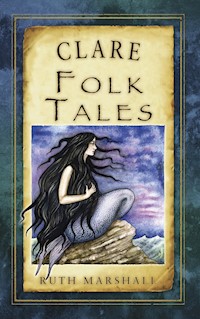
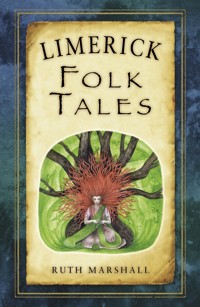
Do you know what lurks in the waters of Cullaun Lake? Or why a Clare woman should never, ever, be disturbed while she is knitting? These questions and more will be answered in this unique collection of traditional tales from across the county, which explores Clare's rich heritage of myths and legends. We will hear the tales of well-known figures, including Cúchulainn, Brian Boru and Clare wise-woman Biddy Early, as well as lesser-known characters such as Grian, Daughter of the Sun, and the Hag of Bealaha. Also featured are fantastic stories of mythical creatures and underwater worlds, including the Newhall mermaid, the fairies of Glandree, and the sunken city of Kilstiofeen. Clare's varied and vivid landscape, from its ancient oak woodlands and soft drumlin country in the east, to its rugged and windswept Atlantic coastline in the west, is reflected in this tantalising selection of tales collected and retold by local storyteller Ruth Marshall.
Das E-Book können Sie in Legimi-Apps oder einer beliebigen App lesen, die das folgende Format unterstützen:
Veröffentlichungsjahr: 2013
Ähnliche


















To the wise women and the heroes.
To Carolanne, Iain and Rosie Bloom.
ACKNOWLEDGEMENTS
Thank you to all who told me stories as I hitched around County Clare many years ago; to the kind gentlemen of the Local Studies Centre in Ennis; to the children and teachers of the 1930s who collected stories for the Schools Folklore Scheme (1937-38); to Criostoir Mac Carthaigh, archivist, Irish Folklore Commission, UCD.
Thank you to Iain Symes-Marshall, Carolanne Lamont and Susie Minto for long conversations of encouragement and support. I couldn’t have done it without you.
CONTENTS
Title
Dedication
Acknowledgements
Introduction
1 Wise Women, Wild Women, Harridans & Hags
2 The Blacksmith
3 Lon Mac Liofa
4 Mermaids, Swan Maidens & Other Shapeshifters
5 Heroes
6 Fairies
7 Ghosts & The Dead
8 Saints, Sinners, Miracles & Marvels
9 Lakes, Waves & Sunken Lands
10 Creatures Great & Small
11 Monsters
12 Jokers & Tricksters
Glossary
Pronunciation Guide
Copyright
INTRODUCTION
I first came to East Clare as a naive ‘blow-in’ in 1986. I couldn’t drive then and if I wanted to get anywhere I had to hitch lifts. When you are hitching, people tell you stories and ask for your story, because that’s what you do to shorten the road. Back then I wasn’t too sure what my story was, but thankfully it’s a bit clearer now. Now I know that wherever you are there is a story to hear, whether that’s in a small shop-come-pub in someone’s front room, the elderly neighbour who drops in of an evening, or the stranger who happens to be walking on the same stretch of otherwise deserted shore. Stories seep into your cells and become part of you until sometime later you realise you know that story, and tell it again.
That’s how it was with some of these stories, but with others I spent days in front of the ancient microfiche machines in the Local Studies Centre in Ennis searching through reels of film of handwritten jotters full of folklore collected by schoolchildren in the 1930s. These stores of collective wisdom are part of the archives of the Irish Folklore Commission and they are a wee seam of pure gold. The only problem is that there is so much interesting material there it was hard to stick to looking for stories and not to go off on tangents of skipping games or cures for whooping cough.
One of the first snippets of story I found there was about a woman called Biddy Collins who lived in a cabin on a bog near Tulla, and who was regularly visited by fairies who told her stories in the night. In a way, that is how I felt as I worked on this book. Each day I got on with the stuff of living: all the necessary chopping of wood, carrying of water, feeding the cat, etc. At night, the fairies and other characters from the stories in this book came to visit me, retold their tales, and helped me to be comfortable in using my own voice, with its distinctly Scottish accent, to tell these stories from County Clare.
It seemed to me that in undertaking this project I needed to be aligned with the fairy presences of this place where I have made my home. I am used to working with landscape and through observing the elements (earth, water, air, fire) coming to meet the spirit of place. I am used to that ‘genius loci’ sharing its story with me, speaking through me. Working on this book required a different approach: the stories exist already. They have emerged over hundreds, perhaps thousands of years, spoken into the sleeping ears of those who lived here in County Clare. I did not need to dig deep into the earth to find these stories. I had only to mine the rich seam of memory – my own and those recorded many years ago.
I attempted to attune as closely as I could to the very essence of the tales. To put myself into the geographic locations, to feel in my body the living stories, and to re-tell them from that embodied place: from the inside out. I tried to be as true to the stories as possible. I asked for and genuinely felt the support of the mysterious otherworld. The work, both researching and writing my re-tellings, has been a joy and a gift. I have felt carried, supported, and encouraged by the stories themselves.
The stories I have included will not be everybody’s choice of typical Clare folk tales, but they are the ones that speak to me, that grabbed my attention and demanded to be told. They are stories that I am happy to tell, that sit well on me, that contain some essential truth that still has relevance for us.
I am conscious that the largest section is on Wise Women, Wild Women, Harridans & Hags, and I make no apology for this. These are the stories that I found most interesting and exciting. I found myself empathising with the hags, who were often maligned in the old tales, as a patriarchal society belittles women and presents them as wicked for simply being wilful. I found that when I pieced together snippets of the same story from different places, I found the ‘back story’ that explained, for example, how the Cailleach Bealaha was wronged as a young woman, and thus became a vindictive ‘hag’ in later life. Stories explain how we have come to be as we are. Even hags had hearts that were broken.
I come back to the old woman Biddy Collins. Some may have thought her mad or deluded, but I saw in this brief glimpse of her, a woman who knew the power of story and the power of blessing. I hope you will find this book holds something similar that might enrich your life. So I’d like to offer you the blessing she spoke when she told her stories. To you, readers, listeners, tellers, re-tellers, and to the land of County Clare itself: ‘God bless the hearers and tellers, and when ’tis told and those that’s telling it.’
Ruth Marshall, 2013
1
WISE WOMEN, WILD WOMEN, HARRIDANS & HAGS
BIDDYEARLY
The first stories I heard when I moved from the north of Scotland to East Clare in 1986 were about Biddy Early. Biddy was not a mythical character, but a real flesh and blood woman who lived in East Clare and died at a good age in around 1874. The stories spoke of her as a healer, a wise woman who knew about herbs. They said she had a blue bottle through which she could tell the future. Biddy, they said, was a red-headed independent woman who had had at least four husbands, the last of these being a man of thirty when she herself was in her seventies. With her cottage door always open, Biddy was loved by the common people for her cures, and yet feared and resented by others, including certain priests, who labelled her a witch.
As Biddy’s cottage at Kilbarron near Feakle was only a few miles from where I lived, I felt I must pay a visit, and set out on the quiet road to hitch a lift. One man told me that when he had gone to pay his respects at Biddy’s old home, he was met at the gate with a sudden clap of thunder and a flash of lightning, and so had run off in fright! So it was with trepidation that I walked up the muddy track to the tumbled-down cottage. Would I be welcome here? A little nervously I stopped at the doorway to ask permission to enter. Just then a little wren flew in through the ruined window and crossed the room towards me. That was greeting enough for me. The wren somehow to me is always female, just as the robin is always male. I felt myself welcomed by that humble little brown bird: a plain and simple wee bird with no pretensions. I thought then that that is what healing is: nothing fancy, no big deal, just simple everyday magic. Biddy and a little brown birdie welcomed me in, and it felt like a blessing.
I had heard the story of how ‘Doctor Bill’ (Loughnane) had suffered terrible misfortune after doing up the cottage in the 1960s and trying to make a commercial venture of it. Biddy, after all, had never charged for her services, but had gratefully received whatever people brought to her. And they brought what they could: fresh baked bread, eggs, poitín.
Biddy Early’s cottage was up for sale again recently, once more with the hope that someone would take it and turn it into a tourist attraction. It makes me wonder, why would a little brown bird want to be dressed up like a parrot and displayed? I think that anyone who really wants to meet Biddy Early does so. I believe that the spirit of Biddy Early is still among us in the simple, humble workings of those who heal and bless.
So, that is my story of meeting Biddy Early in the 1980s. Now here are some of the older stories told about her …
As well as knowing the uses of herbs, Biddy also had a magic blue bottle that she would look into to see if a person would respond to her cure or not. People say that the manner in which Biddy acquired this bottle was somewhat unusual.
Biddy Early had a grown-up son called Paddy. He was a great dancer and he loved hurling. He was coming home late from a dance one night when a party of small men (fairies or ‘good people’) called to him to come and make up their numbers for a hurling match. Paddy went with them and joined their side. The game was played fast and fierce all through the night, and at last, with Paddy’s help, his team won. The players were grateful and showed this by giving Paddy a blue bottle. They said he should give the bottle to his mother, that she would know what to do with it and that it would provide her with a good livelihood. Paddy stuffed the bottle inside his shirt and thanked the men, who vanished suddenly as the cock crowed with the first rays of the sun. When he reached home, Paddy told his story and gave the bottle to Biddy, who went on to do great work with that famous blue bottle!
Once a poor man tried to steal Biddy Early’s blue bottle, thinking he could make his fortune with it. He got into Biddy’s house when she was not at home, because her door was always open to whoever needed her, but he did not see the bottle anywhere. He was just about to start rifling through Biddy’s meagre possessions when his feet suddenly became stuck to the ground. He was very scared then, sure that Biddy knew exactly what he was about. He wished he’d never gone into her house, and he wanted nothing more than to run away before she could catch him there, but he could not lift either foot. He was still fastened there when Biddy came home. She laughed at the sight of him stuck to her floor, then she spoke a few words and his feet came unstuck again. That man never did a day’s good after that.
There was a Mrs Murphy who lived around Maghera, near Tulla. One day her daughter began to complain of a pain in her right leg. When this pain had lasted for several days, the doctor came to see the girl, and gave her a bottle of lotion to rub into the sore part of her leg. The lotion made no difference. The girl was still in pain, and she hobbled about with a pronounced limp.
Some of the neighbours suggested that Mrs Murphy should go to see Biddy Early and ask her for a bottle that would cure the girl’s condition. They told her stories of how Biddy had helped one man when his cattle were sick, and another when his son was unable to rise from his bed in the morning. Others spoke badly of Biddy Early, saying that she was a witch, and advised Mrs Murphy to have nothing to do with her. Amongst those who spoke against Biddy was one Mr O’Keefe, a close neighbour.
The girl’s pain and discomfort worsened and Mrs Murphy finally decided she would go and ask Biddy for help. She rose early in the morning and left the house before anyone could see her, for she wanted no one to know her business. She walked to Feakle and made her way to Biddy Early’s cottage.
Biddy was waiting for her at the door and greeted her warmly. There was no need to tell her who she was, nor what she was there for, for Biddy greeted her with, ‘So Mrs Murphy, you have come looking for a cure for your daughter’s sore leg, have ye?’
Biddy told her where she had come from, described what she had passed on the road there, and mentioned the conversation in Mrs Murphy’s kitchen when Mr O’Keefe had tried to scare her off from going to Biddy.
‘Ah now,’ said Biddy, ‘it will not be long before he will need my help himself, but will he dare to ask for it?’ As it turned out, a short while afterwards Mr O’Keefe was driving a horse and cart towards Tulla, when the horse shied at Maghera Cross. A terrific wind arose and Mr O’Keefe was blown off his cart into the road and lay there quite senseless until he was found by a passer-by. Mr O’Keefe’s own son had to plead with Biddy for her help. With some reluctance she gave him a bottle that cured Mr O’Keefe. As you can imagine, he did not speak ill of Biddy and her cures again.
Anyway, Biddy prepared a bottle for Mrs Murphy’s daughter. She took a look through her own blue bottle and saw that the girl would do well if she took the remedy. Mrs Murphy thanked Biddy, and set off on the road home. The road home would take her through the village of Tulla, where there happened to be a fair that day. Despite the busyness of the fair, Mrs Murphy saw no one she recognised as she passed through the streets, which was odd, as she was quite familiar with most of the Tulla people. Nobody spoke to her as she walked through the village, and she saw no cattle there, despite the fair.
Mrs Murphy believed this strange happening was down to Biddy’s magic. After all, she had told Biddy that her visit was secret and that she wished it to remain so.
As she drew near to her home, a strange dog viciously attacked Mrs Murphy. It was all she could do to keep hold of the bottle and prevent it from smashing. She chased off the ferocious dog, reached the house with the bottle intact, and gave her daughter the contents. Within a day or two the girl recovered and her leg was good as new.
It was not just the local people around Feakle and East Clare who visited Biddy. Her name was known throughout the county, and people travelled from the furthest corners of West Clare to ask for a cure.
There was a woman who lived in Lissycasy who became ill. Her husband was sceptical about Biddy and her bottle, and told his wife, ‘It is all nonsense, I don’t believe in Biddy Early or her cures, but to please you, I will go and ask her help. What harm can it do?’
It was a long way to travel, and he was tired when he reached Biddy’s cottage. Biddy met him at the door and said, ‘So, why did you come all the way from Lissycasey to me looking for a cure, when I know you told your wife you have no faith in it at all?’
The man was amazed and a little shamefaced. Biddy gave him a bottle for his wife anyway and warned him to be careful not to drop it when he would reach a certain spot on his road home. When he reached that place, he was mysteriously pulled from his horse and the bottle broke when it fell to the ground. He returned to Biddy’s cottage.
Once again, before he could tell her what had happened, she told him what she had seen. Then she gave him another bottle and warned him again. He was pulled from his horse a second time at that same spot, but this time he managed to keep the bottle intact. He gave the bottle to his wife, and she was cured in a few days.
Biddy could tell when a neighbour was not a good neighbour or when one man wished ill luck upon another. There was a fairly well-off farmer living near Lissycasey. He had a fine, big herd of cows that gave plenty of milk, so he used to make lots of butter every week.
When May Eve arrived a change came over the butter-making. It started that night when he was churning. No matter how long the man worked at it he could make no butter at all. It continued that way every week from that May Eve until July. The butter just would not come. As time went by, he began to suspect that someone was putting the evil eye on him, so he decided to go and see what Biddy had to say about the matter.
As he reached her house, Biddy met him at the door. Before he could say a single word, Biddy said, ‘I know why you have come, and you are right, there is someone taking the butter from you. The worst of it is, that person is someone you think of as a friend, but behind your back he means you no good at all.’
Biddy told him that this ‘friend’ had a sick calf that would die in two days’ time. She told him to watch out between midnight and one o’clock in the morning for where his neighbour would bury the calf.
The man went back home and waited the two days, then stayed up out in the dark night watching his neighbour as Biddy had told him. He saw the neighbour carry the dead calf through into his land, and bury it there.
He said nothing to anyone, but hurried back to Biddy next morning, to see what she would suggest he do next.
‘I am afraid that is not the first creature he has buried on your land,’ said Biddy.
She told him that his neighbour had been burying animals on his land for some time, and that if he were to look he would find a good number of them there. ‘Go home now and tell your neighbour to dig up all the creatures he has buried on your land.’
Biddy went away a moment and returned with a bottle for him. ‘Take this bottle and empty it over the place where the animals were buried.’
The man went home and confronted his neighbour. Well, the air was thick with curses and argument, and sticks were shaken and violence threatened, but at last his neighbour did as Biddy had said.
When all the dead animals were removed, and the contents of Biddy’s bottle was sprinkled over the soil, it seemed the farmer’s luck returned. There was no more trouble with the churning. And the neighbour? He never had much luck afterwards.
If a house or shed was accidentally built over a path that the ‘good people’ (the fairies) travel, it was understood that bad luck would befall those who live there. This could come as sickness in man or beast living there, loss of wealth or crops.
Biddy told a man whose cattle had stopped giving milk to move a goose cabin that he had put up at the bottom of his field. As soon as he had moved the cabin, the cow’s milk flowed freely again.
A poor woman slipped one morning as she as going out the back door of her house and broke her leg. When her husband went to Biddy, she told him they should close that door and use another way in and out, because that was the route the fairies used to go in and out.
There was a man in the west of Clare who built a house on the top of a hill. There was a great view from there; he could see all over the fields, and out to the sea. It was a grand house, but after a very short time living in the new house all his children fell ill, the man’s cattle died and he became very poor. He went to see Biddy and asked if she knew why he was beset by such misfortune. Biddy asked the man, ‘How could you expect anything else to happen to you when you and your family live on top of another family?’
He asked Biddy, ‘What do you mean?’
‘You built your house on a path the fairies use, but if you close up one of the rooms in the house, all should go well for you.’
The man did as Biddy said and all his family recovered. They never used that room again, and had no more trouble from the fairies.
I lived in a house like that myself at one time in East Clare, and I was never well there, though it seemed not to affect the men in the family. On my very first night in that house I saw several small men in tall red hats who seemed to be carrying a large human figure wrapped in a sheet upon their shoulders. I watched them pass through the closed front door, cross the kitchen and pass out through the back wall. I later learned there was known to be a fairy path in that area. Ah now, if only Biddy had still been around in the 1980s, I could have called to her for help. I’m sure she would have known just what to do about it!
Despite her knowledge and her gifts, Biddy could not always save the sick. There was a man called James McInerney who lived in Kilmaley. Around harvest time, he was returning home one evening, after seeing to his stock in the field, when he met an old woman with a shawl pulled up over her head and with no shoes on her feet. He greeted her, thinking she was some poor old wandering woman, but she gave no answer.
When he went home he realised that he had forgotten to close up a certain gap in the field wall through which his stock might be able to escape. So he went back out to close the gap and on his way he met the same woman again. He carried on and when he reached the gap, he found that he had been closed already, but it looked odd to him. The gap appeared to be filled with stones instead of the usual planks of wood lying straight across.
As he was coming back home he once again saw the strange woman. This time she came straight towards him and she reached out to grasp at him. Suddenly he felt very faint. He staggered on and eventually reached his home, but his family were shocked to see his grey face and the life gone out of him. They asked him what had happened and he told them he was afraid for his life because he had met an old fairy woman, and that when he went to the gap it was already blocked.
He took to his bed that night and was there for seven years. His family did not know how to help him, but at last they made up their minds to go to Biddy in Feakle.
It was a long journey, but when they arrived at Biddy’s house she greeted them at the door and she told them their names and the place they lived, and who they had met on the way. Biddy listened carefully as they told her their story. Then she looked through her old bottle and thought for a while, and then told them to bring her their hen that slept next to the cock each night. She said that they would probably never be able to bring the hen into her house but they should try it anyhow.
When they got home again James McInerney was still in his bed with no change in him at all. They told him what Biddy had said, and he was pleased to hear that there might yet be a cure for his condition.
The family watched for a few nights to see which hen slept next to the cock each night. Then they caught her and tied her legs with a cord and put her into a basket.




