


Erhalten Sie Zugang zu diesem und mehr als 300000 Büchern ab EUR 5,99 monatlich.
- Herausgeber: THP Ireland
- Kategorie: Fantasy und Science-Fiction
- Sprache: Englisch
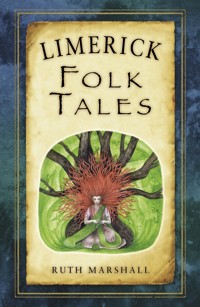
County Limerick is a place of kings and commoners. It is where Donn Fírinne, king of the Munster fairies, is said to have once roamed and where Sean na Scuab, a poor broom seller from the wrong side of the river, was chosen to be mayor of the city. It is a land filled with stories, poetry, music and drama. In these pages you can read about Sionainn, who was carried away by the flowing waters of the River Shannon; the bright and beautiful goddess Áine, the fairy queen, who knits the earth's green mantle below Lough Gur; Finn MacCool and his band of warri ors, the Fianna; the wise woman Joan Grogan and her ingenious cures; foolish Tadhg who outwitted a gang of thieves; and the poet-magician, Gearóid Iarla, on his horse with silver shoes. In this unique collection, storyteller Ruth Marshall recounts tales of mystery, music and magic from across the rich tapestry of the folklore of County Limerick.
Sie lesen das E-Book in den Legimi-Apps auf:
Seitenzahl: 288
Veröffentlichungsjahr: 2016
Das E-Book (TTS) können Sie hören im Abo „Legimi Premium” in Legimi-Apps auf:
Ähnliche















First published in 2016
The History Press Ireland
50 City Quay
Dublin 2
Ireland
www.thehistorypress.ie
The History Press Ireland are a member of Publishing Ireland, the Irish Book Publisher’s Association.
This ebook edition first published in 2016
All rights reserved
Text © Ruth Marshall, 2016
The right of Ruth Marshall to be identified as the author of this work has been asserted in accordance with the Copyright, Designs and Patents Act 1988.
This ebook is copyright material and must not be copied, reproduced, transferred, distributed, leased, licensed or publicly performed or used in any way except as specifically permitted in writing by the publishers, as allowed under the terms and conditions under which it was purchased or as strictly permitted by applicable copyright law. Any unauthorised distribution or use of this text may be a direct infringement of the author’s and publisher’s rights, and those responsible may be liable in law accordingly.
EPUB ISBN 978 0 7509 8158 3
Original typesetting by The History Press
eBook converted by Geethik Technologies
CONTENTS
Acknowledgements
About the Author and Illustrator
Introduction
1. The Limerick
2. The Tailor
3. Old Wives and Wise Women
4. The Fool Makes Good
5. Tales of the Fianna
6. Áine’s Sacred Landscape
7. Gearóid Iarla
8. Donn of Knockfeerina
9. Dreams
10. Strange Goings On
11. Toryhill
12. Fairies
13. Saints …
14. … and Sinners
15. Daft Nonsense
16. Love You Large, Love You Small
17. The Black Pig
18. The Siege of Knocklong
19. King of the Reeks
20. Owney and Owney-na-Peak
21. The River Shannon
A Closing Limerick
ACKNOWLEDGEMENTS
My thanks go to all those who have walked alongside me, whether for longer or shorter stretches, on my journey through County Limerick’s stories. It’s all good, it all helped. In particular, my gratitude to: Carolanne Lamont and Iain Symes-Marshall for listening, reading, believing. Also Arran Purdie, Cat Lamont, Angie Pinson, Sinead Duignan and her children, Ann Mason for lifts into Limerick, Niamh Ní Lochlainn for sharing bean feasa stories, Anne O’Reilly for help with Irish spellings.
The children and teachers of the 1930s who gathered folklore and stories from their local areas for the Schools Folklore Scheme (1937–38). This is a truly fantastic resource.
To Criostoir MacCarthaigh, archivist, for advice, and the Irish Folklore Commission, UCD, for permission to draw from the Schools Folklore Scheme material; and for specific permission to include the story ‘How the Forget-me-not Got Its Name’ in its entirety in this book.
Mary Immaculate College Library and Limerick City Library local studies section.
Áine, sovereignty goddess and fairy queen, for bringing lightness and helping make writing this book such a delight.
All those who have told these stories before me. If you had not, I would not have found them today. Thank you to those who will read them and tell and retell again. This is how we keep stories alive.
ABOUT THE AUTHOR AND ILLUSTRATOR
Born in Scotland, Ruth Marshall moved to Ireland thirty years ago.
Before settling in Ireland, she studied Archaeology and Botany at Glasgow University, worked as a folklore collector in the Scottish Highlands, and co-ran a wholefood shop.
In Ireland she joined a group of parents in founding a new school, which is now Raheen Wood Steiner National School in County Clare. She was a puppeteer, performing environmental puppet plays in schools and festivals around Ireland.
Ruth’s son was born in 1989. This pivotal moment also brought about the birth of her storyteller self, as she began to create stories to entertain, soothe and ease adaptation to difficult circumstances.
Combining her interest in holistic living and spirituality with her skills in creative writing, she was editor and publisher of Ireland’s holistic magazine, Network Ireland, for sixteen years. During this time she trained as a teacher of circle dance and soul-making and a facilitator of the Transformation Game, and became an energy healer and life coach. Crucially, while training as a Steiner kindergarten teacher, Ruth met Nancy Mellon, a pioneer in the work of storytelling as a healing art, and went on to do further courses with her in Ireland, the UK and Sweden.
Following her passion for keeping stories alive, Ruth has worked with all ages and abilities, from junior infants to retired older people. She taught creative writing for five years at ALFA Raheen Wood Steiner Secondary, and currently facilitates writing and personal development groups for adults. She believes in the healing power of the spoken word and derives great satisfaction from seeing others access their creativity and grow into more of who they really are.
As a storyteller and heritage specialist she visits primary schools through the Heritage in Schools Scheme, and gives storytelling and seasonal crafts sessions in museums, libraries, festivals.
Ruth’s published works include Celebrating Irish Festivals (Hawthorn Press, 2003): a ‘hands-on’ guide to Celtic festivals with stories, crafts, recipes and games to help families and communities celebrate together, and Clare Folk Tales (The History Press, 2013): a collection of folk tales from County Clare. She also published poetry in journals and anthologies in the UK and Ireland.
www.ruthmarshallarts.weebly.com
INTRODUCTION
I was delighted to have the opportunity to write this book of folk tales from County Limerick and I have thoroughly enjoyed the process of finding, gathering and retelling stories, and illustrating them. Engaging with these stories has served to deepen my relationship with the landscape of County Limerick.
Limerick is the nearest city to where I live, across the Shannon in rural County Clare. It is where I would go for a big shop, for art and craft materials, to rummage through the charity shops, to see a film or go to theatre. As a city, Limerick is rich in culture and history, it has poetry, theatre, cinemas, colleges, university, art school, and it sits on the River Shannon. As a county, Limerick is also rich. It has good land, in the east it is part of the ‘golden vale’.
The name Limerick has several possible origins: ‘Luimneach’ in Irish means ‘the flat area’, which is quite a good description of the largely limestone plain of central County Limerick, with its few volcanic hills here and there. Others say it comes from ‘Loimeanach’, meaning ‘bare marsh’ and refers to the Shannon shore near the city, or a ‘place laid bare by horses’. Or perhaps it comes from ‘Luimnigthe’, referring to the cloaks removed by warriors in battle by the river’s edge.
The land was overseen by Áine, the queen of the Munster fairies, whose home was Cnoc Áine, one of the three fairy hills of County Limerick. Formerly one of the Tuatha Dé Danann, Áine was the goddess of sovereignty, who could confer, or retract, this gift at her will. There are stories of Áine’s relationships with local rulers, Ailill Ollam and Maurice, Earl of Desmond, and the children she bore them, including the poet-magician Gearóid Iarla. These stories resonated with me. I celebrated the way Áine fought back against her attacker, proving him unfit to rule the land. As a knitter, I identified with her in her guise as the woman who knits the green fabric of the world beneath the lake. So many riches, so many layers of truth. These stories are golden threads that weave a magical cloth.
As a balance, Donn Fírinne, king of the Munster fairies, had his residence nearby at Knockfeerina. Again there are stories of his interactions with local mortals as well as neighbouring fairies. Finn MacCool and his band of warriors hunted in the hills of County Limerick. Their names, grafted onto hills and townlands, tell us where they roamed. Later came saints, travelling through the county, leaving their blessings, or sometimes curses, behind them, as well as their names and stories. The fairies too are ever present, stealing away new mothers to nurture their young, or enticing musicians to play for their night-long dancing.
A tradesman who made himself most visible in the County Limerick tales was the tailor. The journeyman tailor travelled from place to place to ply his trade, and he brought his bit of know-how problem solving with him to the households he stayed in, as well as the suits and shirts he made.
Another item of clothing, the apron, started to show up in different stories in curious ways. Biddy Early, Clare’s famous wise woman and healer, makes an appearance, as does Limerick’s own bean feasa, Joan Grogan. Joan would find her cures by travelling out of her body while in a trance state, then instruct the woman of the house to hold up her apron to receive whatever would fall into it. In other tales, giant women shape the landscape by carrying bits of mountains in their aprons, and men wear aprons to sow seed. The apron motif fascinated me: this practical garment that protects the wearer and has so many uses. I noticed that I often wore one of my own colourful aprons when I sat at my laptop at the kitchen table, typing up stories or drawing story characters – many of them in their aprons.
Where there are wise women and old wives, there are also fools: holy fools who make good. In this collection, you will find not Jack, but Tadhg, Pat and Sean, each of whom ends up surprising his mother, and proving he has his own kind of wisdom. There is hope for us all.
I hope that in having found and retold these stories, I am doing what I can to help keep them alive. In turn I hope that in reading them you will also find a deepening respect and relationship with the land and the people of County Limerick. Perhaps you will be encouraged to visit places featured in the stories. If you do, I am certain you will find magic, mystery and more tales to share.
Ruth Marshall, 2016
1
THE LIMERICK
Limerick has been home to many poets, and some claim it is the source of the well-known popular verse form that bears its name. We all know the Limerick’s short, punchy form: five lines, rhyming AABBA, with a humorous and often bawdy subject matter. The Maigue Poets certainly used the form, and it was often followed by a line from a popular song, ‘Will you come up to Limerick’, but it was the English writer Edmund Lear who popularised it in his books of nonsense verse in the nineteenth century.
Limericks are fun: they have a familiar rhythm and an easy rhyme scheme. They make us laugh. Children make them up spontaneously, so we know you don’t need to be a gifted poet to create one. The Limerick is a people’s poem. So here goes: my attempt at a Limerick.
There are riches more precious than gold, Such as stories that need to be told, Full of legends and tales From the hills and the dales. Now the book simply needs to be sold.
2
THE TAILOR
The journeyman tailor was an important character in the old times. He would travel from place to place, bringing his tools and his fabrics with him for the making or mending of a suit of clothes. He would stay with a household while he worked for them, and rely on their hospitality, and he would bring news and stories with him. As a stranger in a household, he might notice what others had simply taken for granted, so in many stories it is the tailor who sees that there is something strange going on when, for example, an old woman keeps coming back asking for coals from the fire. It is often the tailor who knows how to make changes to restore the natural order of things.
THE TAILOR AND THE FAIRY CHILD
A farmer and his wife lived together in an old mill with their baby son, just nine months old. They had a good life; all three were happy and healthy and the work on the farm was going well.
One day while the man was out in the fields, the wife went out to the stream to fetch a pail of water, leaving her son fast asleep in his basket. When she came back, the child was screaming so loud you’d think the world was coming to an end. His face was turning blue and when she looked closer, it seemed that he had shrunken and shrivelled. What had happened to her happy boy? She picked the child up to nurse him, but he kicked and turned, shrieking all the more, and would not settle in her arms. Was there something terribly wrong with him? She could see no sign of anything, but determined to keep a close eye on him as the day went on. However, after that day, the child grew not an inch taller, but stayed skinny and gaunt. He did not crawl on the floor, nor babble and knock over blocks like a normal child. All day long he only lay in his basket, crying and waving his wiry arms in the air.
A tailor, Connolly by name, came by looking for work. The farmer had work for him, so he agreed to stay the week the work would take. A bed was made up for him, and he set to his sewing. The first day, as he sat and sewed, he noticed the child’s constant whimpering. ‘What is the matter with the boy?’ he asked. The wife told him how her son had changed the day she had left him to fetch water. ‘I should never have left him alone!’ she cried, blaming herself for the boy’s troubles. Connolly puzzled over this: why would the child suddenly change?
A few days later both farmer and wife set off for the market in Newcastle West, leaving the tailor in charge of the house and the child, still grizzling in his basket. They had hardly left the house when a voice called out, ‘Hey, Connolly!’
Connolly looked around. As there was no one in the house save himself and the child, he went back to his stitching. But the voice called again, ‘Come here, Connolly!’ The tailor was afraid. Could it really be the sickly child who was calling him? What should he do?
Connolly went over to the basket. The sickly child was sitting up with a hideous grin on his face. ‘Can you keep a secret?’ it asked.
‘Eh, I can,’ stammered the tailor, wondering what might happen next.
‘Very well!’ said the child, leaping out of the basket and taking down a fiddle that hung over the fireplace. The child then danced around the kitchen, playing jigs and reels, and it was fine music he played, so the tailor could not help but dance along with him. He played tune after tune until they heard the farmer and his wife returning from the market. The child quickly hung up the fiddle, jumped back into the basket, and began to whimper.
Connolly drew the farmer and his wife aside. ‘Might I have a word with ye?’ he asked.
‘What is it, man? Is there something wrong?’
‘It is the child,’ says the tailor. ‘He is not your own child at all, but a fairy, lying there in his place.’
‘Is there anything we can do to get our own son back?’ cried the wife.
‘Leave it to me,’ says Connolly, ‘and I will get him to give you back your son. But stay out of the room while I do this, for it might upset you to watch.’
Connolly went back into the room, taking a shovel with him. He took up a shovelful of red coals from the fire, and came over to the basket.
‘Get out of there now before I roast ye alive!’ cried Connolly brandishing the red-hot shovel before the fairy child’s face. ‘Bring back the son of this house and be gone from it yourself!’
The ‘child’ leapt from the basket and, shrieking like a banshee, went running from the house. Although they chased him down the road, the tailor, the farmer and his wife could not catch him.
When they returned to the house, there was their own smiling child sitting up in the basket, round and plump and singing happily to himself. He reached up his small hands towards his mother. The woman lifted him from the basket and held him to her breast, sniffing his soft hair and calling all the sweet names a mother calls her beloved child.
There was no more crying in that household. The child grew tall and learned to speak and stand, and was the shining light of his parents’ lives from that day on.
Connolly the tailor finished his work there later that evening. Next day he would be moving on to the next-door neighbours, and he would have another story to tell when he got there.
THE MISSING BREAKFAST
The following morning, the people of the house were still sleeping soundly when Connolly gathered his things and was ready to leave. There was no breakfast ready for him, but surely the next-door neighbours would give him some food when he arrived there. It was not so far to the next house, and the walk would only help him work up an appetite.
When he reached the neighbours’ farm, they’d been up already since the cock had crowed. Their breakfast was long past, and the dishes all washed up and the pans hanging up gleaming. They did not offer the tailor a bite to eat, so by the time ten o’clock came by, his stomach was crying out for food. What could he do?
Connolly called the woman of the house and asked her for a lighted candle. When she brought it, he took it outside and went walking back and forth along the road he had come. The woman followed him, and at last she asked him, ‘What are you looking for out on the road with a lighted candle in the broad daylight?’
‘I was looking for my breakfast. Somehow I must have missed it between that other house and yours. I was looking to see was it out here on the road and I had passed it by.’
‘Come on away back in with you and I will put on a pot for you,’ said the woman of the house, laughing as she blew out the candle. ‘You only had to tell me you were hungry. You will not starve while you are staying in my house.’
She brought Connolly back into the kitchen and cooked up a fine breakfast for him. Three good meals a day he had while he was staying there, and another story to tell when he moved on.
COALS AND BUTTER
Another time a journeyman tailor was staying on a farm while he was making a suit of clothes. The man and woman of the house were going to market in Abbeyfeale one day to sell their butter, eggs and chickens. They left the tailor sitting by the kitchen table, busy at his work. ‘Would you just keep an eye about the place, and let us know anything that happens while we are gone?’
‘Of course,’ says the tailor, and he got on with his work.
He was stitching away at the table when the door of the kitchen opened and in came a small round old woman with a large white apron on her. ‘Would you give me a coal from your fire, for my own has gone out and I have nothing to light it with?’
The tailor did not know the woman, but he saw no harm in it. He picked up the iron tongs and took out a hot coal and gave it to the woman.
The woman thanked him for the coal and she was gone. He did not watch to see which way she went nor how far from the house.
Only once she was gone, did the tailor wonder what the woman was about. Then he took up his tongs and took out a single coal from the fire. He took his coal down to the end of the hall and put it in a large pot. That pot was used for cooking up scraps for the pigs and poultry, and there was a bit of water in it.
He went back to his stitching at the table. It wasn’t long until the small round old woman with a large white apron on her came back. ‘Mister, can you give me another coal. The one I got before went out.’
The tailor gave the old woman a second coal. When she had gone, he took another coal and added it to the pot in the hall, and placed a lid on it.
A third time the old woman came asking for a coal. The tailor gave her a red coal, and then he put one more coal in the pot in the hall and covered it up.
When the man and woman of the house returned from the market, they asked the journeyman tailor what he had seen that day.
‘I saw much that puzzled me,’ he said. ‘But first, can I ask you a question? How are ye getting on with the farm here? Are ye having much luck with it?’
The farmer replied, ‘To be honest with you, things are not going so well for us here.’
‘Is there a problem with the milk or the butter?’ asked the tailor.
‘Yes,’ said the wife. ‘The cows are never giving the milk we should be getting, and there is hardly any butter to speak of.’
Then the journeyman tailor told them, ‘A very strange thing happened today when you were away. An old woman came to the house three times looking for a coal from the fire. I gave her the coals, but I thought there was something odd. So I took the precaution of taking a coal myself, and adding it to your pot in the hall. I think whatever has been wrong on the farm, you will find it in there.’
When the wife took the lid off the pot in the hall, she found it filled to the brim with butter!
The tailor had guessed the old woman’s trick to steal the butter, and blocked the spell. There was no more trouble with the milk and butter on that farm.
And the journeyman tailor, well, now he had another story to tell on his evenings by the fire in every house he visited.
THE TAILOR AND THE HARES
On May Day morning, people always needed to be wary lest someone steal away their butter.
There was a tailor who lived alone in a small cottage beneath a hill. One morning in May an old woman came knocking at his door. She asked for a coal from his fire and, not thinking what day it was, he gave her the coal, and away she went. But once she was gone, he thought to take a coal and put it in a pot of water. A few minutes later the old woman was back, asking for another coal. Again he gave her one, but took one himself as soon as she had gone. That was how it went on, until the whole fire was gone, and yet still the old woman had no hold over him with her spell. Next she came back and took out a tin of ointment from a hole in the fireplace. When she rubbed this on her face, at once she turned into a hare, and was gone, running out the door.
The tailor opened the tin, and rubbed some of the ointment on his own face. Soon he was racing out the door and after the other hare. He followed her to a field full of hares, there must have been hundreds of them, all leaping around a man on horseback. There were cows there too, his neighbour’s cows, and some of the hares were milking them.
The horseman suddenly called out, ‘Stop! There is a stranger among us here!’
The hares went racing in all directions, and the tailor ran for home as fast as he could go, chased by the horseman who managed to slap him on his left cheek with his whip. When he reached home, the tailor rubbed the ointment on his face, and became a man again. The place where the horseman’s whip had caught him remained covered with grey fur ever since that day.
TAILOR SPELLMAN’S SPELL
There was a tailor called Spellman who lived close to Knockainy Hill. Every morning he used to go walking up the hill. He would speak a few words there on top of the hill. Then he’d take out his needle and he would point it towards each of the points of the compass: to the north, the south, the east and the west. Then he’d walk around, still holding out his needle, until he’d done a whole circle. When he’d finished that, he’d put the needle back in his case and down the hill he’d go, back home and get on with his work for the day.
Every day he did his morning walk up the hill, and there was no other tailor who could enter Knockainy. If a journeyman tailor was heading that way, something would get in his way, and he would have to turn back. That was his way of protecting his business.
THE TAILOR’S SECRET
There was a tailor who lived in Knocklong who was always busy. People would go to him by preference because, as well as being a fine tailor, he was also a great storyteller. People would travel a long way to get this tailor to make their clothes because of his fascinating tales. Other tailors would visit too, because they thought he had a ‘charm’ that helped him make clothes so neat and tidy. They all wanted to know what his secret was. There were a lot of tailors around and every one of them was looking for that bit of an edge over the others.
One day the tailor got very sick and he realised that his time was coming. He sent a message out to all the other tailors in the district, saying he was on his deathbed and he had no wish to take his secret with him to the grave.
Word travelled fast and before long all the tailors within 50 miles were crowded into the tailor’s shop. They waited, chatting among themselves until the tailor was ready to reveal the secret of his trade.
The old tailor sat up in his bed and declared, ‘My friends and fellow tailors, I believe I am not long for this world. Before I take my final breath and reach the gates of the world beyond, I would like to tell you something that has served me well through all my years of tailoring. I have always had plenty of trade, and there is a good reason for that. Come close now, for I feel my strength is leaving me.’
The tailors all gathered in close around the bed, holding their breath, desperate to hear the secret of his success.
‘Here is my advice to you,’ the old tailor continued. ‘Whenever you sew on a button, always tie a knot at the end of your thread …’
All the tailors gasped, as the old man closed his eyes and lay his head back on his pillow, taking the real secret with him to the world beyond.
SOURCES
‘The Fairy Child’, ‘The Missing Breakfast’: NCFS 514:325-7; John Aherne, Kilbeheny, County Limerick. Kilbeheny (C) School
‘Coals and Butter’: Irish Life and Lore: Jim Lane & Denis Broderick – part 2
‘The Tailor and the Hares’: NCFS 492:164-166; Ned Leahy, Tournafulla. Collector: Mary Mulcahy, Tournafulla. Gleann Gort School, Newcastle West
‘Tailor Spellman’s Spell’: NFC 1799:116, 1971
‘The Tailor’s Secret’: NCFS 516:459; John Dooley, Grange, County Limerick. Grange School, County Limerick
3
OLD WIVES AND WISE WOMEN
JOAN GROGAN
Just as County Clare has Biddy Early, renowned as a wise woman throughout the whole country, so County Limerick has Joan Grogan. She lived in West Limerick, near the Kerry border, and had a reputation as a healer and seer. Here are some of the stories told about her and her abilities.
How Joan Found Her Power
Joan Grogan was born in a small, modest house in the townland of Athea, near the border with County Kerry. She seemed happy enough, was a lively child, and there was no sign in her early years of any particular ability that would set her apart from others. She grew up among the girls and boys of the district, and joined in their sport and play like any other girl.
When she was around 20 years old she set off with a crowd of other young people to a wake. It was already dark when they set off and the group stayed close together, laughing and joking on their way. But when they crossed a stream the party split, some leaping across quickly and racing ahead while others took their time crossing the water. So none of them noticed that Joan was missing. The first and faster group just thought she was coming up behind with the other party; while the second group thought she had gone ahead with the first.
By the time they all met up again at the wake, they noticed that Joan was not among them. They thought little of it, laughed at how each had thought she was with the others. ‘She must have decided to go home early,’ they said, or ‘Joan probably changed her mind and went to see her auntie.’
No one was concerned that Joan was not with them, nor thought any harm had come to her. But the next morning, there was a very strange story on everyone’s lips, telling what had befallen Joan Grogan. Joan herself had no memory at all of that night, from setting out with her friends for the wake until she woke up in the strangest of places. She awoke in the morning out of a deep sleep, but was as surprised as anyone might be to find herself sitting up on the roof of her own house, up on the top of the chimney pot! How she had got there she couldn’t begin to wonder, but because she herself laughed at the absurdity of it, everyone else treated it as a strange joke.
After that night Joan began to have epileptic fits from time to time. She had also suddenly developed a kind of second sight, for now she knew things about other people that no one else could have known. When she was having a fit, Joan would somehow travel out of her body and see things that she had no way of knowing. Some began to fear Joan for the strange power she had and they called her a witch. But to others, she was a wise woman who could help them with cures for diseases of man and beast.
The news of her abilities spread and people came to her from far and near for help. Joan found that she could bring on a fit or trance at will by drinking a little whiskey. When she visited the house of a sick person, she would often tell the woman of the house to go and open the door and hold out her apron. Then a sprig of herbs would fall into the outstretched apron. When these were boiled in goat’s milk, they were given to the patient to drink.
They say that Joan cured several people whom the doctors had given up as hopeless cases, and once she even raised a man who had been dead for twenty-four hours and he lived for a further five years after that!
Meat for the Table
As often happened to women with knowledge of healing, the priests took against Joan, claiming her powers came from an evil source, and warned people to stay away from her. They went so far as to excommunicate Joan, although she was welcomed back into the fold before she died.
When Joan was visiting a neighbour one day, there was only a few potatoes and a jug of buttermilk when the family sat down for dinner. Joan said aloud, ‘It is a pity there is no meat for your dinner.’
‘You are right there,’ said the man of the house. ‘It is indeed, but what can we do?’ Joan went up and opened the back door. She held up her apron stretched between her two hands. The next thing you knew, there was a joint of roast beef came falling down into her apron. Joan brought the joint of meat to the table, saying, ‘Here is a fine joint of meat for your dinner!’ and with that, she left the house, so that they could enjoy their meal. The meat was hot, as if it had just come out of the oven, and the aroma was rich and made their mouths water. But not one of them would touch so much as a mouthful of it, no matter how delicious it smelt. When Joan had gone, the woman of the house took the meat outside, threw it away across the fields, where none of their animals could find it, and left it there for the crows or foxes. Perhaps they had listened to the priest when he spoke against Joan in the church on Sunday, but they did not trust the source of the meat and were afraid to tempt fate by eating it.
A Cure
Joan worked at one time for a man in Glenamore. In the house there was a young man who suffered with polyps in his nose. When he asked her could she find a cure for him, she put herself into a trance, and whilst she was ‘out of herself’ she spoke to those present and gave them instructions on what to do for the cure.




