


Class E-Book
33,99 €
Mehr erfahren.
- Herausgeber: John Wiley & Sons
- Kategorie: Geisteswissenschaft
- Sprache: Englisch
Using an innovative framework, this reader examines the most important and influential writings on modern class relations.
- Uses an interdisciplinary approach that combines scholarship from political economy, social history, and cultural studies
- Brings together more than 50 selections rich in theory and empirical detail that span the working, middle, and capitalist classes
- Analyzes class within the larger context of labor, particularly as it relates to conflicts over and about work
- Provides insight into the current crisis in the global capitalist system, including the Occupy Wall Street Movement, the explosion of Arab Spring, and the emergence of class conflict in China
Sie lesen das E-Book in den Legimi-Apps auf:
Seitenzahl: 1541
Veröffentlichungsjahr: 2017
Ähnliche




















Table of Contents
Cover
Title Page
General Introduction
How to Read This Book
PART ONE: The Working Class
CHAPTER 1: Representing the Working Class
I
II
III
CHAPTER 2: The Realm of Freedom and The Magna Carta of the Legally Limited Working Day
On the Realm of Necessity and the Realm of Freedom
The Magna Carta of the Legally Limited Working Day
CHAPTER 3: Time, Work‐Discipline, and Industrial Capitalism
CHAPTER 4: The Wages of Whiteness
CHAPTER 5: A Living Wage
Producerist and Consumerist Forms
Toward the Living Wage
CHAPTER 6: The Stop Watch and The Wooden Shoe
Taylor and the “Art of Sweating” (1)
The I.W.W. Turns to Guerilla Warfare
CHAPTER 7: The Power of Women and the Subversion of the Community
The Origins of the Capitalist Family
The Exploitation of the Wageless
Surplus Value and the Social Factory
The Productivity of Wage Slavery Based on Unwaged Slavery
A New Compass for Class Struggle
The Refusal of Work
CHAPTER 8: Ladies of Labor, Girls of Adventure
Introduction
Ladies of Labor:
CHAPTER 9: Three Strikes That Paved the Way
CHAPTER 10: Jukebox Blowin’ a Fuse
Images of Work and Resistance in Rock ’n’ Roll
CHAPTER 11: Labor’s Time
Introduction
CHAPTER 12: The Unmaking of the English Working Class
Deindustrialization, Working‐Class Masculinity, and the Origins of Heavy Metal
Reification and Class Consciousness in Heavy Metal
Conclusion: Hell Awaits
CHAPTER 13: The Jobless Future
Introduction
The Need to Reduce Working Hours
CHAPTER 14: Shiftless of the World Unite!
CHAPTER 15: Occupy the Hammock
The Return of the Repressed in New Working‐Class Organizing Efforts
Discourse and Ideology in the Minimum‐Wage Debates
The Figure of the Slacker and the Cultural Dimension of the Minimum‐Wage Debate
Conclusion
PART TWO: The Middle Class
CHAPTER 16: The Vanishing Middle
What Is the Middle Class?
A Class Without Events
The Routinization of the Intellect
Back to the Future
CHAPTER 17: The Struggle Over the Saloon
Introduction
The Rise of The Saloon
The Struggle Over the Saloon, 1870–1910
CHAPTER 18: The Salaried Masses
Selection
Short Break for Ventilation
Among Neighbours
Shelter for the Homeless
CHAPTER 19: The Twilight of the Middle Class
Introduction
Chapter One
CHAPTER 20: The Rise of Professionalism
The Rise of Corporate Capitalism and the Consolidation of Professionalism
CHAPTER 21: The New Working Class
The Differentiations Within the Working Class
For a Marxist Sociology of Work
Does Technological Alienation Exist?
Is the New Working Class Revolutionary?
CHAPTER 22: How the University Works
The Rhetoric of “Job Market” and the Reality of the Academic Labor System
Job‐Market Theory as Second‐Wave Knowledge
Works Cited
CHAPTER 23: The Mental Labor Problem
The Cost of Idle Curiosity
A Great Divide
The Cultural Discount
The Cost Disease
New Model Workers
Artists Cannot Afford to Be Rewarded Well?
The Service Ideal
A Volunteer Low‐Wage Army?
Education Enterpreneurs
Second Thoughts
CHAPTER 24: Neoliberalism, Debt and Class Power
Introduction: Debt, Crisis and Everyday Life
Mortgage and Student Debt: From the 1950s through 2009
Mortgage Debt, Neoliberalism and Accumulation by Dispossession
From Wage Discipline to Debt Control: Neoliberalism and Finance Capital
Mortgage and Student Debt: Producing and Regulating Indebtedness
Conclusion: The Society of Control is a Society in Debt,which is the Neoliberal Utopia
Bibliography
PART THREE: The Capitalist Class
CHAPTER 25: The Capitalist Class
I
II
III
IV
V
VI
VII
CHAPTER 26: The Secret of Primitive Accumulation
Chapter 27: The Expropriation of the Agricultural Population from the Land
CHAPTER 27: The Monied Metropolis
Introduction
8 The Culture of Capital
9 The Rights of Labor, The Rights of Property
CHAPTER 28: Class Struggle and the New Deal
Chapter One The Capitalist State, Class Relations, and the New Deal
Chapter 2 The Process of Capitalist Development
Chapter Five The Monopoly Debate and Intracapitalist Conflict
CHAPTER 29: Scientific Management
Chapter 4 Scientific Management
Chapter 6 The Habituation of the Worker to the CapitalistMode of Production
CHAPTER 30: Labor and Franklin Delano Roosevelt’s New Dream
Preface
4 The Eight‐Hour Day
6 Labor and Franklin Delano Roosevelt’s New Dream
8 Labor Turns from Shorter Hours to Full‐Time, Full Employment
CHAPTER 31: Nixon’s Class Struggle
I
II
III
VI
VIII
IX
XI
CHAPTER 32: The Global Reserve Army of Labor and the New Imperialism
Global Labor Arbitrage
The Global Reserve Army
The New Imperialism
CHAPTER 33: The End of Retirement
Whither Retirement?
The Erosion of the U.S. Retirement Security System
Explaining the Shift from Defined Benefit to Defined Contribution Plans
The Implications for Workers
Pension Reform
Jobs and the Older American
CHAPTER 34: The Politics of Austerity and the Ikarian Dream
Selected Bibliography
Index
End User License Agreement
List of Illustrations
Chapter 06
Figure 6.1
Chapter 24
Figure 24.1 Household debt as a percentage of disposable income.
Figure 24.2 Household debt as percentage of gross domestic product (GDP).
Figure 24.3 Homeowner’s equity as percentage of home value.
Guide
Cover
Table of Contents
Begin Reading
Pages
iii
iv
vii
viii
ix
x
xi
xii
xiii
xiv
xv
xvi
xvii
xviii
xix
xx
xxi
1
3
4
5
6
7
8
9
10
11
12
13
14
15
16
17
18
19
20
21
22
23
24
25
27
28
29
30
31
32
33
34
35
36
37
38
39
40
41
42
43
44
45
46
47
48
49
50
51
52
53
54
55
57
58
59
60
61
62
63
64
65
66
67
69
70
71
72
73
74
75
76
77
79
80
81
82
83
84
85
86
87
88
89
90
91
92
93
94
95
96
97
98
99
100
101
102
103
104
105
106
107
108
109
110
111
112
113
114
115
116
117
118
119
120
121
122
123
124
125
126
127
128
129
130
131
132
133
134
135
136
137
138
139
141
142
143
144
145
146
147
148
149
150
151
152
153
154
155
156
157
158
159
160
161
162
163
165
166
167
168
169
170
171
172
173
174
175
176
177
178
179
180
181
182
183
184
185
186
187
188
189
190
191
193
194
195
196
197
198
199
200
201
202
203
205
206
207
208
209
210
211
212
213
214
215
216
217
218
219
221
222
223
224
225
226
227
229
230
231
232
233
234
235
236
237
238
239
240
241
242
243
244
245
246
247
248
249
250
251
252
253
254
255
256
257
258
259
260
261
263
264
265
266
267
268
269
270
271
272
273
274
275
276
277
278
279
280
281
282
283
284
285
286
287
288
289
290
291
292
293
294
295
296
297
298
299
300
301
302
303
304
305
306
307
308
309
310
311
312
313
314
315
316
317
318
319
320
321
322
323
324
325
326
327
328
329
330
331
332
333
334
335
336
337
338
339
340
341
342
343
344
345
346
347
348
349
350
351
353
354
355
356
357
358
359
360
361
362
363
364
365
366
367
368
369
370
371
372
373
374
375
376
377
378
379
380
381
382
383
384
385
386
387
388
389
390
393
394
395
396
397
398
399
400
401
402
403
404
405
406
407
408
409
410
411
413
414
415
416
417
418
419
420
421
422
423
424
425
426
427
428
429
430
431
432
433
434
435
436
437
438
439
440
441
442
443
444
445
446
447
448
449
450
451
452
453
454
455
456
457
458
459
460
461
462
463
464
465
467
468
469
470
471
472
473
474
475
476
477
478
479
480
481
482
484
483
485
486
487
488
489
490
491
492
493
494
495
496
497
498
499
500
501
502
503
504
505
506
507
508
509
510
511
513
514
515
516
517
518
519
520
521
525
526
527
528
529
530
531
532
533
534
535
536
537
538
539
540
541
542
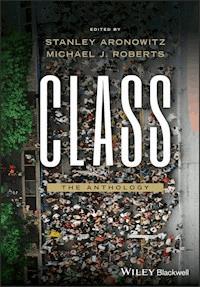
CLASS THE ANTHOLOGY
Edited by Stanley Aronowitz and Michael J. Roberts
This edition first published 2018.Editorial material and organization © 2018 Stanley Aronowitz and Michael J. Roberts
All rights reserved. No part of this publication may be reproduced, stored in a retrieval system, or transmitted, in any form or by any means, electronic, mechanical, photocopying, recording or otherwise, except as permitted by law.Advice on how to obtain permision to reuse material from this title is available at http://www.wiley.com/go/permissions.
The right of Stanley Aronowitz and Michael J. Roberts to be identified as the authors of the editorial material in this work has been asserted in accordance with law.
Registered OfficesJohn Wiley & Sons, Inc., 111 River Street, Hoboken, NJ 07030, USA John Wiley & Sons Ltd, The Atrium, Southern Gate, Chichester, West Sussex, PO19 8SQ, UK
Editorial Office9600 Garsington Road, Oxford, OX4 2DQ, UK
For details of our global editorial offices, customer services, and more information about Wiley products visit us at www.wiley.com.
Wiley also publishes its books in a variety of electronic formats and by print‐on‐demand. Some content that appears in standard print versions of this book may not be available in other formats.
Limit of Liability/Disclaimer of WarrantyWhile the publisher and authors have used their best efforts in preparing this book, they make no representations or warranties with respect to the accuracy or completeness of the contents of this book and specifically disclaim any implied warranties of merchantability or fitness for a particular purpose. No warranty may be created or extended by sales representatives or written sales materials. The advice and strategies contained herein may not be suitable for your situation. You should consult with a professional where appropriate. Neither the publisher nor authors shall be liable for any loss of profit or any other commercial damages, including but not limited to special, incidental, consequential, or other damages.
Library of Congress Cataloging‐in‐Publication data is available for this book.
ISBN 9780631224983 (hardback), 9780631224990 (paperback)
Cover Design: WileyCover Image: © Young Sam Green / EyeEm/Gettyimages
General Introduction
Stanley Aronowitz and Michael J. Roberts
This volume of documents, classic articles and original analysis by the editors remains controversial on several grounds. Despite the growing evidence that the global economy is dominated by a handful of leading corporations and the very rich individuals who control them, the conventional wisdom is that we live in a world of mom and pop enterprises. Accordingly, most citizens of the most industrially developed countries are termed “middle class.” For those who do not own their own businesses, we measure class by income and by consumption. Beneath this vast social group is the relatively small corps of the poor, a diminishing proportion of the population.
Mainstream political science insists that there is no ruling class or power elite in the functions of the state. Following the dictum, most forcefully established in the late 1950s by Yale political scientist Robert Dahl, whose book Who Governs? remains a bible for many, American politics consists of a plurality of organizations, including business, political parties, pressure groups on single issues, and unions, none of which, in advance, constitutes the leading edge of governance. This idea of American classlessness can be traced back to the immensely influential book Why There is No Socialism in the United States (1906) by the German economist and sociologist Werner Sombart. Sombart advanced the thesis that the workers were not a class in the European sense. They did not exhibit solidarity as a class because America is really the land of opportunity. It had no feudal tradition and possessed unlimited natural and economic resources. The urban political machines address and often solve the most pressing issues facing workers outside the workplace. Yet in subsequent years, especially the 1930s, 1940s and 1960s, American workers engaged in some of the sharpest strikes, factory occupations and demonstrations of any working class in advanced industrial capitalism, most of which were unauthorized by law.1 Even so, conventional social science remains adamant that class plays a subordinate or no role in the conduct of politics and the political economy. According to this view, the United States is a middle class society with a tiny stratum of the rich and a slightly larger underclass of the poor, who are declining over time. And the poor are poor because their families are dysfunctional or they lack the energy and the will to take advantage of prevailing opportunities to lift themselves out of poverty. Some anthropologists and sociologists advanced the theory that the poor wallow in a “culture of poverty” that effectively cuts them off from mainstream society. In the absence of outside intervention, either by the state or by private philanthropies this culture, it is held, is self‐reproducing. Among the leading scholars of this position were Daniel Patrick Moynihan and Nathan Glazer, whose book Beyond the Melting Pot stirred fierce debate in the 1960s when the question of poverty commanded the nation’s attention and became a subject of national policy.
However, the most disputed idea that underlies this project is that we declare that our societies are constituted by three classes: a capitalist ruling class consisting of the tycoons of finance, the top political managers, the corporate elite, and in the United States what C. Wright Mills termed the “warlords” at the pinnacle of the military; a middle class of small business owners and salaried professionals and technical operatives who still enjoy some autonomy in the performance of their work; and the working class, employed or not, with decent or low income, who have little or no control over their labor.2 More, we argue that class and class conflict has riven society throughout the history of capitalism and, indeed, constitutes how capitalism has developed. Capital accumulation is not an automatic process initiated solely by investment. It is spurred by economic and social struggles. When force does not work, the demands of labor are often met by capitalists through the introduction of job‐destroying technologies that may yield higher wages, but to fewer employees. Capitalism has penetrated agriculture in these societies, so that there is no longer a peasantry. Capitalist agriculture is almost entirely industrialized; it imposes a factory‐like division of labor, hours of work and forms of supervision. Most people who work the land are either a diminishing group of small producers, seasonal laborers on middle sized farms, many of whom are immigrants, often undocumented, or workers for giant agricultural corporations. The developing world, which still has billions of peasants – small owners, tenant farmers, subsistence farmers, workers on state or privately‐owned industrial farms – has experienced, over the last 40 years, an explosion in manufacturing industry. The primary site for the industrialization is China. Following the death in 1977 of Mao, the revolution’s key figure, the leadership of the Communist Party began a major program of industrialization. In predominantly peasant society, its first task was to create a working class. With a population of over a billion, it adopted the most extensive enclosure in human history. The expulsion of farm labor from the countryside made the parallel effort of the British seventeenth and eighteenth centuries look like a tea party. In the 1980s and 1990s, 150 million people were driven from the land into China’s major cities.3 There they were employed in construction, factories and urban service industries, and some remained unemployed pending economic expansion. Second, under state control, the government invited foreign private capital to establish industrial plants and other enterprises. Third, the state began a program of expanded vocational and higher education to train skilled workers, scientific and technical personnel and managers. In contrast to the years following the conquest of power in 1949, the party and the government were eager to learn from the capitalist West, and to import its technologies. For example, scientists, engineers and students were sent abroad to acquire knowledge and training in their respective fields and western consultants were brought to China to train the indigenous population in management skills and technical fields.
By 2000 China was already a major global industrial power. It quickly overtook western countries in the production of textiles, shoes and clothing, but moved beyond light manufacturing to heavy machinery such as construction vehicles, electronics (computers, telephones and other equipment), petrochemicals and, within a few years, automobiles. Much of its industrial production was destined for export; its main internal market was among the growing middle class of small producers and professionals. The regime retained a substantial state sector, but the emphasis on attracting private capital marked a new phase in the country’s history. China’s exports to the United States and Europe far exceeded its imports. By 2010, China was supplying inexpensive cars to the growing middle class of Southeast Asia and was beginning to penetrate the African and Latin American markets.
Working and living conditions in the private sector were, in the main, abysmal. The 1990s witnessed the beginning of a steady wave of worker protest against these conditions. Workers demanded higher wages, but also fought for decent working conditions and housing. The state permitted strikes and demonstrations against private sector employers, but strictly forbid industrial action against state enterprises. Its argument was that because the Chinese state is a workers’ state, workers cannot strike against themselves. Yet the past 20 years have been rife with class conflict. Since the early 1990s, official reports count the number of protests each year at about 7000; in recent years the number has reached nearly twice that amount.4 In some instances the government and the private employers have responded by instituting reforms. In other cases, conditions have not materially improved. Workers are often required to labor for 12–16 hours a day and occasionally are forced to spend 30 hours or more on the job. Beyond the factory the government’s vast urban development program has been met with resistance. As the government tore down thousands of residential buildings to make way for industrial plants and middle class housing, residents responded by what the official press termed “riots,” which obliged the authorities to promise relocation to alternative housing, a promise not always fulfilled. Will the great proletarian revolution break out in China?
Following World War Two, experts left, right and center have, with numbing regularity, declared the era of class and class struggle at an end. In the advanced societies, workers enjoyed rising living standards brought about by a combination of economic growth in Western Europe and North America and the legalization of collective bargaining and state‐sponsored social benefits. The strike weapon proved potent, providing upward pressure for change. While Europeans hesitate to call this phenomenon a symptom of the “bourgeoisification” of the working class, sociologists in the United Kingdom and the United States argued that workers had become “middle class” and the concept of struggle between classes was permanently overcome by welfare capitalism.5 State and private pensions insured the continuation of economic security beyond employment; unemployment compensation effectively tided over those temporarily afflicted by recession or labor market instability. And in the years following the failure of Congress to enact national health insurance in 1949, unions incorporated health coverage in collectively‐bargained contracts, and most, but not all non‐union employers offered some kind of health plan to their workers in order to prevent further union organization. In addition, with the assistance of the Federal Government, many working class families were able, for the first time, to purchase single or two household homes.
The post‐war boom which left millions behind lasted until about 1973. This was the year that President Richard Nixon took the United States off the gold standard in order to spur the economy, which after 1969 was stagnating. Already, in the late 1960s America was experiencing capital flight to developing countries and the US South, leaving New England, parts of the Midwest, and the Middle Atlantic states in an apparently permanent condition of decline. The new challenges to the US economy were wrought by the emergence of Japan and Europe as global economic powers and by the militancy of a considerable, highly unionized industrial labor force which fought against speedup and other productivity measures.6 In the wake of declining productivity due, chiefly, to worker resistance, US capital went on strike. It fought the workers by destroying jobs in two ways: outsourcing and, perhaps more important, introducing a new wave of technological innovation led by computerization of manual labor. In automobile manufacturing, machine tool manufacturing, steel, textiles, oil refining and chemical production, corporations shed workers even when they did not close plants. But they closed plants, too.
Once prosperous industrial cities like Homestead, PA, Detroit, Flint, Toledo, Akron, Youngstown and many others were either suddenly or gradually deindustrialized. The remaining labor force was reduced by as much as 60–70%, even as production levels did not suffer. For example, the basic and fabricating US steel labor force was 600,000 in 1960. By 2000 it had been reduced to slightly over 100,000, with no loss of tonnage production. The big three auto corporations had employed 750,000 workers in 1970; by 2000, threatened in part by foreign imports and by their own computerization on the production lines, they had no more than 200,000 workers and continued to shed workers in the early years of the twenty‐first century, even as the industry revived from its doldrums in 2010. In 1960, there were 180,000 refinery workers in the oil industry. By 2010, even as production remained high, less than 40,000 were still employed.7
In Europe, Spain has a 20% unemployment rate, joblessness is rising in Italy and Portugal, and in Greece the economy is close to collapse. The demands of the European Union’s financial managers for severe austerity measures in these countries as a price for bailout funds for the banks and other institutions of the financial system have met with varying degrees of resistance. Trade unions and Left parties have argued that the austerity is directed, much like US austerity, at workers’ living standards. Already in Greece, for example, pensions for state employees, including academics, have been cut in half. Private sector wages have also suffered and social benefits are threatened everywhere. Among these countries, Greece is experiencing ongoing protest. The parties of the Left won a clear majority in the 2012 parliamentary elections, and the coalition of the groups calling itself Syriza enjoyed a stunning victory in the January 2015 election and is now leading Greece against the austerity programs designed by the captains of finance capital.8 In Spain, the anti‐austerity party Podemos was on the verge of winning national elections there, as Pablo Iglesias had a good chance of becoming the next Prime Minister.9 Podemos lost ground in a recent election in June of 2016, but it is too soon to know if they can regain the ground that they lost.10 The French elections resulted in the first Socialist government in 18 years, a victory that can only be ascribed to resistance to the austerity program of the previous Center‐Right government of Sarkozy. Still, it remains to be seen whether the new Socialist regime will chart an independent course or submit to the harsh conditions set by the European Union’s managers and by the conservative German Chancellor. Recent events have revealed that the Socialist government is suffering from internal strife, as strikes by workers resisting changes in the country’s labor laws have significantly complicated the ability of the Socialist government to mediate class conflict.11 Italy’s technocratic regime that has been installed to administer austerity is highly unstable. From the Right as well as the Left, there have been challenges to the idea that the people must pay for the perfidy of the banks and other institutions of finance capital.
But America was not immune from protest against austerity from below. In 2006 a million marchers took to the streets of American cities and towns to demand immigration reform.12 The protesters, who were composed, largely, of undocumented as well as legal immigrants, believed that their action would force the Federal government to enact a plan to legalize 11 million undocumented immigrants. Indeed, the administration of the Republican president, George W. Bush, called for changes in both statute and the practice of government expulsion. But Congress was slow to act. The marchers could be confident that a new Democratic president and a Democratic Congress would heed their call. However, the 2008 Democratic sweep of the White House and Congress failed to fulfill the immigrant dream of citizenship. The newly elected president Barack Obama did not view his victory as a mandate for change. From the start, he assumed a defensive posture, as if he had barely squeaked through, despite a commanding majority in the poll. Most of the undocumented were working as low‐paid laborers in various service industries or in the hugely important agricultural sector and were no burden on the public treasury. Nor did citizens clamor to take dishwashing jobs in restaurants or opportunities to pick apples, vegetables, strawberries and cotton. But these facts failed to deter the administration from undertaking a fierce campaign of deportation that far exceeded that of the previous Bush era. Indeed, according to The Nation magazine, Obama expanded an existing deportation program by 3,600 percent.13
Spring 2011 was a season of global discontent. In quick succession mass demonstrations in Tunisia, Egypt, Libya and other Arab countries removed long‐ruling dictators from their thrones.14 The democratic impulse ran deep among all subordinate classes of society. But US media all but ignored the working class strikes and demonstrations that preceded and accompanied the protests in the center of Cairo.15 For these media, the so‐called “Arab Spring” was clearly a middle class series of events. If there was any difference within the movement it was termed religious versus secular, the army against the democrats, but the class struggle was conveniently left out. The fact that many workers walked out from the workplace and took to the streets was due, largely, to years of political and social repression and impossibly low wages reinforced by state‐run trade unions as much as the government. Egypt, the largest country in North Africa and the Middle East, faced the problem of a military take‐over that threatened to undermine and ultimately cancel the effect of liberal democratic elections, and the re‐introduction of anti‐working class force. In an unstable situation in 2012 it remained to be seen whether liberal democracy and an autonomous labor movement would survive.
After four years of economic slump, a new movement of protest and resistance emerged in the United States. The first sign of struggle occurred in Madison, Wisconsin. Following the shellacking sustained by the Democrats in the 2010 elections where the Republicans captured the House of Representatives and many statehouses and state legislatures changed hands as well, the newly elected right‐wing Wisconsin governor Scott Walker, following the lead of his Indiana counterpart, Mitch Daniels, proposed abolition of collective bargaining for state employees, except on wages. In the spring of 2011, the labor movement, students and community activists responded with mass demonstrations at the state capital, including an occupation of the capital. It was not a one‐day demonstration. Day after day up to 125,000 demonstrators showed up at the capital; teachers left their classrooms and students at the university stopped attending classes. Fourteen Democratic senators left town, depriving Walker of a quorum to pass the legislation.16 As the movement gained momentum the Democrats proposed to recall four Republican senators and the governor. The forward march of direct action was diverted to electoral strategy. The Democrats regained a senate majority but the recall failed to topple the governor. But, after years of torpor, a section of the American labor movement had removed the scales from its eyes, for at least a moment. The Wisconsin struggle, which failed to reverse the anti‐collective bargaining legislation, reverberated throughout the country. In Ohio, in a referendum, voters repealed a similar measure as Labor flexed its considerable muscle.
In September 2011, the class movement from below entered a new phase. Occupy Wall Street, without offering a list of specific demands, occupied Zuccotti Park, a sliver of land in the Wall Street area. The occupation, which gathered mostly young people, many of whom were unemployed college graduates, advanced only a single slogan, “We are the 99%,” and opposed themselves to the “1%,” who they claimed ran the economic and political institutions of the globe and had ruthlessly imposed a series of bank bailouts that would be paid for with working class and middle class tax dollars, a merciless transfer of wealth from the 99% to the 1%. A few weeks later the 200 occupiers, now supplemented by at least 500 others, attempted to block the Brooklyn Bridge. The demonstration was quickly met with a cordon of New York City riot police that beat some of the protesters and arrested more than 70 of them. The exhibition of police coercion electrified youth and activists throughout the United States and spread around the globe. Within days at least 110 American cities and smaller communities had Occupy movements: Boston, Philadelphia, Chicago, Saint Louis, Detroit, Los Angeles, San Francisco, Portland, Seattle and Providence, among others. In Oakland, dockers who were members of the International Longshore and Warehouse Union shut down the port in sympathy with the occupation, and in New York a demonstration and march of 20,000 pro‐occupiers, many of whom were organized union members, filled the streets of the downtown area.17
Occupy movements sprouted in some Canadian, European and Southeast Asian cities such as London, Toronto and Hong Kong, and in Latin America in Mexico City, Santiago and Buenos Aires, among others. By late fall, 2011, the class nature of global power was exposed to public view. Occupy Wall Street organizers resisted calls from liberal supporters to advance specific demands, enter the electoral arena, and negotiate with city and state authorities. President Obama expressed sympathy with the movement, but did not come to the Washington Occupy site, let alone any of the more than 100 others. Mayors in some leading cities hesitated to break the occupation until in late November a conference call was convened among 18 mayors of cities where the occupation was particularly effective and visible. They decided, probably advised by the US Attorney General, to apply force to disperse the sites. Accordingly, under the pretext of security and sanitary concerns, a coordinated police action was implemented and dozens of sites were cleared. The Occupy movement did not entirely disappear but it was set back, in part, because the organizers did not seem to have a “plan B” to meet the eventuality that they would be removed from public space.
What differentiates the Occupy movement from other social movements? In the first place, the activists remained skeptical about suggestions made by their liberal supporters that they frame a specific series of demands. Their suspicion was motivated by a reading of the history of American social movements. Feminist, black freedom and environmental movements of recent vintage have sought amelioration of very pressing but relatively easy grievances for the power structure to address. Although the mass struggle for black civil rights was conducted over several decades of the twentieth century, its resolution was not genuine equality but two significant but limited legislative victories. The Voting Rights Act prohibited by law discriminatory state measures to exclude blacks from the vote. These included literary tests, poll taxes and outright coercion. The Civil Rights Act was more far‐reaching. For the first time since Reconstruction, the Federal government would enforce employment, housing and public accommodation discrimination, and the right of citizens to organize for their interests without facing the organized violence of the state. Similarly, women fought for and, in 1973, won abortion rights and anti‐discrimination measures at the Federal level on questions of employment. But abortion rights were granted by the Supreme Court rather than Congress. In Roe v. Wade, Justice Harry Blackmun, writing for the majority, invoked the privacy doctrine, not the equal protection under the 14th amendment, which Ruth Bader Ginsburg argued would have been a stronger rationale because it would have recognized women as a class.
The publication of Rachel Carson’s Silent Spring in 1962 was the intellectual event that spurred the emergence of the contemporary environmental movement. Within a decade, activists in Greenpeace and other organizations engaged in direct action against polluters, especially power companies that used fossil fuels, the US Navy, public institutions and some politicians. Their force was sufficiently potent to influence the Nixon administration to establish an Environmental Protection Agency with some enforcement powers. In subsequent years, the Agency faced strong opposition from conservatives and some unions, especially in the energy sector that was invested in coal and oil. As scientific evidence mounted in the 1980s and 1990s that showed the planet was experiencing severe climate change (global warming, sea level rise, tornadoes, drought, etc.) that would eventually threaten the supply of food and potable water and rain physical destruction on entire communities, the subject became a major public issue. The Right greeted the ecological crisis with systematic denial. The Left remained divided: while it did not repudiate the claim of global deterioration, it remained preoccupied with issues of economic justice, the definition of which grew narrower after 2000 as the employment and financial crises became endemic to all industrially advanced societies. As always, the progressive liberals vacillated between their reliance on political parties which they believed could enact legislative remedies, and institutions such as the United Nations which enjoyed the legitimacy of international law and public opinion.
The brilliant success of the political center was to persuade all of the major social movements, including the disability movement, to follow the playbook of the unions. Even though their most successful results had been won by direct action rather than electoral politics, at least initially, one by one they formed caucuses within the Democratic Party at the national and state levels. While not entirely renouncing direct action, especially in times of dire emergency, they largely surrendered their independence. Consequently, as the Democrats moved to the center, they pulled the unions, civil rights, feminist and environmental organizations away from confrontation toward compromises that frequently amounted to defeat. For example, as black and Latino joblessness officially grew to double digits even as the general unemployment rates were about 8% or less, the black and Latino organizations did not entertain the idea that they should learn from the example of Madison Labor or the Occupy movement. They had become so tied to the electoral and legislative process that placing their faces against the wheel became virtually unthinkable. While Martin Luther King Jr. remained an icon and events like the Montgomery bus boycott, the Birmingham mass demonstrations that faced down police violence, the March on Washington for Jobs and Freedom and the fight for unionization of Memphis garbage workers are worn proudly by the leadership, these organizations have largely remained passive as poverty has spread throughout many black and Latino communities. Nor have the women’s organizations been able to counter the steady deterioration of abortion at the state and local level. And at the global and local level the struggle for sustainable ecology is at a standstill, even as the icecaps melt, incidents of climate instability multiply, and unseasonable drought spreads throughout the American Midwest that threatened the 2012 corn crop and other grains. Efforts to reach a global agreement to stem the deleterious efforts of climate change have failed because some of the leading powers like the United States and the emerging economies like China have effectively vetoed the entreaties of scientists and activists to heed the call to action.
The failure of the Bernie Sanders campaign to topple the Clinton–Obama machine that dominates the Democratic Party is the most recent example of how the political center continues to thwart challenges from the Left. In some ways, the Sanders campaign provided an avenue for Occupy Wall Street to enter mainstream politics, but the attempt failed. It might be, as Robert Reich has recently argued, that the Left needs to seriously consider once again a third party, like the Green Party led by Jill Stein, as a more effective vehicle for progressive change, because the Clinton campaign proved unable to hold onto voters in the rustbelt states who voted for Obama in 2012, then flipped to Trump in 2016. There is pressure on Bernie Sanders to lead such a movement during the next cycle of elections after 2016.18 In the meantime, the Trump administration seeks to push through legislation and policy changes that will continue to redistribute wealth upwards, betraying working‐class voters who were persuaded that he was the best candidate to take on the twin powers of Washington and Wall Street.19 In all likelihood Trump’s proposals will worsen the economic crisis that led to the discontent that put him in the White House as he seeks to repeal the Dodd‐Frank Wall Street Reform and Consumer Protection Act, which includes the Volker rule that prevents investment banks from speculating with other people’s money.20
Class politics extends beyond the shop floor. What is lacking today in most industrialized countries are middle class and working class movements that include, but are not limited to, workplace and other economic issues. For example, the quality of public education in the United States has deteriorated over the past 20 years. Of course, budget cuts play a significant role in producing bloated classrooms, frayed facilities and teacher layoffs. But the problems of schooling are evident in the curriculum, too. Many urban high schools lack laboratories, computers and other basic technologies of science. The shortage of qualified math teachers has forced schools to assign humanities and social science teachers to fill the gap and they have been unable to offer advanced placement math such as calculus or even trigonometry. And the issues go beyond science and math. As is well known, Texas, whose politics have become extreme right, sets the standard for textbooks of all sorts; most publishers simply will not commission texts that take controversial positions on history, or other social science subjects. Thus, labor history is virtually absent in high school history textbooks. The struggles of the black freedom movement, if addressed at all, are cleansed and the key achievements of feminism and ecology are treated with deafening silence. In the wake of this retrograde situation there is no important movement for curriculum reform in the United States.
Given the strong tendency of some state administrations to even deny the climate crisis, the incidence of humanly caused environmental disasters is concentrated in states and regions where measures to ameliorate, if not solve, the environmental crisis are systematically refused. We can see the consequences of this refusal in Louisiana and other Gulf States where Hurricane Katrina and subsequent tornadoes in Alabama and Mississippi resulted in a level of devastation of lives and resources that was due largely to neglect. As recently as 2015, New Orleans’ lower ninth ward is still in ruins, more than nine years after Hurricane Katrina.21 The effects of Hurricane Irene are still being felt on the Atlantic coast. Joplin, MO, was all but flattened by a brief tornado, and some communities of New York State are still digging their way out of the destruction wrought in the wake of Hurricane Irene, in 2011. In 2012, New Jersey, New York and Connecticut suffered the horrendous effects of Hurricane Sandy, an event that left coastal communities devastated and proved that government agencies were ill‐prepared to deal with the disaster. The class dimension of these disasters is evident: most communities that were the most deeply affected have working class majorities, often black.
Finally, the financial crisis of 2007 is still with us. The cutting edge of the crisis was in housing mortgages. As is well known, from the 1990s banks were encouraged to make loans to borrowers with little or no equity. They were made at variable interest rates and many required the lender to pay only on the interest rate. In time, the bubble burst: the borrowers were hit suddenly with exorbitant payment requirements, even as the value of the property crashed. As many as four million homes were in payment arrears. The borrowers found themselves with a debt that was greater than the value of the houses. Some fled the homes, leaving only the keys behind. Most were served with eviction notices. Although the Federal government started a rescue program to prevent evictions, its terms were so stringent that only 700,000 borrowers were saved. More than three million houses went on the market at severely reduced prices in comparison to their last purchase prices. Home prices fell precipitously in the midst of America’s first depression since 1939. It takes no Einstein to realize that most of those who lost their homes were working class.22
Like Katrina and other “natural disasters” of recent vintage, the working class has paid the price for the crisis, and the middle class – small farmers, some professionals, public employees – are not far behind. With mass layoffs in the public sector and an economy that is all but at a standstill, living standards have plunged; there is a housing “shortage” even as millions of homes are vacant. Homelessness among families with working parents as well as the unemployed has become one of the consequences of the housing crisis. Still, the Bush and Obama administrations and most European states bailed out the banks as their top priority. In short, with more than 14 million officially unemployed and stagnant wages, a weak labor movement and social movements that are tied to conventional electoral politics, the situation worsens with each passing day. And the workers and middle class pay for the profits and income of the financial corporations and the very rich. Moreover, even as the stock and commodities markets boomed and the Obama administration declared a recovery, good jobs remained hard to find for credentialed workers as well as those with less schooling. And the jobless rate remains stubbornly high.
There is good reason to believe that the long night of denial is reaching its end. What is missing are the forces that are prepared to reverse the one‐sided class war being waged against the people by a tiny formation of financiers and their political supplicants. It is open to question whether the putative forces of opposition are prepared to join the battle. At this juncture it is premature to make predictions, but what is certain is that there are signs from the base of society that we are in the winter of our discontent.
This reader is, in many ways, unique.
Notes
1
See Martin Glaberman,
Wartime Strikes
(Bewick Editions, 1980), Art Preis,
Labor’s Giant Step
(Pathfinder Press, 1972), Jeremy Brecher’s
Strike!
(PM Press, 2014), Mario Tronti,
Operai e Capitale [Workers and Capital]
(Einaudi, 1996), George Lipsitz,
Rainbow and Midnight
(University of Illinois Press, 1994), Michael Roberts,
Tell Tchaikovsky the News
(Duke University Press, 2014), and Stanley Aronowitz,
False Promises
(Duke University Press, 1992) and the
Death and Life of American Labor
(Verso, 2014).
2
The underlying assumption of the contents of this reader is the classical three‐class model of social structure, based on the social relations of production suggested by Karl Marx and many who follow his perspective. We want to call attention to the relatively recent work of one of the editors, Stanley Aronowitz, who in his book
How Class Works
(Yale, 2003) argues, from a framework of social and political power, that classes emerge when a social formation – women, racialized groups, workers and so forth – forces society to address their demands. Aronowitz also claims that under these conditions “classes” emerge and disappear as classes if they fail to impose their demands or, having achieved a measure of success, are re‐integrated into the prevailing power relations.
3
See Pun Ngai,
Made in China: Women Factory Workers in a Global Workplace
(Duke University Press, 2005).
4
See the article “Behind China’s Wildcat Strike Wave” in
Labor Notes
,
http://www.labornotes.org/blogs/2014/10/review‐behind‐chinas‐wildcat‐strike‐wave
, the
Atlantic Magazine
article “Rising Protests in China”
http://www.theatlantic.com/photo/2012/02/rising‐protests‐in‐china/100247/
, and “China's Workers Are Getting Restless” in
Bloomberg Business
http://www.bloomberg.com/bw/articles/2014‐10‐15/chinas‐workers‐are‐getting‐restless
5
See Ralf Dahrendorf,
Class and Class Conflict in Industrial Society
(Stanford University Press, 1959), for a good example of this point of view.
6
See
Rebel Rank and File
edited by Brenner et al. (Verso, 2010).
7
See David Brody,
Steel Workers in America: The Non Union Era
(University of Illinois Press, 1988), and in the
New York Times
, “The Wage that Meant Middle Class,”
http://www.nytimes.com/2008/04/20/weekinreview/20uchitelle.html?pagewanted=all&_r=0
8
See the article published in
The Guardian
, “Anti‐Austerity Syriza Party Sweeps to Stunning Victory,”
http://www.theguardian.com/world/2015/jan/25/greece‐election‐vote‐austerity‐leftwing‐syriza‐eu
9
See the coverage in
The Nation
magazine:
http://www.thenation.com/article/195129/can‐podemos‐win‐spain#
10
See the recent coverage in
The Guardian
here:
https://www.theguardian.com/commentisfree/2016/jun/28/podemos‐spanish‐elections‐spain‐anti‐austerity‐party
and here:
https://www.thenation.com/article/has‐spains‐podemos‐party‐squandered‐its‐prospects/
11
See the coverage in
The Guardian
here:
https://www.theguardian.com/law/2016/jun/04/what‐are‐french‐strikes‐about‐and‐will‐they‐affect‐euro‐2016
. See also coverage in the
New York Times
here:
http://www.nytimes.com/2016/05/13/world/europe/france‐hollande‐no‐confidence‐vote.html?_r=0
12
See coverage in the
Washington Post
,
http://www.washingtonpost.com/wp‐dyn/content/article/2006/03/25/AR2006032501352.html
13
See coverage in
The Nation
magazine here:
https://www.thenation.com/article/the‐deportation‐machine‐obama‐built‐for‐president‐trump/
14
See Paul Mason,
Why It's Still Kicking Off Everywhere
(Verso, 2013).
15
See Michael Yates’ piece in the
New Labor Forum
on this issue.
http://newlaborforum.cuny.edu/2013/03/06/we‐are‐the‐99‐the‐political‐arithmetic‐of‐revolt/
16
For more on the situation in Wisconsin, see Michael Yates’ book,
Wisconsin Uprising
(Monthly Review Press, 2012).
17
For more on the Occupy movement see Todd Gitlin,
Occupy Nation
(It Books, Original Edition, 2012).
18
See coverage in
Salon
here:
http://www.salon.com/2016/03/27/robert_reich_this_is_a_working_class_revolt_partner/
19
See the coverage in the
New York Times
here:
https://www.nytimes.com/2016/12/02/opinion/seduced‐and‐betrayed‐by‐donald‐trump.html?_r=0
20
See the coverage in the
Financial Times
here:
https://www.ft.com/content/7dec9a66‐faa2‐11e6‐9516‐2d969e0d3b65
21
See the coverage in
The Guardian
here:
https://www.theguardian.com/us‐news/2015/jan/23/new‐orleans‐lower‐ninth‐ward‐condos‐gentrification
22
See David Dayen’s reporting for Bill Moyers on this topic here:
http://billmoyers.com/2015/02/14/needless‐default/
How to Read This Book
Michael J. Roberts
What makes this anthology unique in relation to other readers that address the issue of class is its multi‐disciplinary approach. We have brought together texts drawn from three distinct epistemological traditions of academic research: political economy, social history and cultural studies. Each of these theoretical orientations provides a particular way to understand the phenomenon of class. The three main parts of this reader, The Working Class, The Middle Class and The Capitalist Class, include chapters drawn from all three of these theoretical orientations, although the perspective of political economy dominates The Capitalist Class, while the orientations of social history and cultural studies constitute the majority of chapters in The Working Class and The Middle Class. We also approach class in terms of intersectionality by including chapters by David Roediger, Nan Enstad, Mariarosa Dalla Costa and Selma James, and Jonathan Cutler that look at the ways in which class is mediated by race and gender and vice versa.
The most distinctive aspect of our book is that we embed the concept of class within the larger theoretical framework of the labor question, which means that class must be understood in terms of conflicts over and about work. As Hannah Arendt argued in her definitive text, The Human Condition, work is primarily characterized by the relationship between rulers and ruled. For us, this phenomenon must be included in what counts as class. Scholars and commentators who conceptualize class in terms of income and consumption frequently ignore the workplace and the asymmetrical power relations that structure it. This is a serious mistake. We agree with women’s‐studies scholar Kathi Weeks, who argues in her recent book, The Problem with Work, that “political theorists tend to be more interested in our lives as citizens and noncitizens, legal subjects and bearers of rights, consumers and spectators, religious devotees and family members, than in our daily lives as workers” (p. 2). In short, the reification of work permeates our culture. This book should be seen as contributing to the project of bringing the critique of work back into the analysis of class, a point of view which has been neglected in recent years. A critique of work not only questions the way in which work is organized, it also imagines the possible liberation from work.
One of the principal theoretical perspectives emphasized in this reader is that class, as a phenomenon, must be understood as a relationship rather than as a location. This way of looking at class is explained in great detail by E.P. Thompson in his classic work, The Making of the English Working Class. Thompson’s perspective has provided a significant influence upon how we have organized this anthology. In terms of the organization of this reader, we have constructed The Working Class and The Capitalist Class parts so that certain chapters from each should be read together as a means to get a flavor for how class must be understood as a relationship constituted by the conflict between labor and capital. In particular, the chapters in The Working Class by E.P. Thompson, Mike Davis, Art Preis, Michael J. Roberts, Jonathan Cutler, Ryan Moore and Robin D.G. Kelley should be read alongside the chapters in The Capitalist Class by Sven Beckert, Harry Braverman, Rhonda Levine, Benjamin Klinne Hunnicutt and Jefferson Cowie. Other selections in all three parts complement these ones as well as move in directions that provide unique ways to look at class in cultural terms.
In addition to the inter‐disciplinary character of this reader, we have organized the reader so as to follow a rough chronology of key moments or periods in the history of class relations in the United States. We lead off The Working Class and The Capitalist Class with selections that look at the origins of capitalism in Western Europe, then move our focus to the US experience where we include chapters that examine important developments in the history of class struggle in the United States including: the conflict over the emergence of the wage‐labor system in the early nineteenth century, the relationship between slavery and industrialization and its impact on race relations, the intersection between class and gender in the division of labor, the emergence of the fight for the 8‐hour workday, the tumultuous period known as the “Gilded Age,” the emergence of scientific management and the concomitant struggle between capitalists and workers over control of the shop‐floor, the political fight that produced the New Deal set of legislation followed by the Taft–Hartley Act in 1947, the influence of the counterculture on the labor movement in the 1960s, the corporate assault on the labor movement beginning in the 1970s, and automation and the jobless future. We then turn to globalization and the global crisis of capitalism in the twenty‐first century in the chapter by Foster and McChesney on the global reserve army of labor. This chapter complements issues that we introduced in the general introduction, namely the emergence of a new form of class conflict in China and the explosion of the Arab Spring and the global Occupy Wall Street movement as responses to the meltdown of the global financial services industry. While most of the selections focus on the American experience, we have pointed beyond the US context by including selections from Kristin Lawler, Siegfried Kracauer and Serge Mallet that consider the contexts of Europe. It is our contention that a theoretical perspective which gives historical context to these new developments is crucial for an adequate understanding of the contemporary global capitalist system and the changing class relations that we are experiencing today. Below we discuss the three theoretical orientations that constitute the unique perspective of this reader.
The tradition of political economy situates the concept of class within a framework that seeks to understand the macro‐structural dynamics of capitalist development. The selections in this reader that exemplify the point of view of political economy include the chapters by Harry Braverman, Karl Marx, Rhonda Levine, John Bellamy Foster and Robert W. McChesney, Teresa Ghilarducci, Stanley Aronowitz and William DiFazio, and Stanley Aronowitz. Political economy is necessary to, if not sufficient for, an adequate understanding of class because unlike many theoretical perspectives on the issues of class and “stratification,” political economy makes explicit what these paradigms do not: namely, the capitalist‐economic context within which class distinctions are created and reproduced. Many academic treatments of class as stratification discuss the issues in terms of “occupational ladders” that seem to exist independently of the particular dynamics of a capitalist economic system. In other words, the treatments of class that define the phenomenon in terms of stratification reify the distribution of wealth and income in both ahistorical and universalistic terms. The specific dynamics of capitalism are ignored in mainstream discussions of class that discuss the issue in vague generalities like “upper class,” “middle class” and “lower class,” as if all societies irrespective of place and time exhibit these characteristics. Perhaps the best example of this problem is in the field of sociology where the reification of class found its most sophisticated form within structural functionalism, including the now canonical text by Davis and Moore, “Some Principles of Stratification” (American Sociological Review, Vol. 10, No. 2, 1944, pp. 242–249).
Part of what separates political economy (PE) from mainstream economics is that PE seeks to identify the specific features of capitalism that separate it from other modes of production, i.e. feudalism and socialism, at the same time as it explains how capitalism is rent with contradictions that keep the system in a constant state of crisis. Perhaps most important for the purposes of this reader, PE seeks to show how capitalism creates the conditions for its own transcendence through contradictions that are internal to, and constitutive of its development. As Marx argues in the Grundrisse, capitalists seek to use labor‐saving technology to control workers, increase surplus value and expand the dynamics of capitalist accumulation to all corners of the globe not yet exposed to capitalism. The irony of this development is that this very same technology makes possible the radical reduction of time spent at work, which meant for Marx the possibility of a vast expansion of the so‐called “leisure class.” Capitalist development points toward a future where robots will be doing more and more of the work in advanced “post‐industrial” societies.
The possibility of working less depends upon the course of the class struggle, specifically whether or not workers can successfully fight for the shorter hours of work, which is an historical and political question that cannot be answered by an analysis which seeks to examine the dynamics of capitalist accumulation. In other words, a major theoretical problem at the heart of PE is the framing of labor as a dependent variable: capitalist development, it is often argued, happens at the expense of workers, who by definition are constituted theoretically as a mere category or variable in a framework which situates labor as an instrument used by capital. The theoretical framework of PE is unable to explain how workers constitute themselves as a class that opposes capitalist interests and the logic of capitalist accumulation. This brings us to the second epistemological perspective in this book: history.
Social history addresses the main problem with the intellectual tradition of PE: namely, its inability to explain how working people have responded and contributed to the development and history of capitalism on the one hand, and how capitalists have constituted themselves as a class opposed to workers on the other hand. In the tradition of PE, a major theoretical problem has been its neglect of everyday life, especially the ways in which working people and the power elite make sense of their situation inside capitalist social relations. Intellectuals working in the tradition of social history and labor history have sought to fill in the gaps created by PE through looking at the particular ways in which working people have played an important role in the various phases of capitalist development and the ways in which the capitalist class, in turn, has constituted itself in opposition to the labor movement. The chapters in this volume that are drawn from history include those by E.P. Thompson, Sven Beckert, Lawrence Glickman, David Roediger, Roy Rosenzweig, Nan Enstad, Robin D.G. Kelley, Benjamin Kline Hunnicutt and Jonathan Cutler.




