


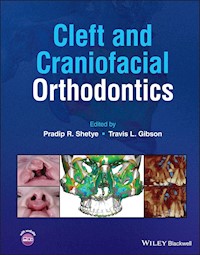
Cleft and Craniofacial Orthodontics E-Book
192,99 €
Mehr erfahren.
- Herausgeber: John Wiley & Sons
- Kategorie: Fachliteratur
- Sprache: Englisch
Cleft and Craniofacial Orthodontics Comprehensive reference work for managing patients with orofacial clefts and complex craniofacial conditions from birth to skeletal maturity Cleft and Craniofacial Orthodontics is a comprehensive and detailed reference work on the management of patients with orofacial clefts and complex craniofacial conditions. Covering patients ranging from birth to skeletal maturity, the book provides orthodontists, plastic and oral and maxillofacial surgeons, speech and language therapists, pediatric dentists, and prosthodontists with the information they need to evaluate and treat these conditions. Highlighting the multidisciplinary team approach, the book aids clinicians in developing a complete plan for their patients. Each chapter is organized to reflect clinical practice, making it easy to apply the information to the treatment setting. Additionally, a companion website offers video clips of surgical and orthodontic procedures to further aid in reader comprehension and application. Sample topics covered within the work include: * Introduction to orofacial clefting: cleft lip and palate anatomy, cleft types and classification, epidemiology, and genetics of cleft lip and palate * Early management of orofacial clefting: prenatal diagnosis and counselling, feeding infants with clefts, and development of nasoalveolar molding therapy * Orthodontic treatment: interceptive orthodontics, management of anteroposterior and transverse discrepancies, preparation for alveolar bone grafting, and combined orthodontic-orthognathic management * Orthodontic and multidisciplinary management of twenty complex craniofacial conditions including craniofacial microsomia, Treacher-Collins syndrome, and syndromic craniosynostosis Orthodontists, plastic surgeons, craniofacial surgeons, oral and maxillofacial surgeons, speech and language therapists, pediatric dentists, prosthodontists, and otolaryngologists can use this book to attain essential knowledge on managing patients with orofacial clefts and complex craniofacial conditions and understand how to apply that knowledge to practical patient settings.
Sie lesen das E-Book in den Legimi-Apps auf:
Seitenzahl: 2293
Veröffentlichungsjahr: 2022
Ähnliche




















Table of Contents
Cover
Title Page
Copyright Page
Contributors
Preface
About the companion website
Part I: Introduction to craniofacial orthodontics and team care
Introduction
What is craniofacial orthodontics?
Terminology and definitions
Treatment timeline of craniofacial anomalies
References
CHAPTER 1: Craniofacial team concept and the role of a craniofacial team
Introduction
The interdisciplinary team care model
History of the team model in cleft and craniofacial care
Disciplines of the cleft and craniofacial team
Functions of a craniofacial team
Acknowledgments
References
CHAPTER 2: Evolution of craniofacial orthodontics as a subspecialty
Introduction
Role of an orthodontist on a cleft and craniofacial team
History of craniofacial orthodontics
Fellowship training in craniofacial orthodontics
Future of craniofacial orthodontics as a subspecialty
References
Part II: Introduction to orofacial clefting
CHAPTER 3: Embryology and classification of orofacial clefting
Introduction
Embryogenesis of the face
Embryogenesis of orofacial clefting
Classification of orofacial clefts
Acknowledgments
References
CHAPTER 4: Epidemiology, etiology, and genetics of orofacial clefting
Introduction
Epidemiology of orofacial clefting
Etiology and risk factors in orofacial clefting
Genetics of orofacial clefting
Genetics of syndrome‐associated orofacial clefting
Genetic risk factors in non‐syndromic clefting
Patient evaluation and family counseling
References
CHAPTER 5: Anatomy of cleft lip and palate
Introduction
Facial anatomy in unaffected infants
Anatomy of unilateral cleft lip
Anatomy of bilateral cleft lip
Anatomy of cleft palate
Variations in presentation of orofacial clefting
Acknowledgments
References
Part III: Management of orofacial clefting – prenatal period and infancy
CHAPTER 6: Prenatal diagnosis, family counseling, and infant feeding
Introduction
Prenatal diagnosis of orofacial clefting
Prenatal consultation
Initial newborn visit
Physiology of feeding in cleft lip and palate
Feeding techniques in cleft lip and palate
Acknowledgments
References
CHAPTER 7: History and current presurgical infant orthopedic treatment
Introduction
History of presurgical infant orthopedics
Current presurgical infant orthopedic treatment
Controversies and evidence‐based outcomes of presurgical infant orthopedic appliances
Conclusion
Acknowledgments
References
CHAPTER 8: Introduction to clinical provision of nasoalveolar molding
Introduction
Patient selection
Initial team consultation
Impression acquisition
Appliance fabrication
Appliance delivery
Management of treatment challenges
Monitoring treatment progress
Surgical modifications after nasoalveolar molding
References
CHAPTER 9: Nasoalveolar molding in unilateral cleft lip and palate
Introduction
Treatment goals of nasoalveolar molding in unilateral cleft lip and palate
Variable presentations of unilateral clefting
Appliance adjustment and activation in unilateral cleft lip and palate
Long‐term outcomes of nasoalveolar molding in unilateral cleft lip and palate
Acknowledgments
References
CHAPTER 10: Nasoalveolar molding in bilateral cleft lip and palate
Introduction
Treatment goals of nasoalveolar molding in bilateral cleft lip and palate
Variable presentations of bilateral clefting
Appliance adjustment and activation in bilateral cleft lip and palate
Management of treatment challenges
Long‐term outcomes of nasoalveolar molding in bilateral cleft lip and palate
Acknowledgments
References
CHAPTER 11: Technological advancements in presurgical infant orthopedics
Introduction
Application of digital three‐dimensional technologies in infant orthopedics
Outcomes of digital three‐dimensional technologies in infant orthopedics
Future of three‐dimensional printing technologies in infant cleft and craniofacial care
Acknowledgments
References
CHAPTER 12: Post‐surgical nostril retainer in orofacial clefts
Introduction
Post‐surgical relapse of the nasal deformity
Protocol for using post‐surgical nostril retainer
The outcome of post‐surgical nostril retainers
References
CHAPTER 13: Primary surgical repair for unilateral cleft lip
Introduction
Principles of unilateral cleft lip repair
Surgical techniques for lip, nose, and alveolar repairs in unilateral cleft lip
Postoperative care
Outcome assessment of primary repair for unilateral cleft lip
References
CHAPTER 14: Primary surgical repair for bilateral cleft lip
Introduction
Surgical considerations in primary reconstructive surgery for bilateral cleft lip
Surgical techniques for lip, nose, and alveolar repairs in bilateral cleft lip
Postoperative care
Outcome assessment of primary repair for bilateral cleft lip
References
CHAPTER 15: Cleft palate repair
Introduction
Surgical considerations for cleft palate repair
Indications and timing of cleft palate repair
Surgical techniques for hard palate repair
Surgical techniques for soft palate repair
Other adjunctive procedures for palate repairs
Postoperative care
Outcomes of palate repair and common complications
Conclusions
Acknowledgments
References
CHAPTER 16: Otolaryngology considerations in cleft and craniofacial care
Introduction
Hearing disorders in patients with cleft lip and palate
Breathing disorders in patients with orofacial clefts
Pathological respiration during sleep
Diagnostic approach to obstructive sleep apnea
Pathophysiology of obstructive sleep apnea in patients with orofacial clefts
Management of obstructive sleep apnea in patients with orofacial clefts
References
Part IV: Management of orofacial clefting – preschool years
CHAPTER 17: Dental development in children with orofacial clefting
Introduction
Oral and dental development in infancy
Development of primary dentition
Development of permanent dentition
Dental anomalies of the permanent dentition
Summary
References
CHAPTER 18: Pediatric dental management in patients with orofacial clefts
Introduction
Establishment of cleft/craniofacial dental home and first dental visit
Behavior guidance
Preventive dental care
Goals of minimally invasive dentistry (MID)
Treatment options and behavior guidance
Acknowledgments
References
CHAPTER 19: Normal speech and language and the management of speech disorders in patients with clefts
Introduction
Normal speech and language development
Speech and resonance disorders due to cleft lip/palate
Management of speech and resonance disorders in cleft lip and palate
References
CHAPTER 20: Management of velopharyngeal dysfunction
Introduction
Anatomy and physiology of the velopharyngeal valve
Velopharyngeal dysfunction
Assessment of velopharyngeal dysfunction
Prosthetic management of velopharyngeal dysfunction
Surgical management of velopharyngeal dysfunction
References
Part V: Management of orofacial clefting – preadolescence
CHAPTER 21: Orthodontic treatment for orofacial clefting in preadolescence
Introduction
Orthodontic treatment in preadolescence
Early interceptive orthodontics
Orthodontic preparation for alveolar bone grafting
Pre‐adolescent orthodontic treatment after alveolar bone grafting
References
CHAPTER 22: Correcting transverse discrepancies in patients with clefts
Introduction
Maxillary transverse discrepancy in cleft lip and palate
Expander anchorage
Maxillary expansion appliances
Outcome studies on maxillary expansion
Final considerations
References
CHAPTER 23: Correcting anteroposterior discrepancies in patients with orofacial clefts
Introduction
Anteroposterior discrepancies in cleft lip and palate
Biomechanics of maxillary protraction
Outcome studies on maxillary protraction
Maxillary protraction appliances
References
CHAPTER 24: Orthodontic preparation for alveolar bone grafting in unilateral cleft lip and palate
Introduction
Timing of alveolar bone graft reconstruction
Preoperative evaluation of the cleft site
Pre‐surgical orthodontic preparation for alveolar bone grafting
Perioperative phase of bone graft surgery
Acknowledgments
References
CHAPTER 25: Orthodontic preparation for alveolar bone grafting in bilateral cleft lip and palate
Introduction
Management of the premaxilla
Preoperative evaluation of the cleft site
Pre‐surgical orthodontic preparation for alveolar bone grafting
Perioperative phase of bone graft surgery
References
CHAPTER 26: Alveolar bone graft surgery
Introduction
Surgical considerations in alveolar bone grafting
Principles for cleft alveolar bone grafting
Secondary alveolar bone grafting in patients with unilateral clefts
Secondary alveolar bone grafting in patients with bilateral clefts
Postoperative management and complications
Alternative graft materials for alveolar cleft reconstruction
Acknowledgments
References
CHAPTER 27: Outcomes of secondary alveolar bone graft surgery
Introduction
Physiology of bone formation in treated alveolar defects
Bone formation after autogenous alveolar bone graft
Bone formation after BMP treatment
Bone formation after gingivoperiosteoplasty
Assessment of alveolar bone graft success
Long‐term bone maturation and remodeling
Conclusion
Acknowledgements
References
CHAPTER 28: Orthodontic preparation forpremaxillary repositioning surgery
Introduction
Premaxillary position in bilateral cleft lip and palate
Treatment of premaxillary malpositioning
Interdisciplinary planning of premaxillary repositioning surgery
Pre‐surgical orthodontics
Acknowledgments
References
CHAPTER 29: Clear aligner therapy for pre‐adolescent patients with cleft lip and palate
Introduction
Orthodontic preparation and management for secondary alveolar bone grafting
Management of the transverse dimension
Management of the sagittal relationship
Management of the vertical relationship
Case selection for CAT versus FAT
Design of the clear aligners
Other applications of CAT for CLP and other craniofacial conditions
The future of CAT for patients with CLP and other craniofacial conditions
References
Part VI: Management of orofacial clefting – early adolescence
CHAPTER 30: Orthodontic treatment for mild maxillomandibular discrepancies in early adolescence
Introduction
Evaluation of maxillomandibular skeletal discrepancy
Orthodontic treatment of orthognathic and mildly discrepant maxillomandibular relationships
Orthodontic treatment stability in mild skeletal discrepancy
References
CHAPTER 31: Orthodontic treatment for moderate to severe maxillomandibular discrepancies in early adolescence
Introduction
Evaluation of maxillomandibular skeletal discrepancy
Orthodontic treatment for patients with moderate to severe skeletal discrepancy
Orthodontic treatment
Orthodontic treatment stability in moderate to severe skeletal discrepancy
References
CHAPTER 32: Maxillary distraction in adolescent patients with orofacial clefts
Introduction
Conventional maxillary advancement versus distraction
Le Fort I maxillary distraction in patients with orofacial clefts
Maxillary distraction with external devices
Maxillary distraction with internal devices
Future directions
References
CHAPTER 33: Alveolar and anterior maxillary distraction in patients with orofacial clefts
Introduction
Alveolar distraction osteogenesis in cleft lip and palate treatment
Biology of alveolar distraction osteogenesis
Clinical applications of alveolar and segmental distraction osteogenesis
Tooth‐borne alveolar distraction appliances
Bone‐anchored alveolar distraction appliances
Hybrid distraction appliances
Restorative management after alveolar distraction
Potential complications of alveolar distraction
Conclusion
References
Part VII: Management of orofacial clefting – late adolescence and adulthood
CHAPTER 34: Orthodontic treatment for orofacial clefting in late adolescence
Introduction
Evaluation of patients with clefts in late adolescence
Treatment options
Orthodontic treatment
Adjunctive surgical procedures
Final restorative dental treatment
References
CHAPTER 35: Evaluation of patients with clefts for orthognathic surgery
Introduction
Assessment of patients for orthognathic surgery
Functional clinical examination
Facial and extraoral soft tissue evaluation
Skeletal relationship and radiographic evaluation
Dental and occlusal evaluation
Interdisciplinary team evaluation
Development of a comprehensive treatment plan
Presentation of the treatment plan and consent for orthognathic surgery
Acknowledgments
References
CHAPTER 36: Orthognathic surgery in patients with clefts – maxillary surgery
Introduction
Maxillary hypoplasia in patients with cleft lip and palate
Pre‐surgical orthodontics
Le Fort I advancement surgery
Post‐surgical orthodontic treatment
Outcomes of Le Fort I advancement surgery
References
CHAPTER 37: Orthognathic surgery in patients with clefts – maxillary and mandibular surgery
Introduction
Indications for maxillary and mandibular surgery in patients with cleft lip and palate
Pre‐surgical orthodontics
Maxillomandibular orthognathic surgery
Traditional surgical planning using facebow transfer, model surgery, and splint construction
Computerized surgical planning and splint construction
Post‐surgical orthodontics
Outcomes of double‐jaw surgery
References
CHAPTER 38: Surgery first approach in patients with clefts
Introduction
Surgery‐first orthognathic approach for patients with cleft lip and palate
Indication and patient selection
Regional acceleratory phenomenon in the surgery‐first approach
Treatment protocol in surgery‐first approach
Surgery‐first for Le Fort I advancement
Surgery‐first for maxillomandibular orthognathic surgery
Outcomes of the surgery‐first orthognathic approach
Future of surgery‐first orthognathic approachfor patients with orofacial clefts
References
CHAPTER 39: Adult orthodontics in patients with clefts
Introduction
Assessment of adult patients with clefts seeking orthodontic treatment
Orthodontic treatment indications in adult patients with clefts
Special considerations for adult patients seeking orthodontic treatment
Developing achievable orthodontic treatment goals
References
CHAPTER 40: Management of missing teeth, dental implants, and prosthetic restoration in orofacial clefts
Introduction
Missing, malformed, and transposed teeth
Orthodontic considerations in the management of missing teeth
Restoration of malformed teeth
Space closure and substitution
Prosthetic replacement of missing teeth
Implant restoration
Conventional fixed prosthodontic replacement
Autotransplantation
References
CHAPTER 41: Secondary soft tissue revision surgery at skeletal maturity in patients with orofacial clefts
Introduction
Secondary lip deformities in unilateral cleft lip
Secondary lip deformities in bilateral cleft lip
Secondary nasal deformities in unilateral cleft lip and palate
Secondary nasal deformities in bilateral cleft lip and palate
Secondary palate deformities
Paranasal hypoplasia
Adjunctive aesthetic procedures
References
Part VIII: Outcomes in cleft care
CHAPTER 42: Growth and development of the craniofacial skeleton in patients with clefts
Introduction
Craniofacial growth and orofacial clefting: infancy (birth to one year)
Craniofacial growth and orofacial clefting: pre‐school (one to five years)
Craniofacial growth and orofacial clefting: preadolescence (5–10 years)
Craniofacial growth and orofacial clefting: adolescence (10–15 years)
Craniofacial growth and orofacial clefting: late adolescence (15–20 years)
Natural growth in adults with untreated orofacial clefts
References
CHAPTER 43: Standardized diagnostic records in cleft and craniofacial orthodontics
Introduction
Purposes of standardized records
Outcome records and clinical audits
Types of records
Common measurement and rating scales in cleft and craniofacial care
Timing of record‐taking
Identification of best practices through multicenter studies – Americleft
References
CHAPTER 44: Radiology in cleft and craniofacial care
Introduction
Prenatal imaging
Postnatal imaging
Imaging protocols for patients with orofacial clefts
Outcome assessments of ABG
Radiation protection
Acknowledgments
References
CHAPTER 45: Retention and stability in patients with orofacial clefts
Introduction
Retention
Stability, relapse, and post‐treatment change
Special considerations in retention and stability for patients with orofacial clefts
Orthodontic retention protocols
Conclusion
Acknowledgments
References
CHAPTER 46: Psychosocial development and care in patients with orofacial clefting
Introduction
Psychosocial development in infancy (prenatal to one year)
Psychosocial development in pre‐school (one to five years)
Psychosocial development in pre‐adolescence (5–10 years)
Psychosocial development in early adolescence (10–15 years)
Psychosocial development in late adolescence (15–20 years)
Psychosocial development in adults (20+ years)
Research and methodological considerations
References
CHAPTER 47: Access issues and burden of care in craniofacial orthodontics
Introduction
Adversity in children with orofacial clefts
Equity, diversity, and inclusion in cleft and craniofacial care
Burden of care
Barriers to accessing care
Support and advocacy
References
CHAPTER 48: Application of artificial intelligence in treating patients with cleft and craniofacial anomalies
Introduction
Application of artificial intelligence in cleft and craniofacial care
Treatment planning assisted by artificial intelligence
Customized orthodontic and surgical appliances
Treatment monitoring and follow‐up
Treatment outcome assessment
Conclusion
Acknowledgments
References
Part IX: Orthodontic management of complex craniofacial conditions
CHAPTER 49: Orthodontic management in Pierre Robin sequence
Introduction
Pierre Robin sequence
Craniofacial team, orthodontic, and surgical management
References
CHAPTER 50: Orthodontic management in craniofacial microsomia
Introduction
Craniofacial microsomia
Craniofacial team, orthodontic, and surgical management
Acknowledgments
References
CHAPTER 51: Orthodontic management in Treacher Collins syndrome
Introduction
Treacher Collins syndrome
Orthodontic and craniofacial team management
Summary
References
CHAPTER 52: Orthodontic management in syndromic craniosynostosis
Introduction
Syndromic craniosynostosis
Craniofacial team, orthodontic, and surgical management
Acknowledgments
References
CHAPTER 53: Orthodontic management in cleidocranial dysplasia
Introduction
Cleidocranial dysplasia
Craniofacial team, orthodontics, and surgical management
References
CHAPTER 54: Orthodontic management in Beckwith–Wiedemann syndrome
Introduction
Genetics and embryology
Epidemiology
Clinical features and classification
Craniofacial growth
Craniofacial team, orthodontics, and surgical management
References
CHAPTER 55: Orthodontic management of achondroplasia
Introduction
Achondroplasia
Orthodontic and craniofacial team management
References
CHAPTER 56: Overview of other craniofacial conditions
Introduction
Neurofibromatosis type 1
Moebius syndrome
Stickler syndrome
Frontonasal dysplasia
Binder syndrome
Solitary median maxillary central incisor syndrome
Turner syndrome
Cherubism
Parry–Romberg syndrome
Vascular malformations
Acknowledgments
References
CHAPTER 57: Distraction osteogenesis in craniofacial syndromes
Introduction
Distraction osteogenesis
Mandibular distraction
Midface distraction
Simultaneous two‐jaw distraction
Cranial distraction
Acknowledgments
References
CHAPTER 58: Orthodontic management of pediatric obstructive sleep apnea
Introduction
Pediatric obstructive sleep apnea
Management of pediatric OSA
Adenotonsillectomy
Other surgical interventions
Positive airway pressure
Orthodontic management in pediatric OSA
Airway management in cleft and craniofacial anomalies
References
CHAPTER 59: Role of the orthodontist in managing facial trauma and post‐oncological treatment
Introduction
Role of the orthodontist in managing facial trauma
Role of the orthodontist in managing head and neck cancer
Role of orthodontists in craniofacial reconstruction following oncologic resection
References
CHAPTER 60: Role of the orthodontist in facial transplantation
Introduction
Facial transplantation
Components of facial transplants
Facial transplantation team
Surgery
Management of oral structures
Outcomes of facial transplantation
Future directions in facial transplantation
Acknowledgments
References
Index
End User License Agreement
List of Tables
Chapter 0
Table 1 Multidisciplinary treatment timeline of craniofacial anomalies.
Chapter 1
Table 1.1 Name changes of the now ACPA.
Table 1.2 Publications of the ACPA and predecessors.
Table 1.3 Key contributions and responsibilities of team members by discipl...
Chapter 3
Table 3.1 Terminology of the CLAP cleft notation.
Table 3.2 Standardized “superset” groupings for phenotypic combinations usi...
Chapter 4
Table 4.1 Summary of major genetic syndromes that can include cleft lip and...
Table 4.2 Genetic locations with variants achieving genome‐wide significanc...
Chapter 5
Table 5.1 Normative anthropometric measurements of the upper lip and nose i...
Chapter 6
Table 6.1 Prenatal consultation.
Table 6.2 Treatment roadmap for cleft lip/palate.
Table 6.3 Hospital discharge checklist.
Table 6.4 Feeding issues/challenges in infants with clefts.
Chapter 7
Table 7.1 Classification of pre‐surgical infant orthopedic methods.
Chapter 8
Table 8.1 Consumable materials used for NAM therapy and examples of commonl...
Chapter 12
Table 12.1 Dimensions of symmetrical nostril retainers by MEDPOR/Stryker.
Table 12.2 Dimensions of asymmetrical nostril retainers by MEDPOR/Stryker....
Chapter 17
Table 17.1 Polymorphisms in eruption sequence of the maxillary permanent de...
Table 17.2 Polymorphisms in eruption sequence of the mandibular permanent d...
Chapter 18
Table 18.1 Dental visit and recommendations by age for patients with CL/P....
Table 18.2 Management of carious lesions.
Chapter 19
Table 19.1 Key to phonetic symbols (which do not match their graphemes) use...
Table 19.2 Classification of phonemes by placement, manner, and voicing
Table 19.3 Classification of individual phonemes by placement, manner, and ...
Table 19.4 Normal speech and language development.
Table 19.5 Obligatory distortions and compensatory productions due to denta...
Table 19.6 Speech characteristics based on the size of the VP opening.
Table 19.7 Typical compensatory productions for VPI.
Table 19.8 Characteristics and causes of different types of resonance disor...
Table 19.9 Primary advantages of each instrumental procedure.
Chapter 20
Table 20.1 Treatment options for VPD.
Chapter 26
Table 26.1 Surgical timing of alveolar bone grafting.
Chapter 27
Table 27.1 ABG success rate according to cleft type and age.
Table 27.2 Factors contributing to ABG outcome.
Chapter 30
Table 30.1 Maxillomandibular skeletal discrepancy grading in patients with ...
Chapter 32
Table 32.1 Indications and limitations of maxillary DO with RED or HIMXD.
Chapter 35
Table 35.1 Determining total space requirements for pre‐surgical orthodonti...
Table 35.2 Soft tissue changes after Le Fort I advancement in cleft lip and...
Table 35.3 Orthognathic surgical risks in cleft lip and palate.
Chapter 38
Table 38.1 Timing of orthognathic surgery with respect to orthodontic prepa...
Chapter 42
Table 42.1 Comparison of common skeletal and dental features of different o...
Chapter 43
Table 43.1 Scoring definitions for the GOSLON Yardstick.
Table 43.2 Interpretation of the standardized way to assess grafts (SWAG) s...
Table 43.3 Eurocleft, Americleft, and ICHOM recommendations on timing of mi...
Table 43.4 Eurocleft, Americleft, and ICHOM recommendations on timing of mi...
Table 43.5 Eurocleft, Americleft, and ICHOM recommendations on timing of mi...
Table 43.6 Eurocleft, Americleft, and ICHOM recommendations on timing of min...
Table 43.7 Eurocleft, Americleft, and ICHOM recommendations on timing of min...
Table 43.8 Eurocleft, Americleft, and ICHOM recommendations on timing of min...
Chapter 45
Table 45.1 Describing the definition of relapse and stability.
Chapter 46
Table 46.1 Psychosocial measures for clinical audit: psychosocial risk and ...
Table 46.2 The pediatric PROMIS, provided by Healthy Measures, is a person‐c...
Table 46.3 The CLEFT‐Q is an instrument for patients with CL/P to evaluate o...
Table 46.4 National Institutes of Health toolbox emotion battery consists o...
Chapter 47
Table 47.1 Barriers to accessing cleft and craniofacial care.
Chapter 50
Table 50.1 The OMENS classification system for quantifying the deformity of...
Chapter 51
Table 51.1 Embryologic origin, craniofacial structures, and clinical featur...
Chapter 52
Table 52.1 Global craniofacial surgical interventions for syndromic cranios...
Chapter 56
Table 56.1 Clinical diagnostic features of Turner syndrome.
Chapter 58
Table 58.1 Commonly reported symptoms associated with OSA in children.
Chapter 60
Table 60.1 List of additional exclusion criteria reported in the FT literat...
List of Illustrations
Chapter 0
Figure 1 Categorization of craniofacial anomalies.
Chapter 1
Figure 1.1
Disciplines of cleft and craniofacial teams
. Core discipline grou...
Figure 1.2 Scope of cleft and craniofacial team care.
Figure 1.3 Participants at the myFace “Races for Faces” event.
Chapter 2
Figure 2.1 3D cephalometric evaluation of mandibular asymmetry. (a) Conventi...
Chapter 3
Figure 3.1 Development of the frontonasal prominence (fnp), lateral nasal pr...
Figure 3.2 Derivates of the pharyngeal arches, clefts, and pouches.
Figure 3.3 Facial prominences across species.
Figure 3.4 Shared gene expression in the face and limbs. Purple staining dem...
Figure 3.5 Fusion of the facial prominences; (a) the fnp (blue) and maxillar...
Figure 3.6 Development of the palate through fusion of the fnp (blue) and ma...
Figure 3.7 Common presentations of orofacial clefts; (a) intact lip and oral...
Figure 3.8 Veau classification of cleft palate.
Figure 3.9 Example of standardized CLAP notation and shorthand abbreviation....
Chapter 4
Figure 4.1 Lip pit phenotypes in VWS syndrome.
Figure 4.2 Clinical features of CHARGE syndrome. (a) A ten year old with rep...
Figure 4.3
22q11.2 deletion syndrome
(22qDS).
Figure 4.4 Schematic overview of the chromosome 22q11.2 region. Centromere i...
Figure 4.5 EEC syndrome. (a) Complete left cleft lip and palate; (b) deletio...
Figure 4.6 Clinical pictures, X‐rays, and brain MRI of patients with OFDS. Facia...
Figure 4.7 Patient with STL1 with characteristic midface hypoplasia and micr...
Figure 4.8 KS1, typical facial features.
Figure 4.9 Algorithm for invasive genetic testing according to oral cleft ca...
Figure 4.10 The two main methods of maternal plasma DNA sequencing for prena...
Figure 4.11 General methodologic principles of non‐invasive prenatal tests f...
Chapter 5
Figure 5.1 Craniofacial skeleton. (a) Lateral view; (b) frontal view; (c) mi...
Figure 5.2 Perioral musculature.
Figure 5.3 Morphology of the lips and nose.
Figure 5.4 Nasal cartilages.
Figure 5.5 Infant alveolar anatomy. The gingival groove defines the inner al...
Figure 5.6 Muscles of the soft palate.
Figure 5.7 Landmarks for anthropometric measurements of the face.
Figure 5.8 Disrupted nasal morphology in an infant with complete unilateral ...
Figure 5.9 Discontinuity of the orbicularis oris in unilateral cleft lip and...
Figure 5.10 Intraoral and nasal casts of an infant with left complete unilat...
Figure 5.11 Discontinuity of the orbicularis oris in bilateral cleft lip and...
Figure 5.12 Intraoral and nasal casts of an infant with complete bilateral c...
Figure 5.13 An infant with complete bilateral cleft lip and palate. Note the...
Figure 5.14 Anatomical variation in cleft lip and palate. (a) Lip deformitie...
Chapter 6
Figure 6.1 3D sonogram/infant photo.
Figure 6.2 Illustration of the normal feeding process. The top part shows po...
Figure 6.3 Feeding bottles: (a) Cleft Lip/Palate Nurser (Enfamil), (b) Dr. B...
Chapter 7
Figure 7.1 The original NAM appliance developed by Grayson and Cutting; (a) ...
Figure 7.2 Use of nasal stent off the alveolar plate developed by Dogliotti‐...
Figure 7.3 Horizontal lip tape on a 3D infant model with unilateral cleft li...
Figure 7.4 Horizontal lip tape for an infant with unilateral cleft lip and p...
Figure 7.5 Horizontal lip tape for an infant with bilateral cleft lip and pa...
Figure 7.6 In infants with bilateral clefts and significantly protruded prem...
Figure 7.7 A straight stretchable tape can also be used instead of 3M Steri‐...
Figure 7.8 Model showing asymmetrical unilateral DynaCleft positioning tape....
Figure 7.9 Model showing a symmetrical bilateral DynaCleft positioning strip...
Figure 7.10 Passive feeding plate made of hard acrylic. The plate is taped t...
Figure 7.11 Latham appliance for infants with unilateral cleft lip and palat...
Figure 7.12 The unilateral Latham appliance, known as the
DMA
, consists of a...
Figure 7.13 In patients with bilateral complete clefts, the
ECPR appliance
c...
Figure 7.14 A unilateral NAM appliance. Note the single retention button and...
Figure 7.15 A bilateral NAM appliance. Note the double retention buttons and...
Figure 7.16 Figueroa's modified NAM appliance. Note the molding plate made o...
Figure 7.17 The DPNR appliance by Bennun has a molding plate with modified e...
Figure 7.18 Nostril retainer by Stryker, made of soft silicone, can be used ...
Figure 7.19 Nasal elevator by DynaCleft. The device is secured to the forehe...
Figure 7.20 Evidence‐based summary of NAM. Randomized controlled trials (pur...
Chapter 8
Figure 8.1 Dental chair setup for infant examination. (a) The caregiver (blu...
Figure 8.2 Intraoral photograph showing vomer ulceration in a newborn infant...
Figure 8.3 Infant with neonatal tooth erupting during NAM. (a) Neonatal toot...
Figure 8.4 PVS putty impression material and activator.
Figure 8.5 Sample of a consent form for impression and NAM therapy.
Figure 8.6 Infant position for impression. Note the use of a mirror handle t...
Figure 8.7 Set of impression trays. Wide trays are used for unilateral cleft...
Figure 8.8 Soft PVS impressions. (a) Infant with unilateral cleft lip and pa...
Figure 8.9 Dental stone models. (a) Infant with unilateral cleft lip and pal...
Figure 8.10 Laboratory fabrication of a molding plate using pre‐mixed self‐c...
Figure 8.11 Laboratory fabrication of a molding plate using salt and pepper ...
Figure 8.12 Cured, trimmed, and polished molding plates showing frenum relie...
Figure 8.13 Retention buttons. (a) Custom silicone mold to fabricate acrylic...
Figure 8.14 Supplies used to secure the molding plate in an infant. (a) Hydr...
Figure 8.15 Retention button and tape positioning. (a) Correctly positioned ...
Figure 8.16 NAM plate delivered to the infant. (a) Infant with unilateral cl...
Figure 8.17 Infant feeding with a bottle after insertion of the molding plat...
Chapter 9
Figure 9.1 Cleft nasal deformity in complete UCLP.
Figure 9.2 Patient with unilateral left cleft lip and palate (a) before, (b)...
Figure 9.3 (a) Pre‐NAM image and (b) post‐NAM image demonstrating approximat...
Figure 9.4 (a) Pre‐NAM and (b) post‐NAM alveolar molding images demonstratin...
Figure 9.5 (a) Pre‐NAM and (b) post‐NAM images showing the alveolar gap not ...
Figure 9.6 Correct positioning of the retention button for a patient with UC...
Figure 9.7 Infant with UCLP immediately after molding plate insertion. Note ...
Figure 9.8 Adjustment of the NAM appliance for alveolar molding in UCLP. Rem...
Figure 9.9 The molding plate is widened by adding acrylic on the outside and...
Figure 9.10 Modifications to the NAM appliance during alveolar molding in UC...
Figure 9.11 Plate instability can be caused by excessive adjustment for vert...
Figure 9.12 Nasal stent addition. (a) Attachment of the nasal stent wire on ...
Figure 9.13 Initial placement of nasal stent in a collapsed nostril. (a) The...
Figure 9.14 Photograph showing an infant with incomplete cleft of the lip, n...
Figure 9.15 Infant with left‐sided UCLP undergoing NAM treatment. Note the o...
Figure 9.16 NAM appliance in an infant with UCLP. Note the position of the r...
Figure 9.17 Lip taping using a ¼
″
adhesive wound closure strip from th...
Figure 9.18 Alternative lip tape incorporating an orthodontic elastic.
Figure 9.19 Infant with UCLP treated with NAM therapy. (a) Pre‐treatment – n...
Figure 9.20 Infant with right‐sided UCLP with Simonart's band. (a) Pre‐treat...
Figure 9.21 Alveolar molding after NAM therapy. (a) Pre‐treatment photograph...
Chapter 10
Figure 10.1 Infant with BCLP. (a) Pre‐treatment photograph showing asymmetry...
Figure 10.2 (a) Pre‐NAM and (b) post‐NAM photographs demonstrating retractio...
Figure 10.3 (a) Pre‐treatment and (b) post‐NAM images demonstrating closure ...
Figure 10.4 An infant with complete BCLP with significantly deviated premaxi...
Figure 10.5 Retention button position for bilateral NAM appliance.
Figure 10.6 Infant with BCLP immediately after molding plate insertion. Note...
Figure 10.7 Adjustment of the molding plate for premaxillary retraction usin...
Figure 10.8 Adjustment of the alveolar molding plate for premaxillary retrac...
Figure 10.9 Premaxillary retraction in the presence of posterior transverse ...
Figure 10.10 Nasal septum interference with premaxillary retraction. (a) Pre...
Figure 10.11 Alveolar segment alignment. (a) Pre‐treatment stone model; (b) ...
Figure 10.12 Bilateral addition of nasal stents to the molding plate. (a) In...
Figure 10.13 Infant with complete BCLP after progressive nasal stent adjustm...
Figure 10.14 Nasal stent activation in BCLP. (a) Initial stent position may ...
Figure 10.15 Photograph of an infant with BCLP undergoing NAM treatment. (a)...
Figure 10.16 Lateral view of nasal stents demonstrating the complex shape of...
Figure 10.17 NAM appliance with nasal stents and columellar band in an infan...
Figure 10.18 An infant with BCLP treated with NAM therapy. (a) Pre‐treatment...
Chapter 11
Figure 11.1 Digitized pre‐treatment model.
Figure 11.2 Model processing and arch‐form definition.
Figure 11.3 Sample virtual setup; 16 stages starting from initial (top left)...
Figure 11.4 Aligner for PSIO: (a) aligner fabricated on 3D printed model; (b...
Figure 11.5 Superimposition of pre‐treatment (blue) and post‐treatment (yell...
Figure 11.6 Pre‐treatment photographs of four sample cases (a–d) before PSIO...
Figure 11.7 Post‐treatment photographs of four sample cases (a–d) treated wi...
Figure 11.8 Clinical weekly photographs of sample treated case with OrthoAli...
Chapter 12
Figure 12.1 Infant with right‐sided UCLP. (a) Pre‐treatment; (b) after NAM. ...
Figure 12.2 Koken stents are made of soft silicone and are available in 13 s...
Figure 12.3 Nostril retainers by MEDPOR/Stryker are also available in 13 dif...
Figure 12.4 The nostril retainer is cut at an angle with a longer side super...
Figure 12.5 Initial placement of the nostril retainer in the infant's nose u...
Figure 12.6 Photograph showing complete seating of the nostril retainer in t...
Figure 12.7 Infant with left‐sided complete UCLP. (a) Pre‐treatment; (b) aft...
Figure 12.8 Infant with bilateral UCLP. (a) Pre‐treatment; (b) after NAM. No...
Chapter 13
Figure 13.1 Extended Mohler cleft lip repair in a patient with incomplete le...
Figure 13.2 Patient with left unilateral cleft lip and alveolus with a Simon...
Figure 13.3 Surgical techniques for unilateral cleft lip repair. (a) Randall...
Chapter 14
Figure 14.1 A patient with a complete bilateral cleft lip and nasal deformit...
Figure 14.2 (a)–(c) NAM device applied to the patient demonstrated in Figure...
Figure 14.3 Markings for the Mulliken bilateral cleft lip repair. Not featur...
Figure 14.4 Complete release of the prolabium composite from the premaxilla....
Figure 14.5 Supraperiosteal dissection across the face of the maxilla is imp...
Figure 14.6 Nostril rim incisions used for the Mulliken nasal reconstruction...
Figure 14.7 Careful blunt dissection is performed over the upper and lower l...
Figure 14.8 Lip and nasal appearance after completion of bilateral cleft lip...
Figure 14.9 Surgical markings of the Cutting retrograde cleft nasal reconstr...
Figure 14.10 A patient with a bilateral cleft lip, nose, alveolus, and palat...
Chapter 15
Figure 15.1 Anatomy of the palate.
Figure 15.2 Veau classification of cleft palate.
Figure 15.3 Submucous cleft palate. The lining of the palate is intact; howe...
Figure 15.4 Infant with Pierre Robin sequence. (a) Small mandible (micrognat...
Figure 15.5 Schematic of von Langenbeck palatoplasty. (a) Pre‐treatment; (b)...
Figure 15.6 Schematic of V
─
Y pushback palatoplasty. Following nasal fl...
Figure 15.7 Schematic of Bardach two‐flap palatoplasty. The complete mobiliz...
Figure 15.8 Schematic of the radical IVV. Critical to the success of this pr...
Figure 15.9 Schematic of the Furlow double‐opposing Z‐plasty. Incisions for ...
Figure 15.10 Intraoral view of a palatal fistula.
Chapter 16
Figure 16.1 Normal clear tympanic membrane as seen from an external view.
Figure 16.2 Middle ear serous effusion.
Figure 16.3 Audiograms. (a) Commonly defined HLs (frequency vs dB); (b) audi...
Figure 16.4 Tympanograms. (a) Type A normal tympanogram; (b) type B tympanog...
Figure 16.5 Pressure equalization tube in place with tympanosclerosis on the...
Figure 16.6 Sleep study of patient with apneic episodes as marked on study....
Figure 16.7 Tonsillar enlargement causing airway obstruction during sleep.
Figure 16.8 Adenoid enlargement in the nasopharynx as seen on lateral X‐ray....
Figure 16.9 Laryngomalacia during asleep airway endoscopy.
Figure 16.10 Enlarged tonsils from Waldeyer's ring causing obstructive sleep...
Chapter 17
Figure 17.1 Intraoral photographs and panoramic radiographs of a patient wit...
Figure 17.2 A patient with left UCLP. (a)–(c) Maxillary dental development f...
Figure 17.3 Numerical and positional variations observed for the maxillary l...
Figure 17.4 A patient with a left UCLP demonstrating agenesis of the maxilla...
Figure 17.5 A patient with a right UCLP demonstrating impaction of the perma...
Figure 17.6 Serial panoramic radiographs of patient with left UCLP and a myr...
Figure 17.7 Serial panoramic radiographs of a patient with left UCLP demonst...
Chapter 18
Figure 18.1 Examination of the pre‐cooperative patient with knee‐to‐knee pos...
Figure 18.2 Tell‐show‐do technique. The mirror allows the child to be engage...
Figure 18.3 Nitrous oxide is a behavior management tool for anxious, but coo...
Figure 18.4 Crowding and malposition of teeth can make oral hygiene more dif...
Figure 18.5 Tight lip scars can make oral hygiene more difficult.
Figure 18.6 Rampant caries of primary and permanent teeth in a patient with ...
Figure 18.7 Radiograph showing maintaining a primary tooth adjacent to the c...
Figure 18.8 Carious primary molars in a patient with high caries risk. (a) C...
Figure 18.9 An extraoral bitewing radiograph is an alternative to intraoral ...
Figure 18.10 Hypoplasia and caries of primary incisors in a patient with bil...
Figure 18.11 Food impaction on the surface of a hypoplastic permanent molar....
Figure 18.12 Pre‐ and post‐SDF application on carious primary molar. Note th...
Figure 18.13 Caries on the first primary molar was treated with IPT and Hall...
Figure 18.14 Space maintainers for premature extraction of non‐restorable pr...
Chapter 19
Figure 19.1 Position of the velum during production of oral speech sounds.
Figure 19.2 Micrognathia and Class II malocclusion in a patient with a histo...
Figure 19.3 Class III malocclusion in a patient with significant maxillary d...
Figure 19.4 (a) Velopharyngeal insufficiency characterized by normal elevati...
Figure 19.5 Videofluoroscopy showing VP opening during speech. (a) Lateral v...
Figure 19.6 (a) The nasopharyngoscope is inserted into the middle meatus and...
Figure 19.7 Nasometer II sound separator in place for data collection. There...
Chapter 20
Figure 20.1 Anatomy of the velopharynx (top: coronal view; bottom: superior ...
Figure 20.2 VP closure patterns.
Figure 20.3 Submucous cleft palate.
Figure 20.4 Lateral view during videofluoroscopy.
Figure 20.5 Typical view during nasopharyngoscopy. (a) Demonstrates inadequa...
Figure 20.6 (a) Palatal lift appliance (intraoral and lateral views). On the...
Figure 20.7 A diagram demonstrating Furlow double‐opposing Z‐plasty palatopl...
Figure 20.8 Posterior pharyngeal flap surgery. (a) – (left) the design of a ...
Figure 20.9 Sphincter pharyngoplasty. (a) Surgical markings for flap design ...
Chapter 21
Figure 21.1 The three time points for orthodontic intervention during the pr...
Figure 21.2 Premature extraction of a primary second molar. (a) Panoramic ra...
Figure 21.3 Panoramic radiograph of a seven year old patient with UCLP showi...
Figure 21.4 Ectopic eruption of maxillary permanent first molar corrected wi...
Figure 21.5 Bilateral ectopic eruption of maxillary permanent first molars c...
Figure 21.6 A modified Halterman appliance fabricated on the contralateral p...
Figure 21.7 Premature extraction of primary teeth. (a) Maxillary arch of a p...
Figure 21.8 A modified Nance temporary obturator. (a) Five year old patient ...
Figure 21.9 Removable appliance to correct developing anterior crossbite. (a...
Figure 21.10 Fixed appliances during preadolescence. (a) Intraoral frontal v...
Figure 21.11 Removable appliance for anterior and posterior crossbite correc...
Figure 21.12 Patient using a Delaire‐type PHG with CPAP appliance.
Figure 21.13 Occlusal photographs of a patient with BCLP. Note the discrepan...
Figure 21.14 “Occult fistula” during maxillary expansion. (a) Occlusal photo...
Figure 21.15 A CBCT image of a patient with left UCLP. Note the root exposur...
Figure 21.16 Profile changes with PHG therapy during preadolescence. (a) Pre...
Figure 21.17 Cephalometric changes with PHG therapy. (a) Pre‐treatment later...
Figure 21.18 Fixed orthodontic appliance with a bonded expander, partial bra...
Figure 21.19 Forced extrusion. (a) CBCT radiograph showing peg‐shaped supern...
Figure 21.20 Clear retainer with palatal coverage made from 1.5 mm thick vac...
Chapter 22
Figure 22.1 Eight‐year‐old patient with right UCLP in the mixed dentition sh...
Figure 22.2 Eight‐year‐old patient with BCLP in the mixed dentition showing ...
Figure 22.3 The maxillary constriction demonstrates an increasing severity f...
Figure 22.4 CBCT‐derived coronal section at the level of permanent first mol...
Figure 22.5 Fixed retainers used after maxillary expansion in UCLP (a) and B...
Figure 22.6 A modified fixed retainer combining transpalatal arch, bilateral...
Figure 22.7 A pre‐existing occult oronasal fistula (a) and (b) was revealed ...
Figure 22.8 RME performed after SABG in a 14‐year‐old male with a left UCLP....
Figure 22.9 SME using the quad helix appliance in a patient with a right UCL...
Figure 22.10 Conventional RME performed with the Hyrax expander in a 12‐year...
Figure 22.11 Fan‐type expander in a patient with a left UCLP. Radiographic i...
Figure 22.12 Thirteen‐year‐old patient with BCLP. Pre‐treatment photographs ...
Figure 22.13 RME performed with the expander with differential opening in a ...
Figure 22.14 MARPE in a non‐cleft adult patient.
Chapter 23
Figure 23.1 FM therapy in a patient with right UCLP and slight maxillary def...
Figure 23.2 A nine‐year‐old patient with left UCLP presenting a Class III sk...
Figure 23.3 A patient with left UCLP treated using BAMP therapy followed by ...
Chapter 24
Figure 24.1 Timing of alveolar bone graft reconstruction.
Figure 24.2 During the GPP procedure, the surgeon closes the nasal floor and...
Figure 24.3 CBCT image of a patient with left UCLP, with the cleft defect ex...
Figure 24.4 A patient with right complete UCLP treated with nasoalveolar mol...
Figure 24.5 CBCT image showing an unsuccessful GPP procedure primarily due t...
Figure 24.6 CBCT image of a patient showing a wide alveolar cleft defect. Th...
Figure 24.7 Pyramidal boundaries of the alveolar cleft defect.
Figure 24.8 Staged closure of a large palatal fistula. (a) Pre‐treatment; (b...
Figure 24.9 Fan expander prior to alveolar bone graft surgery. (a) Pre‐expan...
Figure 24.10 Preparation for SABG surgery using two consecutive fan expander...
Figure 24.11 Unfavorably positioned teeth prior to SABG surgery. (a) Pre‐tre...
Figure 24.12 Leveling of the gingival margin for teeth adjacent to the cleft...
Figure 24.13 Leveling of the gingival margin. (a) Permanent maxillary right ...
Figure 24.14 Opening space for surgical access for a patient with left UCLP....
Figure 24.15 Correction of the impacted maxillary right central incisor in t...
Figure 24.16 Extraction of primary teeth in the cleft site four weeks prior ...
Figure 24.17 Impacted and non‐salvageable teeth. (a) Pre‐treatment CBCT demo...
Figure 24.18 Postoperative vacuum‐formed retainer in place one week after SA...
Figure 24.19 CBCT images of a patient with right UCL. (a) Preoperative; (b) ...
Chapter 25
Figure 25.1 A patient with BCLP at preadolescence with a malpositioned prema...
Figure 25.2 Management of the premaxilla and alveolar bone defect has a wide...
Figure 25.3 CBCT image of a patient with a resected premaxilla. (a) Frontal ...
Figure 25.4 CBCT image of a patient with BCLP demonstrating adequate bone fo...
Figure 25.5 CBCT image of a patient with BCLP who underwent NAM and unilater...
Figure 25.6 Orthodontic preparation for bilateral alveolar bone grafting in ...
Figure 25.7 Pre‐surgical CBCT of the same patient as in Figure 25.6, demonst...
Figure 25.8 Posterior maxillary segmental osteotomy and advancement. (a) Pre...
Figure 25.9 Orthodontic preparation for SABG surgery with a fan expander and...
Figure 25.10 Pre‐surgical CBCT of the same patient as in Figure 25.9, demons...
Figure 25.11 A clear vacuum‐formed 1.5 mm splint with palatal coverage is de...
Chapter 26
Figure 26.1 The alveolar cleft visualized as a 3D pyramidal defect.
Figure 26.2 Determination of ABG timing.
Figure 26.3 (a) Pre‐expansion canine constriction associated with narrow alv...
Figure 26.4 Flap design demonstrating neck of tooth incision on minor/latera...
Figure 26.5 Nasal lining elevated and closed.
Figure 26.6 (a) Cortical bone used to create nasal floor; (b) cortical bone ...
Figure 26.7 Compressed cancellous marrow packed into the bony defect.
Figure 26.8 Watertight closure without tension and placement of keratinized ...
Figure 26.9 Placement of the orthodontic arch wire and surgical splint secur...
Figure 26.10 (a) Axial CT image four years after bone graft in a patient wit...
Chapter 27
Figure 27.1 Alveolar bone graft surgery. (a) Pre‐surgical; (b) surgical inci...
Figure 27.2 Alveolar cleft grafted by cancellous iliac bone. (a) Preoperativ...
Figure 27.3 Histological images (HE, 40x magnification) of alveolar cleft tr...
Figure 27.4 Modified Bergland scale. (a) A: 100% filled cleft; B: marginal d...
Figure 27.5 Chelsea scale. (a) Eight‐point scale for bone position; (b) grad...
Figure 27.6 The SWAG scale divides the cleft into apical, middle, and corona...
Figure 27.7 CBCT scale for ABG outcomes. Score 0: no bone bridge mesial to t...
Figure 27.8 Comprehensive orthodontic treatment. (a) Initial intraoral view;...
Figure 27.9 (a) Pre‐surgical panoramic radiograph showing the right maxillar...
Chapter 28
Figure 28.1 Intraoral photographs of a patient with significant descent of t...
Figure 28.2 Treatment algorithm for the malpositioned premaxilla in patients...
Figure 28.3 Photograph showing non‐surgical orthopedic and orthodontic intru...
Figure 28.4 Axial view of the maxillary CBCT of a patient with BCLP. Note th...
Figure 28.5 Model surgery for premaxillary repositioning. (a) Horizontal and...
Figure 28.6 Premaxillary repositioning with a traditional surgical splint. (...
Figure 28.7 Patient with BCLP with vertically malpositioned premaxilla. (a) Intra...
Figure 28.8 CSP and digital splint construction. The maxillary dental digita...
Figure 28.9 Intraoral photographs. (a) Pre‐treatment brackets are bonded to ...
Figure 28.10 Maxillary CBCT illustrates the repositioned premaxilla and the ...
Figure 28.11 Axial view of the maxillary CBCT eight months post‐operatively ...
Figure 28.12 Extraoral smile photographs. (a) Pre‐surgical, note excess prem...
Figure 28.13 Internal rigid fixation must be avoided for premaxilla repositi...
Chapter 29
Figure 29.1 Sixteen‐year‐old patient with repaired isolated CP. (a) Initial ...
Figure 29.2 Fourteen‐year‐old patient with right cleft lip and alveolus, bei...
Figure 29.3 Eight‐year‐old patient with BCLP being prepared for a secondary ...
Figure 29.4 Seven‐year‐old patient with left cleft lip and alveolus being pr...
Figure 29.5 Nine‐year‐old patient with right complete CLP being prepared for...
Figure 29.6 Seventeen‐year‐old patient with a repaired complete left CLP who...
Figure 29.7 Thirteen‐year‐old patient with a repaired right cleft lip and al...
Figure 29.8 (a) ClinCheck screen capture from lingual perspective showing th...
Figure 29.9 Fourteen‐year‐old patient with a repaired BCLP requesting closur...
Figure 29.10 Fourteen‐year‐old patient with a repaired complete left CLP. Du...
Figure 29.11 Seventeen‐year‐old patient with repaired left complete CLP bein...
Chapter 30
Figure 30.1 A nine year old patient with a cleft palate. (a) CBCT demonstrat...
Figure 30.2 A patient with a bilateral cleft lip and alveolus with multiple ...
Figure 30.3 A CBCT image shows resorption of the permanent maxillary incisor...
Figure 30.4 A patient with a history of left‐sided complete UCLP. (a) Maxill...
Figure 30.5 A patient with a history of left complete UCLP who had undergone...
Figure 30.6 Mandibular arch of a patient with a mild maxillomandibular skele...
Figure 30.7 A patient with a history of cleft palate. (a) Panoramic radiogra...
Figure 30.8 Intraoral photographs of the same patient as shown in Figure 30....
Figure 30.9 A panoramic radiograph of a patient with right incomplete unilat...
Figure 30.10 Lateral cephalograms of the same patient as shown in Figure 30....
Figure 30.11 Smiling photographs of the patient shown in Figures 30.9 and 30...
Figure 30.12 Panoramic radiographs of a patient with incomplete unilateral c...
Figure 30.13 Lateral cephalograms of the patient shown in Figure 30.12. (a) ...
Figure 30.14 Intraoral photographs of the same patient as shown in Figures 3...
Figure 30.15 Panoramic radiograph of a patient with right unilateral incompl...
Figure 30.16 Lateral cephalograms of the same patient as shown in Figure 30....
Figure 30.17 Smiling photographs of the same patient as shown in Figures 30....
Figure 30.18 Panoramic radiograph of a patient with left complete cleft lip ...
Figure 30.19 Lateral cephalogram of the same patient as shown in Figure 30.1...
Figure 30.20 Intraoral photographs of the same patient as shown in Figures 3...
Chapter 31
Figure 31.1 A patient with left unilateral cleft lip and palate with a sever...
Figure 31.2 Patient with a history of bilateral cleft lip and palate at earl...
Figure 31.3 A patient with right UCLP. (a) Pre‐treatment maxillary arch with...
Figure 31.4 A patient with left UCLP with severe skeletal discrepancy in ear...
Chapter 32
Figure 32.1 Illustration of rigid external distraction (RED) device. Note cr...
Figure 32.2 Composite illustration of 12 patients with OFCs treated with RED...
Figure 32.3 Average tracings of patients with OFC treated with RED. The T1–T...
Figure 32.4 High Le Fort I osteotomy with RED. (a) Diagram illustrating high...
Figure 32.5 First patient to undergo maxillary distraction with external dis...
Figure 32.6 (a) Intraoral splint made with an orthodontic headgear face bow ...
Figure 32.7 (a) Intraoral splint fabricated using an orthodontic cervical he...
Figure 32.8 Intraoral splint with removable traction hooks. (a) Arrows from ...
Figure 32.9 Frontal (a) and maxillary occlusal (b) views of a patient with a...
Figure 32.10 Cephalometric radiographs; (a) in occlusion; (b) at rest. Note ...
Figure 32.11 Diagram illustrating rotation of a free body as a force passes ...
Figure 32.12 3D planning of a case for maxillary advancement. Preoperative a...
Figure 32.13 Intraoral splint with removed traction hooks secured with ortho...
Figure 32.14 Radiographs taken before and after maxillary distraction. Note ...
Figure 32.15 Adjustments to the RED system. (a) Initial vertical vector to c...
Figure 32.16 After maxillary advancement with RED, an orthopedic face mask i...
Figure 32.17 Cephalometric radiographs before and after distraction. (a) Pre...
Figure 32.18 CBCT scans from a patient before and after distraction. (a) Bef...
Figure 32.19 Before (a) and after (b) maxillary distraction intraoral photog...
Figure 32.20 Fourteen year old patient with a unilateral cleft lip/palate, m...
Figure 32.21 Radiographs of the patient shown in Figure 32.20. (a) Before RE...
Figure 32.22 Facial photographs of the patient shown in Figure 32.20. (a) Pr...
Figure 32.23 Intraoral photographs of the patient shown in Figure 32.20. (a)...
Figure 32.24 Diagram of the HIMXD system. (1) Fixation malar/maxillary plate...
Figure 32.25 Diagram of the modified HIMXD system. (1) Fixation malar/maxill...
Figure 32.26 Views of the intraoral splint used to secure the footplates of ...
Figure 32.27 If the patient requires additional distraction beyond that prov...
Figure 32.28 Malar/maxillary plate drilling template (a) and simulation of t...
Figure 32.29 (a) Orthodontic microimplants used to secure the anterior aspec...
Figure 32.30 3D VSP. (a) Preoperative condition with maxillary hypoplasia. (...
Figure 32.31 VSP images showing right and left bone depth for fixation of ma...
Figure 32.32 Right and left views of the maxillary arch with the HIMXD devic...
Figure 32.33 (a, b) Facial photographs and (c,d) cephalometric radiographs, ...
Figure 32.34 Patient who underwent simultaneous mandibular set back with rig...
Figure 32.35 Intraoral photographs of the patient shown in Figure 32.33 just...
Chapter 33
Figure 33.1 Schema of vertical alveolar distraction.
Figure 33.2 (a) Occlusal picture of a tooth‐borne anterior segmental distrac...
Figure 33.3 Schema for alveolar transport distraction.
Figure 33.4 Interdental distraction; (a) pre‐treatment occlusal picture; (b)...
Figure 33.5 Horizontal incision is done to raise mucoperiosteal flap, follow...
Figure 33.6 Panoramic radiographs of a patient; (a) preoperative orthodontic...
Figure 33.7 A bone‐borne distractor fixed with transmucosal screws to the pa...
Figure 33.8 Vertical incisions leading to callus exposure and leak.
Chapter 34
Figure 34.1 Hand–wrist radiograph of a patient with an orofacial cleft durin...
Figure 34.2 Radiographic and photographic images of a patient with right UCL...
Figure 34.3 Radiographic and photographic images of a patient with left UCLP...
Figure 34.4 Radiographic images of a patient with left UCLP treated with par...
Chapter 35
Figure 35.1 Profile view with soft tissue anatomical landmarks.
Figure 35.2 The parasagittal region requires evaluation in patients with oro...
Figure 35.3 Basilar view of a patient with UCLP. Note asymmetric hypoplasia ...
Figure 35.4 Frontal view showing vertical facial proportions.
Figure 35.5 Lateral cephalograms of a patient with decreased midface height....
Figure 35.6 Frontal view showing facial fifths for evaluating facial symmetr...
Figure 35.7 A posteroanterior cephalometric reconstruction from a CBCT of a ...
Figure 35.8 The effect of mandibular autorotation on Le Fort I advancement i...
Chapter 36
Figure 36.1 Cleft‐maxillary hypoplasia index (CMHI) Reproduced with permissi...
Figure 36.2 A patient with left UCLP who underwent decompensation of dental ...
Figure 36.3 A patient with left UCLP who underwent compensation of dental ma...
Figure 36.4 Progress study models to evaluate post‐surgical occlusion. (a) P...
Figure 36.5 Hand‐articulated study models mounted on a hinge articulator for...
Figure 36.6 A digitally designed surgical splint. (a) Stereolithography (STL...
Figure 36.7 Computerized surgical planning. (a) Hand‐articulated study model...
Figure 36.8 Modified Le Fort I osteotomy for simultaneous advancement and ve...
Figure 36.9 A patient with UCLP who underwent Le Fort I advancement. (a) Pre...
Figure 36.10 Post‐surgical orthodontic elastics. (a) and (b) Orthodontic ela...
Chapter 37
Figure 37.1 A patient with right UCLP with facial asymmetry. (a) Pre‐surgica...
Figure 37.2 A patient with BCLP. (a) Pre‐surgical CBCT lateral view, showing...
Figure 37.3 A patient with BCLP with severe maxillomandibular anteroposterio...
Figure 37.4 A patient with BCLP and bimaxillary retrusion. (a) Pre‐surgical ...
Figure 37.5 Facebow registration.
Figure 37.6 Erickson platform used to measure pre‐surgical models and post‐m...
Figure 37.7 Mounted models on a semi‐adjustable articulator for intermediate...
Chapter 38
Figure 38.1 A patient with a right‐side unilateral cleft lip and palate who ...
Figure 38.2 A patient with a history of bilateral cleft who underwent Le For...
Chapter 39
Figure 39.1 An adult patient with unilateral cleft lip and palate (UCLP) pre...
Figure 39.2 An adult patient with left UCLP who had undergone only primary r...
Figure 39.3 An adult patient with right UCLP who had undergone primary repai...
Figure 39.4 An adult patient with left UCLP who had previously declined orth...
Chapter 40
Figure 40.1 A panoramic radiograph of a patient with left‐sided unilateral c...
Figure 40.2 A panoramic radiograph of a patient with right‐sided unilateral ...
Figure 40.3 A panoramic radiograph of a patient with complete BCLP, showing ...
Figure 40.4 A panoramic radiograph of a patient with PRS showing agenesis of...
Figure 40.5 A patient with left‐sided unilateral complete CLP with a left m...
Figure 40.6 A patient with left‐sided unilateral complete CLP with agenesis ...
Figure 40.7 A patient with left‐sided unilateral complete CLP with the absen...
Figure 40.8 A patient with left‐sided unilateral complete CLP with the absen...
Figure 40.9 A patient with right‐sided unilateral complete CLP with the agen...
Figure 40.10 A 20‐year‐old patient with a repaired CP, and congenital absenc...
Figure 40.11 A patient with left‐sided unilateral complete CLP with absence ...
Figure 40.12 A patient with left‐sided unilateral complete CLP with the abse...
Figure 40.13 A patient with right‐sided unilateral complete CLP with the age...
Figure 40.14 A 23‐year‐old patient with repaired BCLP and congenital absence...
Figure 40.15 A patient with left‐sided unilateral complete CLP with agenesis...
Figure 40.16 A patient with right‐sided unilateral complete CLP with agenesi...
Figure 40.17 A 19‐year‐old patient with a repaired left UCLP and congenital ...
Figure 40.18 A 20‐year‐old patient with a history of left UCLP, absence of t...
Figure 40.19 A 25‐year‐old patient with missing cleft‐side lateral incisors ...
Figure 40.20 A 35‐year‐old female with a repaired left UCLP, a history of su...
Figure 40.21 A patient with right‐sided unilateral complete CLP with agenesi...
Chapter 41
Figure 41.1 Before and after photos of a secondary scar revision for contrac...
Figure 41.2 Discontinuity of the vermilion after primary repair may necessit...
Figure 41.3 A step off in the white roll even as small as 1 mm can be notice...
Figure 41.4 A widened philtrum, paucity of the vermilion in between the phil...
Figure 41.5 A whistle deformity involves the loss of contact between the upp...
Figure 41.6 Intraoperative photos of an Abbe flap show the reconstruction of...
Figure 41.7 The images in the left column reflect nasal deformities that can...
Figure 41.8 Intraoperative photos of rhinoplasty at the time of Abbe flap di...
Figure 41.9 This patient underwent a staged approach for correction of her u...
Figure 41.10 Alveolar bone grafting is performed to address alveolar defects...
Figure 41.11 Example of a patient with BCLP, who first underwent orthognathi...
Figure 41.12 Preoperative and postoperative images of a patient with a cleft...
Figure 41.13 Autologous fat grafting can be used to address the lack of soft...
Figure 41.14 Three‐dimensional printed custom plates can be used for facial ...
Chapter 42
Figure 42.1 (a) Initial extraoral pictures and model of an infant with CLP; ...
Figure 42.2 The digital workflow for designing and fabricating NAM aligners....
Figure 42.3 3D voxel‐based superimposition in a patient with BCLP, showing t...
Figure 42.4 3D voxel‐based superimposition in a patient with unilateral righ...
Figure 42.5 (a) An 11 year old patient with BCLP, −8.5 mm overjet, a severel...
Figure 42.6 The multidisciplinary management of an adult with right CLP. (a)...
Chapter 43
Figure 43.1 The audit cycle.
Figure 43.2 GOSLON Yardstick.
Figure 43.3 The modified Asher‐McDade scale. Source: Reproduced with permiss...
Figure 43.4 Q‐sort method for Asher‐McDade rating. Source: Reproduced with p...
Figure 43.5 The SWAG scale method for ABG assessment. The grafted cleft site...
Chapter 44
Figure 44.1 Imaging for soft tissue repairs of cleft during infancy. (a) Cli...
Figure 44.2 CBCT superimposition of a patient with right CLP before (tan) an...
Figure 44.3 Components of radiation protection.
Figure 44.4 Radiation effective dose to US population by category. (a) Early...
Figure 44.5 CBCT images showing image degradation due to patient movement in...
Figure 44.6 (a) Intra‐oral photograph of patient with right sided incomplete...
Figure 44.7 CBCT imaging of patients with orthodontic appliances can produce...
Chapter 45
Figure 45.1 Post‐surgical use of a removable nostril retainer.
Figure 45.2 Removable Hawley‐style retainer.
Figure 45.3 Begg‐style retainer.
Figure 45.4 Fixed TPA with Wilson arms to prevent relapse after maxillary ex...
Figure 45.5 Fixed bonded retainer: (a) rigid wire bonded to canines and (b) ...
Figure 45.6 Removable clear retainers: (a) maxillary retainer and (b) mandib...
Figure 45.7 Hawley retainer with a pontic to restore a missing tooth.
Chapter 47
Figure 47.1 Web of ACEs (inner circle) and adverse community experiences (ou...
Figure 47.2 Elements of trauma‐informed care relevant to health‐care practic...
Chapter 48
Figure 48.1 Evaluation of artificial intelligence.
Figure 48.2 Artificial neural network (ANN).
Figure 48.3 (a) Three segmented regions of interest: mid‐forehead strip (yel...
Figure 48.4 (a) A new input image is first preprocessed to achieve face dete...
Figure 48.5 Overview of CLPNet.
Figure 48.6 Dental monitoring: (a) automated teeth segmentation and labeling...
Figure 48.7 Processing pipeline of the CNN to score facial attractiveness....
Chapter 49
Figure 49.1 A patient diagnosed with PRS managed with mandibular distraction...
Figure 49.2 A patient with PRS managed conservatively during infancy. (a) Bu...
Figure 49.3 A patient diagnosed with PRS and OSA. (a) Cone‐beam computed tom...
Chapter 50
Figure 50.1 Pruzansky classification of CFM based on the severity of the man...
Figure 50.2 An eight year old patient with left‐sided CFM with no functional...
Figure 50.3 A nine year old patient with left‐sided CFM with no functional i...
Figure 50.4 A patient with left‐sided CFM at skeletal maturity presented for...
Figure 50.5 A patient with Goldenhar syndrome presented during adulthood. Su...
Chapter 51
Figure 51.1 Lateral and frontal photographs and lateral cephalograms before ...
Figure 51.2 Superimposition of preoperative and postoperative tracings of la...
Figure 51.3 Simulation of Le Fort III and mandibular osteotomies and distrac...
Figure 51.4 (a) Preoperative and (b) postoperative CT scans showing counterc...
Figure 51.5 (a) Preoperative and (b) postoperative panoramic reconstructions...
Figure 51.6 A 16‐year‐old patient who previously underwent C3DO. The movemen...
Chapter 52
Figure 52.1 The head shape associated with metopic, sagittal, lambdoid, bico...
Figure 52.2 Patient with Crouzon syndrome with no previous history of any su...
Figure 52.3 Patient with Apert syndrome with a previous history of Le Fort I...
Figure 52.4 Patient with Pfeiffer syndrome in early adolescence. (a) Pre‐ort...
Figure 52.5 Patient with Apert syndrome. (a) and (b) Maxillary occlusal and ...
Figure 52.6 Patient with Crouzon syndrome in late adolescence treated with c...
Chapter 53
Figure 53.1 Treatment of multiple impacted teeth in a patient with CCD at th...
Figure 53.2 Approaches to the surgical and orthodontic management of impacte...
Figure 53.3 Use of 3D printing in the management of impacted teeth in a pati...
Figure 53.4 An 18 year old patient with CCD who presented late and was treat...
Chapter 54
Figure 54.1 A patient with BWS treated with maxillary expansion and a tongue...
Figure 54.2 A patient with BWS treated with tongue reduction, pre‐surgical o...
Figure 54.3 A patient with BWS with severe sleep apnea. (a) Patient was init...
Chapter 55
Figure 55.1 Orthodontic management of dental malocclusion in a patient with ...
Figure 55.2 Combined surgical and orthodontic management of skeletal and den...
Chapter 56
Figure 56.1 Patient with neurofibromatosis involving the left inferior alveo...
Figure 56.2 Lateral cephalogram of patient with Moebius syndrome. Note the l...
Figure 56.3 Facial features in Stickler syndrome include a depressed nasal b...
Figure 56.4 Cone Beam Computed Tomography (CBCT) image of a patient with FND...
Figure 56.5 Lateral view CBCT of a patient with Binder syndrome. Note midfac...
Figure 56.6 Patient with single maxillary central incisor secondary to SMMCI...
Figure 56.7 Extraoral photographs demonstrating webbed neck and micrognathia...
Figure 56.8 Intraoral photographs demonstrating (a) high‐arched, V‐shaped pa...
Figure 56.9 Multilocular fibro‐osseous lesions in a patient with cherubism r...
Figure 56.10 Follow‐up radiograph of the same patient as in Figure 56.9. Ext...
Figure 56.11 Frontal photograph of a patient with PRS with marked atrophy of...
Figure 56.12 Hypertrophied maxilla and zygoma in a patient with Sturge–Weber...
Figure 56.13 Gingival tissue of a patient with Sturge–Weber syndrome.
Chapter 57
Figure 57.1 Mandibular distraction in a patient with craniofacial microsomia...
Figure 57.2 Neonatal horizontal vector mandibular distraction in a patient w...
Figure 57.3 Bite block for unilateral open bite management after unilateral ...
Figure 57.4 Iatrogenic TMJ ankylosis following mandibular distraction.
Figure 57.5 Internal telescoping distractor for distraction of the midface (...
Figure 57.6 RED device for external midface distraction (KLS Martin).
Figure 57.7 VSP for Le Fort III distraction.
Figure 57.8 Traditional (non‐rigid) midface distraction splint.
Figure 57.9 Rigid splint for midface distraction with the RED device. (a) Ri...
Figure 57.10 Serial lateral cephalograms during active distraction to monito...
Figure 57.11 Posterior cranial distractor.
Figure 57.12 Internal monobloc distraction.
Chapter 58
Figure 58.1 Multifactorial pathophysiology of sleep‐disordered breathing in ...
Figure 58.2 Obstructive sleep apnea in children. Factors that contribute to ...
Figure 58.3 Relationship of craniofacial morphology and sleep‐disordered bre...
Figure 58.4 Pediatric sleep questionnaire.
Chapter 59
Figure 59.1 Diagnostic pathway for trauma entities affecting the permanent d...
Figure 59.2 A four year old patient with left condylar fracture secondary to...
Figure 59.3 An 18 year old patient with left‐sided facial trauma and multipl...
Figure 59.4 A 14 year old patient with a previous history of neuroblastoma o...
Figure 59.5 A 15 year old with a history of alveolar rhabdomyosarcoma involv...
Figure 59.6 The free fibula graft includes bone, soft tissue, and vascular s...
Figure 59.7 A 12 year old patient presented following resection of the anter...
Figure 59.8 A 24 year old patient with a history of Ewing's sarcoma of the r...
Chapter 60
Figure 60.1 Preoperative and postoperative pictures of patients who received...
Figure 60.2 (a) Soft tissue defect classification system for FT. Type 0: ora...
Figure 60.3 Organization of face transplant donor (a) and recipient (b) oper...
Figure 60.4 CAD/CAM of patient‐specific skeletal cutting guides. The allogra...
Figure 60.5 Donor mask for facial restoration. A high‐fidelity 3D‐printed ma...
Figure 60.6 Highlights of relevant head and neck anatomy for FT.
Figure 60.7 Indocyanine green fluorescence angiography to verify appropriate...
Figure 60.8 CSP for patient who received maxillomandibular transplantation. ...
Figure 60.9 Real‐time intraoperative surgical navigation can be leveraged to...
Figure 60.10 Despite achieving Class I occlusion postoperatively, patient 1 ...
Figure 60.11 Patient 1. Surgical planning of a midface advancement for corre...
Figure 60.12 Post‐transplant photographs of patient 1. (a) Class III maloccl...
Figure 60.13 Patient 2 received orthodontic treatment with elastics, beginni...
Figure 60.14 Patient 2 had palatal dehiscence and floor‐of‐mouth dehiscence ...
Guide
Cover Page
Title Page
Copyright Page
Contributors
Preface
About the companion website
Table of Contents
Begin Reading
Index
Wiley End User License Agreement
Pages
iii
iv
ix
x
xi
xii
xiii
xiv
xv
1
3
4
5
6
7
8
9
10
11
12
13
14
15
16
17
18
19
20
21
22
23
25
27
28
29
30
31
32
33
34
35
36
37
38
39
40
41
42
43
44
45
46
47
48
49
50
51
52
53
54
55
56
57
58
59
60
61
62
63
64
65
66
67
68
69
70
71
72
73
75
77
78
79
80
81
82
83
84
85
86
87
88
89
90
91
92
93
94
95
96
97
98
99
100
101
102
103
104
105
106
107
108
109
110
111
112
113
114
115
116
117
118
119
120
121
122
123
124
125
126
127
128
129
130
131
132
133
134
135
136
137
138
139
140
141
142
143
144
145
146
147
148
149
150
151
152
153
154
155
156
157
158
159
160
161
162
164
165
166
167
168
169
170
171
172
173
174
175
176
177
178
179
180
181
182
183
184
185
186
187
188
189
190
191
192
193
194
195
196
197
198
199
200
201
202
203
204
205
207
209
210
211
212
213
214
215
216
217
218
219
220
221
222
223
224
225
226
227
228
229
230
231
232
233
234
235
236
237
238
239
240
241
242
243
244
245
246
247
248
249
250
251
252
253
254
255
256
257
258
259
261
263
264
265
266
267
268
269
270
271
272
273
274
275
276
277
278
279
280
281
282
283
284
285
286
287
288
289
290
291
292
293
294
295
296
297
298
299
300
301
302
303
304
305
306
307
308
309
310
311
312
313
314
315
316
317
318
319
320
321
322
323
324
325
326
327
328
329
330
331
332
333
334
335
336
337
338
339
340
341
342
343
344
345
346
347
348
349
350
351
352
353
354
355
356
357
358
359
360
361
362
363
364
365
366
367
368
369
370
371
372
373
374
375
376
377
378
379
380
381
382
383
384
385
387
389
390
391
392
393
394
395
396
397
398
399
400
401
402
403
404
405
406
407
408
409
410
411
412
413
414
415
416
417
418
419
420
421
422
423
424
425
426
427
428
429
430
431
432
433
434
435
436
437
438
439
440
441
442
443
444
445
446
447
448
449
450
451
452
453
455
456
457
458
459
460
461
462
463
464
465
466
467
468
469
470
471
472
473
474
475
476
477
478
479
480
481
482
483
484
485
486
487
488
489
490
491
492
493
494
495
496
497
498
499
500
501
502
503
504
505
506
507
508
509
510
511
512
513
514
515
516
517
518
519
520
521
522
523
524
525
526
527
528
529
530
531
532
533
534
535
536
537
538
539
540
541
542
543
544
545
546
547
548
549
550
551
552
553
554
555
556
557
559
561
562
563
564
565
566
567
568




