


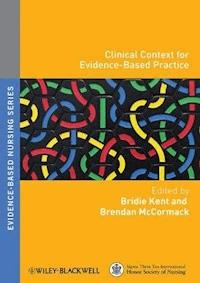
Clinical Context for Evidence-Based Practice E-Book
45,99 €
Mehr erfahren.
- Herausgeber: John Wiley & Sons
- Kategorie: Fachliteratur
- Serie: Evidence Based Nursing
- Sprache: Englisch
The Evidence-Based Nursing Series is co-published with Sigma Theta Tau International (STTI). The series focuses on implementing evidence-based practice in nursing and midwifery and mirrors the remit of Worldviews on Evidence-Based Nursing, encompassing clinical practice, administration, research and public policy.
Clinical Context for Evidence-Based Practice provides insights into the key contextual issues to be considered in the implementation and assessment of evidence-based practice. Increasingly, implementation research is demonstrating that for evidence to be successfully implemented into practice, the context of practice needs to be considered.
Clinical Context for Evidence-Based Practice addresses professional, educational, and organizational contextual issues that impact on the implementation of evidence into practice and the bringing about of practice change. Practical strategies that have been used effectively to overcome these contextual issues in a range of healthcare settings are identified. Specific contextual issues in different care settings are also addressed e.g. acute care, primary health care, peri-operative settings, paediatrics, aged care, mental health, midwifery.
Each chapter is written by an internationally known and respected author, with experience of developing or reviewing contextual strategies that have an impact on the implementation and utilisation of research in practice. They explore how gaining a better understanding of context made a difference to the implementation process or outcome and address the potential to transfer different approaches to a range of healthcare settings.
- An informative, practical resource for nurses and other health care professionals
- Explores context-related models and approaches to implementation
- Informs implementation and enables effective decision making
- Critically appraises contextual factors across the spectrum of care
- Explores future directions and implications
- Includes case examples
Sie lesen das E-Book in den Legimi-Apps auf:
Seitenzahl: 373
Veröffentlichungsjahr: 2011
Ähnliche




















Contents
Foreword
Cover Image
Notes on Contributors
1 Introduction
References
2 Context: overview and application
Introduction
Defining context
Models and frameworks
Context Assessment Index
The Ottawa Model of Research Use
Mode 2 thinking and context for evidence-based practice
Global factors
Conclusion
References
3 Making context work in primary health care
Introduction
What is primary health care?
PHC as a set of strategies
Assessing community need
Engaging community
Conclusion
References
4 Making context work in acute care
Introduction
The acute care context in relation to use of evidence in practice
Characteristics of acute care contexts
Evidence of the influence of acute care context on the use of research in practice
Interventions and strategies to implement interventions
Application of research evidence in the acute care context—a case example
Conclusion
References
5 Making context work in pediatrics
Introduction
Medication safety
Evidence from practice
Overcoming the barriers to implementing evidence into practice
Empowering families
Changing practice
Conclusion
References
6 Making context work in the perioperative setting
Introduction
Meta-analyses
Randomized clinical trials
Non-experimental studies
Other sources of evidence
Clinical practice guidelines and perioperative standards
Summary
Additional resources
References
7 Midwifery in the context of new and developing technologies
Introduction
Defining healthcare technology
Defining birth technologies
Understanding the complexity of technology and its relevance to midwifery
Philosophical perspectives on birth technology
Midwives and birth technology: major theoretical positions
Birth technology competence
Pregnant women’s use of the Internet in pregnancy
Current context of midwifery care
The midwifery model of care
International definition of the midwife
Global health: The World Health Organization
Global statistics on Internet usage
Inappropriate use of technology
Use of technology during pregnancy and childbirth
References
8 Making context work in mental health
Introduction
Contextualizing mental health care
The practice of reviewing: the evolution of scientific literature
Interpreting the evidence
Implications of “context” for practice: effect of peerreview on practice
Benchmarking practice: its place in the hierarchy of evidence
Interpreting the evidence
Implications of benchmarking practice for mental health practice
Summary of how the different contexts of reviewing and benchmarking practices impact on mental health and practice environments
Concluding comments
References
9 Making context work in aged care
Introduction
Aged care settings and providers
Best practice in aged care
A program of research on evidence-based aged care
Influences on evidence-based aged care
Summary: maximize relationships, minimize stress
References
10 Enabling context with policy
Introduction
Evidence and policy making
The policy-making process
The place of evidence in the policy process
From policy to practice
Taking account of policy in implementation strategies
Bridging the gaps between practice, policy, and research
Summary
References
11 Context in context
Introduction
Considering these individual contexts—context within contexts
The impact of the changing world on contextual factors for evidence-based healthcare?
Way forward
References
Index
This edition first published2010 © 2010 Sigma Theta Tau International
Blackwell Publishing was acquired by John Wiley & Sons in February 2007.Blackwell’s publishing programme has been merged with Wiley’s global Scientific, Technical, and Medical business to form Wiley-Blackwell.
Registered officeJohn Wiley & Sons Ltd, The Atrium, Southern Gate, Chichester, West Sussex, PO19 8SQ, United Kingdom
Editorial offices9600 Garsington Road, Oxford, OX4 2DQ, United Kingdom 2121 State Avenue, Ames, Iowa 50014-8300, USA
For details of our global editorial offices, for customer services and for information about how to apply for permission to reuse the copyright material in this book please see our website at www.wiley.com/wiley-blackwell.
The right of the author to be identified as the author of this work has been asserted in accordance with the UK Copyright, Designs and Patents Act 1988.
All rights reserved. No part of this publication may be reproduced, stored in a retrieval system, or transmitted, in any form or by any means, electronic, mechanical, photocopying, recording or otherwise, except as permitted by the UK Copyright, Designs and Patents Act 1988, without the prior permission of the publisher.
Wiley also publishes its books in a variety of electronic formats. Some content that appears in print may not be available in electronic books.
Designations used by companies to distinguish their products are often claimed as trademarks. All brand names and product names used in this book are trade names, service marks, trademarks or registered trademarks of their respective owners. The publisher is not associated with any product or vendor mentioned in this book. This publication is designed to provide accurate and authoritative information in regard to the subject matter covered. It is sold on the understanding that the publisher is not engaged in rendering professional services. If professional advice or other expert assistance is required, the services of a competent professional should be sought.
Library of Congress Cataloging-in-Publication DataClinical context for evidence-based nursing practice/edited byBridie Kent and Brendan McCormack.p.; cm. — (Evidence-based nursing series)Includes bibliographical references and index.ISBN 978-1-4051-8433-5 (pbk.: alk. paper)1. Evidence-based nursing. 2. Context effects (Psychology) I. Kent,Bridie. II. McCormack, Brendan. III. Series: Evidence-based nursing series.[DNLM: 1. Evidence-Based Nursing—methods. 2. Clinical Competence.WY 100.7 C641 2010]RT84.5.C567 2010610.73—dc222010007737
A catalogue record for this book is available from the British Library.
Foreword
Over more years than seems possible, I spent considerable time and energy in various medical centers attempting to facilitate and evaluate evidence-based practice (EBP) and organizational innovation efforts. This experience and related evaluative data increasingly highlighted for me the importance of the context within which enthusiastic nurses tried to implement change. For such change to be successful, which includes change that is sustained over time, and to move beyond individual enthusiasm or organizational “adoption in principle,” the critical nature of contextual factors had to be recognized and actively addressed.
This book in the EBP Series on the role of context provides validation for the above observation; and it is significant for anyone interested in truly “making EBP happen” in practice, in any country. Its content provides an overview of the meaning, complexity, and criticality of context. It demonstrates the universality of contextual impact on EBP across specialty areas and multiple types of practice settings. It provides real life examples, describes suggested implementation approaches, and highlights the existence of research on this issue within nursing—as well as the need for more research within nursing on the relationship of context, implementation approaches, and actualization of EBP. It provides paradigms and theories for consideration, as well as links to additional resources to enhance readers’ knowledge and skills on the subject. In the end, it draws attention to the fact that reflective practitioners interested in enhancing the quality of care they and their colleagues deliver need to knowledgably reflect upon, assess and influence the context in which they hope to make adoption of EBP a reality.
Cheryl B. Stetler, PhD, RN, FAAN
Cover Image
The ‘tantrix puzzle’ image of the book cover represents the complexity of the concept of ‘practice context’ and the depth of levels at which contextual characteristics operate. Increasingly, researchers in the field of knowledge translation recognise that context is a complex issue and that it has significant influence over the way in which knowledge is used in practice. Like the tantrix puzzle, unravelling the elements of context requires an understanding of how the different components of a practice setting connect with each other. Each connection influences the shape and position of the next and it is only through working out the logic of the connections can the puzzle be solved—or context be understood.
The Evidence-Based Nursing Series
The Evidence-Based Nursing Series is co-published with Sigma Theta Tau International (STTI). The series focuses on implementing evidence-based practice in nursing and mirrors the remit of Worldviews on Evidence-Based Nursing, encompassing clinical practice, administration, research and public policy.
Other titles in the Evidence-Based Nursing Series:
Models and Frameworks for Implementing Evidence-Based Practice: Linking Evidence to Action
Edited by Jo Rycroft-Malone and Tracey BucknallISBN: 978-1-4051-7594-4
Evaluating the Impact of Implementing Evidence-Based Practice
Edited by Debra Bick and Ian D. GrahamISBN: 978-1-4051-8384-0
Notes on contributors
Tracey Bucknall
Tracey Bucknall PhD, Grad Dip Adv Nurs, BN, ICU Cert, RN is currently Professor, School of Nursing, Deakin University and Head, Cabrini-Deakin Centre for Nursing Research, Cabrini Health, Australia, and is an Associate Editor of Worldviews on Evidence-Based Nursing.
During her career, Tracey has held a variety of clinical, educational, and research appointments in both private and public hospitals, and in the tertiary sector. Tracey’s primary research interests are clinical decision making and implementation of research into practice. Her research focuses on understanding how individuals make decisions routinely and in uncertainty, the environmental and social influences encountered in changing contexts, and interventions to improve the uptake of research in practice. More recently she has incorporated patient involvement in decision making as a means of influencing clinician uptake of research evidence.
Jane Cahill
Jane Cahill (MA Hons; PhD) is Research Fellow at the School of Healthcare, University of Leeds. She has extensive experience of psychological therapy effectiveness research having worked for the Psychological Therapies Research Centre at the University of Leeds for nine years before being appointed to the School of Healthcare. Her current programme of research supports the mental health research stream within the school and has a particular focus on the therapeutic alliance, practice-based evidence approaches, workforce mental health issues, and complementary and alternative approaches to mental health.
Dawn Freshwater
Dawn Freshwater PhD, BA, UKCP Reg, RGN, FRCN is Professor of Mental Health and Head of the School of Healthcare, University of Leeds. Her research interests span across mental health, prison
healthcare, and psychosocial interventions. She is keen to examine and develop innovative ways of understanding and implementing research within the healthcare system and has used a variety of post-modern approaches to underpin her research grant activity. She is the author of 15 books, has contributed widely to academic discourse around research methods, and is currently the editor of the Journal of Psychiatric Mental Health Nursing. She is a Fellow of the Royal College of Nursing and a registered psychotherapist.
Gill Harvey
Gill Harvey PhD, BNurs, is a Reader in Health Management at Manchester Business School (MBS). She has a professional background in nursing and, prior to taking up post at MBS, Gill worked for 9 years as the Director of the Royal College of Nursing’s Quality Improvement Programme. Whilst working at the RCN, Gill was also responsible for establishing and leading the National Collaborating Centre for Nursing and Supportive Care, funded by the National Institute for Health and Clinical Excellence (NICE), to develop clinical guidelines for the NHS. Gill’s research interests are focused on two main areas: organizational failure and turnaround and evaluative research around issues of implementation and facilitating quality improvement in practice.
Alison Hutchinson
Alison Hutchinson PhD, MBioeth, BAppSc (Adv Nsg), Midwifery Certificate, Nursing Certificate is currently Associate Professor at Deakin University and Cabrini Health, Australia. Following completion of a hospital-based nursing education, Alison undertook a Bachelor of Applied Science (Advanced Nursing) at La Trobe University, Melbourne, Australia. In 1991 she completed midwifery certificate training at the Mercy Hospital for Women in Melbourne. In 1996 she fulfilled the requirements for the award of Master of Bioethics at Monash University, Melbourne, and in 2004, supported by Australian Research Council, Strategic Partnership in Research Training Award; she completed a Doctorate in Philosophy at The University of Melbourne. Her PhD research examined research utilization by nurses in the context of a multidisciplinary setting. In July 2007 she was awarded CIHR and AHFMR Postdoctoral Fellowships and commenced her fellowship under the supervision of Dr Carole Estabrooks at the University of Alberta. Her postdoctoral work has focused on the influence of context and interdisciplinary interaction on the uptake of research evidence by health professionals.
Nadine Janes
Nadine Janes PhD, MSc, ACNP(cert), GNC(C), RN has been a gerontological nurse for more than 20 years. She has worked as an unregulated care provider, a registered nurse, and an advanced practice nurse in both institutional and community settings. Currently, Nadine holds positions across academia and practice. She is the Manager of Professional Practice at West Park Healthcare Centre as well as an Adjunct Professor at Ryerson University, both in Toronto, Canada. Through her research Nadine is exploring the process by which nursing staff utilize knowledge about best practice when caring for older persons in aged care settings. As a clinical leader in a rehabilitation and complex continuing care setting, she has the opportunity to apply, test, and refine her research findings at the point-of-care on a day-to-day basis. Finally, through her teaching, Nadine educates tomorrow’s nursing leaders about the complexities involved in supporting nurses to do what they know is best in moments of practice.
Bridie Kent
Bridie Kent PhD, BSc(Hons), PGCert Teaching in HE, RNT, RN, FCNA(NZ) is the Professor at Deakin University and Chair of Nursing at Eastern Health. She leads the Eastern Health Nursing and Midwifery Research Unit, Melbourne, Australia. Over the last two decades, Bridie has held clinical and academic appointments that have provided her with opportunities to link research, education, and practice in three different healthcare settings—UK, New Zealand, and Australia. She has over 15 years of experience in the field of critical care, been leading research-based teaching in this area of practice, and has contributed to a number of key texts, all of which help to inform and guide decision making in clinical practice. She is an experienced nurse researcher, with extensive experience in quality improvement, practice change, health services education, and research in the UK, New Zealand, and Australia, using associations with other leading centers to achieve sustainable results. For the last 8 years, she has played a leading role in evidence-based practice uptake and implementation in New Zealand, and through the Joanna Briggs Collaboration, helped to advance the science of evidence-based practice internationally. She is the Director of the Deakin Centre for Quality and Risk Management: A collaborating centre of the Joanna Briggs Institute. She is also Associate Editor of Implementation Science and Section Editor of Worldviews on Evidence-Based Nursing.
Debbie Kralik
Debbie Kralik RN, PhD is General Manager of Strategy and Research at the Royal District Nursing Service in South Australia. She is Adjunct Associate Professor at the University of South Australia and Adelaide University. Her research interests for the past decade have been the experience of chronic illness and community care. Debbie is Senior Editor of two journals: the Journal of Advanced Nursing and the Journal of Nursing and Healthcare of Chronic Illness.
Brendan McCormack
Brendan McCormack D.Phil (Oxon.), BSc (Hons.), PGCEA, RNT, RMN, RGN is currently the Professor of Nursing Research, Institute of Nursing Research/School of Nursing, University of Ulster, Northern Ireland; Adjunct Professor of Nursing, University of Technology, Sydney; Adjunct Professor of Nursing, Faculty of Medicine, Nursing and Health Care, Monash University, Melbourne.
He leads a number of practice development and research projects in Ireland, the UK, Europe, and Australia, which focus on the development of person-centered practice. In addition he is the Head of the Person-centred Practice Research Centre in the Institute of Nursing Research, coordinating research and development activity in this area. His writing and research work focuses on gerontological nursing, person-centered nursing, and practice development, and he serves on a number of editorial boards, policy committees, and development groups in these areas. He is the editor of the International Journal of Older People Nursing. He has coauthored Practice Development in Nursing which has now been translated into two languages and Practice Development in Nursing: International Perspectives. Brendan is Chair of the Older Person’s Charity, AgeNI and President of the All-Ireland Gerontological Nurses Association (AIGNA).
John Rosenberg
John Rosenberg PhD, RN holds a Teaching and Research position in the University of Queensland School of Nursing and Midwifery and was the Chair of Palliative Care Nurses Australia Inc. from 2008 to 2010. He is a registered nurse with a clinical background in community-based palliative care. He has also worked as an educator and researcher in the care of people at the end of life. John was
conferred a PhD by Queensland University of Technology in 2007, which examined the integration of health promotion principles and practice in palliative care organizations. John’s ongoing scholarly interests lie in sociological perspectives of death and dying and in the engagement of palliative care organizations with the wider community in the support of people at the end of life. John is also interested in the promotion of advanced skills in palliative care nursing and is a coauthor of the Competency Standards for Specialist Palliative Care Nursing Practice.
Marlene Sinclair
Marlene Sinclair’s PhD MEd DASE BSc RNT RM RN, Specialist certificate in Neuromedicine/Neurosurgery career highlights have been in midwifery education and research. Marlene holds a personal chair for Midwifery Research at the Institute of Nursing Research, University of Ulster and is President and founder of the Doctoral Midwifery Research Society. Her specialist area of research is the appropriate use of technology in childbirth and her work extends from Ireland, to the UK and further afield to Taiwan and Jordan. She is editor and founder of the Royal College of Midwives (RCM) research journal, Evidence Based Midwifery.
Victoria M. Steelman
Victoria Steelman PhD, RN, CNOR, FAAN is an Assistant Professor at the College of Nursing, The University of Iowa, in Iowa City, IA, USA. She focused on implementing evidence-based practice changes in perioperative settings for 20 years. She has published extensively and presented about issues related to safe patient care in the operating room and authored many of the Association of periOperative Registered Nurses Recommended Practices. She is well recognized for these activities and received two Outstanding Achievement awards from the AORN for this work. In 2007, she was inducted into the American Academy of Nursing in recognition of the national and global impact of her work. In 2008, she received AORN’s highest honor, the Award for Excellence in recognition of her contributions to perioperative nursing.
Valerie Wilson
Valerie Wilson PhD, MN, Bed St., RSCN, RN is the Director of Nursing Research & Practice Development at the Children’s Hospital at Westmead and Professor of Nursing Research & Practice Development at the University of Technology, Sydney. She has extensive experience in practice development, facilitation, and evaluation. She completed her PhD in 2005, in which she evaluated the effectiveness of practice development strategies in a Special Care Nursery. The results of her research have been published in several nursing and practice development journals and books.
She is member of a Knowledge Utilization/Translation group as well as the International Practice Development collaborative. Her focus is on working with clinicians to develop person-centered approaches to care, that are both evidence based and take into account the needs of patients and families. The evaluation of this work, together with a number of local, state, and international projects form the basis of her research work.
Chapter 1
Introduction
Bridie Kent and Brendan McCormack
Evidence-informed practice has, in the western world, been the driver for many changes in nursing education, policy, and research. As Ciliska (2006) indicated it is now accepted as the norm “Every nurse should have at least an understanding of the purpose and process of evidence-based practice, be able to ask relevant clinical questions, and know who in their environment can assist them in answering questions.” (p. 38). Concerns over adverse events, quality of care, and the quest for clinical effectiveness have led to guides, books, and decision-aids being developed to assist nurses, and other health professionals, with the utilization of evidence in their practice.
Implementation of evidence is a science in its own right, and is associated with specific challenges. One of these relates to the detailed knowledge and skills that health professionals have been encouraged to learn and adopt. The plethora of published works (research and textbooks) is testament to the attention that evidence-informed healthcare has attracted over recent years. This series adds further to the toolkit of resources available for use by health professionals.
So, there is no shortage of resources but what is lacking is a sound understanding of the issues that positively or negatively influence the uptake of evidence into practice. Increasingly, the importance of “context” as a key influence on the translation and use of evidence in practice is recognized. However, context is not a simple concept; the multifaceted nature of the factors related to context raises a variety of challenges to the systematic implementation of evidence into practice. This complexity has resulted in context being referred to by many knowledge translation researchers as “the black-box of practice” (Rycroft-Malone, 2007). Despite many years of research into evidence-based practice, knowledge utilization, and knowledge translation, we continue to know very little about what makes a context receptive to evidence, what contextual factors have the most impact on clinical effectiveness and clinical decision making, what interventions work best to change practice context, and possibly the most challenging of all—how best to evaluate changes in practice context. Thus there is a clear need for ongoing research in this field to clarify the concept and to develop methods for assessing and appraising the potential impact of individual contextual factors on evidence implementation and the resulting impact of context on implementation interventions.
McCormack et al. (2002) highlighted the variability of contexts in which healthcare takes place and the breadth of factors that subsequently influence practice settings. The context of healthcare can be seen, on one level, as infinite as it takes place in a variety of settings, communities, and cultures that are all influenced by a variety of factors, for example, sociocultural, political, economic, and historical factors. However, in their concept analysis of context, McCormack et al. (2002) used the term to refer to the environment or setting in which people receive healthcare services, or in the context of getting research evidence into practice, “the environment or setting in which the proposed change is to be implemented” (Kitson et al., 1998). They suggested that, in its most simple form, context refers to the physical environment in which practice takes place. Whilst this may seem like an oversimplistic idea, having some boundaried understanding of context is important. In particular, international evidence suggests that nurses have a strong allegiance with the setting in which they work (e.g., a ward, department, clinic, community) (Aiken et al., 2001) and less so with an organization at large and thus the systems, structures, processes, and patterns in an organization are experienced differently in particular practice settings. The boundary of the practice setting shapes how a clinician experiences the organization and, ultimately, how such things as evidence are translated into practice. With this notion of a boundaried practice environment in mind, McCormack et al. (2002) identified three characteristics of context—culture, leadership, and evaluation.
The literature on culture in health and social care is complex, broad, and diverse. Manley (2004) has argued that some of the problems associated with understanding culture arise from a lack of distinction in the literature (and among decision makers) between “organizational culture” and “workplace culture.” Davies et al. (2000) argue that whilst there are many conceptions of culture, broadly speaking perspectives are divided between those that view culture as something an organization “is” and those that view it as something that an organization “has.” The former being characteristics that are “fixed,” immutable, and serve as descriptors of an organization. When an organization is considered to “have” culture then these are “aspects or variables of the organisation that can be isolated, described and manipulated” (p. 112). Davies et al. (2000) also purport that it is only through the view that organizations “have culture” that it is possible to consider ways in which culture can be changed. Manley (2004), however, argues that organizations are cultures, incorporating such things as language, myths, rules, and stories. However, Manley suggests that this (organizational culture) is not the culture that patients and staff experience everyday, instead, what they do experience is the culture of different settings (contexts) or workplaces. Wilson et al., (2005), Coeling and Simms (1993), and Adams and Bond (1997) have all argued that there is a need to understand the culture of the individual workplace prior to implementing innovations or developments, as culture has been found to vary between units within the same organization. An effective workplace culture is one in which there is (Manley, 2004, p. 2):
a person-centered approach with patients, users, and staff;daily decision making that is transparent and evidence-based, where evidence is the blending of different sources of knowledge (patient preferences, empirical research, critical reflection of experience and professional expertise, and local knowledge [e.g., audit findings]);a learning culture in which through formal critique there is a focus on individual, team, and service effectiveness;development of leadership potential to achieve a culture of empowerment, continuing modernization and innovation.The impact of leaders, and leadership roles and styles in particular, has been shown to be a significant factor in shaping culture and the context of practice. There is a large and diverse literature espousing the virtues and otherwise of particular leadership roles and styles. In modern healthcare, much emphasis is placed on “transformational leadership.” Transformational leaders create a culture that recognizes everybody as a leader of something. They inspire staff toward a shared vision of some future state, as well as a number of other processes such as challenging and stimulating, enabling, developing trust, and communicating. Transformational leaders require emotional intelligence, rationality, motivational skills, empathy, and inspirational qualities and the intellectual qualities of strategic sensing, analytical skills, and self-confidence in public presentation (Kouzes & Posner, 1993). Schein (1985) suggests that transformational leaders can transpose their individual beliefs and values into collective beliefs and values and that these eventually become assumptions because they are seen to work reliably and then are taken for granted. Thus, it is implied that the transformational leader can alter the dominant practice culture and create a context that is more conducive to the integration of evidence and practice. Transformational leaders can facilitate the integration of the “science” component of healthcare practice (the application of science and technology) and the “art” component (the translation of different forms of practice knowledge) to enable the development of expertise in practice and a shared understanding of knowledge for practice. However, whilst such integration enables greater effectiveness in practice, it raises challenges in terms of evaluating practice effectiveness, the effectiveness of interventions, and patient outcomes.
Evaluating outcomes from practice is essential to healthcare effectiveness and in everyday practice is manifested through medical audit, clinical audit, standard setting, quality improvement programmes, care pathway monitoring, and accreditation. However it is widely recognized that measuring effectiveness is complex and the answering of one effectiveness question raises many others and, indeed, most effectiveness evaluation can only ever “partially answer” questions. Whilst the “hard” data of cost-effectiveness and resource management provide a particular perspective on the effectiveness of practice, if we believe that an effective workplace culture is multifaceted and multilayered, as described earlier, then the evaluation of these perspectives and layers is also important. Thus, the “hard” outcome data that can inform the effectiveness of particular interventions and the “soft” data of user experiences, staff feedback, peer review, and reflections on practice are equally valid.
A good example of the influence of contextual factors on evidence uptake is found when the practice of preoperative fasting is explored. Despite high quality evidence-based guidelines, such as those issued by the UK’s Royal College of Nursing (2005), many patients continue to suffer unduly from dehydration, delayed healing, and other complications. Lorch (2007) explored the implementation of these guidelines in the orthopedic setting and identified barriers to their uptake, which included:
resistance from theater staff and a few consultant surgeonsdifficulty educating night staffrapid turnover of domestic stafffear from junior doctors and nursing staff of upsetting the surgeons’ routineslack of awareness by nursing staff of free space on morning elective lists.Here we have evidence of attitudinal, environmental, economic, and communication factors that combine in various ways resulting in poor application of evidence within clinical practice settings and the adverse effects experienced by patients.
So what can be done?
Education or the presence of clinical guidelines, as a sole activity, is insufficient to change health professionals’ behavior (Grimshaw et al., 2004). A greater understanding is needed, supplemented by practice examples, and that is what we hope to achieve with this book. Experts in evidence-based practice and knowledge translation have summarized the key contextual factors that impact positively and negatively on practice change in their various healthcare settings. There will be some overlap but we make no apologies for this. It is useful to understand that there are some common contextual influences, while others tend to be setting or field specific.
There are some guides to assist evidence implementation or knowledge translation, the latter of which is the term currently favored by many implementation scientists and is widely used as a key word in articles published in many leading journals (Kent et al., 2009). Understanding how knowledge is translated into practice is important; it focuses on methods or processes that can be used to increase clinicians’ practice-related knowledge and how they can use that knowledge to improve patient outcomes or health services to close or lessen the evidence-practice gap (Westbrook & Gagnon, 2009).
This brief overview of context and the way it is understood in the context of this book highlights the need for different perspectives of practice context to be brought together into one volume and to analyze how these perspectives help shape our thinking. It is for this reason that we have asked different experts in the field of evidence-based practice to comment on and discuss the contextual factors that commonly affect the uptake or utilization of evidence by practitioners. Implementation scientists have to consider differences in settings, organizational factors, the variability in cultures that exist within practice settings and all the other external and internal influences such as micro-, meso- and macroeconomics, environment, history, and politics. Add to these individual psychosocial factors such as attitudes, beliefs, and knowledge and the complexity of context as a mediating factor for successful evidence implementation becomes acutely apparent.
In Chapter 2, context is explored further by drawing on relevant models and theories that will help to develop an overview of the work that has been taking place in terms of conceptualizing contextual factors that affect evidence-based practice. By no means is this overview comprehensive and all-encompassing; that was not the aim of this chapter. What it does is highlight the common contextual factors that have been identified over the past decade or so and provide possible tools for use when considering implementing evidence into practice.
In Chapter 3, the contextual factors associated with primary care settings are explored, using examples of studies conducted within this setting. Debbie Kralik and John Rosenberg have many years of primary care experience between them, and they have worked in a variety of settings including district nursing and community palliative care.
Chapter 4 moves the exploration to the other extreme of care provision; the acute care sector. Alison Hutchinson and Tracey Bucknall draw on implementation projects that they and others have conducted to capture the key contextual factors that commonly impact on knowledge translation in the acute care setting. Alison and Tracey both hold joint clinical and academic appointments and actively engage in the promotion and uptake of evidence-based practice on a daily basis.
Pediatrics forms the focus of Chapter 5. Val Wilson, an experienced pediatric registered nurse, also draws on research conducted by herself and others to provide examples of how contextual factors can positively and negatively influence knowledge translation and practice change. She uses work conducted in the special care nursery environment to illustrate key factors related to embedding evidence into practice, and also reveals how problems arising in practice can be addressed by research and practice change to reflect new evidence.
Chapter 6 takes the reader to the specialised perioperative setting. Victoria Steelman has extensive expertise infusing evidence-based practice into healthcare settings and has a particular interest in studying safety and quality. She has made significant contributions to perioperative nursing, in the USA and further afield, and once again, she draws on her research to provide an overview of the factors that should be considered when undertaking knowledge translation activities in the perioperative setting.
We move to another specialist field of healthcare, Midwifery, in Chapter 7. Marlene Sinclair, who is Ireland’s first Professor of Midwifery Research, draws on her research experiences, particularly in birth technology, that span both qualitative and quantitative methods. She captures the contextual factors that are associated with Midwifery practice and includes examples that will not only enhance our understanding of issues in this area of practice but also our knowledge and understanding of technology in the birthing process and birth outcomes.
Mental health is the focus of Chapter 8. Dawn Freshwater and Jane Cahill explore the context of evidence as developed and applied in mental healthcare settings. In particular, they draw on two examples of how evidence can be used to both define and influence practice environments and subsequently impact on care; the process of benchmarking and the practice of reviewing research and research evidence.
In Chapter 9 the focus shifts to the care of older persons. In a world where people are generally living longer and healthier lives, it is important to explore how to provide the best in healthcare for older persons. Nadine Janes has a wealth of experience to draw on; she has worked as an unregulated care provider, a registered nurse, and as an advanced practice nurse in both institutional and community settings. Therefore she is extremely well placed to consider the aged care setting, in particular the factors that affect knowledge translation in long-term care facilities.
We move from the specific to the wider world in Chapter 10. Gill Harvey explores issues relating to the wider policy context of implementation, looking in particular at the relationships between policy and practice in relation to delivering evidence-based healthcare.
She discusses the factors that influence decision making at a policy level and draws on specific examples to illustrate how the policy process can mediate the translation of evidence into practice, pushing some issues higher up the agenda and others lower down.
We know that we have not included all settings or fields of practice; that would be virtually impossible in a book of this size. We also recognize that many of the examples are from the western world and few from the rapidly developing eastern societies. By exploring context in various clinical settings, we hope that the factors will be seen in such a way that they can be transferred to other settings that we have not covered and similarly be considered when undertaking knowledge translation in any part of the world. In the final chapter we will synthesise the key issues emerging from previous chapters and propose some options for moving forward with advancing our knowledge of context and identifying future research priorities in this field.
We will begin however with the next chapter, which provides an overview of context, and draws on frameworks or models that can be used by health professionals to identify and assess the impact that each has on achieving successful practice change.
References
Adams, A. & Bond, S. (1997). Clinical specialty and organizational features of acute hospital wards. Journal of Advanced Nursing, 26, 1158–1167.
Aiken, H., Clarke, S.P., Sloane, D.M. et al. (2001). Nurses reports on hospital are in five countries. Health Affairs—Web Exclusive, 20, 45–53.
Ciliska, D. (2006). Evidence-based nursing: How far have we come? What’s next? Evidence-Based Nursing, 9, 38–40.
Coeling, H. & Simms, L. (1993). Facilitating innovation at the unit level through cultural assessment, Part 2: Adapting managerial ideas to the unit work group. Journal of Nursing Administration, 23, 13–20.
Davies, H.T.O., Nutley, S.M. & Mannion, R. (2000). Organisational culture and quality of health care. Quality in Health Care, 9, 111–119.
Grimshaw, J., Thomas, R., Maclennan, G. et al. (2004). Effectiveness and efficiency of guidelines dissemination and implementation strategies. Health Technology Assessment, 8(6), 1–72.
Kent, B., Hutchinson, A.M. & Fineout-Overholt, E. (2009). Getting evidence into practice—understanding knowledge translation to achieve practice change. Worldviews on Evidence-Based Nursing, 6, 183–185.
Kitson, A., Harvey, G. & McCormack, B. (1998). Approaches to implementing research in practice. Quality in Health Care, 7, 149–159.
Kouzes, J. & Posner, B. (1993). Transformational leadership. The credibility factor. The Healthcare Forum Journal, 36, 16–24.
Lorch, A. (2007). Implementation of fasting guidelines through nursing leadership. Nursing Times, 103, 30–31.
Manley, K. (2004). Transformational culture: A culture of effectiveness. In: Mccormack, B., Manley, K. & Garbett, R. (eds) Practice Development in Nursing. Oxford: Blackwell.
McCormack, B., Kitson, A., Harvey, G., Rycroft-Malone, J., Titchen, A. & Seers, K. (2002). Getting evidence into practice: The meaning of “context.” Journal of Advanced Nursing, 38, 94–104.
Royal College of Nursing (2005). Perioperative fasting in adults and children: An RCN guideline for the multidisciplinary team. London: Royal College of Nursing.
Rycroft-Malone, J. (2007). Theory and knowledge translation: Setting some co-ordinates? Nursing Research, 56, 578–585.
Schein, E.H. (1985). Organizational Culture and Leadership. San Francisco: Jossey-Bass.
Westbrook, J. & Gagnon, M. (2009). Knowledge translation initiative for DBTACs. Austin, TX: National Center for the Dissemination of Disability Research (NCDDR)/SEDL.
Wilson, V., McCormack, B. & Ives, G. (2005). Understanding the workplace culture of a special care nursery. Journal of Advanced Nursing, 50, 27–38.
Chapter 2
Context: overview and application
Bridie Kent and Brendan McCormack
Introduction
This chapter will look at the different definitions and understandings of “context” and explore what this includes from different perspectives. The models and frameworks that specifically mention context will be explored further, with clarification of the similarities or differences between them and how they have been used. Also included is a discussion of the ways of approaching the critical appraisal of contextual issues in relation to evidence-based practice. Readers will be “sign-posted” to the other books of this series that explore models and approaches to support evidence implementation, and assessing the outcomes of implementation, respectively.
Defining context
Evidence-based practice has, since the late 1990s, become a driving force for problem-solving to improve clinical practice and cost-effectiveness of care (Fineout-Overholt et al., 2004). Many healthcare organizations have invested heavily in strategies to increase the likelihood that all clinical practice is evidence based wherever possible, thus moving practice away from a reliance upon rituals. The drive for improvements in quality and effectiveness in healthcare and the need to enhance patient safety, which have triggered the rapid growth in evidence-based practice resources, have required a change in culture, away from paternalistic care provision, to one of person-centered care in which the practitioner is a critical thinking, reflective, knowledge-based doer. By utilizing approaches that raise awareness of taken-forgranted assumptions and then critically reflecting on these, a greater understanding of both practice and the evidence available for use in practice emerges. Awareness of the importance of the context in which evidence-based practice takes place also emerges. It is through critical reflection around the use of research findings that health professionals can understand more fully the internal and external contexts of the practice setting in which adoption of evidence is being considered. With this knowledge, the likelihood of successful delivery of evidence-based person-centered care may be maximized.
Although many readers will be aware of the history of EBP, it does no harm to remind ourselves that it is a process within which clinical decisions are made by practitioners, using the best available research evidence, their clinical expertise, and patient preferences, with consideration also of available resources. Stetler, who’s model is detailed in Book 1 of this series, and colleagues from the USA (Stetler et al., 1998) suggest that EBP occurs when, within the organization institutionalization of research findings and other objective systematically obtained information has been achieved through the development of culture, capacity and infrastructure. They further argue that this institutionalization of research enhances the practice of clinicians, managers, educators and other staff.
In the subsequent years, in almost all developed, and some developing, countries, healthcare has increased in complexity. For evidence to be successfully implemented into practice, it is essential that the wider issues that can be classed as contextual elements are considered. Such elements are, in general, pertinent to the setting in which the practice change is being proposed and can include leadership; policy; organizational structure, societal, and cultural issues; and basic organizational components. Some of these interact with others, and yet all present different challenges, or influences, to those who are working to get evidence implemented into practice. As a result, it is important that contextual factors are explored in relation to the different healthcare settings that exist worldwide.
It is evident from the literature, and from expert groups, that context can be interpreted in different ways and at different levels. In a concept analysis of context that was introduced in the previous chapter, McCormack et al. (2002) focused primarily on context in terms of environment. By this, they meant the setting where practice takes place, or the setting for the proposed practice change. As the reader will know, there are few environments, if any, that are the same, even within the same area of practice. For example, in the field of critical care, one intensive care unit will have a different environment or be influenced by different environmental factors to that of another unit. The size of the unit, types of patients admitted (e.g., general or specialist), type of organization (public or private), country or geographical location, and the age of the unit; each one of these imposes different influences in unique ways. If these were not enough, there are also the human factors that make one setting different to another. These are often defined as creating the culture of the workplace and this influences the way things are done (Manley, 2000a). Whether context per se is a more significant issue than workplace culture is an issue that is debated in the literature. Davies and colleagues (Davies et al., 2000) for example argue that the key significant factor in the successful uptake of evidence is that of organizational culture and would consider this to be of much greater significance than the issue of context. This conceptualization challenges the perspective offered in models, for example, the Promoting Action on Research Implementation in Health Services (PARIHS) framework where culture is considered to be a sub- element of context. Whatever the answer, the reality is that we know there is an interrelationship between organizational systems, structures, and processes, practice setting and workplace cultures. However, the nature of that relationship (or relationships) remains poorly understood (Plsek & Greenhalgh, 2001).
Berwick, in his work exploring practice change driven by adverse events, has identified the importance of culture (Berwick, 2003). He has been an advocate for practice change for many years now and as head of the US Institute for Health Innovations, he has persuaded hundreds of organizations, and thousands of individuals to adopt evidence-based changes to practice that have positively impacted on many more people’s lives. The Institute for Healthcare Improvement (IHI) established a campaign called the 5 million lives campaign that has, at its heart, culture change; for more information on this campaign go to the following web site http://www.ihi.org/IHI/Programs/Campaign (accessed September 28, 2009).
Culture in itself is a major influencing factor on evidence-based practice and on the quest to ensure evidence is translated into practice. This is generally known as knowledge translation. The factors influencing knowledge translation can be further divided by level into micro, meso, and macro. One way of explaining the differences between each of these is to use the work of Kapiriri et al. (2007).
They investigated priority setting at the three different levels in Canada, Norway, and Uganda. They found that at the macro-level, the contextual influences relating to resource allocation decisions were politics, public pressure, and advocacy, some of which were further complicated by the impact of international priorities. At the meso-level, the influencing factors were national priorities, guidelines, and evidence. At the micro-level, however, the contextual influences were much more localized and included attitudes and feelings of worth. Factors that were considered to be at macro-level influenced, or set the context, at the lower meso- and micro-levels.




