


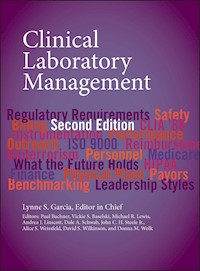
Clinical Laboratory Management E-Book
137,99 €
Mehr erfahren.
- Herausgeber: John Wiley & Sons
- Kategorie: Fachliteratur
- Serie: ASM
- Sprache: Englisch
This totally revised second edition is a comprehensive volume presenting authoritative information on the management challenges facing today's clinical laboratories. * Provides thorough coverage of management topics such as managerial leadership, personnel, business planning, information management, regulatory management, reimbursement, generation of revenue, and more. * Includes valuable administrative resources, including checklists, worksheets, forms, and online resources. * Serves as an essential resource for all clinical laboratories, from the physician's office to hospital clinical labs to the largest commercial reference laboratories, providing practical information in the fields of medicine and healthcare, clinical pathology, and clinical laboratory management, for practitioners, managers, and individuals training to enter these fields. If you are looking for online access to the latest clinical microbiology content, please visit www.wiley.com/learn/clinmicronow.
Sie lesen das E-Book in den Legimi-Apps auf:
Seitenzahl: 3221
Veröffentlichungsjahr: 2013
Ähnliche




















Clinical Laboratory Management
Clinical Laboratory Management
SECOND EDITION
Lynne S. Garcia, EDITOR IN CHIEF
LSG & Associates, Santa Monica, California
EDITORS:
Paul Bachner
Department of Pathology & Laboratory Medicine, University of Kentucky Chandler Medical Center, Lexington, Kentucky
Vickie S. Baselski
Clinical Microbiology, University of Tennessee Health Science Center at Memphis, Memphis, Tennessee
Michael R. Lewis
Department of Pathology, Fletcher Allen Health Care, Burlington, Vermont
Andrea J. Linscott
Department of Pathology, Ochsner Medical Center, New Orleans, Louisiana
Dale A. Schwab
Nichols Institute, Quest Diagnostics, Inc., San Juan Capistrano, California
John C. H. Steele, Jr.
Clinical Pathology Laboratories, Department of Pathology, Medical College of Georgia, Georgia Regents University, Augusta, Georgia
Alice S. Weissfeld
Microbiology Specialists Inc., Houston, Texas
David S. Wilkinson
Department of Pathology, VCU School of Medicine, Richmond, Virginia
Donna M. Wolk
Copyright © 2014 American Society for Microbiology. ASM Press is a registered trademark of the American Society for Microbiology. All rights reserved. No part of this publication may be reproduced or transmitted in whole or in part or reutilized in any form or by any means, electronic or mechanical, including photocopying and recording, or by any information storage and retrieval system, without permission in writing from the publisher.
Disclaimer: To the best of the publisher’s knowledge, this publication provides information concerning the subject matter covered that is accurate as of the date of publication. The publisher is not providing legal, medical, or other professional services. Any reference herein to any specific commercial products, procedures, or services by trade name, trademark, manufacturer, or otherwise does not constitute or imply endorsement, recommendation, or favored status by the American Society for Microbiology (ASM). The views and opinions of the author(s) expressed in this publication do not necessarily state or reflect those of ASM, and they shall not be used to advertise or endorse any product.
Library of Congress Cataloging-in-Publication Data
Clinical laboratory management / Lynne S. Garcia, editor in chief, LSG & Associates, Santa Monica, CA ; editors, Paul Bachner, Department of Pathology & Laboratory Medicine, University of Kentucky Chandler Medical Center, Lexington, KY [and eight others]. — 2nd edition.
pages cm
Includes bibliographical references and index.
ISBN 978-1-55581-727-5 — ISBN 978-1-68367-345-3 (e-ISBN) 1. Medical laboratories—
Administration. 2. Pathological laboratories—Administration. I. Garcia, Lynne Shore, editor of compilation. II. Bachner, Paul, editor of compilation.
[DNLM: 1. Laboratories—organization & administration. 2. Clinical Laboratory Techniques.]
R860.C56 2014
610.72’4—dc23
2013036960
doi:10.1128/9781555817282
Printed in the United States of America
10 9 8 7 6 5 4 3 2 1
Address editorial correspondence to: ASM Press, 1752 N St., N.W., Washington, DC
20036-2904, USA.
Send orders to: ASM Press, P.O. Box 605, Herndon, VA 20172, USA.
Phone: 800-546-2416; 703-661-1593. Fax: 703-661-1501.
E-mail: [email protected]
Online: http://www.asmscience.org
Contents
Contributors
Preface
Acknowledgments
SECTIONI
Basic Concepts and the Current Healthcare Environment
1 Principles of Management
Jeffrey Casterline and John R. Snyder
IntroductionLeadership, Management, and AdministrationLeadership • Management • AdministrationManagement ConceptsCultural Lag • Review of Management ThoughtDecision MakingWhat Is Decision Making? • Types of Decisions • Individual versus Group Decision Making • The Problem-Solving/Decision-Making Process • RiskManagement EthicsDefinitions • Characteristics of High-Ethics Organizations • Benefits of Strong Workplace Ethics • Management Roles and ResponsibilitiesSummaryKEY POINTSGLOSSARYREFERENCESOTHER READINGAPPENDIX2 Management Functions
Laurence P. Vetter
IntroductionPlanningStrategic Planning • Selecting a Planning Group • Environmental Analysis • SWOT Analysis • Vision and Mission Statements • Goals and Strategies • Prioritization • Accountability • Measuring Success (Metrics)OrganizingOrganizational Chart • Time Management • Policies • Procedures • Workflow • StaffingDirectingCommunicating • Delegating • Motivating • Managing Change • CoachingControllingSetting Performance Standards • Evaluating Employee Performance • Problem Solving • Decision MakingSummaryKEY POINTSGLOSSARYREFERENCESAPPENDIXES3 Relevant Economic and Business Concepts
Roxanne Mercer and Ann L. Harris
IntroductionOverview of Laboratory Industry Trends during the Past Decade • Forecast for the FutureStrategic Business Planning OverviewMarket Assessment • Key StrategiesCompetitive EnvironmentClinical Laboratory Competitive Market • Business Entities, Strategic Alliances, Joint Ventures, Mergers and Acquisitions, and Integrated NetworksThe Economic EnvironmentFour Stages of the Business Cycle • The National Economy: Fiscal and Monetary Policies • Assess Infrastructure and Develop Production Strategies • Cost Accounting Principles • System-Wide Approach to Establishing a Fee Schedule • Consumer Price Index • Pricing StrategiesPromotional (Marketing and Sales) StrategiesMarket Research • Marketing Strategies • Sales Strategies • Advertising StrategiesCustomer-Focused Concepts and Service StrategiesWho Is the Customer? • Understanding Customer Behavior • Key Concepts and Recognized Customer Service Strategies • Service Delivery StrategiesSummaryKEY POINTSGLOSSARYREFERENCESADDITIONAL READINGAPPENDIX4 Current Challenges to Financial Stability within the Diagnostic Laboratory
Roxanne Mercer and David S. Wilkinson
IntroductionWorkforceAvailability of Personnel • Training Programs • On-the-Job Training • Recruitment and Retention • Generational DiversityWorkplaceCentralized versus Decentralized Operations • Local and Regional Integration of Laboratory ServicesWork FlowNew Technology • Testing Site OptionsDoing More with LessSystematic Approaches to Managing Change • RightsizingShrinking ReimbursementGross versus Net Revenue • Medicare • Managed Care • BillingRegulations and Unfunded MandatesRegulations • Unfunded MandatesSummaryKEY POINTSGLOSSARYREFERENCESAPPENDIX5 The Impact of Regulatory Requirements
Susan D. Roseff, Denise E. Russell, Christina E. Anderson, and Roxanne Mercer
IntroductionBrief History • Overview of the Current State of Laboratory RegulationsRegulation of Workplace Safety and Human Resource ManagementOccupational Safety and Health Administration • American National Standards Institute • National Institute of Occupational Safety and Health • CLSI • Centers for Disease Control and Prevention • Food and Drug Administration • Equal Employment Opportunity Commission • Department of Transportation and International Air Transport Association • Hazard Communication Standard • Blood-Borne Pathogens • Ergonomics • Tuberculosis • Latex • Sharps • General Laboratory Safety • Chemicals • Transportation of Clinical Specimens • Employment DiscriminationAccreditation and LicensureBrief History • Laboratory Inspection and Accreditation • Personnel Certification and LicensureRegulations Affecting Transfusion MedicineOverview of Changes in Transfusion Medicine that Have Resulted in Increased Scrutiny • Safety • Regulatory Organizations that Specifically Impact Transfusion Medicine • Biological Product Deviation Reporting • The Cost of Increasing Regulatory OversightRegulation of Laboratory Business PracticesNegotiated Rule-Making Process • Corporate Compliance • Key Elements of a Model Compliance Plan for Hospitals • The Legal EnvironmentLaboratory Reimbursement and Medical NecessityMedicare • Other Federally Funded Programs • National Coverage Determination and Local Medical Review Policies • Reimbursement Methods • Code of Medical Necessity (Reasonable and Necessary Services) • Overview of the Reimbursement Process• Registration and Coding • Claims Processing and Submission • Remittance Advice • Audit and Benchmark MonitorsCompliance—the Next Generation: HIPAACovered Entities • Privacy Standards: Rules Governing Protected Health Information • Administrative Requirements • Personnel Policies and Procedures • Patient Informed Rights • Business Associates and Business Associate Agreements • Standards for Electronic Transactions • HIPAA Compliance and EnforcementSummaryKEY POINTSGLOSSARYREFERENCESAPPENDIXES6 The Changing Practice of Medicine
Susan D. Roseff, Denise E. Russell, and Margaret M. Grimes
IntroductionOverview of Major ChangesShift from Inpatient to Outpatient Care • Shift from Centralized to Decentralized Testing • Shift to Primary Care: Patient-Centered Medical Home • Shortages of Qualified Staff • Quality of Care and Error Reduction • Pay for Performance • Healthcare Reform • Advances in Technology • Wellness and Prevention • The Aging Population • Recognition of Women’s Health NeedsThe Impact of TechnologyThe Electronic Medical Record • Meaningful Use/Value-Based Purchasing • Patient Access to Information • Patient Confidentiality • Advances in Diagnostic TestingThe Emergence of Clinical Practice GuidelinesThe Role of Evidence-Based Medicine and Outcomes Data • Concerns about Utilization and Quality • Clinical Practice Guidelines and Clinical Pathways Defined • Use of Clinical Practice Guidelines • Pros and Cons • Developing Clinical Pathways and GuidelinesMedicolegal IssuesMalpractice Litigation • Patient Safety • Disclosure of Adverse Events/CMS Never Events • CMS Serious Reportable Events • Enterprise Risk Management • Insurance • HIPAA and Patient Confidentiality • Contracts • Specimens • Documentation • Research LiabilityTraining Physicians for Practice in the 21st CenturyThe Educational Goal: The Complete Physician • New Paradigms in Medical Training • Incorporating New Knowledge and Training Techniques into the Curriculum • Training Physicians for the Managed-Care EnvironmentExternal Forces Impacting Undergraduate and Graduate Medical EducationFinding the Right Mix: How Many Physicians Do We Need? • Current Challenges to Academic CentersSummaryKEY POINTSGLOSSARYREFERENCESAPPENDIX7 The Changing Healthcare Environment
Ann Harris and David S. Wilkinson
IntroductionChanging Reimbursement ModelsChange from Traditional Indemnity to Managed-Care Insurance • Four Stages of Managed-Care Market Development • Reimbursement Strategies in a Managed-Care Market • Healthcare Stakeholders in a Managed-Care MarketImpact of Healthcare ReformPatient Protection and Affordable Care Act • Payment Reform and Provider Reimbursement Strategies • Current Trends and Issues with Healthcare Reform • Hospitals and Laboratories: Concerns in Healthcare ReformChanging Emphasis on Quality and ValueHealth Maintenance Organization Network Management • Patient Management • Disease Management • Healthcare Reform: Demonstration ProjectsThe Educated ConsumerBaby Boomers and Generation Xers: The Educated and Savvy Consumer • Consumer-Driven Healthcare • The Increasingly Litigious EnvironmentChanging TechnologyTechnological Advances • Direct Consumer Access • Direct Access Testing • Advances in Genetic Testing and Molecular Pathology • Personalized Medicine • New Regulations to Address Changing Technology: HIPAA • Impact of Reform on Electronic Health Records and Meaningful UseConsolidation in the Healthcare IndustryOverview: Laboratories, Hospitals, Physician Practices, and Managed-Care Organizations • Integrated Delivery Systems • Laboratories: Change from Revenue Centers to Cost Centers • Internal Consolidation in Hospital Laboratories • Regional Integrated Laboratory NetworksStrategies for Success in the 21st CenturyStrategic Redesign • Developing System-Wide Thinking and a Common Culture • Differentiating a Competitive Advantage • Training Adequate, High-Quality Laboratory Professionals for the Future Workforce • Moving from Top-Down Management to Bottom-Up Customer Focus • Evidence-Based Medicine • Meaningful and Relevant InformationSummaryKEY POINTSGLOSSARYREFERENCESAPPENDIXESSECTIONII
Managerial Leadership
8 The Foundations of Leadership
David S. Hefner and Katharine R. Becker
IntroductionDistinguishing Management from LeadershipWhat Is “Leadership” and How Do You Become a Leader? • Management • LeadershipThe First Foundational Factor Is IntegrityThe Definition of Integrity • Honoring Your Word • The Pitfalls in Honoring Your Word • What Is Your Word? • What Is the Current State of Your Word? • Trust and Its Relationship to Honoring Your Word • Preparation for Making a Commitment or Giving Your WordThe Second Foundational Factor Is AuthenticityThe Definition of Authentic • Knowing Yourself • How Do You Respond in Various Situations? • The Importance of Context • The Path to AuthenticityThe Third Foundational Factor Is Commitment to Something Bigger than YourselfSucceeding as a Leader • What Happens Next?SummaryKEY POINTSACKNOWLEDGMENTSREFERENCESAPPENDIXES9 Employee Needs
John C. H. Steele, Jr.
IntroductionThe Laboratory Workforce—Is There an Approaching Crisis?Theories of Human NeedsMaslow’s Hierarchy of Needs • Alternative TheoriesMeeting Employee NeedsLevel 1 and 2 Needs • Level 3, 4, and 5 Needs • Higher-Level NeedsThe Role of Generational DifferencesCharacteristics of the Generations • Meeting the Needs and Wants of the Four GenerationsSummaryKEY POINTSGLOSSARYREFERENCESAPPENDIX10 Motivating through Intelligent Leadership
Christa Pardue
What Is Motivation?Knowledge of SelfCreating the Vision • Humility • Basic NeedsKnowing What Others See in YouFactors of Motivation • The Right People Need the Right Leader • Actually Fix the ProblemsKnowing the Emotions of LeadingEmotional Intelligence • The Need for Purpose • Human Motivation TheorySummaryKEY POINTSGLOSSARYREFERENCES11 Successful Communication
Diane C. Turnbull
IntroductionChannels of CommunicationFormal Channels of Communication • Informal Channels of CommunicationTypes (Methods) of CommunicationOral (Face-to-Face) Communication • Telephone Communication • Written Communication • PowerPoint Presentation • Electronic Communication • Visual Communication • Body Language and Other Nonverbal CommunicationBarriers to CommunicationPhysical Barriers • Nonverbal Barriers • Verbal Barriers • Psychological BarriersThe Importance of ListeningEffective Listening • Ineffective Listening • Stages of ListeningTypes of ListeningNonlistener • Marginal Listener • Evaluative Listener • Active ListenerElements of Effective CommunicationSkills for Effective Communication • Organizational Climate • Using Body Language • Using Positive LanguageLeadership Essentials for Improving CommunicationThe Interaction Process • Adapting Communication StylesSummaryKEY POINTSGLOSSARYREFERENCESAPPENDIX12 Effective Meetings
Mark G. Hanly
IntroductionThings To Do before the MeetingDetermine If There Is a Need for a Meeting • Determine What Type of Meeting Is Needed • Develop the Agenda • Use of the Consent Agenda • Determine Whom To Invite to the Meeting • Determine the Venue of the Meeting • Determine the Technology/Equipment Required for the Success of the MeetingThings To Do during the MeetingThings To Do after the MeetingCalculating the Cost of MeetingsRecurrent MeetingsHow To Be an Effective Participant in a MeetingSummaryKEY POINTSGLOSSARYREFERENCES13 Conflict Management
Jean Egan
IntroductionConflict DefinedWhat Conflict Is and Is NotConstructive ConflictDestructive ConflictCommon Causes of ConflictInternal and External Origins of ConflictInternal Sources of Conflict • External Sources of ConflictPower Is the Underlying IssueTwo Basic Beliefs about Handling a ConflictFive Conflict Resolution StylesWorking with Each Style To Resolve ConflictCreating an Environment Where Conflict Is Addressed and ResolvedThe Role of the Manager • The Role of the Staff • Creating the Right Environment To Resolve ConflictA Communication Model To Manage and Resolve ConflictThe GGMG ModelA Seven-Step Plan for Resolving ConflictWhen Conflict Resolution FailsKey Steps in Resolving ConflictWhat the Organization Can DoSummaryKEY POINTSGLOSSARYREFERENCESAPPENDIX14 Managing Change
Kellie Gibbs
IntroductionKey Concepts of ChangeTypes of ChangeFactors Affecting ChangeThe Change CurveLaboratory Change RolesHow To Become an Agent of ChangeWhy People Resist ChangeFear • Lack of Trust • Comfort • Perception of Need • Lack of Knowledge/Competence • Poor Communication • Exhaustion/SaturationForms of Resistance to ChangeSteps to Managing ChangePrepare • Implement • Monitor • Sustain • ReevaluateChanges that Are Common TodayLooking AheadParadigm Shifts in Today’s Healthcare IndustryTrends and ChangesCompeting in the Future in the Healthcare ArenaSummaryKEY POINTSGLOSSARYREFERENCESAPPENDIXSECTIONIII
Personnel Management
15 Employee Selection
Anthony S. Kurec
IntroductionDiversity in the WorkplaceCriterion-Based Job Description RequirementsJob Description Review • Minimal Personnel RequirementsSearch ProcessSearch Committee • AdvertisingInterview ProcessScreening Résumés • Interview Formats • Interview Questions • Interview “Do’s and Don’ts”Hiring ProcessOrientationDocumentationRetentionResignation and TerminationProgressive DisciplineSummaryKEY POINTSGLOSSARYREFERENCESAPPENDIX16 Performance Appraisals and Competency Assessment
Kari Jones, Diane C. Halstead, and Donna L. Oblack
IntroductionPerformance AppraisalsDefinition of Performance Appraisals • Purpose of Performance Appraisals • Benefits of Performance Appraisals • Appraisal Types: Formal and Informal Appraisals • Responsibility for Developing a Performance Appraisal Program • Legal Aspects of a Performance Appraisal Program • Elements of a Meaningful Formal Performance Appraisal • Competency-Based Appraisals • Rating Methods • Other Types of Performance Appraisals • Who Should Perform the Appraisal? • Preappraisal Preparation • Steps to a Successful Performance Appraisal Interview • Benefits of Becoming a Mentor • Salary Adjustments • Strategies To Reinforce Appropriate Behaviors • Guidelines for Appraising Poor Performers • Dealing with Emotional Outbursts during Performance Appraisals • Completed Performance Appraisal Documents • Improvement Plan • Web-Based Software Products and WebsitesCompetency AssessmentRegulatory Foundation for Competency Assessment • Timing of Competency Assessment • Methods for Assessment of Competency • Practices • Personnel ExcellenceSummaryKEY POINTSGLOSSARYREFERENCESAPPENDIXES17 Staffing and Scheduling
Patti Medvescek
IntroductionLaboratory Personnel: Current Dynamics Affecting StaffingLabor Shortage • Business Need • Increasing Opportunities for Medical TechnologistsPersonnel RequirementsEducation • Training and Competence Assessment • Functional Definitions • Generalist versus SpecialistLaboratory StaffingStaffing Requirements • Basis for Determination: Workload RecordingStaff SchedulingKey Success Factors • Metrics for Success • Alternatives • Special Considerations • Flexible StaffingSummaryKEY POINTSGLOSSARYREFERENCESAPPENDIX18 Teams, Team Process, and Team Building
James W. Bishop, K. Dow Scott, Stephanie Maynard-Patrick, and Lei Wang
IntroductionDefinition of a TeamDistinguishing Teams from Work Groups • Types and Classifications of Teams • Why Define a “Team” So Precisely?Group Process and TeamsGuidelines for Choosing Whether To Have TeamsCommon Purpose • Interdependent Tasks • Summary • A Cautionary NoteSelecting Team MembersTask-Related Training • Team-Related TrainingLeading TeamsGeneral Ideas about Leadership: A Brief Review • Leadership in a Team Environment • Team Leader SelectionMotivating Team PerformanceGoal Setting and Performance • Goal Setting and Teams • Evaluating Teams and Team Members • Pros and Cons of Rewarding Team MembersVirtual TeamsGlobal TeamsSummaryKEY POINTSGLOSSARYREFERENCESAPPENDIXES19 Labor Relations
Lynne S. Garcia
IntroductionLabor LawNational Labor Relations Act (Wagner Act), 1935 • Fair Labor Standards Act (Black Act), 1938 • Labor-Management Relations Act (Taft-Hartley Act) • Labor-Management Reporting and Disclosure Act (Landrum-Griffin Act) • 1974 Amendments to the NLRANational Labor Relations BoardDescription • Function • Structure • Processing of Cases • Authority To Secure Injunctive Relief from a Court • Current Issues Related to the NLRBUnion StructureFormal Structure • Union Membership • Function of the Union StewardUnionization ProcessIndividual, Group, and Union Image: Reasons Why Employees Join a Union • Relevance for Healthcare EmployeesOrganizing CampaignAuthorization Cards • The Bargaining Unit • Information Distribution and Solicitation • Election • CertificationCollective BargainingIssues for Bargaining • Preparation Phase • Negotiation Phase • Administration of the Agreement • Management Rights ClauseSummaryKEY POINTSGLOSSARYREFERENCESAPPENDIXES20 Workplace Drug Testing and the Clinical Laboratory
Jimmy R. Lea
IntroductionRegulated and Nonregulated TestingWhom To TestPreemployment Testing • For Cause/Reasonable Suspicion • Random Testing • Return to DutyDrug Testing ProtocolSpecimen Collection • Specimen Testing • Cutoff Concentrations • Drug Confirmation • Reporting ResultsManaging Clinical and Forensic Drug TestingSummaryKEY POINTSGLOSSARYREFERENCESAPPENDIXESSECTIONIV
Requirements for Effective Laboratory Management
21 Quality Management
Ron B. Schifman, George S. Cembrowski, Donna M. Wolk, and Joanne I. Brisbois
IntroductionQuality Management of Preanalytical ProcessesTest Selection and Ordering • Quality of Specimen Collection • Patient and Client Satisfaction • Specimen Transport, Storage, Receipt, and Preanalytical ProcessingQuality Management of Analytical ProcessesMethod Selection and Evaluation • Quality Control • Quality Control Rules • Frequency of Quality Control Analysis • Specification of MAE • Use of Patient Data for Quality Control • External Quality Control (Proficiency Testing)Quality Management of Postanalytical ProcessesTurnaround TimeCorrected and Incomplete ReportsDocument ControlSummaryKEY POINTSGLOSSARYREFERENCESAPPENDIXES22 International Organization for Standardization
Anne Marsden and Amy Shahtout
IntroductionISO BackgroundBenefits of the ISO StandardsISO 9000 FamilyISO 15189ISO Certification ProcessISO 15189 and the CAPSummaryKEY POINTSREFERENCES23 Effective Communication in Laboratory Management
Elissa Passiment and Andrea J. Linscott
IntroductionDelivering the MessageCommunicating to Diverse AudiencesMeans and Mechanics of Effective CommunicationSpoken Word • Written Word • Intradepartmental Communication • Interdepartmental Communication • External CommunicationSummaryKEY POINTSGLOSSARYREFERENCES24 The Laboratory Information System: Making the Most of It in the Clinical Microbiology Laboratory
Joseph M. Campos
IntroductionThe Microbiology Laboratory in the 21st CenturyA Primer on Information System Terminology and ArchitectureA Primer on the LISLIS InterfacesAdmission/Discharge/Transfer (ADT) Interface • Order-Entry Interface • Results-Entry Interface • Instrument Interface • Billing Interface • Reference Laboratory Interface • Peripheral HardwareLaboratory InformaticsLaboratory Data Repository • Data-Mining Tools • ConnectivityMiscellaneous ApplicationsPreparation of a Periodic Antibiogram • Electronic Surveillance for Clusters of Hospital-Associated Infections • Unique Device IdentifiersSummaryKEY POINTSGLOSSARYREFERENCES25 Management of Point-of-Care Testing
Glen L. Hortin and Christopher D. Doern
IntroductionOrganizational ChallengesPolitical Challenges • Setting Goals for POCT Management • Developing Management Structures for POCT • Laboratory Licensure and AccreditationOperational ChallengesDetermining the Scope of POCT Services • Weighing Alternatives to POCT • Analyzing Costs and Benefits • Assessing the Impact of POCT Services • Quality Assurance Challenges • Information Systems and BillingPOCT in Developing Countries and Rural SettingsChallenges • Organizing POCT in Resource-Limited SettingsTechnological ChallengesRapid Changes of Menu, Devices, and Technology • Lack of Equivalence between POCT and Central Laboratory Tests • New Monitoring TechnologiesSummaryKEY POINTSGLOSSARYREFERENCESAPPENDIX26 Principles of Preanalytic and Postanalytic Test Management
Adarsh K. Khalsa, Michael Santa Cruz, and Michael A. Saubolle
IntroductionPreanalytic ActivitiesTest Selection and Implementation • Appropriate Test Utilization • Specimen Acquisition, Transport, and Storage • Test OrderingPostanalytic ActivitiesThe Report • Storage and Retention • Assessment of Test Results on Patient OutcomesSummaryKEY POINTSGLOSSARYREFERENCES27 Selection and Implementation of New Equipment and Procedures
Paula Revell and Lakshmi Chandramohan
IntroductionDefining the Laboratory’s RequirementsTechnical/Performance ConsiderationsPhysical/Technology RequirementsHuman ResourcesFinancialConfidentiality and Conflict of InterestInformation ReviewImplementation and Product PlacementVerification and ValidationVerification • ValidationPersonnel Competency Assessment and TrainingProficiency TestingSummaryKEY POINTSGLOSSARYREFERENCES28 Laboratory Safety
James J. Dunn and David L. Sewell
IntroductionSafety Management Plan and ResponsibilitiesLaboratory HazardsBiological Hazards • Chemical Hazards • Physical Hazards • Radiation HazardsStandard PrecautionsHazard Prevention and ContainmentRisk Assessment • Handwashing • Barrier Protection • Engineering Controls • Work Practices • Respiratory Protection • Immunization • Warning Signs and Labels • Biological Safety Cabinets and Chemical Fume HoodsSterilization and DecontaminationSpill ManagementBiological • ChemicalFire SafetyWaste ManagementRegulatory Oversight • Management ProgramPackaging and Shipping Infectious SubstancesInfectious Substances Classification • Packaging, Labeling, and Shipping Regulated MaterialPersonnel TrainingTraining Program • Methods • Documentation • Monitoring and EvaluationSummaryKEY POINTSGLOSSARYREFERENCESAPPENDIXES29 Emergency Management
Andrea J. Linscott, Patti Medvescek, and David L. Sewell
IntroductionEmergency Management PlanPurpose or Policy • Hazard Analysis • Incident Management SystemElements of an EMPEmergency Operations Center • Communications • Medical Treatment Areas • Decision To Shut Down Laboratory • Damage Assessment • Evacuation • Personnel Pool • Personnel Care • Locator System • Security • Training • Monitoring and EvaluationDisastersFire • Hazardous Materials • Radioactive Material • Utility Failure • Bomb Threat • Natural Disasters • Terrorism Threats • Civil DisorderSummaryKEY POINTSGLOSSARYREFERENCESAPPENDIXESSECTIONV
Financial Management
30 Financial Management: Setting the Stage
Ronald B. Lepoff
IntroductionThe Hospital EnvironmentOperating in the Inpatient Hospital Setting • Operating in the Outpatient Hospital SettingThe Non-Hospital EnvironmentSummaryKEY POINTSGLOSSARYREFERENCES31 Strategic Planning
Paul Valenstein
Introduction: What Is Strategy?Evidence To Recommend Strategic PlanningRandomized Controlled Trials • Case Studies • Economic TheoryDeveloping and Maintaining a Business Strategy: The Strategic Planning ProcessStructure of the Clinical Laboratory IndustrySize of the Testing Market • Concentration of Competitors • Barriers to Entry • Separation of Payor, Purchasing Agent, and Beneficiary • Economies of Scale • Restrictions on Markups and Kickbacks • Powerful Sellers and Buyers • Substitute Products • Unique Economics of Inpatient Care • ConclusionsCompetitor AnalysisCompetitors’ Goals • Competitors’ Assumptions • Competitors’ Capabilities • Interactions of Competitors • ConclusionsStrategic Positions in the Laboratory IndustryWhat Are Strategic Positions? • Types of Strategic Positions • Strategic Positions of Clinical Laboratories • ConclusionsImplementing the Strategy: Activity FitWhat Is Activity Fit? • Activity Fit Involves Trade-OffsFailure of StrategyStraddling • Growth Trap • Profitability Trap • HubrisSummaryKEY POINTSGLOSSARYREFERENCESAPPENDIXES32 Human Resources at the Local Level: An Important Component of Financial Management
Washington C. Winn, Jr., Fred Westenfeld, and Michael R. Lewis
IntroductionConstraints on Managerial FunctionThe Cardinal Rules for Optimizing PerformanceGet It Right at the Outset • Expect Cooperative Behavior and Best Possible Performance • Lead by Example • Involve All Members of the Team • Perceived Fairness Is More Important than Rigid Equality • Maintain Communication in All Directions • Keep Your Eyes and Ears Open • Act Quickly and Decisively • When Problems Surface, Involve the Laboratory Manager Immediately; Involve Human Resources as AppropriateClassic Situations that May Interfere with Optimal PerformanceThe Underperforming Employee • The Overperforming Employee • The Intrusion of Personal Issues • The Underground Troublemaker • The Cabal • Weakness at thePractical Issues in Utilization of Personnel ResourcesSkill Mix of Personnel • Cross-Training and Rotation • Mix of Employment Arrangements • Coverage of Vacations, Holidays, and Routine Shifts • Use of OvertimeSummaryKEY POINTSGLOSSARYREFERENCES33 Costs, Budgeting, and Financial Decision Making
Geoffrey C. Tolzmann and Richard J. Vincent
IntroductionCost AccountingClassification of Costs • Behavior of Costs • Measuring Full Cost • Average versus Marginal Costs • Actual Cost versus Standard Cost • Costing Issues • A Formula for Developing Laboratory Costs • Laboratory Costing ExamplesBreak-Even AnalysisEquipment Purchase • Capitation ContractCapital Acquisition ConceptsTime Value of Money • DepreciationBudgetingTypes of Budgets • The Budgeting Process • Budget ExamplesVariance AnalysisFinancial StatementsFinancial RatiosSummaryKEY POINTSGLOSSARYREFERENCES34 Financial Decision Making: Putting the Pieces Together
Ronald J. Bryant and Michael R. Lewis
IntroductionContextual ConsiderationsAnalytical Underpinnings of a DecisionExecuting the PlanSummaryKEY POINTSSECTIONVI
Generation of Revenue
35 Correct Coding of Billable Services in the Clinical Laboratory
Vickie S. Baselski, Alice S. Weissfeld, and Fran Sorrell
IntroductionProcedure Coding: What Test Procedures Have Been Performed?The CPT SystemDescription • Types of CPT Codes • Modifiers • The Process for Change • Procedure Coding GuidanceProcedure Coding AlternativesCapitated ServicesDiagnosis Coding: Why Is the Service Being Performed?Inpatient Diagnosis Coding • Outpatient Diagnosis Coding • Other Unique Patient Groups . ICD-CM . SNOWMED CTService LocationRole of CLIA and State Licensing • Revenue CodesDocumentation of CodesRequisition • Claims • Code MappingSummaryKEY POINTSGLOSSARYREFERENCESAPPENDIX36 Approaches to Billing Laboratory Services
Vickie S. Baselski, Alice S. Weissfeld, and Fran Sorrell
IntroductionInteractions in the Billing ProcessProvider Mix • Payor MixTerms of CoverageTypes of Services • Payment for ServicesLogistics of the Billing ProcessClaim versus Invoice Submission • Invoice Billing • Claim BillingCapitated Arrangement BillingPay for PerformanceSummaryKEY POINTSGLOSSARYREFERENCESAPPENDIX37 Charges and Fees for Laboratory Services
Vickie S. Baselski, Alice S. Weissfeld, and Fran Sorrell
IntroductionCalculating Costs and ChargesSetting Costs • Setting ChargesDetermining Payment AmountsFee Schedules • Medicare Clinical Laboratory Fee Schedule • Fee Setting for New Codes on the CLFS • The Medicare Physician Fee Schedule • Other Fee Schedules • Capitated PaymentsKeys to Success in ReimbursementRetrospective Payment • Prospective PaymentSummaryKEY POINTSGLOSSARYREFERENCESAPPENDIXSECTIONVII
Profitability, Contribution, and Reimbursement
38 Rules and Regulations in Reimbursement
Vickie S. Baselski, Alice S. Weissfeld, and Fran Sorrell
IntroductionGeneral CriteriaBasic RulesProcedure Code EditsBasic Edits • National Correct Coding Initiative • Mutually Exclusive Codes • Comprehensive/Component Edits • Medically Unlikely EditsConditions of CoverageMedical Necessity • National Coverage Determination • Local Coverage Determination • Screening Tests • Experimental Testing • Administrative PoliciesSpecial Coverage ConditionsEnd-Stage Renal Disease • Skilled-Nursing Facility • Ambulatory Payment Classifications • Inpatients • Three-Day Window • Date of Service Rule • Other Private-Payor RulesRemittance Advice ReviewBeneficiary Documents • Provider Documents • Auditing Remittance AdviceSummaryKEY POINTSGLOSSARYREFERENCESAPPENDIXES39 Reimbursement Compliance
Vickie S. Baselski, Alice S. Weissfeld, and Fran Sorrell
IntroductionImproper PaymentsProgram IntegrityAuthority for Program Integrity • Activities in Program IntegrityPayor IntegrityPrepayment Review • Postpayment ReviewLaboratory Provider IntegrityThe Seven Essential Elements • Specific Areas of ConcernCoding and Billing IssuesCPT Coding • Modifiers • ICD-CM Coding • The Requisition • Special Ordering SituationsMedical-Necessity IssuesRecord RetentionMarketing PracticesPricing and Inducements • Ordering Provider and Patient CommunicationFraud Alerts and Advisory OpinionsAuditing and MonitoringResponse to Possible Fraud or AbuseLaboratory Examples of Fraud and AbuseSummaryKEY POINTSGLOSSARYREFERENCESAPPENDIXES40 Determination of Profitability
Vickie S. Baselski, Alice S. Weissfeld, and Fran Sorrell
IntroductionPitfalls in Cost AccountingLaboratory ProfitabilityBalance Sheets • Income Statements • Cash Flow StatementsKey IndicatorsKey Income Indicators • Key Expense IndicatorsInstitutional ProfitabilityHuman ProfitabilityLaboratory ValueSummaryKEY POINTSGLOSSARYREFERENCESSECTIONVIII
Outside Marketing and Expansion
41 Outreach Considerations and Overall Goals
Charlene H. Harris
IntroductionConsidering an Outreach ProgramAdministrative Interest • Exploring the Market • Strategic Plan • Business Plan • Sales PlanCommitment from All Relevant PartiesFeasibility Report • Philosophical Understanding • Service and Financial SupportImplementing the Outreach ProgramPeople • Processes • Facilities • Equipment • SuppliesOutreach IndicatorsGrowing the Outreach ProgramMarket Assessment • Client NeedsSummaryKEY POINTSGLOSSARYREFERENCESAPPENDIXES42 Outreach Implementation Requirements: A Case Study
Frederick L. Kiechle, Jack Shaw, and Joseph E. Skrisson
IntroductionOutreach Plan Approval ProcessBarriers to the Plan’s Approval • Consultants to the Rescue • Bureaucratic Simplification Equals SuccessRequirements for Outreach ImplementationSales and Marketing Program • Courier Services: Basics and LogisticsBeaumont Reference Laboratory: 1993 to 2004Annual Growth and Its Implications • Projecting Future Volume • Send-Out Tests • Monitoring Financial OutcomeJoint Venture Hospital LaboratoriesHistory of JVHL . Benefits of BRL’s Affiliation with JVHLSummaryKEY POINTSGLOSSARYREFERENCES43 Finance and Decision Making in Outreach
Michael G. Bissell and Harry E. Pukay-Martin
IntroductionThe Clinical Laboratory as a Business • The Phases of the Growth CurveDecision Making in Laboratory Outreach ManagementTypes of CostsDirect and Indirect Costs • Fixed, Variable, and Mixed Costs • Unit Costs • Additional Cost Concepts for Decision Making • Characteristics of Laboratory Costs • MicrocostingLevels of Decision Making in Outreach OperationsMenu: To Test or Not To Test • Operation: To Perform In-House or Send Out • Capital: Whether or Not To Acquire New Equipment • Financing Capital: To Lease or Buy EquipmentSummaryKEY POINTSGLOSSARYREFERENCESAPPENDIXES44 Outreach: Obstacles to Hospital Outreach and Enhancing Customer Satisfaction
Beth H. Deaton
IntroductionMaking Organizational ChangesCentralize Work • Place Laboratory Management on Off ShiftsGive Outreach Its DueMake Outreach High-Profile • Manage Outreach as a Business, Not a DepartmentInformation Technology ChangesHospital Systems versus Separate Systems • Nonstaff Physicians • Data Interface • Patient Registration and Accounting Concerns • Populating the Patient Record • Physician Office ConnectivityMeeting the NeedsCapital • FTEsHospital versus Outreach ContractingDefining Insurance Plans • Contracting • Acceptance of PayorsFailure To Understand Financial Implications and RequirementsUnrelated Business Income Tax • Other TaxesUnderstanding the Hospital’s Point of ViewLower Cost per Test • Make MoneyTranslating Hospital and Laboratory Compliance for an Outreach OperationPhysician Communication • Medicare Secondary Payor Questionnaires • Physician Acknowledgments • Advance Beneficiary Notices • Requisition Design • Pricing • Add-On Tests • National and Local Coverage Policies • Sanctioned Physicians • Contracts • Audits and Reviews • Participation and CooperationEnhancing Customer Satisfaction: CommunicationNewsletter • Marketing and Sales Team • Laboratory Guidebook • Website • Focus GroupCustomer Satisfaction AssessmentSurveys • Problem Reporting and ResolutionCouriers: The First LineClient ServicesAccess to Draw Sites and Patient Service CentersBuilding and Retaining Your Client BaseLeverage the Continuum of Care • Keep Asking Why • Follow Up When Clients LeaveProfessional Marketing and Sales PersonnelCommission Plans • Reports • Prepackaged InformationTechnical Expertise AccessibilityAccounts That Require Special CareNursing Homes • Drug Accounts • Home Health Agencies • Veterinary Lab ServicesDefine Service Area and ServicesRange of Services • The Importance of StandardizationSummaryKEY POINTSGLOSSARYREFERENCESAPPENDIXESSECTIONIX
Clinical Trials and Evidence-Based Laboratory Medicine
45 The Current State of the U.S. Food and Drug Administration Process and Regulations for Diagnostic Laboratory Assays
Donna M. Wolk, Natalie N. Whitfield, Elizabeth M. Marlowe, and Marilyn M. Marshall
IntroductionBackground: The FDA Processes for Classification and Assessment of New IVDsPremarket Approval (PMA) • Premarket Notification [510(k)] and 510(k) Review • Alternative Application Submission Approaches • The Pre-IDE Process • The Expedited ReviewMiscellaneous FDA RequirementsEstablishment Registration • Medical Device Listing • Good Manufacturing Practices and Quality System Regulations • Quality ControlAutomated Laboratory AssaysPostmarket ReviewLimitations Inherent to Current FDA ProcessesSummaryKEY POINTSGLOSSARYREFERENCES46 The Clinical Trial Laboratory: Research Compliance for Clinical Research Microbiologists
Donna M. Wolk and Marilyn M. Marshall
IntroductionFunded Clinical Research in Laboratory MedicineSponsored Projects • Office of Research and Contract Analysis (ORCA)Compliance with Human Subject RegulationsBackground for Human Subject Regulations • Regulatory Requirements for Human Subject Protection • Human Subject Research: Classifications Based on Risk • Human Subject Training Requirements and Site Authorization • Informed Consent • Special Populations • Continuing Review by the IRB • Records Retention for HSPPsCompliance with HIPAACompliance with Conflict of Interest PoliciesIntellectual Property ConsiderationsGLP and GCP RegulationsSponsor Responsibilities • Study Director and Responsibilities • Quality Assurance Office: Organization, SOPs, Inspections, Reporting Data • GLP Background • Equipment and Equipment Validations • Standard Operating Procedures • Reagent and Solutions: Test and Control Article • Final Research ReportsSummaryKEY POINTSGLOSSARYREFERENCESAPPENDIX47 Clinical and Evidence-Based Research in the Clinical Laboratory
Donna M. Wolk
IntroductionTypes of StudiesObservational Studies • Mechanistic Studies • Therapeutic Studies • Large-Scale Clinical Trials • Meta-AnalysisTranslational ResearchSequence of Investigation • Literature Search • Hypothesis Generation • Designing the Study To Test the HypothesisBiostatisticsDescriptive Statistics • Inferential Statistics: General Issues for Medical Devices • Other Issues for Diagnostic StudiesOther Research ConsiderationsSystematic Reviews and Laboratory Medicine Best PracticesEvidence-Based Laboratory Medicine • Laboratory Medicine Best Practices InitiativeSummaryKEY POINTSGLOSSARYREFERENCESAPPENDIXSECTIONX
Defining and Measuring Standards for Success
48 Benchmarking and Performance Monitoring for the Clinical Laboratory
Lionelle D. Wells, Washington C. Winn, Jr., and Michael R. Lewis
IntroductionWhy Benchmark?The Payoff from BenchmarkingThe Basic StepsPrioritization • Data Collection and Analysis • Development and Implementation of PlansWhere Do We Find Information about Benchmarks?Quality Benchmarks • Financial BenchmarksGeneral Approach to Financial Benchmarking and Performance MonitoringThe Problem of Comparability • The Problem of Cost Accounting • Workload Recording • The Search for Simplicity • Selection of Indicators for Benchmarking or Performance Monitoring • Problems Associated with Benchmarking by UOS • UOS Benchmarking in a Competitive EnvironmentMeasuring Laboratory Financial PerformancePerformance Monitoring • External BenchmarkingInterpretation of Performance Monitoring DataSummary Measure as Unifying Force • Prerequisites for Effective Use of a Summary MeasureInterpretation of External Benchmarking DataMeasuring Laboratory Performance in the Broader Clinical SettingEffect of Accountable Care Organizations • Linkage of Payment to Measures of Quality • Laboratory-Related Standards in Broader Accreditation ProgramsSummaryKEY POINTSGLOSSARYREFERENCESAPPENDIXES49 Test Utilization and Clinical Relevance
Michael L. Wilson, Gary W. Procop, and L. Barth Reller
IntroductionEvaluating Potential and Real ProblemsClinical Relevance • Cost-Effectiveness Analysis, Cost-Benefit Analysis, and Cost-Utility AnalysisDocumenting the Extent of the ProblemLiterature Review • Centralized Studies • Local DataLaboratory-Based Approaches to ControlNewsletters • Policy Changes • Personal and Ad Hoc Communication • LIS/HIS-Based Controls on Test Ordering • LIS-Based Feedback in ReportsInstitution-Based Approaches to ControlWorking with the Medical Staff • Formal Protocols Validated by Medical Staff • Working with the Nursing Staff • The Concept of the Laboratory Test Formulary • Using Major Events To Effect Change (e.g., Institutional Quality Assurance [QA] Office, Root Cause Analysis)What Works and Doesn’t Work: How To Take the First StepsPutting It All TogetherBase Policy Approaches and LIS/HIS-Based Controls on Evidence-Based Medicine • Track Results • The Plan, Do, Study, Act Model • The Future: Better Teaching and TrainingSummaryKEY POINTSGLOSSARYREFERENCESAPPENDIX50 Benchmarking and Performance Monitoring: What Is Appropriate for Your Laboratory?
Ronald J. Bryant and Michael R. Lewis
IntroductionStarting at the Beginning: What To Measure?Where Can We Get Help?How Will I Fund This?Evaluation of Data and Monitoring of PerformanceSummaryKEY POINTSGLOSSARYSECTIONXI
The Future of Clinical Laboratories
51 The Future of Pathology and Laboratory Medicine: Political, Social, Economic, and Regulatory Impacts
Paul Bachner
IntroductionThe Current Environment of HealthcareCurrent RegulationsCLIA ’88 • HIPAA • OSHA Standards for Occupational Exposure to Blood-Borne Pathogens • The Stark LawsLiability ConsiderationsThe Future Regulatory Climate under CLIA ’88Personnel Standards and Quality Control Standards • Complexity Categories • Waived Testing • Changes to CLIA and Alternative ApproachesThe Impact of HIPAALaboratory Requirements • The Future of HIPAABioterrorismRecent History • Future ImpactLong-Term Effects: Legislation, Regulation, AccreditationQuality, Value, and Patient Safety • The Patient Safety MovementIssues Affecting Research and Academic LaboratoriesStem Cell Research • BiorepositoriesRestrictive Patents and Restraints on Use of Human TissuesSummaryKEY POINTSGLOSSARYREFERENCESAPPENDIX52 The Future of the Clinical Scientist Workforce
Diana Mass and John R. Snyder
IntroductionEssential Role in Healthcare • Other Continuing Imperatives • A New Workforce • Laboratory Paradigms • The Old Laboratory • The New Laboratory • The Changing Workforce • Creating Conditions of Good WorkThe Changing Nature of WorkThe Consultation Role and Process • Consultant Skills • The Internal ConsultantSummaryKEY POINTSGLOSSARYREFERENCES53 Electronic Health Records and Their Implications and Opportunities for Laboratories
Walter H. Henricks
IntroductionElectronic Health RecordsDefinition and Components • Status of EHR UseFederal Regulations Related to EHRs and Their Implications for LaboratoriesMeaningful Use: The EHR Incentive Program • Meaningful Use Requirements Directly Relevant to Laboratories • EHR Certification Program: Functional Criteria and Data Standards • Certification Criteria and Standards Most Relevant to LaboratoriesConcerns/Implications for Laboratories Related to Increased Use of EHR SystemsResults Management • Test Result Management when Multiple Laboratories Serve a Single EHR System • Computerized Provider Order Entry • EHR-LIS Interfaces • Technical Aspects of Interfaces: HL7 and LOINC • Operational Challenges for Laboratories with LIS-EHR InterfacesStrategies for Laboratories To Succeed in Laboratory Information Management in the EHR EraSteps To Increase Involvement and Influence in EHR Processes Related to the Laboratory • Tactics for Working with EHR Support Staff • Laboratory Involvement in EHR Selection and ImplementationSummaryKEY POINTSGLOSSARYREFERENCES54 Current Trends in Instrumentation and Technology: Outlook for the Future
Sheshadri Narayanan and Audrey N. Schuetz
IntroductionChemistryCore Laboratory • Rapid-Response Laboratory and Point-of-Care Testing • Noninvasive TestingHematologyAutomation in the Routine LaboratoryCoagulation LaboratoryRoutine Coagulation • Point-of-Care Testing • Molecular TestingMicrobiologyMolecular TestingBlood BankAutomation • Molecular TestingOutlook for the FutureDriving Forces • Miniaturization and Microfluidics • Biochips • DNA SensorsSummaryKEY POINTSGLOSSARYACKNOWLEDGMENTSREFERENCESAPPENDIXES55 The Future Practice of Laboratory Medicine
Paul Bachner and M. Desmond Burke
IntroductionLaboratory Medicine: Origins and Historic DevelopmentClinical PathologyRecent Trends in Clinical PracticeIncreasing Utilization of Laboratory Services • Growth of Point-of-Care Testing • Increasing Autonomy of Nonphysician Healthcare Providers • The Electronic Revolution and Clinical PracticeReaction to Recent TrendsClinical Laboratory Consultation • Teaching Test Strategy and Interpretation of Results • Future Role of Pathologists and the Laboratory in Emerging Economic Models • Evidence-Based Medicine and Medical InformaticsPredictions for the 21st CenturySummaryKEY POINTSGLOSSARYREFERENCESMaster Glossary
Index
Contributors
Christina E. Anderson
Department of Pathology, Virginia Commonwealth University Health System, Richmond, VA 23298
Paul Bachner
Department of Pathology and Laboratory Medicine, University of Kentucky Chandler Medical Center, 800 Rose St., Room MS 112, Lexington, KY 40536-0298
Vickie S. Baselski
University of Tennessee Health Science Center at Memphis, Clinical Microbiology, 349 Riverbluff Place, Memphis, TN 38103-4132
Katharine R. Becker
PLB Ventures and Consulting, 9502 Roe Circle, Franktown, CO 80116
James W. Bishop
Department of Management, New Mexico State University, Las Cruces, NM 88003
Michael G. Bissell
Ohio State University Medical Center, Room 4173 Graves Hall, 333 W. 10th Ave., Columbus, OH 43210-1239
Joanne I. Brisbois
Geisinger Health System, 100 N. Academy Avenue, MC 01-31, Danville, PA 17822-0131
Ronald J. Bryant
University of Vermont Medical Group, Fletcher Allen Health Care, 111 Colchester Avenue, Mailstop 233MP1, Burlington, VT 05401
M. Desmond Burke
Emeritus Professor of Pathology & Laboratory Medicine, Cornell University Medical College, New York, NY 10021
Joseph M. Campos
Children’s National Medical Center and Georgetown University Medical Center, Washington, DC
Jeffrey Casterline
Department of Pathology and Laboratory Medicine, Drexel University College of Medicine, 245 N 15th Street / MS 435, Philadelphia, PA 19102
George S. Cembrowski
Medical Biochemistry, University of Alberta Hospital, Edmonton, Alberta, Canada
Lakshmi Chandramohan
Department of Pathology, Baylor College of Medicine, Molecular Microbiology Laboratory, Texas Children’s Hospital, 6621 Fannin St., MC2-2271, Houston, TX 77030
Beth H. Deaton
Consolidated Lab Services, 600 Gresham Dr., Norfolk, VA 23507
Christopher Doern
Children’s Medical Center of Dallas, University of Texas Southwestern Medical Center, Dallas, TX
James J. Dunn
Department of Pathology, Cook Children’s Medical Center, Fort Worth, TX 76104
Jean Egan
Jean Egan Associates, LLC, 33 Woods Hollow Road, West Suffield, CT 06093
Lynne S. Garcia
LSG & Associates, 512 – 12th St., Santa Monica, CA 90402
Kellie A. Gibbs
MCG Health, Inc. dba Georgia Regents Medical Center, BI-2008B, 1120 15th Street, Augusta, GA 30912
Margaret M. Grimes
Department of Pathology, Virginia Commonwealth University Health System, Richmond, VA 23298
Diane C. Halstead
North Florida Pathology, P.A., and Clinical Laboratory Services, Baptist Medical Center, Jacksonville, FL 32207
Mark G. Hanly
SEPALabs, Brunswick, GA 31525, and Department of Pathology, Southeast Georgia Health System, Brunswick, GA 31520
Ann L. Harris
Department of Pathology, VCU Medical Center, PO Box 980258, Richmond, VA 23298-0258
Charlene H. Harris
System Director, Laboratory Services, Sarasota Memorial Health Care System, 1700 South Tamiami Trail, Sarasota, FL 34239
David S. Hefner
Georgia Regents Medical Center and Georgia Regents University, 1120 15th Street, Augusta, GA 30912
Walter H. Henricks
Center for Pathology Informatics and Pathology and Laboratory Medicine Institute, Cleveland Clinic, 9500 Euclid Avenue, L21, Cleveland, OH 44195
Glen L. Hortin
Quest Diagnostics, Tampa, FL 33617
Kari Jones
Anatomic Pathology, MCGHealth, Inc., 1120 15th Street, Augusta, GA 30912
Adarsh K. Khalsa
Laboratory Sciences of Arizona, Banner Good Samaritan Medical Center, Phoenix, AZ 85006
Frederick L. Kiechle
Pathology Consultants of South Broward, Memorial Healthcare System, 3501 Johnson Street, Hollywood, FL 33021
Anthony S. Kurec
Clinical Associate Professor, Emeritus, SUNY Upstate Medical University, 750 East Adams St., Syracuse, NY 13202
Jimmy R. Lea
Forensic Drug Laboratory, Georgia Regents University Medical Center, 1120 15th Street, Augusta, GA 30912
Ronald B. Lepoff
Department of Pathology, University of Colorado School of Medicine, 12401 East 17th Avenue, Mailstop A022, Aurora, CO 80045
Michael R. Lewis
University of Vermont Medical Group, Fletcher Allen Health Care, 111 Colchester Avenue, Mailstop 233MP1, Burlington, VT 05401
Andrea J. Linscott
Dept. of Pathology, Ochsner Healthcare System, 1514 Jefferson Highway, New Orleans, LA 70121
Elizabeth M. Marlowe
Regional Reference Laboratories, Southern California Permanente Medical Group, 11668 Sherman Way, North Hollywood, CA 91605
Anne Marsden
Quality Assurance, Quest Diagnostics Nichols Institute, San Juan Capistrano, CA 92690
Marilyn M. Marshall
Office of Responsible Conduct for Research, University of Arizona, Tucson, AZ 85719
Diana Mass
Clinical Laboratory Sciences Program, School of Life Sciences, Arizona State University, Tempe, AZ 85287-4501, and Associated Laboratory Consultants, 14142 Ridge Canyon Rd., Valley Center, CA 92082
Stephanie Maynard-Patrick
Department of Management, New Mexico State University, Las Cruces, NM 88003
Patti Medvescek
Labor Analytics and Benchmarking, Financial Operations, Indiana University Health, 950 N. Meridian St., Suite 800, Indianapolis, IN 46204
Roxanne Mercer
Department of Pathology, VCU Medical Center, PO Box 980662, Richmond, VA 23298-0662
Sheshadri Narayanan
Dept. of Pathology & Laboratory Medicine, Weill Medical College of Cornell University, 525 East 68th St., Room F-715, New York, NY 10021
Donna Oblack
Cincinnati Department of Veteran Affairs Medical Center, Cincinnati, OH 45220
Christa Pardue
Laboratory Services, University Health Care Systems, 1350 Walton Way, Augusta, GA 30901
Elissa Passiment
ASCLS, 2025 M Street, NW, Suite 800, Washington, DC 20036
Gary W. Procop
Department of Molecular Pathology, Cleveland Clinic, 9500 Euclid Avenue / LL2-2, Cleveland, OH 44195
Harry E. Pukay-Martin
Department of Pathology, The Ohio State University, 121 Hamilton Hall, 1645 Neil Ave., Columbus, OH 43210
L. Barth Reller
Departments of Pathology and Medicine, Duke University School of Medicine, DUMC Box 3938, Research Drive, Durham, NC 27710
Paula Revell
Pathology and Pediatrics, Baylor College of Medicine, and Clinical and Molecular Microbiology Laboratories, Texas Children’s Hospital, 6621 Fannin St., MC1-2261, Houston, TX 77030
Susan D. Roseff
Department of Pathology, Virginia Commonwealth University Health System, PO Box 980662, Richmond, VA 23298-0662
Denise E. Russell
Risk Management, Virginia Commonwealth University Health System, Richmond, VA 23298
Michael Santa Cruz
Laboratory Sciences of Arizona, Banner Gateway Medical Center / MD Anderson Cancer Center, Gilbert, AZ 85234
Michael A. Saubolle
Laboratory Sciences of Arizona, Banner Good Samaritan Medical Center, and University of Arizona College of Medicine, Phoenix, AZ 85006
Ron B. Schifman
Diagnostics Service Line, Southern Arizona VA Healthcare System, 3601 South 6th Ave. (6-113), Tucson, AZ 85723
Audrey N. Schuetz
Dept. of Pathology & Laboratory Medicine, Weill Cornell Medical College/NewYork-Presbyterian Hospital, 525 East 68th St., Room Starr 737C, New York, NY 10065
K. Dow Scott
Institute of Human Resources and Industrial Relations, Loyola University Chicago, Chicago, IL 60611
David L. Sewell
Pathology and Laboratory Medicine Service, Veterans Affairs Medical Center, Department of Pathology, Oregon Health and Sciences University, Portland, OR 97239
Amy Shahtout
Quest Diagnostics, 33608 Ortega Highway, San Juan Capistrano, CA 92690
Jack Shaw
Mednet Services, 1633 Fairlane Circle, Suite 300, Allen Park, MI 48101
Joseph E. Skrisson
Dynacare Laboratories, 9200 W. Wisconsin Avenue, Milwaukee, WI 53226-3596
John R. Snyder
Ohio State University College of Medicine, 4240 Campus Drive, Lima, OH 45804
Fran Sorrell
American Esoteric Laboratories, 1701 Century Center Cove, Memphis, TN 38134
John C. H. Steele, Jr.
Department of Pathology, Georgia Regents University, Room BI-2008A, 1120 15th Street, Augusta, GA 30912-3640
Geoffrey C. Tolzmann
Dahl-Chase Diagnostic Services, 417 State Street, Suite 540, Bangor, ME 04401
Diane C. Turnbull
Georgia Regents University, 1102 15th Street, Augusta, GA 30912
Paul Valenstein
IHA Pathology and Laboratory Management, 5301 East Huron River Dr., Ann Arbor, MI 48106-3058
Laurence P. Vetter
Department of Pathology, Virginia Commonwealth University, P.O. Box 980662, Richmond, VA 23298-0662
Richard J. Vincent
University of Vermont Medical Group, Fletcher Allen Health Care, 111 Colchester Avenue, Mailstop 233MP1, Burlington, VT 05401
Lei Wang
Department of Management, The University of Texas Pan-American, Edinburg, TX 78539
Alice S. Weissfeld
Microbiology Specialists, Inc., 8911 Interchange Drive, Houston, TX 77054
Lionelle D. Wells
Center for Disease Detection, San Antonio, TX 78233
Fred Westenfeld
Department of Pathology and Laboratory Medicine, Fletcher Allen Health Care, 111 Colchester Avenue, Mailstop 233MP1, Burlington, VT 05401
Natalie N. Whitfield
Department of Pathology, University of Arizona Medical Center, 3601 N. Campbell Avenue, Tucson, AZ 85724-5059
David S. Wilkinson
Department of Pathology, VCU Medical Center, 1101 East Marshall Street, P.O. Box 980662, Richmond, VA 23298-0662
Michael L. Wilson
Department of Pathology and Laboratory Services, Denver Health Medical Center, Mail Code #0224, 777 Bannock, Denver, CO 80204-4507
Washington C. Winn
(Deceased)
Donna M. Wolk
Department of Laboratory Medicine, Geisinger Health System, 100 N. Academy Avenue, MC 01-31, Danville, PA 17822-0131
Preface
The current environment for laboratory medicine and pathology continues to undergo dramatic transformation, which is influenced by significant changes in the legislative, regulatory, reimbursement, technologic, sociologic, economic, communication, and business sectors. The practice of all aspects of medicine and allied healthcare requires new approaches and a much broader range of managerial expertise. Areas in which a laboratory director, manager, or supervisor is expected to understand and perform include fiscal and human resources, patient care testing and quality performance issues, and overall accountability to the facility administration.
It is very important that individuals working within the healthcare environment learn to hear, speak, and thoroughly understand the operational language of healthcare administration. During the past few years, the fields of laboratory medicine and pathology management have seen many dramatic changes, including those related to quality assurance, communication, data storage and retrieval, point-of-care testing, test management, automation, safety and emergency preparedness, regulatory requirements, information confidentiality, billing and coding requirements, physical space changes, laboratory consolidation, shortage of training programs and trained personnel, competency testing, specimen handling and shipping requirements, decrease in reimbursement, demand for increased productivity, and increased need for consultation and educational initiatives for clients. Reactions to the changes that have occurred in the healthcare environment in recent years are essentially twofold: increased efforts to contain costs and increased demand for appropriate and error-free medical care.
The purpose of this text is to provide comprehensive, practical information and guidelines for healthcare management in the 21st century to laboratory directors; managers; chief technologists; supervisors; trainees in schools of healthcare administration, medical laboratory technology, and other allied health disciplines; those training for leadership positions; and those studying for board or registry certification in management. This book is designed both for those who are already actively working in clinical pathology and clinical laboratory management and for those who are training to enter these fields. It contains a comprehensive overview of management principles and how they apply to the clinical laboratory. In-depth analysis of the financial challenges facing clinical laboratories is included, as are discussions on good business practices. There is extensive information on the impact of the regulatory environment on every aspect of clinical laboratory practice, as well as personnel management related to all relevant job classifications. Additional discussions include the changing practice of medicine, managerial leadership, the expanding field of point-of-care testing, enhanced information systems and security/confidentiality requirements, reimbursement compliance, outside marketing and expansion, clinical trials and evidence-based medicine, benchmarking, current trends in instrumentation and technology, enhanced consultation though expanded test result reports, and the future of clinical laboratories.
The authors are all practicing laboratorians, many of whom have had extensive “hands-on” experience in all facets of clinical laboratory practice, including both technical and managerial responsibilities. Each section is edited by experienced professionals and includes comprehensive coverage, both didactic and practical, of all issues related to clinical laboratory operations.
Clinical Laboratory Management, Second Edition, offers extensive laboratory management information in one resource. Practical examples and numerous summary tables are provided to serve as guidelines for relevant documentation. Various management tools are discussed, particularly related to personnel, technical, regulatory, and financial responsibilities. This information is relevant for all job levels within the laboratory, as well as for all healthcare management and technical training courses. Each chapter follows the same format, designed to flow easily from one section to another. When relevant, chapters contain checklists, work sheets, forms, abbreviations/acronyms, diagrams, figures, photographs, and specific practical examples of relevant material.
It is important for readers to understand that there are many different laboratory settings; not every laboratory will handle managerial responsibilities the same way, nor will every option be applicable to every situation. The key to quality and clinically relevant laboratory management approaches requires a thorough understanding of the pros and cons of each approach and how various options may or may not be relevant for one’s particular laboratory size and range of expertise, client base, number and type of patients seen, personnel expertise and availability, equipment availability, educational initiatives, and communication requirements.
The use of product or program names is not intended to endorse specific products or programs or to exclude substitute products or programs. Every effort has been made to ensure accuracy; however, ASM Press and the Editors encourage you to submit to us any suggestions, comments, and information on errors found.
Acknowledgments
As editors for the Second Edition of Clinical Laboratory Management, we would like to express our thanks to the many educators, colleagues, and students who have helped shape our perspectives regarding the field of clinical laboratory and pathology management. As with the first edition, the aim was to consolidate this information for the benefit of those working in healthcare and to share our knowledge with individuals currently working in laboratory management positions. However, regardless of your position in the healthcare arena, understanding the management challenges and “rules of the game” is beneficial for everyone.
Our special thanks go to the authors for their outstanding contributions. All of these individuals have extensive work experience in the field and bring this expertise to each chapter. We appreciate the time and energy it took to produce the Second Edition, knowing that all were extremely busy with the day-to-day operations for their current positions.
We would like to thank members of the editorial staff of ASM Press, especially Ellie Tupper, Christine Charlip, and our copyeditors; they are outstanding professionals and contributed extensive support throughout the publication process. With their help, we all managed to complete the task and maintain our sense of humor.
Above all, our special thanks go to our families and colleagues for their support, guidance, and advice during this extensive project. This Second Edition was very much a collaborative effort, and we hope the material will prove beneficial to the overall healthcare community.
Lynne S. Garcia
Paul Bachner, Vickie S. Baselski,
Michael R. Lewis, Andrea J. Linscott,
Dale A. Schwab, John C. H. Steele, Jr.,
Alice S. Weissfeld, David S. Wilkinson,
and Donna M. Wolk
I
Basic Concepts and the Current Healthcare Environment
SECTION EDITOR: David S. Wilkinson
1 Principles of ManagementJeffrey Casterline and John R. Snyder
2 Management FunctionsLaurence P. Vetter
3 Relevant Economic and Business ConceptsRoxanne Mercer and Ann L. Harris
4 Current Challenges to Financial Stability within the Diagnostic LaboratoryRoxanne Mercer and David S. Wilkinson
5 The Impact of Regulatory RequirementsSusan D. Roseff, Christina E. Anderson, Roxanne Mercer, and Denise E. Russell
6 The Changing Practice of MedicineSusan D. Roseff, Denise E. Russell, and Margaret M. Grimes
7 The Changing Healthcare EnvironmentAnn L. Harris and David S. Wilkinson
1 Principles of Management
Jeffrey Casterline and John R. Snyder
OBJECTIVES
To familiarize the reader with the concepts of leadership, management, and administration
To place modern management ideas in their historical context




