


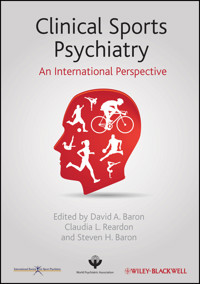
Clinical Sports Psychiatry E-Book
78,99 €
Mehr erfahren.
- Herausgeber: John Wiley & Sons
- Kategorie: Fachliteratur
- Sprache: Englisch
This book has it all - written by national and international experts and edited by world authorities, it is the first book on sport psychiatry in over a decade. Dealing with psychopathology, mental health problems and clinical management, it differs markedly from sports psychology books that focus on performance issues. Eating disorders, exercise addiction, drug abuse are all problems that are seen in 'everyday' athletes, not just elite performers. This book shows how to help.
This text covers the most important topics in contemporary sports psychiatry/psychology from an international perspective. Chapter authors are experts in the field and global leaders in the related professional organizations, including current and past Presidents/Chairs of the International Society for Sports Psychiatry and of the World Psychiatric Association Section on Exercise and Sports Psychiatry. Authors are mainly psychiatrists: the rest are PhD sport psychologists.
The book comprises representative chapter authors from around the world, to an extent unprecedented in this topic. The authors and editors are well-informed in global perspectives, e.g., having served as consultants to numerous Olympic teams, in addition to service on the International Society for Sports Psychiatry's Board of Directors.
Specifically, this book covers four main categories of topics:
1) mental health challenges faced by athletes (including substance use disorders, exercise addiction, eating disorders, depression, suicide, and concussion),
2) treatment approaches and therapeutic issues with athletes (including different types of psychotherapy for psychiatric disorders, psychotherapeutic performance enhancement approaches, transference and countertransference issues, achievement by proxy, psychotherapeutic issues as applied to a couple of sports that are played around the world, and use of psychiatric medications in athletes),
3) psychosocial issues affecting athletes (including sexual harassment and abuse, cultural issues, and ethics issues), and
4) the field of sports psychiatry (including work within one common sports psychiatry practice setting, and current status of and challenges in the field of sports psychiatry).
There is a growing need for this book. Performance-enhancing drugs, use of psychotropics in impaired athletes, head trauma, sexual abuse, eating disorders, ethics, and depression and suicide in athletes, are just a few of the timely subjects addressed in this text. This is the only comprehensive reference available for those working in the field (or merely interested in it) to consult for current information on these topics. The existing sports psychology texts all focus on performance issues, with little, if any, attention paid to these areas of clinical significance. The book addresses the core differences between sports psychiatry and sports psychology, as well as the areas of overlap. Emphasis is placed on how the disciplines should work together in diagnosing and treating athletes dealing with emotional stress and psychopathology.
Chapters include case examples and specific goals listed at the beginning, along with tables and graphs to highlight key concepts.
Sie lesen das E-Book in den Legimi-Apps auf:
Seitenzahl: 531
Veröffentlichungsjahr: 2013
Ähnliche




















Contents
Contributors
Foreword by Steve Peters
ABOUT THE AUTHOR
Foreword by Thomas Newmark
ABOUT THE AUTHOR
Acknowledgments
Preface
Part one: Mental Health Challenges Faced by Athletes
1 Substance Use in Athletes
BACKGROUND AND SCOPE OF PROBLEM
REASONS FOR USE
TRAUMATIC BRAIN INJURY
RECOGNIZING SUBSTANCE USE
TREATMENT
COLLEGE VERSUS PROFESSIONAL
SPECIFIC SUBSTANCES
CONCLUSIONS
2 Addiction in Retired Athletes
BACKGROUND
ATHLETIC RETIREMENT – ALWAYS TRAUMATIC?
A MODEL OF ADAPTATION TO ATHLETIC RETIREMENT
SUBSTANCE ABUSE AND ADDICTION IN RETIRED ATHLETES
PRERETIREMENT PREDISPOSITIONS TO ADDICTIONS
PAINKILLERS MISUSE
SMOKING
DRINKING
CONCLUSION
3 Doping in Sport
INTRODUCTION
HISTORY OF DOPING IN SPORT
THE CURRENT STATE OF DOPING IN SPORTS
CONTROVERSIES OF POSITIVE DRUG TESTS
FINANCIAL AND BUSINESS IMPLICATIONS
SHORT- AND LONG-TERM EFFECTS OF DOPING
GENE DOPING
CULTURAL ISSUES ASSOCIATED WITH DOPING
CASE STUDIES
SUMMARY
4 Exercise Addiction: The Dark Side of Sports and Exercise
DEFINITIONS, SYMPTOMOLOGY, AND CLASSIFICATION
ASSESSMENT OF EXERCISE ADDICTION
EPIDEMIOLOGY
COMORBIDITY
ETIOLOGY
CONCLUSION AND IMPLICATIONS
ACKNOWLEDGMENTS
5 Eating Disorders in Athletes
INTRODUCTION
EPIDEMIOLOGY
THE ROLE OF SPORTS IN THE GENESIS OF EATING DISORDERS AND SPORTS-SPECIFIC EATING DISORDERS
EATING DISORDERS IN THE MALE ATHLETE
THE FEMALE ATHLETE TRIAD
TREATMENT
FUTURE RESEARCH
6 Personality and Personality Disorders in Athletes
INTRODUCTION
PERSONALITY TRAITS IN ATHLETES
PERFECTIONISM
ANGER AND AGGRESSION
ATHLETIC IDENTITY
PERSONALITY DISORDERS IN ATHLETES
CASE STUDIES
SUMMARY
7 Assessing and Treating Depression in Athletes
INTRODUCTION
DEFINING DEPRESSION
SYMPTOMS AND PRESENTATION
DIAGNOSTIC ISSUES
DIAGNOSTIC TOOLS
TREATMENT
SPECIAL CONSIDERATIONS
CONCLUSION
8 Suicide in Athletes
INTRODUCTION
ETIOLOGY
RETIREMENT
PSYCHOLOGICAL TRAITS
SUBSTANCE ABUSE/ANABOLIC STEROID ABUSE
AXIS I PSYCHOPATHOLOGY
PRESSURE TO WIN
SEXUAL ABUSE
HOMOSEXUALITY
FIREARMS
CULTURAL INFLUENCES
PREVENTION
SPORTS AS THERAPY
FUTURE RESEARCH
9 Concussion in Sports
INTRODUCTION
WHAT IS CONCUSSION AND TRAUMATIC BRAIN INJURY?
PATHOPHYSIOLOGY OF CONCUSSION
DIAGNOSIS OF CONCUSSION
EPIDEMIOLOGY AND ETIOLOGY OF CONCUSSION
PREVENTION OF CONCUSSION
POST-CONCUSSION SYNDROME
SECOND IMPACT SYNDROME
CHRONIC TRAUMATIC ENCEPHALOPATHY
FUTURE RESEARCH
10 Posttraumatic Stress in Athletes
GENERAL ASPECTS
RISK FACTORS
OTHER RESEARCH ON DIAGNOSIS OF POSTTRAUMATIC STRESS SYMPTOMS IN ATHLETES
FURTHER SPECIFIC REACTIONS TO EXTREME STRESS IN SPORT
RELEVANCE
CLINICAL CONSIDERATIONS AND INTERVENTIONS
CONCLUSIONS
Part Two: Treatment Approaches and Therapeutic Issues with Athletes
11 Psychotherapeutic Treatment of Athletes and Their Significant Others
INTRODUCTION
THE ATHLETE-PATIENT
PSYCHOTHERAPY WITH THE ATHLETE-PATIENT: UNIQUE CHALLENGES
CONCLUSION
12 Mindfulness, Attention, and Flow in the Treatment of Affective Disorders in Athletes
INTRODUCTION
MINDFULNESS
FLOW
ATTENTION IN SPORTS
MINDFULNESS, EXERCISE, AND MENTAL HEALTH
BRIDGING THE GAP BETWEEN FLOW AND MINDFULNESS – DEVELOPING A TREATMENT APPROACH
CONCLUSIONS
13 Performance Enhancement and the Sports Psychiatrist
INTRODUCTION
MOTIVATION AND GOAL SETTING
MAXIMIZING COGNITION AND EMOTION IN COMPETITIVE ENVIRONMENTS
ATTENTIONAL FOCUS AND MENTAL IMAGERY
POSITIVE PSYCHOLOGY, PEAK PERFORMANCE, AND THE ATHLETIC ZONE
SUMMARY
14 Applied Sports Psychology in Worldwide Sport: Table Tennis and Tennis
INTRODUCTION
TENNIS AND TABLE TENNIS: EXAMPLES OF WORLDWIDE SPORTS
THE GAME FACE ROUTINE
THE GAME FACE PYRAMID
RECOMMENDATIONS AND CONCLUSIONS
15 The Use of Psychiatric Medication by Athletes
INTRODUCTION
ANTIDEPRESSANTS
ANXIOLYTICS AND SEDATIVE-HYPNOTICS
STIMULANTS
MOOD STABILIZERS AND ANTIPSYCHOTICS
RECOMMENDATIONS AND CONCLUSIONS
Part Three: Psychosocial Issues Affecting Athletes
16 Sexual Harassment and Abuse in Sport
WHAT IS SEXUAL HARASSMENT AND ABUSE IN SPORT?
PREVALENCE OF SEXUAL HARASSMENT AND ABUSE IN SPORT
PERPETRATORS OF SEXUAL HARASSMENT AND ABUSE IN SPORT
RISK FACTORS FOR SEXUAL HARASSMENT AND ABUSE IN SPORT
PHYSICAL AND PSYCHOLOGICAL CONSEQUENCES OF SEXUAL HARASSMENT AND ABUSE IN SPORT
PHYSICAL CONSEQUENCES AND MEDICAL PRESENTATIONS OF SEXUAL HARASSMENT AND ABUSE IN SPORT
PSYCHOLOGICAL CONSEQUENCES OF SHA IN SPORT
SPECIFIC PSYCHOLOGICAL CONSEQUENCES AND MEDICAL PRESENTATIONS SEEN IN SPORT IN GENERAL
PREVENTION BY UNDERSTANDING THE COACH–ATHLETE RELATIONSHIP
THE TEAM DOCTOR’SROLE IN PREVENTION OF SHA
LEADERSHIP FROM THE INTERNATIONAL OLYMPIC COMMITTEE
CLINICAL APPROACH TO DISCLOSURE
CONCLUSION
17 The Role of Culture in Sport
MULTICULTURALISM
SPECIFIC EXAMPLES OF IMPORTANT CULTURAL ISSUES IN SPORT
STIGMA AND ACCESS TO PSYCHIATRIC TREATMENT AROUND THE WORLD
EPIDEMIOLOGY OF MENTAL ILLNESS IN ATHLETES ACROSS DIFFERENT CULTURES
WOMEN, SPORT, AND CULTURE
CONCLUSIONS
18 Ethical Issues in Sports Psychiatry
INTRODUCTION: THE EVOLUTION OF MEDICAL ETHICS
MODERN MEDICAL ETHICS
MEDICAL ETHICS AROUND THE WORLD
ETHICAL ISSUES IN PSYCHIATRY
MENTAL HEALTH IN THE ATHLETIC ARENA
SPORTS PSYCHIATRY: A NEWCOMER TO THE FIELD
ETHICS OF OTHER SPORTS HEALTH-CARE PROFESSIONS
ETHICAL CHALLENGES FOR THE SPORTS PSYCHIATRIST
CONCLUSION
Part Four: The Field of Sports Psychiatry
19 Sports Psychiatrists Working in College Athletic Departments
BACKGROUND
DESIGN
BUDGET
WHO IS BEING SERVED
CONFIDENTIALITY
BOUNDARIES
IMPROVING UTILIZATION WITH A TEAM ASSISTANCE PROGRAM MODEL
TREATMENT ISSUES
PART OF THE SPORTS MEDICINE TEAM
LOCATION
CONCLUSION
20 Sports Psychiatry: Current Status and Challenges
BACKGROUND
EVOLUTION OF THE FIELD
CHALLENGES FOR THE FIELD
THE ROLE OF PROFESSIONAL SPORTS PSYCHIATRY ORGANIZATIONS
Index
This edition first published 2013, © 2013 by John Wiley & Sons, Ltd
Wiley-Blackwell is an imprint of John Wiley & Sons, formed by the merger of Wiley’s global Scientific, Technical and Medical business with Blackwell Publishing.
Registered OfficeJohn Wiley & Sons, Ltd, The Atrium, Southern Gate, Chichester, West Sussex, PO19 8SQ, UK
Editorial Offices9600 Garsington Road, Oxford, OX4 2DQ, UKThe Atrium, Southern Gate, Chichester, West Sussex, PO19 8SQ, UK2121 State Avenue, Ames, Iowa 50014–8300, USA
For details of our global editorial offices, for customer services and for information about how to apply for permission to reuse the copyright material in this book please see our website at www.wiley.com/wiley-blackwell.
The right of the author to be identified as the author of this work has been asserted in accordance with the UK Copyright, Designs and Patents Act 1988.
All rights reserved. No part of this publication may be reproduced, stored in a retrieval system, or transmitted, in any form or by any means, electronic, mechanical, photocopying, recording or otherwise, except as permitted by the UK Copyright, Designs and Patents Act 1988, without the prior permission of the publisher.
Designations used by companies to distinguish their products are often claimed as trademarks. All brand names and product names used in this book are trade names, service marks, trademarks or registered trademarks of their respective owners. The publisher is not associated with any product or vendor mentioned in this book. This publication is designed to provide accurate and authoritative information in regard to the subject matter covered. It is sold on the understanding that the publisher is not engaged in rendering professional services. If professional advice or other expert assistance is required, the services of a competent professional should be sought.
The contents of this work are intended to further general scientific research, understanding, and discussion only and are not intended and should not be relied upon as recommending or promoting a specific method, diagnosis, or treatment by health science practitioners for any particular patient. The publisher and the author make no representations or warranties with respect to the accuracy or completeness of the contents of this work and specifically disclaim all warranties, including without limitation any implied warranties of fitness for a particular purpose. In view of ongoing research, equipment modifications, changes in governmental regulations, and the constant flow of information relating to the use of medicines, equipment, and devices, the reader is urged to review and evaluate the information provided in the package insert or instructions for each medicine, equipment, or device for, among other things, any changes in the instructions or indication of usage and for added warnings and precautions. Readers should consult with a specialist where appropriate. The fact that an organization or Website is referred to in this work as a citation and/or a potential source of further information does not mean that the author or the publisher endorses the information the organization or Website may provide or recommendations it may make. Further, readers should be aware that Internet Websites listed in this work may have changed or disappeared between when this work was written and when it is read. No warranty may be created or extended by any promotional statements for this work. Neither the publisher nor the author shall be liable for any damages arising herefrom.
Library of Congress Cataloging-in-Publication Data
Clinical sports psychiatry : an international perspective / edited by David A. Baron, Claudia L. Reardon, Steven H. Baron. p. ; cm. Includes bibliographical references and index.
ISBN 978-1-118-40488-1 (cloth)I. Baron, David A. II. Reardon, Claudia L. III. Baron, Steven H.[DNLM: 1. Athletes–psychology. 2. Mental Disorders–therapy. 3. Sports–psychology. QT 260] 616.89–dc23
2012048022
A catalogue record for this book is available from the British Library.
Wiley also publishes its books in a variety of electronic formats. Some content that appears in print may not be available in electronic books.
Cover image: www.cyandesign.co.ukCover design by www.cyandesign.co.uk
Contributors
Samir AbolmagdAddiction Medicine Unit, Cairo University, Cairo, EgyptEzzat Abdelazeem A. AwadNTNU Norway, Hail, Kingdom of Saudi ArabiaDavid A. BaronInternational Relations, Keck School of Medicine at the University of Southern California, Los Angeles, CA, USADepartment of Psychiatry, Keck School of Medicine at the University of Southern California, Los Angeles, CA, USAKeck Medical Center at University of Southern California, Los Angeles, CA, USAGlobal Center for Exercise, Psychiatry, and Sports at USC, Health Sciences Campus, Los Angeles, CA, USASteven H. BaronMontgomery County Community College, Blue Bell, PA, USAAntonia L. BaumDepartment of Psychiatry and Behavioral Sciences, George Washington University School of Medicine and Health Sciences, Washington, DC, USAKrisztina BerczikDoctoral School of Psychology, Eötvös Loránd University, Hungary Institute of Psychology, Eötvös Loránd University, Budapest,HungaryUgur CakirDepartment of Psychiatry, Derince Education and Research Hospital, Kocaeli, TurkeyBrandon J. CornejoNorthwest Permanente, East Interstate Medical Office, Mental Health, Portland, OR, USABulent CoskunDepartment of Psychiatry, Community Mental Health Center, Kocaeli University, Kocaeli, TurkeyJeremy DeFrancoDepartment of Psychiatry, Keck School of Medicine at the University of Southern California, Los Angeles, CA, USAZsolt DemetrovicsInstitute of Psychology, Eötvös Loránd University, Budapest, HungaryRobert M. FactorDepartment of Psychiatry, University of Wisconsin School of Medicine and Public Health, Madison, WI, USAHeba M. Fakher M. HendawyDepartment of Neuropsychiatry, Faculty of Medicine, Institute of Psychiatry, Ain Shams University, Cairo, EgyptMichael W. FitzgeraldWarrior Behavioral Health, U.S. Army Health Center, Schofield Barracks, HI, USAIra D. GlickPsychiatry and Behavioral Sciences, Stanford University School of Medicine, Stanford, CA, USAMark D. GriffithsInternational Gaming Research Unit, Psychology Division, Nottingham Trent University, Nottingham, UKDora KurimaySPiN New York, New York, NY, USATamás KurimayDepartment of Psychiatry and Psychiatric Rehabilitation, Saint John Hospital, Budapest, HungaryMichael T. LardonDepartment of Psychiatry, School of Medicine, University of California, San Diego, San Diego, CA, USASaul I. MarksFINA Sports Medicine Committee, Toronto, ON, CanadaInternational Society for Sport Psychiatry,North York General Hospital, Toronto, ON, CanadaDepartment of Health and Disease, Department of Psychiatry, University of Toronto, Toronto, ON, CanadaSally MohamedKasr El Maadi Hospital, korniche El Maadi, Maadi, Cairo, EgyptEric D. MorseCarolina Performance, North Carolina State University, Raleigh, NC, USAThomas NewmarkDepartment of Psychiatry, Robert Wood Johnson Medical School, Cooper University Hospital, Camden, NJ, USAAslihan PolatDepartment of Psychiatry, Kocaeli University Medical Faculty, Kocaeli, TurkeyWomen’s Mental Health Unit, Kocaeli University School of Medicine, Kocaeli, TurkeyPavel A. PonizovskiyDepartment of Mental Disorders Complicated by Substance Abuse, Moscow Research Institute of Psychiatry, Moscow, RussiaClaudia L. ReardonDepartment of Psychiatry, University of Wisconsin School of Medicine and Public Health, Madison, WI, USAEva C. RitvoDepartment of Psychiatry and Behavioral Sciences, University of Miami School of Medicine, Miami, FL, USAMark A. StillmanDepartment of Psychology, School of Liberal Arts, Georgia Gwinnett College, Lawsenceville, GA, USAJoshua TompkinsKeck School of Medicine at the University of Southern California, Los Angeles, CA, USAKathy ToonGlamSlam Tennis, El Cerrito, CA, USAThomas WenzelDivision of Social Psychiatry, Medical University of Vienna, Vienna, AustriaLi Jing ZhuDivision of Social Psychiatry, Medical University of Vienna, Vienna, Austria
Physical Education College, Zheng Zhou University, Zheng Zhou, Henan, Peoples Republic of China
Foreword by Steve Peters
I am very pleased and honored to have been invited to write a foreword for this groundbreaking book. I have been a consultant psychiatrist for over 20 years and have worked in the field of elite sport since 2001, going on to become the first full-time sports psychiatrist in the United Kingdom in 2005.
Forging new pathways can be fraught with danger, and it would have been very helpful when I first started working with athletes to have had some guidance on the more unfamiliar areas that I was about to encounter. A few examples would be abuse in sport, sexual harassment, substance use, and cultural issues. Although these topics have previously been considered independently, there has never been a concise volume that draws them together in a manner that offers the would-be sports psychiatrist or practicing clinician a comprehensive coverage of the work and research undertaken to date. Alongside the more familiar psychiatric areas of expertise such as eating disorders, these less familiar areas have been woven together to provide, within this book, a balanced and comprehensive coverage of the range of subjects the psychiatrist could possibly expect to encounter in sport. As psychiatry within sport is a relatively new discipline within medicine and arguably in its embryonic phase, attempting to draw together the spectrum of areas that psychiatry covers across various sports is a commendable endeavor. In addition, to coordinate international perspectives is ambitious. I believe that the editors and their authors have not only admirably succeeded in this venture but also established a foundation for future work in the field.
This book, therefore, has drawn together experts who have offered a comprehensive review of recent research in their specialist fields. The book does not claim to be authoritative but rather offers the reader the opportunity to survey the work of others with the addition of personal experience and interpretation. For example, in my own area of expertise, optimizing the functioning of the human mind, the reader is introduced to a selected number of psychological practices and techniques for consideration. These are not presented as superior illustrations or definitive models but rather as examples to consider. This approach is representative of the style of the book and I believe gives it its strength. It offers information as a forum for discussion, to be thought provoking and yet also offers practical advice. As such, the book is a very useful tool to all psychiatrists working in the field of sport or who have an interest in it.
The book is well balanced both in the range and depth of its contents. It could be viewed as having three major themes. The first theme deals with the more standard aspects of mental health and covers notoriously difficult areas within clinical practice such as addictions, suicidal ideation, and posttraumatic stress. The second major theme covers the general health of the athlete from both the physical and psychological perspectives, and within this does not shirk from tackling the more challenging subjects of potential abuse, sexual harassment, doping, and lifestyle choices encountered within various cultures in sport. The final theme looks at how the psychiatrist can contribute toward improving the athlete’s performance. The information offered has a lot of practical advice and will be a great asset to the psychiatrist.
This book is very forward looking and will help provide a basis for the development of the specialism of sports psychiatry within medicine. It offers a future curriculum for training those who wish to specialize in this field, and I recommend it as extremely useful reading to both the trainee and the experienced specialist already engaged in sport.
ABOUT THE AUTHOR
Dr. Peters has worked with the Great Britain Cycling Team, the Professional Procycling Team SKY, and numerous other elite national sports, such as England Rugby, Track and Field, Taekwondo, and Canoeing. He holds positions with the UK anti-doping organization and has acted in a consultancy capacity to the World Anti-Doping Agency. He introduced his own mind management model for sport, encapsulated in the book The Chimp Paradox. He is a Senior Clinical Lecturer and Undergraduate Dean at Sheffield Medical School and a member of the examination panel for the Royal College of Psychiatrists.
Foreword by Thomas Newmark
My entire life, I have been a sports fan. As President of The International Society for Sports Psychiatry (ISSP) for the past 4 years and a member of the ISSP for 20 years, I have seen the evolution and growing interest in the field of sports psychiatry. The ISSP has held annual symposia at the American Psychiatric Association (APA) annual scientific meeting. Psychiatrist experts have presented, and athletes have enriched the programs by sharing their experiences. Traumatic brain injury and the impact of injury, doping, and addiction in athletes are among the topics presented and discussed in recent years. I have participated in and been very inspired by and impressed with these programs. The level of interest shown by members and nonmembers, both nationally and internationally, has continued to soar. Members have often inquired about how they can learn about the field and if there is a textbook for sports psychiatry. We now have this comprehensive volume Clinical Sports Psychiatry: An International Perspective. This textbook is written with scientific rigor and practical information to facilitate your sports psychiatry practice.
I have long known and worked with editors David Baron, D.O., MSEd, and Claudia Reardon, M.D. Both are extraordinarily dynamic individuals. Steven Baron, Ph.D., is a noted social scientist whose current research focuses on sports psychology and traumatic brain injury.
David Baron, D.O., is a giant in the field of sports psychiatry. He is one of the world experts on concussion, doping, and mood disorders in athletes and has written and presented extensively. Dr. Baron is an outstanding researcher and has always pushed to have sports psychiatry as a field based in scientific data. He has worked with Olympians and has been a consultant at the Olympic Games. Claudia Reardon, M.D., is an expert in the use of treatment modalities and medications in athletes. She is a dedicated researcher and educator. She has a broad, visionary perspective of the status and future of sports psychiatry.
I learned about the field of sports psychiatry by attending and presenting sports psychiatry-related topics at the APA and by developing a sports psychiatry program for local high-school athletes. In addition, I read articles written by many of the authors and editors featured in Clinical Sports Psychiatry: An International Perspective. In treating athletes and in 20 years of educating medical students and training psychiatry residents, I have seen few comprehensive resources for sports psychiatry practice, the only other notable one being Sports Psychiatry: Theory and Practice (Eds. Begel and Burton, 2000). Having treated athletes for performance anxiety, issues related to recovery from injury, and postconcussion syndrome, I felt the need for a resource current with the evolving science, research, and knowledge. Clinical Sports Psychiatry: An International Perspective fulfills that need. We at the ISSP have also encouraged the increased interest, participation, and contributions of international psychiatrists in the field. Their contributions are included in this new textbook.
Indeed, the editors have recruited an outstanding team of experts for the book. In reading this volume, psychiatrists will develop greater competence in working with athletes and teams. The global perspective is unique. Through the ISSP, I know and work with many of the authors. All are nationally and internationally known psychiatrists in their areas of expertise. Eric Morse, M.D., has developed behavioral and addiction service programs for college athletes and teams. Saul Marks, M.D., from Canada, has studied, consulted with, and treated athletes who have been sexually harassed or abused. Antonia Baum, M.D., has expertise in eating disorders in athletes and has extensively researched suicide risk in athletes. Ira Glick, M.D., has written and spoken throughout the world on psychotherapy treatments for athletes and their families and collaborates routinely with Eva Ritvo, M.D. Michael Lardon, M.D., has worked extensively with golfers on performance enhancement. Finally, other authors and I speak to the current status and challenges of sports psychiatry.
Be enriched and enjoy.
ABOUT THE AUTHOR
Thomas Newmark, M.D., is President of the International Society for Sports Psychiatry. Presently, he is Professor of Psychiatry at Cooper Medical School of Rowan University (CMSRU) in Camden, New Jersey. Previously, Dr. Newmark was Professor at Robert Wood Johnson Medical School (RWJMS) and Chief of Psychiatry at Cooper University Hospital (CUH), serving from 1997 to 2011. He served as President of the Cooper Medical Staff from 2002 to 2007. Dr. Newmark is President-Elect of the American Association of Psychiatric Administrators. He is a past president of the New Jersey Psychiatric Association and South Jersey Psychiatric Association and continues to serve as the head of the Ethics Committee for NJPA. In his 25 years of service at CUH and RWJMS, Dr. Newmark has served on numerous committees for RWJMS, including those for Admissions, Appointment and Promotions, Curriculum, CME, and the Executive Committee.
Dr. Newmark earned his medical degree from Hahnemann University Medical School (now Drexel University School of Medicine). He completed his internship at Albert Einstein Medical Center in Philadelphia and his residency at the Medical University of South Carolina. He is board certified in adult, psychosomatic medicine, and administrative psychiatry. Dr. Newmark has been recognized consistently by his colleagues, being named a Top Doc many times. He serves on the Editorial Board of Academic Psychiatry. Dr. Newmark has made numerous presentations and has published on sports psychiatry. Very interested in psychiatric education, Dr. Newmark has received several teaching awards, including seven Golden Apple Teaching Awards from the RWJMS and the Sol Sherry M.D. Award from CUH. He is a Distinguished Life Fellow of the American Psychiatric Association.
Acknowledgments
The coeditors are very grateful to the International Society for Sports Psychiatry and to the World Psychiatric Association Section on Exercise and Sports Psychiatry. Both organizations endorsed this work and supported its development by providing as chapter authors many of the world’s leading experts in sports psychiatry. We would also like to acknowledge the athletes across the globe who give so much of themselves in order to pursue and model excellence.
Preface
Spanning the globe to bring you theconstant variety of sport…the thrill ofvictory…and the agony of defeat…thehuman drama of athletic competition…this is ABC’s Wide World of Sports!
This was the weekly opening of the first television broadcast to showcase sports from around the globe. It first aired on 29 April 1961 on the American Broadcasting Company, but became an international phenomenon, focusing on sports not commonly covered by international networks. It introduced viewers from around the world to sports rarely seen by the average sports fan. The editors of this text were inspired by this approach. This book is one of the first to address current issues in sports psychiatry from a global perspective (the chapter authors represent over half a dozen countries). It does not concentrate on any individual sport, but rather provides analysis of the most important, contemporary issues in sports psychiatry, including concussion in sports, suicide in athletes, doping, and sexual harassment and abuse in sport. Our goal is to span the globe to bring the reader the full variety of sports psychiatry topics in one text, from an international perspective.
Much of the lay public and many members of the sporting world do not understand the differences between sports psychologists and sports psychiatrists. As behavioral health providers, both disciplines offer valuable contributions in providing for the well-being of athletes, on and off the field of competition. Sports psychology, an older and more established field, tends to focus on performance enhancement strategies and techniques, whereas sports psychiatry addresses the etiology and treatment of psychiatric symptoms and syndromes presenting in athletes. Importantly, overlap between the fields does exist. For example, sports psychiatrists may discuss performance enhancement strategies such as goal setting and mental imagery in the context of addressing an athlete’s depression or anxiety. Not only is this holistic approach helpful for the overall functioning of the athlete, but it also helps to achieve “buy in” from the athlete who may otherwise be reluctant to seek psychiatric treatment solely for the purpose of treating a psychiatric disorder.
We believe athletes, especially elite competitors, should be viewed as a unique patient population with diagnostic and treatment interventions sensitive to their needs. Just as child or geriatric psychiatrists are knowledgeable about different clinical presentations of and treatments for their patient population, psychiatrists evaluating and treating athletes should be aware of issues impacting their clinical cohort. After reading this book, we believe the learner will have a better appreciation of these unique concepts.
Athletic competition has been an integral component of culture worldwide for thousands of years. Successful athletes are treated like royalty, with the most accomplished becoming national icons. Few events can match the impact of a world champion national team on the collective psyche of an entire country. Olympic champions in marquee sports are given rock star status after their victory. Youth athletes dream of someday attaining the fame and financial rewards given to elite competitors. As all athletes know, success does not come without paying the price. Years of dedication and self-sacrifice are the universal blueprint for victory. Only recently has the impact of emotional stress and physical injury been acknowledged as important factors to consider. The potential long-term adverse consequences of multiple head trauma are changing the culture of contact sports around the globe. We have learned that nonelite athletes may suffer from sport-related psychiatric conditions such as exercise addiction. Moreover, even after retirement, athletes may be at risk for sport-related psychiatric conditions including depression and substance abuse.
Through the topics mentioned and several others, we have introduced the reader to the most important contemporary issues in sports psychiatry. Our goal is to inspire the reader to engage in the education and research needed to better address the mental health needs of athletes around the world. The “game” is just beginning, and everyone wins if we do it right. Sport has many known mental health benefits, and it is the hope of sports psychiatrists to optimize the benefits while successfully preventing and treating psychiatric symptoms and disorders that may arise.
We hope you feel encouraged to contribute to the emerging field of sports psychiatry. This book is endorsed by the two major sports psychiatry organizations, the International Society for Sports Psychiatry (ISSP) and the World Psychiatric Association Section on Exercise and Sports Psychiatry. We thank their leadership for the endorsement and encourage all qualified readers to consider joining both of these excellent groups.
David A. BaronClaudia L. ReardonSteven H. Baron
Part One
Mental Health Challenges Faced by Athletes
1Substance Use in Athletes
Eric D. Morse
Carolina Performance, North Carolina State University, USA
KEY POINTS
A strong, clear, enforceable drug testing policy with frequent, random drug tests would reduce substance use in athletes.
Assessment of positive drug tests and treatment of substance use disorders and co-occurring mental illness by sports psychiatrists would help athletes continue to perform at a high level.
The higher the stakes, the more the risk of doping and the use of performance-enhancing drugs, and the greater the need for sports psychiatrists working with athletes.
BACKGROUND AND SCOPE OF PROBLEM
Despite the risk of negative consequences of loss of performance, pay, and scholarships, elite athletes seem to use most substances at higher rates than age-matched nonathletes in the general population [1–10]. The rates may be lower in some sports, ethnicities, and nationalities [7, 11]. Comparing the National Collegiate Athletic Association (NCAA) survey data from 2005 to 2009, there was a drop in reported use of amphetamines (3.7% of U.S. college athletes reported use), ephedrine (0.9%), and anabolic steroids (0.6%), and increases in cannabis (22.6% reported use), cocaine (1.8%), opioids (3.3%), alcohol (83.1%), and alcohol binges (38.8%) [12]. While sometimes used initially for performance-enhancing reasons, many of these substances can represent gateways to other drug use. There are certainly risks of “stimulant stacking” (energy drinks, excitatory amino acids, caffeine, nicotine, ephedrine, and amphetamines) that can lead to “upper–downer” pairings (adding cannabis, alcohol, or prescription sleeping medications to stimulants) [4]. Sports psychiatrists must be aware of these pairings and patterns of use among their athletes to avoid enabling. Sports psychiatrists must be able to urine drug test their athletes for diagnostic purposes, in a way that would not lead to negative consequences and that would encourage treatment and assistance over penalties. Our elite athletes are role models for our youth; thus, creating prevention and intervention programs to reduce substance use in athletes may have a significant impact on substance use in general.
Lesen Sie weiter in der vollständigen Ausgabe!
Lesen Sie weiter in der vollständigen Ausgabe!
Lesen Sie weiter in der vollständigen Ausgabe!
Lesen Sie weiter in der vollständigen Ausgabe!
Lesen Sie weiter in der vollständigen Ausgabe!
Lesen Sie weiter in der vollständigen Ausgabe!
Lesen Sie weiter in der vollständigen Ausgabe!
Lesen Sie weiter in der vollständigen Ausgabe!
Lesen Sie weiter in der vollständigen Ausgabe!
Lesen Sie weiter in der vollständigen Ausgabe!
Lesen Sie weiter in der vollständigen Ausgabe!
Lesen Sie weiter in der vollständigen Ausgabe!
Lesen Sie weiter in der vollständigen Ausgabe!
Lesen Sie weiter in der vollständigen Ausgabe!
Lesen Sie weiter in der vollständigen Ausgabe!
Lesen Sie weiter in der vollständigen Ausgabe!
Lesen Sie weiter in der vollständigen Ausgabe!
Lesen Sie weiter in der vollständigen Ausgabe!
Lesen Sie weiter in der vollständigen Ausgabe!
Lesen Sie weiter in der vollständigen Ausgabe!
Lesen Sie weiter in der vollständigen Ausgabe!
Lesen Sie weiter in der vollständigen Ausgabe!
Lesen Sie weiter in der vollständigen Ausgabe!




