


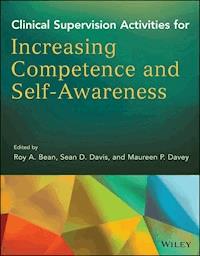
Clinical Supervision Activities for Increasing Competence and Self-Awareness E-Book
56,99 €
Mehr erfahren.
- Herausgeber: John Wiley & Sons
- Kategorie: Fachliteratur
- Sprache: Englisch
Cultivate self-awareness, empathy, and clinical competence in the mental health professionals you supervise
Providing tested guidance for clinical supervisors of mental health professionals, editors Roy A. Bean, Sean D. Davis, and Maureen P. Davey draw from their own backgrounds in training, private practice, and academe, as well as from an international panel of experts representing various mental health fields to provide activities and best practices that allow therapists to better serve an increasingly diverse set of clients and issues.
While clinical skills are easily observed, the more subtle areas of self-awareness, or exploring unexamined judgments are more difficult to spot and to provide supervision and guidance for. The numerous experiential activities included will help supervisors and the mental health professional they supervise develop their skills and techniques around:
- Intuition
- Empathy
- Self-awareness
- Mindfulness
- Multicultural awareness
- Perspective taking
The book covers both clinical as well as diversity-focused competence and awareness, and suggests various forms of activities, including research exercises, reflection, journaling, and more. Each activity includes measurement metrics as well as additional resources that help clinicians identify the best activity for a given situation. Appropriate for clinicians at every level and from a multitude of backgrounds, these tried and tested best practices can be used in clinical supervision, as a class assignment, or to facilitate professional growth.
Sie lesen das E-Book in den Legimi-Apps auf:
Seitenzahl: 838
Veröffentlichungsjahr: 2014
Ähnliche




















Table of Contents
Cover
Title Page
Copyright
Preface
Core Clinical Competence and Self-Awareness
Diversity-Focused Competence and Self-Awareness
References
Acknowledgments
Part 1: Core Clinical Competence and Self-Awareness
Chapter 1: Facilitating Clinician Development Using Themes of Personal Issues
Introduction
Rationale
Activity Instructions
Example
Measuring Progress
Conclusion
Additional Resources
References
Chapter 2: Exploring the Person-of-the-Therapist for Better Joining, Assessment, and Intervention
Introduction
Rationale
Activity Instructions
Example
Measuring Progress
Conclusion
Additional Resources
References
Chapter 3: The Empathy Game
Introduction
Rationale
Activity Instructions
Example
Measuring Progress
Conclusion
Additional Resources
References
Chapter 4: Seeing Through the Eyes of the Other Using Process Recordings
Introduction
Rationale
Activity Instructions
Examples
Measuring Progress
Conclusion
Additional Resources
References
Chapter 5: Discovering Acceptance and Nonjudgment Through Mindfulness
Introduction
Rationale
Activity Instructions
Example
Measuring Progress
Conclusion
Additional Resources
References
Chapter 6: Encouraging Self-Reflection in the Reflective Listening Process
Introduction
Rationale
Activity Instructions
Example
Measuring Progress
Conclusion
Additional Resources
References
Chapter 7: Enhancing Self-Awareness Using Feedback Reflection
Introduction
Rationale
Activity Instructions
Examples
Measuring Progress
Conclusion
Additional Resources
References
Chapter 8: Exploring Personal Roles and Themes in Clinical Training
Introduction
Rationale
Activity Instructions
Examples
Measuring Progress
Conclusion
Additional Resource
References
Chapter 9: Addressing Resistance to Behavior Change
Introduction
Rationale
Activity Instructions
Examples
Measuring Progress
Conclusion
Additional Resources
References
Chapter 10: Teaching Self-Compassion to Decrease Performance Anxiety in Clinicians
Introduction
Rationale
Activity Instructions
Example
Measuring Progress
Conclusion
Additional Resources
References
Chapter 11: Reconnecting With the Motivation to Become a Clinician
Introduction
Rationale
Activity Instructions
Example
Measuring Progress
Conclusion
Additional Resource
References
Chapter 12: Giving a Voice to Clinicians-in-Training About Their Concerns
Introduction
Rationale
Activity Instructions
Example
Measuring Progress
Conclusion
Additional Resources
References
Chapter 13: A New Experience With the Family of Origin
Introduction
Rationale
Activity Instructions
Example
Measuring Progress
Conclusion
Additional Resources
References
Chapter 14: Exploring Conflict and Its Importance to Clinician Development
Introduction
Rationale
Activity Instructions
Examples
Measuring Progress
Conclusion
Additional Resources
References
Chapter 15: Examining the Source of Negative Self-Beliefs
Introduction
Rationale
Examples
Measuring Progress
Conclusion
Additional Resources
References
Chapter 16: Creating a Safe Learning Environment for Clinicians Through Group Discussion and Supervision
Introduction
Rationale
Activity Instructions
Examples
Measuring Progress
Conclusion
Additional Resources
References
Chapter 17: Increasing Competence for Working With International and National Disasters1
Introduction
Rationale
Activity Instructions
Example
Measuring Progress
Conclusion
Additional Resources
References
Chapter 18: Developing Supervision Skills for Resiliency and Decreased Vicarious Trauma1
Introduction
Rationale
Activity Instructions
Examples
Measuring Progress
Conclusion
Additional Resources
References
Chapter 19: Dealing With Trauma Using Self-Awareness and Self-Care
Introduction
Rationale
Activity Instructions
Example
Measuring Progress
Conclusion
Additional Resources
References
Chapter 20: Aligning Organizational and Individual Culture and Values
Introduction
Rationale
Activity Instructions
Examples
Measuring Progress
Conclusion
Additional Resources
References
Chapter 21: Collaborative Reflective Training for Mental Health Clinicians in Medical Settings
Introduction
Rationale
Activity Instructions
Example
Measuring Progress
Conclusion
Additional Resources
References
Chapter 22: Using Medical Genograms in Clinical Supervision
Introduction
Rationale
Activity Instructions
Example
Measuring Progress
Conclusion
Additional Resources
References
Part 2: Diversity-Focused Competence and Self-Awareness
Chapter 23: Increasing Awareness of Multicultural Issues in Therapy and Supervision
Introduction
Rationale
Activity Instructions
Example
Measuring Progress
Conclusion
Additional Resources
References
Chapter 24: Exploring Other Perspectives of Gender and Ethnicity
Introduction
Rationale
Activity Instructions
Example
Measuring Progress
Conclusion
Additional Resources
References
Chapter 25: Understanding Power Imbalances in the Clinical Encounter
Introduction
Rationale
Activity Instructions
Example
Measuring Progress
Conclusion
Additional Resources
References
Chapter 26: Inviting a Better Understanding of Privilege and Disadvantage
Introduction
Rationale
Activity Instructions
Examples
Measuring Progress
Conclusion
Additional Resources
References
Chapter 27: Reexamining Social Class, Ethnicity, and Available Resources
Introduction
Rationale
Activity Instructions
Examples
Measuring Progress
Conclusion
Additional Resources
References
Chapter 28: Experiencing Poverty Through a Large-Group Role-Play
Introduction
Rationale
Activity Instructions
Examples
Measuring Progress
Conclusion
Additional Resource
References
Chapter 29: Fostering Awareness of Ability and Disability Through Group Inclusion and Exclusion
Introduction
Rationale
Activity Instructions
Examples
Measuring Progress
Conclusion
Additional Resources
References
Chapter 30: Enhancing Self-Awareness for Working With Deaf Clients
Introduction
Rationale
Activity Instructions
Example
Measuring Progress
Conclusion
Additional Resources
References
Chapter 31: Preparing Clinicians to Work With Co-occuring Disabilities and Substance Abuse
Introduction
Rationale
Activity Instructions
Examples
Measuring Progress
Conclusion
Additional Resources
References
Chapter 32: Empowering Clinicians to Work With African Immigrants Through Game Playing
Introduction
Rationale
Activity Instructions
Example
Measuring Progress
Conclusion
Additional Resources
References
Chapter 33: Group Role-Plays and the Immigrant Experience
Introduction
Rationale
Activity Instructions
Example
Measuring Progress
Conclusion
Additional Resources
References
Chapter 34: Supervising Foreign-Born Clinicians in the United States
Introduction
Rationale
Activity Instructions
Example
Measuring Progress
Conclusion
Additional Resources
References
Chapter 35: Challenging Heterosexual and Cisgender Privilege in Clinical Supervision
Introduction
Rationale
Activity Instructions
Case Example
Measuring Progress
Conclusion
Additional Resources
References
Chapter 36: Exploring Perceptions of LGBTQ Individuals and Couples
Introduction
Rationale
Activity Instructions
Examples
Measuring Progress
Conclusion
Additional Resources
References
Chapter 37: Discovering Compassion for Victims of Domestic Violence
Introduction
Rationale
Activity Instructions
Example
Measuring Progress
Conclusion
Additional Resource
References
Chapter 38: Developing Empathy for Co-victims of Rape
Introduction
Rationale
Activity Instructions
Examples
Measuring Progress
Conclusions
Additional Resources
References
Chapter 39: Increasing Awareness for Working With Overweight Clients
Introduction
Rationale
Activity Instructions
Examples
Measuring Progress
Conclusion
Additional Resources
References
Chapter 40: Dealing With Addiction and Recovery
Introduction
Rationale
Activity Instructions
Examples
Measuring Progress
Conclusion
Additional Resources
References
Chapter 41: Experiencing the Addiction Recovery Process
Introduction
Rationale
Activity Instructions
Examples
Measuring Progress
Conclusion
Additional Resources
References
Chapter 42: Increasing Sensitivity to Ageism
Introduction
Rationale
Activity Instructions
Example
Measuring Progress
Conclusion
Additional Resource
References
Chapter 43: Helping Clinicians Develop End-of-Life Awareness
Introduction
Rationale
Activity Instructions
Examples
Measuring Progress
Conclusion
Additional Resources
References
About the Editors
About the Contributors
Author Index
Subject Index
End User License Agreement
Pages
3
4
5
6
7
9
10
11
12
13
15
16
17
18
19
20
21
22
23
24
25
26
27
28
29
30
31
33
34
35
36
37
38
39
41
42
43
44
45
46
47
49
50
51
52
53
54
55
56
57
58
59
60
61
62
63
64
65
67
68
69
70
71
72
73
74
75
76
77
79
80
81
82
83
84
85
86
87
88
89
90
91
92
93
94
95
97
98
99
100
101
102
103
104
105
106
107
108
109
111
112
113
114
115
116
117
119
120
121
122
123
124
125
127
128
129
130
131
132
133
135
136
137
138
139
140
141
142
143
144
145
146
147
151
152
153
154
155
156
157
159
160
161
162
163
165
166
167
168
169
170
171
173
174
175
176
177
178
179
180
181
183
184
185
186
187
188
189
190
191
192
193
194
195
196
197
198
199
200
201
202
203
205
206
207
208
209
210
211
213
214
215
216
217
218
219
220
221
222
223
224
225
226
227
228
229
230
231
233
234
235
236
237
239
240
241
242
243
244
245
246
247
248
249
250
251
252
253
255
256
257
258
259
260
261
262
263
264
265
266
267
268
269
271
272
273
274
275
276
277
278
279
281
282
283
284
285
286
287
288
289
290
291
292
293
294
295
296
297
298
299
301
302
303
304
305
306
1
149
307
309
310
311
312
313
314
315
317
318
319
320
321
322
323
325
326
327
328
329
330
331
332
333
334
335
336
Guide
Table of Contents
Part 1: Core Clinical Competence and Self-Awareness
List of Illustrations
Figure 4.1
Figure 17.1
Figure 29.1
Figure 32.1
List of Tables
Table 2.1
Table 7.1
Table 12.1
Table 18.1
Table 18.2
Table 20.1
Table 25.1
Table 25.2
Table 27.1
Table 28.1
Table 29.1
Table 29.2
Table 30.1
Table 30.2
Table 33.1
Table 33.2
Table 34.1
Table 35.1
Table 36.1
Table 39.1
Clinical Supervision Activities for Increasing Competence and Self-Awareness
Edited by
Roy A. Bean
Sean D. Davis
Maureen P. Davey
Cover Design: Wiley
Cover Image: © iStockphoto/Terryfic3D
This book is printed on acid-free paper.
Copyright © 2014 by John Wiley & Sons, Inc. All rights reserved.
Published by John Wiley & Sons, Inc., Hoboken, New Jersey.
Published simultaneously in Canada.
No part of this publication may be reproduced, stored in a retrieval system, or transmitted in any form or by any means, electronic, mechanical, photocopying, recording, scanning, or otherwise, except as permitted under Section 107 or 108 of the 1976 United States Copyright Act, without either the prior written permission of the Publisher, or authorization through payment of the appropriate per-copy fee to the Copyright Clearance Center, Inc., 222 Rosewood Drive, Danvers, MA 01923, (978) 750-8400, fax (978) 646-8600, or on the web at www.copyright.com. Requests to the Publisher for permission should be addressed to the Permissions Department, John Wiley & Sons, Inc., 111 River Street, Hoboken, NJ 07030, (201) 748-6011, fax (201) 748-6008.
Limit of Liability/Disclaimer of Warranty: While the publisher and author have used their best efforts in preparing this book, they make no representations or warranties with respect to the accuracy or completeness of the contents of this book and specifically disclaim any implied warranties of merchantability or fitness for a particular purpose. No warranty may be created or extended by sales representatives or written sales materials. The advice and strategies contained herein may not be suitable for your situation. You should consult with a professional where appropriate. Neither the publisher nor author shall be liable for any loss of profit or any other commercial damages, including but not limited to special, incidental, consequential, or other damages.
This publication is designed to provide accurate and authoritative information in regard to the subject matter covered. It is sold with the understanding that the publisher is not engaged in rendering professional services. If legal, accounting, medical, psychological or any other expert assistance is required, the services of a competent professional person should be sought.
Designations used by companies to distinguish their products are often claimed as trademarks. In all instances where John Wiley & Sons, Inc. is aware of a claim, the product names appear in initial capital or all capital letters. Readers, however, should contact the appropriate companies for more complete information regarding trademarks and registration.
For general information on our other products and services please contact our Customer Care Department within the United States at (800) 762-2974, outside the United States at (317) 572-3993 or fax (317) 572-4002.
Wiley publishes in a variety of print and electronic formats and by print-on-demand. Some material included with standard print versions of this book may not be included in e-books or in print-on-demand. If this book refers to media such as a CD or DVD that is not included in the version you purchased, you may download this material at http://booksupport.wiley.com. For more information about Wiley products, visit www.wiley.com.
Library of Congress Cataloging-in-Publication Data:
Clinical supervision activities for increasing competence and self-awareness / edited by Roy A. Bean, Sean D. Davis, Maureen P. Davey.
pages cm
Includes bibliographical references and index.
ISBN 978-1-118-63752-4 (pbk. : alk. paper); ISBN 978-1-118-65336-4 (ebk); ISBN 978-1-118-82791-8 (ebk) 1. Psychotherapy. 2. Empathy. I. Bean, Roy A., editor of compilation.
RC480.C563 2014
616.89′14--dc23
2013042744
Preface
Across all mental health professions, practitioners have long been focused on providing competent and effective treatment to their clients. Countless empirical studies and theoretical papers have been published in an attempt to improve the quality of clinical treatments. More recently, this collective investment in quality clinical education and treatment has been reflected in outcome-focused educational accreditation principles, more stringent measures of therapeutic success, and explicit measures of clinical competence and treatment efficacy.
In most instances, the practice of clinical training has been advanced, as exemplified by standardized educational curriculums designed to help clinicians meet outcome-based criteria for graduation and licensure. Unfortunately, a primary or unbalanced devotion to outcome-based education can be limiting in at least two ways. First, it can turn the supervisor's focus to the assessment of clinician outcomes in lieu of being actively engaged in the training process and the current experiences of the clinicians-in-training. Second, it can emphasize supervisory attention to clinician factors that are more easily observed (e.g., knowledge acquisition, skill development) rather than therapist awareness and competencies in the more subtle areas, such as overcoming personal biases or developing intuition, empathy, and perspective taking.
One of the key characteristics of a competent and emotionally stable clinician is self-awareness. In fact, regardless of the mental health specialization (e.g., professional counselor, psychologist, clinical social worker, marriage and family therapist, psychiatrist, chemical dependence counselor), all psychotherapists need to be aware of their own biases and personal limitations. As supervisors and educators work to assess and foster competence and self-awareness, they serve an important gatekeeping function by guarding access to the profession and, more importantly, by protecting clients from inadequate and/or unethical clinical care. A greater level of self-awareness can help clinicians avoid many problems and, when needed, can facilitate the resolution of training issues. Competent clinicians who have greater self-awareness are also able to more easily keep professional boundaries and to avoid dangerous levels of countertransference and enmeshment with clients. Similarly, clinicians who have been well-trained at this level are more often able to avoid burnout and are more likely to genuinely and professionally connect to their clients.
Lesen Sie weiter in der vollständigen Ausgabe!
Lesen Sie weiter in der vollständigen Ausgabe!
Lesen Sie weiter in der vollständigen Ausgabe!
Lesen Sie weiter in der vollständigen Ausgabe!
Lesen Sie weiter in der vollständigen Ausgabe!
Lesen Sie weiter in der vollständigen Ausgabe!
Lesen Sie weiter in der vollständigen Ausgabe!
Lesen Sie weiter in der vollständigen Ausgabe!
Lesen Sie weiter in der vollständigen Ausgabe!
Lesen Sie weiter in der vollständigen Ausgabe!
Lesen Sie weiter in der vollständigen Ausgabe!
Lesen Sie weiter in der vollständigen Ausgabe!
Lesen Sie weiter in der vollständigen Ausgabe!
Lesen Sie weiter in der vollständigen Ausgabe!
Lesen Sie weiter in der vollständigen Ausgabe!
Lesen Sie weiter in der vollständigen Ausgabe!
Lesen Sie weiter in der vollständigen Ausgabe!
Lesen Sie weiter in der vollständigen Ausgabe!
Lesen Sie weiter in der vollständigen Ausgabe!
Lesen Sie weiter in der vollständigen Ausgabe!
Lesen Sie weiter in der vollständigen Ausgabe!
Lesen Sie weiter in der vollständigen Ausgabe!
Lesen Sie weiter in der vollständigen Ausgabe!
Lesen Sie weiter in der vollständigen Ausgabe!
Lesen Sie weiter in der vollständigen Ausgabe!
Lesen Sie weiter in der vollständigen Ausgabe!
Lesen Sie weiter in der vollständigen Ausgabe!
Lesen Sie weiter in der vollständigen Ausgabe!
Lesen Sie weiter in der vollständigen Ausgabe!
Lesen Sie weiter in der vollständigen Ausgabe!
Lesen Sie weiter in der vollständigen Ausgabe!
Lesen Sie weiter in der vollständigen Ausgabe!
Lesen Sie weiter in der vollständigen Ausgabe!
Lesen Sie weiter in der vollständigen Ausgabe!
Lesen Sie weiter in der vollständigen Ausgabe!
Lesen Sie weiter in der vollständigen Ausgabe!
Lesen Sie weiter in der vollständigen Ausgabe!
Lesen Sie weiter in der vollständigen Ausgabe!
Lesen Sie weiter in der vollständigen Ausgabe!
Lesen Sie weiter in der vollständigen Ausgabe!
Lesen Sie weiter in der vollständigen Ausgabe!
Lesen Sie weiter in der vollständigen Ausgabe!
Lesen Sie weiter in der vollständigen Ausgabe!
Lesen Sie weiter in der vollständigen Ausgabe!
Lesen Sie weiter in der vollständigen Ausgabe!
Lesen Sie weiter in der vollständigen Ausgabe!
Lesen Sie weiter in der vollständigen Ausgabe!
Lesen Sie weiter in der vollständigen Ausgabe!
Lesen Sie weiter in der vollständigen Ausgabe!
Lesen Sie weiter in der vollständigen Ausgabe!
Lesen Sie weiter in der vollständigen Ausgabe!




