


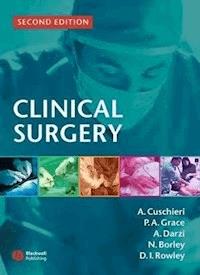
Clinical Surgery E-Book
70,99 €
Mehr erfahren.
- Herausgeber: John Wiley & Sons
- Kategorie: Fachliteratur
- Sprache: Englisch
Blackwell's Clinical Surgery has established itself as an excellent indispensable resource for undergraduate medical students and house officers. The first edition was Awarded 1997 BMA Certificate of Commendation. Written by an outstanding team of editors and expert contirbutors, the new updaetd and revised edition has been designed as a complete learning guide.
Unlike competing titles, Clinical Surgery covers the following all in one book!
- Symptoms and signs of surgical disease
- Diagnosis and investigations
- Treatment and procedures
The book is divided into five sections:
- Clinical Skills and Investigations
- Perioperative Care
- The Management Of Acute Surgical Illness and Trauma
- General Surgery
- Specialist Surgery
The new edition features:
- Revised chapters with updated and refreshed material, written in a systematic format to aid learning and enhance understanding
- 15 new chapters with more information providing you with everything you need to know
- Blackwell's famous At A Glance boxes for the most common surgical conditions and common clinical presentations
- Must Know/Must Do boxes - to aid learning and revision through self-assessment
- Clinically orientated information on practical procedures
- Evidence Based Medicine references for further reading and research
- Excellent full colour illustrations and a new attractive and easy to use format
The second edition of Clinical Surgery is perfect for undergraduate and junior doctors alike as well as other health professionals who need a comprehensive account of surgery in all the major medical specialities. With a strong emphasis on clinical practice and the necessary knowledge and skills, this is a must-buy for anyone going on a surgical rotation. Clinical Surgery is intended to teach you everything you need to know about surgery at the start of your career.
Pre-publication quotes
"I do not think it is an understatement to say that it is a revolutionary book. It is obviously written with integrated courses very much in mind and manages to integrate the basic sciences with clinical information very well.... Maybe above all things, this is a very practically orientated book and really attempts to mould the medical student in to a very good house officer."
SHO, Leeds
Sie lesen das E-Book in den Legimi-Apps auf:
Seitenzahl: 2116
Veröffentlichungsjahr: 2012
Ähnliche




















Contents
Contributors
Preface
List of abbreviations
Part 1 Clinical Skills and Investigations
1 History-taking and Physical Examination
Introduction
Clinical presentation
The history
Physical examination
Examination of specific anatomical areas
2 Basic Clinical Procedures
Introduction
General principles
Consent to treatment
Aseptic technique
Scrubbing up
Gowning
Donning gloves
Local anaesthetics
Performing a simple interrupted suture (Fig. 2.1)
Excising a lesion
Maintaining the airway
Basic thoracic procedures
Urinary catheterization
Rectal examination
Taking blood from a patient
Insertion of an intravenous cannula
Arterial blood gas sampling
Nasogastric tubes
Diagnostic peritoneal lavage
3 Principles of Investigation
Introduction
Blood investigations
Microbiology
Imaging
Endoscopy
Measurement of function
Evidence-based medicine
Part 2 Perioperative Care
4 Assessment of Patients for Surgery and Preoperative Medical Management
Goals of preoperative assessment
Methods of assessment
Calculating risk
Evidence-based medicine
5 Prophylaxis
Introduction
Principles of prophylaxis
Specific prophylaxis
Evidence-based medicine
6 Transfusion of Blood and Blood Products
Introduction
Good transfusion practice
Blood and plasma products
Adverse effects of transfusion
Evidence-based medicine
7 Surgical Infection
Introduction
Pathophysiology of infection
Management of surgical infections
Specific surgical infections
Postoperative infection
Viral diseases of surgical importance
Principles of antibiotic therapy
8 Pain Relief
Introduction
Benefits of treating acute pain
Reasons for inadequate pain control
Factors affecting postoperative pain
Assessment of pain
Selection of appropriate analgesic drugs
Regular monitoring and recording
Opioids
Non-steroidal anti-inflammatory drugs
Local and regional analgesia
Non-drug analgesia
Evidence-based medicine
9 Complications following Surgery
Classification of complications
Common clinical presentations
Common or important problems
Evidence-based medicine
10 Rehabilitation
Introduction
Specific problems of rehabilitation
Gastrointestinal disorders
Part 3 The Management of Acute Surgical Illness and Trauma
11 Hypoxic States and Airway Obstruction
Introduction
Causes of acute hypoxia
Clinical features of hypoxia
Principles of treatment of the hypoxic patient
Oxygen therapy
Mechanical ventilation
Pulse oximetry
Evidence-based medicine
12 Haemorrhage, Hypovolaemia and Shock
Introduction
Classification of shock
Clinical features
Assessment and treatment of shock
Complications of shock
Gastrointestinal haemorrhage
13 Fluids, Electrolytes, pH Balance and Nutrition
Introduction
Fluid and electrolytes
Acid–base balance
Nutrition
Evidence-based medicine
14 Acute Renal Failure
Introduction
Classification
Pathophysiology
Clinical features
Management
Prognosis
Evidence-based medicine
15 The Acute Abdomen
Introduction
Aetiology (see Table 15.1)
Investigations
Peritonitis
Haemoperitoneum
Intestinal obstruction
Complications
Intestinal pseudo-obstruction
16 Systemic Inflammatory Response Syndrome
Introduction
Pathophysiology
Clinical features
Management
Prognosis
Evidence-based medicine
17 Initial Management of the Severely Injured Patient
Introduction
The golden hour
Preparation
Initial assessment
Primary survey and resuscitation
Secondary survey
Definitive care
Evidence-based medicine
18 Head Injury
Introduction
Pathology
Classification
Management
Special problems
Specific head injuries
Intracranial haemorrhage
Outcome from head injury
Rehabilitation after head injury
Spinal injury
Evidence-based medicine
19 Abdominal Trauma
Introduction
Mechanism of injury
Surgical anatomy of abdominal injuries
Management of trauma
Specific intra-abdominal injuries
Penetrating abdominal trauma
Emergency laparotomy for abdominal injuries
Pelvic genitourinary injuries
20 Chest Trauma
Introduction
Types of chest injury
21 Musculoskeletal Trauma
Introduction
History-taking after trauma
Examination of the traumatized patient (see Chapter 17)
Investigation of fractures
Management of fractures
Complications of fractures
Dislocations
Common fractures and joint injuries
22 Soft-tissue Trauma
Introduction
Injuries to specific soft tissues
23 Burns
Introduction
Epidemiology
Pathophysiology
Mechanisms of injury
Initial management of major burns
Subsequent management of burn injury
Rehabilitation
Part 4 General Surgery
24 Disorders of the Abdominal Wall
Introduction
Swellings in the wall
Common abdominal herniae
Unusual herniae
25 Disorders of the Oesophagus
Anatomy and physiology
Symptoms of oesophageal disease
Investigations
Gastro-oesophageal reflux disease
Benign oesophageal strictures
Columnar metaplasia of the oesophagus (Barrett’s columnar epithelium)
Non-reflux oesophagitis
Diaphragm
Hiatus hernia
Oesophageal motility disorders
Oesophageal diverticulae
Sideropenic dysphagia (Paterson-Kelly or Plummer-Vinson syndrome)
Oesophageal perforations
Tumour of the oesophagus
Evidence-based medicine
26 Disorders of the Stomach and Duodenum
Introduction
Dyspepsia
Investigations
Gastroduodenal disease: Helicobacter pylori infection
Acute gastroduodenal disorders
Peptic ulcer disease
Complications of gastric surgery
Gastritis
Gastric tumours
Evidence-based medicine
27 Disorders of the Liver
Anatomy of the liver
Investigations
Clinical features of liver disease
Cirrhosis
Congenital hepatic fibrosis (fibropolycystic disease)
Hepatic encephalopathy
Fulminant liver failure
Hepatic abscess
Subphrenic extrahepatic abscess
Non-parasitic hepatic cysts
Hydatid cysts
Liver tumours
Metastatic disease of the liver
Portal hypertension
Budd–Chiari syndrome
Hepatic artery aneurysm
Evidence-based medicine
28 Disorders of the Biliary Tract
Anatomy
Investigation of biliary tract disorders
Jaundice
Management of large bile duct obstruction
Cystic disease of the biliary tract
Gallstones
Acalculous chronic gallbladder disease
Ductal calculi
Cholangitis
Haemobilia
Bilioenteric fistulae
Benign bile duct strictures
Tumours of the biliary tract
29 Disorders of the Pancreas
Anatomy and physiology
Investigations
Congenital anomalies
Pancreatitis
Tumours of the exocrine pancreas
Tumours of the endocrine pancreas
Evidence-based medicine
30 Disorders of the Spleen
Anatomy and physiology
Hypersplenism
Hyposplenism
Postsplenectomy sepsis
Splenic infarction
Splenomegaly
Ectopic (wandering) spleen
Splenic cysts
Splenic tumours
Splenic vein thrombosis
Evidence-based medicine
31 Disorders of the Small Intestine and Vermiform Appendix
Physiology
Small-bowel investigations
Small-bowel tumours
Crohn’s disease
Radiation enteropathy
Intestinal tuberculosis
Human immunodeficiency virus enteropathy
Short-gut syndrome (intestinal failure)
Vascular abnormalities
Vermiform appendix and Meckel’s diverticulum
32 Disorders of the Colon and Rectum
Diverticular disease
Vascular lesions of the colon
Volvulus of the colon
Chronic inflammatory bowel disease
Colonic polyps
Carcinoma of the colon and rectum
Carcinoma of the anus
Benign anal and perianal disorders
33 Disorders of the Breast
Breast anatomy and physiology
Congenital anomalies
Benign breast disease
Breast cancer
Evidence-based medicine
34 Disorders of the Endocrine Glands
Thyroid
Parathyroid
Adrenal
Pituitary
35 Salivary Glands
Introduction
Submandibular gland
Parotid gland
Disorders of the salivary glands
Evidence-based medicine
36 Skin and Adnexae
Skin
Subcutaneous tissue
Nails
Evidence-based medicine
Part 5 Specialist Surgery
37 Cardiovascular Disorders
Introduction
Pathophysiology
ARTERIAL DISEASE
Peripheral occlusive arterial disease
Chronic lower limb ischaemia
Acute lower limb ischaemia
The diabetic foot
Thromboangiitis obliterans (Buerger’s disease)
Raynaud’s syndrome
Aneurysms
Extracranial arterial disease
Arterial miscellany
VENOUS DISEASE
Venous thrombosis
Pulmonary embolism
Post-thrombotic (postphlebitic) limb
Varicose veins
Venous miscellany
LYMPHATIC DISEASE
Lymphoedema
Tumours of lymphatics
CARDIAC SURGERY
Evaluation of the patient
Perioperative care
Cardiac surgery for specific diseases of the heart
Evidence-based medicine
38 Pulmonary Disorders
Introduction
Evaluation of the patient
Pulmonary embolism, collapse and infections
Disorders of the pleura
Bronchial neoplasms
Mediastinal lesions
Aspiration syndromes
Respiratory (ventilatory) failure
Evidence-based medicine
39 Genitourinary Disorders
Introduction
Clinical assessment
Infection of the genitourinary tract
Urinary tract obstruction
Urolithiasis
Urological malignancies
Incontinence and neuropathic bladder disorders
Disorders of the testis and scrotum
Impotence
Evidence-based medicine
40 Neurosurgical Disorders
Introduction
Evaluation of patients with neurosurgical disorders
Principles of management of neurosurgical patients
Common neurosurgical disorders
Hydrocephalus
Spinal surgery
Peripheral nerve disorders
Miscellaneous neurosurgical problems
Evidence-based medicine
41 Musculoskeletal Disorders
Introduction
Evaluation of the patient with orthopaedic disorders
Problems with joints
Knee problems
Backache and neckache
Minor adult disorders
Adult foot disorders
Orthopaedic conditions of childhood
42 Plastic and Reconstructive Surgery
Introduction
Wound healing and management
Hand surgery
Pressure sores
Lower limb trauma surgery
Surgery for congenital deformities
Facial injuries
Aesthetic surgery
43 Ear, Nose and Throat Disorders
Introduction
ENT emergencies: diagnosis and first-line management
Head and neck cancer: requirements for urgent referral
Common (non-malignant) throat and neck presentations
The ear
The nose and sinuses
Common presentations in childhood
Evidence-based medicine
44 Ophthalmic Disorders
Introduction
Evaluation of the patient
The acute red eye
Sudden loss of vision (Table 44.2)
Diabetes mellitus
Macula
Chronic glaucoma
Cataract
Squint (strabismus)
Diseases of the eyelid
45 Principles of Transplantation
Introduction
Immunology
Immunosuppression
Organ donation
Renal transplantation
Liver transplantation
Pancreas transplantation
Cardiac transplantation
Other organs
46 Surgical Conditions in Neonates, Infants and Children
Introduction
History
Physical examination
Fluid management
Neonatal conditions
Infant conditions
Paediatric conditions
Evidence-based medicine
Index
© 1996, 2003 by Blackwell Science Ltd
a Blackwell Publishing company
Blackwell Science, Inc., 350 Main Street, Malden, Massachusetts 02148-5020, USA
Blackwell Publishing Ltd, 9600 Garsington Road, Oxford OX4 2DQ, UK
Blackwell Science Asia Pty Ltd, 550 Swanston Street, Carlton, Victoria 3053, Australia
The right of the Authors to be identified as the Authors of this Work has been asserted in accordance with the Copyright, Designs and Patents Act 1988.
All rights reserved. No part of this publication may be reproduced, stored in a retrieval system, or transmitted, in any form or by any means, electronic, mechanical, photocopying, recording or otherwise, except as permitted by the UK Copyright, Designs and Patents Act 1988, without the prior permission of the publisher.
First published in 1996
Reprinted 2001
Second edition 2003
Library of Congress Cataloging-in-Publication Data
Clinical surgery/Alfred Cuschieri... [et al.]. — 2nd ed.
p.; cm.
Includes index.
ISBN 0-632-06394-7
1. Surgery.
[DNLM: 1. Surgical Procedures, Operative. WO 500 C641 2003] I.
Cuschieri, Alfred.
RD31.C643 2003
617—dc21
2003000667
A catalogue record for this title is available from the British Library
Commissioning Editor: Vicky Noyes
Managing Editor: Geraldine Jeffers
Production Editor: Alice Emmott
Production Controller: Kate Charman
For further information on Blackwell Science, visit our website:
http://www.blackwellpublishing.com
Contributors
Peter Butler
Department of Plastic Surgery, Royal Free Hospital, Pond Street, London, NW3 2QG
Author of
Chapter 23
Co-author of
Chapter 42
Graham Haddock MBChB MD FRCS(Glas) FRCS(Ed)
FRCS(Paed)
Consultant Paediatric and Neonatal Surgeon, Department of Paediatric Surgery, Royal Hospital for Sick Children, Yorkhill, Glasgow, G3 8SJ
Author of
Chapter 46
Ashok Handa FRCS FRCS(Ed)
Clinical Tutor in Surgery and Honorary Consultant Surgeon, Nuffield Department of Surgery, John Radcliffe Hospital, Headley Way, Headington, Oxford, OX3 9DU
Author of
Chapter 45
Natasha Hidvegi MBBS
Research Fellow, Department of Plastic Surgery, Royal Free Hospital, Pond Street, London, NW3 2QG
Author of
Chapter 42
Eamon Kavanagh MD FRCS(I)
Department of Surgery, Mid-Western Regional Hospital, Dooradoyle, Limerick, Ireland
Co-author of
Chapters 3, 16, 35, 37
Michael Kerin MCh FRCS(I) FRCS(Ed)
Lead Surgeon, National Breast Screening Programme, Mater Misericordiae Hospital, Eccles Street, Dublin 7, Ireland
Author of
Chapter 33
Paul Kinnear FRCS FRCOphth
Consultant Ophthalmologist, Department of Ophthalmology, Charing Cross Hospital, Fulham Palace Road, London, W6 8RF
Author of
Chapter 44
Trottie Kirwan MB BChir
Consultant Anaesthetist, Chelsea & Westminster Hospital, 369 Fulham Road, London, SW10 9NH
Co-author of
Chapter 8
Graham Leese MD FRCP
Consultant Physician, Ninewells Hospital and Medical School, Dundee, DD1 9SY
Co-author of
Chapter 34
Mervyn Maze MB ChB FRCP FRCA FMedSci
Professor and Chair of Anaesthesia, Department of Anaesthetics and Intensive Care, Imperial College London; Director of Research and Development, Chelsea and Westminster NHS Healthcare Trust, 369 Fulham Road, London
Co-author of
Chapter 8
William Morrison MBChB FFAEM FRCP FRCS FRCA
MRCGP DRCOG
Accident and Emergency Consultant, Department of Accident & Emergency Medicine, Ninewells Hospital, Dundee, DD1 9SY
Co-author of
Chapter 17
Paraskevas Paraskeva FRCS
Lecturer in Surgery, Department of Surgical Oncology and Technology, Imperial College London, St Mary’s Hospital, 10th Floor Queen Elizabeth the Queen Mother Wing, London, W2 1NY
Author of
Chapters 13, 20, 32
Co-author of
Chapter 2
Peter Richards FRCS FRCPCH
Department of Paediatric Neurosurgery, Radcliffe Infirmary, Woodstock Road, Oxford, OX2 6HE
Author of
Chapters 18, 40
Victoria Rose MD MRCS(Eng)
Specialist Registrar, Department of Plastic Surgery, Royal Free Hospital, London, NW3 2QG
Author of
Chapter 42
David Smith MD FRCS(Ed)
Consultant Surgeon and Honorary Senior Lecturer, Ninewells Hospital and Medical School, Dundee, DD1 9SY
Author of
Chapter 34
Shawn St Peter MD
Resident in Surgery, Mayo Clinic, Rochester, MN 55905, USA
Co-author of
Chapter 45
Janet Wilson MD FRCS(Ed) FRCS(Eng)
Professor of Otolarnyngology, Head and Neck Surgery, University of Newcastle, Freeman Hospital, High Heaton, Newcastle upon Tyne, NE7 7DN
Author of
Chapter 43
Preface
Clinical Surgery in its new edition is much more than a facelift. It is the outcome of a major collective effort based on regular meetings of the five editors with the publishers at which format, content and layout were discussed. Admittedly, completion of the second edition has taken longer than anticipated, but the delay has been worthwhile. Although the basic structure of the first edition has been retained, the rewrites, alterations and new material have been based on feedback from our readers specially commissioned by our publishers before work on the second edition commenced in earnest. The needs and comments expressed by students and house officers who took part in the feedback on each and every chapter (favourable or otherwise) were kept firmly in mind by the authors and editors during the redrafting process. Consequently, the editors are confident that all defects and criticisms have been met and the second edition has no serious shortcomings.
In addition to this we have introduced some new features, which we regard as important in the continuous acquisition of medical and surgical knowledge that is based on reading, clinical observation and practice. Perhaps the most relevant of these are the Must know (core knowledge information), Must do (necessary clinical and humanistic skills) appropriate to each chapter. These provide evidence to the reader of landmark achievements of knowledge and goals in the learning process. When indicated, we have included references to evidence-based medical practice but shied away from any extensive bibliography.
New material, previously not covered or dealt with in too superficial a manner in the first edition has been added or enhanced without a material increase in the size of the book. In achieving this, we have not sacrificed any of the good features of the book including the At A Glance boxes, which have been so popular as aides-mémoire with the medical undergraduates in particular.
We trust the second edition of Clinical Surgery, like its predecessor, proves to be useful to students, house officers and senior house officers, that it will incite tham to consider a career in surgery, but if not, that they benefit as doctors from reading the book. If the second edition achieves the last, we as editors would be well pleased with the outcome of our work.
We would like to thank Alice Emmott, Senior Production Editor, for her forbearance and tact and the entire team at Blackwell Publishing. Also, the authors, you all did a magnificent and expeditious job.
Alfred Cuschieri
Pierce Grace
Ara Darzi
Neil Borley
David Rowley
List of abbreviations
AAA abdominal aortic aneurysm ABI ankle/brachial index ACTH adrenocorticotrophic hormone ADH antidiuretic hormone ADL activities of daily living AF atrial fibrillation AFP α-fetoprotein AIDS acquired immunodeficiency syndrome ALT alanine aminotransferase APACHE Acute Physiology and Chronic Health Evaluation APTT activated partial thromboplastin time ARDS acute respiratory distress syndrome ARF acute renal failure ASA American Society of Anesthesiologists AST aspartate aminotransferase ATLS advanced trauma life support ATN acute tubular necrosis AVM arteriovenous malformation AZT azidothymidine BCC basal cell carcinoma BCG bacillus Calmette-Guérin BPH benign prostatic hypertrophy CABG coronary artery bypass grafting CARS compensatory anti-inflammatory response syndrome CBV circulating blood volume CDH congenital dislocation of the hip CJD Creutzfeldt–Jakob disease CMV cytomegalovirus; controlled mandatory ventilation CNS central nervous system CO cardiac output COPD chronic obstructive pulmonary disease COX cyclooxygenase CPAP continuous positive airways pressure CPK creatine phosphokinase CPR cardiopulmonary resuscitation CRP C-reactive protein CSF cerebrospinal fluid CT computed tomography CVP central venous pressure DIC disseminated intravascular coagulation 2,3-DPG 2,3-diphosphoglycerate DPL diagnostic peritoneal lavage DSA digital subtraction arteriography DTPA diethylenetriaminepentaacetic acid DVT deep vein thrombosis EBV Epstein–Barr virus ECG electrocardiogram, electrocardiography EDTA ethylenediaminetetraacetic acid EEG electroencephalography EMG electromyography ENT ear, nose and throat EPVF extrapulmonary ventilatory failure ERCP endoscopic retrograde cholangiopancreatography ESR erythrocyte sedimentation rate ESRD end-stage renal disease ESWL extracorporeal shock-wave lithotrispsy EUS endoscopic ultrasonography FAP familial adenomatous polyposis FEV1 force expiratory volume in 1 s FFP fresh frozen plasma FIO2 fractional inspired oxygen concentration FVC forced vital capacity GABA γ-aminobutyric acid GFR glomerular filtration rate GORD gastro-oesophageal reflux disease γ-GT γ-glutamyltransferase GvHD graft vs. host disease HAFLOE high-airflow oxygen enrichment HAV hepatitis A virus HBV hepatitis B virus HCC hepatocellular carcinoma HCV hepatitis C virus HDL high-density lipoprotein HDU high-dependency unit HIV human immunodeficiency virus HLA human leukocyte antigen HPP human pancreatic polypeptide HR heart rate 5-HT 5-hydroxytryptamine HTLV human T-cell leukaemia virus ICP intracranial pressure ICU intensive care unit IL interleukin INR international normalized ratio IPSID immunoproliferative small intestinal disease ITP immune thrombocytopenic purpura IVU intravenous urogram JVP jugular venous pressure, jugular venous pulse LDH lactate dehydrogenase LDL low-density lipoprotein LHRH luteinizing hormone-releasing hormone LOS lower oesophageal sphincter LPS lipopolysaccharide LSBO long-segment Barrett’s oesophagus MALT mucosa-associated lymphoid tissue MCH mean corpuscular haemoglobin MCP metacarpophalangeal MCV mean corpuscular volume MEN multiple endocrine neoplasia MHC major histocompatibility complex MNG multinodular goitre MODS multiple organ dysfunction syndrome MRA magnetic resonance angiography MRCP magnetic resonance cholangiopancreatography MRI magnetic resonance imaging MRSA methicillin-resistant Staphylococcus aureus MUGA multiple gated acquisition NGU non-gonococcal urethritis NO nitric oxide NSAID non-steroidal anti-inflammatory drug OA oesophageal atresia OGD oesophagogastroduodenoscopy OPSI overwhelming postsplenectomy infection Paco2 partial pressure of arterial carbon dioxide Pao2 partial pressure of arterial oxygen PCV packed cell volume PCWP pulmonary capillary wedge pressure PE pulmonary embolism PEEP positive end-expiratory pressure PEFR peak expiratory flow rate PET positron emission tomography PGL primary gastric lymphoma POSSUM Physiological and Operative Severity Score for the enUmeration of Mortality and Morbidity PPI proton pump inhibitor PPV patent processus vaginalis PSA prostate-specific antigen PT prothrombin time PTH parathyroid hormone PUJ pelviureteric junction RA rheumatoid arthritis RBF renal blood flow RF radiofrequency RPLND retroperitoneal lymph node dissection RRT renal replacement therapy RTA road traffic accident SAH subarachnoid haemorrhage SBP spontaneous bacterial peritonitis SCC squamous cell carcinoma SIGN Scottish Intercollegiate Guidelines Network SIMV synchronized intermittent mandatory ventilation SIRS systemic inflammatory response syndrome SLE systemic lupus erythematosus SPECT single-photon emission computed tomography SSBO short-segment Barrett’s oesophagus SSEP somatosensory evoked potential SSI surgical site infection STD sexually transmitted disease STN solitary thyroid nodule SV stroke volume TENS transcutaneous electrical nerve stimulation TGF transforming growth factor TIA transient ischaemic attack TLC total lung capacity TNF tumour necrosis factor TNM tumour, regional nodes, distant metastases TOE transoesophageal echocardiography TOF tracheo-oesophageal fistula t-PA tissue plasminogen activator TPN total parenteral nutrition TPO thyroid peroxidase TRUS transrectal ultrasound TSH thyroid-stimulating hormone TURP transurethral resection of the prostate UTI urinary tract infection VAC vacuum-assisted closure VC vital capacity VIP vasoactive intestinal polypeptide VSD ventricular septal defect WCC white cell count WHO World Health OrganizationPart 1
Clinical Skills and Investigations
1
History-taking and Physical Examination
Introduction
Clinical presentation
The history
Physical examination
Examination of specific anatomical areas
Must know Must do
Must know
Symptomatology and signs of common surgical disorders that present electively
Presentation and physical findings of common surgical emergencies
Must do
Take histories of patients with surgical disorders: learn by experience how to establish rapport with patients
Examine patients with surgical disorders: head and neck, chest, abdomen, limbs and genitalia
Perform rectal examinations under supervision
Acquire skill and experience in performing common clinical procedures, e.g. insertion of intravenous lines, insertion of nasogastric tubes, injections, setting up drips, catheterization of the urinary bladder (male and female)
Examine the locomotor system of patients
Attend outpatient general surgical clinics
Attend fracture clinics
Introduction
The mastery of clinical skills is different from knowing how the various clinical tasks are performed. This expertise has several components, including the ability to:
communicate freely and efficiently with patients and colleagues;detect abnormal physical signs, e.g. an enlarged liver, rebound tenderness;recognize acute and life-threatening situations;perform common clinical procedures with proficiency;confirm normality when present.No amount of encyclopaedic knowledge gained from reading and lectures can ever impart clinical competence. The requirements for proficiency as a doctor are core knowledge of the common medical and surgical disorders and full clinical competence. Rare and obscure illnesses will be encountered by every clinician from time to time. One needs only to be aware of these disorders since the competent doctor will recognize that the patient does not fit any of the common disease patterns and will seek advice or expert opinion.
Clinical presentation
Patients may present in two ways:
Lesen Sie weiter in der vollständigen Ausgabe!
Lesen Sie weiter in der vollständigen Ausgabe!
Lesen Sie weiter in der vollständigen Ausgabe!
Lesen Sie weiter in der vollständigen Ausgabe!
Lesen Sie weiter in der vollständigen Ausgabe!
Lesen Sie weiter in der vollständigen Ausgabe!
Lesen Sie weiter in der vollständigen Ausgabe!
Lesen Sie weiter in der vollständigen Ausgabe!
Lesen Sie weiter in der vollständigen Ausgabe!
Lesen Sie weiter in der vollständigen Ausgabe!
Lesen Sie weiter in der vollständigen Ausgabe!
Lesen Sie weiter in der vollständigen Ausgabe!
Lesen Sie weiter in der vollständigen Ausgabe!
Lesen Sie weiter in der vollständigen Ausgabe!
Lesen Sie weiter in der vollständigen Ausgabe!
Lesen Sie weiter in der vollständigen Ausgabe!
Lesen Sie weiter in der vollständigen Ausgabe!
Lesen Sie weiter in der vollständigen Ausgabe!
Lesen Sie weiter in der vollständigen Ausgabe!
Lesen Sie weiter in der vollständigen Ausgabe!
Lesen Sie weiter in der vollständigen Ausgabe!
Lesen Sie weiter in der vollständigen Ausgabe!
Lesen Sie weiter in der vollständigen Ausgabe!
Lesen Sie weiter in der vollständigen Ausgabe!
Lesen Sie weiter in der vollständigen Ausgabe!
Lesen Sie weiter in der vollständigen Ausgabe!
Lesen Sie weiter in der vollständigen Ausgabe!
Lesen Sie weiter in der vollständigen Ausgabe!
Lesen Sie weiter in der vollständigen Ausgabe!
Lesen Sie weiter in der vollständigen Ausgabe!
Lesen Sie weiter in der vollständigen Ausgabe!
Lesen Sie weiter in der vollständigen Ausgabe!
Lesen Sie weiter in der vollständigen Ausgabe!
Lesen Sie weiter in der vollständigen Ausgabe!
Lesen Sie weiter in der vollständigen Ausgabe!
Lesen Sie weiter in der vollständigen Ausgabe!
Lesen Sie weiter in der vollständigen Ausgabe!
Lesen Sie weiter in der vollständigen Ausgabe!
Lesen Sie weiter in der vollständigen Ausgabe!
Lesen Sie weiter in der vollständigen Ausgabe!
Lesen Sie weiter in der vollständigen Ausgabe!
Lesen Sie weiter in der vollständigen Ausgabe!
Lesen Sie weiter in der vollständigen Ausgabe!
Lesen Sie weiter in der vollständigen Ausgabe!
Lesen Sie weiter in der vollständigen Ausgabe!
Lesen Sie weiter in der vollständigen Ausgabe!
Lesen Sie weiter in der vollständigen Ausgabe!
Lesen Sie weiter in der vollständigen Ausgabe!
Lesen Sie weiter in der vollständigen Ausgabe!
Lesen Sie weiter in der vollständigen Ausgabe!




