


Erhalten Sie Zugang zu diesem und mehr als 300000 Büchern ab EUR 5,99 monatlich.
- Herausgeber: Salt
- Kategorie: Gesellschafts- und Liebesromane
- Serie: Salt Modern Fiction
- Sprache: Englisch
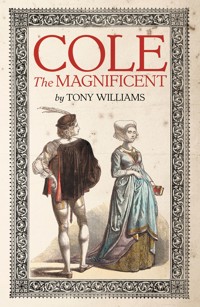
The orphan Cole wanders the world, seeking the fabled Underground City which he has promised his love Sigrid he will find. Somewhere else entirely, Niven sits in a palace garden taking lessons in astronomy and architecture, dreaming up ways to escape being married off to one of her father's friends. Cole's story is pieced together from folk songs and fragments as he travels ever onwards towards his destiny: a new life even stranger than the one before. Niven too will learn what it means to leave the garden of childhood. Their world is one of witchcraft and wishing, wisdom and regret, as they slowly learn how much it is possible to love, and suffer for the sake of love. Comic, grotesque, lyrical, and immensely readable, Tony Williams's fantasy picaresque is a reader's delight. A sweeping yarn through the darkest of ages, filled with rogues, lovers, murderers, swindlers, and saints.
Sie lesen das E-Book in den Legimi-Apps auf:
Seitenzahl: 528
Veröffentlichungsjahr: 2023
Das E-Book (TTS) können Sie hören im Abo „Legimi Premium” in Legimi-Apps auf:
Ähnliche




















for Fred and Katherine, Cap and Scamps
How dost thou, old coal?
—John Marston
Contents
COLE THE MAGNIFICENT
1
Cole was a farmer’s son, in the days when every farmer was the king of his own meadow and there were five kingdoms to a shire. Gold rings were considered no more valuable than hazelnuts, and if a stray dog lay down and cleaned itself, it was made an earl.
Harald was Cole’s father, and Bea was his mother. There were no other children: some of them had died in infancy and the others had decided not to be born at all. So Cole ran happy and alone through all the days of his boyhood, lonely and free through all the firelit nights of his first life lived.
Their home was a farmstead which lay in a green valley. The other farmers round about called Harald their lord. Each steading was a cluster of low buildings with a hall at the centre, where the long fire burned and the people sat together to talk and eat. The walls were made of stones and turf. The buildings were surrounded by homefields where hay was grown for the winter, and pastures where the sheep and goats and ponies grazed, and cornfields, and fields of cabbage and onion.
Harald’s steading was only a little bit bigger than the other farms. It had a stag carved in the lintel above the door, and green glass tiles in front of his high seat. There was a brewhouse, a smokery, a tannery, and a dozen storerooms. On either side of the valley were steep hillsides, the pastures running up to banks of scree and crags of stone, and then the high moors running away to another country. There was the sky, with sometimes the sun in it and sometimes the moon. There was summer and winter. Buried somewhere on the steading was an oaken chest the size of a baby’s cradle, and in it were coins from the reign of Jubert Runo, and of Brutus Greenshield, and of the Godwits Elder and Younger. And there were apples in the orchard and trout in the silver river.
But one day Harald’s haystack kingdom came to an end quite unexpectedly.
2
Brand came with his men in the dawn, when the valley was half asleep. Every farmstead had smoke rising from its hall. A few men and women were moving in the pastures, tending to livestock, or starting at their chores among the crops.
Brand spurred his horse and led his band down into the valley off the purple moor. They crossed the scree and entered on slopes of short-cropped grass, littered with sheep droppings. One by one the people in the valley noticed the riders entering the land. Some glanced and turned away, thinking it safer to stay in open country with the sheep than to join in the farmer’s quarrels. But one man ran from a vegetable patch to the main farm, dropping his hoe as he went.
The sheep parted as the riders approached, but a shepherd stood at the head of the track and barred their way. He said no guests were expected at Harald’s place that day.
Brand said, ‘I have come to give Harald something which every man receives in the end.’
The shepherd replied, ‘You will not go down to give Harald his gift as long as I am standing here.’
‘Indeed,’ said Brand, dismounting and stepping up to the man, who was unarmed. He took the leather skirt from his own thigh and held it in front of the shepherd’s legs as he struck with his sword. The result was that the man’s lower leg was broken, but no blood was spilled. Those who saw what happened understood that Brand had come to kill Harald, but spare his people.
He mounted his horse and led the riders down the track past the shepherd lying in the grass.
They rode into the homefield of Harald’s steading. The horses were grazing but the folk had retreated into the hall when Brand’s men approached. Now Harald and his housecarls emerged from the hall, looking dazed with sleep. One or two of them wore mail byrnies, but the others had to make do with their kirtles and leather caps. They were more farmers than fighting men. They held their swords and axes like unfamiliar tools.
Harald asked Brand whether he had come to trade acorns. ‘If not, and the business is blood, let’s step to it.’
‘You see straight to the heart of things,’ said Brand. ‘I’ve come to kill you and take your farms. Let’s save our breath for the fight.’
Now the two sides closed and the fighting began. Harald’s men were hard pressed, and stood with their backs to the hall and its door. One by one they fell. Brand and Harald fought each other.
Brand struck strongly. Harald was forced to give ground, and before he had a chance to recover, Brand swung his sword again and inflicted a deep wound across Harald’s shoulder. The collar bone was severed and his arm hung uselessly. His sword dropped to the ground. Blood gushed over Harald’s neck and chest. His broad face turned waxy pale over his beard.
He said, ‘You will enjoy my ale all winter, but next year you must brew your own.’ Then Brand struck him again, a powerful blow that split his face apart and killed him.
‘That’s the end of King Harald,’ said Brand, and people knew then that he intended to take the title of king in these lands.
Harald’s housecarls were given the choice of surrendering or being put to death, and most of them chose to go on living under Brand’s fiefdom. Inside the hall were the women and servants, and other men who, having no skill with weapons, had not been called upon to fight. They were all brought outside.
Brand said to Harald’s widow, Bea, ‘I don’t intend to take you as a wife, but like the rest of Harald’s chattels you have passed into my hands. Now I must decide how to dispose of you.
‘I know that Harald has a son, and the father is not defeated till the son too is dead. Tell me where your son is, and you will live with honour as a member of my household. Otherwise I can offer you only distress.’
Bea said, ‘I have hardly known where Cole is since he was two years old, and now I never shall do again.’ And she took a knife from her skirt and drew it quickly across her own belly.
Brand turned and began to search the farmstead for the boy even as Bea knelt shrieking and handling her own spilled entrails. Her people went to her for one last time.
He searched the other buildings of the farmstead one by one. The first was a storeroom where Harald’s grain lay in sacks and his salt meat hung from a beam. The second was his brewhouse and the third a blackened smokery where hundreds of split fish hovered like strange birds.
The next outbuilding smelt of piss and dung. The room was almost filled by a low vat of liquid, with hides largely submerged but poking up here and there. A man was pissing into the vat. He turned his head to Brand and said, ‘It’ll take a smidgen more if you feel the need.’
Brand said, ‘Didn’t you hear the commotion outside?’
‘That’s no business of mine,’ said the tanner. He had finished pissing and was putting himself away.
Brand said, ‘Come outside and make yourself known to my men. Things will go alright for you.’
The man nodded and Brand left the tannery. But as he walked back into the homefield a shadow moved behind him. A small figure passed from the tannery door and ran round the corner.
It was a boy – a slim boy of about twelve or thirteen years old, with his clothes plastered to his body with the offensive dark liquid of the vat. Brand strode in the direction the boy had gone. As he passed the tanner, the man said, ‘It’s strange what passes under your nose.’
The boy was running across the homefield behind the steading. At the far edge a piebald pony was grazing. Brand’s men had gathered the rest of Harald’s horses and tethered them, but they had not thought this little pony worth bothering with.
The boy leapt on to its back and set it trotting. He was surely too tall for her to carry, but he was slim and light, and as he rode, half hugging the pony’s neck with his fingers clutching her mane, she did not resist his wishes. Picking up to a gallop, pony and boy cleared the homefield wall and sped on between hayfield and pasture, cornfield and meadow, out along the valley towards the river. Three of Brand’s men mounted their horses and rode off in pursuit.
Brand had the tanner beaten until his body was blue and he could not breath without wheezing; but the leather about the place was fine in quality, so afterwards he had the servants bathe the man and feed him gruel, and gave him a silver button.
Brand sat on the wall of the homefield as the sun rose higher, looking over the fertile valley he had claimed. The hunger that comes after a killing was on him. Harald’s serving women made a stew of barley and horseflesh, and one, a red-headed woman of thirty or so, brought Brand a bowl of it. She looked him full in the face and, even as she held the bowl out towards him, his heart quailed before her. He took the meal and ate.
It was evening before his men returned. They said that the boy had ridden faster than they had thought possible. He had known the place to ford the river, the way through the copse to skirt the boggy ground, the place to drop down behind a bank so that even those following close behind could not be sure which way he had gone. In the end they had lost him up a little clough that led on to the moors. Their horses were blown, and the going was bad, and they had to walk up the rocky bed of the stream. By the time they reached the moors the boy was nowhere to be seen.
Brand was not angry, as they had feared. He only made a wry face and said that today’s harvest always left work for tomorrow. Then he said to everyone at the steading that it should not be called Harald’s place any longer.
‘What should it called?’ they asked him.
He thought a moment and said, ‘Brandsstead’; and it was thought a good name.
3
Cole rode over the moors, whispering in the pony’s ear all the while.
‘Alice, carry me safely over the hills and I’ll feed you sweet apples. Find me some courage, I’ll steal you a parsnip. Turn time back the other way and I’ll make you my bride.’
He had learned to ride on the little mare and she loved him even though he never kept his promises. They sped by the moorland beehives and Cole said goodbye to each and every bee. They scuttled through purple heather past the yellow bones of sheep, and stopped in the shade of some birches where a burn ran down, so they both could drink.
At evening Cole could see no shelter, so he lay down and slept on the spongy moss, with the scratchy stems of heather as a blanket. It was a cold night, and a hungry one, and he found himself much disturbed by dreams.
The next day’s journey went on over moors as wild as yesterday’s, and by mid-afternoon Cole was getting very hungry. Alice grazed on coarse moor grass and drank the peaty water that gathered in ditches, and though Cole shared the water he did not find the grass appealing. Eventually they came to a place where the peat was bare and there were signs of disturbance. He dug down and found some buried butter. He spoke these verses:
Whether this treasure
is meant for man
or the gob of a goddess
it’s better that I
should snaffle than starve.
The feasting hall
inside me is empty.
The riches are spent,
so who would deny me
this deep ingot?
Three more days Cole rode over the moor, nibbling the stolen butter and some dry berries he gathered here and there. On the fourth day the uplands fell away into a fertile plain. Cole stood on the moor’s edge and counted twenty-seven farms, with smoke rising from their halls, and the hayfields trembling, and ponds of carp lying around them like spilled drops of ale. Here was another kingdom. His stomach rumbled, and he made his way down the hillside to the nearest steading.
There he was welcomed and fed, and asked his name and his story. When the people heard he was Harald’s boy, and that Harald was dead, they said he must be taken to the king.
Cole was slurping up a bowl of stewed hogget. He said, ‘That’s fine, but I’m sure he’s busy today. I think I’ll rest, and visit him tomorrow.’ He scraped out his bowl and went to lie down by the fire, where he fell asleep between the snoring dogs.
This old lullaby is known as ‘The Flight of Cole’:
When I was a little boy I ran away to die
I gathered stones and heather roots and baked them in a pie
I picked the eaten berries and I called the tussocks rye And the very next day I was born.
My father washed the doorstep with a pail of crimson soap
My mother loosed her living with a bellyful of rope
But Alice took me elsewhere, every hoofbeat beating hope And the very next day I was born.
I sailed on that mountain that was rising like a wave
I found a pot of butter in a hollow like a grave
And ate while I was weeping, I was laughing like a knave And the very next day I was born.
4
But some people say that Harald’s lad Cole was drowned in the tanning vat by the new king’s men, and that it was only a foolish goose-herder who escaped on the pony, and broke its back. They say he hid in a cave on the moor for six weeks, eating mallow leaves and bilberries, and then made his way to the next valley where the menfolk beat him and tied him to a cart for sport. They would have killed him if the farmer had not said this was a waste of a thrall. So the fool was chained to a fence post and made to turn the quernstone, and fed green corn until he sickened and died.
But it made the folk uneasy to think of the boy they had killed. And they worried that next year Brand might ride over and do to them what he had done to Harald. So a legend sprang up that the boy who had escaped was Harald’s son, and that he had not died but travelled on across this and many other lands, and one day would return in great pomp to take back his father’s kingdom. And this legend of Cole helped them sleep at night.
The same Cole is remembered in the children’s rhyme:
Col A Hern
was drowned in piss
but lived a long
time after this.
Unlucky Col
and his pony fled
his mother
and his father dead.
Cut off your fingers,
cut off your toes
when Col A Hern
knows what he knows.
Other people say that there was no such man as Harald, and that Cole sprang from the earth as a man without a father and a king without a land. He is the figure of our longing: he may never recover his father’s kingdom because it never was, just as we may never satisfy our desire to recover what came before. He is the years our parents lived before we were born. And Brand is the time that marches in to occupy the childhood we have vacated; we hate him, but he has no quarrel with us and is more custodian than usurper.
In another version of the story, Cole grew up out of the root of a felled rowan tree, and his lips were red as rowan berries. And at first he could speak no language, but learned to talk by listening to the sparrows, and so he began by always joking; and then he listened to the wind, and so he was always lamenting; and finally he stood behind a waterfall and heard the secrets that lie behind all speech, and then he was ready to enter the world of humankind.
Or Conrad of Arles speaks of a dog called Colle or Cal who belonged to Valdemar, King of the Balts. In those days kings had to pay their way like anyone else, and Valdemar worked as a farrier shoeing the stocky horses bred in those parts. In this way he travelled his whole kingdom, tasting his subjects’ ale and sleeping in their haylofts. Donkeys and tomcats were his court, and his crown was a piece of sacking he used to keep the mice off his face.
Everywhere he went, Valdemar took his dog with him. Cal was a yellow crossbreed and probably handsome if you could get over your irritation at his thieving ways. He was famous in all the Baltic villages and the housewives had a saying that ‘if there’s meat by the hearth then Cal won’t starve.’ Best of all he liked to follow his master in the yard and eat up the parings of hoof as they fell from his knife.
Valdemar said the parings would make Cal ill, but at night Cal would wake up and trot outside and the hooves of all the horses of the kingdom floating in his belly would let his mind run anywhere he wished. He ran over to the cliffs of Brittany and watched the ocean break itself against the world. He ran around by the ice to the Swedish court and learned the Norse tongue, and listened to tales of white bears and the sea-unicorn. He also ran east for a long time, through the seven kingdoms and the six sultanates, along the Silk Road and all the way to the city of the Emperor, where he would have learned everything there is to know, except a firecracker went off and sent him running home again. In this manner Cal whiled away all his nights as his master slept. In the morning Valdemar would get up and see his dog fast asleep. Then he would spit and say that Cal was the laziest dog in the land, little guessing that Cal’s muscles ached with the miles of the whole world inside them.
Some nights Cal would not run at all, but sat and watched the stars turning above him and the moon travelling across the sky between the branches of the trees. Then one night the moon stopped and asked him the way to Constantinople, and Cal barked in fright until all the villagers woke up and gave him a beating for disturbing them. But Cal knew what he had seen and heard, and ever after would not go out on a clear night for fear of meeting the moon again.
5
The king at this time was Egg Eggson. He lived in a hall in the middle of the plain, next to a wide, slow river. Egg’s hall had great stone walls, but a turf roof like any other farm. Beside the hall lay a mill whose wheel turned and turned as the river ran away like time.
When Cole arrived to see him, with a housecarl on either side to make sure he did not run away, Egg was sitting in his high seat quarrelling with his bard. The bard had composed a poem in praise of Egg’s belching, but Egg was not impressed. The poem said that Egg’s belches sounded like the calls of a chaffinch and his farts smelled like quince blossom. Egg said, ‘Next you will say I am slender as a dragonfly, taller than a lime tree, and I piss cream for the children’s porridge.’
The bard did not reply, because he was trying to memorise everything that Egg had said.
When he was told that a boy had arrived from over the mountains, the king dismissed his lickspittle and ordered the boy to be brought forward.
The half-grown boy stood like a frog before the shaggy heron, an ear of corn before the quern.
Cole told the king his name, and all about what had happened with Brand and his men. When Egg heard that Cole was Harald’s son, he pricked up his ears. Kings’ sons did not arrive every week, and there was something cocky about the lad that both annoyed and gladdened him.
‘You must have some luck,’ said Egg, ‘to have escaped Brand’s men like that.’
‘You must have some luck,’ said Cole, ‘to have ended up with a rich kingdom like this.’
‘With a tongue like yours, it’s a wonder Harald didn’t chase you off himself.’ Egg seemed displeased, but already he was thinking what a fine husband Cole would make for his daughter, Issi, once Cole was of age and the girl, in a year or so, should have begun the transition into womanhood. To soothe matters, he said, ‘I have known Harald Colsson all my life as a good man and a friendly neighbour. To hear of his death and of Bea his queen’s brings me grief. But also honour – he has sent me his last and greatest gift. You may stay here as my guest till you are of age and ready to take back Harald’s lands. And I shall call you Cole Haraldsson, in the northmen’s style.’
But Cole said, ‘I don’t care an onion for the northmen’s style. I’m not from the north, I’m northish at best. My name is Cole, and it’s all the name I need.’
‘King Cole, then,’ agreed the king.
‘I hardly think that title becomes me. Call Brand a king instead, since he holds my father’s land and sits in his hall.’
‘The land is no matter,’ said Egg, ‘and by the time your beard is full I shall have helped you take it back.’
In those days it was one measure of a lord’s greatness, how many landless kings he supported as guests in his hall. There were three such grand pensioners already in Egg’s household: King Fridith, King Manus Quercus and King Onmorro. The three of them sat in worn silk tunics by the long fire, chewing on mutton bones and looking at the few pieces of silver they had got left from the days of their glory. King Fridith was hoping for the favour of a certain serving girl, and followed her about giving her compliments and offering to help carry dishes. In return she would beat him with the bowl of an iron ladle. King Manus was blind. He slept all day and wept at night. King Onmorro was always talking about how he was going to lead a fleet of ships over the sea to take back his island kingdom. Egg encouraged him by saying he would furnish him with ships and men, with the result that Onmorro, who had only five retainers of his own – three housecarls, a decrepit washerwoman and a one-legged priest – was perpetually waiting at Egg’s hall, saying please and thank you and growing old.
So Cole came to live in the stone hall by the mill, somewhere between a boy and a man, between an honoured guest and a poor relation. He stayed there for that winter, and the next, growing slowly taller and ever more inscrutable. In that time he never once picked up a weapon or spoke of the catastrophe that had overtaken him. So folk began to say that he was less of a man than his father Harald.
6
The longest version of Cole’s story is found in the Teufelsmoor Codex, but the most reliable is a manuscript discovered in the library of the Strahov Monastery. Judith of Ravenna mentions Cole in a letter, and there are references to him in the works of Walafrid Strabo and Alpharabius the Second. John Philochronos condemned him for heresy, and St Bernadette wrote of him her devotional song ‘Suco Colum Spangli Filus.’ There are fables and incidents from the life of Cole in the works of Leo the Mathematician, Abulcasis, Wassaf al-Hadrat, Martin Pseraphin, Nicolas the Wicked, Aaron ben Perez, Ouyang Xiu, Magister Salernus, Edith of Malmesbury, Hemachandra, Alistair Hazelworm of Jedburgh, and Mariana, prioress of the sinking nunnery at Warburg. Certain episodes have been gleaned from the margin of a psalter that was taken apart to use in binding a bestiary. Others occur only in old tales and the kind of folk song that lingers in the air round a ruined croft.
It is a pity that the Oosterlandboek is no longer extant. It contained a Life of Cole produced by Eutychius of Alexandria, which Ahmad Baba al-Timbukti refers to as completely authoritative. But the vellum on which it was written had not been adequately scraped of flesh, and it was eaten by starving Flemish soldiers during the siege of Ghent.
7
People said Cole was the best guest Egg’s kingdom had ever had. He would eat a braised knuckle and drink all night, and tell tales that had the hall resounding with laughter. But of course he was only a boy, so after a while the ale took its effect: he would suddenly grow quiet, and then go outside to throw up. When he came in he would be grave and still, a little pale in the cheeks, and would sit and listen to the others talking, sipping his ale steadily, until the sky grew thick and it was time to sleep. Then the only merriment left was that of the men and women who lay in each other’s arms. Those like Cole who lay alone had only their dreams to entertain them; and now the smile fell from Cole’s countenance, and a shadow took its place. He lay on the straw in the hall, turned away from the company. He did not move, and a person going by for a visit to the outhouse might think him asleep. But every so often his eyes would spring open and a spasm would pass across his face, either of hatred or of loathing or of sorrow or of despair or of turmoil or of disquiet. Then he might grind his teeth, he might gather the furs that covered him into his fists; his nose might run and his eyes also; a sob or a whine might be swallowed in his throat, or a whisper might clamber silently about his lips like a spider whose web has been disturbed.
Many were the oaths that Cole swore during those nights. He swore to quarry a mountain with a wooden spoon. He swore to set fire to an eagle’s tail. He swore to climb inside an apple, so that another person would eat it and he would disappear. He swore to cut his fingernails with a hammer, to speak a language whose every word was law, to send back the rain, and to dig up the roots of a hawthorn tree and ask their advice. Of course, behind all these oaths lay the loss of his parents and the land he grew up in. There seemed no way he would ever return there. So he would swear his mad oaths, and weep, and curse himself, till he fell asleep.
In the morning he would wake with ale’s green bruise at his temples and sour breath on his lips. He would drink two or three cups of spring water, then go down to the river and submerge his head and shoulders in a pool that lay under a weeping willow. After bathing, he would go and help the serving women fetch more water from the spring.
‘It’s only fair,’ he said, ‘as I’ve drunk so much of it.’
The spring rose at a rocky knoll a little way from the hall, and ran down in a narrow brook to join the river. It was possible to take water from the river or the brook, but it was cleaner at the knoll, and Egg liked the serving women to go there for the water he was to drink or that his ale was to be made from.
A few trees surrounded the spring. It gushed out between two white stones from its underground source, which some said was a goddess but others said was rain that had collected in the mountains of the Underground City and run uphill through the earth. Whatever the reason for the spring’s presence, the knoll was called Lucky Knoll and considered a sacred place, and it would have been a serious crime for blood to be spilt or a man and woman to enjoy themselves there.
Cole would arrive and stand on the summit of Lucky Knoll and measure Egg’s kingdom, which stretched on one side to the moorlands that bordered Brandsstead, and on the other to distant lands which Egg’s housecarls spoke of as the scene of strange wonders, where travellers could spend their whole lives voyaging and never set foot in a place they had been before. After he had looked out at the land in all directions and stared at the cloudbanks in the sky, looking for God knows what, Cole would go down and help the serving women carry the yokes of water back to the hall.
One day, one of Egg’s housecarls, a man called Rolf Bad Dog or Rolf Hen-Chaser, watched Cole surveying the land and reported to Egg that Cole coveted his kingdom.
Egg said, ‘That is exactly what I intend, once he has married Issi and I am in my grave. But I don’t intend that he should put me there, and I hope to rule these fields for another twenty harvests at least.’ He struck Rolf’s cheek for his petty-mindedness, but also gave him a bronze brooch for his wife who was just then swollen with their third child.
‘In a few weeks,’ said Egg, ‘you will be busy watching a new child. In the meantime I would like you to keep an eye on the other chick that’s in our nest.’ So Rolf Hen-Chaser took to following Cole around to see if he was up to no good. And of course, he found what he was looking for.
There was one serving woman Cole got on particularly well with. She was called Sigrid, and she was the girl King Fridith was besotted with. When the old king came drooling, she would send him away with a sharp word and a look of contempt. One day Cole noticed her among the women at the spring, and offered to carry her buckets for her.
She gave him a cool glance. ‘Just what I need, the help of a weakling.’
Cole said, ‘If I spill a single drop, I’ll go naked in front of Egg in his high seat and tell him I need a wet nurse.’
So Sigrid put the yoke across his shoulders, and Cole walked back to the hall looking from left to right to check that neither bucket was losing water. When they arrived, the buckets were full, but showed a few wet tracks where the odd drop had slopped over.
Cole said, ‘It looks like the housecarls will get a good laugh tonight.’
But Sigrid smiled and said, ‘The sides of the buckets are wet from being filled. You didn’t spill any.’
After that, they were good friends and talked every day. Sigrid’s sarcastic remarks punctured other people, but Cole seemed to enjoy them. They would wake early and walk to the spring with the empty buckets, then sit on top of Lucky Knoll and watch the sun rising over the plain. The stones, white as ash, were smooth from countless others sitting there at the sacred spring in ages past. The leaves of the birches shimmered below them, and in the fields of the surrounding farms Cole and Sigrid watched Egg’s bondsmen trudge out to work still swallowing the last of their breakfast oatmeal. Here and there a housecarl walked or rode his horse along the trackways, and it seemed that even from far away they could hear the metallic shunk of the housecarl’s hauberk and smell the pungent scent of the horse.
When Cole sat on the white stones next to this disdainful girl and glanced sidelong at her face staring at the horizon, he felt an odd feeling in his belly and knew this was the stuff of songs.
He said, ‘We’d better be getting back with the water,’ and blushed.
‘Yes.’ Still she sat for a while longer, looking into the distance, towards the farms of the border housecarls, where Egg’s lands ended and the rest of the world began. But in the end she sighed and shook her hair, and stood, stooping to pick up the yoke of buckets. Cole watched her body’s movement and the odd feeling in his belly sharpened.
The next morning he was expecting the feeling because he had spent all day and all night thinking about it. But that did not make it easier to bear.
Sigrid was only a year or so older than Cole himself. When she was fifteen she was going to be married to one of Egg’s housecarls who lived in a farm out in the east of the kingdom. Albert was a bald, middle-aged man with a good girth and a purse of silver. He had had his eye on Sigrid for three summers, and Egg had promised her to him when she reached fifteen. This was why Egg frowned on King Fridith’s pursuit of her. It was more important to him to keep his border housecarl happy than to satisfy the desires of a landless king.
Fridith used to follow Sigrid around telling her she had eyes of amber and deserved to have princes for children. He would put his hand on her neck or on her small bosom, and she would strike him across the brow with the stick she used to beat the washing, so hard that he would wince and go away, and that evening he would hide his bruised face in the shadows of the hall.
Cole asked Sigrid if she refused Fridith out of love for the housecarl Albert, but she said not. ‘I fear Albert more than Fridith, because when the time comes for Egg to give me to him, I may not refuse, as I do with Fridith.’ She was revolted by both of these men and their attentions. But even though everyone on the steadings knew how she treated Fridith and laughed at him, she was careful to avoid being alone with him, because a swift blow with a stick was one thing, but Fridith was a big man and could easily overpower her if he wished.
Cole said, ‘I’ll keep a watch over you, and if Fridith follows when you go to fetch ale, I’ll not be far behind.’
‘In that case you will end up with a broken arm, or worse,’ said Sigrid. ‘You are only a boy. It’s better that you stay out of it.’
That put Cole’s nose out of joint, and for a while he took to spending more time with the men, labouring on the farmstead, than with the women. Meanwhile Rolf Hen-Chaser had noted Cole’s friendship with the serving girl, and reported it to King Egg.
8
Somewhere else entirely there was a girl called Niven, or Nuthven, or Anaphan. She was the youngest daughter of her father’s house.
She is mentioned in the Gospel of Pseudo-Lazarus and in the writings of al-Saghani, Maker of Astrolabes. Het’um of Corycus calls her St Nina Benedicta, whereas Juansher Juansheriani says she was an ancient goddess who lived inside a stone. Cyril of Damascus says her likeness was carved in a choir stall in Rungholt Minster, on the Frisian coast, which was washed away in the Great Mandrowning that was sent to punish the wickedness of the western Franks.
Xenophon calls both girl and city Nineveh, saying they were the same, the largest city in the world and the clearest mind, as one. The wharves let on no sea but the great stream of the Tigris. In physical beauty, in order, in art, in administration, the city excelled all others, becoming its own songs and its own history, till its daily life became a kind of thinking; and this was the birth of consciousness. It is said that the Assyrian people travelling downriver arrived at a vast and empty city, saying, ‘Here is our queen and we shall be her populace.’ Xenophon calls this the Parable of the People and the State: ‘One is real and the other a dream, yet none knows which.’
The manuscript in the Strahov Library says Niven was of the Greek Church, and describes her visions as taking place inside a great basilica. It speculates that she was driven mad by possession or by St Anthony’s Fire and that the frescoes on the walls began to move. She became besotted with the figure of St Christopher, stumbling across a river in rags using a branch as a staff. But in that case where was the Christ child in her vision?
Bernard of Marzek maintains that Niven was a child of the Otherworld, that although human she grew up in the Land of the Broken Compass, which is to say in the place that cannot be reached by road or by river, by horse or by boat. Some call it death’s kingdom, but in that case how could Niven and her family be living there?
Certain rabbinical scholars assert that Niven’s home was Antioch, and others Houssa or Zyx, and still others insist she grew up in Jumnevineta on the charcoal seas of the North. Notker the Stammerer quarrelled with Tovma Artsruni over whether her home was Sarazm or Merv, but they agreed it was a great port, even though both those settlements lay hundreds of miles inland. It might have been a city on the shore of the Euxine or the Caspian Sea, the Sea of Akkad or another sea now silted up into a desert or swallowed by the predatory ocean.
Whatever shore it lay on, the city was a place of plenty. Its creels were filled with fishes whose family trees were more illustrious than that of the Cypriot kings, and the fruits sold in its markets tasted not only of Good and Evil but also of Sorrow, Rapture, Distance, Lassitude, Fever, and Spite. Its drinking water was delivered by aqueduct, and the livestock there were housed in vaulted barns far superior to the hall of stone, turf and timber that Egg Eggson was so proud of. The people of the city had not heard of the Franks at all; or, if they had, it was as a tribe of heathens who did not have the use of cutlery, natural science, alchemy, calculus, bidets, ciphers, or conversation. Those who had travelled west and inspected the churches and fortresses found there had quickly learned to stifle their laughter. Those who had eaten at Frankish tables preferred not to talk about it.
The city had a thousand white towers, and Niven lived with her mother and father in a house surrounded by orchards and terraced gardens. Her father was a middle-ranking administrator in an obscure branch of the civil service. Her mother was an accomplished flautist and had written a treatise on midwifery and mysticism. Her brothers had all gone off to be captains in the guard and hoped to perish in glory on the plains of distant provinces. Her sisters had married mighty scions, and lived inaccessibly in houses exactly like this one in other parts of the chalk-white city. So now Niven lived utterly alone with her mother, father, and thirty silent and respectful servants in the shade of cypress trees and tall bronze ornaments wrought in the style of cypress trees.
Niven learned mathematics, astronomy and other subjects under the tutelage of a man called Gaddi. He was the very flower of learned eunuchry in that region. People called him the Bullock of the Library and he wore a robe of camlet embroidered with ancient symbols. He taught her the geometries of the Greeks, the Persians and the Egyptians, and that other species of geometry, which treats of imagination, whose angles the bureaucrats of the world are never able to calculate. He taught her the gradations of birdsong. And in return she taught him about the hierarchies of laughter and the firmament of light, the sky that stretches many miles in the heart. Tutor and pupil had orbited one another respectfully for a dozen years. But there was little more they could teach one another, and their friendship was nearly at an end.
9
One day towards harvest King Egg came to Cole where he was chopping birches in the marsh. It was a hot morning and Cole had stopped to swab his chest with water from a hole the men had dug. Before they began their work they would use a mattock to cut a square of turf as if they were cutting peat, and then dig down the length of a man’s arm. By the time they stopped to rest the hole would have filled up with marsh water, which was not good to drink but was cold enough for them to douse themselves and put out the fire of work.
Cole had set down his axe by the pile of felled saplings and plunged his arms into the hole. When Egg came up he was using his kirtle to mop the fetid water over his chest and back.
‘It looks like hot work this morning,’ said Egg.
Cole replied, ‘In summer all work is hot. Even the girl who stirs the pot must bear the fire’s flames.’
‘That girl would get on better if people were not forever bothering her,’ said Egg. ‘You’ve stayed here as our guest for two summers now, and shown yourself to be a lucky man, and a popular one too. You know very well that I would like to marry you to my daughter Issi. Once you are my son-in-law I will lead my men against Brand and take back your father’s lands. Then the whole realm, Brand’s and mine, will be yours when I die. Give me your word and we will arrange the wedding feast for the winter.’
Cole laughed. ‘Issi is only a child, and I am scarcely better equipped for the work of the bed-closet myself. You may put the two of us together and burn incense, strew the bed with petals, but in the morning you will find we did nothing but share a bowl of curds and bicker about the rules of chess.’
‘It’s never done till it’s done,’ said the king. ‘Every stallion was once a foal.’
But Cole said, ‘No bread will rise while the corn’s green,’ and turned to go back to his work.
Egg caught him by the arm and spoke in a voice of fury. ‘You have been our guest for a long time, and taken your supper. Now I’m doing you an honour which you shan’t refuse. You can talk to the serving girl about how to slice carrots, but you will take Issi as your wife.’
Cole looked down at where Egg’s hand gripped his arm, and then over to where his axe lay by the felled saplings. The men had stopped their work and were watching, and Egg too saw where Cole was looking.
Cole said, ‘I won’t marry anyone just because I’m told.’
The men stood watching how things would develop. The strange calls of lapwings sounded over the marsh. The king still held on to Cole’s arm.
Cole nodded at the hole the men had dug to collect water and said, ‘If my words offend you, do not stay your hand. Look, the grave is already half dug.’
Egg hesitated, but then he let go of Cole’s arm and left the marsh.
10
By now Cole had recovered from the slight which Sigrid the Sarcastic had given him. Or rather, he thirsted for more insults. The next morning he was back pestering her as she drew water from the spring.
They sat on Lucky Knoll and after a while Sigrid said, ‘I thought the king had decreed that you weren’t to talk to servants.’
Cole lay back and switched a stem of fern in the air. ‘He’s not my king, so his decrees mean nothing to me. I’m just passing through and I’ll do as I please.’
‘What about Issi?’
‘What about her?’ said Cole, and they smiled at one another quickly and then looked away.
After that they talked just as amicably as they had before.
They would talk about the lands beyond Egg’s kingdom, and tell each other tales about things that went on there. Cole told Sigrid the tales of the Swan of Chalk, Yakmar the Dwarf with the Brass Hand, and the Princess of the North Who Was Cursed to Sing. Sigrid told Cole the tales of Ogga the Swineherd, the Riddle of the Pony, and How the Corn Gave Up its Secrets.
Cole said, ‘One day I’ll go beyond Egg’s lands and see the places named in these tales, and live a tale of my own.’
‘Aye,’ said Sigrid with her sarcastic smile.
‘You could come.’
She said nothing to this, and for the rest of the morning she would not talk to Cole, but listened to the old women’s gossip instead.
Another day as the yoke lay idle on the grass they fell to talking about the spring and its water. Cole told how it ran out from the Underground City, where the sky was beneath men’s feet and the rain fell up towards the ground.
Sigrid laughed and said that in such a land the moles would fly through the air, and birds would lay their eggs in rabbit warrens.
‘I have heard of such a bird,’ said Cole. ‘It is called a tamorie, and its beak is all the colours of a summer meadow.’
But Sigrid continued to mock him, saying that he was as gullible as a child who had been told to plant peas and sit to watch them sprout. ‘Wherever the water comes from, it’s not from a place dreamed up by the Council of What is Not and Cannot Be.’
Cole’s face grew red, and for a while he could not speak for fear of tears bursting from his eyes. But then he mastered himself by three big breaths, and said, ‘I swear this oath: when I am gone out of Egg’s lands living the tale of my life, I will find the Underground City where this river begins, and bring back a treasure to prove to you it exists.’
Sigrid had stopped laughing. She looked at him solemnly, and said, ‘There comes a time when talking should give way to kissing.’
The kiss went on a long time. Then they moved off the summit into a little hollow that was hidden behind a stand of gorse, and in the hollow Sigrid lay down and took Cole upon her.
Afterwards they sat up and tidied themselves, and Sigrid kissed Cole again and said, ‘I expect it’s something we’ll get better at, like threading a loom or tickling trout.’
‘Good ale can only get better once we learn to drink it.’
And they smiled at one another ruefully and went to fill the yoked buckets at the spring. But though the gorse was thick with thorns and fragrant flowers, their meeting had not been private. The sneak Rolf Hen-Chaser, hiding nearby, had watched their fumbling tryst, and he took his report of it to Egg Eggson.
11
But some say Cole was a merchant in the fens, who founded the town of Colcaster that was later used by the Saxons to sell enormous quantities of wool. He had a pet ferret which he kept in a velvet stomacher. He called the ferret the Countess of Malmö, and when it had kits he made them aldermen, and fed them slugs from a little dish.
This Cole was seduced by his own sister in the days when such an act was deplored but not yet punishable. After they had lain together, she waited till he fell asleep and strangled him with his own dressing gown cord. Then she rode off with his sack of money towards Yarmouth where a ship was waiting to take her to her lover, the King of Jutland. But the ferrets hid in the sack and later chewed through the hull of the ship, and Cole’s sister was drowned. This gave rise to the popular rhyme:
Kell ran from her brother
Dying in the town
With a dish of dainties
Hidden in her gown
His children ate the dainties
His children ate a hole
And Kell fell through the ocean
To join her brother Cole
The King of Jutland, when he heard what had happened, was beset with grief. He ordered that every herring that was caught in Jutish waters should be brought to him to stand trial for murder. In this way a great many herring were sentenced to death. But one day a golden herring was caught and brought before the king. He asked it what it had done to save his lover Kell. The fish opened its mouth and daisies fell out on one side, forget-me-knots fell out on the other. A wooden church grew up where the daisies fell, and amongst the forget-me-knots there was an eel writhing. The king and his courtiers looked on, and the eel turned into an old woman. It was Kell, and she had aged fifty years in the herring’s stomach. The couple were married, and in due course the queen gave birth to ten thousand young, who grew up to be the famous Danish army which invaded the Saxon lands.
12
That evening Cole returned to Egg’s hall and went to take his place on the bench. But Egg met him and told him not to make himself comfortable.
‘You told me you were not ready yet to take on the life of a man. Both your marriage and your feud with Brand would have to wait till you were older. But now I hear that you have been lying down in a sacred place with one of the servants. You are a boy when it suits you and a man when your blood overheats.’
The folk said that Egg’s was a calm fury. They might have expected him to have Cole put to death, but instead he was full of contempt.
Cole said, ‘It does no good to argue with a king in his hall, especially when he’s in the right.’
‘There are enough lazy youths in Eggland to drink my ale three times over. I don’t need another one. You may stay here tonight and guzzle your share one more time, but in the morning you must go. Whether you go back to Harald’s place as you ought, or outwards into the other districts of the world, is your business.’
‘Indeed,’ said Cole. Then he turned and addressed the company. ‘I’m still a bit narrow in the shoulders to go and kill Brand. I think I will go out and try the other lands, and see what the world has got to offer. I’m going with one particular thing in mind: to visit the Underground City our grannies sing of, and to see what there is to be seen along the way.
‘I’ll go on my own and be glad of it, but if anyone wants to come along, they’ll be welcome.’
‘The folk have sworn bonds to me, and may not leave on a whim,’ said Egg.
‘Not all of them. There are some free men amongst them, and your housecarls may choose to leave your service. Even amongst the folk who have sworn bonds, there may be some whose work you do not value, who you are glad to be shot of.’
Now Egg’s face grew crafty, as he ran through his people in his mind, and decided which of them were not worth keeping on the land.
The upshot was that a couple of housecarls chose to join Cole on his journey. There was a strong man called Brin Fallow who had the taste for killing. He had fought for one of the kings in the south for money, though in truth the coins now lay forgotten in a chest buried under the cheese store at his farm; it had been the fighting itself that had been his reward. He was bored of life in Egg’s kingdom and wanted to try his axe’s blade against the necks of people in other countries.
The second housecarl was called Oskar the Old. He had been a hunter in the far north. He had lost part of his foot to the frost, and when he grinned it was possible to see that three of his teeth were made of walrus ivory. He stood crookedly and looked as if he might at any moment fall asleep. He was coming towards the end of his life, and he said that he was of little use on the steadings. ‘I have given you half my life,’ he said to Egg, ‘but I don’t see what’s gained by giving you my death. It’s better to die on the road, which is endless, and makes every day a new kingdom.’
Aside from the carls, there were three bondsmen who had long been more trouble to Egg than they were worth. They were called Olaf the Drunk, Hort Harisson and Stout Mart. Hort and Mart were lazy men. Mart was suspected of pilfering from the stores, while Hort would take an hour to put his boots on and another hour to lift a single turf. The third man, Olaf, was not a bad worker, but when he had been drinking he tended to say the first thing that came into his head, without thinking about whether it gave offence, and in this way he had irritated many of the people in the valley. Egg said that these three were no longer welcome in his kingdom. He dissolved the bonds they had sworn to him, and said they must go with Cole whether they liked it or not.
There was also a free man, whose name was Kennel. He was a shoemaker by trade, and he had only lived at Egg’s steadings for the last two or three years. He said that he could carry on his trade wherever he went, and that as he had no wife or children to keep him there, he would go with the boy and see if the Underground City he spoke of could be found.
Egg said it was good that the runts were being driven from the sty. ‘You should be careful these reprobates don’t murder you for your kirtle,’ he told Cole. ‘Although even that would probably be too much effort for them.’
‘The bull’s farts are loudest just before he falls asleep,’ said Olaf the Drunk, and although Egg turned purple with rage, he had already dissolved the man’s bond so he was not permitted to punish him.
But now he turned back to Cole, and said with a smile, ‘There is one servant who will not be going with you. She is sworn to my service and she is staying here.’
Cole said, ‘If you mean Sigrid, she would not go anyway. She thinks I’m an idiot to go on such a journey. But one day I will return and prove to her that I made it, and on that day your power over her will be finished.’
13
Advanced theories of astronomy were, for a long time, the only thing likely to perturb Niven as she lolled on the terraces of her parents’ palace. In the daytime she stretched out a scroll from the Aryabhatiya and weighed it down at one end with a chunk of amber and at the other with a chunk of lapis. Beside it on the marble table was a bowl of oranges and a jug of rosewater. She reread the chapter concerning celestial and earthly bodies, orbits and years. Within a few minutes she called the servant Gaddi to her, asking, ‘It says here that the length of a person’s life may be measured by the planets and their rotations. How can this be the case?’
‘Count how often the planets move round the Sun and you will find it tallies with the number of years a man is alive. What else is a year?’
‘But what if he is killed by his mother while he is only a few hours old, or crushed by falling masonry before he grows to manhood?’
‘That also is counted in the stars.’
‘Then the future lies before us like an open book.’
‘If we can only read it.’ Amusement was flickering across Gaddi’s face.
‘So do the heavens merely record what has been and will be, or do they decide it?’
‘Time itself is created by the movement of the planets.’
‘So if the planets came to rest and occupied still points in the sky, no one would ever die and no one would ever grow old?’




