


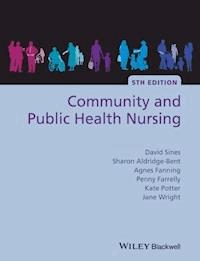
Community and Public Health Nursing E-Book
38,99 €
Mehr erfahren.
- Herausgeber: John Wiley & Sons
- Kategorie: Fachliteratur
- Sprache: Englisch
"An extremely popular and valuable resource to students, practitioners and managers in community health care nursing" - Journal of Advanced Nursing
The fifth edition of Community and Public Health Nursing is an essential source of information for all those working in primary and community healthcare. Comprehensive and accessible, it draws on the knowledge of a wide range of experts and conveys all the information and skills nurses working in modern primary care settings require. It includes material on policy developments, research perspectives, health visiting, practice and district nursing, team working, advanced nursing practice, non-medical prescribing, inter-professional practice, and user involvement.
- New edition of the definitive textbook on community healthcare nursing
- Covers learning disability nursing, caring for patients with mental health conditions, and community children’s nursing and school nursing
- Written by experts in the field – providing authority and insight
- Thorough, comprehensive, and up-to-date with the latest policy guidelines
Community and Public Health Nursing is an invaluable resource for novice and experienced practitioners, and for all healthcare professionals who work in the primary care and community setting, including practice nurses, nurse practitioners, district nurses, community staff nurses, health visitors, school nurses, walk-in centre nurses and sexual health nurses.
This title is also available as a mobile App from MedHand Mobile Libraries. Buy it now from iTunes, Google Play or the MedHand Store.
Sie lesen das E-Book in den Legimi-Apps auf:
Seitenzahl: 766
Veröffentlichungsjahr: 2013
Ähnliche




















Contents
Notes on Contributors
1 The Context of Primary Healthcare Nursing
The changing context of service provision
The changing face of the community healthcare workforce
The primary care vision for the next decade
The impact of primary care policy changes on the role of the primary care nurse
The scope of primary care nursing practice within the context of a changing workforce
Conclusion
References
2 Community Development and Building Capacity
Introduction
The current context for community development practice
Defining the terms
The role of community health professionals
Conclusion
References
3 Multi-Sector Working and Self-Management, Community Health Care
Introduction
Context for multi-sector working in the United Kingdom
Key drivers for multi-agency working
Examples of multi-sector working and self-management initiatives
Dementia
Obesity
Asthma
Concluding reflections
References
4 Moving Care Closer to Home
Hospital provision: A brief history of the last 50 years
Health care: What does it mean?
Caring and nursing: Where are we now?
Nursing at the interface between paid and unpaid care
Public health and care closer to home
Conclusion
References
5 Evidence-Based Practice and Translational Research Applied to Primary Health Care
Introduction
Evidence-based practice
Designing the study
Translational research
Experiments, randomised controlled trials and quasi-experiments
Health impact assessments
Different methodologies and methods give you new insights
Participatory approaches for community research
Data collection methods
Data management, analysis and interpretation
General research issues
Presentation and dissemination
The internet or world wide web (www)
Research proposals
Ethical issues
IRAS
The NHS research passport
Conclusion
Acknowledgments
Further reading
References
6 Integrating the Children’s Public Health Workforce
Introduction
Health indicators
The policy context
The role of the specialist community public health nurse
The HCP
Delivering the HCP
Pregnancy and the first 5 years of life
The practitioner’s role in safeguarding and child protection
The practitioner role in improving emotional health and well-being
Conclusion: future development and challenges for practice
References
7 Community Children’s Nursing
Introduction
Early days
The NHS
NHS at home: Community children’s nursing services
Children with acute and short-term conditions
Children with LTCs
Children with disabilities and complex conditions, including those requiring continuing care and neonates
Technology dependence
Continuing care
Neonates
Children with life-limiting and life-threatening illness, including those requiring palliative and end-of-life care
Conclusion
References
8 Public Health Nursing (Adult): A Vision for Community Nurses
Introduction
The vision for health reform: the policy context
The public health outcomes framework (2012)
Health promotion versus public health
An upstream approach
Health protection
Community nursing and public health
Conclusions: the future
References
9 Caring for the Adult in the Home Setting
End of life
The policy context
Managing LTCs in the community
Case Study based upon complexities of patient care in the home setting
Maximising health and well-being: helping people to stay independent
Working with people to provide a positive experience of care
Adult safeguarding
Measuring impact of service through patient feedback
Delivering high-quality care and measuring impact
Building and strengthening leadership
Ensuring we have the right staff, with the right skills in the right place
Technology
Informal carers
Supporting positive staff experience
Conclusion
References
10 General Practice Nursing in Context
Introduction
Origins
The advent of contemporary general practice nursing
Practice nursing roles and functions
Core skills for the GPN
Education
Chronic disease management
Asthma management
Hypertension
The future
References
11 Occupational Health Nursing
OHNs as specialist practitioners
Historical perspective
Provision of OH services in the United Kingdom
The changing nature of UK workplaces
Changing work patterns
Workplace practices
The domains of OH nursing practice
The professional domain
The environmental domain
The educational domain of practice
Public health strategies
Specialist community public health nursing: Part 3 of the register maintained by the NMC
References
12 Caring for the Person with Mental Health Needs in the Community
Introduction
Background: Why bother with community mental health nursing?
Clinical profile: John
Recovery: Conceptual explanation
Development of therapeutic relationship
Assessment of needs
Instilling hope
Promoting life beyond distress
Promoting connectedness
Promoting personal responsibility
Principles of community mental health nursing
Conclusion
References
13 Caring for the Person with Learning Disabilities in the Community
Introduction
People with learning disabilities
The number of people who have learning disabilities
Service principles in learning disability services
Moving forward
The health of people with learning disabilities
What community nurses for people with learning disabilities do?
The future role of community nursing services for people with learning disabilities
Conclusion
References
14 Leadership: Measuring the Effectiveness of Care Delivery
Introduction
Influences on leadership
Government policies
Front-line staff
Spend some time looking at these four scenarios
Measuring the effectiveness of delivery
Conclusion
References
15 Social Innovation and Enterprise
Introduction
What is social innovation?
Research on social innovation
Characteristics of a social innovator
Social innovation and community health
Commissioning
Approaches to social innovation
Social innovation as a concept
Conclusion
References
16 Adult Vulnerability in the Community
Introduction
Adult safeguarding
Definitions of abuse of adults
Legal framework of adult safeguarding
Mental Capacity Act 2005
Recent adult safeguarding guidance
Domestic violence
The prevalence of domestic violence in the United Kingdom
Effects of domestic violence
Contextual issues
Substance and alcohol misuse
Conclusion
References
17 End-of-life Care
Whole systems approach
Assessment: The foundation to providing good care
Symptom management
Beyond the management of physical symptoms
Advance care planning
Advanced decisions to refuse treatment (ADRT)
Assisted suicide
Do not attempt resuscitation orders
Care in the last days of life
Models of interdisciplinary working: The road to successful end-of-life care
Community nurses: The lynchpins of successful end-of-life care in the community
Death of a child
Dementia
Care of the bereaved
Conclusion
References
18 Interprofessional Learning and Teaching for Collaborative Practice Community
Introduction
Inter-professional education and collaborative practice
Learning theory
Teaching and learning in practice
Responsibilities for teaching and learning of all members of the team
Adult safeguarding: an example
Conclusion
References
19 User Involvement, Self-Management and Compliance
The modern PPI system
The rationale for greater user involvement
The patient as co-producer
Co-production cannot be realised without support
Conclusion
Acknowledgement
References
Index
This edition first published 2013 © 2013 by John Wiley & Sons, Ltd© 1995, 2001 by Blackwell Science Ltd for first and second editions© 2005 by Blackwell Publishing Ltd for third edition
Registered OfficeJohn Wiley & Sons, Ltd, The Atrium, Southern Gate, Chichester, West Sussex, PO19 8SQ, UK
Editorial Offices9600 Garsington Road, Oxford, OX4 2DQ, UKThe Atrium, Southern Gate, Chichester, West Sussex, PO19 8SQ, UK111 River Street, Hoboken, NJ 07030-5774, USA
For details of our global editorial offices, for customer services and for information about how to apply for permission to reuse the copyright material in this book please see our website at www.wiley.com/wiley-blackwell
The right of the author to be identified as the author of this work has been asserted in accordance with the UK Copyright, Designs and Patents Act 1988.
All rights reserved. No part of this publication may be reproduced, stored in a retrieval system, or transmitted, in any form or by any means, electronic, mechanical, photocopying, recording or otherwise, except as permitted by the UK Copyright, Designs and Patents Act 1988, without the prior permission of the publisher.
Designations used by companies to distinguish their products are often claimed as trademarks. All brand names and product names used in this book are trade names, service marks, trademarks or registered trademarks of their respective owners. The publisher is not associated with any product or vendor mentioned in this book. It is sold on the understanding that the publisher is not engaged in rendering professional services. If professional advice or other expert assistance is required, the services of a competent professional should be sought.
The contents of this work are intended to further general scientific research, understanding, and discussion only and are not intended and should not be relied upon as recommending or promoting a specific method, diagnosis, or treatment by health science practitioners for any particular patient. The publisher and the author make no representations or warranties with respect to the accuracy or completeness of the contents of this work and specifically disclaim all warranties, including without limitation any implied warranties of fitness for a particular purpose. In view of ongoing research, equipment modifications, changes in governmental regulations, and the constant flow of information relating to the use of medicines, equipment, and devices, the reader is urged to review and evaluate the information provided in the package insert or instructions for each medicine, equipment, or device for, among other things, any changes in the instructions or indication of usage and for added warnings and precautions. Readers should consult with a specialist where appropriate. The fact that an organization or Website is referred to in this work as a citation and/or a potential source of further information does not mean that the author or the publisher endorses the information the organization or Website may provide or recommendations it may make. Further, readers should be aware that Internet Websites listed in this work may have changed or disappeared between when this work was written and when it is read. No warranty may be created or extended by any promotional statements for this work. Neither the publisher nor the author shall be liable for any damages arising herefrom.
Library of Congress Cataloging-in-Publication Data
Community health care nursing (Sines)Community and public health nursing / edited by David Sines, Sharon Aldridge-Bent, Agnes Fanning,Penny Farrelly, Kate Potter, and Jane Wright. – 5th edition.p. ; cm.Preceded by: Community health care nursing / edited by David Sines, Mary Saunders, Janice Forbes-Burford. 4th ed. 2009.Includes bibliographical references and index.
ISBN 978-1-118-39694-0 (paper)I. Sines, David, editor of compilation. II. Title.[DNLM: 1. Community Health Nursing–Great Britain. 2. Public Health Nursing–Great Britain.3. Primary Health Care–Great Britain. WY 106]RT98610.73′43–dc23
2013026529
A catalogue record for this book is available from the British Library.
Wiley also publishes its books in a variety of electronic formats. Some content that appears in print may not be available in electronic books.
Cover image: iStockphoto.com/A-Digit.Cover design: Sarah Dickinson
Notes on Contributors
Sue AxeFaculty of Society and HealthBuckinghamshire New UniversityUxbridgeUKOwen BarrFaculty of Life SciencesUniversity of Ulster MageeLondonderryNorthern IrelandUKSharon Aldridge BentFaculty of Society and HealthBuckinghamshire New UniversityHigh WycombeUKZoe BerryFaculty of Society and HealthBuckinghamshire New UniversityUxbridgeUKMichelle BootFaculty of Society and HealthBuckinghamshire New UniversityUxbridgeUKJenni BurtonFaculty of Society and HealthBuckinghamshire New UniversityHigh WycombeUKRuth ClemowFaculty of Society and HealthBuckinghamshire New UniversityUxbridgeUKAgnes FanningFaculty of Society and HealthBuckinghamshire New UniversityHigh WycombeUKPenny FarrellyFaculty of Society and HealthBuckinghamshire New UniversityHigh WycombeUKAnne HarrissFaculty of Health and Social SciencesLondon South Bank UniversityLondonUKKate PotterFaculty of Society and HealthBuckinghamshire New UniversityHigh WycombeUKSusan ProcterFaculty of Society and HealthBuckinghamshire New UniversityUxbridgeUKMargaret RiogaFaculty of Society and HealthBuckinghamshire New UniversityHigh WycombeUKPeter SandyFaculty of Society and HealthBuckinghamshire New UniversityHigh WycombeUKJason SchaubFaculty of Society and HealthBuckinghamshire New UniversityHigh WycombeUKDavid SinesFaculty of Society and HealthBuckinghamshire New UniversityUxbridgeUKMark WhitingNurse ConsultantWest Herts PCT, Peace Children’s Centre WatfordUKJane WillsFaculty of Health and Social CareLondon South Bank UniversityLondonUKJane WrightFaculty of Society and HealthBuckinghamshire New UniversityHigh WycombeUKMaryam ZonouziPeer ExchangeLondonUK
1
The Context of Primary Healthcare Nursing
David Sines
Faculty of Society and Health, Buckinghamshire New University, Uxbridge, Middlesex, UK
The changing context of service provision
The population of the United Kingdom is projected to increase by 4.9 million from an estimated 62.3 million in 2010 to 67.2 million over the 10-year period to 2020. Projected natural increase (more births than deaths) will account for 56% of the projected increase over the next decade, resulting in an overall UK population increase to 73.2 million over the 25-year period to mid-2035. The population is also projected to continue ageing with the average (median) age rising from 39.7 years in 2010 to 39.9 years in 2020 and 42.2 by 2035 (Office for National Statistics 2011).
The key drivers for population growth within the United Kingdom relate to greater life expectancy and migration, particularly from Eastern Europe (migration being expected to account for 68% of population growth during this period). Over the 25-year period to 2035, the number of children aged under 16 is also projected to increase from 11.6 million in 2010 to 13.3 million in 2026 before decreasing slightly to 13.0 million in 2035, whilst the population is projected to become older gradually, with the average (median) age rising from 39.7 years in 2010 to 39.9 years in 2020 and 42.2 years by 2035. As the population ages, the numbers in the oldest age groups will increase the fastest. In 2010, there were 1.4 million people in the United Kingdom aged 85 and over; this number is projected to increase to 1.9 million by 2020 and to 3.5 million by 2035, more than doubling over 25 years (Office for National Statistics 2011). The age of the working population will also increase during this period, demonstrating unforeseen lifestyle patterns, which in turn will impact on those people of state pensionable age.
According to Mathers and Loncar (2006), the ten leading causes of death by 2030 will be ischaemic heart disease, cerebrovascular disease, upper respiratory tract and lung cancers, diabetes mellitus and chronic obstructive pulmonary disease (COPD). Within the top ten leading causes of death will also rank dementias, unipolar depressive disorders, alcohol use disorders, stomach and colon cancers and osteoarthritis. The combination of longer-term physical disorders and psychosocial challenges will demonstrate the importance of integrated service provision and workforce capability and capacity to respond to presenting co-morbidities. Other worldwide challenges relating to infectious diseases, such as HIV and tuberculosis, will provide additional pressures on our healthcare systems.
So how do society and its associated health and social systems respond to such challenges? In the first place, it can be assumed that societal change moulds the institutions that are created to respond to the needs of the population. Demands change over time, and in so doing, socio-demographic factors drive the process of change that in turn requires the National Health Service (NHS) to adapt its operational base. Examples of such changes relate to the needs of an increasingly demanding and complex population, a reduction in the number of available informal carers, advances in scientific knowledge and technological innovation and a heightened awareness of ethical challenges (such as gene therapy, stem cell research, embryology and euthanasia). In addition, the 2010 Coalition Government’s quest to locate healthcare delivery as ‘close to home’ as possible has placed greater priority on primary and community service developments.
Such changes were enshrined within the context of the Government’s inaugural healthcare White Paper ‘Equity and Excellence: Liberating the NHS’ DH (2010a). The 2010 White Paper placed much emphasis on sharing decision making between clinicians and patients, leading to their empowerment and ultimate engagement in sharing responsibility for their own care:
Too often patients are required to fit around services, rather than services around patients.
This is a key component of the Government’s ‘Big Society’ mandate, encouraging a move to self-care and a reduction in dependency on State-sponsored healthcare delivery.
The resultant ‘care closer to home’ initiative has been influenced by a range of external forces, driven by government pressure to drive down NHS costs and to reduce dependency on hospital admission (DH 2008a, b). Such changes however come at a price in their own right, and if the NHS is to succeed in responding effectively to the demands of the new community care culture organisation, then it will have to be prepared to face the demands of a changing environment of care practice and delivery (Buchan 2008).
Care closer to home has been defined by Nancarrow et al. (2006) as ‘shifting all resources and expertise to primary care trusts’. This somewhat simplistic definition was adopted throughout the NHS 5 years ago and became the foundation for healthcare reform in the United Kingdom (Ham 2011). For example, NHS London announced in September 2008 that it would develop a new community-focused workforce plan for the city by 2013 (Workforce for London – NHS London 2007). The Health Authority advised that it wanted to see a 50% shift of hospital-based activity into community and primary care. This ambitious plan included a 10% reduction in inpatient bed admissions and a 41% increase in outpatient attendances in community healthcare service facilities. In order to achieve this, the workforce was challenged with the need to work more flexibly alongside patients, across care pathways in a variety of settings closer to home (DH 2008a, b). The workforce strategy that accompanied the SHA plan (NHS London 2010) advised that 15 000 healthcare workers would need to be trained or retrained to work in the community. More specifically the community nursing workforce would need to expand from 22% of the total nursing population in London to 40%. This presents a major challenge for the NHS and its educational providers (Buchan 2008) and represents three decades of investment in community-focused health service reform.
Lesen Sie weiter in der vollständigen Ausgabe!
Lesen Sie weiter in der vollständigen Ausgabe!
Lesen Sie weiter in der vollständigen Ausgabe!
Lesen Sie weiter in der vollständigen Ausgabe!
Lesen Sie weiter in der vollständigen Ausgabe!
Lesen Sie weiter in der vollständigen Ausgabe!
Lesen Sie weiter in der vollständigen Ausgabe!
Lesen Sie weiter in der vollständigen Ausgabe!
Lesen Sie weiter in der vollständigen Ausgabe!
Lesen Sie weiter in der vollständigen Ausgabe!
Lesen Sie weiter in der vollständigen Ausgabe!
Lesen Sie weiter in der vollständigen Ausgabe!
Lesen Sie weiter in der vollständigen Ausgabe!
Lesen Sie weiter in der vollständigen Ausgabe!
Lesen Sie weiter in der vollständigen Ausgabe!
Lesen Sie weiter in der vollständigen Ausgabe!
Lesen Sie weiter in der vollständigen Ausgabe!
Lesen Sie weiter in der vollständigen Ausgabe!
Lesen Sie weiter in der vollständigen Ausgabe!




