


Erhalten Sie Zugang zu diesem und mehr als 300000 Büchern ab EUR 5,99 monatlich.
- Herausgeber: Salt
- Kategorie: Gesellschafts- und Liebesromane
- Serie: Salt Modern Stories
- Sprache: Englisch
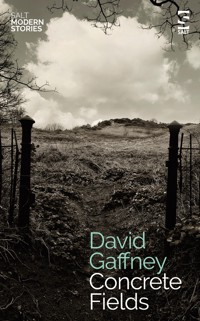
The countryside – what is it for? A paradise on earth where you can relax and get creative? Or an outdoor wool factory where every other house is an Airbnb and there are fewer trees than Camden. In his new collection of short stories David Gaffney explores the theme of town versus country through a number of different lenses, including his own experience of being brought up in west Cumbria then moving to Manchester. A creative residency on the coast of Scotland becomes weirder and weirder in "The Retreat"; 'I've always had the feeling that the countryside has something against me and that one day it will take its revenge.' In "The Table", a recluse in Penrith uses mid-century furniture to lure city dwellers into a world of 'depressed farmers with shotguns and bottomless pits of slurry that will swallow you so hard you'll never be seen again. And in "The Garages" the pressure of city living forces a man to become oddly obsessed with empty spaces. Often funny, often haunting, often profound, Gaffney uses dark humour and surreal characters to demonstrate a deep understanding of how places, urban or rural, can shape, influence and sometimes distort our lives. 'People who like the countryside tend to believe in things that aren't really there,' says a character in "The Country Pub". These are indeed stories about things that aren't really there, and this is why they resonate with you long after you have stopped reading.
Sie lesen das E-Book in den Legimi-Apps auf:
Seitenzahl: 192
Veröffentlichungsjahr: 2023
Das E-Book (TTS) können Sie hören im Abo „Legimi Premium” in Legimi-Apps auf:
Ähnliche


















For Clare
Contents
CONCRETE FIELDS
The Country Pub
We needed somewhere to stay overnight after an event at the Kendal comic book festival and that’s when we came across the White Cross Inn. The Good Food Guide was gushingly positive on every aspect of this hostelry: its homely, rustic bar, its quaint old bedrooms, and its inspirational, experimental cook, who was pictured in his chef’s whites wielding a gleaming, silver knife and smiling through a luxurious beard.
The information was all laid out as if we should have heard of this man, and his dishes were described in detail – things like Orkney mackerel with a rhubarb jus, beetroot bathed in dry ice, and celeriac sorbet, of which there was a photograph, and although you couldn’t tell from the picture whether the dessert was made of celeriac or not, it looked well presented, and the venue looked authentically countrified, yet with a shimmer of metropolitan style. So I went online and booked a room for the Saturday night along with a meal in the restaurant.
The event at the comic book festival was to promote my new graphic novel with illustrator Dan Berry, and it went relatively well, apart from a few strange questions from one audience member towards the end which I hadn’t quite understood.
On the way to the White Cross Inn, which was somewhere between Kendal and Kirkby Stephen, I raised this with Clare.
‘What was that last bloke going on about?’ I said.
‘Which bloke?’
‘The one with the glasses and the Ghoulors sweatshirt.’
‘Narrows it down.’
‘OK, well, the one who said he couldn’t tell if the characters were hugging goodbye or hugging hello in one particular panel?’
‘I don’t know. It’s just good to hear from people who are really engaging in your work, isn’t it?’
The White Cross Inn stood next to a ramshackle caravan park, which looked like the sort of caravan park people lived in all the time rather than somewhere you went on your holidays. A board outside the pub advertised soup and a sandwich for £6.50, which struck us as a little unexperimental for our much-lauded chef, but we decided this was probably an ironic touch by this super-arch sophisticate who had probably trained in Copenhagen; the sandwich would be a bowl of liquid and the soup a block of compressed radish gel or something.
Regardless of the food, we both had particular expectations. We had already spoken about the candlelit snug, the log fire, the row of hand-pulled ales on the bar, and the newspapers to read. Possibly there would be a cat to stroke. But when we got inside we were disappointed.
The smaller rooms had been knocked into one large brightly lit space and all the old-fashioned banquettes from the photos had been ripped out and most of the seating was now in the form of high stools at elevated long tables, like sitting at a breakfast bar in a sitcom. A television on the wall showed a rugby match and it was being watched by two men in orange hi-vis overalls, who were talking in loud voices about someone who had given them some instructions to do some task which had turned out to be in some way impossible.
‘If he wants us, he can find us here,’ one of them said.
‘You can only do what you can do,’ the other man said, as I stood next to him at the bar, ‘isn’t that right, young feller?’ he said to me.
‘Yep,’ I said. ‘You can’t do more than that.’
We waited for someone to check us in. A squat, solid-looking man with a neck as wide as his shaven head was washing pint glasses behind the bar with his back to us and, although I knew he could see us in the mirror, he didn’t make any move to ask us what we wanted.
The only other occupants of the room were a woman and three children. She was sitting at one of the few low tables near the bar with a child on her knee who was playing on an iPad. Two other children were running round the bar, whooping every now and again, but no one seemed to mind. The woman was drinking lager and blackcurrant, not a drink you saw much any more.
I looked at the row of pumps. They didn’t have anything that looked remotely like a decent cask ale, only a Bombardier and a Black Sheep; the rest was standard Robinsons, and anyway there wasn’t a single corner that looked comfortable enough to sit down and enjoy a good pint in this massive knocked-through space. As well as the noise from the rugby match, the child’s game kept making explosive noises and playing tinny tunes.
‘Aye,’ said the hi-vis man again, to no one in particular. ‘You can only do what you can do.’
‘As Einstein said,’ his friend added.
‘Yup.’
A thin woman appeared and looked us up and down, puzzled.
‘Ah,’ she said. ‘You must be from the internet.’
‘We’ve just driven down from Kendal,’ I said. ‘If that’s the same.’
She flipped open a large diary and tapped her finger on an entry. ‘You booked online,’ she said, as if this was an accusation and it had put her to a lot of trouble.
‘And you’ve got dinner booked as well, haven’t you? At eight. I don’t think eight is going to be a good idea.’ She closed the diary with a snap. ‘The local hunt has booked out the rest of the restaurant and they will be ordering their food at eight. So could you come to dinner at seven forty-five instead?’
I looked over into the restaurant, which was large and empty and looked cold and lonely in the way a hotel breakfast room looks when it is all laid for breakfast the next day. ‘That’s fine,’ I said.
‘Also,’ she said, ‘I must warn you that the hunt hasn’t actually been out today because the weather wasn’t right for the foxes.’
I couldn’t help wondering how they could go fox hunting when fox hunting was illegal as far as I knew, but I didn’t question this. This was the countryside. You had to respect their ways, I guess.
‘So they won’t be in a good mood. They’ll just want to get really drunk and sing hunting songs,’ she said, without smiling.
‘I thought fox hunting was illegal?’ Clare said.
‘Well, it is,’ she said, tapping the side of her nose and twisting her mouth up at the side, ‘and it isn’t.’
She took us through a door behind the bar and up some narrow stairs and then we entered a new extension, in muted greys and cream.
Our room looked like no one had ever stayed in it. There was a small window that you could only see out of if you stood on tip toes and if you did that you saw that it overlooked the caravan park. On the dressing table were two bottles of water and some biscuits wrapped in cellophane. We sat on the bed and looked at each other. The light from the high window was weak and milky. Pale greys and off-whites proliferated, a desaturated palette which looked as though the colours had lost their will to live.
‘It must have changed hands,’ Clare said.
I picked up a laminated menu the size of a motoring map of Europe. ‘Maybe the food will make up for the venue?’
It didn’t. There was pie and chips and fish and chips and lasagne and chips. Chilli with half chips and half rice. Each meal was £8.50, which seemed very cheap. Where was the celeriac sorbet and the rhubarb jus? Where was the duck-infused gel? The radish foam?
‘Well, it’s probably all right. Good old-fashioned pub grub. But, to be honest, £8.50 a meal? I was hoping to pay more.’
‘I know,’ she said. ‘Me too.’
We didn’t eat out a lot, but when we did, we liked it to be worthwhile. So rather then eating out frequently in budget places like Pizza Express, we would save up our money and spend it somewhere a bit posher.
‘Well, what should we do while we wait for our dinner? The bar’s not very nice to sit in, is it?’
‘We could drive into Kirkby Stephen?’
We decided to go for a walk. A footpath from the pub car park led us along the edge of a flat empty field with barbed wire around it. We walked for a quarter of an hour and ended up at the back of the caravan site where there was a hut full of fuel canisters with a bull-terrier tied up outside that barked at us and strained at its leash.
I looked away from the dog to the fields around us. Was this what they called scenery? Was this what they called lovely? Was this what they called natural? It was flat for miles wherever you looked and all you could see were greenish-brown surfaces cropped by sheep, with no distinguishing features to make the landscape interesting.
‘There’s no trees,’ I said.
‘I read somewhere that there are more trees in Camden than there are in the Yorkshire Dales or the South Lakes put together. It’s the sheep and the farmers. They like to keep it barren like a bowling green. And it also means it floods all the time.’
I looked at the map on my phone. ‘There’s a village half a mile away. We could walk there? Could be a better pub?’
‘Or even a tree.’
But when we got back to the main road and began to walk towards the village, we discovered there were no pavements and cars kept speeding around the bends, often on the wrong side of the road.
‘Not only are there no trees,’ I said. ‘You can’t fucking walk anywhere to find a tree, you have to drive. Everyone has to drive. I think we should ban the countryside. I don’t see the point of it. I don’t like the look of it, you can’t go anywhere without a car, all people like to do is kill things and eat frozen lasagne and chips and live in shit caravans with barking dogs and drink lager and blackcurrant.’
We decided to brave the bar and have a drink anyway and set off back to the pub.
‘What do you think he meant about it, though?’
‘Who?’
‘The man at the festival with the weird question. About not being able to tell if those characters in that panel were hugging goodbye or hello.’
‘Well, I suppose he had a point.’
‘Did he?’
‘Well, as Dan said in his reply, a still image is a frozen picture. It is a piece of frozen time. It doesn’t tell you the immediate past or the immediate future.’
‘You were more convinced by Dan’s reply than mine, I see.’
Clare stopped walking. ‘You know what?’ she said. ‘Why don’t we just go home?’
‘What?’ I said.
‘Well, why spend time somewhere we don’t want to be and eat food we don’t want to eat with a bunch of fox hunters who will be in a bad mood because they haven’t been able to watch their terriers tear a wild animal to pieces, and then wake up tomorrow somewhere we don’t want to be with nothing to do but drive home?’
‘Oh,’ I said. ‘I hadn’t thought of that option.’
‘We haven’t taken any bags into the room, we haven’t used anything. Did you pay when you booked?’
‘No, it was pay when you leave.’
‘Let’s tell them there’s been a family emergency.’
We stood at the bar for about ten minutes until the thin lady who had checked us in finally came over.
‘I’m afraid we’ve had a call from home to say we have to go back. There’s been a family emergency.’
‘Oh,’ she said. ‘Harold, can you come over here?’
Harold came over. He was the square-shaped man with the wide neck who had been washing glasses and ignoring us earlier. He had a goatee beard and tattoos.
‘Well, that’s a shame,’ he said. ‘Tell you what, we’ll only charge you for the room, as you never actually ordered any food. But we’ll have to charge you for breakfast because we got a few things in.’
Everything suddenly felt very odd to me, as if the landlord and landlady knew that all of this was going to happen and had prepared for it. It was as if the whole scene had happened before and was repeating itself. And I was the only one who didn’t know the script.
‘Oh, I don’t know,’ I said. ‘We haven’t even unpacked. We haven’t been in the room for more than five minutes. I didn’t think we would need to pay anything. After all, it’s a family emergency?’
I decided not to mention the fact that the pub was nothing like the one advertised on the internet with its celeriac sorbet and fancy chef, because the landlord would no doubt say, well look, we do food, we do beer, we have a bar, we have bedrooms, what’s your problem? He would probably argue that his food was better value than a dollop of rhubarb jus and a sliver of venison for thirty quid. He would claim they had improved the place, not ruined it. And if you asked the locals – the blokes who had been watching the rugby, the woman with the three kids – they would agree with him. Who wanted to drink in a dark, dingy pub with beer that smelt of wet dogs, that was heated by an ineffective open fire, that had no TV? And who wanted to spend a week’s wages on a minuscule portion of some gimmicky dish that probably didn’t even come on a normal plate? Maybe I was in the wrong. What sort of middle-class monster had I become?
‘Well, I’m afraid you’ve booked,’ he said. ‘So you have to pay. That’s how hotels work. We have lost out. We could have booked that room out to someone else.’
I looked over at the board on which the room keys hung and saw that only one was missing – ours – but I didn’t say anything.
‘I’m sorry,’ I said. ‘If you want to, you can send me the bill. I’ll give you my address.’
‘I suppose that’s what we will have to do,’ he said, and slammed down the pad of bills and picked up another pad of paper.
I told him our address and when I said Manchester, the landlady (his wife, I assumed) shook her head as if to say, typical, it’s what you would expect. As he wrote, the landlord’s brow became red and sticky with sweat. I looked at his hand holding the pen; his knuckles were white and his hand was shaking. All my years spent working as a welfare benefits adviser had taught me how to recognise rage building up, and this man was about to blow.
As we left the pub I heard the landlord lift up the side of the bar as if he was about to follow us and we crossed the car park briskly as I imagined the landlord’s eyes burning into my back with hatred. Even the car we were in made us look bad. It was hired. I hadn’t owned a car for years, but the landlord and landlady of the White Cross Inn weren’t to know that, and although I always booked the cheapest model, the hire company had run out of budget hatchbacks, and I had been upgraded to a BMW 3 Series. Running away without paying a bill of fifty quid in a sixty-grand glossy black saloon.
‘I just need to get something out of the boot,’ said Clare as we reached the vehicle.
I jumped in the driver’s seat and threw open the passenger door. ‘No! We just need to get away. That man looked seriously angry.’
I reversed out of the parking space without looking round, and we spun out of the car park into the road, gravel flying out behind, and as I sped away the car’s engine began to moan at a higher and higher pitch and I realised I was doing sixty in third gear and so I quickly changed up to fourth, then fifth, and for a split second I was in such a state of heightened stress that I wasn’t sure whether we were speeding away from the pub or back to it. ‘Is this the right way?’ I shouted to Clare. ‘We are not heading back there, are we?’
‘Yes, it’s the right way,’ she said. ‘Just drive.’
Three or four miles down the road, I slowed down.
‘Do you think he’ll follow us?’ said Clare.
‘No. He’ll have to just write it off as a bad debt. Those people were fraudulent, leaving all that stuff on the internet about the old menu and the old chef and the old bar.’
‘But that’s not what you said, is it?’
‘No.’
‘I’m worried. Should we have paid?’
‘Morally, no. I think they’re taking the piss. But technically and legally, yes, we should have paid. You are supposed to pay for a hotel if you book it.’
‘He’s got our address. What if he turns up at the door?’
‘He’s not going to come all the way to Manchester and spend money on petrol and parking.’
‘He won’t have to park. He can just stop his car outside our house. You are obsessed with paying for parking. It’s something I’ve never liked about you.’
‘Anyway, he’s not going to put himself even further out of pocket coming to Manchester when he knows we won’t answer the door.’
‘Maybe he’ll send someone. The boys. They talk about sending the boys round, don’t they? This is the hospitality business. They’re all gangsters. Maybe he’ll look us up on social media and put things online.’
‘He didn’t look like a social media kind of person.’
‘She will be, though.’
It started to rain and the windscreen wipers came on automatically and began slapping to and fro really fast and I couldn’t work out how to turn them off. A red light appeared on the dashboard and a message flashed up saying that we should stop immediately.
‘These modern cars have artificial intelligence,’ said Clare. ‘It knows we’ve done something wrong and it is suggesting we go back and put things right.’
‘Do you think BMW programme a moral code into their cars?’
‘Probably not. But I bet Citroën do.’
The car began to go slower and slower, the engine sounding like a Hoover powering down. Then it turned itself off completely and we glided along until I found a narrow road to turn off into, and I rolled the car up it and on to a bank of grass. We sat there for a few moments not saying anything. Rain pelted down and neither of us wanted to get out. My phone had no signal.
‘There’s some lights over there,’ I said. ‘It looks a village. Let’s see if there’s a pub we can wait in while I ring the car hire company.’
There was a pub – the Golden Hind – and when we stepped inside it was like walking into heaven. A log fire was burning in the grate, there were a few couples dotted about drinking and reading newspapers, and several tables were laid out for dinner. A row of hand pumps on the bar had handwritten labels on them and there was a detailed blackboard telling you all about the beer.
Violins played and angelic voices sang.
‘What an intelligent car,’ I said, and, to the landlord, ‘You don’t by any chance have rooms as well, do you?’
‘We do,’ he said. ‘And the room is half price if you have a meal here with us.’ He handed me a piece of paper with curly handwriting on it. ‘It’s a small, carefully curated menu. Just what’s fresh on the day and whatever we can forage locally. The wines are all paired with the food. There’s a table free at eight, if you’d like it?’
Later we were sitting by the fire sipping a real ale from the local micro-brewery. We were the only ones left in the pub by then, and we had already been shown our room, which was a tiny, dusty space in a slopey-ceilinged attic that smelt of damp. A creaky brass four-poster was covered by a candlewick bedspread. But despite it looking like your granny’s house, it had a charm and character that the other place could never achieve with its Instagrammable minimalism. The whole pub was crooked as if it had subsided, and going down the dark, wonky stairs to the bar made you feel as if you were descending through a German expressionist film set.
There were plenty of logs on the fire, so we had a few more drinks and did the Guardian crossword together.
At about midnight the landlord came over. ‘I’m off now,’ he said. ‘All the staff are gone.’
‘Do we have to go up to our room?’
‘No, it’s fine,’ he said. ‘You can sit here by the fire as long as you like. Throw as many logs on as you want and don’t worry about putting it out when you leave. It will take care of itself.’ He spoke very slowly and looked to the side all the time, rather than straight at us. ‘I live a few miles away, in the town, in Kirkby Stephen. We lived here above the pub for a while but, you know, it was quite lonely for my wife. She didn’t like the dark and the—’ He raised his hand and rubbed his fingers together in the air as if trying to catch something invisible ‘—the mystery. The mystery of living in the countryside. She’s very practical. She thinks you have to be superstitious to enjoy the countryside. She thinks people who like the countryside tend to believe in things that aren’t really there.’ He paused and looked down at his shoes. ‘She was brought up in the suburb of a big city. So there’s just my brother upstairs. But he won’t bother you. You won’t see him or hear him at all.’ He looked up at the ceiling, and then down again. ‘He’s been sick, you see, quite ill for the last few years, and he doesn’t really like people that much.’ The landlord took out his car keys. ‘Anyway, if you want anything from the bar, just help yourselves, write down on that pad what you’ve had, and we’ll settle up tomorrow.’
When he had gone, we heard a heavy door slamming followed by the jangling of keys and a clunking noise as the lock was engaged. A car engine started and ran for a few minutes before we heard the wheels crunching on gravel as the vehicle left the car park. And then all was silent.
‘People in the countryside are so trusting,’ I said. ‘Imagine a bar in Manchester leaving you alone and telling you to drink whatever you want. Look at all those single malt whiskies.’
‘We shouldn’t betray his trust.’
‘We’ll pay for it, of course,’ I said.
‘Let’s just have another beer. I’m getting quite tired.’
I placed another log on the fire and we sat in silence gazing at the embers and sipping our ale.




