


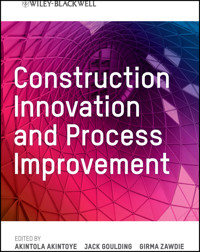
Construction Innovation and Process Improvement E-Book
93,99 €
Mehr erfahren.
- Herausgeber: John Wiley & Sons
- Kategorie: Wissenschaft und neue Technologien
- Sprache: Englisch
Innovation in construction is essential for growth. The industry strives to remain competitive using a variety of approaches and needs to engage structured initiatives linked to proven innovation concepts, techniques and applications. Even in mature markets like the Architecture, Engineering and Construction (AEC) sector, where business behaviour is generally considered as being risk averse, it is increasingly important to embed innovation into mainstream business practices.
In Construction Innovation and Process Improvement a number of wide ranging issues from construction practice in different countries with different contexts are presented to provide a rich collection of literature embracing theory and practice.
Chapters are divided into three broad themes of construction innovation relating to: Theory and Practice; Process Drivers; and Future Technologies. Several questions are posed, including for example: What is particularly unique about construction innovation in theory and practice? What are the major drivers of construction innovation? What factors are needed to support and deliver future construction technologies?
In attempting to respond to such questions, the book sheds new light on these challenges, and provides readers with a number of ways forward, especially cognisant of the increased role of globalisation, the enhanced impact of knowledge, and importance of innovation. All these can have a significant impact on strategic decision-making, competitive advantage, and sustainable policies and practices.
Part One deals with change management, technology, sustainable construction, and supply chain management; Part Two addresses innovation and process improvement drivers, including strategic management, concurrent engineering, risk management, innovative procurement, knowledge management; Part Three explores future technologies in construction – and particularly, how these can be harnessed and leveraged to help procure innovation and process improvement.
Sie lesen das E-Book in den Legimi-Apps auf:
Seitenzahl: 839
Veröffentlichungsjahr: 2012
Ähnliche




















Contents
Contributors
Part I Theory and Practice
1 Construction Innovation and Process Improvement
1.1 Introduction
1.2 Innovation in Construction
1.3 Construction Innovation: Theory and Practice
1.4 Construction Innovation: Process Drivers
1.5 Construction Innovation: Future Technologies
1.6 Conclusion
2 Construction Innovation through Change Management
2.1 Introduction
2.2 The Innovation Process: Evolution as a Systemic Phenomenon
2.3 Role of Culture as Challenge for Change Management and Innovation
2.4 General Framework for Change Management
2.5 Innovation in Construction
2.6 Conclusion
3 Construction Innovation: Theory and Practice
3.1 Introduction
3.2 Definitional Debate on Innovation
3.5 Conclusion
4 Culture and Innovation
4.1 Introduction
4.2 Culture and Construction
4.3 Culture and Innovation
4.4 Factors Affecting Innovation
4.5 Conclusion
4.6 Acknowledgements
5 Innovation, Technology and Knowledge Transfer for Sustainable Construction
5.1 Introduction
5.2 Innovation, Technology and Knowledge Transfer Practices
5.3 Innovation, Technology and Knowledge Transfer in Construction
5.4 The Construction Innovation System
5.5 Technological Regime in Construction
5.6 Opportunities, Appropriation and Cumulative Effect of Innovation
5.7 Managing Innovation for Sustainable Construction: The Dutch Case
5.8 Conclusion
6 Innovation and Value Delivery through Supply Chain Management
6.1 Introduction
6.2 Organisational Value
6.3 Value Generation and SCM
6.4 Emerging Supply Chain Management Issues
6.6 Conclusion
6.7 Acknowledgements
Part II Process Drivers
7 Strategic Management in Construction
7.1 Introduction
7.2 Construction Sector Dynamism and Drivers
7.3 Business Processes Redesign
7.4 Business Strategy
7.5 Business Performance Assessment
7.6 Strategy Development within Construction
7.7 Conclusion
8 Risk Management in Planning for Process Improvement
8.1 Introduction
8.2 Process Improvement
8.3 Planning for Process Improvement
8.4 Risk and its Management
8.6 Conclusion
9 Modern Methods of Construction
9.1 Introduction
9.2 The Need for Change
9.3 Modern Methods of Construction
9.4 Open Building Manufacturing – ManuBuild Project
9.5 Offsite Production in the UK Construction Industry
9.6 Conclusion
10 Construction Innovation through Knowledge Management
10.1 Introduction
10.2 Knowledge and Knowledge Management – Context and Definition
10.3 Knowledge Management and Innovations in Project Based Environments
10.5 Knowledge Management Strategy – Issues and Contexts
10.6 Knowledge Management Techniques and Technologies
10.8 Conclusion
11 Innovation through Collaborative Procurement Strategy and Practices
11.1 Introduction
11.2 Construction Procurement and the Procurement Cycle
11.3 Procurement Strategies
11.4 Conventional Procurement Methods
11.5 Collaborative Procurement or Innovation Procurement Methods
11.6 Conclusion
12 Concurrent Engineering in Construction
12.1 Introduction
12.2 The Concept of Concurrent Engineering
12.3 Implementation of CE
12.4 Benefits of Concurrent Engineering
12.5 CE in Construction
12.6 Critical Enablers of CE Adoption in the Construction Industry
12.7 Overcoming Barriers to CE Adoption
12.8 Benefits of CE to the Construction Industry
12.9 Conclusion
12.10 Acknowledgement
13 Complexity Theory: Implications for the Built Environment
13.1 Introduction
13.2 Complexity Overview
13.3 Complexity in the Built Environment
13.4 Complexity in Organisations
13.5 Toolkits
13.6 Complex Innovation in Organisations
13.7 Conclusion
Part III Future Technologies
14 Design Innovation: Advanced Visualisation Futures
14.1 Introduction
14.2 Design Innovation and Existing Visualisation Tools
14.3 Cognitive Approach to Design
14.4 Virtual Reality Interfaces within Conceptual Architectural Design
14.6 Conclusion
15 Virtual Planning and Knowledge-based Decision Support
15.1 Introduction
15.2 The Complex Nature of Construction Projects
15.3 Construction Planning and Virtual Prototyping
15.4 Building Information Modelling
15.5 Interoperability and Industry Foundation Classes
15.6 Knowledge-based Decision Support for Virtual Prototyping
15.7 The Promotion of Innovation through Virtual Planning in Practice
15.8 Conclusion
16 E-readiness in Construction
16.1 Challenges Facing the Construction Industry
16.2 Business Dynamics and Technology
16.3 Building ICT Capability
16.4 Business Process and ICT
16.5 People and ICT
16.6 Business Process and Implementation
16.7 E-readiness
16.8 Organisational E-readiness in Construction
16.9 Conclusion
17 Building Information Modelling
17.1 Introduction
17.2 Background
17.3 A Case Study on the Implementation of BIM
17.4 Building Information Modelling in the UK
17.5 Innovation through BIM
17.6 Conclusion
18 Industry Preparedness: Advanced Learning Paradigms for Exploitation
18.1 Introduction
18.2 Learning and Training Developments and Opportunities
18.3 Virtual Reality Systems
18.4 Case Study
18.5 Conclusion
18.6 Acknowledgements
Index
This edition first published 2012© 2012 by Blackwell Publishing Ltd.
Blackwell Publishing was acquired by John Wiley & Sons in February 2007. Blackwell’s publishing programme has been merged with Wiley’s global Scientific, Technical, and Medical business to form Wiley-Blackwell.
Registered OfficeJohn Wiley & Sons Ltd, The Atrium, Southern Gate, Chichester, West Sussex, PO19 8SQ,United Kingdom
Editorial Offices9600 Garsington Road, Oxford, OX4 2DQ, United Kingdom2121 State Avenue, Ames, Iowa 50014-8300, USA
For details of our global editorial offices, for customer services and for information about how to apply for permission to reuse the copyright material in this book please see our website at www.wiley.com/wiley-blackwell.
The right of the author to be identified as the author of this work has been asserted in accordance with the UK Copyright, Designs and Patents Act 1988.
All rights reserved. No part of this publication may be reproduced, stored in a retrieval system, or transmitted, in any form or by any means, electronic, mechanical, photocopying, recording or otherwise, except as permitted by the UK Copyright, Designs and Patents Act 1988, without the prior permission of the publisher.
Designations used by companies to distinguish their products are often claimed as trademarks. All brand names and product names used in this book are trade names, service marks, trademarks or registered trademarks of their respective owners. The publisher is not associated with any product or vendor mentioned in this book. This publication is designed to provide accurate and authoritative information in regard to the subject matter covered. It is sold on the understanding that the publisher is not engaged in rendering professional services. If professional advice or other expert assistance is required, the services of a competent professional should be sought.
All reasonable attempts have been made to contact the owners of copyrighted material used in this book. However, if you are the copyright owner of any source used in this book which is not credited, please notify the Publisher and this will be corrected in any subsequent reprints or new editions.
Library of Congress Cataloging-in-Publication Data
Akintoye, Akintola. Construction innovation and process improvement / Akintola Akintoye, Jack S. Goulding,Girma Zawdie. p. cm.Includes bibliographical references and index.
ISBN 978-1-4051-5648-6 (hardback) 1. Construction industry–Technological innovations. 2. Civil engineering–Technologicalinnovations. 3. Competition. I. Goulding, Jack S. II. Zawdie, Girma, 1946– III. Title. HD9715.A2A435 2012624.068–dc23
2011045230
A catalogue record for this book is available from the British Library.
Wiley also publishes its books in a variety of electronic formats. Some content that appears in print may not be available in electronic books.
Contributors
Akintola AkintoyeSchool of Built and Natural Environment University of Central Lancashire UK Mustafa AlshawiUniversity of Salford UK Chimay J. AnumbaThe Pennsylvania State University USA Oluwaseyi AwodeleHeriot Watt University Edinburgh UK Graeme BowlesHeriot Watt University Edinburgh UK Charles EgbuUniversity of Salford UK Richard FellowsLoughborough University Loughborough UK Jack S. GouldingUniversity of Central Lancashire UK Umit IsikdagBeykent University Turkey John M. KamaraNewcastle University Newcastle UK Murat KuruogluIstanbul Technical University Istanbul Turkey Anita LiuUniversity of Hong Kong Hong Kong Eric LouUniversity of Salford UK Shu-Ling LuUniversity of Reading Reading UK Jamie MainCapita Symonds Limited UK Wafaa NadimBritish University in Egypt Egypt Stephen OgunlanaHeriot Watt University Edinburgh UK Farzad Pour RahimianUniversity of Central Lancashire UK Martin G. SextonUniversity of Reading Reading UK Mark D. SharpThe Association of International Property Professionals London UK Joseph H.M. TahOxford Brookes University Oxford UK Jason UnderwoodUniversity of Salford UK Emilia Van EgmondEindhoven University of Technology The Netherlands Derek H.T. WalkerRMIT Melbourne Australia Girma ZawdieStrathclyde University Glasgow UK
Part I
Theory and Practice
1
Construction Innovation and Process Improvement
Akintola Akintoye, Jack S. Goulding and Girma Zawdie
1.1 Introduction
In order to promote and retain competitiveness, industry needs to focus on innovation and the improvement of their processes. Panuwatwanich et al. (2008) noted that innovation is necessary as a source of competitive advantage for firms operating in the construction industry, and consequently, that many firms are expending a significant amount of resources in an effort to acquire various forms of innovation in order to maintain and/or increase their competitiveness. Similarly, Aouad et al. (2010) highlighted that the competitiveness of firms inevitably depends on national and regional systems of innovation, which in turn depends on government policy. Therefore, given the constant changes and dynamism of the business environment, securing competitiveness is therefore high on the agenda of most firms. In this respect, securing innovation and process improvement is an influential lever for delivering this. On this theme, the increased complexity and sophistication of the Architectural Engineering and Construction (AEC) sector is now placing unparalleled demands on stakeholders to keep projects on time and within budget, with a new emergent theme of developing and maintaining robust and defendable innovation policies and procedures. Although it is not easy to sustain radical improvement in an industry that has historically been categorised as diverse and fragmented (Banwell, 1964; Latham, 1994; Fairclough, 2002), it has been recognised that there is a need for continuous and sustained improvement, using focused efforts to deliver the value needed by customers, along with addressing the industry challenge concerning waste and poor quality arising from existing structures and working practices (Egan, 1998). In this respect, Professor Watson (CSaP, 2011) reviewed the key concepts of innovation, noting that innovation was more than invention or creativity, as it enveloped commercialisation, implementation and entrepreneurship as part of the innovation process – which required a change in culture to proactively promote and support innovation.
This book raises a number of wide ranging issues relating to construction innovation and process improvement, especially in the light of experience derived from construction practice in different countries with different contexts. The chapters therefore provide a rich collection of literature embracing theoretical and practice-empirical appeal, which gives credence to the pervasive and transformative effect that innovation can bring. Moreover, even in mature markets such as the AEC sector, where business behaviour is generally considered as risk averse, it highlights the increased importance and significance of embedding innovation initiatives into mainstream business practices. In this respect, construction practice is still evolving, with complex aspects underpinned by organisational and management responsibilities that seek to draw alignment across a wide range of players, not least contractors, subcontractors, suppliers and clients. This network of players in the industry is important, as they have a significant bearing on the manner in which innovative activities occur in the industry. It is also important to note that the nature of construction innovation is closely examined in terms of its impact on technological progress of the industry to date, and emergent technological trajectories.
The chapters in this book are divided into three broad themes of construction innovation relating to: Theory and Practice; Process Drivers; and Future Technologies. These three categories tease out the main salient issues on construction innovation and process improvement, and highlight the implications for future competitiveness and sustainability of the industry. These themes pose several questions for reflection, including ‘What is particularly unique about construction innovation in theory and practice?’, ‘What are the major drivers of construction innovation?’ and ‘What factors are needed to support and deliver future construction technologies?’
In attempting to respond to these questions, this book sheds new light on these challenges, and provides readers with a number of ways forward, especially cognisant of the increased role of globalisation, the enhanced impact of knowledge and importance of innovation, as all these can have a significant impact on strategic decision making, competitive advantage, and sustainable policies and practices.
1.2 Innovation in Construction
Several definitions have been proffered for innovation. For example, Van de Ven (1986) regards innovation as any ideas, practices and technologies perceived to be new by the organisation involved. Slaughter (1998) defined innovation as the actual use of a nontrivial change and improvement in a process, product or system that is novel to the institution developing the change; whereas, Stewart and Fenn (2006) described innovation as the profitable exploitation of ideas, which have an important role to play in seeking competitive advantage. Innovation in construction can therefore be considered as the successful development and/or implementation of new ideas, products, process or practices, in order to increase organisational efficiency and performance (Egbu et al., 1998; DTI, 2003; Ling, 2003; Sexton and Barrett, 2005; Panuwatwanich et al., 2008). On the other hand, some proponents advocate that because the construction industry is largely project-based and fragmented, the patterns of innovation differ in many ways from those of other industries, and therefore, industry innovation remains hidden when co-developed at the project level (Aouad et al., 2010). However, Stewart and Fenn (2006) noted that innovation in the construction industry has been recognised in three domains: product, process and organisation. Process innovation is oriented towards production methods, and organisational innovation to approaches to managing the firm and implementation of new corporate strategic orientations. They contest that in construction, innovation is mostly seen in terms of physical process and product, particularly improvements in materials. However, Blayse and Manley (2004) identified six main factors that could influence innovation in construction as:
They noted that these influences are the key factors that drive (or in fact hinder) business innovation.
From a process perspective, the term ‘processes’ are ‘the fundamental building blocks’ of all organisations, and both process understanding and process improvement form the lifeblood of total quality organisations. Processes transform inputs, which can include actions, methods and operations, into outputs. They are the steps by which we add value, and it should be the aim of customer focused, total quality organisations, for these outputs to satisfy or exceed the needs and expectations of their customers’ (DTI, 2011). On this theme, Sarshar et al. (2004) developed a Structure Process Improvement for Construction Enterprises maturity framework to assess organisational performance. More fundamentally, the industry acknowledged that there was a need for new process configurations and innovation through life-cycle decision analysis (which had been championed in many countries and supported by industry stakeholder groups and government bodies). Moreover, both the Latham (1994) and Egan (1998) reports identified that the construction industry needed to embrace innovation and process improvement. Similarly, in Hong Kong, the government established a Construction Industry Review Committee (CIRC) that published its report, ‘Construct for Excellence’, in 2001. This report, amongst other recommendations, charged the industry to collectively develop a culture of innovation which deliberately concentrated and fostered innovation, both from a technology and fostered perspective. In Australia, Sidwell et al. (2004) reported on the importance of reengineering the construction delivery process, noting that the fragmented and differentiated structure of the construction industry was a major characteristic that militates against improvement. The core challenge for the construction industry was therefore to develop radical project delivery processes that concentrated on front-end issues of procurement strategies, interfaces in the process, information flows, and the elimination of non-value-adding activities.
The need for construction innovation and process improvement was further emphasised by the Egan (1998) report through the Construction Task Force, which identified as one of its terms of reference to ‘examine current practice and the scope for improving the industry by innovation in products and processes’; some notable areas of which included:
The above points, whilst not exhaustive, offer a number of critical areas for reflection, all of which are covered in this book through the three core themes of: Theory and Practice, Process Drivers, and Future Technologies.
1.3 Construction Innovation: Theory and Practice
Panuwatwanich et al. (2008) noted that innovation diffusion in design firms could be enhanced by creating a culture for innovation using innovative leaders. Moreover, Barlow and Jashpara (1998) highlighted the importance of collaborative links between firms for stimulating organisational learning. Similarly, Gann and Salter (2010) opined how clients can act as a catalyst in the construction value chain to help foster innovation by exerting pressure on supply chain partners to improve overall performance, and also by helping them to devise strategies to cope with unforeseen changes. This is particularly important, as Vennstrom and Eriksson (2010) identified that client perceived barriers to change could be divided into three types: attitudinal, industrial and institutional; noting that ‘Clients wishing to act as change agents need to be aware that their use of internal versus external project management affects their chances to influence the other construction actors and implement change and innovation’. Furthermore, Aouad et al. (2010) noted ‘Our understanding of innovation and how it occurs in the sector is far from complete but can be enriched further by detailed work that brings together different theoretical perspectives on innovation that will enable the development of context sensitive ways of recognising and measuring innovation at different levels of resolution.’
Part I of this book therefore explores the above issues, dealing with matters relating to change management, technology, sustainable construction (SuCo), and supply chain management (SCM).
Chapter 2 highlights the occurrence of innovation through organisational learning; knowledge accumulation and knowledge sharing; conflict management and coalition building, with the aim to minimise resistance to change. The overarching factor impinging upon the process of construction innovation is the cultural context within which construction activities are pursued, so that the occurrence of innovation would be expected to be highly likely where there is ‘cultural readiness’ arising from exposure to new ideas and practices. Cultural readiness exists where proactive management and flexible and change-responsive organisational arrangement are evident, and where management supports coalition building through the process of providing the conditions for relationship balancing and conflict resolution. Emphasis is therefore placed on removing fragmentation, embracing change, and leveraging innovation drivers to meet and deliver business goals and new market opportunities.
Chapter 3 explores the theory and practice of construction innovation in terms of the synthesis of resource-based and market-based perspectives of innovation. The market-based view of innovation is a variation of ‘demand pull’ innovation, which utilises the role of institutional and market factors to stimulate innovation at the firm level. Market conditions influencing innovation possibilities include both the general business environment, and the interaction or industry-specific environment. Market conditions shape the resources that firms exploit to respond to opportunities and threats. The resource-based view of innovation is based on the understanding of firms identifying and developing resources that enable them to shape market conditions. The knowledge base of the firm, which is bolstered by the firm’s relationship capital, structure capital and human capital, is crucial for interfacing organisational resources with external agencies in market relations to produce the dynamic capabilities that provide the basis for innovation and sustainable competitive advantage. It concludes by highlighting the importance of exploiting existing capabilities to produce innovation in order to enhance performance; but equally, the need to invest in explorative innovation for the future.
Chapter 4 highlights the importance and impact of culture on innovation. Innovation has a cultural context that determines the nature of the prevailing demand and supply conditions, as well as the organisation and management bases of innovation. This is especially important, as it impinges and influences the ways in which knowledge infrastructures evolve. Cultural change is therefore crucial for technological progress, as any model of innovation would be incomplete without the inclusion of cultural parameters. The role of culture in construction is discussed, noting the importance and development of co-operation structures (or social systems), and the need to include learning as one of the dimensions of innovation culture. Learning culture is therefore explored, noting the importance of the prevailing cultural climate in order to determine what changes may be needed to facilitate learning and the transfer of creative problem solving. The importance of learning (and learning from other sectors) is acknowledged as being crucial for developing an innovation culture, the mandate of which requires leaders with vision and foresight to ‘plan ahead’ in order to fully benefit from this.
Chapter 5 examines how innovation and international technology and knowledge transfer (TKT) relates to SuCo performance. The systemic interactions between these are investigated, particularly concerning new design concepts and their integration with building elements and processes. The efficiency and effectiveness in TKT practices are evaluated within the construction firm and across different projects, at regional, national and international levels. In this respect, knowledge accumulation and learning can be seen as a pivotal driver for innovation and TKT processes, as successful production and trade performance strongly depend on capability and motivation to innovate and quickly adopt new technologies. This can help form the building blocks for either subsequent incremental innovation or new knowledge sets for future innovation in other related areas. The construction innovation system is explored, with emphasis on collaboration and technical regime. A case study from The Netherlands is used to discuss the management of innovation and SuCo using a network-based approach. Findings highlight the importance of integration, where innovative solutions in construction go beyond the traditional ways in order to match environmental gains with economic gains.
Chapter 6 raises the importance of securing construction innovation from the vantage point of ‘organisational sustainability’ and the organisation’s role of delivering value to its core stakeholders. It therefore provides readers with an insight into the concepts of SCM, and how this can be applied innovatively to derive value-added processes and organisational sustainability. Organisational value is discussed, highlighting the importance this can have on securing competitive advantage, especially using knowledge chains, value chains and human capital chains. Thus, an important factor here is understanding the pivotal links and dependencies that SCM can have on leveraging construction innovation from several settings, not least efficiency, value delivery, social support aspects and through sustainability issues. A case study is used to present the transformational impact of SCM, and how this led to sustainable competitive advantage. Research findings highlight the importance of supply chains, and how the industry as a whole could learn from other industries, in order to garner additional value and sustainability benefits.
1.4 Construction Innovation: Process Drivers
The drivers of construction innovation leading to process improvement were categorised by Bossink (2004) as being environmental pressure, technological capability, knowledge exchange, and boundary spanning. Whilst these innovation drivers in these categories can be considered to be active at trans-firm, intra-firm and inter-firm levels, it is equally important to acknowledge the importance that external pressures place on firms to achieve innovation. Technological capability can enable organisations to experiment with and use innovative applications and methods in their construction projects; whereas, knowledge exchange represents the development and sharing of knowledge and expertise in and between organisations, and boundary spanning represents the capability of institutions and organisations to co-innovate with other institutions and organisations. These are all essential ingredients of innovation. Given this, Widén (2010) identified two approaches for driving innovation: client-driven innovation through required innovative solutions, processes, etc, and innovation secured through procurement forms applied. On a similar theme, Stewart and Fenn (2006) noted that construction innovation tended to focus on product innovations, which did not take into account strategic innovation, nor the kind of innovation required for value-adding innovations that could procure competitive advantage. They concluded that a strategic perspective on innovation and strategic thinking was needed to motivate the organisation to look beyond the product and process to the entire system for delivering value to the customer.
Part II of this book, therefore addresses innovation and process improvement driver topics, including strategic management, concurrent engineering, risk management, innovative procurement and knowledge management.
Chapter 7 explores the importance of strategic management on process improvement, especially how strategy can be purposefully aligned to deliver innovation opportunities. It explores the fluidity of the construction sector, and the need for organisations to continually re-visit their business models, especially cognisant of market forces, and the need to align corporate competence and capability to strategic trajectories in order to secure competitive advantage. In this respect, the concepts and application of strategy is reviewed from a business performance perspective, highlighting the importance of identifying appropriate performance metrics for subsequent review. A case study is presented for discussion, which identified the strategic challenges faced by one construction company, and the solution put in place to manage competing drivers and external forces. Research findings highlight the importance of developing strategies that have a clear focus and readily identifiable objectives and deliverables, and the need to understand how strategy (strategic positioning), skills (intellectual capital), ICT (alignment to strategy) and process (understanding) all interrelate.
Chapter 8 introduces the importance of integrating risk management at the planning stage for process improvement. A major goal of most modern organisations is to meet or exceed the demands of clients, and many attempts have been made to achieve this with various degrees of success. In this respect, it is advocated that the absence of standardised process improvement methodologies are partly attributable. This chapter critically reviews the extant literature on process improvement and risk management, and identifies failures associated with project and process improvement initiatives. It advocates the need to have clearly articulated mechanisms in place to help organisational performance, as it is posited that risk predominantly emanates from uncertainties associated with pursuing certain causes of action. The need for risk management integration when planning for process improvement is therefore seen as an important lever, as organisations need to be able to understand and differentiate their core/value-creation business processes and supportive processes. Research findings also note the importance of understanding the decisions made; particularly why improvement interventions are required, as this can help create acceptance, and also help secure other desired results such as competitiveness, improved customer satisfaction levels, enhanced profitability, etc.
Chapter 9 explores the need for the construction industry to change. It introduces Modern Method of Construction and Offsite Production approaches as exemplars for discussion that, from an innovation point of view, is seen as means for both improving and changing the construction industry’s thinking and practices. The manufacturing concept and offsite production approaches are explored from a strategic as well as from an implementation perspective, in order to identify the requirements needed to help overcome the industry’s inherent problems. This is also advocated as a means of promoting the construction industry and overcoming skill shortages. The need for change is presented, supported by a number of initiatives taken from other industries. A conceptual model is presented for discussion based on four core dimensions: people, product, technology and process. This is promoted as a way of evaluating ‘process’, ‘people’, ‘technology’, ‘product’, ‘market’ and ‘risk’. Research findings identify the need to secure a common ‘language’ across the different stakeholder groups, along with a need to share a collective view and understanding of offsite production practices.
Chapter 10 introduces the role of knowledge management in organisations, especially how this can be used to deliver innovation and secure competitive advantage. It identifies how knowledge management impacts upon innovations in project-based environments, and the challenges faced in managing this using effective knowledge management practices. These challenges are discussed, and solutions offered, particularly the need to recognise the constraints imposed on knowledge management processes by the project environments; and to determine new means of creating, transferring, sharing, implementing and exploiting individual and project knowledge. Effective knowledge management practices are advocated to include a number of core areas, including networking, Communities of Practice, storytelling, coaching, mentoring and quality circles (to share and transfer tacit knowledge through organisational/project environments). Many factors currently confront construction organisations in the management of knowledge assets, including organisational culture and maturity, strategic decision making, existing and future capabilities, financial and technological capabilities, and the effect of internal and environment stimuli. These are all seen as being inextricably linked.
Chapter 11 presents the role of procurement to innovation, particularly in relation to the criteria needed and choice of innovative procurement methods available. Traditional approaches to procurement usually involve a chain of separate firms who add value to items purchased from other organisations through ‘arms-length’ one-off contracts. The use of collaborative procurement methods to deliver innovation is often employed because of the shortcomings of conventional procurement methods, and collaborative relationships have brought advantages to several companies in many industries. Consequently, there is an increasing use of collaborative working relationships, including partnering, joint ventures, strategic alliances and public private partnerships. These arrangements are evaluated and discussed, using exemplars from literature to highlight success areas. The use of integrated teams is a common feature of collaborative arrangements; and by involving the team at the earliest stage in a project, improvements are advocated in quality, productivity, health and safety, cash flow, reduced project durations, and more clearly identifiable risks. It concludes by noting that different collaborative relationships can deliver real (tangible) innovation and process improvements, but that such collaboration methods need to be carefully considered to ensure that they fit into the business plans of all contributory organisations.
Chapter 12 presents the key issues and technologies needed for the adoption of concurrent engineering in construction. It explores the concepts of concurrent engineering, and explains how this can be used to secure construction innovation and process improvement in the industry. Implementation issues are identified, emphasising the need to adopt new ways of working, as this requires a change in culture and practice with respect to integration (tools, processes, teams, etc). This also requires up-front consideration of life-cycle issues in the project development process, in order to bring about change using new methods and techniques. The critical enablers of concurrent engineering adoption within the industry are seen as being predominantly ‘organisational’, and ‘technical’, albeit acknowledged as also being influenced by many other issues, including procurement. Research findings present the importance of adopting a multi-facetted approach to concurrent engineering on order to leverage key benefits, but also mitigate potential barriers to adoption.
Chapter 13 explores complexity theory, and its relationship with the various aspects of the built environment, particularly how this can be used to leverage innovation. It overviews the development of complexity and identifies where entangled complexity interacts with construction processes. Complexity on organisations is then examined, along with toolkits and models for explication. This presents the transition of complexity to innovation and performance improvement, using worked exemplars as paradigms for exploitation. A case study covering five building phases is presented for discussion. This identifies how the different types of complexity affect building processes using an aggregate scoring matrix. It concludes by noting that whilst complexity in the built environment is still maturing, there is a greater need to understand the systems, procedures, processes, and interactions of variables, in order to learn from the past and generate solutions for the future.
1.5 Construction Innovation: Future Technologies
Han (2005) noted that the future of the industry is poised to take full advantage of the ever-increasing information and automation technologies, to advance the level of quality, efficiency, technical performance and safety. Moreover, that design, construction, as well as manufacturing and onsite application techniques, are becoming more intelligent, integrated and automated. On this theme, Boddy and Abbott (2010) identified a series of drivers, challenges and solutions including:
Similarly, Aouad et al. (2010) noted that the capacity of the construction industry to innovate in response to the number of external drivers and consequent challenges could be measured by the effectiveness with which appropriate solutions were developed. Some of the solutions offered included the use of ICT; asserting that innovation platforms are needed to integrate a range of technologies to better coordinate policy and procurement, in line with a construction vision that would respond to the emerging needs of the world and construction industry in the future. Given the importance of innovation in construction, it is important to acknowledge that this can be supported by a number of collaborative networks, leveraged through methods such as open innovation, micro-innovation, open source solutions, road mapping and value mapping (CSaP, 2011).
Part III of this book explores future technologies in construction – especially, how these can be harnessed and leveraged to help procure innovation and process improvement.
Chapter 14 presents the use of tangible, immersive and interactive virtual reality interfaces as a viable solution for promoting the integration of data simulation and communication through the whole design and construction processes (to improve designers’ cognition and collaboration). These interfaces are acknowledged as being able to provide intuitive interaction that supports ‘free’ artistic expression, and bridge the gap between artistic experimentation and accurate manufacturing-oriented modelling. This is introduced as a means of proactively fostering multidisciplinary teamwork in order to enhance outcomes in collaborative arrangements. Moreover, it is asserted that this could also contribute towards transforming the conceptual architectural design phase, thereby enabling project teams to generate and test new ideas and introduce innovation into the design and construction process. A number of design visualisation and simulation tools are evaluated, along with cognitive approaches to design. A case study is introduced that investigates designers’ spatial cognition, collaboration and creativity. Core findings highlight the importance of enabling stakeholders to proactively engage in these developments as part of the project development lifecycle, especially in collaborative environments that are geographically dispersed.
Chapter 15 posits that the next generation of virtual prototyping systems will need to draw heavily upon multiple configurable knowledge sources in order to cope with the complexity that traditionally characterises construction projects (as existing construction planning methods do not adequately represent or communicate the spatial and temporal aspects of construction schedules effectively). It explores the complex nature of construction projects, and evaluates various construction planning and virtual prototyping tools available, including the impact of building information models and other emergent knowledge models. A prototype system is presented for discussion, highlighting how this can be used to support innovation in modern construction management processes. Research findings advocate the need for managers to take a wider and more strategic role, especially where their capacity to visualise and understand the implications of alternative decision choices is made clearer through the convergence of emerging digital tools. This will also help support envisioning in order to improve innovation processes. To support this, a framework is advocated that can integrate multiple applications through a project model database with knowledge-based support to handle cross-application business processes.
Chapter 16 presents the importance of e-readiness to construction firms. It highlights the current challenges facing the industry, and explores the relationship between business drivers and technological solutions. Given this, it is posited that there is an exigent need to build capability and capacity in information and communication technology (ICT) with organisational structures. This requires a thorough understanding of the link between ‘business process and ICT’, ‘people and ICT’, ‘business process and implementation’ and ‘e-readiness’. These issues are all explored, highlighting the need to define the term ‘organisational readiness’ in construction. Three core themes (People, Process and Technology) are presented as a viable way forward, supported by five core enablers (Leadership & Empowerment, Change Management, Business & Information Process, Policy/Strategy/Vision, and ICT Sharability/Inter-operability). Research findings highlight the importance of securing sustained e-business initiatives. However, this is posited as needing effective measures and systems in place to design, develop, deliver and evaluate these.
Chapter 17 introduces Building Information Modelling (BIM) as a formal conduit for storing and managing building information through all stages of a project’s lifecycle (from conception to demolition/disassembly). It is advocated that the implementation of the BIM paradigm can enable information exchange of several applications through agreed models (i.e. schema standards), in order to optimise these phases. The development and use of BIM is evaluated, particularly from an inter-operability, integration and data sharing perspective. Two case studies using BIM are presented for discussion. These present a number of significant findings, not least the need to establish data veracity and protocols through a formal BIM strategy. It is also advocated to create more efficient team working, enhance collaboration, secure better coordination (especially in complicated projects), and add value by automating most of the information management processes. It is noted that innovation can be secured through BIM, either through direct implementation, or through newly emerging technologies (i.e. cloud computing, sensor network, web services, etc).
Chapter 18 discusses the need for the industry to evaluate the way in which it manages projects (as these have changed significantly over the past few years), especially with advances in technology, and the increased prevalence of web-based project collaboration technologies and project extranets. This has created a fundamental need to re-visit the way in which skills and competence are designed and delivered to meet business and learners’ needs. Given this, learning and training developments are explored, with particular emphasis placed on the way through which learning pedagogy has evolved; especially the current trends in learning styles and models, including the game theory approach. Developments in virtual reality systems are then evaluated, and a virtual construction site simulator is presented as a case study for discussion. This presents a development framework, along with supportive rubrics for aligning learning outcomes to actual work-based scenarios. Research findings note the importance of being able to train professionals in ‘safe’ and ‘controlled’ environments. Moreover, it is posited that future developments in simulated virtual reality environments may be able to diagnose learner styles, in order to deliver bespoke training material to individual learner types.
1.6 Conclusion
Innovation in construction is essential. The industry has continued to strive to remain competitive using a variety of approaches. It is therefore asserted that a paradigm shift in thinking is now required, which proactively engages structured initiatives that purposefully align to proven innovation concepts, techniques and applications. The higher the levels of innovation garnered, the greater the likelihood that this will in turn generate economic growth (Balyse and Manley, 2004; Gambatese and Hallowell, 2011). Continuous process improvement is also likely to play a major role in this (to achieve significant productivity improvement), along with the role of people, process and technology. These need to be linked and integrated in order to ensure that innovation enablers are cogently aligned to measurable process improvement initiatives. Finally, it is important to acknowledge that the incumbent industry stakeholders and governmental bodies are likely to influence and drive construction innovation, the remit of which will require new thinking to traditional approaches and the adoption of new workable relationships.
This book therefore emphasises the role of innovation and process improvement in construction through 18 chapters. These chapters explore the theory and practice of innovation and process improvement initiatives needed, and highlight the future technologies and formal mechanisms needed to support and deliver them.
References
Aouad, G., Ozorhon, B. & Abbott, C. (2010) Facilitating innovation in construction: Directions and implications for research and policy. Construction Innovation: Information, Process, Management, 10(4), 374–394.
Banwell, H. (1964) Report of the Committee on the Placing and Management of Contracts for Building and Civil Engineering Works. HMSO, London.
Barlow, J. & Jashpara, A. (1998) Organisational Learning and Inter-Firm Partnering in the UK Construction Industry. The Learning Organisation,5(2), 86–98.
Blayse, A.M. & Manley, K. (2004) Key influences on construction innovation. Construction Innovation: Information, Process, Management, 4(3),143–154.
Boddy, S. & Abbott, C. (2010) Review of CIB Collected Outlook Reports, CIB Publication 334. CIB, Rotterdam. Available from http://cibworld.xs4all.nl/dl/publications/pub334.pdf (assessed August 2011).
Bossink, B.A.G. (2004) Managing drivers of innovation in construction networks. Journal of Construction Engineering and Management, 130(3), 337–345.
Construction Excellence (2009) Never Waste a Good Crisis: A Review of Progress since ‘Rethinking Construction’ and Thoughts for Our Future. Construction Excellence in Built Environment, London.
CSaP (2011) Drivers, Challenges and Approaches to Innovation in the Construction Sector, Professor Jeremy Watson, CONNECTIONS Lecture Series, 11 March, Centre for Science and Policy, University of Cambridge, Cambridge.
DTI (2011) Process Understanding and Improvement. Available from http://www.businessballs.com/dtiresources/TQM_process_management.pdf (accessed July 2011).
DTI (2003) Innovation Report – Competing in the Global Economy: The Innovation Challenge. HMSO, London.
Egan, J. (1998) Rethinking Construction. UK Department of the Environment, Transport and the Regions, HMSO, London.
Egbu, C.O., Henry, J., Kaye, G.R, Quintas, P., Schumacher, T.R. & Young, B.A. (1998) Managing organisational innovations in construction. In: Proceedings of the 14th Annual Conference of the Association of Researchers in Construction Management, ed. Hughes W. ARCOM, Reading, 605–614.
Fairclough, J. (2002) Rethinking construction innovation and research: a review of government R&D policies and practices. Department of Trade and Industry. Available from http://www.bis.gov.uk/files/file14364.pdf (accessed August 2011).
Gambatese, J.A. & Hallowell, M. (2011) Enabling and measuring innovation in the construction industry. Construction Management and Economics, 29(6), 553–567.
Gann, D.M. & Salter, A. (2010) Innovation in project-based, service-enhanced firms: the construction of complex products and systems. Research Policy, 29(7/8), 955–972.
Han, H. (2005) Automated Construction Technologies: Analyses and Future Development Strategies. Unpublished PhD Thesis, Massachusetts Institute of Technology, Department of Architecture, USA.
Latham, M. (1994) Constructing the Team, Joint Review of Procurement and Contractual Arrangements in the United Kingdom, Construction Industry. HMSO, London.
Ling, F.Y. (2003) Managing the implementation of construction innovations. Construction Management and Economics. 21(6), 635–649.
Panuwatwanich, K., Stewart, R.A. & Mohamed, S. (2008) Validation of an empirical model for innovation diffusion in Australian design firms. Construction Innovation: Information, Process, Management, 9(4), 449–467.
Sarshar, M., Haigh, R. & Amaratunga, D. (2004) Improving project process: Best practice case study. Construction Innovation, 4, 69–92.
Sexton, M. & Barrett, P. (2003) Performance-based building and innovation: balancing client and industry Needs. Building Research and Information, 33(2), 142–148.
Sidwell, A.C., Kennedy, R.J. & Chan, A.P.C. (2004) Reengineering construction delivery process. Report, January, Construction Industry Institute, Queensland University of Technology, Brisbane.
Slaugher, E.S. (1998) Models of construction innovation. Journal of Construction Engineering and Management, 124(3), 226–232.
Stewart, I. & Fenn, P. (2006) Strategy: The motivation for innovation. Construction Innovation, 6, 173–185
Van de Ven, A.H. (1986) Central problems in the management of innovation. Management Science. 32(5), 590–607.
Vennstrom, A. & Eriksson, P.E. (2010) Client perceived barriers to change of the construction process. Construction Innovation,10(2), 126–137.
Widén, K. (2010) Construction Innovation – Statsbygg, the Driving Client. Report, Lund University, Division of Construction Management, Lund.
2
Construction Innovation through Change Management
Girma Zawdie
2.1 Introduction
Van de Ven (1986) refers to innovation as the transformation of ‘new ideas into good currency’. Innovation is also viewed as a systemic phenomenon resulting from processes in which a whole range of players interact, influencing the direction of change, and also the speed with which this is effected (Freeman, 1987; Lundvall, 1992). At the heart of these interactions underlying the innovation process are evolving systems of organisation and management at both the micro and macro levels of decision making. At the micro level, the ways in which enterprises are organised and managed have significant bearing on the extent to which the enterprises engage in knowledge exchange and its use for them to be able to realise their innovative potential and establish themselves as pace setters in emerging industrial and market trends. At the macro level, innovation possibilities are contingent on the way the complex social functions of wealth creation, knowledge production and systems of regulation and governance are organised and managed to reinforce each other to generate a culture of innovation (Leydesdorff and Zawdie, 2010). Thus, for innovation to occur on a sustainable basis, change of organisation and management cultures is essential at all levels, so that social interactions and functions that underpin creativity and innovativeness are least constrained. In other words, when systems evolve as a managed and organised process, they create the condition for innovation (Jones ., 2004; Tourish and Hargie, 2004).
Lesen Sie weiter in der vollständigen Ausgabe!
Lesen Sie weiter in der vollständigen Ausgabe!
Lesen Sie weiter in der vollständigen Ausgabe!
Lesen Sie weiter in der vollständigen Ausgabe!
Lesen Sie weiter in der vollständigen Ausgabe!
Lesen Sie weiter in der vollständigen Ausgabe!
Lesen Sie weiter in der vollständigen Ausgabe!
Lesen Sie weiter in der vollständigen Ausgabe!
Lesen Sie weiter in der vollständigen Ausgabe!
Lesen Sie weiter in der vollständigen Ausgabe!
Lesen Sie weiter in der vollständigen Ausgabe!
Lesen Sie weiter in der vollständigen Ausgabe!
Lesen Sie weiter in der vollständigen Ausgabe!
Lesen Sie weiter in der vollständigen Ausgabe!
Lesen Sie weiter in der vollständigen Ausgabe!
Lesen Sie weiter in der vollständigen Ausgabe!
Lesen Sie weiter in der vollständigen Ausgabe!
Lesen Sie weiter in der vollständigen Ausgabe!
Lesen Sie weiter in der vollständigen Ausgabe!




