


Contemporary Museums E-Book
130,99 €
Mehr erfahren.
- Herausgeber: John Wiley & Sons
- Kategorie: Geisteswissenschaft
- Sprache: Englisch
At the center of current debates surrounding the social function of museums, questions concerning museum activities and the participation of both inhabitants and the public arise. In 2019, these questions were the subject of many heated debates at the 34th General Assembly of ICOM in Kyoto, which intended to propose a new definition of the museum. As the representations of the tensions between Universalist and Communitarian approaches are not only largely dependent on the historical and socio-political contexts of the various countries concerned, a generational angle must also be considered. It thus seems totally anachronistic to try to defend a dichotomous vision that is far too simplistic. At the heart of these current events and international issues, this collective work studies, in an international context, the values, actions and discourses advocated for participating in processes such as collection, selection, conservation and interpretation of heritage elements linked to the territories, resources, knowledge and know-how of various communities. The analysis of the tensions and asymmetries of power between various groups of actors - politicians, managers, scientists, visitors, representatives of local or diasporic populations, among others - particularly in the context of decolonization policies of museums, is also a major part of this book.
Sie lesen das E-Book in den Legimi-Apps auf:
Seitenzahl: 529
Veröffentlichungsjahr: 2023
Ähnliche




















Table of Contents
Cover
Title Page
Copyright Page
Introduction: The Social and Political Dimensions of Museums in Debate
I.1. From local participation to the social role of the museum
I.2. From the political implications of the museum to its decolonization
I.3. References
Part 1: From Local Participation to the Social Role of the Museum
1 Reflections on Social Participation and the Museum in Latin America
1.1. Introduction
1.2. The Round Table of Santiago de Chile, 1972: a new beginning for Latin American museological
praxis
1.3. Museums and social participation: toward a Latin American museology
1.4. The museum in the time of the pandemic: the fragile equilibriums of social participation
1.5. References
Online readings
2 Analysis of Different Modalities of the Museological Promotion of Participatory Archaeological Research
2.1. Introduction
2.2. The values and epistemological presuppositions of participatory archaeology
2.3. The importance of the contemporary sociocultural contexts of archaeological sites
2.4. Conclusion
2.5. Acknowledgments
2.6. References
3 The Paradox of Participation in the Chinese Ecomuseum
3.1. Introduction
3.2. Historical and contextual markers of the origins of the ecomuseum in China
3.3. Participation in the Chinese–Norwegian ecomuseum program
3.4. From the ecomuseum to the economuseum: the evolution of the paradigm of the Chinese ecomuseum
3.5. Conclusion: participation beyond economic reasoning?
3.6. Acknowledgments
3.7. References
4 The Integration of Digital Technologies into the Museum
4.1. Introduction
4.2. The emergence of new technologies
4.3. Digital technologies and museum functions
4.4. Digital technologies and the social dimension of the museum
4.5. Conclusion
4.6. References
5 Redefining the Museum or the Distant Echo of Santiago
5.1. Prologue: the Nouvelle Muséologie movement in Canada
5.2. 1987: “The Spirit Sings”
5.3. Kyoto 2019: a progressive definition
5.4. ICH: The Trojan horse
5.5. Redefining the museum in 2019, half a century after Santiago
5.6. The “spirit of the Nouvelle Muséologie”
5.7. The concerns of the new definition
5.8. Toward a new world for the museum
5.9. References
Part 2: From Political Engagement to the Decolonization of the Museum
6 Problems and Challenges of the Involvement of Diasporas within the Museum
6.1. Diaspora museums dealing with genocide
6.2. Analyzing the obstacles encountered in the context of a partnership with a diaspora, a case study: the renovation of the RMCA
6.3. References
7 Indigenous and Museum-Based Curation
7.1. Introduction
7.2. Intermuseologies: the museum and the Kaingang, Guarani Nhandewa and Terena peoples (São Paulo, Brazil)
7.3. Curation: methodological approaches
7.4. Collection management policies
7.5. Final considerations
7.6. Acknowledgments
7.7. References
8 “Collaborative Conservation” in the Museum: Is Decolonized Conservation Possible in France?
8.1. Conservation–restoration, between standardization and materiality
8.2. From participatory conservation to the decolonization of conservation
8.3. The French situation: limits and roadblocks to overcome
8.4. Conclusion
8.5. References
9 Restitution and Repatriation Procedures: New Perspectives, New Practices
9.1. Introduction
9.2. The relationship between museums and local populations: toward the legislation of restitution
9.3. The repatriation of human remains
9.4. Conclusion
9.5. References
Conclusion
References
List of Authors
Index
End User License Agreement
List of Tables
Introduction
Table I.1.
A non-exhaustive presentation of the main reports, laws and conve
...
Chapter 3
Table 3.1.
The management structure of the Soga ecomuseum (adapted from the
...
Table 3.2.
Representative list of the three generations of ecomuseum
Chapter 8
Table 8.1.
Terminology to characterize the conservation of tangible cultural
...
Table 8.2.
Table summarizing the different streams of “conservation”; some o
...
List of Illustrations
Chapter 2
Figure 2.1
Cast of the Taaoa tiki exhibited in the hall of Hatiheu (Pierre O
...
Figure 2.2
Cast of the great petroglyphic rock exhibited in the hall of Hati
...
Chapter 6
Figure 6.1
Chéri Samba, Réorganisation, 2002. Oil on canvas. RMCA Collection
...
Figure 6.2
According to Aimé Mpane, these two wooden statues, arranged so as
...
Figure 6.3
(a) Arsène Matton (1873–1953), La Belgique apportant la civilisat
...
Chapter 7
Figure 7.1
Presentation by the Kaingang of the Icatu and Vanuíre Indigenous
...
Figure 7.2
Presentation by the Guarani Nhandewa of the village of Nimuendajú
...
Figure 7.3
Presentation by the Terena of the Icatu Indigenous land and the v
...
Guide
Cover Page
Title Page
Copyright Page
Table of Contents
Begin Reading
Conclusion
List of Authors
Index
Wiley End User License Agreement
Pages
iii
iv
xi
xii
xiii
xiv
xv
xvi
xvii
xviii
xix
xx
xxi
xxii
xxiii
xxiv
xxv
xxvi
xxvii
xxviii
xxix
xxx
xxxi
xxxii
1
3
4
5
6
7
8
9
10
11
12
13
14
15
16
17
18
19
20
21
22
23
24
25
26
27
28
29
30
31
32
33
34
35
36
37
38
39
40
41
42
43
44
45
46
47
48
49
50
51
52
53
54
55
56
57
58
59
60
61
62
63
64
65
66
67
68
69
70
71
72
73
74
75
76
77
78
79
80
81
82
83
85
86
87
88
89
90
91
92
93
94
95
96
97
98
99
100
101
102
103
104
105
107
108
109
110
111
112
113
114
115
116
117
118
119
120
121
122
123
124
125
127
128
129
130
131
132
133
134
135
136
137
138
139
140
141
142
143
144
145
146
147
148
149
150
151
152
153
155
156
157
158
159
160
161
162
163
164
165
166
167
168
169
170
171
172
173
175
176
177
178
179
180
181
182
183
184
185
186
187
188
189
190
191
192
193
194
195
196
197
198
199
200
201
202
203
205
206
207
208
209
210
211
212
213
214
215
216
217
218
219
220
221
222
223
224
225
226
227
228
229
230
231
232
233
Series EditorMarie-Christine Maurel
Contemporary Museums
Tension Between Universalist and Communitarian Approaches
Edited by
Yves Girault
First published 2023 in Great Britain and the United States by ISTE Ltd and John Wiley & Sons, Inc.
Apart from any fair dealing for the purposes of research or private study, or criticism or review, as permitted under the Copyright, Designs and Patents Act 1988, this publication may only be reproduced, stored or transmitted, in any form or by any means, with the prior permission in writing of the publishers, or in the case of reprographic reproduction in accordance with the terms and licenses issued by the CLA. Enquiries concerning reproduction outside these terms should be sent to the publishers at the undermentioned address:
ISTE Ltd
John Wiley & Sons, Inc.
27-37 St George’s Road
111 River Street
London SW19 4EU
Hoboken, NJ 07030
UK
USA
www.iste.co.uk
www.wiley.com
© ISTE Ltd 2023The rights of Yves Girault to be identified as the author of this work have been asserted by him in accordance with the Copyright, Designs and Patents Act 1988.
Any opinions, findings, and conclusions or recommendations expressed in this material are those of the author(s), contributor(s) or editor(s) and do not necessarily reflect the views of ISTE Group.
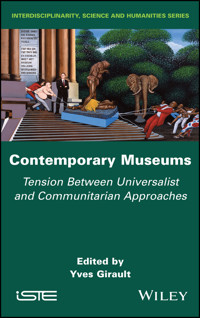
Cover image:Partial reproduction of the painting Réorganisation (see Figure 6.1, page 143)© Chéri Samba, Réorganisation, Oil on canvas, 2002.Collection MRAC, Tervuren, HO.0.1.3865Rights reserved
Library of Congress Control Number: 2022950653
British Library Cataloguing-in-Publication DataA CIP record for this book is available from the British LibraryISBN 978-1-78630-745-3
IntroductionThe Social and Political Dimensions of Museums in Debate
Today, the field of museology worldwide is seeing a flourishing of concerns over heritage, visible most notably in the increase in community demands, made in very different sociopolitical contexts, which seek to identify, analyze and promote the heritage of local populations. “All this originates in experiments that first took shape in Latin America out of various scenarios connected with the sociopolitical situations of the 1960s, 1970s and 1980s (revision and reaction to European cultural models, military dictatorships and democratic transitions, etc.), giving rise to new theoretical trends such as new museology, social museology and critical museology)” (Girault and Orellana 2020b, p. 43). These social and cultural upheavals gave rise to the radical initiatives first put in place in Mexico in the 1960s, notably the creation of the National Museum of Anthropology in 1964. However, it is only since the Round Table of Santiago de Chile (1972) that we have seen the development of a slew of community museums demanding much greater autonomy and the devolution of authority to local cultures. Thus, the early initiatives of Mario Vásquez, at the Casa del Museo, and those of Guillermo Bonfil Batalla, at the Museo Nacional de Culturas Populares (1982), made a clear break from nationalist and Eurocentric museology in introducing a social dimension, associated particularly with indigenous communities with cultures and identities differing from those of the dominant classes. In his introductory address to the International Colloquium on Social, Participatory and Critical Museology, the goal of which was to analyze the changes made nearly 50 years after the Round Table of Santiago de Chile, de Varine suggests in hindsight that the concept of the integral museum has brought two major innovations to the museum world: “One is linked to the process of inculturation, that is, creating and developing types of action impelled by populations themselves, in close partnership with museums. The other is décentration [off-centering] regarding the present-day world, taking into account the contributions of specialists in land use planning, agriculture and environmental education with respect to the organization of the museum’s tasks” (Girault and Orellana 2020b, p. 47).
While, since the 1970s, many authors have analyzed the diverse modes of community participation in the activities of the museum, the main questions raised in this colloquium highlight the evolution of this participation in practice. How are the local communities, those concerned with the creation or renovation of a museum, being defined? How are the joint work teams being formed between the museum and the communities or minorities? How are the important decisions concerning the collection and interpretation of objects, the setting of objectives and the proposal of projects being made? Other authors have focused their analyses of the diverse modes of community participation on the choice and the manner of treatment of more political questions which are revelatory of current societal conflicts (the place of women, slum residents, the LGBTQ+ population, prisoners) and the institutional limits on the treatment of these questions (Girault and Orellana 2020a). The interventions made in this colloquium have thus been structured around two general approaches: the participation of inhabitants and of publics in museum activities versus the recognition of the political role of institutions, which tends to lean toward a decolonial approach to the museum. These approaches, which are at the heart of contemporary debates on the social function of museums, have also been tempestuously debated during the Kyoto Conference, as emphasized by Bergeron and Galassini (Chapter 5), which notably ended by proposing a new definition of the museum. As the perception of these two approaches is largely dependent on the historical and sociopolitical contexts, past and present, of the different countries concerned, it therefore seems to us completely anachronistic to wish to defend such a reductive dichotomy. This collective work, structured in two parts, thus looks to analyze the various arguments brought up in these debates to begin, we hope, to take the heat out of them.
I.1. From local participation to the social role of the museum
Isabel Orellana Rivera’s contribution (Chapter 1) is invaluable for better understanding the political, social and cultural contexts of certain Latin American nations (Argentina, Brazil, Chile and Mexico), which underpinned the creation of a particular museology. If Mexico was the undeniable starting point for these changes in the 1970s, it was in the 10 following years that similar initiatives began to emerge in other Latin American nations. Isabel Orellana Rivera notes that in Chile, it took more than 10 years after the end of its dictatorship for the understanding of the relationship between the museum and the community to change at an institutional level. Beginning in 2001, the efforts of the Gabriela Mistral Museum of Education (GMME), situated in a working-class neighborhood in the old town of Santiago, figure among these pioneering initiatives. In the course of these 12 years of work with its communities, the museum has thus been able to create, in collaboration with the inhabitants of the neighborhood, a narrative framework of exhibitions and cultural activities, expounding on themes important for social life (cultural democracy, participatory democracy, gender perspectives, public education, children, environmental education, civil rights approaches, the questioning of pedagogical practices). As director of this museum, Isabel Orellana Rivera also notes that: “All this was made possible by the fact that their museological practices were guided by four principles: an ethical principle (responsibilities to our social and cultural environments), a pedagogical principle (understanding the museum as a place of transformation, change, and learning), a recreational principle (reconstructing and redefining concepts and roles with the community) and an ideological principle (the conflicting of spaces and practices)”. To subsequently analyze, on the one hand, the manner in which Latin American museums revisit the discourses and spaces of participation and, on the other hand, to analyze the decision-making power communities hold over their heritage, Isabel Orellana Rivera refers to the work of Karl Marx, Émile Durkheim, Talcott Parsons, Robert Merton and Max Weber. She further notes that to respond to these questions, it is essential to rethink the museum based on disciplines that converge in the different forms of Latin American museology (critical, educative and communicative, participatory, relational, social, subaltern, traditional, transdisciplinary, transformative, etc.), which reinforce the political-ideological character of the museum as a space of dialogue, exchange, criticism and participation. After having identified certain characteristics of Latin American museology where the museum is seen as a forum for the discussion of social problems and ideological confrontations (Afro-descendant communities, the construction of the image of the other as the object of the exhibition, social control, human rights, slavery, memory, the indigenous world, inclusive pedagogy, economic power, dictatorial processes, violence), she highlights certain contradictions and tensions therein.
In their contribution (Chapter 5), Bergeron and Galassini analyze the (in their judgement) non-negligible role Canada has played in spreading the values of New Museology, led by museologists such as Duncan Cameron and a group of French-speaking museologists formed of Pierre Mayrand, René Rivard, Paule Renaud and Maude Céré. They observe that this group of museologists notably contributed to the break with traditional museum culture through their participation in the creation, in 1985, of the International Movement for a Nouvelle Muséologie (MINOM). But this phenomenon is far from being specific to the American continent, and so we wish to recall that beginning in the 1970s, led by Georges Henri Rivière and Hugues de Varine, first in France, then in Italy and Portugal, a new museum structure, the ecomuseum, emerged, which profoundly altered two mainstays of museology: its relationship with heritage and its relationship with visitors (de Varine 1992). Given the success of this concept, which has been widely taken up in a variety of countries across all continents (China, Spain, Mexico, Quebec, Senegal, etc.), this term has undoubtedly been misused from time to time (de Varine 2017). In fact, if, in the 1980s, “the concept of the ecomuseum worked to further the social and territorial integration of the museum” (Kinard 1985, p. 223), Rivard (1985) notes that of the six ecomuseums in Quebec, each have a different purpose: the “Haute-Beauce” works to save a collection based around local heritage, fruit of the labor of an autodidact ethnographer, from threat of depatriation; the “Fier-Monde” is a response to the requests of a housing cooperative in a working-class district for the creation of appropriate cultural and defensive tools, and the “Vallée de la Rouge” was created by a heritage society interested in interpretation and in community action. In Chapter 3 of this work, Yi Du, in proposing a typology of Chinese ecomuseums, also highlights the diverse goals of these ecomuseum projects, some highly distanced from the norms of the Nouvelle Muséologie. We must bear in mind that ways of dealing with heritage also saw an important leap in development in the 1960s in North America, with the creation of the neighborhood museum (Kinard 1985), followed by the creation of museums dedicated to indigenous populations (the National Museum of the American Indian at the Smithsonian, 2004) or, as analyzed by Girault (Chapter 6), the creation of museums linked to diasporas (the Museum of the African Diaspora in San Francisco, 2005). Simultaneously and gradually, researchers and professionals, inspired by the post-colonial studies developed first in the United States and then in Europe, wished, in reaction to the cultural heritage left by colonization, to carry out a reflection which would put strain on the concepts of heritage, the museum, conservation and memory. The works of Gaugue (1992, 1999), on the presentation of the nation in African museums, and Perrois (1999) on the valorization of heritage in Gabon illustrate the manner in which the leaders of new nation-states have in turn used the institution of the museum to contribute to the creation of a “collective imagination” (Anderson 1996), which seeks to produce a sentiment of belonging to a community (Bouttiaux 2007). Reacting to this process, numerous minority populations, or those without access to the dominant power structures, have developed their own museums to defend their cultures, affirm their identities, increase their visibility, or even continue to exist. There are thus certain village communities in Africa, which have explored highly innovative forms of heritage management: cultural banks, which have as their primary function to internally develop initiatives which protect and promote local heritage material, as well as initiatives that generate revenue (Girault 2016).
Some of the approaches presented above will be analyzed in this collective work, but before this we wish to return to what seems to us the most important question: Do these initiatives point to a true participation on the part of communities, or to their instrumentalization? The term “participation” is, in truth, rather ambiguous, given its often very different uses and definitions. Therefore, as highlighted by Mairesse (Chapter 4): “If societal participation is promoted both by the most radical militants and large institutions, it goes without saying that the way in which this participation is envisaged will depend largely on the orientation and the power-relations of the institutions which promote it”.
Francisco Valdez’s contribution (Chapter 2) takes the first step toward tackling this question through an analysis of the various obstacles and conditions governing the creation of community museums, referring notably to the development of research projects in participatory archaeology. In noting first one of the primary specificities of the research he has undertaken in the Amazon – the fact that the current populations of Amazonian villages are rooted most often in immigration and thus have no blood ties to the civilizations uncovered by the archaeologists – Valdez reveals the first obstacle: How can one generate interest in these discoveries among living populations, and how can one integrate them into the framework of participatory museology? Not being a museologist, he has been able to oversee many projects attempting this, particularly in the Amazon, and it is from this viewpoint he writes. His reflection has two epistemological anchors. He first uses the notion of the “continuum of collaboration” which, according to Colwell-Chanthaphonh and Ferguson (2008), comprises three steps, to which Duin et al. (2015) have added two others which highlight an important paradigm change in modern archaeology which is named, following Atalay (2012), community-based archaeology. Valdez also outlines the epistemological presuppositions of three of the principal currents of archaeological research. This introduction permits us, as non-specialists in this discipline, to better understand its greater openness to participatory research in comparison with other scientific disciplines. But the real originality of his work is that it gradually illustrates, with the support of case studies, the manner in which the sociocultural contexts of the communities in which archaeological digs are carried out can favor or disfavor the enacting of the different stages of participatory research identified by Colwell-Chanthaphonh and Ferguson (2008) and Duin et al. (2015), and, finally, how these contexts can facilitate the creation of a museum in an equally participatory mode. He has chosen as his first case study a research context quite similar to that of his work on the Mayo-Chinchipe civilization, similar in that the local populations currently living in the Tolita Tumaco region are not of pre-Columbian origins. He extends his analysis by analyzing and comparing two more, relatively similar examples: two relatively poor rural communities claiming the same ancestral identity, projects which were overseen by the same museologist. Valdez shows, however, that in one case the digs were undertaken with urgency, in a context of preservation – preserving it against the owners of the site who wished to restore a factory there – which did not allow for the creation of a regional museum with the participation of the local population. On the other hand, he emphasizes that the research undertaken at the other site is a good example of social archaeology, which led to the creation of a community museum which is run to this day by the local population. Finally, Francisco Valdez shows clearly how the running, on the Marquesas Islands, of a true community- based archaeology allowed, after many years of site clearance, archaeological surveys, knowledge sharing to interpret the sites and the artifacts found there, for the idea of a community museum to emerge, which gradually became a means, in the eyes of the local population, to promote their different heritages and their sometimes revived traditions – all that which stood to affirm their identity. Much like Francisco Valdez, Marília Xavier Cury (Chapter 7) sees collaboration as a method of co-research and co-learning, balancing the power play and decision-making. She explains that, taking auto-representation into account, collaborations emerge in the museum from the contrast between its basic nature and its capacity to transform and re-educate itself through joint initiatives undertaken with social groups linked to collections (or those who see in the museum a space of action). She shows too that the collaboration at the heart of the ethnographic museum allows for recognition of the strong political and diplomatic skill of indigenous groups in building what they see as partnerships so as to achieve their goals.
Notwithstanding the difficulties recurring in the practice of participatory museology, which have been the object of numerous publications since the 1970s, we wish to address an ethical aspect, which is too seldom clarified. In effect, the inclusion of local populations in the promotion of an archaeological heritage, like the examples analyzed by Francisco Valdez (Chapter 2), can sometimes pose ethical problems. Thus, according to Pantazatos (2010), archaeologists, as stewards of the past, must be led by an ethics of solicitude. He supports this argument by presenting a case study covering a dig undertaken in 2003 by John Bintliff in Boeotia. He notes that this archaeologist “who unearthed the remains of cultural materials which speak to the heritage of the Arvanites” (Pantazatos 2010, p. 102) became conscious through exchanges with members of the local population that, to his great surprise, the Arvanites had no wish to engage with their heritage, as, according to the older generations of Arvanites, this would harm younger generations. In the conclusion of his article, Pantazatos states that a steward guided by solicitude must thus “take into account the particular relationship of the community to its historic heritage […] through helping it exercise its right to forget its heritage”. One can clearly identify here an ethical position that stands in opposition to the thinking of Valdez and a number of his colleagues, in particular the idea that the primary task of the researcher must be to communicate to the community the relationship of history to the evolution of a people, as well as the need to democratize knowledge and heritage culture (Valdez 2016). This ethical question is not at all specific to archaeology, however; it can, in fact, be posed in considerably more diverse situations, such as in the focusing of natural parks on questions of heritage. According to Guillaume Blanc (2015), in the national parks of the Semian Mountains (Ethiopia), Cévennes (France) and Forillon (Quebec), in order to revive a sense of national identity, states have preserved an idyllic vision of nature through denying the traditional rights to and uses of this land to its inhabitants. He illustrates this in explaining that in the Cévennes National Park, as opposed to the national parks of the United States which emphasize their wild nature, public authorities have sought to idealize an agro-pastoral society today extinct, imposing “traditional” agricultural methods and artisanal activities on inhabitants to preserve ancient housing and minor heritage (ovens, washhouses, etc.). Yi Du (Chapter 3) highlights a similar problem in remarking that in China, the first ecomuseums contributed to the construction of a primitive image of minorities, who saw in this mirror not only their culture but also their poverty, caused by this backwardness, which led them in the end to throw off their traditional culture, to the chagrin of certain leaders in heritage. This points, finally, toward ideas of difficult heritage (Macdonald 2016) or negative heritage (Wahnich 2011), heritage that memorializes tragic eras in history. The employment of an ethics of solicitude can lead, then, toward completely opposed practices, when some wish to raze sites or monuments of this type in order to erase any physical trace of the tragic past they embody (the destruction of statues or monuments which glorify colonization, for example), and some wish, on the contrary, to preserve them, pay homage to victims and pass down to future generations a political, pedagogical and ethical message (see the concentration and extermination camp of Auschwitz-Birkenau).
The contribution of Yi Du (Chapter 3) also works toward a clarification of the term “partner”. She first lays out the two most significant contexts for the development of museums in continental China: the appropriation from 1956 of a Soviet-style model of the museum in service to the people, then the disengagement from this model beginning in the 1980s and with integration into the ICOM. Yi Du then analyzes the real motivations behind the creation of ecomuseums in China. She notes that these ecomuseums were not associated with the development of the Nouvelle Muséologie, but more with a Western influence, which, according to her, obscured any reflexive and critical consideration in terms of the participation of local populations. Following this statement, she analyzes the difficulties and the paradoxes tied to the participation of these populations in Chinese ecomuseums. Referring to Plummer and Tylor (2004), who describe six levels of community participation in China (presence, expression, discussion, decision-making and initiative/self-management), she suggests that in the course of the creation of ecomuseums in China, dominated by government action and piloted by experts, the participation of populations is limited only to “presence”. By mobilizing a rich bibliography – and the diachronic typology of Chinese ecomuseums established by Su Donghai (2008), comprising three levels (the will to democratization, the development of professionalism (in heritage conservation) and socio-economic development) – Yi Du finally analyzes the diverse ways in which this concept has been adapted in China, a country which counts to this day over 30 ecomuseums, including some which have been gradually neglected since their openings.
François Mairesse, 50 years after the Santiago declaration, questions the place of digital technology in the field of social museology at a time when this technology, on a day-to-day basis, is changing the way we live (Chapter 4). He first recalls the conditions in which digital technology emerged and its growing importance within the museum. Given the potential of this technology in terms of database management, he highlights that its first documented applications were linked, like at the Metropolitan Museum from 1968, to the management of collections, automizing inventory and documentation procedures. Through the 1990s, with the gradual democratization of this technology (scanners, digital cameras, CD-ROMs, websites), and then, beginning in the 2000s, under the influence of creations such as Google Books, Google Earth, Google Scholar, Google Maps, etc., museum authorities accelerated the digitalization of collected artifacts, which in return allowed for the development of cultural offerings for broader and broader audiences.
This relationship with audiences, according to Mairesse, took a decisive turn in the middle of the first decade of the 2000s with the appearance of Web 2.0, which allowed the Tech Museum of Innovation in San Jose to create and develop the basis for a truly participatory museum managed by the entirety of its user base. It eventually revealed new digital tools, which allowed for the placement of the public at the center of the museum experience: information terminals, immersive environments, virtual reality headsets, new spaces entirely dedicated to digital technology, personal museums which take advantage of the information Internet users have left on websites, social media platforms, or during online purchases. François Mairesse, leaning heavily on the context of the Covid-19 crisis, which led to the temporary closure of a great many museums1, thus investigates the ways in which digital technologies take into account the social dimension of the museum. If part of the public was able to use Covid-19 lockdowns to further explore these digital tools, including video conferencing platforms, he suggests that only a small number of institutions actually put in place new activities aimed at families, created new content (behind-the-scenes tours of museums, discussions with professionals) or offered online activities (such as conferences or webinars). Finally, after having identified the main limits of the contribution of digital technologies to museums (the inadequacy of social media platforms, the focus on the digital treatment of current events), Mairesse states that the economic and political contexts in which this technology was developed, dominated by two massive global powers, seem completely opposed to those of the thinkers of the Round Table of Santiago de Chile.
Orellana Rivera (Chapter 1) also highlights certain obstacles to the development of digital offerings encountered in Chile during the Covid-19 pandemic: the meagre resources allocated to digital communication, the lack of personnel specializing in the development of Web content, the skill deficit of the user base, the difficulty inherent to mediation through social media, the technological precarity of many virtual visitors and a lack of internet access. She remarks that, as at the Gabriela Mistral Museum of Education which, during the pandemic, opened its doors to the entire world by distancing itself from its normal audience, who lack technological resources (the inhabitants of the neighborhood, community organizations, schools), this situation gave rise to the paradox of communication without borders (Pérez 2003). Following on from this statement, and taking into account the fact that certain regular visitors will likely not return for a long time, Orellana Rivera proposes some reflections to, in similar contexts, encourage inclusion, ensure true social participation, allow for a new understanding of museal languages in the face of the other represented by information technologies, and, finally, pass from a physical space to a participatory cyberspace, without abandoning in-person audiences.
The varied contributions presented above make reference to the primary innovation of the Round Table of Santiago de Chile (1972), namely its putting the social function of the museum onto the media-political agenda, notably through the participatory creation of museums, which were of benefit to local populations. At the 34th General Assembly of the ICOM in Kyoto (September 1–7, 2019), the project of adopting a new definition of the museum, breaking with the 2007 definition which figured in the statutes of the ICOM and in the regulatory texts of many member states, became the subject of a lively debate, and was in the end rejected. This proposition, which put forward as its key postulate the idea that museums are not defined solely in relation to their collections and to the notion of heritage, but above all in relation to the engagements they make with regard to communities for the purpose of social justice, put on the media and political agenda the political implications of the museal institution. If many authors and professionals were entirely opposed to this new definition, arguing that the primary function of the museum was to present and conserve the tangible and intangible heritage of humanity2, Bergeron and Galassini (Chapter 5) defend the thesis, in a North American context, that in the Kyoto proposition (see Box I.1) one can undeniably hear the distant echo of Santiago de Chile (see Box I.2), for “whether or not the words and the formulation have been changed, the objectives remain manifestly the same. We had to wait, then, almost fifty years for the values adopted in Santiago to reappear at the heart of the International Council of Museums”.
Museums are democratising, inclusive and polyphonic spaces for critical dialogue about the pasts and the futures. Acknowledging and addressing the conflicts and challenges of the present, they hold artefacts and specimens in trust for society, safeguard diverse memories for future generations and guarantee equal rights and equal access to heritage for all people.
Museums are not for profit. They are participatory and transparent, and work in active partnership with and for diverse communities to collect, preserve, research, interpret, exhibit, and enhance understandings of the world, aiming to contribute to human dignity and social justice, global equality and planetary well-being.
Box I.1. Extract from the new definition of the museum proposed September 7, 2019 and voted upon in the Extraordinary General Assembly of the ICOM, Kyoto
The integral museum is an institution which serves the society of which it is an integral part; it possesses in itself the elements that allow it to participate in the formation of the conscience of the communities it serves; it can serve to push communities into action, by situating their activity in a historical framework that illuminates contemporary problems; in other words, by reintroducing the past to the present, by engaging in the ongoing changing of structures and by provoking other changes within its respective national reality.
Box I.2. Extract from the Declaration of Santiago de Chile referring to the integral museum (resolutions adopted by the Round Table of Santiago de Chile, in Rôle du musée dans l’Amérique latine d’aujourd’hui, Museum, vol. XXV, no 3, 1973, p. 199)
Bergeron and Galassini thus present the notions that seemed the most novel to the members of the ICOM, such as “the museum as a place of democratization”, dedicated to “critical dialogue” and “equal rights” so as to “contribute to human dignity and social justice”, as little more than a distant echo of the resolutions adopted in Santiago de Chile, which are still often debated. They comment first that the UNESCO Convention for the Safeguarding of the Intangible Cultural Heritage, adopted in 2003, has already gone some way to expanding the social role of museal institutions by changing conceptions of the museal object, and the very nature of the collection. This is qualified by Bergeron and Galassini as, following Turgeon (2014), a cultural paradigm shift in professional practice in the museum – one which suggests that “museums are no longer in a position to identify what is of value within a given culture, privileging elements of learned culture; they must instead perform this task alongside citizens, who are the first to recognize what is of value to the community in terms of heritage”. To better understand the challenges associated with the adoption of a new definition which could not, in 2019, gain consensus approval, the authors proceed to analyze the disparities between wealthy and developing nations, some of the latter having denounced the neocolonialism of European nations and wealthy nations. They show that the polarization between members of the ICOM reveals certain geopolitical and generational postures. “These strategic alliances were particularly visible in the manifest solidarity between the United States, Australia, and the Northern European nations, who hoped for the proposition to be accepted so as to give new momentum to the movement of museum decolonization defended by the director of the Smithsonian Institute, Lonnie Bunch”. The generational fracture, for its part, opposes “the boomers, who, beginning in the 1970s, militated for the development of mediation and cultural action, with millennials, who militate for a profound transformation of the museum and who adhere therefore, more spontaneously too, to the new definition proposed in Kyoto”. Through these last few years, we have therefore passed, according to Bergeron and Galassini, from a paradigm seeking horizontality and thus equality, to a search for the particularity of each individual person, which will tend, depending on the political, cultural, and juridical contexts of individual countries, toward a politics of decolonialization in the museum.
I.2. From the political implications of the museum to its decolonization
It seems opportune now to recall that in Africa, for example, numerous authors have shown that the first public museums were created under the influence of colonialism (Gaugue 1992, 1999, 2001; Sabran 1999; Robert 2007; Girault 2016). Thus, according to Gaugue (1999, p. 727): “With the exception of the Spanish in Equatorial Guinea, all the European colonial powers opened museums in their tropical African colonies, and at the time of their various independences, there existed around a hundred public museums”. Brianso and Girault (2014, p. 150) give several examples: “In Saint-Louis in Senegal the French founded tropical Africa’s first museum in 1863, and Benin’s first in 1930. In Namibia, the oldest museum structure was founded by the Germans in 1907 in Windhoek; the East Africa and Uganda Natural History Society founded the National Museum of Kenya in 1910; in Nigeria, the first museums were founded by the English administration as urged by Kenneth C. Murray, professor of plastic arts”.
In France’s colonies, the museum, steeped in the values of modernity, “sought to present and to conserve materials which bear witness to the cultures of the dominated people to highlight, in contrast, the imagined superiority of European civilizations” (Robert 2007, p. 16). From a more global point of view, Kiethega (1991) holds that these museums were “constructed in capital cities to present to strangers and tourists, and above all to the bourgeoisie running colonial administration and commerce, a cultural shortcut to understanding these different countries […] entirely severed from their environments, about which they were in any case ignorant”. Following this observation, intellectuals from many formerly colonized nations worked to initiate this movement of decolonization. Konaré noted in 1983 (p. 146): “We are not in a position to present an ideal model; each people, each ethnic group, each cultural community will define, based on their traditions, models and structures of conservation particular to them. In each case, it will fall to Africans themselves (and not to foreigners, experts or not!), freeing themselves from their cultural alienation, rejecting foreign concepts, to decolonize the museum of today and to invent the museums they need. These museums will be designed to respond to indigenous needs and will not be designed to satisfy tourists or strangers to the land”. Following on from this, Alpha Oumar Konaré, as president of the ICOM, organized in November 1991 in Benin, in Ghana and in Togo the colloquium “What museums for Africa? Heritage in the future”. In his inaugural speech, he reaffirmed his position, stating: “It is high time, it seems, to proceed to a complete review; we must ‘kill’, I say kill, the Western model of the museum in Africa so that new ways of conserving and promoting heritage may flourish. Will this ever be possible until we destroy the web of dependence and of alienation, a web woven around us such that the fields of education and of culture remain distinct, and such that mostly rural populations are made to remain in a state of marginalization bordering on exclusion?” (Konaré 1992, p. 385). Finally, we wish to recall that the AFRICOM program was born out of this meeting and that, following this, the constituent assembly of AFRICOM, held from October 3 to 9, decided to create AFRICOM as an autonomous organization3. This situation is not unique to the African continent and, according to Cury (Chapter 7), a number of the great museums in Europe and in North America have perpetuated, “throughout their existence, significations founded on the colonialist matrix, from which coloniality and its tangled relations with capitalism are derived. Persisting to this day, colonialism continues to influence the museum, its interpretations, and its representations”. Péquignot (Chapter 8) notes in turn that: “Through the last few years, there has been an increase in the number of museums that have become aware that the collections they conserve and exhibit, as well as the research that emerges from them, lean to a large degree on presuppositions linked to a colonial past”. This realization prompted a politics of decolonization which gradually took shape in various countries. Time was needed for the objectives and values of this politics to appear on national and international media-political agendas, necessary preconditions for its translation into laws and conventions (see Table I.1). It was equally necessary that the pioneers of this politics, notably those at the heart of large museums, spoke up. Péquignot recalls too that it was in the United States, prompted by the NAGPRA law (1990)4, that the National Museum of the American Indian (NMAI) at the Smithsonian Institution opened its doors in 2004. It became, then, the first institution to illustrate the decolonization of the museum, by offering a new paradigm for the interpretation and representation of native communities (Kreps 2011).
Within the framework of his reflections on the ties present between museums and diasporas, Girault (Chapter 6) also analyzes the obstacles encountered in decolonizing the former Royal Museum for Central Africa in Tervuren (RMCA), which was reopened under the name AfricaMuseum. Focusing on the analysis of the ties connecting museums and diasporas, he presents the first diaspora museums, like that of Xiamen (China, 1956), which were founded not exclusively on the native land of these populations, but also on their adopted land, to present there a new narrative written primarily by the members of the diaspora. Given that the majority of diaspora museums, created in the last 20 years, are based around African, Armenian, Chinese and Jewish diasporas, his first analysis focuses on the position of the genocide museum as an institution: What types of museum develop what types of narration in relation to the identities they represent? Which museums require representation in relation to which diasporas? Mobilizing research on memorial museums and institutions across the world which are dedicated, on one hand, to the history of the Jewish people and to the memory of the Holocaust, and, on the other hand, to the Armenian genocide, Girault identifies three types of diaspora museum which, according to him, reveal three stages of the reconstruction of identities. He then presents various programs which allowed the authorities of the foremost European ethnographic museums to share reflections and experiences relating to the debates around collective memory and its links to colonization and Western imperialism, which is still conserved in ethnographic collections held by former colonial powers. He then focuses his attention on a case study: the renovation of the Royal Museum for Central Africa in Tervuren (RMCA), as, while its authorities engaged willingly in a partnership with the diaspora, the renovation process aroused near-unanimous disappointment among African diasporas, sharing a feeling of instrumentalization. After having succinctly recalled the historical and political context of the creation of the RMCA, which is without doubt the source of the main difficulties encountered by the main actors in the renovation project, he identifies and analyzes four fundamental obstacles: architectural interpretation, the way in which the aforementioned partnership was created, the status of collections, and the lack of a holistic approach to chosen themes. To gradually tend toward a decolonization of this institution and to respond to the hopes of the diaspora, Girault (Chapter 6) finally makes reference to three practices to bear in mind: curatorial ethics, decolonized conservation, and the restitution of collections, practices which are analyzed in this work in Chapters 7–9 respectively, by Marília Xavier Cury, Amandine Péquignot and Simon Jean-Nebbache.
In effect, in the framework of an attempt to decolonize a museum, certain authorities promote the participation of communities in policies surrounding the acquisition, the re-evaluation and the interpretation of collections. In fact, even though policies of collection management focus initially on the legal and normative obligations of the museum based on its fundamental functions of research, education and the sharing of knowledge, Marília Xavier Cury explains that they must now consider curatorial ethics through the practice of research into the provenance of objects, to better recontextualize them, promoting their uses and their access in relation to the rights of the population (Chapter 7). To illustrate her claim, based on an analysis of the politics of collaborative collection management carried out with contributions by the Kaingang, Guarani Nhandewa and Terena peoples, Cury analyzes the “different collection processes, which have passed through the 20th century and enter the third decade of the 21st century”, and which “make reference to multiple methodological perspectives which speak to the decolonial agenda and to dialogical relations of communication gradually put in place with the participation of Indigenous groups”. The very precise description and analytical reflection focused by the author on “the utmost necessity for the taking into account of self-representation, while mobilizing the methodology of collaboration to ultimately allow the appearance of new recontextualizations and resignifications of objects” contributes in no small part to the originality of this article. Cury notes too that early research into the trajectory of objects, carried out deep within indigenous lands with the Kaingang, Guarani Nhandewa and Terena peoples, preceded the re-evaluation phase of the collections, this being the encounter between these groups and the objects passed down from their ancestors. In this re-evaluation phase, certain objects were chosen to be presented in a future exhibition, the plaques and texts which refer to them containing memories and testimonies from those who participated in this re-evaluation. Together, these projects allowed for a genuine co-construction of the exhibition’s rhetoric: between the past, glimpsed through the objects and the memories of ancestors, and the present. Discussing the adequacy of standards in the face of new ethical approaches, Cury, to conclude, formulates four questions which she considers fundamental.
This curatorial ethics was initially developed, for the most part, in English-speaking countries, but it then began to be taken seriously on the European continent, including in Switzerland, which might seem strange at first glance, given that Switzerland did not have a colonial empire. However, as Boris Wastiau, the director of the Ethnographic Museum of Geneva (MEG), emphasizes: “This country supplied cohorts of missionaries to Africa; Swiss geographical societies served as thank tanks in the Berlin conference, which determined the frontiers of the colonial empires; the cofounder of the ICRC, Gustave Moynier, was the first consul general of the Congo in Switzerland; Swiss bankers financed colonialization. However, there are no permanent exhibitions which address these questions” (Framery 2020). It is for this reason that Wastiau developed a strategic plan (2020–2024) to deconstruct the colonial viewpoints of the MEG. “A development of the last few years is that, rather than on the biographies of objects, we are focusing on the context of their acquisition. Why did the missionaries make this or that acquisition, for example, and how?” (Tariant 2021) Taking a similar approach, the curators of the exhibition “Fiction Congo, les mondes de l’art entre le passé et le présent” [Congo Fiction: Worlds of art between the past and the present] (November 2019– March 2020, Rietberg Museum, Zurich), which ended in March of 2020, invited Sammy Baloji, Sinzo Aanza, David Shongo and Michèle Magema as part of an artist-in-residence program, who then created their own visions of the Congo, based on their critical analyses of the archives of Hans Himmelheber (1908–2003)5. Sammy Baloji, “an artist critical of postcolonialism, conceived a multimedia installation in which he questioned the decontextualization of objects exhibited in museums, and attempted to breathe new life into them through a reinterpretation of ancient memorial practices”6. As we have noted, this politics of the decolonialization of museums also concerns itself with conservation and restoration practices as they are carried out within museums.
Amandine Péquignot (Chapter 8), before presenting the innovations of decolonized conservation, outlines the primary phases in the evolution of conservation–restoration within the museum, defining also the terms advocated in 2008 by the ICOM-CC: preventative conservation, curative conservation, and restoration, “which together constitute the ‘conservation—restoration’ of tangible cultural heritage, distinguishing each term from the others in terms of the objectives, the measures and the actions they encompass”. She explains that the “principle of durability has been proposed as a progression from the two previously mentioned principles of reversibility and minimal intervention”, the principle of durability being founded on the fact that the “value of an object is not inherent to itself, but generated by those who observe it”. While this practice is advocated today by the ICOM-CC and the international conservation codes which recommend that practitioners treat objects with respect, something which looks past the purely material aspects of objects and considers the person, community or culture to whom it is significant, Amandine Péquignot argues that it is for the most part not put into place within museums. She then introduces the reader to five fundamentals of decolonized conservation formalized by Sully (2007), which go further than the standards and dogmas of Western conservation–restoration, facing up instead to the sensibility and the materiality of objects (care of living objects)7 and associating itself with indigenous curation, this being the practice of ensuring the spiritual integrity and life of artifacts, developing reserves which respect native systems of classification, arranging artifacts with respect to their type or status, and putting in place conditions which allow for their ritual purification. Péquignot then describes the experiments carried out by Emmanuel Kasarhérou (in France), Gabriele Herzog-Schröder (in Germany) and Bruno Brulon Soares (in Brazil), each of which showed that this decolonized conservation–restoration, despite its obstacles, “can be envisaged within museums that often represent countries that are former colonizers or oppressors, by allowing for a dialogue between the two parties held in tension”, a dialogue “open to the possible plurality of knowledge and know-how”. To better emphasize that indigenous curation cannot be carried out in every country without adherence to strict rules, Péquignot ends by focusing on the situation in France, a country very slow to put such practices in place.
Table I.1.A non-exhaustive presentation of the main reports, laws and conventions permitting the repatriation or restitution of museum objects
1970
UNESCO General Conference
Adoption of a convention which offers an international framework for the prevention of theft and pillaging, and for the return and restitution of stolen cultural goods
1984 Australia
Protection of heritage
To protect objects threatened by deterioration and prevent the desacrilization of Aboriginal and Torres Strait Islander heritage
1984 Canada
Quebec Declaration
Breaking the monopoly on the conservation of objects in expanding the traditional role of the museum by the integration and development of populations
1985 Argentina
Law 23.302
Text which permitted numerous restitutions to original populations carried out by Argentinian museums
1986 ICOM
Code of Ethics
Recommendation to “respond with diligence, respect, and sensitivity to requests from communities of origin for the return of human remains and objects of ritual value exhibited to the public” (Article 4.4)
1990 United States
NAGPRA
Federal law from 1990 which encouraged the repatriation and interment of certain Native American human remains, funerary objects, sacred objects, and objects of cultural heritage
2003 New Zealand
Karanga Repatriation Program
Program of the repatriation of
Toi moko
(Māori heads) held in foreign museums. Te Papa museum
2004 England
Human Tissue Act
Authorizing museums to repatriate human remains dating from less than 1,000 years ago
2005 Australia
Return of Indigenous Cultural Property
The restitution of sacred objects and the repatriation of Aboriginal human remains
2007 UNESCO
Recognition of the rights of indigenous populations
Article 12 recognizes the right to the restitution of sacred objects and human remains
2010 France
Restitution of Māori heads
Authorizing the restitution of Māori heads by France to New Zealand, and relative to collection management
2018 France
Savoy-Sarr Report
Concerning the restitution of African collections
2019 Germany
Agreement for the restitution of objects of the colonial period
Delivery of a report on the first lines of thought relating to the treatment of collected objects stemming from colonial contexts
Deputy Minister to the Federal Chancellor, Deputy Minister for International Cultural Policy at the Federal Ministry of Foreign Affairs, Ministers of Culture, Länder and Municipal Associations
2020 Sweden
National Committee on Swedish Heritage
Production of a document promoting preventative conservation practices in collaboration with communities of origin
2021 Belgium
Council of Elders of African Empires and Kingdoms
Facilitating the return of African cultural, religious and spiritual heritage
It becomes clear, in reading these fundamentals, that one could easily dream up some objections put forward by reluctant conservators from within the French context, such as the questioning of the natural authority of museum authorities; the difficulty of questioning the most fundamental principles of professional conservation; and the acceptance of a different logic of heritage, one felt by the conservator to be more spiritual than material, something opposed to the concept of laïcité (secularity). Indeed, if the French principle of laïcité guarantees the same right to the expression of belief to believers and non-believers, any cooperation between religion and the state with regard to the protection of sacred cultural heritage would have to exist alongside the guarantee of liberty from religion, “the fact that nobody may be forced to follow religious dogmas or prescriptions”8.
There also exists the principle of the neutrality of the state, of local authorities, and of public services. These principles are inscribed in the laïcité charters of public services, which notably state “that public service authorities must respect the application of the principle of laïcité in the executing of their services”. The case study proposed by Péquignot at the end of Chapter 8 is thus highly pertinent, as she shows clearly that indigenous care presents an ethical problem to conservators in publicly funded French museums. Derlon and Jeudy-Ballini (2015, p. 87) have already expressed that the museum must “remain a laic [secular] space where visitors are not made to obey religious precepts and norms. […] It is in this space that nations put forth their own representations of otherness and where artifacts, regardless of their initial statuses, become museum objects”. Derlon and Jeudy-Ballini (2015, p. 85) note also that “certain religious communities indeed require that artifacts be oriented in a particular direction, placed at a specific height or at a distance from any object or element judged to be incompatible, rearranged daily or honored by rituals. For others, the sacredness of an object requires that it only be approached by those practicing sexual, dietary or behavioral restrictions, restrictions one cannot imagine being routinely observed by the conservators or stewards of museums, whether or not they are adherents to these beliefs”. Roustand (2016) supports this argument, analyzing critically, within the context of the Quai-Branly Museum’s hosting of a Māori exhibition, its adherence to the curatorial arrangements – involving ritual care – demanded by the Museum of New Zealand Te Papa Tongarewa. She then explains that, on a much broader scale, the urging of a French public institution toward the carrying out of spiritual or religious practices within its walls calls into question its relationship with the values of the Republic, or at least reformulates it.
Finally, a politics of the decolonization of museums also brings up the question of the restitution of works and objects to their communities of origin. Today this question is very much in the public eye – notably in France, following a 2017 speech by Emmanuel Macron in Ouagadougou and, subsequently, the presentation to the President of the Republic, by the economist Felwine Sarr and the art historian Bénédicte Savoy, of a report intitled “Return African Heritage” on November 23, 2018, which prompted very strong feelings from within the art and conservation worlds, and led to numerous polemics on the subject9. Indeed, after having documented the systematic pillaging of Africa under the colonial yoke, these researchers proposed multiple different recommendations aimed at the return of highly valuable works of art to their continent of origin. This argument has already been addressed by Michel Leiris, the secretary and archivist of the Dakar-Djibouti mission who, in his work Phantom Africa (L’Afrique fantôme) (1934), denounced the raiding and sacking which accompanied colonial conquest, purchases made either for derogatorily low prices or under threat, theft in the name of science – all the practices which, according to this author, contributed to the creation of most European collections (Cousin 2019)10. On the other hand, Reginald Groux11 critiques Emmanuel Macron’s use of the word “restitution”, which leads de facto to the pernicious notion of illicit possessions. He mourns too that, rather than allowing museums “to unify history, traditions, and cultures”, the restitution debate fueled by President Macron’s speech “leaves the cultural domain, becoming an ideological and political matter”. Groux recommends instead that, to allow sub-Saharan Africa to build its own museums, “Western states possessing public collections of African art should contribute to the forming of coherent and documented collections which can be offered to African countries, accompanied by the training of competent staff”.
As analyzed by Simon Jean-Nebbache in Chapter 9, the demand for the return of elements conserved in museums always leads to numerous debates and controversies. The nature of objects within collections (artistic or scientific), sometimes collected and sometimes looted during the colonial period or during armed conflicts, and the multiple kinds of museum concerned, are factors which make these procedures complex, and widely debated. To better respond to these increasingly numerous demands, and following an early research project which allowed for the identification of the origins of collections (see Chapter 7 and the practice of curatorial ethics), 20 years ago museum professionals identified two very different approaches: restitution, the returning of objects and of works of art to their owners, and repatriation, which refers only to the returning of objects to their lands of origin – patria




