


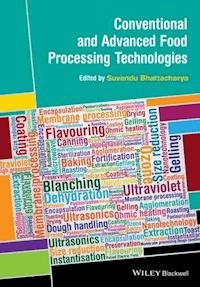
Conventional and Advanced Food Processing Technologies E-Book
180,99 €
Mehr erfahren.
- Herausgeber: John Wiley & Sons
- Kategorie: Fachliteratur
- Sprache: Englisch
Food processing technologies are an essential link in the food chain. These technologies are many and varied, changing in popularity with changing consumption patterns and product popularity. Newer process technologies are also being evolved to provide the added advantages.
Conventional and Advanced Food Processing Technologies fuses the practical (application, machinery), theoretical (model, equation) and cutting-edge (recent trends), making it ideal for industrial, academic and reference use. It consists of two sections, one covering conventional or well-established existing processes and the other covering emerging or novel process technologies that are expected to be employed in the near future for the processing of foods in the commercial sector. All are examined in great detail, considering their current and future applications with added examples and the very latest data.
Conventional and Advanced Food Processing Technologies is a comprehensive treatment of the current state of knowledge on food processing technology. In its extensive coverage, and the selection of reputed research scientists who have contributed to each topic, this book will be a definitive text in this field for students, food professionals and researchers.
Sie lesen das E-Book in den Legimi-Apps auf:
Seitenzahl: 1344
Veröffentlichungsjahr: 2014
Ähnliche




















Table of Contents
Title Page
Copyright
Dedication
List of Contributors
Foreword
Section 1: Conventional Food Processing
Chapter 1: Drying and Dehydration Processes in Food Preservation and Processing
1.1 Introduction
1.2 Drying kinetics
1.3 Different drying processes
1.4 Conclusions
Abbreviations
References
Chapter 2: Size Reduction Practices in Food Processing
2.1 Introduction
2.2 Applications of the grinding process
2.3 Grinding energy laws
2.4 Machinery requirement
2.5 Mechanism of size reduction
2.6 Size reduction of liquid
2.7 Conclusions
References
Chapter 3: Dough Processing: Sheeting, Shaping, Flattening and Rolling
3.1 Introduction
3.2 Dough sheeting
3.3 Shaping
References
Chapter 4: Extrusion Processing of Foods
4.1 Introduction
4.2 Application of extrusion technology
4.3 Description of an extruder
4.4 Selected extrusion technology
4.5 Post-extrusion treatment
4.6 Quality characteristics of product
4.7 Equations related to food extrusion
4.8 Present status
References
Chapter 5: The Process of Gelling
5.1 Introduction
5.2 Classification of gels
5.3 Gelling process
5.4 Mechanism of gel formation
5.5 Methods for characterization of gels
5.6 Mathematical models
5.7 Conclusions
References
Chapter 6: Thermal Food Preservation Techniques (Pasteurization, Sterilization, Canning and Blanching)
6.1 Introduction
6.2 Pasteurization and sterilization
6.3 Aseptic processing
6.4 Canning
6.5 Blanching
References
Chapter 7: Extraction Processes
7.1 Introduction
7.2 Conventional extraction
7.3 Advanced extraction processes
References
Chapter 8: Baking
8.1 Introduction
8.2 Bread
8.3 Biscuit
8.4 Cake
8.5 Machinery
8.6 Conclusions
References
Chapter 9: Frying of Foods
9.1 Introduction
9.2 Frying as a unit operation
9.3 Properties of fried products
9.4 Machinery of frying
9.5 Stability of fried products
9.6 Conclusions
Acknowledgement
References
Chapter 10: Roasting and Toasting Operations in Food: Process Engineering and Applications
10.1 Introduction
10.2 Applications of the process in specific foods
10.3 Process modelling
10.4 Machinery and methods
10.5 Changes during roasting/toasting
10.6 Recent researches
10.7 Possible future applications
10.8 Conclusions
Symbols
References
Chapter 11: Micronization and Encapsulation: Application of Supercritical Fluids in Water Removal
11.1 Introduction
11.2 Supercritical fluid
11.3 Developmental stages
11.4 Process description and influence of process parameters
11.5 Conclusions and future perspectives
Abbreviations
Acknowledgements
References
Chapter 12: Flavouring and Coating Technologies for Preservation and Processing of Foods
12.1 Introduction
12.2 Flavouring of foods
12.3 Edible coatings for food applications
12.4 Food flavouring by coating
12.5 Regulatory aspects and future trends
Acknowledgements
References
Chapter 13: Instantization and Agglomeration of Foods
13.1 Introduction
13.2 Applications of the technology/process
13.3 Process technology
13.4 Scientific principles
13.5 Conclusions and future possibilities
References
Chapter 14: Fortification and Impregnation Practices in Food Processing
14.1 Introduction
14.2 Food modification by vacuum impregnation
14.3 Food modification by osmotic dehydration
14.4 Influence parameters on food modification by VI and OD
14.5 Traditional and future applications
14.6 Combination of OD and VI with other processes
14.7 Conclusions
Abbreviations
References
Chapter 15: Refrigeration in Food Preservation and Processing
15.1 Introduction
15.2 Changes in foods during refrigeration
15.3 Chilling and freezing time prediction
15.4 Refrigeration equipment
15.5 Refrigerated storage and transport
15.6 Recent developments in food refrigeration
15.7 Conclusions
References
Chapter 16: Biotransformation in Food Processing
16.1 Introduction
16.2 Production of gluconic acid
16.3 Ascorbic acid
16.4 Lactose hydrolysis by β-galactosidase
16.5 Invert sugar
16.6 Production of oligosaccharides
16.7 Glucose isomerization
16.8 Production of flavour and fragrance
16.9 Artificial sweetener
16.10 Conclusions
References
Section 2: Advanced Processes
Chapter 17: Ultraviolet in Food Preservation and Processing
17.1 Introduction
17.2 Microbial disinfection
17.3 Mycotoxin elimination
17.4 Inactivation of enzymes in juices
17.5 Improvement of polymer films
17.6 Conclusions
References
Chapter 18: Application of Microwave Technology in Food Preservation and Processing
18.1 Introduction
18.2 Background
18.3 Principles
18.4 Applications of microwave in food preservation and processing
18.5 Present status and future possibilities
18.6 Conclusions
References
Chapter 19: Infrared in Food Preservation and Processing
19.1 Introduction
19.2 Theory of infrared drying
19.3 Application of infrared energy in food industry
19.4 Conclusions
References
Chapter 20: Application of Radiowave Frequency in Food Processing
20.1 Introduction
20.2 Principles of RF processing
20.3 Use of RF heating in food processing
20.4 Factors influencing RF heating processes
20.5 Computer simulation of RF heating in food processing
20.6 Conclusions
References
Chapter 21: Application of Ultrasonics in Food Preservation and Processing
21.1 Introduction
21.2 Ultrasound mechanism
21.3 Application of ultrasound in food processing
21.4 Conclusions
References
Chapter 22: Membrane Processing
22.1 Introduction
22.2 Terminology and general considerations
22.3 Pressure-driven membrane operations
22.4 Electrodialysis
22.5 Membrane contactors
22.6 Membrane bioreactors
22.7 Pervaporation
22.8 Conclusions
Abbreviations
References
Chapter 23: Nanoparticles and Nanotechnology in Food
23.1 Introduction
23.2 Advantages of nanotechnology
23.3 Applications in food preservation and processing
23.4 Process technology
23.5 Regulatory and safety issues
23.6 Conclusions
References
Chapter 24: High Pressure Processing: Current Status
24.1 Introduction
24.2 Heat transfer during high pressure processing
24.3 Mass transfer during high pressure processing
24.4 Studies on nonuniformity of pressure in solid foods
24.5 Effect of high pressure on bioactive compounds in foods
24.6 Mechanisms of microbial inactivation during high pressure processing
References
Chapter 25: Ozone Processing
25.1 Introduction
25.2 Ozone properties
25.3 Ozone generation
25.4 Antimicrobial action
25.5 Applications of ozone
25.6 Remarks on health and safety concerns
Acknowledgements
References
Chapter 26: Application of Pulsed Electric Fields in Food
26.1 Introduction
26.2 Principle of action
26.3 Application
26.4 Equipment design
26.5 Outlook
References
Chapter 27: Ohmic Heating
27.1 Introduction
27.2 Applications of OH system
27.3 OH heating process and equipment
27.4 Modelling of the OH process
27.5 Critical factors of OH processing
27.6 Sensitivity analysis of the continuous OH system
27.7 Conclusions
References
Chapter 28: Intelligent Identification System for Poultry Portion Sorting
28.1 Introduction
28.2 Automation in poultry processing
28.3 Intelligent poultry portion identification
28.4 Future possible applications
28.5 Conclusions
References
Index
End User License Agreement
Pages
xix
xx
xxi
xxii
xxiii
xxv
xxvi
xxvii
3
4
5
6
7
8
9
10
11
12
13
14
15
16
17
18
19
20
21
22
23
24
25
26
27
28
29
30
31
32
33
34
35
36
37
38
39
40
41
42
43
44
45
46
47
48
49
50
51
52
53
54
55
56
57
58
59
60
61
62
63
64
65
66
67
68
69
70
71
72
73
75
76
77
78
79
80
81
82
83
84
85
86
87
88
89
90
91
92
93
94
95
96
97
99
100
102
101
103
104
105
106
107
108
109
110
111
112
113
114
115
116
117
118
119
120
121
122
123
124
125
126
127
128
129
130
131
132
133
134
135
136
137
138
139
140
141
142
143
144
145
146
147
148
149
150
151
152
153
154
155
156
157
159
160
161
162
163
164
165
166
167
168
169
170
171
172
173
174
175
176
177
178
179
180
181
182
183
184
185
186
187
188
189
190
191
192
193
194
195
197
198
199
200
201
202
203
204
205
206
207
208
209
210
211
212
213
214
215
216
217
218
219
220
221
222
223
224
225
226
227
228
229
230
231
232
233
234
235
236
237
238
239
240
241
242
243
244
245
246
247
249
250
251
252
253
254
255
256
257
258
259
260
261
262
263
264
265
267
268
269
270
271
272
273
274
275
276
277
278
279
280
281
282
283
284
285
286
287
288
289
290
291
292
293
294
295
296
297
298
299
300
301
302
303
304
305
306
307
308
309
310
311
313
314
315
319
316
317
318
320
321
322
323
324
325
326
327
328
329
330
331
332
333
334
335
336
337
338
339
340
341
342
343
344
345
346
347
348
349
350
351
352
353
354
355
357
358
359
360
361
362
363
364
365
366
367
368
369
370
371
372
373
374
375
376
377
378
379
380
381
382
383
384
385
386
387
388
389
390
391
392
393
394
395
396
397
398
399
400
401
402
403
404
405
406
407
408
409
410
413
414
415
416
417
418
419
420
421
422
423
424
425
426
427
428
429
430
431
432
433
434
435
437
438
439
440
441
442
443
444
445
446
447
448
449
450
451
452
453
454
455
456
457
458
459
460
461
462
463
464
465
466
467
468
469
470
471
472
473
474
475
476
477
478
480
481
482
483
479
484
485
486
487
488
489
490
491
492
493
494
495
496
497
498
499
500
501
502
503
504
505
506
507
508
509
510
511
512
513
515
516
517
518
519
520
521
522
523
524
525
526
527
528
529
530
531
532
533
534
535
537
538
539
540
541
542
543
544
545
546
547
548
549
550
551
552
553
554
555
556
557
558
559
560
561
562
563
564
565
566
567
568
569
570
571
572
573
574
575
576
577
578
579
580
581
582
583
584
585
586
587
588
589
590
591
592
593
595
596
597
598
599
600
601
602
603
604
605
606
607
608
609
610
611
612
613
614
615
617
618
619
620
621
622
623
624
625
626
627
628
629
630
631
632
633
634
635
636
637
638
639
640
641
642
643
644
645
646
647
648
649
650
651
652
653
654
655
656
657
658
659
660
661
662
663
664
665
666
667
668
669
670
671
672
673
674
675
676
677
678
679
680
681
682
683
684
685
686
687
688
689
690
691
692
693
694
695
696
697
698
699
700
701
702
703
704
705
706
707
708
709
710
711
712
Guide
Cover
Table of Contents
Foreword
Section 1: Conventional Food Processing
Begin Reading
List of Illustrations
Figure 1.1
Figure 1.2
Figure 1.3
Figure 2.1
Figure 2.2
Figure 2.3
Figure 2.4
Figure 2.5
Figure 2.6
Figure 3.1
Figure 3.2
Figure 3.3
Figure 3.4
Figure 3.5
Figure 3.6
Figure 3.7
Figure 3.8
Figure 3.9
Figure 3.10
Figure 4.1
Figure 4.2
Figure 4.3
Figure 4.4
Figure 4.5
Figure 5.1
Figure 5.2
Figure 5.3
Figure 5.4
Figure 6.1
Figure 6.2
Figure 6.3
Figure 6.4
Figure 6.5
Figure 6.6
Figure 6.7
Figure 7.1
Figure 8.1
Figure 8.2
Figure 9.1
Figure 9.2
Figure 9.3
Figure 9.4
Figure 9.5
Figure 9.6
Figure 10.1
Figure 10.2
Figure 10.3
Figure 10.4
Figure 10.5
Figure 10.6
Figure 10.7
Figure 10.8
Figure 10.9
Figure 11.1
Figure 11.2
Figure 11.3
Figure 11.4
Figure 11.5
Figure 12.1
Figure 12.2
Figure 12.3
Figure 13.1
Figure 13.2
Figure 13.3
Figure 13.4
Figure 13.5
Figure 13.6
Figure 13.7
Figure 14.1
Figure 14.2
Figure 14.3
Figure 15.4
Figure 15.5
Figure 15.6
Figure 15.7
Figure 15.8
Figure 15.9
Figure 16.1
Figure 16.2
Figure 16.3
Figure 18.1
Figure 18.2
Figure 18.3
Figure 18.4
Figure 18.5
Figure 19.1
Figure 19.2
Figure 19.3
Figure 19.4
Figure 19.5
Figure 21.1
Figure 21.2
Figure 22.1
Figure 22.2
Figure 22.3
Figure 22.4
Figure 22.5
Figure 22.6
Figure 22.7
Figure 22.8
Figure 23.1
Figure 23.2
Figure 24.1
Figure 24.2
Figure 24.3
Figure 24.4
Figure 24.5
Figure 24.6
Figure 24.7
Figure 24.8
Figure 24.9
Figure 24.10
Figure 24.11
Figure 25.1
Figure 25.2
Figure 26.1
Figure 26.2
Figure 26.3
Figure 26.4
Figure 26.5
Figure 27.1
Figure 27.2
Figure 27.3
Figure 27.4
Figure 27.5
Figure 27.6
Figure 27.7
Figure 27.8
Figure 27.9
Figure 27.10
Figure 28.1
Figure 28.2
Figure 28.3
Figure 28.4
Figure 28.5
Figure 28.6
Figure 28.7
List of Tables
Table 1.1
Table 1.2
Table 1.3
Table 1.4
Table 2.1
Table 2.2
Table 2.3
Table 2.4
Table 3.1
Table 4.1
Table 5.1
Table 5.2
Table 5.3
Table 7.1
Table 7.2
Table 8.1
Table 8.2
Table 9.1
Table 10.1
Table 11.1
Table 11.2
Table 11.3
Table 12.1
Table 12.2
Table 12.3
Table 12.4
Table 12.5
Table 13.1
Table 13.2
Table 13.3
Table 13.4
Table 13.5
Table 13.6
Table 13.7
Table 13.8
Table 13.9
Table 14.1
Table 15.1
Table 15.2
Table 17.1
Table 18.1
Table 18.2
Table 19.1
Table 19.2
Table 19.3
Table 19.4
Table 19.5
Table 21.1
Table 21.2
Table 22.1
Table 22.2
Table 22.3
Table 22.4
Table 23.1
Table 24.1
Table 26.1
Table 26.2
Table 26.3
Table 26.4
Table 28.1
Table 28.2
Conventional and Advanced Food Processing Technologies
Edited by
Suvendu Bhattacharya, Ph.D.
Professor, AcSIR and Chief Scientist,
CSIR-Central Food Technological Research Institute, Mysore, India
This edition first published 2015 © 2015 by John Wiley & Sons, Ltd
Registered office: John Wiley & Sons, Ltd, The Atrium, Southern Gate, Chichester, West Sussex, PO19 8SQ, UK
Editorial offices: 9600 Garsington Road, Oxford, OX4 2DQ, UK
The Atrium, Southern Gate, Chichester, West Sussex, PO19 8SQ, UK
111 River Street, Hoboken, NJ 07030-5774, USA
For details of our global editorial offices, for customer services and for information about how to apply for permission to reuse the copyright material in this book please see our website at www.wiley.com/wiley-blackwell.
The right of the author to be identified as the author of this work has been asserted in accordance with the UK Copyright, Designs and Patents Act 1988.
All rights reserved. No part of this publication may be reproduced, stored in a retrieval system, or transmitted, in any form or by any means, electronic, mechanical, photocopying, recording or otherwise, except as permitted by the UK Copyright, Designs and Patents Act 1988, without the prior permission of the publisher.
Designations used by companies to distinguish their products are often claimed as trademarks. All brand names and product names used in this book are trade names, service marks, trademarks or registered trademarks of their respective owners. The publisher is not associated with any product or vendor mentioned in this book.
Limit of Liability/Disclaimer of Warranty: While the publisher and author(s) have used their best efforts in preparing this book, they make no representations or warranties with respect to the accuracy or completeness of the contents of this book and specifically disclaim any implied warranties of merchantability or fitness for a particular purpose. It is sold on the understanding that the publisher is not engaged in rendering professional services and neither the publisher nor the author shall be liable for damages arising herefrom. If professional advice or other expert assistance is required, the services of a competent professional should be sought.
Library of Congress Cataloging-in-Publication Data
Conventional and advanced food processing technologies / edited by Suvendu Bhattacharya.
pages cm
Includes bibliographical references and index.
ISBN 978-1-118-40632-8 (hardback)
1. Food industry and trade. I. Bhattacharya, Suvendu, editor.
TP370.C67 2014
664′.02— dc23
2014019555
Wiley also publishes its books in a variety of electronic formats. Some content that appears in print may not be available in electronic books.
1 2015
Dedicated to
Mother
Jyotirmoyee Devi
Father
K.N. Bhattacharya
List of Contributors
Suvendu Bhattacharya
(Editor)
Food Engineering Department, CSIR–Central Food Technological Research Institute, Mysore, India
Kemal Aganovic
German Institute of Food Technologies (DIL e.V.), Quakenbrueck, Germany
Lilia Ahrné
Process and Technology Development, SIK—The Swedish Institute for Food and Biotechnology, Göteborg, Sweden
Tesfaye Faye Bedane
Department of Industrial Engineering, University of Salerno, Fisciano, SA, Italy
Debabrata Bera
Department of Food Technology, Techno India, Salt Lake City, Kolkata, India
Sila Bhattacharya
Grain Science and Technology Department, CSIR–Central Food Technological Research Institute, Mysore, India
Teresa R.S. Brandão
Lesen Sie weiter in der vollständigen Ausgabe!
Lesen Sie weiter in der vollständigen Ausgabe!
Lesen Sie weiter in der vollständigen Ausgabe!
Lesen Sie weiter in der vollständigen Ausgabe!
Lesen Sie weiter in der vollständigen Ausgabe!
Lesen Sie weiter in der vollständigen Ausgabe!
Lesen Sie weiter in der vollständigen Ausgabe!
Lesen Sie weiter in der vollständigen Ausgabe!
Lesen Sie weiter in der vollständigen Ausgabe!
Lesen Sie weiter in der vollständigen Ausgabe!
Lesen Sie weiter in der vollständigen Ausgabe!
Lesen Sie weiter in der vollständigen Ausgabe!
Lesen Sie weiter in der vollständigen Ausgabe!
Lesen Sie weiter in der vollständigen Ausgabe!
Lesen Sie weiter in der vollständigen Ausgabe!
Lesen Sie weiter in der vollständigen Ausgabe!
Lesen Sie weiter in der vollständigen Ausgabe!
Lesen Sie weiter in der vollständigen Ausgabe!
Lesen Sie weiter in der vollständigen Ausgabe!
Lesen Sie weiter in der vollständigen Ausgabe!
Lesen Sie weiter in der vollständigen Ausgabe!
Lesen Sie weiter in der vollständigen Ausgabe!
Lesen Sie weiter in der vollständigen Ausgabe!
Lesen Sie weiter in der vollständigen Ausgabe!
Lesen Sie weiter in der vollständigen Ausgabe!
Lesen Sie weiter in der vollständigen Ausgabe!
Lesen Sie weiter in der vollständigen Ausgabe!
Lesen Sie weiter in der vollständigen Ausgabe!
Lesen Sie weiter in der vollständigen Ausgabe!
Lesen Sie weiter in der vollständigen Ausgabe!
Lesen Sie weiter in der vollständigen Ausgabe!
Lesen Sie weiter in der vollständigen Ausgabe!
Lesen Sie weiter in der vollständigen Ausgabe!




