


1,99 €
Mehr erfahren.
- Herausgeber: Blagoy Kiroff
- Kategorie: Geisteswissenschaft
- Sprache: Englisch
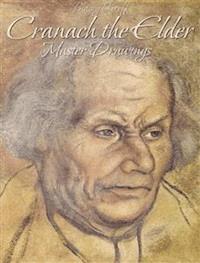
Lucas Cranach the Elder (1472 – 1553) was a German Renaissance painter and printmaker in woodcut and engraving. He was court painter to the Electors of Saxony for most of his career, and is known for his portraits, both of German princes and those of the leaders of the Protestant Reformation, whose cause he embraced with enthusiasm, becoming a close friend of Martin Luther. He also painted religious subjects, first in the Catholic tradition, and later trying to find new ways of conveying Lutheran religious concerns in art. He continued throughout his career to paint nude subjects drawn from mythology and religion. Following the huge international success of Dürer's prints, other German artists, much more than Italian ones, devoted their talents to woodcuts and engravings. This accounts for the comparative unproductiveness as painters of Albrecht Dürer and Hans Holbein the Younger, and also may explain why Cranach was not especially skilled at handling color, light, and shade. Constant attention to contour and to black and white, as an engraver, seems to have affected his sight; and he often outlined shapes in black rather than employing modeling and chiaroscuro.
Das E-Book können Sie in Legimi-Apps oder einer beliebigen App lesen, die das folgende Format unterstützen:
Veröffentlichungsjahr: 2015
Ähnliche

Cranach the Elder:
Master Drawings
By Blagoy Kiroff
––––––––
First Edition
*****
Cranach the Elder: Master Drawings
*****
Copyright © 2015 Blagoy Kiroff
Table of Contents
Title Page
Copyright Page
Foreword
Drawings and Prints
Foreword
Lucas Cranach the Elder (1472 – 1553) was a German Renaissance painter and printmaker in woodcut and engraving. He was court painter to the Electors of Saxony for most of his career, and is known for his portraits, both of German princes and those of the leaders of the Protestant Reformation, whose cause he embraced with enthusiasm, becoming a close friend of Martin Luther. He also painted religious subjects, first in the Catholic tradition, and later trying to find new ways of conveying Lutheran religious concerns in art. He continued throughout his career to paint nude subjects drawn from mythology and religion. Following the huge international success of Dürer's prints, other German artists, much more than Italian ones, devoted their talents to woodcuts and engravings. This accounts for the comparative unproductiveness as painters of Albrecht Dürer and Hans Holbein the Younger, and also may explain why Cranach was not especially skilled at handling colour, light, and shade. Constant attention to contour and to black and white, as an engraver, seems to have affected his sight; and he often outlined shapes in black rather than employing modelling and chiaroscuro.
The first evidence of Cranach's skill as an artist comes in a picture dated 1504. Early in his career he was active in several branches of his profession: sometimes a decorative painter, more frequently producing portraits and altarpieces, woodcuts, engravings, and designing the coins for the electorate.
Early in the days of his official employment he startled his master's courtiers by the realism with which he painted still life, game and antlers on the walls of the country palaces at Coburg and Locha. Before 1508 he had painted several altar-pieces for the Castle Church at Wittenberg in competition with Albrecht Dürer, Hans Burgkmair and others; the duke and his brother John were portrayed in various attitudes and a number of his best woodcuts and copper-plates were published. In 1509 Cranach went to the Netherlands, and painted the Emperor Maximilian and the boy who afterwards became Emperor Charles V. Cranach was the court painter to the electors of Saxony in Wittenberg, an area in the heart of the emerging Protestant faith. His patrons were powerful supporters of Martin Luther, and Cranach used his art as a symbol of the new faith. Cranach made numerous portraits of Luther, and provided woodcut illustrations for Luther's German translation of the Bible. Somewhat later the duke conferred on him the monopoly of the sale of medicines at Wittenberg, and a printer's patent with exclusive privileges as to copyright in Bibles. Cranach's presses were used by Martin Luther.
The death in 1525 of the Elector Frederick the Wise and Elector John's in 1532 brought no change in Cranach's position; he remained a favorite with John Frederick I. In 1547, John Frederick was taken prisoner at the Battle of Mühlberg, and Wittenberg was besieged. During the siege Charles V, the Holy Roman Emperor, remembered Cranach from his childhood and summoned him to his camp at Pistritz. Cranach came, and begged on his knees for kind treatment for Elector John Frederick. Three years afterward, when all the dignitaries of the Empire met at Augsburg to receive commands from the emperor, and Titian came at Charles's bidding to paint King Philip II of Spain, John Frederick asked Cranach to visit the city; and here for a few months he stayed in the household of the captive elector, whom he afterward accompanied home in 1552.
He died at age 81 on October 16, 1553, at Weimar, where the house in which he lived still stands.
Cranach the Elder had a large workshop and many works exist in different versions; his son Lucas Cranach the Younger, and others, continued to create versions of his father's works for decades after his death. Lucas Cranach the Elder has been considered the most successful German artist of his time.
Drawings and Prints
Thief on the cross, facing left
1502, Charcoal with white highlights on red-toned paper
––––––––
A terrible straining of the body, the belly surges forward, the legs seek to free themselves from their bonds... The companion piece shows the other thief, who has already collapsed and hangs limply, his hair has fallen over his eyes and concealing his face.
During his productive period, Lucas Cranach the Elder completed around 5000 paintings, including 'Venus and Cupid' (1508) and numerous popular portraits. Particularly characteristic of his work is his handling of light and materiality. He also attained popularity for his secular and allegoric nudes, in which one frequently observes the body through transparent scarves, the typical attribute of Cranach's paintings.




