


116,99 €
Mehr erfahren.
- Herausgeber: John Wiley & Sons
- Kategorie: Wissenschaft und neue Technologien
- Sprache: Englisch
Written by leading experts in the field, Cyanobacteria: An Economic Perspective is a comprehensive edited volume covering all areas of an important field and its application to energy, medicine and agriculture.
Issues related to environment, food and energy have presented serious challenge to the stability of nation-states. Increasing global population, dwindling agriculture and industrial production, and inequitable distribution of resources and technologies have further aggravated the problem. The burden placed by increasing population on environment and especially on agricultural productivity is phenomenal. To provide food and fuel to such a massive population, it becomes imperative to find new ways and means to increase the production giving due consideration to biosphere’s ability to regenerate resources and provide ecological services.
Cyanobacteria are environment friendly resource for commercial production of active biochemicals, drugs and future energy (biodiesel, bioethanol and hydrogen).
Topics on isolation, identification and classification of cyanobacteria are discussed, as well as further sections on: summarizing a range of useful products synthesized by cyanobacteria, ecological services provided by cyanobacteria including their harmful effect in water bodies and associated flora and fauna. Chapter on tools, techniques, and patents also focus on the economic importance of the group. This book also provides an insight for future perspectives in each particular field and an extensive bibliography.
This book will be a highly useful resource for students, researchers and professionals in academics in the life sciences including microbiology and biotechnology.
Sie lesen das E-Book in den Legimi-Apps auf:
Seitenzahl: 936
Veröffentlichungsjahr: 2013
Ähnliche



















Table of Contents
Title Page
Copyright
List of contributors
Preface
About the editors
Biography
Biography
Biography
Acknowledgements
About the book
Introduction
References
About the companion website
Part I: Biology and classification of cyanobacteria
Chapter 1: Cyanobacteria: biology, ecology and evolution
1.1 Introduction
1.2 Cyanobacteria are ancient microorganisms
1.3 Cyanobacteria are morphologically diverse
1.4 Cyanobacteria as model organisms for microbial biogeography studies
1.5 Cyanobacteria are major contributors to the primary production in the oceans
1.6 Cyanobacterial nitrogen fixation—different strategies
1.7 Cyanobacteria use different strategies to move to areas where conditions are most favorable
1.8 Some cyanobacteria change color as a function of light quality
1.9 A facultative anaerobic lifestyle is common in many cyanobacteria
1.10 Cyanobacteria have adapted to life in extreme environments
1.11 Cyanobacteria can survive adverse conditions for prolonged periods
1.12 Many cyanobacteria readily adapt to cultivation in the laboratory
1.13 Final comments
References
Chapter 2: Modern classification of cyanobacteria
2.1 Introduction
2.2 Diversification and diversity
2.3 The polyphasic approach
2.4 Selected changes in the modern system
2.5 Main prospects, importance for biotechnology
References
Part II: Ecological services rendered by cyanobacteria
Chapter 3: Ecological importance of cyanobacteria
3.1 Introduction
3.2 Variation in cyanobacterial light-harvest pigments
3.3 Metabolic diversity in cyanobacteria
3.4 Intra- and extracellular products facilitating cyanobacterial survival
3.5 Ecophysiology of nitrogen-fixing cyanobacteria
3.6 Concluding remarks
References
Chapter 4: Cyanobacteria and carbon sequestration
4.1 Introduction
4.2 Carbon dioxide emission sources
4.3 Importance of cyanobacteria in carbon sequestration
4.4 Photosynthetic metabolism
4.5 Photobioreactors
4.6 Biotransformations of carbon dioxide in photobioreactors
4.7 Applicability of the process: the economics of cyanobacterial carbon sequestration
References
Chapter 5: Ecology of cyanobacteria on stone monuments, biodeterioration, and the conservation of cultural heritage
5.1 Introduction
5.2 Ecology of cyanobacteria growing on stone monuments
5.3 Factors affecting the occurrence of cyanobacterial biofilms on stone monuments and their biodeterioration activity
5.4 Geographical distribution of cyanobacteria on rock and stone monuments
5.5 Taxonomy and biodiversity of cyanobacteria on stone monuments
5.6 Stress-tolerance mechanisms in terrestrial cyanobacteria
5.7 Control methods of cyanobacteria on stone monuments
5.8 Concluding remarks and future perspectives
References
Part III: Cyanobacterial products
Chapter 6: Therapeutic applications of cyanobacteria with emphasis on their economics
6.1 Introduction
6.2 Bioactive compounds from cyanobacteria
6.3 Therapeutic role of whole-cell cyanobacteria (unspecified products)
6.4 Economics of cyanobacterial therapeutic products
6.5 Concluding remarks
Acknowledgements
References
Chapter 7: Spirulina: an example of cyanobacteria as nutraceuticals
7.1 What is a nutraceutical?
7.2 Cyanobacteria as food
7.3 What is Spirulina?
7.4 Ecology of Spirulina
7.5 Nutritional values of Spirulina
7.6 Medicinal properties of Spirulina
7.7 Hypolipidemic effects
7.8 Antioxidant and anti-inflammatory effects
7.9 Mechanism of medicinal function
7.10 Regulations and safety profile
7.11 Molecular studies of Spirulina
7.12 Structural features of the A. platensis genome
7.13 Restriction modification system
7.14 CRISPR system
7.15 Mobile DNA elements
7.16 Transcription factors
7.17 Membrane transporters
7.18 Photosynthesis-related genes
7.19 Genes for biosynthesis of carotenoid and lipid
7.20 Reactive oxygen species protection
7.21 Signal transduction proteins
7.22 Two-component signal transduction systems
7.23 Future aspects
References
Chapter 8: Ultraviolet photoprotective compounds from cyanobacteria in biomedical applications
8.1 Introduction
8.2 Ultraviolet effects and photoprotection in cyanobacteria
8.3 Commercial sunscreens
8.4 Cyanobacterial secondary metabolites as alternative photoprotectants
8.5 Non-photoprotective medicinal applications of scytonemin
8.6 Applications of cyanobacterial sunscreens beyond biomedicine
8.7 Translational development: regulatory and commercial aspects
References
Chapter 9: Cyanobacteria as a “green” option for sustainable agriculture
9.1 Introduction
9.2 Diversity of soil cyanobacteria
9.3 Role of free-living cyanobacteria in crop growth promotion and productivity
9.4 Technology development and innovations
9.5 Cyanobacterial formulations—traditional to modern approaches
9.6 Cyanobacteria in the rhizosphere
9.7 Azolla–cyanobacteria symbiosis as a biofertilizer
9.8 Concluding remarks
Acknowledgements
References
Chapter 10: The economics of cyanobacteria-based biofuel production: challenges and opportunities
10.1 Introduction
10.2 Cyanobacteria as a biofuel source
10.3 Factors affecting the economics of liquid cyanobacterial biofuel production
10.4 Cyanobacteria as hydrogen energy source
10.5 Concluding remarks
10.6 Declaration
References
Chapter 11: Cyanobacterial cellulose synthesis in the light of the photanol concept
11.1 Introduction
11.2 Maximizing photosynthetic efficiency
11.3 Downstream processing of solar biofuel products
11.4 Cellulose synthesis
11.5 Concluding remarks
Acknowledgements
References
Chapter 12: Exopolysaccharides from cyanobacteria and their possible industrial applications
12.1 Introduction
12.2 Potential applications of cyanobacterial exopolysaccharides
12.3 Concluding remarks
References
Chapter 13: Phycocyanins
13.1 Introduction
13.2 Phycocyanins
13.3 Spectroscopic properties
13.4 Isolation and purification procedures for phycocyanins
13.5 Applications
References
Chapter 14: Cyanobacterial polyhydroxyalkanoates: an alternative source for plastics
14.1 Introduction
14.2 Polyhydroxyalkanoates and their types
14.3 Applications of PHA polymers
14.4 Production of PHA polymers
14.5 Cyanobacterial PHA production utilizing wastes
14.6 Surface study of PHA films
14.7 Concluding remarks
References
Part IV: Harmful aspects
Chapter 15: Costs of harmful blooms of freshwater cyanobacteria
15.1 Introduction
15.2 Categories of economic costs
15.3 Conclusions and future perspectives
References
Chapter 16: Cyanotoxins
16.1 Introduction
16.2 Toxic cyanobacterial blooms
16.3 Cyanotoxins
16.4 Economic perspective
16.5 Concluding remarks
References
Part V: Tools, techniques, and patents
Chapter 17: Photobioreactors for cyanobacterial culturing
17.1 Introduction
17.2 Type of metabolism in cyanobacteria
17.3 Reactor design for biomass production
17.4 Operation mode
17.5 Processing parameters
17.6 Harvesting techniques
17.7 Concluding remarks
Acknowledgments
References
Chapter 18: Commercial-scale culturing of cyanobacteria: an industrial experience
18.1 Introduction
18.2 Open-pond systems
18.3 Closed photobioreactors
18.4 Comparison of open raceways and closed photobioreactors
18.5 Spirulina
18.6 Nostoc
References
Chapter 19: Engineering cyanobacteria for industrial products
19.1 Introduction
19.2 Genetic manipulation of cyanobacteria
19.3 Engineering cyanobacteria to express genes of interest
19.4 Cyanobacteria as cell factories for product syntheses
19.5 Concluding remarks and outlook
Acknowledgement
References
Chapter 20: Cryopreservation of cyanobacteria
20.1 Introduction
20.2 Cryopreservation: theory and practical application
20.3 Cryopreservation methodology
20.4 Cryopreserving biological resources
20.5 Management of cryopreserved resources: biological resource centres
Acknowledgements
References
Chapter 21: Patents on cyanobacteria and cyanobacterial products and uses
21.1 Introduction
21.2 Cyanobacteria and the environment
21.3 Cyanobacteria products and applications
21.4 Cyanobacteria and biofuels
21.5 Culture systems, processes, harvesting and processing
21.6 Cyanobacterial genes in action
21.7 Concluding remarks
References
Index
This edition first published 2014 © 2014 by John Wiley & Sons, Ltd
Registered office: John Wiley & Sons, Ltd, The Atrium, Southern Gate, Chichester, West Sussex, PO19 8SQ, UK
Editorial offices: 9600 Garsington Road, Oxford, OX4 2DQ, UK
The Atrium, Southern Gate, Chichester, West Sussex, PO19 8SQ, UK
111 River Street, Hoboken, NJ 07030-5774, USA
For details of our global editorial offices, for customer services and for information about how to apply for permission to reuse the copyright material in this book please see our website at www.wiley.com/wiley-blackwell.
The right of the author to be identified as the author of this work has been asserted in accordance with the UK Copyright, Designs and Patents Act 1988.
All rights reserved. No part of this publication may be reproduced, stored in a retrieval system, or transmitted, in any form or by any means, electronic, mechanical, photocopying, recording or otherwise, except as permitted by the UK Copyright, Designs and Patents Act 1988, without the prior permission of the publisher.
Designations used by companies to distinguish their products are often claimed as trademarks. All brand names and product names used in this book are trade names, service marks, trademarks or registered trademarks of their respective owners. The publisher is not associated with any product or vendor mentioned in this book.
Limit of Liability/Disclaimer of Warranty: While the publisher and author(s) have used their best efforts in preparing this book, they make no representations or warranties with respect to the accuracy or completeness of the contents of this book and specifically disclaim any implied warranties of merchantability or fitness for a particular purpose. It is sold on the understanding that the publisher is not engaged in rendering professional services and neither the publisher nor the author shall be liable for damages arising herefrom. If professional advice or other expert assistance is required, the services of a competent professional should be sought.
Library of Congress Cataloging-in-Publication Data
Cyanobacteria (Sharma)
Cyanobacteria : an economic perspective / editors, Naveen K. Sharma, Ashwani K. Rai, Lucas J. Stal.
p. ; cm.
Includes bibliographical references and index.
ISBN 978-1-119-94127-9 (cloth)
I. Sharma, Naveen K., editor of compilation. II. Rai, Ashwani K., editor of compilation. III. Stal, Lucas J., 1952- editor of compilation. IV. Title.
[DNLM: 1. Cyanobacteria. 2. Biotechnology– methods. 3. Economics. QW 131]
QR99.63
579.3′9– dc23
2013026553
A catalogue record for this book is available from the British Library.
Wiley also publishes its books in a variety of electronic formats. Some content that appears in print may not be available in electronic books.
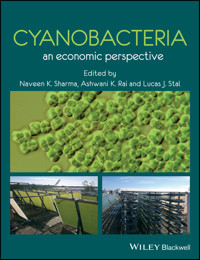
Cover image: Micrograph of the unicellular cyanobacterium Cyanothece sp. Culture Collection Yerseke CCY0110. Outdoor photobioreactors for mass cultivation of cyanobacteria and microalgae. Left: flat panel reactor; Right: tubular reactor. (Photos: L.J. Stal)
Cover design by Steve Thompson
List of contributors
Preface
Human society faces enormous problems in the near future in order to cover the increasing demands of energy, food, and health care. The current ways these demands are covered by society are not sustainable and result in unacceptable changes in our environment, such as global warming due to increasing emissions of the greenhouse gases carbon dioxide, methane, and nitrogen oxides. The increasing emissions of carbon dioxide cause the acidification of the ocean with difficult-to-predict effects. The extensive and increasing use of freshwater and arable land for agriculture and for the production of biofuels compete with food production. The over-use of antibiotics, not only to defeat human illness and infections, but also to increase and economize animal production, has already lead to multiple resistant pathogens and therefore there is an urgent need to discover alternative medicines. These are, in a nutshell, a few of the challenges that human society is currently facing.
The Earth formed more than 4.5 billion years ago. The origin of life on Earth was probably around 4 billion years ago but the rock record goes back only 3.8 billion years and the organic matter in these rocks hints at carbon dioxide fixation. The oldest microfossils are found in lithified microbial mats—so-called stromatolites—dating back almost 3.5 billion years. These might have been cyanobacteria. Modern microbial mats and stromatolites are built by cyanobacteria and are analogues of those in the fossil record. Multicellular organisms such as the plants and animals only developed 0.6 billion years ago. Hence, life was microbial for at least 3.2 billion years, during which time it evolved a stunning genetic diversity. All biogeochemical cycles are run by microorganisms. The number of different types of microorganism and their genetic diversity is unknown but is estimated to be many tens or hundreds of millions, harboring a plethora of metabolic pathways with the capacity to produce bioactive compounds, as well as other possible uses that are awaiting to be discovered and used by human society.
Cyanobacteria are oxygenic phototrophic bacteria. They use water as the electron donor, splitting it into oxygen and hydrogen. The latter is used to fix carbon dioxide into organic matter using sunlight as the source of energy. Cyanobacteria were responsible for the oxygenation of the Earth's atmosphere 2.5 billion years ago, and led to the formation of eukaryotic algal and plant cells through an endosymbiotic event with a non-phototrophic host. The endosymbiotic cyanobacterium evolved into the chloroplast of algal and plant cells. It is estimated that cyanobacteria have produced half of global oxygen and plants and algae the other half, but as chloroplasts can be considered to be endosymbiotic cyanobacteria, essentially all oxygen that is produced on Earth is cyanobacterial.
Due to their long history, cyanobacteria have evolved a large morphological and genetic diversity and are known for the production of wide range of bioactive compounds and multiple biotechnological applications such as the production of biofuels (production of ethanol, butanol, or lipids) or food, food additives, and single-cell protein. Cyanobacteria can be grown in mass cultures and because they use sunlight, mass cultivation may be economic. Moreover, because cyanobacteria fix carbon dioxide, the biofuels they produce are carbon-dioxide neutral and sustainable. Cyanobacteria grow in virtually any illuminated environment. Hence there are many species that grow in seawater or at least are salt-water tolerant, eliminating the use of precious freshwater supplies. Many cyanobacteria also grow under extreme conditions so that mass cultivation can be undertaken in areas that are not suitable for food production and hence does not compete with it. Also, the possibility of growing cyanobacteria under extreme conditions presents an important possibility for mass cultivation because it prevents infections and allows stable long-term cultivation.
During recent decades, much research has been carried out into the biotechnological applications of cyanobacteria. With this book we wanted to bring together this knowledge and present cyanobacteria from an economic perspective. We are grateful to the many contributors to this book who provided up-to-date overviews of the biotechnological potential of cyanobacteria and the problems with and feasible opportunities for economic industrial-scale cultivation of these organisms. The contributions in this book also review cyanobacteria from the taxonomic and ecological points of view. This information is crucial for strain selection, design of photobioreactors and planning of economic industrial-scale cultivation. The book also reviews the plethora of biotechnological applications of cyanobacteria, varying from pharmaceuticals, food, food additives, to biofuels and others. In addition, it discusses the possibility of designing cyanobacteria as cell factories by enhancing their metabolism through changes to their genetic content and regulation. We are convinced that this book will be an important resource for anyone who is interested in cyanobacteria and their biotechnological potential, and we express the hope that this book will stimulate and help scientists and biotech engineers to move this field into new and improved applications.
April, 2013Naveen K. SharmaAshwani K. RaiLucas J. Stal
About the editors
Biography
Dr. Naveen K. Sharma is currently working as an Associate Professor at the Department of Botany, Indira Gandhi National Tribal University, Amarkantak (MP, India). He graduated with a Masters in Botany from Banaras Hindu University, Varanasi, and a doctorate from Jiwaji University, Gwalior (M.P.), India. He has more than 12 years of teaching and research experience. He has published 30 research papers and reviews and has an edited book to his credit. His research interest includes cyanobacterial ecology, with an emphasis on aerial dispersal of cyanobacteria. He is the recipient of a prestigious IUSSTF fellowship (2010) for work on the utilization of cyanobacteria for biofuel production.
Biography
Prof. Ashwani K. Rai has more than 35 years of teaching and research experience at the Department of Botany, Banaras Hindu University. He has published more than 80 original research papers and reviews, authored/edited five books and supervised 15 doctoral theses. His area of research includes cyanotoxins, nitrogen metabolism, carbon fixation and salt tolerance in cyanobacteria. Professor Rai has been the recipient of several prestigious fellowships and awards including a Matsumae International Foundation Fellowship, Japan (1982); an Alexander von Humboldt Fellowship, Germany (1983); the National Biotechnology Overseas Associateship Award (DBT, New Delhi, 1986); an Indo-JSPS Exchange Fellowship (1992, 2011); and a Japan Society for Promotion of Science Fellowship (1993). He is a Fellow of the National Academy of Sciences, India (NASI), the National Academy of Agricultural Sciences (NAAS), and the Biotech Research Society India (BRSI). He has served as a Visiting Scientist in Germany, Visiting Professor in USA, and Invited Professor in Japan. He serves as a member of selection committees and task forces of DBT and UGC. At present, he heads the Department of Botany, Banaras Hindu University, Varanasi, India.
Biography
Prof. Lucas J. Stal studied biology at the University of Groningen, The Netherlands where he obtained his Master's degree in 1978 specializing in Microbial Ecology and Molecular Genetics. Then he moved to Germany where he became assistant professor in Geomicrobiology at the University of Oldenburg. He obtained his PhD in 1985 from the University of Groningen for a study on nitrogen fixation in cyanobacterial mats. In 1988 he became associated professor at the University of Amsterdam in the Department of Aquatic Microbiology. In 1996 he became head of the Department of Marine Microbiology of the Netherlands Institute of Ecology, which became part of the Royal Netherlands Institute of Sea Research in January 2012. In 2002 he was a Visiting Professor at the University Miguel Hernandez in San Juan de Alicante in Spain. From 2007 he has also a chair in Marine Microbiology at the University of Amsterdam. Lucas Stal is an expert in cyanobacteria ecology and physiology. He studied in particular the fixation of nitrogen by various types of cyanobacteria as well as in natural ecosystems such as cyanobacterial blooms and microbial mats. He published almost 200 research papers and reviews.
Acknowledgements
We thank the many colleagues who have contributed to this volume. Ashwani K. Rai and Naveen K. Sharma wish to thank their families, friends, and colleagues for their encouragement and support during the time we have been working on this book. Many thanks are due to Fiona Seymour, Senior Project Editor, Life Sciences Book Content Management, Wiley UK for all the support, input, and assistance she provided and for her patience until all the chapters were delivered.
About the book
Cyanobacteria are oxygenic photosynthetic autotrophs and are among the most successful and earliest forms of life we know. Globally, cyanobacteria are important primary producers and play a crucial role in the biogeochemical cycles of nitrogen, carbon, and oxygen. Cyanobacteria are recognized for their high potential in a large variety of biotechnological applications. They are used as food supplements in many countries all over the world. The exploitation of cyanobacteria as a source of a wide range of structurally novel and biologically active compounds that are valuable for drug development is attracting considerable and increasing interest from the pharmaceutical industry. From a biotechnological perspective, cyanobacteria are unique cell factories that combine the cost-effective energy-capturing ability of photosynthesis with high cultivation yields, which are desirable for an economic, industrial-scale production process. This volume is an authoritative and comprehensive overview of the current and future possibilities for industrial scale utilization of cyanobacteria. The book is divided into five parts and twenty-one chapters on various aspects of the biotechnological applications of cyanobacteria. Part I describes general characteristics and classification of cyanobacteria. Part II contains chapters on the ecological services rendered by cyanobacteria. Part III describes the exploitation of cyanobacteria and the currently unexplored potential of cyanobacteria. Part IV discusses the harmful aspects of cyanobacteria. The last part (Part V) includes topics on tools, techniques, and patents related to commercial aspects of cyanobacteria. This book is the first of its kind to provide an overview of the potential commercial exploitation of cyanobacteria and the opportunities and problems related to this exploitation. This book is meant as a useful resource for students, researchers and professionals in academia and the biotech industry.
Introduction
Naveen K. Sharma, Ashwani K. Rai and Lucas J. Stal
At present, human society is confronted with serious issues related to environment, food, and energy (Tilman et al., 2009). The burden on the environment in general and agricultural productivity in particular caused by the exponentially increasing population is phenomenal. In order to produce sufficient food for this massive human population, new ways and means have to be found that will increase food production substantially while taking into account the limits of the biosphere's ability to regenerate resources and provide ecological services. For this to happen, human society will rely on the huge potential of microorganisms to provide food, food additives, pharmaceuticals, and energy. Biotechnological applications for growing these microorganisms and exploiting their potential will make a huge leap in coming years. Cyanobacteria are of particular interest for biotechnological applications.
Cyanobacteria are Gram-negative oxygenic photosynthetic autotrophic organisms and are among the most successful and oldest forms of life (Schopf, 2000). Cyanobacteria enriched the primitive atmosphere with oxygen and therefore were crucial for the evolution of multicellular life. In an endosymbiotic event with a host cell, cyanobacteria became the origin of the chloroplast of the eukaryotic plant cell (Delwiche and Palmer, 1997). Cyanobacteria will occupy almost any illuminated habitat, ranging from aquatic to terrestrial environments as well as extreme habitats such as hot springs, hypersaline waters, deserts, and the polar regions. Several species are unique as they combine nitrogen fixation with oxygenic photosynthesis in a single organism. In Chapter 1, Aharon Oren gives an overview of the biology, ecology, and evolution of this fascinating group of microorganisms.
Cyanobacteria are a monophyletic but heterogeneous group of oxygen-evolving photosynthetic organisms. Cyanobacteria come in a remarkable variety of morphologies, including unicellular, colonial, filamentous, and branched filamentous forms, and their cell size may vary across two orders of magnitude, while the length of trichomes and the size of aggregates may be macroscopic and visible to the naked eye. The taxonomy of cyanobacteria is still the subject of debate. Although cyanobacteria obviously belong to the domain Bacteria, this does not solve the taxonomic problems, which have been classically based on the rich morphological characteristics. The phylogeny based on the DNA sequence of the 16S rRNA gene confounded the classical system. Many prefer the classical system because of the system of nomenclature and because of the recognition of species by microscopy. In Chapter 2, Jií Komárek shares his views on cyanobacterial taxonomy.
During their long evolutionary history, cyanobacteria have undergone several structural and functional modifications, and these are responsible for their versatile physiology and wide ecological tolerance. The ability of cyanobacteria to tolerate high temperature, UV radiation, desiccation, and water and salt stresses contributes to their competitive success in a wide range of environments (Whitton 2012; Herrero and Flores, 2008). Cyanobacteria can photosynthesize at low light intensities and can use bicarbonate ion for carbon dioxide fixation at high pH. Many species fix atmospheric nitrogen and assimilate it as a source of nitrogen. Also, cyanobacteria can use a variety of different sulfur sources and possess efficient phosphate acquisition mechanisms that allow them to live in low-phosphate environments (Sharma et al., 2011, and references therein).
Globally, cyanobacteria are important primary producers and play an important role in the biogeochemical cycles of nitrogen, carbon, and oxygen. It is estimated that cyanobacteria may be responsible for half of the global primary production of these gases. In Chapter 3 Beatriz Díez and Karolina Ininbergs have touched upon the ecological importance of cyanobacteria. The ongoing climatic change is threatening the existence of the human population. The increase in atmospheric carbon dioxide, especially since the industrial revolution, has led to global warming. Autotrophic life can play an important role in mitigating the problem of global change. Eduardo Jacob-Lopes and colleagues have discussed the importance of cyanobacteria in carbon sequestration in Chapter 4. One can easily visualize the luxuriant cyanobacterial growth on historically and culturally important monuments and buildings. Nitin Keshari and Siba Prasad Adhikari discuss various aspects of this phenomenon, including protection methods and the economics involved, in Chapter 5.
For a long time, the economic importance of cyanobacteria was limited to their use as bio-fertilizer in agriculture mainly because of their capacity to fix nitrogen. Technological progress has opened new avenues for the biotechnological applications of cyanobacteria and scientific researchers have made many new discoveries, leading to novel compounds and uses of these organisms. Consequently, many new areas of interest have emerged and a majority have enormous commercial potential. In Chapters 6–14 some of the commercially important products and processes are discussed, with emphasis on economic aspects. The chapters include: therapeutic molecules from cyanobacteria (Rathinam Raja and colleagues, Chapter 6); a detailed account of Spirulina as an example for the production of neutraceuticals by Masayuki Ohmori and Shigeki Ehira (Chapter 7); ultraviolet photoprotective compounds from cyanobacteria and their biomedical applications (Tanya Soule and Ferran Garcia-Pichel, Chapter 8); cyanobacteria as biofertilizers (Radha Prasanna and colleagues, Chapter 9); cyanobacteria as a source for the production of biofuels (Naveen K. Sharma and Lucas J. Stal, Chapter 10); the synthesis of cellulose by cyanobacteria (Milou Schuurmans and colleagues, Chapter 11); the production of exopolysaccharides by cyanobacteria (Giovanni Colica and Roberto de Philippis, Chapter 12); the production of phycocyanin from cyanobacteria (Ruperto Bermejo, Chapter 13); and cyanobacterial polyhydroxyalkanoates as an alternative source for biodegradable plastic (Shilalipi Samantaray and colleagues, Chapter 14).
While cyanobacteria provide a wide range of benefits, many species cause environmental and health problems and represent a nuisance to human society. There are many species of cyanobacteria that cause blooms in water bodies, both marine and freshwater, resulting in a loss of water quality and possible toxicity to aquatic life. In Chapter 15, David P. Hamilton and colleagues deal extensively with cyanobacterial blooming in freshwater bodies. Many bloom-forming cyanobacteria produce a range of secondary metabolites that are toxic to various life forms. These toxins (referred to as “cyanotoxins”) affect the liver (hepatotoxin), the nervous system (neurotoxin), or the skin (dermatotoxin) and represent a serious hazard to human and animal health. Jason N. Woodhouse and colleagues explain the economic fallouts caused by cyanotoxins in Chapter 16.
Cyanobacteria are natural solar-powered cellular factories synthesizing an array of natural compounds useful for human welfare. We have just started to tap this resource. According to Pulz and Gross (2004) the microalgal biomass (including cyanobacteria) market has a size of about 5,000 t/year of dry matter accounting for around US$ 1.25 × 10⁹/year (Table 1). However, authentic data on the cyanobacteria-based market is lacking. Industrial biotechnology involves conversion of biomass via biocatalysis, microbial fermentation, or cell culture to provide material, chemicals, and energy. It is cost-competitive, environment friendly, and sustainable.
Table 1 Projected market estimates for microalgal (including cyanobacteria) products. The estimate excludes biofuels and other valuable services.
Successful industrial-scale biotechnology mainly depends on getting a suitable organism with the desired property. Cyanobacteria could contribute greatly to this enterprise. Formulation of appropriate culture conditions and suitable culture media and their extrapolation to large-scale systems is essential for industrial success. Thus there is a need to combine metabolic engineering with advances in photobioreactor technology. A. Catarina Guedes and colleagues have described various large-scale culture systems including their pros and cons in Chapter 17. An example of large-scale industrial culturing of cyanobacteria has been provided by Hiroyuki Takenaka and Yuji Yamaguchi in Chapter 18.
Modern genetic techniques are capable of increasing the content of valuable products in a desired organism. Lack of cell differentiation and absence of allelic genes make unicellular cyanobacteria a simple system for genetic manipulation. However, hitherto the progress has been slow and suffers from drawbacks. Timo H. J. Niedermeyer and colleagues have described the various genetic manipulation techniques applicable to cyanobacteria in Chapter 19.
In Chapter 20, John G. Day has described the techniques of cryopreservation for long-term storage of useful cyanobacterial strains. It is necessary to move from an academic conception (relevant patents are discussed by Michael A. Borowitzka in Chapter 21) to industrial reality. Until now, with a few exceptions, which are discussed in this book, hardly any cyanobacteria products with potential commercial value have been successfully and economically produced at the industrial scale. The few industrial products that are available in the market include mainly health foods or other niche products. Nevertheless, favorable environmental and economic aspects and largely unharnessed potential make cyanobacteria a promising future resource (Sharma et al., 2011). To make the production cost-effective a “biorefineries approach”, which includes the simultaneous production of the main product with other side products, could be adopted.
References
Delwiche, C.F. and Palmer, J.D. (1997) The origin of plastids and their spread via secondary symbiosis, in Origin of Algae and Their Plastids (ed D. Bhattacharya), Springer, Berlin, pp. 53–96.
Herrero, A. and Flores, E. (2008) The Cyanobacteria: Molecular Biology, Genomics and Evolution, Caister Academic Press, p. 484.
Pulz, O. and Gross, W. (2004) Valuable products from biotechnology of microalgae. Applied Microbiology and Biotechnology65, 635–648.
Sharma, N.K., Tiwari, S.P., Tripathi, K.N. and Rai, A.K. (2011) Sustainability and cyanobacteria (blue-green algae): facts and challenges. Journal of Applied Phycology, 23, 1059–1081.
Schopf, J.W. (2000) The fossil records: tracing the roots of the cyanobacterial lineage, in The Ecology of Cyanobacteria (eds B.A. Whitton and M. Potts), Kluwer, Dordrecht, Netherlands, pp. 13–35.
Tilman, D., Socolow, R., Foley, J.A. et al. (2009) Beneficial biofuels—the food, energy, and environment trilemma. Science, 325, 270–271.
Whitton, B.A. (2012) The Ecology of Cyanobacteria, Kluwer, Dordrecht, Netherlands, p. 669.
About the companion website
This book is accompanied by a companion website:
www.wiley.com/go/sharma/cyanobacteria
The website includes:
Powerpoints of all figures from the book for downloading
PDFs of all tables from the book for downloading
Part I
Biology and classification of cyanobacteria
Chapter 1
Cyanobacteria: biology, ecology and evolution
Aharon Oren
Department of Plant and Environmental Sciences, The Institute of Life Sciences, The Hebrew University of Jerusalem, Jerusalem 91904, Israel
1.1 Introduction
The first time I observed a prokaryotic microorganism through the microscope was during my first semester as a biology student in Groningen, the Netherlands, in the end of 1969. During the introductory botany course a young faculty member named Wytze Stam showed me filaments of Anabaena with many heterocysts, hidden within the leaf cavities of the water fern Azolla (see Adams, Duggan and Jackson, 2012 for more information). Later Wytze Stam became a pioneer of molecular systematics studies of cyanobacteria (then called “blue–green algae”), being the first to apply the technique of DNA–DNA hybridization to elucidate taxonomic relationships between different species (Stam and Venema, 1977).
I consider it a special privilege to have been invited to write the introductory chapter to Cyanobacteria—an Economic Perspective, considering the fact that I have never worked on economic and biotechnological aspects of cyanobacteria, and that during most of my career my studies concentrated on entirely different types of prokaryotes: anoxygenic phototrophic purple sulfur bacteria during my M.Sc. studies and, later, different groups of halophilic Archaea and Bacteria. Still, the cyanobacteria kept fascinating me, and during several periods of my life I have studied different aspects of this important group of prokaryotes. My Ph.D. studies in Jerusalem centered on the ability of certain cyanobacteria, and in particular a filamentous strain from Solar Lake, Sinai, designated , to perform not only oxygenic photosynthesis, but also anoxygenic photosynthesis with sulfide as an electron donor, enabling the organisms to lead an anaerobic life (Garlick, Oren, and Padan, 1977; Oren, Padan, and Avron, 1977; Oren and Padan, 1978). The finding that some cyanobacteria also have well-developed modes of survival in the dark under anaerobic conditions, including fermentation and anaerobic respiration with elemental sulfur as electron acceptor (Oren and Shilo, 1979), showed how well certain members of the group are adapted to an anaerobic lifestyle.
Lesen Sie weiter in der vollständigen Ausgabe!
Lesen Sie weiter in der vollständigen Ausgabe!
Lesen Sie weiter in der vollständigen Ausgabe!
Lesen Sie weiter in der vollständigen Ausgabe!
Lesen Sie weiter in der vollständigen Ausgabe!
Lesen Sie weiter in der vollständigen Ausgabe!
Lesen Sie weiter in der vollständigen Ausgabe!
Lesen Sie weiter in der vollständigen Ausgabe!
Lesen Sie weiter in der vollständigen Ausgabe!
Lesen Sie weiter in der vollständigen Ausgabe!
Lesen Sie weiter in der vollständigen Ausgabe!
Lesen Sie weiter in der vollständigen Ausgabe!
Lesen Sie weiter in der vollständigen Ausgabe!
Lesen Sie weiter in der vollständigen Ausgabe!
Lesen Sie weiter in der vollständigen Ausgabe!
Lesen Sie weiter in der vollständigen Ausgabe!
Lesen Sie weiter in der vollständigen Ausgabe!
Lesen Sie weiter in der vollständigen Ausgabe!
Lesen Sie weiter in der vollständigen Ausgabe!
Lesen Sie weiter in der vollständigen Ausgabe!
Lesen Sie weiter in der vollständigen Ausgabe!
Lesen Sie weiter in der vollständigen Ausgabe!
Lesen Sie weiter in der vollständigen Ausgabe!
Lesen Sie weiter in der vollständigen Ausgabe!
Lesen Sie weiter in der vollständigen Ausgabe!




