


Erhalten Sie Zugang zu diesem und mehr als 300000 Büchern ab EUR 5,99 monatlich.
- Herausgeber: Nine Arches Press
- Kategorie: Poesie und Drama
- Sprache: Englisch
Robert Peake's second full collection of poems is about weathering storms—personal, political, psychological—in our present-day climate of chaos. These are matters of life or death, and Cyclone urges us to consider what the ill wind may bring, and how we will survive it. Peake's acutely tuned poems bring eloquence and urgency to matters of profound devastation. With shattering delicacy, he writes of personal loss, of grief and the long aftermath; "whenever the wind sprays into my face, I taste salt of your absence". These poems also hazard an eye at the global weather and find a world in turmoil, wild with unreliable news and terrible forecasts. Manifesting between the storms is the man with the kindest face. Is he here to save us or warn us? A guide or a harbinger? As these brilliantly-visioned poems suggest, nothing is certain in the eye of the storm. Nevertheless, there is some form of consolation and rescue: "He seems at home in this tempest. He seems happy".
Sie lesen das E-Book in den Legimi-Apps auf:
Seitenzahl: 42
Veröffentlichungsjahr: 2018
Das E-Book (TTS) können Sie hören im Abo „Legimi Premium” in Legimi-Apps auf:
Ähnliche














Cyclone
Cyclone
Robert Peake
ISBN: 978-1-911027-44-7 eISBN: 978-1-911027-66-9
Copyright © Robert Peake, 2018
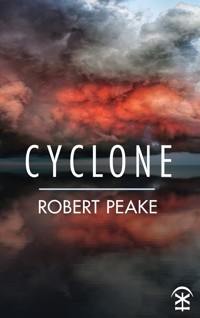
Cover artwork © Photograph ‘Storm Approaching’ by Johannes Plenio
All rights reserved. No part of this work may be reproduced, stored or transmitted in any form or by any means, graphic, electronic, recorded or mechanical, without the prior written permission of the publisher.
Robert Peake has asserted his right under Section 77 of the Copyright, Designs and Patents Act 1988 to be identified as the author of this work.
First published July 2018 by:
Nine Arches Press
Unit 14,
Sir Frank Whittle Business Centre,
Great Central Way, Rugby.
CV21 3XH
United Kingdom
www.ninearchespress.com
Printed in the United Kingdom by:
Imprint Digital
Nine Arches Press is supported using public funding by Arts Council England.
for Valerie
and
remembering James
CONTENTS
The Man with the Kindest Face
Nomansland Common
The man with the kindest face has change for a twenty
Village Panto
Why I Should Be Over It By Now
Cognates of Grief
Cyclone
End of the Meeting
The man with the kindest face in time of revolution
The Opposite of Sleepwalking
The Mothra of Equanimity
Abduction
The man with the kindest face pumps up your bicycle tyre
Due Date
Getting On With It
To The Black Dog’s Master
Mood Diary
The man with the kindest face runs for political office
Homesickness
Intermediate Sword Swallowing
Stockholm
Selfie Smile
Technological Advancements
With Two
Delusion, California
Free Will
Confirmation Bias
Patient Refused Dental Anaesthesia
The low-price leader heads the parade
“Confident Middle-Aged Man Sitting and Smiling Against White Background”
Inventions
The man with the kindest face helps you rearrange your wardrobe
What Will Survive Us
Magpie
Waking Up to the Last Winter on Earth
Letter to the Last Megafauna
Insults for Trees
Collective
Reading Dostoevsky in the John Lewis Café
Berry-Coloured Scarf
Failure to Thrive
The man with the kindest face checks your passport
Horse Optimism
Acknowledgements and thanks
About the author & this book
“Lord, here comes the flood…”
Peter Gabriel
The Man with the Kindest Face
The rear-view glimpse is fleeting
as he lets you into the lane.
He might not have a face at all
or change it like a set of masks –
behind a newspaper in the waiting room,
sliding over to make room on the bus.
You resolve next time to look at him,
risk letting him look back at you.
You taste the salt in your throat,
and you hear him ask, What’s wrong?
You smile at him and say, Nothing.
And you mean it. Nothing at all.
Nomansland Common
“These fragments I have shored against my ruins…”
– T.S. Eliot, The Wasteland
I.
You wake up. Thursday.
In England, not that house, but the other
one, and you are married, and you are
employed, and today is a workday. It is
early. You flex the fingers of your dominant
hand. You are lying on it. You are lying on
your right-hand side, and the pillow is damp
around the right-hand corner of your mouth.
You roll out of bed onto your left leg.
The shock of it travels to the hip-socket,
left shoulder, the spine reverberates
in sympathy. You wake up. You are you.
Two egg cups greet the morning.
Tapping and slicing, you lay waste the shell,
meant to be broken from within, meant to be
the emergence of life from protective slumber,
the first waking, coated in the soil of blood –
a leaf periscopes, a small beak probes, shakes
off the dirt of its making, and you who have
forgotten, find it now underneath your nails
and curl it out with a dull knife, scrub it
out with a brush, mould the soft clay of your
belly over the first scar of your making.
II.
The taste of blackened sunlight,
the ash-taste of morning, stabbing the drapes.
We rise, assemble, tuck in, fall out, lie flatly
through our teeth about how much we love it here.
Blackbird splashes
paint on the wall, a test of faith
its piezoelectric charm, and overtone,
the low hum of a foraging bear,
of diesel truck, trembling to stay still,
bright young man in the opioid clinic,
radial whirr of tyres losing their grip.
I am the spike at the top of the acorn,
splinter in smooth wood, punchline’s sting.
That salty taste in the mouth, red spot
on your napkin, sliver of under-nail ice,
that’s me –
I am waiting, pincers aloft,
and abdomen throbbing, mandibles poised
on each side of my articulated face.
Step on me, on a crack, step up, fall in,
and be singed by the translucent barb
as it plunges through willing skin.
III.
How fast can you go
down the hill, your legs becoming springs,
becoming spring itself, arms winged out,
dodging the pollen-dander flak, you are
young, they say, and may it ever be so,
shuddering to a halt in the long gully,
a shadow passes over, dipping low –
how could you recognise your future
self without a name, a form, it is cold




