


298,99 €
Mehr erfahren.
- Herausgeber: John Wiley & Sons
- Kategorie: Wissenschaft und neue Technologien
- Sprache: Englisch
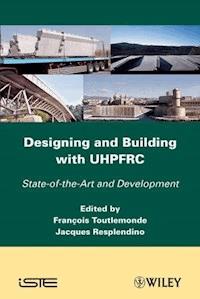
This book contains the proceedings of the international workshop "Designing and Building with Ultra-High Performance Fibre-Reinforced Concrete (UHPFRC): State of the Art and Development", organized by AFGC, the French Association for Civil Engineering and French branch of fib, in Marseille (France), November 17-18, 2009. This workshop was focused on the experience of a lot of recent UHPFRC realizations. Through more than 50 papers, this book details the experience of many countries in UHPFRC construction and design, including projects from Japan, Germany, Australia, Austria, USA, Denmark, the Netherlands, Canada... and France. The projects are categorized as novel architectural solutions, new frontiers for bridges, new equipments and structural components, and extending the service life of structures. The last part presents major research results, durability and sustainability aspects, and the updated AFGC Recommendations on UHPFRC.
Sie lesen das E-Book in den Legimi-Apps auf:
Seitenzahl: 960
Veröffentlichungsjahr: 2013
Ähnliche



















Contents
Foreword
UHPFRC’09 Scientific Committee
UHPFRC’09 Sponsors
PART I Genesis of a New Construction Material
Chapter 1 Introduction: What is a UHPFRC?
1.1. The basis of UHPFRC mix-design
1.2. The main UHPFRC available on the market
1.3. Brief history of the development of UHPC
1.4. The main features of UHPC
1.5. UHPFRC: a material that needs to revolutionize the technologies of design and implementation
1.6. UHPFRC and sustainable development issues
1.7. Conclusion and outlook
1.8. Bibliography
Chapter 2 UHPFRC: Science-driven Material Engineering Can Provide Sustainable Solutions
2.1. Introduction
2.2. Historical overview of concrete technology
2.3. The scientific concepts that have changed concrete technology
2.4. Current, economic, social and environmental challenges
2.5. Conclusion
2.6. Bibliography
Chapter 3 UHPFRC Development: Review of a Determining Application
3.1. Introduction
3.2. Context of repair works at Cattenom
3.3. Possible solutions
3.4. Chinon prototype
3.5. Material specifications
3.6. Codes
3.7. The Cattenom nuclear power plant renovation project
3.8. Quality control of the production process
3.9. The CIVAUX power plant renovation project
3.10. Conclusion
3.11. Bibliography
Chapter 4 UHPFRC Development: Experience with Ductal® Over the Past Two Decades
4.1. Introduction
4.2. Technology of UHPFRC
4.3. Main applications explored in the past two decades
4.4. Conclusion
4.5. Bibliography
Chapter 5 UHPFRC Development: The Experience of BSI® Applications
5.1. Introduction
5.2. First structural application: EDF nuclear power plants
5.3. Bourg-lès-Valence road bridges
5.4. Millau Viaduct toll-plaza canopy
5.5. Aqueduct along the high-speed rail bridge over Canal de l’Ourcq
5.6. ITE® beam
5.7. Architectural applications
5.8. Structural applications in construction
5.9. Applications to structural repair and reinforcement
5.10. Conclusion
5.11. Bibliography
PART II Novel Architectural Solutions
Chapter 6 The Enrico Navarra Gallery
6.1. General features
6.2. Structural gauging
6.3. Realization on the jobsite
6.4. Figures
6.5. Conclusion
6.6. Bibliography
Chapter 7 UHPFRC – A Material for Perforated Panels and Lattice Work: Controlling Shrinkage in Order to Experiment with Various Shapes
7.1. Introduction
7.2. Technology and applications for Ductal® UHPFRC
7.3. Perforated panels made of Ductal®: examples of applications
7.4. Discussion and prospects
7.5. How UHPFRCs connect structures and architecture
7.6. Conclusions
7.7. Bibliography
Chapter 8 The Jean Bouin Stadium
8.1. General features
8.2. Making of the UHPFRC roofing
8.3. Figures
8.4. Conclusion
8.5. Bibliography
PART III New Frontiers for Bridges
Chapter 9 The Passerelle des Anges Footbridge
9.1. General overview
9.2. Working design
9.3. Aeroelastic behavior
9.4. Precasting of the segments and decking
9.5. Installation
9.6. Conclusion
9.7. Bibliography
Chapter 10 Gärtnerplatz – Bridge over River Fulda in Kassel: Multispan Hybrid UHPC-Steel Bridge
10.1. Introduction
10.2. Advantages of UHPC for bridge construction
10.3. First UHPC bridge projects in Germany
10.4. Conceptual design of the Gäertnerplatzbruecke
10.5. Final design and execution
10.6. Additional investigations
10.7. Discussion, conclusions and acknowledgments
10.8. Bibliography
Chapter 11 Construction of the PS34 UHPFRC Bridge
11.1. BCV®: UHPFRC
11.2. General description of the PS34 bridge
11.3. Completion
11.4. Conclusion
11.5. Bibliography
Chapter 12 The Innovation and Application of UHPFRC Bridges in Japan
12.1. Introduction
12.2. Material performance of UHPFRC
12.3. Durability
12.4. Application of UHPFRC bridges
12.5. Toyota city gymnasium footbridge
12.6. Tokyo monorail girder
12.7. Ground support equipment (GSE) bridge
12.8. The mass production of slabs in Haneda Runway D
12.9.Conclusions
12.10.Bibliography
Chapter 13 Perspective on UHPCs from a Specialist Construction Company
13.1. Introduction
13.2. UHPC design and production in Australia
13.3. Australia and New Zealand project examples
13.4. Prospective applications and challenges to overcome
13.5. Concluding remarks
13.6. Bibliography
Chapter 14 Road Bridge “Wild”: Application of the UHPFRC Precast Segmental Construction Method for an Arch Structure
14.1. Introduction
14.2. The “Road Bridge – Wild” pilot project
14.3. Assembly and erection of the arch
14.4. Design and detailing
14.5. Full-scale test
14.6. Final comments for further applications and continuative research
14.7. Conclusions
14.8. Bibliography
Chapter 15 UHPC in the US Highway Infrastructure
15.1. Introduction
15.2. UHPC deployment
15.3. FHWA research efforts
15.4. Discussion and conclusion
15.5. Bibliography
Chapter 16 ITE® Beams, a Cost-effective Enduring Alternative to Filler-beam Decks
16.1. Applications of filler-beam decks
16.2. The ITE® beam
16.3. Comparison with conventional filler-beam construction
16.4. Pinel bridge – first application of ITE® beams
16.5. Detailed design
16.6. Conclusion
16.7. Summary of main figures and features
Chapter 17 UHPFRC Waffle Deck Concept for a Bridge at Livron-Loriol
17.1. General context
17.2. Generic design study
17.3. Experimental program for validation
17.4. Application to the Livron-Loriol composite bridge project
17.5.Conclusions
17.6. Acknowledgements
17.7. Bibliography
Chapter 18 UHPFRC Prototype for a Flexible Modular Temporary High-speed Railway Bridge
18.1. Motivation
18.2. Idea and concept
18.3. The flexible modular temporary bridge
18.4. Assembling and erection
18.5. Design and structural detailing
18.6. Special features in structural design and detailing with UHPFRC
18.7. Conclusion
18.8. Bibliography
Chapter 19 Effective use of UHPC for Deep Foundation Piles
19.1. Introduction
19.2. UHPC pile section design
19.3. Production of piles
19.4. Laboratory testing
19.5. Field testing
19.6. Summary and conclusions
19.7. Acknowledgements
19.8. Bibliography
Chapter 20 Design of Prestressed UHPFRC Girder Bridges According to Canadian Highway Bridge Design Code
20.1. Introduction
20.2. Mechanical properties of UHPFRC
20.3. Design approach for prestressed UHPFRC girders
20.4. Illustrative example – slab a on prestressed UHPFRC girders bridge
20.5. Conclusions
20.6. Bibliography
PART IV New Equipment and Structural Components
Chapter 21 CRC: Precast Applications of UHPFRC
21.1. Introduction
21.2. CRC properties
21.3. Structural applications
21.4. Production
21.5. Discussion
21.6. Bibliography
Chapter 22 Contribution of UHPFRCs in the Treatment of Thermal Bridges
22.1. Context and challenges of the study
22.2. Description of the thermal breaker
22.3. Tests carried out to characterize the properties of the breaker
22.4. Results and discussion
22.5. Conclusion
22.6. Bibliography
Chapter 23 UHPFRC Sunshades: An Elegant Solution for Regulating Heat Input in Buildings
23.1. Introduction
23.2. Ductal® UHPFRC technology: how it contributes to new sunshade design
23.3. The reason Ductal® is the most relevant material for sunshades
23.4. Nantes police headquarters: cable-stayed Ductal® sunshades
23.5. Results and discussion
23.6. Conclusions
23.7. Bibliography
Chapter 24 Investigation of UHPFRC Slabs under Blast Loads
24.1. Introduction
24.2. Previous research
24.3. Continuing and new research
24.4. Example of an existing application
24.5. Concluding remarks
24.6. Bibliography
Chapter 25 Experience with Prefabricated UHPFRC in the Netherlands
25.1 Introduction
25.2 Development of UHPFRC at Hurks Beton
25.3. Applications of UHPFRCs
25.4. Conclusions
25.5. Bibliography
Chapter 26 Precast Bridge Parapets in Ultra High Performance Fiber-reinforced Concrete
26.1. Introduction
26.2. Conception of parapets
26.3. Experimental program
26.4. Experimental results
26.5. Discussion
26.6. Conclusions
26.7. Acknowledgements
26.8. Bibliography
Chapter 27 Using UHPFRC for Complex Façade Elements
27.1. Introduction
27.2. Concrete technology
27.3. Experimental study
27.4. Tests results
27.5. Conclusions
27.6. Bibliography
Chapter 28 Innovative Field Cast UHPC Joints for Precast Bridge Decks. Design, Prototype Testing and Projects
28.1. Introduction
28.2. The solution
28.3. Characteristics of the UHPC jointing material technology
28.4. Testing
28.5. Design considerations for durability of the joint
28.6. Construction/installation
28.7. Conclusion
28.8. Bibliography
Chapter 29 The High Performance Cementitious Material (HPCM), a Cousin of UHPFRC for Long-life Pavement
29.1. Introduction
29.2. Design of the HPCM complex
29.3. Plain mortar tests
29.4. Cracking tests
29.5. Surface resistance tests
29.6. Miscellaneous
29.7. The way forward: two new projects to continue the development of HPCM
29.8. Conclusion
29.9. Bibliography
Chapter 30 Performance of UHPC Crossarms for High-voltage Transmission Lines
30.1. Introduction
30.2. Experimental program
30.3. Conclusions
30.4. Bibliography
Chapter 31 Structural Evaluation of Hybrid FRP-UHPC Bridge Girders
31.1. Introduction
31.2. Experimental program
31.3. Analytical work
31.4. Fatigue tests
31.5. Conclusions
31.6. Bibliography
Chapter 32 Museum of European and Mediterranean Civilizations (MuCEM): The Owner’s Ambition
32.1. Project background
32.2. Project evolution
32.3. Financing
32.4. Program
32.5. Owner’s point of view regarding UHPFRC use
32.6. Planning
Chapter 33 Museum of European and Mediterranean Civilizations (MuCEM): High UHPFRC Content Structure Design
33.1. Introduction
33.2. Structure description
Chapter 34 Museum of European and Mediterranean Civilizations (MuCEM): Experimentation and Modeling of Straight and Y-shaped UHPFRC Prestressed Columns Under the Action of an Off-centered Vertical Load
34.1. Introduction
34.2. Definition of the experimental program
34.3. Modeling of the test
34.4. Conclusion and prospects
PART V Extending the Life of Structures
Chapter 35 Seismic Retrofitting of Bridge Piers with UHPFRC Jackets
35.1. Introduction
35.2. Failure mode of rectangular bridge piers and research objectives
35.3. Description of the proposed retrofitting technique
35.4. Concrete mixes
35.5. Large-scale specimen design
35.6. Test set-up and loading condition
35.7. Specimen behavior
35.8. Conclusion, recommendations and acknowledgements
35.9. Bibliography
Chapter 36 Application of Ultra-high-strength Fiber-reinforced Concrete for Irrigation Channel Repair Works
36.1. Introduction
36.2. Overview of UFC
36.3. Abrasion resistance test
36.4. Roughness coefficient measurement
36.5. Overview of the Hosokawa river tunnel repair work project [MAT 07]
36.6. UFC panel production
36.7. UFC panel installation
36.8. Conclusion
36.9. Bibliography
Chapter 37 Using UHPFRC for Structural Reinforcement of Buildings and Civil Works
37.1. Introduction
37.2. Scope of UHPFRC application
37.3. Anti-abrasion linings
37.4. Architectural transformation of buildings
37.5. Structural reinforcement
37.6. Conclusion
37.7. Bibliography
PART VI Major Research Results
Chapter 38 Ultra High Performance Concrete for Prestressed Elements. Interest of Creep Prediction
38.1. Introduction
38.2. Experiments
38.3. Analytical models
38.4. Conclusions
38.5. Bibliography
Chapter 39 Rheology of Fiber-reinforced Cementitious Materials: Basic Concepts and Application to UHPFRC
39.1. Main concepts of FRC rheology
39.2. Application to UHPFRC
39.3. Bibliography
Chapter 40 Behavior of UHPFRC at High Temperatures
40.1. Introduction
40.2. Concrete mixes and main properties
40.3. Experimental program
40.4. Tests procedure and experimental settings
40.5. Results and discussion
40.6. Conclusions
40.7. Bibliography
Chapter 41 Ant Colony Optimization for Ultra High Performance Concrete Structures
41.1. Introduction
41.2. UHPC
41.3. Ant colony optimization
41.4 Algorithm
41.5. Case study
41.6. Discussion
41.7. Conclusions
41.8. Bibliography
Chapter 42 Investigation of Biaxial Stress States of UHPC Bridge Girders through Small Panel Testing and Finite Element Analysis
42.1. Introduction
42.2. Test specimens
42.3. Small panel testing
42.4. Experimental testing results
42.5. Finite element analysis of UHPC panels
42.6. Discussion
42.7. Conclusions
42.8. Bibliography
Chapter 43 An Overview of Research Advances from 2002 Concerning UHPFRC, in View of Updating the AFGC Recommendations
43.1. Context
43.2. UHPFRC mix-design and behavior in its fresh state
43.3. Casting, early-age behavior and tests
43.4. Structural behavior and modeling
43.5. Structural applications and dedicated experimental research programs
43.6. Other (possibly non-structural) applications and results
43.7. Conclusions: advances and research needs
43.8. Bibliography
PART VII Durability and Sustainability
Chapter 44 An Example of UHPFRC Recycling
44.1. Introduction
44.2. Choice of crushing method
44.3. Evaluation of recycled sand properties
44.4. Recycling of sand in high-quality concrete
44.5. Recycling of fibers in Ceracem®
44.6. Conclusions
44.7. Bibliography
Chapter 45 Ultra High Performance Concrete and its Contribution to Sustainable Development
45.1. Introduction
45.2. Sustainable construction
45.3. Intrinsic performance of the material
45.4. Description of the lifecycle assessment of the “fresh” material
45.5. Application of the LCA to a structure
45.6. Acknowledgements
45.7. Bibliography
Chapter 46 Field Experience of UHPFRC Durability in an Air Cooling Tower
46.1. Context: UHPFRC girders in a nuclear power plant
46.2. Investigations after 10 years of exposure
46.3. Conclusions
46.4. Acknowledgements
46.5. Bibliography
PART VIII Updated AFGC Recommendations
Chapter 47 Ultra High Performance Concrete: New AFGC Recommendations
47.1. Introduction
47.2. Major research and feedback from the 2002 recommendations
47.3. Main changes compared to the 2002 recommendations
47.4. Conclusion
47.5. Bibliography
Chapter 48 New AFGC Recommendations on UHPFRC: Chapter 1 – Mechanical Characteristics and Behavior of UHPFRC
48.1. Introduction
48.2. The new recommendations
48.3. Bibliography
Chapter 49 New AFGC Recommendations on UHPFRC: Chapter 2 – Design
49.1. Introduction
49.2 Fiber orientation (K-coefficient)
49.3 Strain hardening behavior
49.4. Concrete cover adapted for UHPFRC
49.5. Shear stress
49.6. Shear between concrete cast at different times
49.7. Passive reinforcement anchorage length
49.8. Load transfer tests for post-tensioning anchorages
49.9. Bibliography
Chapter 50 New AFGC Recommendations on UHPFRC: Chapter 3 – Durability
50.1. Introduction
50.2. Durability indicators of UHPFRCs
50.3. UHPFRC behavior under extreme temperatures
50.4. UHPFRC and delayed ettringite formation
50.5. Bibliography
Chapter 51 Ultra High Performance Concrete and Sustainable Development: Synthesis of Available Data
51.1. Introduction
51.2. Environmental impact of UHPFRC mixes and manufacturing
51.3. Environmental impact and cost of UHPC structures over their whole lifespan
51.4. New possibilities for retrofitting or repairing existing structures
51.5. Social aspects of sustainable development
51.6. Recyclability
51.7. Bibliography
List of Authors
Index
Author Index
French Summaries
First published 2011 in Great Britain and the United States by ISTE Ltd and John Wiley & Sons, Inc.
Apart from any fair dealing for the purposes of research or private study, or criticism or review, as permitted under the Copyright, Designs and Patents Act 1988, this publication may only be reproduced, stored or transmitted, in any form or by any means, with the prior permission in writing of the publishers, or in the case of reprographic reproduction in accordance with the terms and licenses issued by the CLA. Enquiries concerning reproduction outside these terms should be sent to the publishers at the undermentioned address:
ISTE Ltd
27-37 St George’s Road
London SW19 4EU
UK
www.iste.co.uk
John Wiley & Sons, Inc.
111 River Street
Hoboken, NJ 07030
USA
www.wiley.com
© ISTE Ltd 2011
The rights of François Toutlemonde and Jacques Resplendino to be identified as the authors of this work have been asserted by them in accordance with the Copyright, Designs and Patents Act 1988.
Library of Congress Cataloging-in-Publication Data
Designing and building with UHPFRC / edited by Jacques Resplendino, François Toutlemonde.
p. cm.
Includes bibliographical references and index.
ISBN 978-1-84821-271-8 (hardback)
1. Concrete construction. 2. Fiber-reinforced concrete. I. Resplendino, Jacques. II. Toutlemonde, François, 1965- III. Title.
TA683.D374 2010
624.1'8341--dc22
2010038377
British Library Cataloguing-in-Publication Data
A CIP record for this book is available from the British Library
ISBN 978-1-84821-271-8
Foreword
Over 330 participants attended the international workshop “Designing and Building with UHPFRC: State of the Art and Development”, organized by AFGC, the French Association for Civil Engineering and French branch of fib (fédération internationale du béton), in Marseille (France), November 17-18, 2009. The event focused on the experience gained from many recent ultra-high performance fiber-reinforced concrete (UHPFRC) realizations, presented the updated AFGC Recommendations on UHPFRC, and took advantage of the workshop taking place in Marseille by presenting the MUCEM project, an outstanding exhibition building, with varied innovative structural and decorative applications of this material, which is to be erected on Marseille harbor by 2013.
While UHPFRC has deserved special sessions in scientific conferences from the mid-1990s, especially in the series of International Symposia on the Utilization of High Strength/High Performance Concrete which took place in Paris (France) 1996, Sherbrooke (Canada) 1999, Leipzig (Germany) 2002, Washington DC (USA) 2005, and Tokyo (Japan) 2008, as well as the dedicated symposia held in Kassel (Germany) in 2004 and 2008, it was felt necessary to demonstrate, especially to contractors, architects, designers and owners, the growing expansion of UHPFRC applications, and to share the technical experience gained in designing and building with this material.
Through more than 50 presentations, many countries shared their experience, including projects from Japan, Germany, Australia, Austria, USA, Denmark, the Netherlands, Canad and France. These projects, collected for stimulating further creativity using UHPFRC, could be categorized as renewed architectural opportunities, structures of extended spans and limits, new equipment and components for building and civil structures, and applications for strengthening and reinforcement. The economic feasibility and interest of UHPFRC has been demonstrated mainly for (foot)bridges, outstanding buildings, large pre-cast series and special (high added value) applications. Furthermore, the safety and durability of UHPFRC projects have also been confirmed by recent advances in research, especially concerning fire resistance and durability. As highlighted during the workshop, UHPFRC has benefitted from a fruitful science-based approach of material optimization and civil engineering, which should continue to drive concrete innovation. This may encourage further promising applications, provided the required additional research efforts are carried out, including:
In terms of general needs for the development of UHPFRC, the workshop helped identify a number of desired advances that concern the whole concrete technology and community:
Since the presentations made during the workshop have been available in English sometimes only in a short version, the UHPFRC’09 workshop organizers have decided to publish the full-length contributions in an edited English version of the Workshop Proceedings, so that the present state-of-the art of UHPFRC projects and realizations can be made available worldwide in a reference book. The technical content of the present book should be of special benefit to:
Thanks to the effort of the UHPFRC’09 Scientific Committee and the help of Nadget Berrahou and Jocelyne Jacob at AFGC, it is our honor and pleasure to have collected and edited these contributions, and to provide these Proceedings as a comprehensive reference work for the future of UHPFRC.
François ToutlemondeVice-chairman of UHPFRC’09 scientific committee
Jacques ResplendinoChairman of UHPFRC’09 international workshop
October 2010
UHPFRC’09 Scientific Committee
Jacques RESPLENDINO,
DIRMéd, MEEDDM
, chair
France
Dr François TOUTLEMONDE,
LCPC
, vice-chair
France
Prof. Franz Josef ULM,
MIT
, vice-chair
USA
Bendt AARUP,
CRC Technology
Denmark
Prof. Paul ACKER,
Lafarge
France
Laurent BOUTILLON,
Vinci
France
Prof. Eugen BRÜHWILER,
EPFL
Switzerland
Prof. Myriam CARCASSES,
Paul Sabatier University
France
Danièle CHAUVEL,
EDF
France
Dr Christian CLERGUE,
Vicat
France
Prof. Ekkehard FEHLING,
Kassel University
Germany
Bernard FOURÉ,
Consultant
France
Dr Hans Rudolf GANZ,
VSL
Switzerland
Prof. Ian GILBERT,
University of New South Wales
Australia
Dr Benjamin GRAYBEAL,
FHWA
USA
Prof. Makoto KATAGIRI,
Taiheiyo Cement Corporation
Japan
Pierre MARCHAND,
Sétra / LCPC
France
Prof. Bruno MASSICOTTE,
Ecole Polytechnique de Montréal
Canada
Dr Pierre PIMIENTA,
CSTB
France
Prof. Karl Heinz REINECK,
Stuttgart University
Germany
Dr Pierre ROSSI,
LCPC
France
Dr Patrick ROUGEAU,
CERIB
France
Prof. Yasuhiko SATO,
University of Hokkaido
Japan
Prof. Lutz SPAROWITZ,
Graz Technical University
Austria
Yoshihiro TANAKA,
Taisei Corporation
Japan
Thierry THIBAUX,
Eiffage
France
Prof. Joost WALRAVEN,
TU-Delft
The Netherlands
The members of the UHPFRC’09 Scientific Committee are gratefully acknowledged for the time and expertise devoted to selecting the papers, and reviewing and suggesting amendments for improvement of the contributions collected in this book.
UHPFRC’09 Sponsors
AFGCAssociation française de génie civil − French Association for Civil Engineering, French branch of fib, IABSE and RILEM
fibfédération internationale du béton − International Federation for Structural Concrete
MEEDDM / CGDDMinistère de l’écologie, de l’énergie, du développement durable et de la mer / Commissariat général au développement durable − French Ministry in charge of sustainable development
EFBEcole française du béton − French foundation for knowledge on concrete
CERIBCentre d’études et de recherches de l’industrie du béton − Research center for precast concrete industry
Eiffage TP
Lafarge
Vicat
VSL
The financial support of the UHPFRC’09 Sponsors enabled the organization of the international workshop in Marseille 17-18 November 2009, with over 330 attendees, thus collecting the valuable information provided in this book.
PART I
Genesis of a New Construction Material
Chapter 1
Introduction: What is a UHPFRC?
After recalling the definition of ultra high performance fiber-reinforced concretes (UHPFRC), this chapter details the basic elements of their composition. It presents the main products available on the market and provides a brief history of the development of these concretes. Then the chapter details the main features of UHPFRC, highlighting what distinguishes them from conventional concrete: heat treatment, delayed effects, compressive and tensile strength, performance in terms of sustainability and quality of the faces. The chapter analyzes the changes in design and implementation technology necessitated by UHPFRC development and ends with a presentation of the interest in these materials as part of sustainable development.
UHPFRC are materials with a cement matrix and a characteristic compressive strength between 150 MPa and 250 MPa. They contain steel fibers in order to achieve ductile behavior in tension and, if possible, overcome the use of passive reinforcement. UHPFRC differ from high performance and very high performance concretes in that:
The aim of UHPFRC development is to achieve high tensile strengths through participation of the fibers, which provide tensile strength after the cement matrix has cracked. When the tensile strength is sufficiently high, it may be possible, depending on the way the structure works and the way the loads to which it is subjected, dispense with conventional reinforcement. In general, we remove any traditional passive reinforcement cage in order to keep just the main passive or active reinforcement bars required when the resistance to major forces cannot be provided by the fibers.
1.1. The basis of UHPFRC mix-design
In ordinary concretes, the ratio of water to binder (W/B) is in the order of 0.4 to 0.6. To obtain a high performance concrete, the W/B ratio has to be decreased to below 0.4 (0.3 to 0.35). This reduction is possible thanks to the addition of an admixture (superplasticizer), which allows deflocculating binder, and cement with minimal amounts of water. In a high-performance concrete, if we wish, we can complement the W/B reduction with an extension of the granular spectrum through ultra-thin micrometer-sized additions (generally consisting of silica fume), 5 to 10 times smaller than the size of the cement particles. To obtain UHPFRC, we should further decrease the W/B ratio to below 0.25 (about 0.16 to 0.2). This decrease is generally obtained through a significant increase in the binder amount, and a quantity of water substantially the same as in conventional concrete. We should also add a large quantity of ultra-thin addition (typically silica fume) amounting about 20% of the cement mass. The UHPFRC aggregate size is also very small compared to ordinary concrete – the largest grain size is of the order of millimeters – and particular attention is given to the nature of the aggregates, which must present sufficient mechanical strength to avoid being the weak points of the mixture. The resulting material is extremely compact and has quite remarkable mechanical and durability performance.
Lesen Sie weiter in der vollständigen Ausgabe!
Lesen Sie weiter in der vollständigen Ausgabe!
Lesen Sie weiter in der vollständigen Ausgabe!
Lesen Sie weiter in der vollständigen Ausgabe!
Lesen Sie weiter in der vollständigen Ausgabe!
Lesen Sie weiter in der vollständigen Ausgabe!
Lesen Sie weiter in der vollständigen Ausgabe!
Lesen Sie weiter in der vollständigen Ausgabe!
Lesen Sie weiter in der vollständigen Ausgabe!
Lesen Sie weiter in der vollständigen Ausgabe!
Lesen Sie weiter in der vollständigen Ausgabe!
Lesen Sie weiter in der vollständigen Ausgabe!
Lesen Sie weiter in der vollständigen Ausgabe!
Lesen Sie weiter in der vollständigen Ausgabe!
Lesen Sie weiter in der vollständigen Ausgabe!
Lesen Sie weiter in der vollständigen Ausgabe!
Lesen Sie weiter in der vollständigen Ausgabe!
Lesen Sie weiter in der vollständigen Ausgabe!
Lesen Sie weiter in der vollständigen Ausgabe!
Lesen Sie weiter in der vollständigen Ausgabe!
Lesen Sie weiter in der vollständigen Ausgabe!
Lesen Sie weiter in der vollständigen Ausgabe!
Lesen Sie weiter in der vollständigen Ausgabe!
Lesen Sie weiter in der vollständigen Ausgabe!
Lesen Sie weiter in der vollständigen Ausgabe!
Lesen Sie weiter in der vollständigen Ausgabe!
Lesen Sie weiter in der vollständigen Ausgabe!
Lesen Sie weiter in der vollständigen Ausgabe!
Lesen Sie weiter in der vollständigen Ausgabe!
Lesen Sie weiter in der vollständigen Ausgabe!
Lesen Sie weiter in der vollständigen Ausgabe!
Lesen Sie weiter in der vollständigen Ausgabe!
Lesen Sie weiter in der vollständigen Ausgabe!
Lesen Sie weiter in der vollständigen Ausgabe!
Lesen Sie weiter in der vollständigen Ausgabe!
Lesen Sie weiter in der vollständigen Ausgabe!
Lesen Sie weiter in der vollständigen Ausgabe!
Lesen Sie weiter in der vollständigen Ausgabe!
Lesen Sie weiter in der vollständigen Ausgabe!
Lesen Sie weiter in der vollständigen Ausgabe!
Lesen Sie weiter in der vollständigen Ausgabe!
Lesen Sie weiter in der vollständigen Ausgabe!
Lesen Sie weiter in der vollständigen Ausgabe!
Lesen Sie weiter in der vollständigen Ausgabe!
Lesen Sie weiter in der vollständigen Ausgabe!
Lesen Sie weiter in der vollständigen Ausgabe!
Lesen Sie weiter in der vollständigen Ausgabe!
Lesen Sie weiter in der vollständigen Ausgabe!
Lesen Sie weiter in der vollständigen Ausgabe!
Lesen Sie weiter in der vollständigen Ausgabe!
Lesen Sie weiter in der vollständigen Ausgabe!
Lesen Sie weiter in der vollständigen Ausgabe!
Lesen Sie weiter in der vollständigen Ausgabe!
Lesen Sie weiter in der vollständigen Ausgabe!
Lesen Sie weiter in der vollständigen Ausgabe!
Lesen Sie weiter in der vollständigen Ausgabe!
Lesen Sie weiter in der vollständigen Ausgabe!
Lesen Sie weiter in der vollständigen Ausgabe!
Lesen Sie weiter in der vollständigen Ausgabe!
Lesen Sie weiter in der vollständigen Ausgabe!
Lesen Sie weiter in der vollständigen Ausgabe!




