


74,99 €
Mehr erfahren.
- Herausgeber: John Wiley & Sons
- Kategorie: Wissenschaft und neue Technologien
- Sprache: Englisch
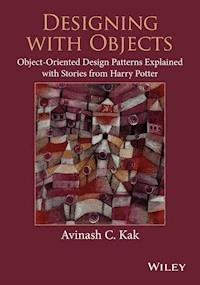
Here is a book that takes the sting out of learning object-oriented design patterns! Using vignettes from the fictional world of Harry Potter, author Avinash C. Kak provides a refreshing alternative to the typically abstract and dry object-oriented design literature.
Designing with Objects is unique. It explains design patterns using the short-story medium instead of sterile examples. It is the third volume in a trilogy by Avinash C. Kak, following Programming with Objects (Wiley, 2003) and Scripting with Objects (Wiley, 2008). Designing with Objects confronts how difficult it is for students to learn complex patterns based on conventional scenarios that they may not be able to relate to. In contrast, it shows that stories from the fictional world of Harry Potter provide highly relatable and engaging models. After explaining core notions in a pattern and its typical use in real-world applications, each chapter shows how a pattern can be mapped to a Harry Potter story. The next step is an explanation of the pattern through its Java implementation. The following patterns appear in three sections: Abstract Factory, Builder, Factory Method, Prototype, and Singleton; Adapter, Bridge, Composite, Decorator, Facade, Flyweight, and Proxy; and the Chain of Responsibility, Command, Interpreter, Iterator, Mediator, Memento, Observer, State, Strategy, Template Method, and Visitor. For readers’ use, Java code for each pattern is included in the book’s companion website.
- All code examples in the book are available for download on a companion website with resources for readers and instructors.
- A refreshing alternative to the abstract and dry explanations of the object-oriented design patterns in much of the existing literature on the subject.
- In 24 chapters, Designing with Objects explains well-known design patterns by relating them to stories from the fictional Harry Potter series
Das E-Book können Sie in Legimi-Apps oder einer beliebigen App lesen, die das folgende Format unterstützen:
Seitenzahl: 837
Veröffentlichungsjahr: 2014
Ähnliche



















CONTENTS
Cover
Title page
Copyright page
PREFACE
ACKNOWLEDGMENTS
1 WHY LEARN DESIGN PATTERNS AND WHY DO SO WITH HELP FROM HARRY POTTER?
1.1 THE OO DESIGN PATTERNS “BIBLE” BY GoF
1.2 BUT WHAT HAS HARRY POTTER GOT TO DO WITH OO DESIGN PATTERNS?
1.3 IS FAMILIARITY WITH HARRY POTTER A REQUIREMENT FOR UNDERSTANDING THIS BOOK?
1.4 HOW THE PATTERN EXPLANATIONS ARE ORGANIZED
1.5 THE TERMINOLOGY OF OBJECT-ORIENTED PROGRAMMING
1.6 THE UML NOTATION USED IN THE CLASS DIAGRAMS
Part I: CREATIONAL PATTERNS
2 ABSTRACT FACTORY
2.1 THE CONCEPT OF A FACTORY IN SOFTWARE
2.2 INTENT AND APPLICABILITY
2.3 INTRODUCTION TO THE ABSTRACT FACTORY PATTERN
2.4 THE ABSTRACT FACTORY PATTERN IN REAL-WORLD APPLICATIONS
2.5 HARRY POTTER STORY USED TO ILLUSTRATE THE ABSTRACT FACTORY PATTERN
2.6 A TOP LEVEL VIEW OF THE PATTERN DEMONSTRATION
2.7 THE ABSTRACT CLASS Factory
2.8 THE HELPER CLASS FactoryStore
2.9 THE ABSTRACT CLASS Enchanted
2.10 THE CONCRETE CLASSES FOR MAGICAL OBJECTS
2.11 THE CONCRETE Factory CLASSES
2.12 THE CLIENT CLASS Diagon AlleyRetailer
2.13 PLAYING WITH THE CODE
3 BUILDER
3.1 BUILDING COMPLEX OBJECTS
3.2 INTENT AND APPLICABILITY
3.3 INTRODUCTION TO THE BUILDER PATTERN
3.4 THE BUILDER PATTERN IN REAL-WORLD APPLICATIONS
3.5 HARRY POTTER STORY USED TO ILLUSTRATE THE BUILDER PATTERN
3.6 A TOP-LEVEL VIEW OF THE PATTERN DEMONSTRATION
3.7 THE ABSTRACT CLASS PotionMaker
3.8 THE CONCRETE EXTENSIONS OF PotionMaker
3.9 THE Director CLASS
3.10 THE Potion CLASS
3.11 THE Ingredient CLASS
3.12 THE PotionMakingFeasibilityViolation CLASS
3.13 THE Client CLASS
3.14 PLAYING WITH THE CODE
4 FACTORY METHOD
4.1 REVISITING THE CONCEPT OF A FACTORY IN SOFTWARE
4.2 INTENT AND APPLICABILITY
4.3 INTRODUCTION TO THE FACTORY METHOD PATTERN
4.4 THE FACTORY METHOD PATTERN IN REAL-WORLD APPLICATIONS
4.5 HARRY POTTER STORY USED TO ILLUSTRATE THE FACTORY METHOD PATTERN
4.6 A TOP LEVEL VIEW OF THE PATTERN DEMONSTRATION
4.7 THE Enchanted CLASS HIERARCHY
4.8 THE ArtifactFactory CLASS HIERARCHY AND THE FACTORY METHODS CONTAINED THEREIN
4.9 THE Client CLASS
4.10 PLAYING WITH THE CODE
5 PROTOTYPE
5.1 WHY NOT MAKE NEW OBJECTS BY COPYING OLD OBJECTS?
5.2 INTENT AND APPLICABILITY
5.3 INTRODUCTION TO THE PROTOTYPE PATTERN
5.4 THE PROTOTYPE PATTERN IN REAL-WORLD APPLICATIONS
5.5 HARRY POTTER STORY USED TO ILLUSTRATE THE PROTOTYPE PATTERN
5.6 A TOP LEVEL VIEW OF THE PATTERN DEMONSTRATION
5.7 THE Dragon CLASS
5.8 THE PrototypeManagerAndDuplicator CLASS
5.9 THE DragonAficionado CLASS
5.10 THE UnknownDragonException CLASS
5.11 PLAYING WITH THE CODE
6 SINGLETON
6.1 SINGULAR OBJECTS
6.2 INTENT AND APPLICABILITY
6.3 INTRODUCTION TO THE SINGLETON PATTERN
6.4 THE SINGLETON PATTERN IN REAL-WORLD APPLICATIONS
6.5 HARRY POTTER STORY USED TO ILLUSTRATE THE SINGLETON PATTERN
6.6 A TOP LEVEL VIEW OF THE PATTERN DEMONSTRATION
6.7 THE MinisterForMagic CLASS
6.8 THE TestSingleton CLASS
6.9 VARIATIONS ON THE SINGLETON PATTERN
6.10 PLAYING WITH THE CODE
Part II: STRUCTURAL PATTERNS
7 ADAPTER
7.1 GETTING THINGS TO WORK TOGETHER
7.2 INTENT AND APPLICABILITY
7.3 INTRODUCTION TO THE ADAPTER PATTERN
7.4 THE ADAPTER PATTERN IN REAL-WORLD APPLICATIONS
7.5 HARRY POTTER STORY USED TO ILLUSTRATE THE ADAPTER PATTERN
7.6 A TOP LEVEL VIEW OF THE PATTERN DEMONSTRATION
7.7 THE TARGET INTERFACE: TeachingDADA
7.8 THE TeacherForDADA CLASS
7.9 THE AdapterForSafeTeaching CLASS
7.10 THE CLIENT CLASS SchoolOfMagic
7.11 OBJECT ADAPTER
7.12 PLUGGABLE ADAPTER
7.13 PLAYING WITH THE CODE
8 BRIDGE
8.1 CONCEPTS AND THEIR IMPLEMENTATION
8.2 INTENT AND APPLICABILITY
8.3 INTRODUCTION TO THE BRIDGE PATTERN
8.4 THE BRIDGE PATTERN IN REAL-WORLD APPLICATIONS
8.5 HARRY POTTER STORY USED TO ILLUSTRATE THE BRIDGE PATTERN
8.6 A TOP LEVEL VIEW OF THE PATTERN DEMONSTRATION
8.7 THE Humanoid CLASS
8.8 THE Dementor, Goblin, AND HouseElf CLASSES
8.9 THE Humanoid Imp CLASS
8.10 IMPLEMENTATION CLASSES FOR THE Dementor, Goblin, AND HouseElf CLASSES
8.11 THE CLIENT CLASS MinistryOfMagic
8.12 PLAYING WITH THE CODE
9 COMPOSITE
9.1 RELATIONSHIPS THAT LOOP BACK
9.2 INTENT AND APPLICABILITY
9.3 INTRODUCTION TO THE COMPOSITE PATTERN
9.4 THE COMPOSITE PATTERN IN REAL-WORLD APPLICATIONS
9.5 HARRY POTTER STORY USED TO ILLUSTRATE THE COMPOSITE PATTERN
9.6 A TOP LEVEL VIEW OF THE PATTERN DEMONSTRATION
9.7 THE WizardTraits INTERFACE
9.8 THE Wizard CLASS
9.9 THE Auror CLASS
9.10 THE Obliviator CLASS
9.11 THE DepartmentHead CLASS
9.12 THE Minister For Magic CLASS
9.13 THE CLIENT CLASS Test
9.14 PLAYING WITH THE CODE
10 DECORATOR
10.1 ONION AS A METAPHOR
10.2 INTENT AND APPLICABILITY
10.3 INTRODUCTION TO THE DECORATOR PATTERN
10.4 THE DECORATOR PATTERN IN REAL-WORLD APPLICATIONS
10.5 HARRY POTTER STORY USED TO ILLUSTRATE THE DECORATOR PATTERN
10.6 A TOP LEVEL VIEW OF THE PATTERN DEMONSTRATION
10.7 THE CoreMessageDeliveryClass CLASS
10.8 THE DECORATOR CLASSES
10.9 THE CLIENT CLASS Test
10.10 PLAYING WITH THE CODE
11 FACADE
11.1 HIDING COMPLEXITY
11.2 INTENT AND APPLICABILITY
11.3 INTRODUCTION TO THE FACADE PATTERN
11.4 THE FACADE PATTERN IN REAL-WORLD APPLICATIONS
11.5 HARRY POTTER STORY USED TO ILLUSTRATE THE FACADE PATTERN
11.6 A TOP LEVEL VIEW OF THE PATTERN DEMONSTRATION
11.7 THE ABSTRACT ROOT CLASS Facade
11.8 THE Network CLASS
11.9 THE Node, Link, AND Path CLASSES
11.10 THE THREE CONCRETE Facade CLASSES
11.11 TESTING THE DEMONSTRATION CODE
11.12 PLAYING WITH THE CODE
12 FLYWEIGHT
12.1 THE IDEA OF CUSTOMIZED DUPLICATIONS
12.2 INTENT AND APPLICABILITY
12.3 INTRODUCTION TO THE FLYWEIGHT PATTERN
12.4 THE FLYWEIGHT PATTERN IN REAL-WORLD APPLICATIONS
12.5 HARRY POTTER STORY USED TO ILLUSTRATE THE FLYWEIGHT PATTERN
12.6 A TOP LEVEL VIEW OF THE PATTERN DEMONSTRATION
12.7 THE HeadMasterPortrait CLASS
12.8 THE FlyweightImageStore CLASS
12.9 THE ImageManager CLASS
12.10 THE PortraitBorderChoices CLASS
12.11 THE ImageNotAvailableException CLASS
12.12 THE PortraitMakerAssignment CLASS
12.13 PLAYING WITH THE CODE
12.14 ACKNOWLEDGMENT
13 PROXY
13.1 IS IT ALWAYS NECESSARY TO HAVE THE REAL THING?
13.2 INTENT AND APPLICABILITY
13.3 INTRODUCTION TO THE PROXY PATTERN
13.4 THE PROXY PATTERN IN REAL-WORLD APPLICATIONS
13.5 HARRY POTTER STORY USED TO ILLUSTRATE THE PROXY PATTERN
13.6 A TOP LEVEL VIEW OF THE PATTERN DEMONSTRATION
13.7 THE ABSTRACT CLASS Wizard
13.8 THE DarkWizardTraits INTERFACE
13.9 THE DarkWizard CLASS
13.10 THE DarkLord CLASS
13.11 THE ClientClass CLASS
13.12 PLAYING WITH THE CODE
Part III: BEHAVIORAL PATTERNS
14 CHAIN OF RESPONSIBILITY
14.1 PASSING THE BUCK
14.2 INTENT AND APPLICABILITY
14.3 INTRODUCTION TO THE CHAIN OF RESPONSIBILITY PATTERN
14.4 THE CHAIN OF RESPONSIBILITY PATTERN IN REAL-WORLD APPLICATIONS
14.5 HARRY POTTER STORY USED TO ILLUSTRATE THE CHAIN OF RESPONSIBILITY PATTERN
14.6 A TOP LEVEL VIEW OF THE PATTERN DEMONSTRATION
14.7 THE INTERFACE CLASS Violations
14.8 THE ABSTRACT CLASS Adjudicator
14.9 THE Player CLASS
14.10 THE CLASSES WITH THE AUTHORITY TO RESOLVE VIOLATIONS
14.11 TESTING THE CODE
14.12 PLAYING WITH THE CODE
15 COMMAND
15.1 ACTIONS VERSUS THE ACTORS
15.2 INTENT AND APPLICABILITY
15.3 INTRODUCTION TO THE COMMAND PATTERN
15.4 THE COMMAND PATTERN IN REAL-WORLD APPLICATIONS
15.5 HARRY POTTER STORY USED TO ILLUSTRATE THE COMMAND PATTERN
15.6 A TOP LEVEL VIEW OF THE PATTERN DEMONSTRATION
15.7 THE Command INTERFACE
15.8 THE MyPlaces INTERFACE
15.9 THE ProtectHarryPotter CLASS
15.10 THE Wizard CLASS
15.11 THE Squib CLASS
15.12 THE Invoker CLASS
15.13 THE UnableToProtectHarryPotterException CLASS
15.15 PLAYING WITH THE CODE
16 INTERPRETER
16.1 PARSING VERSUS INTERPRETATION
16.2 INTENT AND APPLICABILITY
16.3 INTRODUCTION TO THE INTERPRETER PATTERN
16.4 THE INTERPRETER PATTERN IN REAL-WORLD APPLICATIONS
16.5 HARRY POTTER STORY USED TO ILLUSTRATE THE INTERPRETER PATTERN
16.6 A PARSER FRONT-END FOR THE INTERPRETER PATTERN
16.7 A TOP LEVEL VIEW OF THE PATTERN DEMONSTRATION
16.8 THE Driver CLASS
16.9 THE Interpreter Sentence CLASS
16.10 THE WORKER CLASSES FOR INTERPRETATION
16.11 THE UTILITY CLASS ShowSyntaxTree
16.12 PLAYING WITH THE CODE
17 ITERATOR
17.1 STORING OBJECT COLLECTIONS AND INTERACTING WITH THEM
17.2 INTENT AND APPLICABILITY
17.3 INTRODUCTION TO THE ITERATOR PATTERN
17.4 THE ITERATOR PATTERN IN REAL-WORLD APPLICATIONS
17.5 HARRY POTTER STORY USED TO ILLUSTRATE THE ITERATOR PATTERN
17.6 A TOP LEVEL VIEW OF THE PATTERN DEMONSTRATION
17.7 A UTILITY INTERFACE FOR DEMONSTRATING THE ITERATOR PATTERN
17.8 THE Iterator INTERFACE
17.9 THE Fresher CLASS
17.10 THE SortingHat CLASS
17.11 THE MagicCollection INTERFACE
17.12 THE MagicList AND MagicSet CLASSES
17.13 THE CLASS Range
17.14 PLAYING WITH THE CODE
17.15 CREDITS
18 MEDIATOR
18.1 THE ROLE OF MEDIATION IN COLLABORATIVE PROBLEM SOLVING
18.2 INTENT AND APPLICABILITY
18.3 INTRODUCTION TO THE MEDIATOR PATTERN
18.4 THE MEDIATOR PATTERN IN REAL-WORLD APPLICATIONS
18.5 HARRY POTTER STORY USED TO ILLUSTRATE THE MEDIATOR PATTERN
18.6 A TOP LEVEL VIEW OF THE PATTERN DEMONSTRATION
18.7 THE ABSTRACT CLASS Mediator
18.8 THE INTERFACE TrialElements
18.9 THE MinistryOfMagicTrialMediator CLASS
18.10 THE Witness CLASS
18.11 THE Trial INTERFACE
18.12 THE HarryPotterTrial CLASS
18.13 PLAYING WITH THE CODE
19 MEMENTO
19.1 RECALLING THE PAST
19.2 INTENT AND APPLICABILITY
19.3 INTRODUCTION TO THE MEMENTO PATTERN
19.4 THE MEMENTO PATTERN IN REAL-WORLD APPLICATIONS
19.5 HARRY POTTER STORY USED TO ILLUSTRATE THE MEMENTO PATTERN
19.6 A TOP LEVEL VIEW OF THE PATTERN DEMONSTRATION
19.7 THE HogwartsHappening CLASS AND THE INNER Memento CLASS
19.8 THE Client CLASS
19.9 PLAYING WITH THE CODE
20 OBSERVER
20.1 SUBSCRIPTION-BASED BROADCASTING
20.2 INTENT AND APPLICABILITY
20.3 INTRODUCTION TO THE OBSERVER PATTERN
20.4 THE OBSERVER PATTERN IN REAL-WORLD APPLICATIONS
20.6 A TOP LEVEL VIEW OF THE PATTERN DEMONSTRATION
20.7 THE Observer INTERFACE
20.8 THE Observable INTERFACE
20.9 THE DarkLord CLASS
20.10 THE DeathEater CLASS
20.11 THE GodProcess CLASS
20.12 PLAYING WITH THE CODE
21 STATE
21.1 CONTEXTUAL DEPENDENCE OF BEHAVIORS
21.2 INTENT AND APPLICABILITY
21.3 INTRODUCTION TO THE STATE PATTERN
21.4 THE STATE PATTERN IN REAL-WORLD APPLICATIONS
21.5 HARRY POTTER STORY USED TO ILLUSTRATE THE STATE PATTERN
21.6 A TOP LEVEL VIEW OF THE PATTERN DEMONSTRATION
21.7 THE DADA_State INTERFACE
21.8 THE YEAR-BY-YEAR IMPLEMENTATION CLASSES FOR THE STATE
21.9 THE TeachingDADA CLASS
21.10 THE Hogwarts CLASS
21.11 PLAYING WITH THE CODE
22 STRATEGY
22.1 STRATEGIES IN THE PURSUIT OF GOALS
22.2 INTENT AND APPLICABILITY
22.3 INTRODUCTION TO THE STRATEGY PATTERN
22.4 THE STRATEGY PATTERN IN REAL-WORLD APPLICATIONS
22.5 HARRY POTTER STORY USED TO ILLUSTRATE THE STRATEGY PATTERN
22.6 A TOP LEVEL VIEW OF THE PATTERN DEMONSTRATION
22.7 THE ABSTRACT ROOT CLASS FOR STRATEGIES: StrategyAbstractRoot
22.8 THE CONCRETE STRATEGY CLASSES
22.9 THE Champion CLASS
22.10 THE SecondTaskManager CLASS
22.11 PLAYING WITH THE CODE
23 TEMPLATE METHOD
23.1 CUSTOMIZABLE RECIPES
23.2 INTENT AND APPLICABILITY
23.3 INTRODUCTION TO THE TEMPLATE METHOD PATTERN
23.4 THE TEMPLATE METHOD PATTERN IN REAL-WORLD APPLICATIONS
23.5 HARRY POTTER STORY USED TO ILLUSTRATE THE TEMPLATE METHOD PATTERN
23.6 A TOP LEVEL VIEW OF THE PATTERN DEMONSTRATION
23.7 THE ABSTRACT ROOT OF NARRATIVE GENERATION CLASSES
23.8 CONCRETE CLASSES FOR NARRATIVE GENERATION
23.9 THE EXECUTABLE CLASS
23.10 PLAYING WITH THE CODE
24 VISITOR
24.1 HOOKS, GOOD AND EVIL
24.2 INTENT AND APPLICABILITY
24.3 INTRODUCTION TO THE VISITOR PATTERN
24.4 THE VISITOR PATTERN IN REAL-WORLD APPLICATIONS
24.5 HARRY POTTER STORY USED TO ILLUSTRATE THE VISITOR PATTERN
24.6 A TOP LEVEL VIEW OF THE PATTERN DEMONSTRATION
24.7 THE Visitor INTERFACE
24.8 TWO CONCRETE IMPLEMENTATIONS OF THE Visitor INTERFACE
24.9 A RE-IMPLEMENTATION OF THE Wizard HIERARCHY OF THE COMPOSITE PATTERN
24.10 THE EXECUTABLE CLASS Client
24.11 PLAYING WITH THE CODE
REFERENCES
INDEX
End User License Agreement
List of Illustrations
Chapter 01
Fig. 1.1
Fig. 1.2
Fig. 1.3
Fig. 1.4
Fig. 1.5
Fig. 1.6
Fig. 1.7
Fig. 1.8
Chapter 02
Fig. 2.1
Fig. 2.2
Fig. 2.3
Fig. 2.4
Chapter 03
Fig. 3.1
Fig. 3.2
Fig. 3.3
Chapter 04
Fig. 4.1
Fig. 4.2
Fig. 4.3
Fig. 4.4
Chapter 05
Fig. 5.1
Fig. 5.2
Chapter 06
Fig. 6.1
Chapter 07
Fig. 7.1
Fig. 7.2
Fig. 7.3
Fig. 7.4
Chapter 08
Fig. 8.1
Fig. 8.2
Fig. 8.3
Fig. 8.4
Fig. 8.5
Fig. 8.6
Fig. 8.7
Chapter 09
Fig. 9.1
Fig. 9.2
Fig. 9.3
Fig. 9.4
Fig. 9.5
Chapter 10
Fig. 10.1
Fig. 10.2
Fig. 10.3
Fig. 10.4
Fig. 10.5
Fig. 10.6
Fig. 10.7
Chapter 11
Fig. 11.1
Fig. 11.2
Fig. 11.3
Fig. 11.4
Chapter 12
Fig. 12.1
Fig. 12.2
Chapter 13
Fig. 13.1
Fig. 13.2
Chapter 14
Fig. 14.1
Fig. 14.2
Fig. 14.3
Chapter 15
Fig. 15.1
Fig. 15.2
Fig. 15.3
Chapter 16
Fig. 16.1
Chapter 17
Fig. 17.1
Chapter 18
Fig. 18.1
Fig. 18.2
Chapter 19
Fig. 19.1
Fig. 19.2
Chapter 20
Fig. 20.1
Fig. 20.2
Chapter 21
Fig. 21.1
Chapter 22
Fig. 22.1
Fig. 22.2
Chapter 23
Fig. 23.1
Fig. 23.2
Chapter 24
Fig. 24.1
Fig. 24.2
Fig. 24.3
Fig. 24.4
Guide
Cover
Table of Contents
Begin Reading
Pages
iii
iv
xiv
xv
xvi
xvii
xix
1
2
3
4
5
6
7
8
9
10
11
12
13
14
15
16
17
18
19
20
21
22
23
24
25
26
27
28
29
30
31
32
33
34
35
36
37
38
39
40
41
42
43
44
45
46
47
48
49
50
51
52
53
54
55
56
57
58
59
60
61
62
63
64
65
66
67
68
69
70
71
72
73
74
75
76
77
78
79
80
81
82
83
84
85
86
87
88
89
90
91
92
93
94
95
96
97
98
99
100
101
102
103
104
105
106
107
108
109
110
111
112
113
114
115
116
117
118
119
120
121
122
123
124
125
126
127
128
129
130
131
132
133
134
135
136
137
138
139
140
141
142
143
144
145
146
147
148
149
149
150
151
152
153
154
155
156
157
158
159
160
161
162
163
164
165
166
167
168
169
170
171
172
173
174
175
176
177
178
179
180
181
182
183
184
185
186
187
188
190
191
192
193
194
195
196
197
198
199
200
201
202
203
204
205
206
207
208
209
210
211
212
213
214
215
216
217
218
219
220
221
222
223
224
225
226
227
228
229
230
231
232
233
234
235
236
237
238
239
240
241
242
243
244
245
246
247
249
250
251
253
254
255
256
257
258
259
260
261
262
263
264
265
266
267
268
269
270
271
272
273
274
275
276
277
278
279
280
281
282
283
284
285
286
287
288
289
290
291
292
293
294
295
296
297
298
299
300
301
302
303
304
305
306
307
308
309
310
311
312
313
314
315
316
317
318
319
320
321
322
323
324
325
326
327
328
329
330
331
332
333
334
335
336
337
338
339
340
341
342
343
344
345
346
347
348
349
350
351
352
353
354
355
356
357
358
359
360
361
362
363
364
365
366
367
368
369
370
371
372
373
374
375
376
377
378
379
380
381
382
383
384
385
387
388
389
390
391
392
393
394
395
396
397
398
399
400
401
403
404
405
406
407
408
409
410
411
412
413
414
415
416
417
418
419
420
422
423
424
425
427
428
429
430
431
432
433
434
435
436
437
438
439
440
441
442
444
445
446
447
448
449
450
451
452
453
454
455
456
457
458
459
460
462
463
464
465
466
467
468
469
470
471
472
473
474
475
476
477
478
479
480
481
482
483
484
DESIGNING WITH OBJECTS
Object-Oriented Design Patterns Explained with Stories from Harry Potter
AVINASH C. KAK
Purdue University
Cover Image: Courtesy from the author
Copyright © 2015 by John Wiley & Sons, Inc. All rights reserved
Published by John Wiley & Sons, Inc., Hoboken, New JerseyPublished simultaneously in Canada
No part of this publication may be reproduced, stored in a retrieval system, or transmitted in any form or by any means, electronic, mechanical, photocopying, recording, scanning, or otherwise, except as permitted under Section 107 or 108 of the 1976 United States Copyright Act, without either the prior written permission of the Publisher, or authorization through payment of the appropriate per-copy fee to the Copyright Clearance Center, Inc., 222 Rosewood Drive, Danvers, MA 01923, (978) 750-8400, fax (978) 750-4470, or on the web at www.copyright.com. Requests to the Publisher for permission should be addressed to the Permissions Department, John Wiley & Sons, Inc., 111 River Street, Hoboken, NJ 07030, (201) 748-6011, fax (201) 748-6008, or online at http://www.wiley.com/go/permission.
Limit of Liability/Disclaimer of Warranty: While the publisher and author have used their best efforts in preparing this book, they make no representations or warranties with respect to the accuracy or completeness of the contents of this book and specifically disclaim any implied warranties of merchantability or fitness for a particular purpose. No warranty may be created or extended by sales representatives or written sales materials. The advice and strategies contained herein may not be suitable for your situation. You should consult with a professional where appropriate. Neither the publisher nor author shall be liable for any loss of profit or any other commercial damages, including but not limited to special, incidental, consequential, or other damages.
For general information on our other products and services or for technical support, please contact our Customer Care Department within the United States at (800) 762-2974, outside the United States at (317) 572-3993 or fax (317) 572-4002.
Wiley also publishes its books in a variety of electronic formats. Some content that appears in print may not be available in electronic formats. For more information about Wiley products, visit our web site at www.wiley.com.
Library of Congress Cataloging-in-Publication Data:
Kak, Avinash C. Designing with objects : object-oriented design patterns explained with stories from Harry Potter / Avinash C. Kak. pages cm Includes index.
ISBN 978-1-118-58120-9 (paperback)1. Object-oriented programming (Computer science) 2. Rowling, J. K.–Themes, motives. 3. Rowling, J. K.–Characters. 4. Potter, Harry (Fictitious character) I. Title.
QA76.64.K3548 2014 005.1′ 17–dc23
2014007132
PREFACE
Readers who have been following the progress of my Objects Trilogy project will be pleased to see this third and final book of the Trilogy — even if it is almost two years behind schedule.
As to the cause for the delay, the primary culprit was finding the right medium for explaining the design patterns. When I first announced my Objects Trilogy project several years back, my plan, as stated then, was to explain the patterns through famous short stories of the world. By famous I meant classic and universal — the sort that would not need to be re-told when used for explaining the patterns. These would be the stories by Hans Christian Anderson, the Brothers Grimm, and their counterparts from around the world. But, unfortunately, when I started mapping the patterns onto the stories, it became increasingly clear that such stories did not possess the level of complexity that was needed for the patterns. That’s when I turned to Harry Potter.
Lesen Sie weiter in der vollständigen Ausgabe!
Lesen Sie weiter in der vollständigen Ausgabe!
Lesen Sie weiter in der vollständigen Ausgabe!
Lesen Sie weiter in der vollständigen Ausgabe!
Lesen Sie weiter in der vollständigen Ausgabe!
Lesen Sie weiter in der vollständigen Ausgabe!
Lesen Sie weiter in der vollständigen Ausgabe!
Lesen Sie weiter in der vollständigen Ausgabe!
Lesen Sie weiter in der vollständigen Ausgabe!
Lesen Sie weiter in der vollständigen Ausgabe!
Lesen Sie weiter in der vollständigen Ausgabe!
Lesen Sie weiter in der vollständigen Ausgabe!
Lesen Sie weiter in der vollständigen Ausgabe!
Lesen Sie weiter in der vollständigen Ausgabe!
Lesen Sie weiter in der vollständigen Ausgabe!
Lesen Sie weiter in der vollständigen Ausgabe!
Lesen Sie weiter in der vollständigen Ausgabe!
Lesen Sie weiter in der vollständigen Ausgabe!
Lesen Sie weiter in der vollständigen Ausgabe!
Lesen Sie weiter in der vollständigen Ausgabe!
Lesen Sie weiter in der vollständigen Ausgabe!
Lesen Sie weiter in der vollständigen Ausgabe!
Lesen Sie weiter in der vollständigen Ausgabe!
Lesen Sie weiter in der vollständigen Ausgabe!
Lesen Sie weiter in der vollständigen Ausgabe!
Lesen Sie weiter in der vollständigen Ausgabe!
Lesen Sie weiter in der vollständigen Ausgabe!
Lesen Sie weiter in der vollständigen Ausgabe!
Lesen Sie weiter in der vollständigen Ausgabe!
Lesen Sie weiter in der vollständigen Ausgabe!
Lesen Sie weiter in der vollständigen Ausgabe!




