


Disbelief E-Book
Erhalten Sie Zugang zu diesem und mehr als 300000 Büchern ab EUR 5,99 monatlich.
- Herausgeber: Smokestack Books
- Kategorie: Poesie und Drama
- Sprache: Englisch
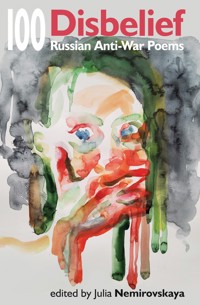
Putin's war in Ukraine has been met by outrage and disbelief around the world. Since the start of the war, writers in Russia, Ukraine and the Russian diaspora have been expressing their opposition to the invasion. An international group of poets and translators have been collecting these poems as the Kopilka project. Disbelief/ Немыслимо presents 100 of the most moving and hard-hitting of these poems by poets including Polina Barskova, Vladimir Druk, Tatiana Voltskaya, Mikhail Aizenberg and Tatiana Shcherbina.
Sie lesen das E-Book in den Legimi-Apps auf:
Seitenzahl: 178
Veröffentlichungsjahr: 2023
Das E-Book (TTS) können Sie hören im Abo „Legimi Premium” in Legimi-Apps auf:
Ähnliche




















Disbelief
100 Russian
Anti-War Poems
Smokestack Books
1 Lake Terrace, Grewelthorpe,
Ripon HG4 3BU
e-mail: [email protected]
www.smokestack-books.co.uk
Copyright of the Russian texts
remains with the authors and their estates.
English translations
copyright the translators.
Introduction copyright
Julia Nemirovskaya.
ISBN 9781739772277
ePub ISBN 9781739173098
Smokestack Books
is represented by
Inpress Ltd
Содержание
Михаил Айзенберг
Ольга Андреева
Ася Анистратенко
Полина Барскова
Лена Берсон
Алла Боссарт
Мария Ботева
Ксения Букша
Дмитрий Веденяпин
Ольга Виноградова
Татьяна Вольтская
Анна Гальберштадт
Владимир Гандельсман
Андрей Гришаев
Вадим Гройсман
Михаил Гронас
Юлий Гуголев
Ольга Гуляева
Иван Давыдов
Надя Делаланд
Александр Дельфинов
Ольга Дернова
Олег Дозморов
Владимир Друк
Валерий Дымшиц
Ирина Евса
Вадим Жук
Кристина Зейтунян-Белоус
Гали-Дана Зингер
Ольга Зондберг
Игорь Иртеньев
Галина Ицкович
Александр Кабанов
Ксения Казанцева
Ксения Кириллова
Евгений Клюев
Дмитрий Коломенский
Нина Косман
Лена Крайцберг
Сергей Круглов
Анна Крушельницкая
Александр Ланин
Ольга Левская
Сергей Лейбград
Герман Лукомников
Шаши Мартынова
Ирина Машинская
Юлия Немировская
Алексей Олейников
Вера Павлова
Юлия Пикалова
Сергей Плотов
Мария Ремизова
Анна Русс
Дана Сидерос
Оля Скорлупкина
Татьяна Стамова
Игорь Сухий
Алексей Тарасов
Данил Файзов
Юля Фридман
Аля Хайтлина
Борис Херсонский
Майя Цесарская
Сергей Шестаков
Вита Штивельман
Татьяна Щербина
Михайло Юдовський
Юрий Якобсон
Санджар Янышев
Contents
Introduction
Mikhail Aizenberg
Olga Andreeva
Assia Anistratenko
Polina Barskova
Lena Berson
Alla Bossart
Maria Boteva
Ksenia Buksha
Dmitry Vedenyapin
Olga Vinogradova
Tatiana Voltskaya
Anna Halberstadt
Vladimir Gandelsman
Andrey Grishaev
Vadim Groisman
Mikhail Gronas
Yulii Gugolev
Olga Gulyaeva
Ivan Davydov
Nadya Delaland
Alexander Delfinov
Olga Dernova
Oleg Dozmorov
Vladimir Druk
Valery Dymshitz
Irina Evsa
Vadim Zhuk
Christine Zeytounian-Beloüs
Gali-Dana Singer
Olga Zondberg
Igor Irteniev
Galina Itskovich
Alexandr Kabanov
Ksenia Kazantseva
Kseniya Kirillova
Eugene Kluev
Dmitry Kolomensky
Nina Kossman
Lena Kraitsberg
Sergei Kruglov
Anna Krushelnitskaya
Alexander Lanin
Olga Levskaya
Sergei Leibgrad
Herman Lukomnikov
Shashi Martynova
Irina Mashinski
Julia Nemirovskaya
Alexei Oleinikov
Vera Pavlova
Julia Pikalova
Sergey Plotov
Maria Remizova
Anna Russ
Dana Sideros
Olya Skorlupkina
Tatiana Stamova
Igor Sukhiy
Alexey Tarasov
Danil Faizov
Yulia Fridman
Alja Khajtlina
Borys Khersonskyi
Maja Ceszárszkaja
Serge Shestakov
Vita Shtivelman
Tatiana Shcherbina
Mykhailo Yudovskyi
Yuriy Yakobson
Sandzhar Yanyshev
Introduction
On 24 February 2022, Putin began a special military operation in Ukraine. As the world watched in horror, the unthinkable unfolded: a full-scale war broke out in twenty-first century Europe, complete with bombed-out cities, tens of thousands of casualties, millions of traumatized refugees, a threat to the world food supply, and a blow to the international economy that hadn’t yet recovered from the crisis of Covid 19. Ukrainians have been horrified, enraged, devastated, and united as never before. For Ukrainian poets, it has been important to find a new voice with which to describe the enemy’s atrocities and express their rage in the face of this aggression. For those in Russia who withstood Putin’s omnipresent propaganda machine and opposed the war - at a time when merely calling it a war rather than a special operation was punishable by as much as 15 years in prison - the horror also included struggling with a sense of deep personal responsibility for the outrage taking place before their eyes. Russophone poets from everywhere have been ravaged by the sight of their native tongue, the Russian language, wielded by Putin as an instrument of suppression and cultural erasure in Ukraine.
The war in Ukraine, just as World War II before it, has inspired countless Russian-language poets from different parts of the Soviet Union to take up the pen; but if at that time Soviet poets supported the state against Nazi Germany and yearned for victory, those who are responding to today’s events in Ukraine condemn both the state and Putin’s aggression. Some of the poets who lived in Russia left in protest. It quickly became clear that help was needed to gather and safeguard the poems they were writing, which is how the Kopilka Project was born. Kopilka - which means a piggy-bank in Russian - was founded in the United States, a place beyond Putin’s reach, where these poems could be collected and preserved. Soon, Kopilka came to include the work of Russophone Ukrainian and diaspora poets, many of them bilingual, who insisted on using the Russian language for their poetry of protest, in order to subvert Putin’s use of Russian in propaganda and state control; as one bilingual poet put it, ‘I refuse to abandon the language to the Putinites!’ Those whose shock was too strong to be able to write any new poems but who wanted to express their anger and protest, sent the Coin Bank editors their old anti-war poems, written after 2008, the year of Putin’s invasion of Georgia, and especially after 2014, the year of his annexation of Crimea.
Kopilka’s collection is represented here by 100 powerful poems along with their English translations, prepared by a number of North American and British translators. While the facts of the war in Ukraine continue to be well-documented by a number of organizations, poetry adds an important dimension to our understanding of the war, exposing its inhumanity and absurdity in a form that is immediately accessible and relatable. The poems are presented here in alphabetical order by their author’s name, but have been chosen so that each one is building on the previous ones, conveying the shock experienced by millions after the onset of Putin’s aggression. Like waves of pain or tragic musical chords, each poem adds its own perspective on the events of this year and turns our experience into something deeper, more subtle, or more macabre than just grief.
Yulia Fridman exposes the absurdity of Russian propaganda taken at face value by at least two-thirds of the population:
When we had liberated Ukraine from the Nazis,
Poland from Martians, Finland from dog-headed men...
We were compelled to raze Estonia from the map,
since the ichthyosaurs took over step by step...
In Latvia too, we destroyed all signs of life,
we had no choice - the West forced our hand!
In his many-layered and complex poems, Andrei Grishaev envisions the bloody tyrant as a gnat and decries the change of landscape when everyday things begin to look ominous:
Fields are growing evil pods
And the sun falls down on us
Lighting up the whole old world
From the hills appears a bud
Down the crack a gnat has crawled
The commander of red blood.
Yulii Gugolev writes about the omnipresent, inescapable fact of ongoing war through a metaphor of stains that spread to encompass the entire world:
These stains are staring like eyes.
They’re like brand marks, raw and burning.
I let them soak for the night,
thought they’d be gone by morning.
But with all the scrubbing and scouring
it stayed, spread to my skin, everywhere.
And the salty taste of iron
in the sky, on my lips, in the air.
Nadya Delaland laments the loss of life by turning herself into a nurturing mother of the dead:
all the dead turn into children
they’re helpless can’t do squat
for them there’s no thank god
dress them turn them cheer them
pick them up hold them tight
sing songs speak clearly say
that they all won’t die one day
Tatiana Voltskaya shows how the war devalues the glorious memory of the previous war fought by Russians against real Nazis:
We’ll get what we deserve, and more. Unholy war
Has tarnished grandad’s medals.
Voltskaya’s bitter, ‘Well get what we deserve’ reverberates in Eugene Kluev’s expression of guilt, shame, and a sense of culpability that any Russophone author experiences after their language became an instrument of torture and aggression:
Jump off the globe, move somewhere far remote!
In Europe now the price of April’s crushing.
I’ve lost my right to have a voice, a vote:
I’m Russian.
Reading poem after poem, experiencing wave after wave, the reader begins to appreciate the depth of poetic vision of different aspects of the war, and to see it through the eyes of the extraordinary people who managed to stay true to their original poetic voices and fearlessly revealed the war’s absurdity and inhumanity
These 100 poems shake the readers out of the emotional vacuum that results from consuming the mass media reports on the war, allowing them to experience the war in a much more personal and immediate manner, and helping them live through this terrible turn of history
Julia Nemirovskaya, Maria Bloshteyn, 2022
Михаил Айзенберг
Слово на ветер; не оживёт, пока
в долгом дыхании не прорастёт зерно.
Скажешь «зима» - и всё снегами занесено.
Скажешь «война» и - угадаешь наверняка.
Не говори так, ты же не гробовщик.
Время лечит. Дальняя цель молчит.
Но слово за слово стягивается петля;
всё от него, от большого, видать, ума.
Скоро заглянешь за угол - там зима.
Выдвинешь нижний ящик - а там земля.
2015
Mikhail Aizenberg
The word is lost; it will not come to life
until with one long breath the seed’s uncurled.
Say ‘winter’ and the snow will cover the world.
Say ‘war’ and you’ll be truer than any knife.
Hush; not yours to make the dead their casket.
Time’s a healer. Mute the distant target.
No. Word by word the noose pulls tight; all birthed -
each word - inside my oh so clever mind.
You’ll glance around, and winter’s in the wind.
Pull out the bottom drawer - and you’ll see earth.
2015
translated by Richard Coombes
Два Голоса
что у тебя с лицом?
нет на тебе лица,
выглядишь беглецом.
топкая здесь земля.
тонок ее настил.
долог ее отлив,
быть не хватает сил,
жабрами шевеля.
вот объявился тать,
командир этих мест.
что ни увидит, съест.
нечего ему дать.
всех коров извели.
зверя сдали на вес.
множатся стригали,
но никаких овец.
да, но еще вдали
множатся голоса
выброшенных с земли,
стертых с ее лица.
в камни обращены.
гонит воздушный ключ
запахи нищеты.
камень еще горюч.
2012
время-то на износ.
времени-то в обрез.
что бы ни началось,
некогда ставить крест.
выбери шаг держать,
голову не клонить,
жаловаться не сметь.
выбери жизнь, не смерть.
жизнь, и еще не вся.
жаловаться нельзя
2012
Two Voices
what’s wrong with your face?
It doesn’t look like a face.
you look like a runaway
earth is muck in this place.
its hide hardly holds.
its tide hardly spills.
breath barely unfolds
by the labour of your gills.
here comes a big thief,
the big chief of these streets.
whatever he sees, he eats.
we got nothing to give.
we butchered the cows: no feed.
we sold the game for cheap.
sheep shearers breed and breed,
but there’s no trace of sheep.
yet, voices breed far away,
yet, there is no dearth
of voices of castaways
scrubbed from the face of the earth.
voices are turned to stone.
the airstream steers the airborne
stench of squalor along.
turns out that stone can burn.
2012
turns out that time’s worn thin,
turns out that time’s cut short.
whatever else may begin
will be the worst resort.
resolve to keep in step,
to never ever fret,
to hold your head high.
resolve to live, not die.
life is yet to be spanned,
fretting be darned and banned.
2012
translated by Anna Krushelnitskaya
Ольга Андреева
Слушайся, детка, ложись-ка в кровать -
русские сказки идут убивать.
Выключи лампу, не спи, но молчи -
бомбардировщики воют в ночи,
завтра приедет Иван на печи.
Слышишь - несётся ковёр-самолёт,
молнию с громом на город нашлёт.
Щука в реке - обернусь, говорит
высокоточной ракетой Калибр.
А Василиса утешит ребят
в Курске, в Воронеже - но не тебя...
Вот они, братья, стоят у костра -
месяц Июль так похож на Февраль.
А Колобка загоняет спираль
страха в чужую неверную даль.
Змей-то, Горыныч, пока что живой -
с третьей, контрольной своей головой.
Шёлковы рыжие кудри огня.
Ты попроси его - чур, не меня.
Глазки закрой - не вползёт в твои сны
злое пророчество духов лесных.
Горькая правда ли, сладкая ложь -
так не бывает, ты не умрёшь,
выдернут репку - и пустишься в рост.
сквозь молодильные яблоки звёзд,
но перед тем упадёшь до поры
в руки рыдающей той медсестры.
Как расточительна ночь и щедра,
выключи атавистический страх,
да, из копытца напиться нельзя,
лебеди-гуси по небу сквозят,
это Жар-птица с тобой говорит,
на Януковиче шапка горит,
кот-волкодав на железной цепи,
вечное море бессильно сопит
в волноотбойники синей волны,
где задыхается мир от войны.
Olga Andreeva
Beddy-bye, my child, lie still!
Russian tales come out to kill.
Turn off lights in your alcove -
Nighttime bombers prowl and rove,
Ivan rides his horseless stove.
Hear the Flying Carpet zoom,
Raining thunderbolts and doom.
See the magic changeling Pike
Launch herself into a strike.
Vasilisa will be Fair
Just to Russian kids out there.
Look, Twelve Brothers going by!
February’s like July.
Kolobok got spooked and fled.
He’s a poor wayfaring bread.
Zmei the Dragon has three heads
For breathing fire at children’s beds.
See his flaming mane fly free.
Ask him nicely: please, not me.
Close your eyes and seal your dreams
From the evil wood-sprites’ schemes.
Bitter truth or lovely lie -
Neither’s real, so you won’t die.
Pull the Turnip, grow up tall,
Watch the Golden Apples fall.
But before, you’ll fall, of course,
To be caught by a sobbing nurse.
Night has brought her riches here.
Lock away your primal fear.
Don’t drink from the Enchanted Hoof.
The Swan Geese fly above your roof.
The Firebird talks to you in grief,
The Burning Hat betrays the thief,
The Learned Cat will yank his chain,
The old blue sea will sigh and wane,
Powerless against the shore
Where the world is sick with war.
translated by Anna Krushelnitskaya
Ася Анистратенко
Понадобилась целая война,
Чтоб двинулись фигуры умолчаний.
Теперь любой утюг, сапог и чайник
Мне говорят: а ты купи слона!
Нет, то есть, ты ходи, пиши, пляши...
Но всё-таки купи, купи слона.
Я не заметил, как прошла весна.
Я не уверен, точно ли я жив.
Слон в комнате. Он дышит в темноте,
Он плохо помещается меж стен,
Он бурно гадит, очень много ест.
Я не хочу слона. Но слон мой здесь.
Assia Anistratenko
It took a downright war for this development,
To shift what sort of things are meant by silence.
But now a random chair, a shoe, a saucer
Are whispering to me: adopt an elephant.
You go on jogging, rhyming, laughing if you like
The elephant will loom just out of sight.
I haven’t noticed as the spring sailed by,
I am not sure if I’m still alive.
My elephant is breathing in the dark.
It’s here, it’s in this room. It barely fits,
It eats a lot, produces tons of crap.
I wish it would be gone. But here it is.
translated by Andrei Burago and the author
Полина Барскова
Город
‘Представитель ДНР:
под «Азовсталью» есть подземный город, затрудняющий его штурм’
Известия, 15 апреля, 2022
по тому надземному переходу на Невском где тебя сбило машиной
сегодня спешат люди
добрые люди как сказано в детском романе
любящие своих близких боящиеся смерти
такие же как и я с трусцой гнильцой в тепловатом сердце
с желанием думать о себе получше поглаже
над пешеходным переходом зияет новая буква//
издает зловоние злосвечение как дохлая крыса гнилая брюква
кто/то добавил новую букву в мой алфавит ладный нежный
кто/то наклеил новую букву на мой ненаглядный город
как это получилось в каком/то смысле теперь неважно
что было здесь раньше в каком/то смысле теперь неважно
почему ты умер в каком/то смысле теперь неважно
важно понять что больше уже никогда не будет
понимание состоит из каждого нового утра
в пустоте в отвращении в одиночестве в жалком крике
на языке посреди которого сияет зияет новая буква:
как голова любимого раздавленная на щербленом асфальте
(а когда я впервые тебя увидела в пяти минутах ходьбы от этого
перехода
я так на тебя смотрела на эту голову прекрасную как светильник
что ты засмеявшись спросил: со мною что/то не так?
И я сказала: не знаю)
из/за этой живой картины я покинула ненаглядный город
но и с собой его забрала в себя его втравила,
как в каверну в зубе—капсулу с ядом,
в яркой толпе его мертвецов стала своею
(самозванка, шпионка, притворщица: примелькалась)—
и теперь этот яд совершает свою работу.
понимание состоит в том, что есть вещи похуже смерти:
город мой бедный стал город пышным: скука//
обывателям лижет руки как верная сука
все говорят о завтрашнем дне: будет ли белым черным горячим
холодным
покупают газеты новостям равнодушно кривятся вздыхают
ценам смотрят кроссворд прогноз погоды
какая в завтрашнем дне хотелось бы знать будет в городе нашем
погода?
в городе нашем погода будет такая:
падет и пал и падает
Вавилон, город великий, потому что он яростным вином блуда
своего напоил все народы, кто поклоняется зверю и образу его и
принимает начертание на чело свое, или на руку свою тот будет
пить вино ярости Божией, вино цельное, приготовленное в чаше
гнева Его, и будет мучим в огне и сере
пред святыми Ангелами и пред Агнцем.
Polina Barskova
City
‘DPR representative:
beneath Azovstal, there is an underground city,
which complicates our assault’
Izvestiya, 15 April 2022
on that street crossing on the Nevsky where you were hit by a car
people are hurrying now
kind people as they are called in a kids’ novel
loving their families fearing death
people like me with a lukewarm heart touched by rot by terror
wishing to think themselves a little nicer better
above the street crossing gapes the new letter -
it exudes an evil stench a lurid glow like a dead rat rotten rutabaga
someone stuck a new letter into my alphabet so neat so mellow
someone slapped the new letter onto my beloved city
in a sense how it happened doesn’t matter anymore
in a sense what had been here before doesn’t matter anymore
in a sense why you died doesn’t matter anymore
what matters is to comprehend what’s gone forever
this comprehension involves every new morning
in desolation loathing loneliness in wretched screeching
on my tongue cankered in the middle with the new letter:
like my lover’s crushed head on the pockmarked pavement
(and when i first saw you in a five-minute walk from this crossing
the way i looked at you at this head beautiful as a luminous lamp
you laughed and asked: something wrong with me?
and i said i don’t know)
because of this moving picture i left my beloved city
but i also took it with me etched into myself,
implanted like a cyanide capsule in a hollow tooth,
i wormed myself into the garish crowd of its dead people
(an impostor a spy a fraud: insinuated into familiarity)—
and now the poison is slowly doing its job.
the comprehension is that there are things worse than death:
this poor city of mine became a city of splendor: boredom
licks the locals’ hands like a loyal bitch
the talk of the city is the tomorrow: will it be white black hot cold
buying newspapers grimacing indifferently at the news
sighing at the prices staring at the crossword puzzle at the weather
forecast
one should like to know what kind of weather befalls our city tomorrow
and this is the weather forecast for our city:
it shall fall it’s fallen it’s falling
Babylon, that great city, because she has made all nations drink of the
wine of the wrath of her fornication, if anyone worships the beast and
his image, and receives his mark on his forehead or on his hand, he
himself shall also drink of the wine of the wrath of God, poured out full
strength into the cup of His indignation. He shall be tormented with
fire and brimstone
before the holy angels and before the Lamb.
translated by Dmitri Manin
Лена Берсон
В темнейшие, темнеменьшие времена,
Все то, что ты можешь думать: война, война.
Все то, что ты можешь делать... да ни хрена.
На случай обстрела - полезней мешок с песком,
Чем тело мое с коснеющим языком,
Который уже не мелет ни на каком.
Родимая речь, все та же (не та, не та),
Роднит нас не больше пены у края рта,
Наличия пальцев, наличия живота.
Привычная, присосавшаяся как клещ,
Ты лучше бы стала невнятная немтыречь,
Чем биться в ушах: стреляй, убивай, калечь.
Шуршала бы ты не громче золы в костре,
Дождя по оконной бреши, дверной дыре,
Травы на сожженном во имя твое дворе.
Lena Berson
In the darkest times, neverthecursed before,
All you can think is this: war, war.
All you can do... not a damn thing anymore.
In case of airstrikes - there’s more use in a sandbag,
Than in my body in which my tongue starts to sag,
Not a language left in which it could still wag.
Our mother tongue, still the same (not the same, no)
No more makes us kin than do spittle bubbles we blow,
Or the way our fingers grow and our bellies grow.
Same speech, stuck to us like a suckling tick -
I wish your mutterances were muffled and thick,
Unlike the knell in their ears: shoot, maim, murder, quick;
Be as hushed as the ash after a flash of flame,
As rain in the window hole, through the gaping door frame,
On the grass in the yard which was burned down in your
name.
translated by Anna Krushelnitskaya
Алла Боссарт
По небу полуночи ангел летел,
крылышками бяк-бяк,
золотокудр и пустотел,
не по делам, а так.
Летел навестить родные места,
откуда в жизни иной
он и еще человек полста
отправились за войной.
Война их манила, обожжена,
крыльями бах-ба-бах,
а где-то там молодая жена
осталася на бобах,
сидит и молча пряжу сучит,
детка агу-агу,
в окошко ее почтальон стучит,
валенки все в снегу.




