


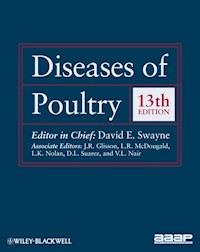
Diseases of Poultry E-Book
165,99 €
Mehr erfahren.
- Herausgeber: John Wiley & Sons
- Kategorie: Fachliteratur
- Sprache: Englisch
Diseases of Poultry is the most comprehensive reference for all aspects of poultry health and diseases, including pathogenesis, diagnostics, epidemiology, and control methods. Published in partnership with the American Association of Avian Pathologists, the Thirteenth Edition remains the international definitive reference, adding newer diagnostic methods and a new chapter on the emerging importance of zoonotic infections for poultry pathogens. Other updates include new high-quality photographs, additional discussion of conceptual operational biosecurity and disease control in organic production systems, and a greater emphasis throughout on the differences in disease incidence and treatments for the United States and other areas around the globe. Organized logically by disease type, the book offers detailed coverage of the history, etiology, pathobiology, diagnosis, and intervention strategies, as well as the economic and public health significance, for an exhaustive list of common and uncommon diseases. Diseases of Poultry, 13th Edition is an essential purchase for poultry veterinarians, veterinary diagnosticians, poultry scientists, students specializing in poultry health, and government officials who deal with poultry health in regulatory climate.
Sie lesen das E-Book in den Legimi-Apps auf:
Seitenzahl: 5298
Veröffentlichungsjahr: 2013
Ähnliche




















Contents
Contributors
Preface: Historical Review of Diseases of Poultry
Introduction
I General Concepts of Poultry Diseases
Chapter 1: Principles of Disease Prevention, Diagnosis, and Control
Introduction
Principles of Disease Prevention, Diagnosis, and Control Introduction
Antimicrobial Therapy (Including Resistance)
Public Health Significance of Poultry Diseases
Chapter 2: Host Factors for Disease Resistance
Introduction
The Avian Immune System
Genetics of Disease Resistance
II Viral Diseases
Chapter 3: Newcastle Disease, Other Avian Paramyxoviruses, and Avian Metapneumovirus Infections
Introduction
Newcastle Disease
Avian Paramyxoviruses 2–11
Avian Metapneumovirus
Chapter 4: Infectious Bronchitis
Chapter 5: Infectious Laryngotracheitis
Chapter 6: Influenza
Chapter 7: Infectious Bursal Disease
Chapter 8: Chicken Infectious Anemia Virus and Other Circovirus Infections
Introduction
Chicken Infectious Anemia
Circovirus Infections of Avian Species
Chapter 9: Adenovirus Infections
Introduction
Aviadenovirus Infections
Atadenovirus (Egg Drop Syndrome and Related Infections)
Hemorrhagic Enteritis and Related Infections
Quail Bronchitis
Chapter 10: Pox
Chapter 11: Reovirus Infections
Introduction
Viral Arthritis
Other Reovirus Infections
Chapter 12: Viral Enteric Infections
Introduction
Turkey Coronavirus Enteritis
Rotavirus Infections
Astrovirus Infections
Avian Enterovirus-Like Virus Infections
Enteric Parvovirus Infections of Chickens and Turkeys
Chapter 13: Viral Infections of Waterfowl
Introduction
Duck Hepatitis
Duck Virus Enteritis (Duck Plague)
Hemorrhagic Nephritis Enteritis of Geese
Parvovirus Infections of Waterfowl
Chapter 14: Other Viral Infections
Introduction
Miscellaneous Herpesvirus Infections
Avian Nephritis
Arbovirus Infections
Turkey Viral Hepatitis
Avian Encephalomyelitis
Avian Hepatitis E Virus Infections
Chapter 15: Neoplastic Diseases
Introduction
Marek’s Disease
Leukosis/Sarcoma Group
Reticuloendotheliosis
Other Tumors
III Bacterial Diseases
Chapter 16: Salmonella Infections
Introduction
Pullorum Disease and Fowl Typhoid
Paratyphoid Infections
Arizonosis
Chapter 17: Campylobacteriosis
Chapter 18: Colibacillosis
Chapter 19: Pasteurellosis and Other Respiratory Bacterial Infections
Introduction
Fowl Cholera
Riemerella anatipestifer Infection
Ornithobacterium rhinotracheale Infection
Bordetellosis (Turkey Coryza)
Chapter 20: Infectious Coryza and Related Bacterial Infections
Chapter 21: Mycoplasmosis
Introduction
Mycoplasma gallisepticum Infection
Mycoplasma meleagridis Infection
Mycoplasma synoviae Infection
Mycoplasma iowae Infection
Other Mycoplasmal Infections
Chapter 22: Clostridial Diseases
Introduction
Ulcerative Enteritis
Necrotic Enteritis
Botulism
Gangrenous Dermatitis
Chapter 23: Other Bacterial Diseases
Introduction
Staphylococcosis
Streptococcus and Enterococcus
Erysipelas
Avian Intestinal Spirochetosis
Tuberculosis
Miscellaneous and Sporadic Bacterial Infections
Chapter 24: Avian Chlamydiosis
IV Fungal Diseases
Chapter 25: Fungal Infections
Aspergillosis
Candidiasis (Crop Mycosis)
Sporadic Fungal Infections
V Parasitic Diseases
Chapter 26: External Parasites and Poultry Pests
Chapter 27: Internal Parasites
Introduction
Nematodes and Acanthocephalans
Chapter 28: Protozoal Infections
Introduction
Coccidiosis
Cryptosporidiosis
Histomoniasis (Blackhead) and Other Protozoan Diseases of the Intestinal Tract
Miscellaneous and Sporadic Protozoal Infections
VI Noninfectious Diseases
Chapter 29: Nutritional Diseases
Chapter 30: Developmental, Metabolic, and Other Noninfectious Disorders
Chapter 31: Mycotoxicoses
Chapter 32: Toxins and Poisons
VII Other Diseases
Chapter 33: Emerging Diseases and Diseases of Complex or Unknown Etiology
Introduction
Multicausal Respiratory Diseases
Multicausal Enteric Diseases
Hypoglycemia-Spiking Mortality Syndrome of Broiler Chickens
Proventriculitis and Proventricular Dilatation of Broiler Chickens
Index
Advertisement
This edition first published 2013 © 2013 by John Wiley & Sons, Inc.First edition, © 1943 Iowa State University PressSecond edition, © 1948 Iowa State University PressThird edition, © 1952 Iowa State University PressFourth edition, © 1959 Iowa State University PressFifth edition, © 1965 Iowa State University PressSixth edition, © 1972 Iowa State University PressSeventh edition, © 1978 Iowa State University PressEighth edition, © 1984 Iowa State University PressNinth edition, © 1991 Iowa State University PressTenth edition, © 1997 Iowa State University PressEleventh edition, © 2003 Iowa State PressTwelfth edition, © 2008 Blackwell Publishing Ltd.
Editorial Offices1606 Golden Aspen Drive, Suites 103 and 104, Ames, Iowa 50010, USAThe Atrium, Southern Gate, Chichester, West Sussex, PO19 8SQ, UK9600 Garsington Road, Oxford, OX4 2DQ, UK
For details of our global editorial offices, for customer services and for information about how to apply for permission to reuse the copyright material in this book please see our website at www.wiley.com/wiley-blackwell.
Authorization to photocopy items for internal or personal use, or the internal or personal use of specific clients, is granted by Blackwell Publishing, provided that the base fee is paid directly to the Copyright Clearance Center, 222 Rosewood Drive, Danvers, MA 01923. For those organizations that have been granted a photocopy license by CCC, a separate system of payments has been arranged. The fee codes for users of the Transactional Reporting Service are ISBN-13: 978-0-4709-5899-5/2013.
Designations used by companies to distinguish their products are often claimed as trademarks. All brand names and product names used in this book are trade names, service marks, trademarks or registered trademarks of their respective owners. The publisher is not associated with any product or vendor mentioned in this book.
The contents of this work are intended to further general scientific research, understanding, and discussion only and are not intended and should not be relied upon as recommending or promoting a specific method, diagnosis, or treatment by health science practitioners for any particular patient. The publisher and the author make no representations or warranties with respect to the accuracy or completeness of the contents of this work and specifically disclaim all warranties, including without limitation any implied warranties of fitness for a particular purpose. In view of ongoing research, equipment modifications, changes in governmental regulations, and the constant flow of information relating to the use of medicines, equipment, and devices, the reader is urged to review and evaluate the information provided in the package insert or instructions for each medicine, equipment, or device for, among other things, any changes in the instructions or indication of usage and for added warnings and precautions. Readers should consult with a specialist where appropriate. The fact that an organization or Website is referred to in this work as a citation and/or a potential source of further information does not mean that the author or the publisher endorses the information the organization or Website may provide or recommendations it may make. Further, readers should be aware that Internet Websites listed in this work may have changed or disappeared between when this work was written and when it is read. No warranty may be created or extended by any promotional statements for this work. Neither the publisher nor the author shall be liable for any damages arising herefrom.
Library of Congress Cataloging-in-Publication Data
Diseases of poultry. – 13th ed. / editor-in-chief, David E. Swayne ; associate editors, John R. Glisson … [et al.]. p. ; cm. Includes bibliographical references and index.
ISBN 978-0-470-95899-5 (hardback : alk. paper) I. Swayne, David E.[DNLM: 1. Poultry Diseases. SF 995] SF995 636.5′0896–dc23
2013007104
A catalogue record for this book is available from the British Library.
Wiley also publishes its books in a variety of electronic formats. Some content that appears in print may not be available in electronic books.
Cover design by Modern Alchemy LLC
Dedicated to
Dr. Y.M. Saif, Associate Editor,Diseases of Poultry, 10th editionEditor-in-Chief, 11th and 12th editions
Dr. A.M. Fadly, Associate Editor,
Diseases of Poultry, 11th and 12th editions
Contributors
Tahseen Abdul-AzizVeterinary PathologistRollins Animal Disease Diagnostic LaboratoryNorth Carolina Department of Agriculture and Consumer ServicesRaleigh, North Carolina, USAClaire B. AndreasenAssociate Dean for Academic and Student AffairsProfessorCollege of Veterinary MedicineIowa State UniversityAmes, Iowa, USAH. John BarnesProfessorDepartment of Population Health and PathobiologyCollege of Veterinary MedicineNorth Carolina State UniversityRaleigh, North Carolina, USAPaul A. BarrowProfessorVeterinary Infectious DiseasesSchool of Veterinary Medicine and ScienceNottingham UniversitySutton Bonington, Leicestershire, United KingdomViveca BåverudAssociate Professor, HeadDepartment of BacteriologyNational Veterinary Institute Uppsala, SwedenRoy D. BerghausAssociate ProfessorDepartment of Population HealthCollege of Veterinary MedicineUniversity of GeorgiaAthens, Georgia, USAAlex J. Bermudez*DirectorVeterinary Medical Diagnostic LaboratoryCollege of Veterinary MedicineUniversity of MissouriColumbia, Missouri, USAPat J. BlackallSenior Principal Research FellowQueensland Alliance for Agriculture and Food InnovationThe University of QueenslandQueensland, AustraliaGunilla BlomqvistDepartment of Virology, Immunology and ParasitologyNational Veterinary InstituteUppsala, SwedenJanet M. BradburyEmeritus ProfessorSchool of Veterinary Science—Leahurst CampusUniversity of LiverpoolNeston, Wirral, United KingdomJoseph M. BrickerGlobal Bios ResearchZoetisKalamazoo, Michigan, USABruce R. CharltonProfessorCalifornia Animal Health and Food Safety Laboratory SystemUniversity of California—DavisTurlock, California, USAHans H. ChengSupervisory Research GeneticistAvian Disease and Oncology LaboratoryAgricultural Research ServiceU.S. Department of AgricultureEast Lansing, Michigan, USARichard P. ChinProfessorCalifornia Animal Health and Food Safety Laboratory SystemUniversity of California—DavisTulare, California, USAJens P. ChristensenAssociate ProfessorDepartment of Veterinary Disease BiologyFaculty of Life SciencesUniversity of CopenhagenFrederiksberg, Copenhagen, DenmarkStephen R. CollettClinical Associate ProfessorPoultry Diagnostic and Research CenterDepartment of Population HealthCollege of Veterinary MedicineUniversity of GeorgiaAthens, Georgia, USARobert M. CorriganPrivate ConsultantUrban RodentologistRMC Pest Management ConsultingRichmond, Indiana, USARocio CrespoAssociate ProfessorAvian Health and Food Safety Laboratory (WADDL) Department of Veterinary Microbiology and PathologyWashington State UniversityPullman, Washington, USAJames F. DavisVeterinary Director of Diagnostics—North GeorgiaGeorgia Poultry Laboratory NetworkOakwood, Georgia, USAJ. Michael DayMicrobiologistEndemic Poultry Viral Diseases Research UnitSoutheast Poultry Research LaboratoryAgricultural Research ServiceU.S. Department of AgricultureAthens, Georgia, USASjaak de WitPoultry VeterinarianAnimal Health ServiceDeventer, The NetherlandsJean Pierre DuchatelDepartment of Infectious and Parasitic DiseasesFaculty of Veterinary MedicineUniversity of LiegeLiege, BelgiumMichael J. DykstraDirector and Research ProfessorLaboratory for Advanced Electron and Light Microscopy MethodsDepartment of Population Health and PathobiologyCollege of Veterinary MedicineNorth Carolina State UniversityRaleigh, North Carolina, USANicolas EterradossiAgence Nationale de Securite Sanitaire de l’Alimentation, de l’Environnement et du Travail (Anses)Laboratoire de Ploufragan/PlouzaneUnite de Virologie Immunologie et Parasitologie Aviaires et CunicolesLaboratoire de reference de l’Organisation Mondiale de la Sante Animale pour la bursite infectieuse aviairePloufragan, FranceAly M. FadlyResearch Leader and Laboratory DirectorAvian Disease and Oncology LaboratoryAgricultural Research ServiceU.S. Department of AgricultureEast Lansing, Michigan, USANaola Ferguson-NoelAssistant ProfessorPoultry Diagnostic and Research CenterDepartment of Population HealthCollege of Veterinary MedicineUniversity of GeorgiaAthens, Georgia, USAScott D. FitzgeraldProfessorDepartment of Pathobiology and Diagnostic InvestigationCollege of Veterinary MedicineMichigan State UniversityEast Lansing, Michigan, USASteve H. Fitz-CoyPoultry ParasitologistMerck Animal HealthSalisbury, Maryland, USARichard M. FultonAssociate ProfessorDiagnostic Center for Population and Animal HealthCollege of Veterinary MedicineMichigan State UniversityEast Lansing, Michigan, USAMaricarmen GarcíaProfessorPoultry Diagnostic and Research CenterDepartment of Population HealthCollege of Veterinary MedicineUniversity of GeorgiaAthens, Georgia, USARichard K. GastSupervisory MicrobiologistEgg Safety and Quality Research UnitAgricultural Research ServiceU.S. Department of AgricultureAthens, Georgia, USAJohn R. GlissonProfessor EmeritusPoultry Diagnostic and Research CenterDepartment of Population HealthCollege of Veterinary MedicineUniversity of GeorgiaAthens, Georgia, USAJean-Luc GuérinAssociate ProfessorPoultry Health and VirologyNational Veterinary College of ToulouseToulouse, FranceJames S. GuyProfessorDepartment of Population Health and PathobiologyCollege of Veterinary MedicineNorth Carolina State UniversityRaleigh, North Carolina, USAHafez M. HafezHeadInstitute of Poultry DiseasesFaculty of Veterinary MedicineFree University of BerlinBerlin, GermanyScott HafnerVeterinary Medical OfficerEastern LaboratoryFood Safety Inspection ServiceU.S. Department of AgricultureAthens, Georgia, USADavid J. HampsonProfessor and DeanSchool of Veterinary and Life SciencesMurdoch UniversityMurdoch, Western Australia, AustraliaChristopher S. HayhowDirector of Regulatory Affairs Biologics, North AmericaMerial, Inc.Athens, Georgia, USAMichael HessHeadClinic for Avian, Reptile and Fish MedicineDepartment for Farm Animals and Veterinary Public HealthUniversity of Veterinary MedicineVienna, AustriaNancy C. HinkleProfessorDepartment of EntomologyCollege of Agricultural and Environmental SciencesUniversity of GeorgiaAthens, Georgia, USAFredric J. HoerrPathologistVeterinary Diagnostic Pathology, LLCAuburn, Alabama, USACharles L. HofacreProfessorPoultry Diagnostic and Research CenterDepartment of Population HealthCollege of Veterinary MedicineUniversity of GeorgiaAthens, Georgia, USATadao ImadaOne-time Research Manager (Emeritus)National Institute of Animal HealthKammondai, Tsukuba, JapanSherman W. JackProfessorDepartment of Pathobiology and Population MedicineCollege of Veterinary MedicineMississippi State UniversityMississippi State, Mississippi, USAMark W. JackwoodHead and J. R. Glisson Professor of Veterinary MedicinePoultry Diagnostic and Research CenterDepartment of Population Health College of Veterinary MedicineUniversity of GeorgiaAthens, Georgia, USATimothy J. JohnsonAssociate ProfessorDepartment of Veterinary and Biomedical Sciences College of Veterinary MedicineUniversity of Minnesota St. Paul, Minnesota, USARichard C. JonesEmeritus ProfessorSchool of Veterinary Science—Leahurst CampusUniversity of LiverpoolNeston, Wirral, United KingdomKirk C. KlasingProfessorDepartment of Animal ScienceCollege of Agricultural and Environmental SciencesUniversity of California—DavisDavis, California, USAGuus KochSenior ScientistDepartment of VirologyCentral Veterinary Institute Wageningen URLelystad, The NetherlandsSusan J. LamontC.F. Curtiss Distinguished Professor of Agriculture and Life SciencesDepartment of Animal ScienceIowa State UniversityAmes, Iowa, USAKenneth S. LatimerResearch Clinical PathologistCovance Laboratories, Inc.Madison, Wisconsin, USADavid H. LeyProfessorDepartment of Population Health and PathobiologyCollege of Veterinary MedicineNorth Carolina State UniversityRaleigh, North Carolina, USACatherine M. LogueProfessorDepartment of Veterinary Microbiology and Preventive MedicineCollege of Veterinary MedicineIowa State UniversityAmes, Iowa, USALarry R. McDougaldProfessorDepartment of Poultry ScienceCollege of Agricultural and Environmental SciencesUniversity of GeorgiaAthens, Georgia, USAX.J. MengProfessorDepartment of Biomedical Sciences and PathobiologyCollege of Veterinary MedicineVirginia Polytechnic Institute and State University (Virginia Tech)Blacksburg, Virginia, USASamia A. MetwallyAnimal Health Officer (Virologist)Food and Agriculture Organization of the United NationsAnimal Health and Production DivisionRome, ItalyPatti J. MillerVeterinary Medical OfficerExotic and Emerging Avian Viral Diseases Research UnitSoutheast Poultry Research LaboratoryAgricultural Research ServiceU.S. Department of AgricultureAthens, Georgia, USAEgbert MundtAnimal HealthIDT Biologika GmbHAm PharmaparkDessau-Rossiau, GermanyVenugopal NairHeadAvian Viral Diseases ProgrammeThe Pirbright InstituteCompton LaboratoryCompton, Berkshire, United KingdomLisa K. NolanProfessor and Dr. Stephen G. Juelsgaard DeanCollege of Veterinary MedicineIowa State UniversityAmes, Iowa, USAAmir H. NoormohammadiAssociate ProfessorSchool of Veterinary ScienceUniversity of MelbourneWerribee, Victoria, AustraliaKenneth OpengartVice PresidentLive Operations and ProcessingKeystone FoodsHuntsville, Alabama, USAVilmos J. PalyaDirectorScientific Support and Investigation Laboratory Ceva Phylaxia Veterinary Biological Co.Budapest, HungaryMary J. Pantin-JackwoodVeterinary Medical OfficerExotic and Emerging Avian Viral Diseases Research UnitSoutheast Poultry Research LaboratoryAgricultural Research ServiceU.S. Department of AgricultureAthens, Georgia, USAF. William PiersonProfessor and DirectorVeterinary Teaching HospitalVirginia and Maryland Regional College of Veterinary MedicineVirginia Polytechnic Institute and State University (Virginia Tech)Blacksburg, Virginia, USASilke RautenschleinProfessor and DirectorClinic for PoultryUniversity of Veterinary MedicineHannover, GermanyZiv RavivAssistant Professor and Head of Poultry Medicine StudiesKoret School of Veterinary MedicineThe Hebrew University of JerusalemRehovot, IsraelRodney L. ReeceSenior Veterinary Research OfficerNSW Department of Primary IndustriesState Veterinary Diagnostic LaboratoryElizabeth MacArthur Agricultural InstituteNew South Wales, AustraliaWillie M. ReedDean and ProfessorCollege of Veterinary MedicinePurdue UniversityWest Lafayette, Indiana, USAJaime A. RuizDirectorCornell University Duck Research LaboratoryNew York State Animal Health Diagnostic CenterCollege of Veterinary MedicineCornell UniversityEastport, New York, USAOrhan SahinResearch Assistant ProfessorDepartment of Veterinary Microbiology and Preventive MedicineCollege of Veterinary MedicineIowa State UniversityAmes, Iowa, USAY.M. SaifProfessor and Head EmeritusFood Animal Health Research ProgramOhio Agricultural Research and Development CenterThe Ohio State UniversityWooster, Ohio, USASusan SanchezProfessorAthens Veterinary Diagnostic LaboratoryCollege of Veterinary MedicineUniversity of GeorgiaAthens, Georgia, USATirath S. SandhuDirector (retired)Cornell University Duck Research LaboratoryCollege of Veterinary MedicineCornell UniversityEastport, New York, USAKarel A. SchatProfessor EmeritusDepartment of Microbiology and ImmunologyCollege of Veterinary MedicineCornell UniversityIthaca, New York, USAStacey L. Schultz-CherryAssociate MemberDepartment of Infectious DiseasesSt. Jude Children’s Research HospitalMemphis, Tennessee, USAJagdev M. SharmaResearch Professor, Biodesign InstituteVisiting Professor of Life Sciences, School of Life SciencesArizona State UniversityTempe, Arizona, USAH.L. ShivaprasadProfessorCalifornia Animal Health and Food Safety Laboratory System—Tulare BranchUniversity of California—DavisTulare, California, USALeslie D. SimsDirectorAsia Pacific Veterinary Information Services Pty. Ltd.Montmorency, VictoriaAustraliaRandall S. SingerAssociate ProfessorDepartment of Veterinary and Biomedical SciencesCollege of Veterinary MedicineUniversity of MinnesotaSt. Paul, Minnesota, USAHanna SkarinDepartment of BacteriologyNational Veterinary Institute Uppsala, SwedenJoan A. SmythProfessorDepartment of Pathobiology and Veterinary ScienceUniversity of ConnecticutStorrs, Connecticut, USAJ. Glenn SongerProfessorDepartment of Veterinary Microbiology and Preventive MedicineCollege of Veterinary MedicineIowa State UniversityAmes, Iowa, USAEdgardo Soriano-VargasProfessorCentro de Investigacion y Estudios Avanzados en Salud AnimalFacultad de Medicina Veterinaria y ZootecniaUniversidad Autonoma del Estado de MexicoToluca, MexicoStephan SpatzMicrobiologistEndemic Poultry Viral Diseases Research UnitSoutheast Poultry Research LaboratoryAgricultural Research ServiceU.S. Department of AgricultureAthens, Georgia, USABruce Stewart-BrownSenior Vice PresidentFood Safety and QualityPerdue FarmsSalisbury, Maryland, USADavid L. SuarezResearch LeaderExotic and Emerging Avian Viral Diseases Research UnitSoutheast Poultry Research LaboratoryAgricultural Research ServiceU.S. Department of AgricultureAthens, Georgia, USADavid E. SwayneLaboratory DirectorSoutheast Poultry Research LaboratoryAgricultural Research ServiceU.S. Department of AgricultureAthens, Georgia, USAStephan G. ThayerRetiredPoultry Diagnostic and Research CenterDepartment of Population HealthCollege of Veterinary MedicineUniversity of GeorgiaAthens, Georgia, USADaniel ToddVirology BranchAgri-Food and Biosciences InstituteStormont, Belfast, United KingdomDeoki N. TripathyProfessor EmeritusDepartment of PathobiologyCollege of Veterinary MedicineUniversity of IllinoisUrbana, Illinois, USAHsiang-Jung TsaiProfessorSchool of Veterinary MedicineNational Taiwan UniversityTaipei, TaiwanFrancisco A. UzalProfessorCalifornia Animal Health and Food Safety Laboratory SystemSan Bernadino BranchSchool of Veterinary MedicineUniversity of California—DavisSan Bernadino, California, USAJean-Pierre VaillancourtProfessorDepartment of Clinical SciencesFaculty of Veterinary MedicineUniversity of MontrealSt-Hyacinthe, Quebec, CanadaPaul C.M. van EmpelGlobal Technical Manager BacteriologyMSD-Animal HealthBoxmeer, The NetherlandsDaisy VanrompayProfessorFaculty of Bioscience Engineering Department of Molecular BiotechnologyGhent UniversityGhent, BelgiumVicky L. van SantenProfessorDepartment of PathobiologyCollege of Veterinary MedicineAuburn UniversityAuburn, Alabama, USAH. VindevogelProfessorClinic of Avian DiseasesFaculty of Veterinary MedicineUniversity of LiegeLiege, BelgiumW. Douglas WaltmanTechnical Director for BacteriologyGeorgia Poultry Laboratory NetworkOakwood, Georgia, USASusan M. WilliamsAssociate ProfessorPoultry Diagnostic and Research CenterDepartment of Population HealthCollege of Veterinary MedicineUniversity of GeorgiaAthens, Georgia, USALeslie W. WoodsProfessorCalifornia Animal Health and Food Safety Laboratory SystemSchool of Veterinary MedicineUniversity of California—DavisDavis, California, USAPeter R. WoolcockProfessorCalifornia Animal Health and Food Safety Laboratory SystemSchool of Veterinary MedicineUniversity of California—DavisDavis, California, USAGuillermo ZavalaAssociate ProfessorPoultry Diagnostic and Research CenterDepartment of Population Health College of Veterinary MedicineUniversity of GeorgiaAthens, Georgia, USAQijing ZhangProfessorDepartment of Veterinary Microbiology and Preventive MedicineCollege of Veterinary MedicineIowa State UniversityAmes, Iowa, USALaszlo ZsakResearch LeaderEndemic Poultry Viral Diseases Research UnitUSDA ARS SAA Southeast Poultry Research LaboratoryAgricultural Research ServiceU.S. Department of AgricultureAthens, Georgia
* Deceased
Preface: Historical Review of Diseases of Poultry
Forewords for Diseases of Poultry, beginning with the first one written by John R. Mohler in 1943, have briefly described the nature and contents of the edition, along with substantive reasons for its publication and distribution to potential users. Mohler pointed out that for a profitable poultry industry, “Knowledge of the characteristics of each disease is necessary....as the first step in building up an effective barrier against it.” He further noted that “This unusually comprehensive book is intended for students, veterinarians, pathologists, and workers in specialized fields.” These words are as applicable today as they were 70 years ago and the importance of the text is supported by publication of 13 editions.
For the 6th edition in 1972, Dr. P.P. Levine offered an accounting of some of the changes in the poultry industry that moved it from a small-scale farm activity to “a highly sophisticated industry marketing products worth over $6 billion per year in the United States alone.” He correctly attributed some of the many advances in disease control through eradication, genetic selection, immunization practices, management improvements, etc. to major advances founded in research. Such new knowledge strongly dictates a need for revised texts. Levine further predicted that “infectious diseases will decline in importance; toxicologic, nutritional, genetic, and husbandry problems will demand increasing attention. Change is the order of life, and avian diseases are no exception.” In the 7th edition (1978), he pointed out many of the important new advances in identifying the etiology of several conditions, and the need forDiseases of Poultry to “keep up with the rapid developments in avian diseases.”
Ben Pomeroy, in the 8th (1984) and 9th (1991) editions, reiterated the need for new editions to keep up with the “explosion of knowledge on the prevention and control of avian diseases.” The inclusion of contributions from experts from many countries of the world, and the importance of such in the face of global issues of disease control, was emphasized by Charles Beard in the Foreword of the 10th (1997) edition. He pointed out that understanding the molecular genetics of causative agents is also important and the use of molecular methods is necessary for poultry disease researchers to understand and control infectious diseases; yet another reason for timely updates.
The message is clear: a changing and global poultry industry and its many allied industries need the most recent information available to keep pace with the challenges of providing adequate health care and disease prevention. It is important not only to poultry flocks, but also to the consumers who expect safe, as well as nutritious, poultry products. This, the 13th edition, upholds the long-standing reputation of this book for keeping scientists, breeders, poultry producers, and poultry health professionals supplied with the latest and most comprehensive information available.
Seventy years have passed since the first edition was printed. Before all details are lost forever, it is fitting to look back at how this “Bible” in the field of poultry diseases came to be and how it has evolved into what it is today. It all began in the 1930s. In a memorandum addressed to the American Association of Avian Pathologists (AAAP) dated December 22, 1965, H.E. Biester related the events that preceded the decision by the Iowa State College (now University) Press (ISU Press) to undertake the publication ofDiseases of Poultry. During the 1930s, Louis DeVries, a member of the Department of Modern Languages at the college, translated a 1929 German book entitledHandbuch der Geflügelkrankheiten und der Geflügerzucht, published by Ferdinand Enke, Stuttgart. The translation laid dormant for several years until Dr. D.M. Campbell, the Chicago publisher ofVeterinary Medicine, saw the translation and expressed some interest in it. Dr. Biester, who described himself as an “innocent bystander, having no special interest in the project,” told Dr. Campbell that the manuscript was unacceptable for a variety of reasons and he suggested that if he were serious about publication, then selected specialists should edit or rewrite the material. Dr. Biester later was pulled into the project and he ultimately concluded that the German book was obsolete. Apparently, a number of men had accepted invitations to cooperate in developing an American book, and according to Biester, they agreed that “it would be better to prepare a totally new book based on American conditions.”
Thus, the die was cast. Dr. Campbell gave up his plans, and the ISU Press decided to publish an original text. Drs. Biester and DeVries served as editors, and 34 American investigators were engaged in the project. There were chapters on general subjects such as anatomy, digestion, genetics, hematology, hygiene and sanitation, nutrition, and surgery, as well as those dealing with specific infectious and noninfectious diseases and conditions. A separate chapter dealt with diseases of turkeys. In 1943, the 1st edition was ready. The publication costs were considerable for a book that was thought to have limited distribution, so it was decided to omit royalties and accept a subsidy for illustrations from the Dean of the College. Fifteen hundred copies were printed and placed on sale for $7.50; to everyone’s surprise, a second printing of 2,500 copies was needed after less than 9 months and there was yet another printing of 2,500 copies 2 years later. Royalties were then instituted! The ISU Press was concerned that without some remuneration, the authors might be reluctant to remain “dedicated.”
The inclusion of Dr. DeVries as an editor is a bit puzzling since he had no medical background; perhaps it was in recognition of his effort with the translation of the German text. In any case, he was replaced in subsequent editions by Dr. L.H. Schwarte, a member of the Veterinary Research Institute in Ames who had written 4 chapters in the 1st edition. The book was thereafter referred to by many as “Biester and Schwarte,” even for a period after they were no longer associated with it. They continued at the helm through the 5th edition, published in 1965. Although Dr. Schwarte contributed several chapters in each of the first 5 editions, Dr. Biester apparently confined his efforts to editorial tasks. Their memo to the AAAP stated that they both were responsible for making the index, and they personally checked practically all of the references because they felt that they “owed to the reader accuracy.” A total of 61 persons served as authors under their editorial supervision; 12 of them contributed to all five editions.
Ultimately, the passage of time dictated that Drs. Biester and Schwarte should relinquish their roles as editors and they decided that the 5th edition (1965) would be their last. As noted in the Preface to the 6th edition, it was their wish “that future editions of the book become the responsibility of the AAAP…” which had become a strong and representative organization to which many of the users ofDiseases of Poultry belonged. Also the AAAP was already in the business of publishing the journalAvian Diseases and so it was considered a logical move. The AAAP appointed a committee, chaired by Dr. M. S. Hofstad who had been one of the book’s authors and who was on the faculty in Ames. Drs. Biester, J.E. Williams, B.S. Pomeroy, and C.F. Helmboldt filled out the committee and, in June 1966, they recommended that the AAAP sponsor future editions ofDiseases of Poultry which would continue to be published by ISU Press in Ames. They asked the Board of Directors to appoint an editorial committee consisting of an editorial chairman and 4 associate editors by January 1, 1967. A letter from Dr. G.H. Snoeyenbos (AAAP secretary-treasurer) to Dr. C.A. Bottorff (AAAP president) dated November 23, 1966, suggested that Dr. P.P. Levine had declined a proposal that he assume the editorship for the book. Dr. Hofstad was subsequently named editor, and he personally requested that Drs. Helmboldt, B.W. Calnek, W.M Reid, and H.W. Yoder, Jr., be invited to be the associate editors. Each was given responsibility for a group of chapters that largely represented their individual interests and strengths. An agreement between the AAAP and the ISU Press was executed on May 8, 1967, and it was agreed that manuscripts would be delivered to the publisher by September 1, 1969. So the transfer was complete and official.
The 6th edition, under totally new editorial support, underwent some significant changes. The length of the book was beginning to be of concern and there was some discussion about perhaps needing to split it into 2 volumes. To avoid this, several chapters (anatomy, nutrition, genetics, and hematology) were eliminated based on good coverage in other publications. Also, there was a consolidation of other material; for instance, all neoplastic diseases were placed in a single chapter and turkey diseases were incorporated in other chapters based on etiology. There were sweeping changes in authorship. Only 14 of the 40 contributors to the 6th edition had participated in the 5th. Clearly, a new era had arrived!
Also, following concern for the book’s length, Dr. Hofstad asked that the number of listed references be reduced by selective citation. He agreed that the reader should find, or be directed to, all pertinent literature on each of the covered topics, the latter through citation of review papers, etc. Space allocated to references became an issue in subsequent editions as well. In the 7th and 8th editions, titles of all references were removed. This was controversial and not all editors agreed, including B.W. Calnek—senior author of this review—and reference titles appeared again beginning with his tenure as editor of the 9th edition. Interestingly, based on the number of pages, the 3rd edition (1,245 pages) was actually longer than the 11th (1,231 pages), but by increasing page size, decreasing type size, and splitting into 2 columns/page, it was possible to include more than twice the amount of written material in the latter.
Unlike the situation with Drs. Biester and Schwarte, citations and their accuracy became the responsibility of the individual authors. When it was observed that many errors existed, authors of the 9th edition were asked by Dr. Calnek to check every single reference against the original work to assure accuracy. This met with an enormous number of groans and considerable resistance until each author (with perhaps an exception or 2) followed this strict instruction. The subsequent turn-around in their attitude was truly amazing when nearly all of them found errors, including the citation of references that did not even exist. It was not uncommon to detect mistakes in as many as 10% of citations in some chapters, probably due in large part to a common practice of copying reference citations from other lists.
Beginning with the 9th edition, the book entered the electronic age. All material was submitted or copied into a word processing program that allowed spell-checking and reformatting. Initially, it was a tedious job, particularly because personal computers at that time were slow and the skill of the individual authors in mastering a new approach varied considerably. However, improvements in software and computers and the possibility of rapid transfer of texts between authors, editors, and the publisher made the preparation of a new edition pleasurable compared to the old “hard-copy” approach.
There has been a continuum of changes that have improvedDiseases of Poultry and kept it relevant over the years. For the 10th edition, the editors carefully reviewed and upgraded illustrations and for the first time included a number of color plates. Another major improvement that was gradually incorporated was the inclusion of molecular biology in many of the chapters. This was particularly important with regard to new applications of molecular techniques in diagnostic procedures, descriptions of etiological agents and significant elements of their molecular makeup, understanding the significance of selected genes in the pathogenesis of the diseases, and the development of genetically engineered vaccines. Our understanding of the fundamental nature of many diseases is now founded on the use of molecular approaches in the research laboratory.
Another of the more significant evolutionary changes was the addition of foreign authors to make the book truly international in flavor. One of the original AAAP-appointed editors argued strongly that Diseases of Poultry should be an “American” book, and the authorship was so aligned. The 6th edition had the first “foreign” contributor, although she (Bela Tumova, from Prague, Czechoslovakia) was actually a visiting professor at the University of Wisconsin working with B.C. Easterday on avian influenza at the time. It wasn’t until the 8th edition that invitations to contribute to the book were extended to workers outside of the United States. Drs. P.M. Biggs and L.N. Payne from England and Drs. J.B. McFerran and M.S. McNulty from Northern Ireland thus paved the way by providing parts of the chapters on neoplastic diseases, adenoviruses and miscellaneous viral infections. The next edition (9th) was truly international with 17 contributors from 8 countries outside of the U.S., and by the 11th edition, there had been a total of 25 different contributors from 11 countries. The worldwide reputation the book was certainly enhanced by the selection of authors based on their knowledge and contributions to our understanding of individual diseases and conditions without regard to their geographic location.
The importance of Diseases of Poultry as a text for the world is also reflected in its translation into foreign languages or publication in a “copied” form in other countries. There have been several authorized translations into Spanish, Chinese, and Russian, and an agreement between the publisher and India has allowed what is essentially a photocopied version of the original to be made.
An ongoing review of the relative importance of individual diseases or conditions has led to a good deal of reshuffling over the years. Chapters have been added, combined, split, or eliminated to meet the changing picture of what is important to the field of avian diseases and disorders. Periodically, and especially with a change in authorship, major rewriting of some sections takes place. New chapters such as one dealing with new and emerging diseases appear when needed.
Beginning with the 12th edition emphasis was placed on the significance of each disease to public health considering the ever increasing interest in food safety. Emphasis was also placed on standardizing the format for all the subchapters by using the same headings thus making the book more reader friendly. In addition several non-USA residents became contributing authors.
Despite our increased understanding of disease processes there remains much to learn. Only in very few cases do we know the molecular markers of virulence, pathogenicity, or immunogenicity of pathogens and, needless to say, the molecular basis for disease resistance is a wide open field. In many cases, our understanding of disease-triggering mechanisms is poor and diseases of multiple etiologies remain problematic.
As indicated, the introduction of molecular techniques has greatly enhanced our understanding of disease but it has also created some confusion as we strive to understand the underlying genetics of important biologic characteristics of pathogens. The early euphoria from thinking that 1 gene is responsible for a given biologic characteristic is being replaced by the realization that more than 1 gene is usually involved. This makes it difficult to decipher our observations. Another point of confusion resulted from the definition of the term genotype and early attempts to relate it to serotype or protective type. Again, it became clear that such a relationship is lacking in most cases and genotyping is useful mainly for epidemiologic studies. Considering all these gaps in our knowledge, and the unprecedented speed of knowledge generation, it is understandable that we need a new edition every 5–6 years to keep our text continually updated.
Finally, the euphoria of the last century, suggesting that we will conquer infectious diseases as stated to the U.S. Congress in 1969, by then Surgeon General of the United States William H. Stewart (“We can close the books on infectious diseases…”), and our own P.P. Levine’s prediction in 1973 stated earlier in this section (“Infectious diseases will decline in importance…”) proved terribly wrong. Microbes are a tough and nimble foe capable of changing and adjusting to new environments mostly created by man. Thus, we think that infectious diseases will continue to be a top health priority for poultry, another reason why we continue to need new editions of this book.
Changes in editors occurred over the years so that by the 11th edition, none of the 1968 group appointed by the AAAP remained. After riding herd on 3 editions (6th–8th), Dr. Hofstad retired and was replaced by Dr. Calnek (9th and 10th) and he, in turn, passed the baton to Dr. Y.M. Saif (11th–12th), and most recently to Dr. D.E. Swayne (13th). Likewise, associate editors that have replaced or been added to the original group appointed by the AAAP in 1968 include Drs. H.J. Barnes (8th–11th), C.W. Beard (9th and 10th), L.R. McDougald (10th–13th), Y.M. Saif (10th), J.R. Glisson (11th–13th), A.M. Fadly (11th and 12th), D.E. Swayne (11th and 12th), L.K. Nolan (12th and 13th), and D.L. Suarez and V. Nair (13th). Dr Nair is the first non-USA resident to serve on the editorial board of the book, another indication of the universal reach of the book.
In summary, it is obvious that the “Bible” in the field of avian diseases is an evolving, vibrant, and ever-current source of information relevant to all practitioners in the field of poultry medicine. It continues to be a reference source of significance to a vast number of persons with many different relationships to the poultry industry.
Bruce W. CalnekY.M. SaifDavid E. Swayne
Introduction
This edition is appropriately dedicated to 2 colleagues who have devoted their careers to creating new knowledge and passing on existing wisdom on poultry health through successive editions of Diseases of Poultry: Dr. Y.M. Saif, who served as Associate Editor for the 10th edition and Editor-in-Chief for the 11th and 12th editions, and Dr. Aly Fadly, who served as an Associate Editor for the 11th and 12th editions. Both have been instrumental in maintaining the high quality of this book, and, indeed, we are highly grateful for their efforts. In addition, I am personally grateful to Dr. Saif, who has mentored me over the past quarter century as a scientist, writer, and editor, especially in the past 5 years in transitioning to Editor-in-Chief for the 13th edition of Diseases of Poultry. With this edition, Drs. Venugopal Nair and David L. Suarez joined the existing Associate Editors, Drs. John R. Glisson, Larry R. McDougald, and Lisa K. Nolan. We are very appreciative of their services.
This edition has a major emphasis on electronic versions with expansion of color figures and availability of 3 specific electronic formats to accommodate a variety of media from traditional computers to stand-alone electronic books to smartphones. The new generation of poultry veterinarians and scientist are living and working in the electronic age and rely upon instantaneous access to crucial information to do their jobs, and Diseases of Poultry will be at their fingertips or in their pockets for daily and mobile use. In addition, the widely used high quality, hard copy is also preserved as a reference text, but with fewer color plates than in the electronic formats.
This 13th edition represents a continuation of the tradition established earlier of providing the latest information on poultry diseases. Earlier trends of expansion of authorship to include authors from around the globe were continued in this edition, as was the appointment of our first non-USA Associate Editor. The Preface was updated and expanded to a more comprehensive review of the history of Diseases of Poultry, including valuable new metric data.
All of the book chapters were updated with the most current and accurate knowledge and many with new figures, especially color figures of gross lesions. Much of the historical information was removed and readers are referred to prior editions. A new subchapter on public health significance of poultry diseases was added to Principles of Disease Prevention, Diagnosis, and Control, (Chapter 1) and public health information was reduced in the individual chapters. A new subchapter on enteric parvoviruses was added to Chapter 12, Viral Enteric Infections. Major revisions were accomplished for Principles of Poultry Production, Health and Disease Control in Commercial Systems; Newcastle Disease; Avian Paramyxoviruses 2-11, and Internal Parasites. With no new cases in 2 decades, the torovirus chapter was removed and readers are referred to prior editions ofDiseases of Poultry for such information.
Subchapters on Dermal Squamous Cell Carcinoma and Multicentric Histiocytosis were merged into the subchapter on Other Tumors.Cochlosoma anatis Infections was merged in with the subchapter on Miscellaneous and Sporadic Protozoal Infections. These changes were dictated by the increasing or decreasing significance of some diseases or the increasing knowledge on a given disease. Some subchapters have been moved to different chapters because of recent findings indicating that they fit within different areas.
A sincere thank you goes to the authors who contributed to the current and earlier editions of the book. It has been a wonderful experience working with all of you.
The personnel at Wiley-Blackwell that worked on this edition have been most helpful and accommodating, and we sincerely appreciate their support.
This is the first time that I served as Editor-in-Chief of Diseases of Poultry, and I (DES) am indebted to my colleagues, the associate editors, for their tireless efforts in the review process and their support and advice.
Finally, I would like to acknowledge special assistance provided by two students, Jessica Self and Jamie Conner, in reviewing and formatting reference lists and retyping figure legends.
Editor-in-ChiefDavid E. Swayne
Associate EditorsJohn R. Glisson
Larry R. McDougaldVenugopal NairLisa K. NolanDavid L. Suarez
I General Concepts of Poultry Diseases
Chapter 1 Principles of Disease Prevention, Diagnosis, and Control
Chapter 2 Host Factors for Disease Resistance
Chapter 1
Principles of Disease Prevention, Diagnosis, and Control
Introduction
Stephen R. Collett
Poultry product prices have not kept pace with rapidly escalating input costs, causing profit margins to diminish throughout the poultry industries. Producers are faced with the challenge of consistently achieving expected performance while satisfying stringent food safety and animal welfare requirements; they can no longer tolerate even the slightest deviation from expected performance.
In an effort to cost-effectively meet demand, producers have had to increase the size and throughput of their production systems. These large close confinement rearing systems, designed to improve economies of scale and maximize productivity by optimizing bird comfort, unfortunately also increase the risk of disease challenge. The physiological stress of keeping pace with genetic potential for production makes birds more vulnerable to disease challenge, and the close proximity of susceptible hosts increases the chance and rate of infectious disease spread. Diseases previously recognized as unimportant, because they have been adequately controlled, have now reemerged as significant concerns. Most of today’s disease challenges are not new problems; rather, they have merely expanded their geographic distribution or reemerged primarily because of management techniques and production system design constraints.
Methods of disease control have evolved with intensification of the industry. While initially focused on diseases of catastrophic nature, attention has rapidly shifted from defined, clinical disease at the individual house or farm level to less well-defined subclinical disease and bird welfare. Similarly, cost justification in decisions on whether or not to implement prevention or control measures has become more complex, requiring the aid of formal economic appraisal.
Lesen Sie weiter in der vollständigen Ausgabe!
Lesen Sie weiter in der vollständigen Ausgabe!
Lesen Sie weiter in der vollständigen Ausgabe!
Lesen Sie weiter in der vollständigen Ausgabe!
Lesen Sie weiter in der vollständigen Ausgabe!
Lesen Sie weiter in der vollständigen Ausgabe!
Lesen Sie weiter in der vollständigen Ausgabe!
Lesen Sie weiter in der vollständigen Ausgabe!
Lesen Sie weiter in der vollständigen Ausgabe!
Lesen Sie weiter in der vollständigen Ausgabe!
Lesen Sie weiter in der vollständigen Ausgabe!
Lesen Sie weiter in der vollständigen Ausgabe!
Lesen Sie weiter in der vollständigen Ausgabe!
Lesen Sie weiter in der vollständigen Ausgabe!
Lesen Sie weiter in der vollständigen Ausgabe!
Lesen Sie weiter in der vollständigen Ausgabe!
Lesen Sie weiter in der vollständigen Ausgabe!
Lesen Sie weiter in der vollständigen Ausgabe!
Lesen Sie weiter in der vollständigen Ausgabe!
Lesen Sie weiter in der vollständigen Ausgabe!
Lesen Sie weiter in der vollständigen Ausgabe!
Lesen Sie weiter in der vollständigen Ausgabe!
Lesen Sie weiter in der vollständigen Ausgabe!
Lesen Sie weiter in der vollständigen Ausgabe!
Lesen Sie weiter in der vollständigen Ausgabe!
Lesen Sie weiter in der vollständigen Ausgabe!
Lesen Sie weiter in der vollständigen Ausgabe!
Lesen Sie weiter in der vollständigen Ausgabe!
Lesen Sie weiter in der vollständigen Ausgabe!
Lesen Sie weiter in der vollständigen Ausgabe!
Lesen Sie weiter in der vollständigen Ausgabe!
Lesen Sie weiter in der vollständigen Ausgabe!
Lesen Sie weiter in der vollständigen Ausgabe!
Lesen Sie weiter in der vollständigen Ausgabe!
Lesen Sie weiter in der vollständigen Ausgabe!
Lesen Sie weiter in der vollständigen Ausgabe!
Lesen Sie weiter in der vollständigen Ausgabe!
Lesen Sie weiter in der vollständigen Ausgabe!
Lesen Sie weiter in der vollständigen Ausgabe!
Lesen Sie weiter in der vollständigen Ausgabe!
Lesen Sie weiter in der vollständigen Ausgabe!
Lesen Sie weiter in der vollständigen Ausgabe!
Lesen Sie weiter in der vollständigen Ausgabe!
Lesen Sie weiter in der vollständigen Ausgabe!
Lesen Sie weiter in der vollständigen Ausgabe!
Lesen Sie weiter in der vollständigen Ausgabe!
Lesen Sie weiter in der vollständigen Ausgabe!
Lesen Sie weiter in der vollständigen Ausgabe!
Lesen Sie weiter in der vollständigen Ausgabe!
Lesen Sie weiter in der vollständigen Ausgabe!
Lesen Sie weiter in der vollständigen Ausgabe!
Lesen Sie weiter in der vollständigen Ausgabe!
Lesen Sie weiter in der vollständigen Ausgabe!




