


Erhalten Sie Zugang zu diesem und mehr als 300000 Büchern ab EUR 5,99 monatlich.
- Herausgeber: Europa Editions
- Kategorie: Gesellschafts- und Liebesromane
- Sprache: Englisch
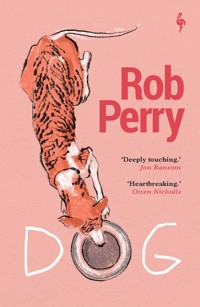
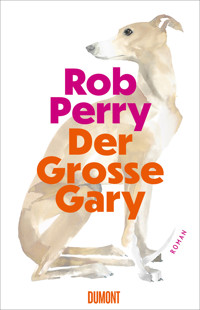
"DOG is a novel full of deft humour and escalating tenderness – a tale about misfits, human and canine, and the currents of hope and courage that bring them together." —Ross Raisin, author of God's Own Country When 18-year-old Benjamin Glass goes to look at a dead whale that has washed up on the beach, he meets an unfamiliar dog who follows him home to his caravan. Benjamin isn't equipped to take care of a dog – he has a chronic fear of germs, and is currently living alone while his grandmother is in hospital. But when a delivery driver recognises the dog as The Mighty Gary, the fastest greyhound in the country, and tells Benjamin about his unsavoury owners, Benjamin is forced to trust the stranger on his doorstep and devise a plan to keep Gary safe. As Benjamin becomes more attached to the dog, it becomes clear that his trust in the delivery driver may well have been misplaced. He will have to leave his comfort zone, take some unhygienic risks, cross paths with dangerous and powerful men and confront his very worst fears if he has any hope of protecting what he loves the most.
Sie lesen das E-Book in den Legimi-Apps auf:
Seitenzahl: 367
Veröffentlichungsjahr: 2024
Das E-Book (TTS) können Sie hören im Abo „Legimi Premium” in Legimi-Apps auf:
Ähnliche



















Europa Editions 8 Blackstock Mews London N4 2BT www.europaeditions.co.uk This book is a work of fiction. Any references to historical events, real people, or real locales are used fictitiously. Copyright © 2024 by Rob Perry First publication 2024 by Europa Editions All rights reserved, including the right of reproduction in whole or in part in any form. Rob Perry has asserted his right to be identified as Author of this Work. Cover design and illustration by Ginevra Rapisardi ISBN 9781787704725
Rob Perry
DOG
DOG
ONE
Benjamin Glass was on his way to see a dead whale when the dog started walking beside him on the sand.‘I’m going to see a dead whale,’ he said out loud.
He didn’t normally encourage dogs he didn’t know, but this one seemed sad. It was dragging a red lead and looking around.
‘You probably shouldn’t come,’ he said to the dog. He said that because he didn’t know what a dog’s grasp of death was—didn’t know if it had the tools to cope.
Benjamin found out about the whale in a newspaper at work. When his supervisor Camille put him on tills, he used newspapers to obscure the scanner so it wouldn’t make him go blind or mutate his cells. She jabbed her finger at a grainy picture on one of the front pages.
‘You should go and see it,’ she said, balled fist hovering over her heart. ‘You should see how it makes you feel.’
Camille had already seen the whale, she said, as part of her complete and intrinsic connection to all the animals of the earth.
‘I wouldn’t like that,’ Benjamin said, spraying antibacterial cleaner onto the conveyor belt.
‘Maybe that’s why you should go,’ she said.
Benjamin stood upwind of the whale and took shallow breaths in case whatever killed it could leapfrog between species. He’d been worrying about airborne pathogens since he heard about a man who arrived at Gatwick airport with a highly contagious respiratory condition. Some of the newspapers said the illness came from East Asia because people were eating bats. Camille was standing by the vending machine with a diet fizzy in her hand when she heard that. She squeezed her eyes tight shut.
‘Poor bats,’ she’d said. ‘Poor, poor bats.’
That afternoon she cleansed her chakras and increased her intake of certain homeopathic remedies.
‘He’s dead,’ Benjamin said, pointing.
He was eyeing the whale’s large mouth and blowhole. The dog sat down a few feet to his left. Even though the whale didn’t seem particularly damaged, the sand underneath it had turned red. It made Benjamin think about blood slowing to a stop in veins the size of water pipes. He looked at its sad old eyes, dried out by the sun, and imagined the whale’s internal organs all pressed up against each other as gravity weighed down on its body out of water.
‘Where’s your owner?’ he said to the dog.
The dog didn’t acknowledge him, just sat gazing at the whale, blinking and breathing. After a while, it walked over to the whale and licked the blubber.
‘Fucking hell,’ Benjamin said, glancing around to see if anyone had heard. When the dog came back, it pressed its wet nose against his hand. ‘Fucking hell,’ he said again.
Benjamin inspected the new patch of moisture just above his knuckles, the cluster of fine, red hand-hairs that had stuck to the skin. All the while, the dog watched him through distant, amber eyes. Slow blinks like it had just woken from a dream.
‘I’m going to have to go home now,’ Benjamin said.
Benjamin walked between the dunes with the saliva hand held out in front of him, the dog following loosely behind. As they made their way along a sandy track, snaking up the side of the California Sands Caravan Park, the dog stopped to sniff at vacant crab shells and bits of plastic washed up from the sea. They reached a hole in the mesh fence.
‘I don’t think you should come through here,’ Benjamin said, pulling his sleeve down over the clean hand—the one the dog hadn’t licked—for protection. It took a few steps forwards and shivered. ‘If you get tetanus you’ll get lockjaw,’ he said. ‘Which means you won’t be able to eat.’ He demonstrated a few chews. ‘Your jaw will seize up.’
Then he squeezed through the gap. He didn’t look back in case the dog got the wrong idea, just walked through the caravans—eyes forward, trainers slipping in the mud—past a flatscreen TV box sagging in the rain and a bike frame with no wheels.
At the caravan, Benjamin looked back along the track. There was no sign of the dog so he walked up and onto the wooden decking. When he turned to check again, the dog was there with its tongue hanging out. It stared, glassy-eyed and mouth ajar, as Benjamin slipped through the door and left it standing on the porch.
Benjamin leant against the wall and drew oxygen into his lungs. He slid off his jeans and put them in the washing machine, then thoroughly washed his hands in the sink. He crept to the window and peered out between the curtains. The dog was sitting on the decking, watching the caravan park’s flag wobble on its pole. Every now and then it closed its eyes for just longer than a blink and swayed. When it looked at Benjamin again, he stepped away from the window and picked up the phone. He called directory enquiries to get the number for an animal welfare organisation and asked them to put him through.
As he waited for a call-centre specialist to become available, Benjamin took two puffs of his inhaler. He held his breath until he felt light-headed, listening to faraway-sounding pop songs crackling through the receiver like the signal was bad. Eventually a lady picked up the phone. She had a Welsh accent and a friendly voice. She said her name was Laura.
‘Hi, it’s Benjamin Glass,’ he said.
‘Hi Benjamin Glass. What can I do for you?’
‘I’m calling because there’s a dog that won’t stop following me,’ he said. ‘I found him on the beach by a dead whale, which he licked. Then he followed me home.’
‘A dead whale?’ Laura said.
Benjamin felt like she’d missed the point a little. It wasn’t the whale on the decking.
‘Yes. On the beach. Do you think he could be infected?’
Laura didn’t answer so Benjamin continued.
‘I get wheezy when I’m stressed,’ Benjamin said, hoping her silence was just the time she needed to come up with a solution. ‘I’ve had to take my inhaler.’
‘Let’s start with what sort of dog he is,’ Laura said.
So Benjamin thought about it. The dog was like other dogs, only his chest was deeper and his legs were longer.
‘He looks like a racing bicycle,’ he said.
‘Right.’
‘And he has an exciting coat. Like a tiger.’
‘Okay. Anything else?’
‘Some of his ribs are poking out,’ he said. ‘Not in a hungry way. I think they always look like that, don’t they?’
‘What do?’
‘These dogs.’
‘Possibly.’ Laura said. ‘Is he a greyhound, do you think?’
Benjamin could hear other telephones ringing in the background. Chairs knocking into desks.
‘Yes,’ he said. ‘I think he is.’
Laura didn’t respond immediately. It seemed to be her way.
‘Does he have a name tag on his collar?’ she said.
‘I don’t know. I’m trying not to touch him.’
‘Where is he now?’
‘I left him out on the decking.’
‘Right. And he’s still there?’
‘I don’t know. Shall I check?’
‘If you could.’
Benjamin crawled to the door, stretching the cord as far as it would go, speaking louder because the handset didn’t quite reach the side of his head. When he peered out through the letterbox, the dog was looking directly at him through the slot. It licked its lips and shivered.
‘I found him. He’s still there,’ Benjamin said. ‘He’s shivering now.’
‘Is there a chance you could let him in?’
‘None at all,’ he said. ‘He’s a germ factory. I just need you to come and get him.’
Benjamin opened the curtain. He felt bad saying things like that because the dog had emotional eyes and because it was cold, but he didn’t want it rubbing its genitals all over the soft furnishings and spreading microbes around the caravan.
‘Is he injured?’ Laura said.
‘Not really. His left eye is a bit bloodshot, I think. It’s hard to tell from here.’
‘Does he look like he’s eaten recently?’
Benjamin examined the dog through the window.
‘Other than the rib thing?’ he said.
‘Yes. Does he look hungry?’
Benjamin didn’t like the pressure of having to decide on the spot. He wasn’t a dog expert.
‘Wait there,’ he said, balancing the phone on the sill, running over to the cupboard.
He took the last slice of a white loaf from the bag and stuffed it through the letterbox. The sound of the dog sniffing was amplified by the slot as it investigated, but it didn’t eat the bread.
‘He’s not hungry,’ Benjamin said.
Benjamin could hear Laura explaining the situation to someone in the background. While he waited for her to finish, he scratched an itchy bit on the inside of his forearm and made the skin go red.
‘Benjamin,’ Laura said eventually, ‘are you still there?’
‘Yep. Still here,’ he said.
She hesitated.
‘The problem we have, with this situation, that you’re . . . in, is that we don’t pick up healthy dogs.’
Benjamin didn’t understand. It wasn’t his dog. He thought maybe he’d misheard so he asked Laura to repeat herself.
‘We don’t pick up healthy dogs, Benjamin,’ she said.
In the silence that followed, Benjamin thought about things. About the dog’s tongue touching the blubber. About its uncovered feet leaving contaminants on the surfaces and about the fact that Camille believed animals were capable of complex human emotions like embarrassment and romantic longing.
‘Have you ever heard of Toxicara canis, Laura?’ he said eventually.
‘I haven’t,’ she said.
‘It’s a kind of parasite that lives in dog faeces. It’s basically a horrendous worm that grows behind your eye and makes you go blind.’ Benjamin waited a few seconds for impact. The skin under his chin was itching. ‘It can shut down your liver and lungs.’
Benjamin heard a phone ringing in the background. Waited for Laura to respond.
‘There’s a local dog warden I’m going to put you in touch with,’ she said. ‘I’m going to give you their number now.’
‘That’s great,’ Benjamin said, relieved. ‘Because I don’t want to make a big deal out of this or anything, but he’s already touched me a couple of times.’
‘He’s touched you?’
‘Yes. On my hand.’
‘I’m going to give you the number now Benjamin—’
He interrupted.
‘Sorry Laura,’ he said. ‘It’s once. It’s actually only once.’
‘What is?’
‘The number of times he’s touched me.’
Another pause. The barely audible sound of Laura breathing.
‘The telephone number, Benjamin. It’s—’
‘I lied about how many times to make it sound worse. He’s only touched me once.’
Laura read him the number. He wrote it down on an envelope with a shaking pencil, his skin white hot with the stress of it.
‘I’m sorry I lied, Laura,’ he said.
‘Do you have a family member that might be able to help?’
‘Normally my nan would know what to do,’ Benjamin said.
‘Great. Where is she?’
He faltered. He didn’t like saying hospital. It felt as though he was speaking something sinister into being.
‘She’s at bingo,’ he said.
‘Fine . . . so she can help when she gets home?’
‘It’s a bingo holiday,’ he said.
‘I didn’t know they did those. Where is it?’
‘Tenerife.’
Benjamin wondered what his nan would have said if she could. He knew she would like the dog, because she liked animals, but that made him feel better and worse at the same time. Better because what he was doing was probably the right thing; worse because she wasn’t there to say it.
‘What about a neighbour?’
Benjamin automatically glanced outside. There was a neighbour, but not the sort that would help. He had unkind views concerning people from abroad and said inappropriate things about women. From Camille’s limited interactions in the supermarket with him, she was convinced he’d been an advocate for leaving the European Union.
‘It’s out of season,’ Benjamin said. ‘There’s no one about.’
‘Okay. But the dog warden is closed now. Until Monday,’ Laura said.
‘I can’t really leave him on the balcony until Monday,’ Benjamin said.
‘Not really,’ Laura said.
Benjamin scratched his elbow. He looked back through the window at the dog, supping at micro-puddles on the decking. He put the phone down.
‘Fucking hell,’ he said for the third time that day.
Outside, the wind was picking up, blades of grass all leaning over. Benjamin pulled on a pair of washing-up gloves and went to the door. He opened it enough to peer out at the dog’s slim body, shaking in the drizzle, ribcage pressed out onto tiger-print fur.
It squeezed its head into the gap.
‘You’re probably going to have to come in,’ Benjamin said.
TWO
Inside, the dog padded around, dragging its lead and smelling things. It was still shivering. ‘You probably wouldn’t feel the cold so much if you had a higher body-fat percentage,’ Benjamin said, following it into the kitchen. Its nails tapped on the lino as it walked over to one of the cupboards and licked a spot on the door. ‘I’ll have to clean that now,’ Benjamin said.
The dog walked over to him and stood with its front paws very close together.
‘I don’t know why you’re still cold,’ Benjamin said. ‘You’re inside.’
With the Marigolds for protection, he unclipped the dog’s lead and put it on the worktop. Then he leant over and rubbed the thick bits of its back legs, running his hand along the bumps of its spine. With his flat palm on the dog’s side, he felt the tremor of its heart pressing the ribs out and pumping blood around its body.
‘Do you feel lost?’ he said.
But that felt like a silly question. Because being lost wasn’t always so clear-cut. He knew you could feel misplaced, even when your body was exactly where it was supposed to be. That, often, it had nothing to do with your location at all.
The dog walked over to the coffee table, brushing along the side of the sofa, then lowered its nose into a cold cup of tea. Benjamin picked up the cup and saw a dead moth disintegrating in the liquid, blurring across its surface. He made a mental note of where the dog had touched. As he poured the tea into the sink, the moth settled temporarily in the plughole before vanishing. Benjamin wondered whether the dog had been forced to drink saltwater and puddles while it was lost.
‘I’ll get you something to drink,’ he said, filling a salad bowl at the sink.
He put the bowl down in front of the dog and it drank for what felt like a long time. When it lifted its head there were tiny beads of water balanced in the fine hairs of its nose. Benjamin watched one of them fall into the fibres of the carpet.
‘I’m going to put you in the bathroom,’ he said. ‘Because I can’t think while you’re touching everything and wandering around.’
Benjamin shepherded it in, being careful not to make any actual, physical contact. As he closed the bathroom door the dog watched him with quiet eyes.
‘I honestly won’t be long,’ he said, hoping the dog wouldn’t urinate.
Benjamin used disinfectant spray on the areas the dog had touched, pausing as he walked over the peach rug to spread his toes in the thick pile. He picked up a cushion, pressed his face into it and shouted very loudly. When he had finished, he looked at himself in the mirror. His cheeks and neck were red. He stood in silence.
‘I’m okay,’ he said through the bathroom door, in case the noise had caused the dog any stress, in case its emotions were compromised.
At work, when a chicken packet split across the scales of Benjamin’s till and dripped inside the circuitry, Camille had carefully explained to him the importance of venting your negativity. While Benjamin spent the best part of forty minutes washing the pink chicken juice from his hands and workspace, Camille expressed that the flow of energy was constant and unerring. She explained that you had to give it somewhere to go, like a river into the ocean. She said her way of doing that could sometimes be as simple as shouting into her coat after a difficult shift. She’d handed him one.
‘I’m already very warm,’ Benjamin said.
‘It’s not to wear. We’re going to expel some negative sentiment,’ she said, climbing up onto a nearby footstool. ‘I find that a little elevation helps. To project.’
Up on the stool, Benjamin looked at Camille for a cue. When she pressed her face into the coat, he did the same. They shouted until their faces were bright red.
‘Do you feel better?’ Camille said. ‘Freer?’
‘A bit,’ Benjamin said.
Except that, really, he felt much better. Partly because of the shouting, and partly because Camille made him worry less. She rarely let things bother her, and he found it comforting. She was trusting and kind and, basically, that was enough.
In the caravan, Benjamin rolled the Marigolds down his forearms, off over his hands, and hung them on the edge of the sink. He tore a sheet from a notepad on the table and wrote a list of places the dog had touched. The wall in the hallway, the sofa (already wiped). All over the carpet.
The list was a help. His memory was less reliable when he was worked up and it would stop him forgetting which items and areas the dog had smeared itself on.
In the bathroom, the dog was standing on the bathmat, exactly as he’d left it.
‘Sorry I shouted,’ he said. ‘I was just venting.’ Benjamin used his hands to gesture ‘venting’ by waving them around his temples. As he spoke, the dog adjusted its ears and head, as if a different angle might help him decode what Benjamin was saying.
‘I’ve got a list now though,’ he said, waving the piece of paper. ‘So I won’t worry as much about you contaminating my things. I can sanitise them later.’
The dog yawned, stretching out its neck.
‘I’m going to have a bath,’ Benjamin said.
Benjamin turned the taps on full, then folded his clothes and put them on the toilet seat. While the bathtub filled, he looked at his naked body in the mirror. As a child he’d always paid close attention to his pallor, because he’d learnt about the Black Death in history and lived in fear that he’d go grey then die like the poor people in the text book. His legs were covered in goose pimples. He automatically cupped his balls to check for lumps.
‘You can lay down. If you want,’ he said to the dog, motioning at the floor.
While the bath filled, the dog walked around in impractically small circles. After three or four rotations it lowered itself into a sphinx-like pose, stretching its front legs out, tucking the back legs under. Benjamin stood in the tub. As he descended, he felt the hot tide of cleanliness rise up and over his body, warming his skin. He slid down until the water reached the bridge of his nose and blinked a few times, then submerged completely.
Eyes open underwater, he watched his hair lifting up and away from his head, swaying like seaweed. He felt the ache for oxygen in his body, the adenosine triphosphate in his cells depleting while he tried to work out in days how long his nan had been in hospital. The light on the tiles wobbled in neat, bright diagonals.
The long, dark shape of the dog’s head appeared above him, hovering over the surface of the water. When Benjamin sat up, it moved away, but he could still read the name tag around its neck.
The Mighty Gary, it said.
THREE
Benjamin towelled himself dry as the water gurgled into oblivion between his feet. He wrapped the towel around his waist and stepped out onto the bathmat.
In the living room, he switched the storage heater on and took a handful of clean clothes from the drying rack. While he was pulling a jumper on over his head, Gary jumped onto the sofa and curled up like a prawn.
‘Jesus,’ Benjamin said, knowingly taking the Lord’s name in vain, glancing at a watercolour picture of the Messiah on the mantel. His nan had never been particularly religious, but she had the odd trinket around because her father was a priest. Benjamin could see how appealing it might be— to believe in something greater, something after—it was just that he never could. The End seemed to him something final. The silence after a glass has been smashed. The blank pages at the end of a book.
Benjamin hoped his nan didn’t feel that way, that she was able to believe that when the lights went out, she’d wake up somewhere different, in another body. In a different life. He picked up a pillow and used it to push Gary ineffectually towards the sofa’s edge.
‘You might have shit particles on your feet,’ he said, pressing a little harder, forced to imagine the parts of a dog’s paw that could harbour that kind of thing. He shook his hands in the air—fingers splayed—like someone drying nail polish, then leant in very close and scrutinised the dog’s paws.
‘I can make you something comfortable to lay on,’ he said, grabbing a blanket from the armchair and putting it over the cushions at the other end of the sofa. ‘This is really comfy and easy to wash,’ he said. ‘You don’t even have to get down. I just need you to stop touching the sofa directly.’
Gary opened one of his eyes, then stood up and walked to the blanket.
‘Thanks,’ Benjamin said, adding sofa—top cushions to his list.
Benjamin sat down on the floor and turned on the TV. A blue glow spilt across the carpet as he flicked through the channels, landing on a nature documentary at the very moment a penguin was being eaten by a sea leopard. Gary stared at the screen, observing the sea leopard’s jaws clamped firmly around the penguin, its tiny black eyes in panic.
‘Sorry,’ Benjamin said, turning it over.
After, he thought about the penguin floating in the heavy swell, its body being lifted up and down by the vast cold gut of the ocean. He thought about the sloshing water all around and the tragic permanence of what came after. He reached for a leaflet on the coffee table that said Sunrise Take-it-away and tried to distract himself with the Chef’s Specials. The penguin’s lonely struggle did not leave him.
‘We should have some food,’ Benjamin said, holding up the leaflet. He turned the TV down, picked up the phone and dialled the number.
‘You probably always eat meat,’ Benjamin said. ‘But I don’t like eating animals.’
He ordered a vegetarian set meal for two.
A car drove past outside and unsettled Gary. Its headlights lit the windows, casting long shadows that slid across the back wall. The dog looked like he was waiting for something to happen. When it didn’t, he jumped down from the sofa and walked to the door where he waited, nose hovering four inches from the glass.
‘What do you want?’ Benjamin said, staring at the back of the dog’s domed head.
Gary let out a long breath and shuttered his eyelashes.
‘It’s dark out there,’ Benjamin said.
The dog fidgeted, moving his feet around on the spot. Benjamin didn’t know how he’d clean up a piss.
‘I’ll let you out then,’ he said.
Standing on the doormat, Benjamin squinted and listened. He tried to pick out Gary’s shape from the heavy outline of things as he drifted around and worried about a lost dog like that on its own. About it accidentally eating rat poison or walking out into the road.
When it felt like Gary had had long enough to properly relieve himself, Benjamin called him, but the wind seemed to swallow his voice. When he said it louder, the sound of the waves heaving up onto land drowned him out. He felt the dark space around him like a physical thing. When he looked across at the lights of town, the houses and the people seemed distant in a way that had very little to do with geography. He thought about his nan. About the ambulance, its blue lights sliding silently over the outside walls of the caravan, and the dinner she’d cooked the night she’d gone into hospital—peas and a tiny pork chop—left cold on the lino beside an upturned plate. He remembered the sensation that had accompanied finding her on the floor, of barely being connected to his body. Like it could walk away and he might forget to follow. When he pulled her up, and as she was lying there blinking, she smiled at him on one side of her mouth. He tried to speak but the feelings wouldn’t translate into words. He wanted to tell her it would be okay. That she meant something to him in a way that was dense and permanent, like stone, of the Earth, beyond delicate bodies. But he couldn’t seem to get it out.
The seconds contorted. The longer Benjamin waited, the less sure he was about how long he’d been waiting, until eventually he wondered whether that was it. Whether what had just happened with the dog wasn’t the beginning of something, but the sum of it. He was trying to figure out which it was he’d wanted when Gary loped back inside, breath drifting up in plumes, and a kind of relief swept over him that made his chest fill and his skin tingle.
Gary led him back to the sofa. The dog curled up on the blanket and closed his eyes and Benjamin watched. After a while, Benjamin flicked through the channels again, leaving the volume on low so he didn’t disturb the dog. He stopped on the news. On the muted TV, a line of text at the bottom of the screen read:
‘INTERNATIONAL STUDENT TESTS POSITIVE FOR BAT VIRUS.’
He didn’t want to know any more about that, so he skipped back to the documentary. It wasn’t much better. Now there were sharks spinning a shoal of fish into a frenzy then hammering into them from the side. The dog was awake again. He always seemed to be watching when something bad happened. His eyes lingered as Benjamin opened a drawer.
‘We should probably just watch a film,’ he said, moving his hand along rows of VHS tapes recorded direct from the telly. The labels were handwritten in block capitals. As Benjamin’s eyes moved along the cassettes, he imagined his nan writing them, pressing the felt tip into the paper, a faint shake in her hand causing all of the horizontal lines to undulate like little waves. He was stuck on the image of her in a hospital bed when his hand brushed the dog’s head. He pulled away for obvious reasons, but felt glad again that it had come back inside.
‘This one’s good,’ he said, holding out a tape that read ‘You’ve got Mail’ on the label. He pushed it into the machine and pressed Play. The wheels inside turned and made a whirring noise, while lines of static stretched out across the screen then disappeared. Gary backed away.
‘It’s got Thomas Hanks and Megan Ryan in it,’ Benjamin said. ‘They start sending each other romantic emails but when they find out they’re business rivals it all gets really awkward because he represents Change. It’s not very good quality because it’s VHS.’
Just at the point in the film when Tom Hanks has realised where his emails are going, a car pulled up on the grass outside. Gary stood with his ears pointed up, listening to the sound of the engine.
‘It’s just the food,’ Benjamin said, pausing the film. He heard the driver clear his throat before he knocked.
‘Two seconds,’ Benjamin shouted, using his leg to keep Gary back from the door. He opened it enough to fit his head and arm out, allowing the lamp in the hallway to illuminate a triangle of the decking outside. The driver threw a cigarette over his shoulder and held up a takeaway in a white plastic bag.
‘Chinese, mate?’ he said, angling his head upwards to release a cloud of smoke. Benjamin tried not to breathe any in.
‘Can you put it on the doormat for me please?’ Benjamin said.
The man nodded, staring at Gary.
‘That’s a premium dog,’ he said, leaning forward to put the bag down, ‘like a miniature racehorse.’
The smell of cigarettes drifted inside the open door as he patted Gary’s head.
‘Probably wants a chicken ball, doesn’t he?’ he said, laughing. He held out his hand and let Gary lick his fingers.
‘How much is the food please?’ Benjamin said, trying to push Gary back with the side of his leg. But the man didn’t hear the question. His eyes were still moving over the dog. Squinting. Working something out. Benjamin wondered if he always let animals lick his hands while he was delivering consumables and wished he would stop breathing so heavily, blowing smoke into the open door. The man squeezed his hand into the pocket of his jeans and took out a scrap of paper.
‘It’s eighteen-forty all in,’ he said. ‘Not including any kind of gratuity.’
Benjamin took out a twenty. He handed it to the man who put it in his pocket without offering change.
‘Very distinctive markings he’s got. They call it brindle, don’t they?’
‘I’m not sure what it’s called,’ Benjamin said. ‘He’s here temporarily.’
The man looked between Benjamin and the dog.
‘Yeah. They call it brindle,’ he said.
On the track behind him, the car was still running.
‘Your car’s still running,’ Benjamin said.
The man straightened up.
‘It won’t always start, so I keep it turning over for drop offs,’ he said. ‘I usually do all my own maintenance, but I’ve been really putting in the overtime on deliveries.’ He rubbed his thumb and first two fingers together to suggest he was well paid. ‘I’ve fallen behind on some aspects of its upkeep,’ he said.
Benjamin nodded.
‘Thanks then,’ he said, closing the door.
Benjamin peered through the curtains. He watched the man walk down the steps, briefly look around in the grass for the cigarette he’d thrown, then reach into his pocket to get another. He saw him get back in the car and take a box of matches from the glovebox. As he lit a cigarette, cupping it with his hand to shield it from the breeze, he stared at the front door of the caravan and Benjamin watched him. Then the man flicked the match from the open window and drove away, the car’s taillights fading as he weaved his way back out.
Benjamin locked the door and dropped a couple of vegetable spring rolls into an aluminium tray. He scraped in some rice, then put it on the kitchen floor in front of Gary. The dog leant over and picked up a spring roll. He bit it a few times then dropped it on the vinyl.
‘It’s probably hot,’ Benjamin said, picking up the tray. He blew on the food to cool it down. ‘You’ll like it now it’s the proper temperature,’ he said. Gary had another go, swallowing it down without chewing. He walked over to the one on the floor and ate that too. Benjamin could see a flake of deep-fried pastry that was stuck in his whiskers.
‘You do probably need the calories,’ Benjamin said.
When they finished eating, Benjamin got his sleeping bag from the cupboard and pulled at the front of the sofa to turn it into a bed. Gary watched the transformation closely, backing away as it clunked into position, waiting to see if anything else was going to happen. When it didn’t, he jumped back up and curled, croissant-like. Benjamin sat and watched as Gary closed his eyes, until the dog fell into a steady sleep, his side rising and falling with breath. In the quiet, he leant in to examine a scar that was drawn in pale pink tissue across Gary’s chest and neck and wondered where it was from. It struck him as strange that things like that—what the dog had seen and heard and felt—were trapped inside or lost forever.
Benjamin drifted off sitting upright in his clothes, cocooned in the sleeping bag, waking only once to the liquid sound of Gary drinking water from the salad bowl.
FOUR
Outside in the darkness, a man moved across the wet sand, scanning the beach with a torch. He walked quickly, shoulders slumped forward, a plastic bag in his hand.
‘Dog,’ he said with an accent, his voice falling into the quiet static of rolling waves. He shook the bag, reached in and produced a dried sprat.
‘I have fish,’ he said, holding out the shrivelled fish body. He squeezed his free hand until the knuckles cracked.
‘Fish for dog,’ he said.
FIVE
Benjamin woke up and Gary’s head was resting on the meat of his leg. It was almost lunchtime. ‘Hi,’ he said, lifting the sleeping bag so that the dog’s chin slid off and onto the cushions. Gary opened an eye and yawned. His tongue was covered in dry saliva like a spider’s web.
‘Sorry,’ Benjamin said, ‘you were touching me.’
Benjamin transformed the bed back into a sofa and pulled the curtains, filling the caravan with a perfect light that warmed the surfaces and the bare skin on his arms. Gary stretched out and laid his face in a yellow slice of it, while Benjamin opened the door for airflow. He didn’t know how long pathogens lingered and the delivery driver had been really craning his neck in.
The dog jogged down to the grass and urinated. On his way back up, Gary paused above an ant that was wandering across the decking. He watched it meandering between his front paws for a second or two, then pressed his tongue down on top of it. When more emerged from the cracks, he walked around, hoovering them up, making Benjamin feel bleak.
‘I think that’s murder,’ he said from the doorway. ‘Those ants are dying when you do that.’
The terminal aspect upset Benjamin. He didn’t know how to explain it, but the powerlessness, the finality of what was unfolding, was overwhelming. Something was happening that couldn’t be undone.
‘If you stop eating insects,’ he said. ‘I’ll make you some food.’
Gary lifted his head. The bright sun highlighted the hairs around his eyes and made them appear translucent. He licked up another ant and followed Benjamin inside.
Gary lifted his front paws onto the worktop and reached for the takeaway tray, so Benjamin grabbed it and held it aloft. ‘We can’t eat that,’ he said, ‘cooked rice grows Bacillus cereus at room temperature. It could give us food poisoning.’
Benjamin didn’t know if dogs got food poisoning, but he remembered the day a Staffordshire Bull Terrier sicked up an entire robin on the doormat at the supermarket. Camille had been in a relationship with its owner at the time, a man who remortgaged his house to buy photos of feet. She said she always went for men that needed repair. When they broke up, Camille and Benjamin drank tins of sugar-free Lilt and shared a split bag of edamame beans by the delivery shutters. They sat on the wall, legs dangling, watching manky pigeons squabble over crisps.
Benjamin opened the fridge. The light inside flickered, intermittently illuminating the empty glass shelves. He picked up a pint of milk and held it up to read the date.
‘This has yesterday’s date on it,’ he said, unscrewing the top and pouring it down the sink. ‘I’m going to make porridge, but we’ll have to do it with water which could be disgusting.’
While Benjamin stirred the oats, Gary stood near him, curving his velvet body around Benjamin’s legs. Benjamin dropped the spoon and it clattered across the floor, flicking porridge onto the cupboard doors. Gary jumped like the caravan was falling down.
‘It’s okay, he said, leaning to wipe the door with a cloth.
Gary padded closer. He dragged his tongue across the lino where the porridge had been. When Benjamin told him to stop, he licked the cupboard instead.
Benjamin wrote cupboard door and floor on his list. Then he picked up the spoon to stop Gary indiscriminately licking the surfaces. He moved towards the back door, cold vinyl sticking to his bare feet, peeling away like plasters. Gary followed him out.
‘When you eat outside it’s called al fresco,’ Benjamin said, putting one of the bowls on the decking.
As Gary ate, lumps of porridge clung to his whiskers. Once the bowl was empty, he licked his chops to find them. A cool breeze channelled through the caravans and made the dog cower. The wind died down and the bright sun warmed Benjamin’s shoulders. He squeezed his eyes tight shut and saw orange through the thin skin of his eyelids.
‘You can have mine too,’ he said, putting his bowl down on the decking.
It felt nice to feed Gary. There was something vulnerable about him: in need of protection. It made Benjamin want to keep filling the bowl with food for as long as he would eat. He felt like he understood some of Camille’s desire to care for damaged romantic partners.
When the dog was finished, he trotted over to a break in the hedge, to the path with the broken fence that led back down to the beach.
‘Where are you going?’ Benjamin said.
The dog walked a few more steps then stopped. He didn’t turn back, but looked along the path, towards the sea.
‘Let me lock the caravan,’ Benjamin said.
Benjamin made sure the hobs were off so the caravan wouldn’t fill with gas, then he followed Gary through the dunes to the beach. The dog jogged along in wobbly lines, pushed sideways by the wind as he went.
‘Be careful of the shells,’ Benjamin said, kicking one away. ‘They’re razor clams. They could cut you.’
In the distance, Benjamin could see the dark outline of the whale again, slumped on the sand. It looked like it was sinking, the boundaries between body and earth blurring. He stopped to take it in, struggling to get his head around the scale. How a brain could be forty or fifty feet away from the borders of its body, how nerves and tendons could stretch so far through flesh and bone. It was strange to him how something so large could just stop being, how something so complex could disappear forever.
‘I don’t want to see him today,’ he said, turning his head away from the creature, like not looking could change the reality of it. ‘Not up close.’
As they walked along the beach, moisture from the sand worked its way into the toes of Benjamin’s trainers. His feet were cold, but it was nice to walk with Gary. Something about it felt vital, like the dog needed the breeze on his skin and the sun and the salt spray. Like he was being charged up by the noises all falling into his folded-over ears. Benjamin reached down and picked up a stone. It was smooth and grey and had a flash of white across it that looked like a cloud. He moved his fingers along one side and could feel the salt residue clinging to it. He slipped it into his pocket, then watched the turbines swinging lazily around on the horizon. Gary did a shit on the sand.
‘I’m not picking that up,’ Benjamin said. ‘I don’t mind temporarily making sure you don’t die, but I’m not picking up your faeces.’
He stood staring at what Gary had done, surrounded by seagulls that were hovering a few feet above the ground. They were negotiating the invisible currents beneath their wings, lifted up and down by gusts of air coming in from the sea.
‘I’m not your owner,’ Benjamin said, trying to walk away, terrorised by the image of a child getting it on their hands and in their eyes while they made sandcastles or played football. He couldn’t have that on his conscience. The sounds of the rolling waves began to feel very far away.
Benjamin looked across the sand to the long concrete path that ran along the front unbroken. He couldn’t see a single person. He took a deep breath, then he used a sandwich packet from his pocket to dig out a shallow hole.
Gary’s shit looked like a frankfurter. Benjamin scooped it up and dropped it into the hole. Then he kicked sand back over it.
‘I can’t believe you made me do that,’ he said, walking to the water to drop the cardboard into the swell. It was drawn out with a wave, then slid back onto the sand.
‘Let’s go,’ he said.
The beach turned into rocks and the rocks turned into cliff face. Benjamin and the dog followed a path that cut inland and led to a rugby field where he sat down on a multi-coloured climbing frame made to look like a helicopter. Gary walked along a hedge pushing his face into the leaves.
‘Other dogs have probably pissed in that bush,’ Benjamin said. ‘The one you’re putting your face on.’ He pointed at the field. ‘Why don’t you go for a run?’
The dog walked over to the helicopter and stood in front of Benjamin. Even when he was still, the fibres in his thick back legs were flexing and twitching. The wind picked up and he cowered. He sipped at a puddle on the tarmac, then went back to the hedge and pushed his face into it some more.
‘Come on,’ Benjamin said, standing up. ‘Like this.’
Benjamin jogged around. He made short bursts across the grass, encouraging the dog, but Gary barely had to run to keep up. He trotted in loose circles, wagging his tail until Benjamin stopped. The field was silent, except for the noise of Gary’s breathing, heavier now as he filled his lungs, pulling his skin taut across his ribcage.
Benjamin watched the black tips of the trees swaying together, as if something large was working its way through the forest beneath. He remembered coming to the park with his nan when he’d first moved into the caravan. It was summer. They were sitting in the helicopter, looking out across the field in front.
‘Do you want to talk about anything?’ she said.
When Benjamin didn’t reply she leant into his shoulder.
‘I feel like Arnold SwarzenVinegar in here,’ she said.
She gave him a sideways look.
‘He’s always in helicopters, isn’t he? With his lumpy arms.’
Benjamin laughed.
‘Get to ze chopper,’ she said.
Benjamin didn’t know what she said that for.
‘Haven’t you seen that film? It’s fantastic. It’s about an alien that hunts humans for sport. And also sort of a commentary on Toxic Masculinity.’
As a concept, that sounded quite violent, but also politically complicated.
‘What age certificate is it?’ Benjamin said.




