


25,99 €
Mehr erfahren.
- Herausgeber: John Wiley & Sons
- Kategorie: Wissenschaft und neue Technologien
- Serie: RGS-IBG Book Series
- Sprache: Englisch
Domicile and Diaspora investigates geographies of home and identity for Anglo-Indian women in the 50 years before and after Indian independence in 1947. * The first book to study the Anglo-Indian community past and present, in India, Britain and Australia. * The first book by a geographer to focus on a community of mixed descent. * Investigates geographies of home and identity for Anglo-Indian women in the 50 years before and after Indian independence in 1947. * Draws on interviews and focus groups with over 150 Anglo-Indians, as well as archival research. * Makes a distinctive contribution to debates about home, identity, hybridity, migration and diaspora.
Sie lesen das E-Book in den Legimi-Apps auf:
Seitenzahl: 600
Veröffentlichungsjahr: 2011
Ähnliche



















Contents
List of Figures
Series Editors’ Preface
Acknowledgements
Chapter One Domicile and Diaspora: An Introduction
Domicile
Diaspora
Home, Memory and Nostalgia
Methodology
Chapter Outline
Chapter Two At Home in British India: Imperial Domesticity and National Identity
Imperial Domesticity
Nationalist Domesticity
Domicile and Domesticity
‘Land of Our Mothers’
Home, Identity and Nationality
Conclusions
Chapter Three Home, Community and Nation: Domesticating Identity and Embodying Modernity
Domesticating Identity
Embodying Modernity
Domestic Transgression
Home, Community and Nation
Conclusions
Chapter Four Colonization and Settlement: Anglo-Indian Homelands
Homelands and Settlements
Anglo-Indian Colonization and Settlement
Colonizing McCluskieganj
Anglo-Indian Home-Making
Dreams of the Future
McCluskieganj Today
Conclusions
Chapter Five Independence and Decolonization: Anglo-Indian Resettlement in Britain
Migration and Resettlement
Britishness, Whiteness and Mixed Descent
Documenting Paternity and Recolonizing Identity
Unsettled Domesticity
Embodied Identities and the Limits of Familiarity
Conclusions
Chapter Six Mixed Descent, Migration and Multiculturalism: Anglo-Indians in Australia since 1947
Anglo-Indians in White Australia
HMAS Manoora
Anglo-Indian Migration in the Wake of HMAS Manoora
From’Race’ to’Culture’
From White Australia to Multiculturalism
Anglo-Indians in Multicultural Australia
Conclusions
Chapter Seven At Home in Independent India: Post-Imperial Domesticity and National Identity
Staying on in India
Nationality and Community
Anglo-Indian Women in Independent India
Dress
Home and work
Marriage
Conclusions
Chapter Eight Domicile and Diaspora: Conclusions
Appendix 1
INDIA
BRITAIN
AUSTRALIA
Appendix 2
INTERVIEWS
FOCUS GROUPS
INTERVIEWEES
Notes
CHAPTER 1 DOMICILE AND DIASPORA: AN INTRODUCTION
CHAPTER 2 AT HOME IN BRITISH INDIA: IMPERIAL DOMESTICITY AND NATIONAL IDENTITY
CHAPTER 3 HOME, COMMUNITY AND NATION: DOMESTICATING IDENTITY AND EMBODYING MODERNITY
CHAPTER 4 COLONIZATION AND SETTLEMENT: ANGLO-INDIAN HOMELANDS
CHAPTER 5 INDEPENDENCE AND DECOLONIZATION: ANGLO-INDIAN RESETTLEMENT IN BRITAIN
CHAPTER 6 MIXED DESCENT, MIGRATION AND MULTICULTURALISM: ANGLO-INDIANS IN AUSTRALIA
CHAPTER 7 AT HOME IN INDEPENDENT INDIA: POST-IMPERIAL DOMESTICITY AND NATIONAL IDENTITY
CHAPTER 8 DOMICILE AND DIASPORA: CONCLUSIONS
Bibliography
NEWSPAPER ARTICLES
FILMS AND TELEVISION PROGRAMMES
Index
RGS-IBG Book Series
The Royal Geographical Society(with the Institute of British Geographers)Book Series provides a forum for scholarly monographs and edited collections of academic papers at the leading edge of research in human and physical geography. The volumes are intended to make significant contributions to the field in which they lie, and to be written in a manner accessible to the wider community of academic geographers. Some volumes will disseminate current geographical research reported at conferences or sessions convened by Research Groups of the Society. Some will be edited or authored by scholars from beyond the UK. All are designed to have an international readership and to both reflect and stimulate the best current research within geography.
The books will stand out in terms of:
the quality of researchtheir contribution to their research fieldtheir likelihood to stimulate other research.being scholarly but accessible.For series guides go to www.blackwellpublishing.com/pdf/rgsibg.pdf
Published
Domicile and Diaspora: Anglo-Indian Women and the SpatialPolitics of Home
Alison Blunt
Geographies and Moralities
Roger Lee and David M. Smith
Military Geographies
Rachel Woodward
A New Deal for Transport?
Edited by Iain Docherty and Jon Shaw
Geographies of British Modernity
Edited by David Gilbert, David Matless and Brian Short
Lost Geographies of Power
John Allen
Globalizing South China
Carolyn L. Cartier
Geomorphological Processes and Landscape Change: Britain inthe Last 1000 Years
Edited by David L. Higgitt and E. Mark Lee
Forthcoming
Living Through Decline: Surviving in the PlacesofthePost-Industrial Economy
Huw Beynon and Ray Hudson
The Geomorphology of Upland Peat
Martin Evans and Jeff Warburton
Publics and the City
Kurt Iveson
Driving Spaces
Peter Merriman
Geochemical Sediments and Landscapes
David Nash and Susan McLaren
Fieldwork
Simon Naylor
Natural Resources in Eastern Europe
Chad Staddon
Putting Workfare in Place
Peter Sunley, Ron Martin and Corinne Nativel
After the Three Italies: Wealth, Inequality and Industrial Change
Mick Dunford and Lidia Greco
© 2005 by Alison Blunt
blackwell publishing
350 Main Street, Malden, MA 02148–5020, USA
9600 Garsington Road, Oxford OX4 2DQ, UK
550 Swanston Street, Carlton, Victoria 3053, Australia
The right of Alison Blunt to be identified as the Author of this Work has been asserted in accordance with the UK Copyright, Designs and Patents Act 1988.
All rights reserved. No part of this publication may be reproduced, stored in a retrieval system, or transmitted, in any form or by any means, electronic, mechanical, photocopying, recording or otherwise, except as permitted by the UK Copyright, Designs and Patents Act 1988, without the prior permission of the publisher.
First published 2005 by Blackwell Publishing Ltd
1 2005
Library of Congress Cataloging-in-Publication Data
Blunt, Alison.
Domicile and diaspora: Anglo-Indian women and the spatial politics of
home/Alison Blunt.
p. cm. — (RGS-IBG book series)
Includes bibliographical references and index.
ISBN-13: 978-1-4051-0054-0 (hardcover: alk. paper)
ISBN-10: 1-4051-0054-0 (hardcover: alk. paper)
ISBN-13: 978-1-4051-0055-7 (pbk.: alk. paper
ISBN-10: 1-4051-0055-9 (pbk.: alk. paper)
1. Women, Anglo-Indian—History—20th century. 2. Women, Anglo-Indian—Social conditions—20th century. 3. Anglo-Indians—Race identity. 4. Anglo-Indians—Ethnic identity. 5. Anglo-Indians—Migrations— History—20th century. I. Title. II. Series.
DS432.A55B58 2005
305.48’891411—dc22
2004024919
A catalogue record for this title is available from the British Library.
Set in 10/12 plantin
by SPI Publisher Services, Pondicherry, India
Printed and bound in India
by Replika Press, Pvt. Ltd, India
The publisher’s policy is to use permanent paper from mills that operate a sustainable forestry policy, and which has been manufactured from pulp processed using acid-free and elementary chlorine-free practices. Furthermore, the publisher ensures that the text paper and cover board used have met acceptable environmental accreditation standards.
For further information on
Blackwell Publishing, visit our website:
www.blackwellpublishing.com
For Mark
Figures
1.1 Map of the Indian subcontinent
1.2 Loreto St Agnes, Lucknow
1.3 Dow Hill School, Kurseong
1.4 Dow Hill girls, homeward bound, 1950
2.1 Tiled Busti in Entally, Calcutta
2.2 Scene in Entally, Calcutta
3.1 ‘Women in the WAC(I) enjoying “time off” between lectures, 1944’
3.2 ‘A group of happy WAC(I) women in the lounge of their mess’
3.3 An Anglo-Indian wedding in Lucknow in the early 1940s
4.1 Cover illustration of the Colonization Observer, April 1934
4.2 McCluskieganj as mooluk and ‘home, sweet home’
4.3 McCluskieganj as mooluk
4.4 The ‘grit’ of pioneers at McCluskieganj
4.5 Images of women at McCluskieganj
4.6 A bungalow at McCluskieganj today
4.7 A ruined bungalow at McCluskieganj
6.1 The arrival of HMAS Manoora at Fremantle, Western Australia, 15 August 1947
6.2 Anglo-Indians on board HMAS Manoora
6.3 An Anglo-Indian family on board HMAS Manoora
6.4 Anglo-Indians on board HMAS Manoora
6.5 Selection of the May Queen at the Lucknow Club
6.6 The crowning of the May Queen at the Lucknow Club, 1957, by the wife of the principal of La Martiniere Boys’ School
6.7 The Australian Anglo-Indian Association Cultural Centre, Padbury, Western Australia
Series Editors’ Preface
The RGS/IBG Book series publishes the highest quality of research and scholarship across the broad disciplinary spectrum of geography. Addressing the vibrant agenda of theoretical debates and issues that characterize the contemporary discipline, contributions will provide a synthesis of research, teaching, theory and practice that both reflects and stimulates cutting edge research. The Series seeks to engage an international readership through the provision of scholarly, vivid and accessible texts.
Nick Henry and Jon Sadler
RGS-IBG Book Series Editors
Acknowledgements
This book represents the culmination of a research project that began in 1998. My preliminary research was funded by grants from the University of Southampton and an HSBC grant from the Royal Geographical Society with the Institute of British Geographers. The main research was funded from 1999 to 2001 by the Economic and Social Research Council (R000 222 826). This was followed by a sabbatical funded by Queen Mary, University of London (QMUL), and a period of research leave funded by the Arts and Humanities Research Board, which enabled me to complete this book. The British Academy funded me to present a paper at the conference on ‘Who are the Anglo-Indians?’ in Melbourne in 2002. I am very grateful for the funding that made my research possible, particularly through funding research leave and research visits to India and Australia, and to employ Samantha Cann, Alison Millard and Jane Parry to transcribe often lengthy interviews and focus group discussions, which they did with great skill and care. My research visits to India and Australia were made all the more enjoyable by staying with friends. Alison Barrett and Aslam Pirzada, Robyn Dowling and Garry Barrett, and Natalie Jamieson and Drew Boucher were all wonderful hosts and made me feel at home in New Delhi, Sydney and Melbourne. I would also like to thank my brother, David Blunt, for visiting me in India.
Throughout my research, I have had the great pleasure and privilege to meet many Anglo-Indians both near to and far from home, and to experience the warmth and the hospitality of the community at first hand. I am particularly grateful to Grace and Dereyck Pereira for their friendship, help and inspiration. Grace also kindly gave me permission to reproduce two of her photographs in the book. I would also like to thank the Victoria and Dow Hill Association members whom I have met in India, Britain and Australia, particularly for welcoming me to the annual school reunions in London since 1998. Many former pupils and former and current teachers at the La Martiniere schools in Lucknow and Calcutta, and at Loreto St Agnes in Lucknow and Loreto Entally in Calcutta, as well as the officers and members of many different associations, have also been extremely helpful in my research.
The archival research for this book was largely based at the Oriental and India Office Collections of the British Library and the National Archives in London; the National Archives of Australia in Canberra; and the archives of the All-India Anglo-Indian Association (AIAIA) in New Delhi. I am particularly grateful to Neil O’Brien (President) and Malcolm Booth (Secretary) of the AIAIA for allowing me to read copies of the Anglo-Indian Review. P.T. Nair in Calcutta very generously made copies of his newspaper archive and found me rare copies of books by Frank Anthony and Cedric Dover. In McCluskieganj, Alfred and Dorothy de Rozario not only let me read and photocopy rare copies of the Colonization Observer and brochures published by the Colonization Society of India, but also welcomed me to stay with them. In addition to all of the interviewees who made my research possible, Barbara Pinto and Sydney Rebeiro in New Delhi, Ram Advani and Nasir Abid in Lucknow, Lionel and Christa Moss in Whitefield, and Melvyn Brown, Philomena Eaton, Sister Maria and Sister Marisa in Calcutta all provided invaluable help during my research. I learnt a great deal from meeting Denise Coelho in London and Reginald Maher in Perth, both of whom have sadly since passed away.
I have greatly benefited from the interest and encouragement that I have received from a wide range of other researchers who have studied the Anglo-Indian community, including Lionel Caplan, Geraldine Charles, Christopher Hawes, Lisa Hewins, Ann Lobo and Susan Lynn in the UK; Kuntala Lahiri Dutt, Ronnie Johnson and Vinisha Nero in India; Keith Butler, Adrian Carton, Glen D’Cruz, Adrian Gilbert, Erica Lewin and Michael Ludgrove in Australia; Robyn Andrews and Dorothy McMenamin in New Zealand; and Bert Payne and Blair Williams in the United States. As well as working at the University of Southampton and at QMUL, I was also a visiting academic at University College London, Curtin University of Technology, Perth, and Melbourne University during the course of my research for this book. I have presented my work at conferences and seminars in Australia, Britain, India, Norway and the United States, and am grateful for the questions and discussion that have helped me to develop my ideas. Closer to home, the ‘Culture, Space and Power’ research group and the students taking my course ‘Geographies of Home’ at QMUL have inspired and helped me throughout my research.
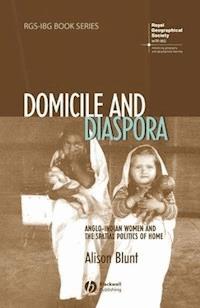
I would like to acknowledge Felicity and Belinda Jones for giving me permission to reproduce the wonderful photograph on the cover. I am also grateful to Rudy D’Silva from Lucknow for allowing me to reproduce copies of his father’s photographs; and to the British Library, the Imperial War Museum and Screensound Australia for permission to reproduce other images. Particular thanks to Ed Oliver at QMUL for drawing Figure 1.1 and for scanning the other images.
Stuart Corbridge, Nick Henry, Shompa Lahiri and Grace Pereira read the entire manuscript and provided very important and helpful suggestions. I have also appreciated the friendly encouragement of Angela Cohen at Blackwell and the superb editing of Justin Dyer. Catherine Nash, Catríona Ní Laoire, Richard Phillips, David Pinder and a number of anonymous referees have also read and commented on parts of this book that have been published elsewhere. I gratefully acknowledge permission to include revised passages from the following papers: A. Blunt (2002) ‘‘‘Land of our Mothers’’: home, identity and nationality for Anglo-Indians in British India’, History Workshop Journal 54: 49–72, by permission of Oxford University Press; A. Blunt (2003) ‘Collective memory and productive nostalgia: Anglo-Indian home-making at McCluskieganj’, Environmentand Planning D: Society and Space 21: 717–738, by permission of Pion Limited, London; and A. Blunt (2003) ‘Geographies of diaspora and mixed descent: Anglo-Indians in India and Britain’, International Journalof Population Geography 9: 281–294. Copyright John Wiley and Sons Limited. Reproduced with permission.
Nicky Hicks, Richard Phillips, David Pinder, Juliet Rowson, Elaine Sharland and Jane Wills have provided invaluable support and friendship throughout my research. Other friends, family and colleagues have also inspired and supported me, including Morag Bell, Michaela Benzeval, Penny Blunt, Jim Chapman, Amanda Claremont, Felix Driver, Stella Edridge, Martin Evans, Georgina Gowans, Derek Gregory, Shompa Lahiri, Roger Lee, Catherine Nash, Miles Ogborn and Ann Varley. Finally, I would like to thank those who represent home for me: Mark Ryan and my parents, Cecily and Peter Blunt, for their love and support.
Chapter One
Domicile and Diaspora: An Introduction
The photograph on the cover of this book was taken in February 1948, six months after Indian Independence and the Partition of India and Pakistan. It was taken outside a bungalow in a railway colony near Chittagong in what was then East Pakistan and is now Bangladesh (see Figure 1.1). It is a photograph of an Anglo-Indian girl, Felicity, with her ayah’s daughter, 1 both dressed up in saris made from a pair of old curtains, and it was taken by Felicity’s father, who worked on the railways. In many ways, this photograph could be viewed as a classic representation of British domesticity in India, forming part of a long tradition of British families posing with their servants and reproducing an empire within as well as beyond the home. 2 But this photograph differs in three main ways. First, it was taken after Independence, when many of the British elite had left India. For those who remained, either waiting for a passage home or, in fewer cases, ‘staying on’, 3 family photographs could now less easily represent imperial domesticity and an empire within the home. Second, although the Bengali girl looks far less confident than two-year-old Felicity, they appear more similar than different in other ways. The Bengali girl is standing further back, with her hand to her face, and returns a far less assured gaze to her mother’s employer. But both girls are dressed up in the same way, both are holding dolls, and both have been playing together. Finally, unlike photographs of British domesticity in India, Felicity is an Anglo-Indian rather than a British girl.
In the nineteenth and early twentieth centuries, the term ‘Anglo-Indian’ referred to the British in India, and is still sometimes used in this way. 4 But since the Indian Census of 1911, the term has referred to a domiciled community of mixed descent, who were formerly known as Eurasian, country-born or half-caste. Anglo-Indians form one of the largest and oldest communities of mixed descent in the world, and continue to live in India as well as across a wider diaspora, particularly in Britain, Australia, New Zealand, Canada and the United States. Descended from the children of European men and Indian women, usually born in the eighteenth and early nineteenth centuries, 5 Anglo-Indians are English-speaking, Christian and culturally more European than Indian. Before Independence in 1947, the spatial politics of home for Anglo-Indians were shaped by imaginative geographies of both Europe (particularly Britain) and India as home. Although Anglo-Indians were ‘country-born’ and domiciled in India, many imagined Britain as home and identified with British life even as they were largely excluded from it. In many ways, Anglo-Indians imagined themselves as part of an imperial diaspora in British India. Indian nationalism and policies of Indianization gave a new political urgency to AngloIndian ideas about home and identity. Some Anglo-Indians who did not feel at home in India settled in a homeland called McCluskieganj, whereas many more migrated after Independence. In 1947, there were roughly 300,000 Anglo-Indians in India and, against the advice of Anglo-Indian leaders, at least 50,000 had migrated by 1970, half of whom resettled in Britain in the late 1940s and 1950s. 6 The second main wave of migration was to Australia in the late 1960s and 1970s once White Australia migration policies had become less restrictive.
Figure 1.1 Map of the Indian subcontinent
In the 1935 Government of India Act, Anglo-Indians were defined in relation to Europeans in terms of their paternal ancestry and domicile:
An Anglo-Indian is a person whose father or any of whose other male progenitors in the male line is or was of European descent but who is a native of India. A European is a person whose father or any of whose other male progenitors in the male line is or was of European descent and who is a native of India.
Lesen Sie weiter in der vollständigen Ausgabe!
Lesen Sie weiter in der vollständigen Ausgabe!
Lesen Sie weiter in der vollständigen Ausgabe!
Lesen Sie weiter in der vollständigen Ausgabe!
Lesen Sie weiter in der vollständigen Ausgabe!
Lesen Sie weiter in der vollständigen Ausgabe!
Lesen Sie weiter in der vollständigen Ausgabe!
Lesen Sie weiter in der vollständigen Ausgabe!
Lesen Sie weiter in der vollständigen Ausgabe!
Lesen Sie weiter in der vollständigen Ausgabe!
Lesen Sie weiter in der vollständigen Ausgabe!
Lesen Sie weiter in der vollständigen Ausgabe!




